The VMO (vastus medialis oblique) is the inner-knee teardrop-shaped quad muscle responsible for terminal knee extension and patellar (kneecap) tracking. A strong VMO produces: better knee tracking and reduced patellar pain (one of the most common knee complaints), the visible teardrop shape that defines well-developed quads, improved squat and lunge performance through better knee extension power, reduced injury risk through balanced quad development, and supported athletic performance in cutting and jumping movements. The VMO is part of the larger quadriceps group but requires specific training principles for development: terminal knee extension for activation peak (the last 15 to 20 degrees of knee straightening), full range of motion in compound exercises (deep squats activate VMO more than partial squats), unilateral patterns for balanced development, and adequate volume across both isolation and compound work. Most lifters who want better VMO development are making one or more of these mistakes: avoiding leg extensions (the primary direct VMO exercise), using partial range squats (limiting VMO activation), running insufficient quad/VMO volume, or assuming VMO is a separate muscle requiring specialized training rather than understanding it as the medial portion of the larger quad group.
Below are ten of the most effective exercises for VMO development, covering direct VMO/quad isolation (lever leg extension), heavy compound work with VMO emphasis (sled 45 leg press, lever hack squat, barbell front squat, barbell squat), unilateral VMO patterns (dumbbell Bulgarian split squat, dumbbell step up, dumbbell walking lunge), variation work (barbell Zercher squat), and accessible compound work (dumbbell goblet squat). Together they form a complete VMO training program. A 45 to 60-minute quad-focused session pulled from this list, performed 1 to 2 times per week, produces strong VMO development for any lifter focused on building the teardrop muscle, addressing knee tracking issues, or improving balanced quad development.
Lever Leg Extension

The Lever Leg Extension performs leg extensions on a lever machine. The pattern produces direct quad isolation including VMO loading.
For VMO development, the leg extension is foundational. The terminal knee extension portion of the leg extension is where VMO activation peaks. Run it for 4 sets of 12 to 15 reps with focus on terminal extension as primary VMO work.
Sit on a lever leg extension machine with the back against the pad and shins under the lower pad. Adjust the seat so the knees align with the machine pivot. Extend the knees by lifting the lower pad up until the legs are completely straight. The quads work hard through pure knee extension – the VMO (vastus medialis oblique) activates strongest in the terminal extension phase (last 15 to 20 degrees). Squeeze hard at peak with focus on VMO contraction. Lower under control. Pause briefly at full extension on each rep for maximum VMO activation.
Barbell Front Squat

The Barbell Front Squat performs front squats. The upright torso position emphasizes quads including VMO.
For VMO development, the front squat produces strong quad emphasis with VMO involvement. Run it for 3 to 4 sets of 6 to 10 reps as compound VMO/quad work.
Set up a barbell on a rack at upper chest height. Position the barbell at the front of the shoulders with elbows up high (front rack position). Step back from the rack. Squat down by bending the knees and hips while keeping the back vertical. Lower until the thighs are below parallel (deep squats activate VMO more than parallel squats). Drive back up through the heels. The pattern produces strong quad emphasis through the upright torso requirement, with VMO activation through deep range of motion.
Barbell Squat

The Barbell Squat performs back squats. The compound pattern hits quads including VMO when performed at full depth.
For VMO development, the full-depth back squat produces VMO activation through deep knee flexion. Run it for 3 to 4 sets of 5 to 8 reps as compound VMO/quad work.
Set up a barbell on a rack at upper back height. Position the bar across the upper back. Step back with feet shoulder-width. Squat down by bending the knees and hips. Lower until the thighs are below parallel (the deeper the squat, the more VMO activation – quarter squats produce minimal VMO loading). Drive back up through the heels. The pattern produces VMO loading specifically through the full range of motion – going below parallel substantially increases VMO activation compared to partial squats.
Dumbbell Bulgarian Split Squat
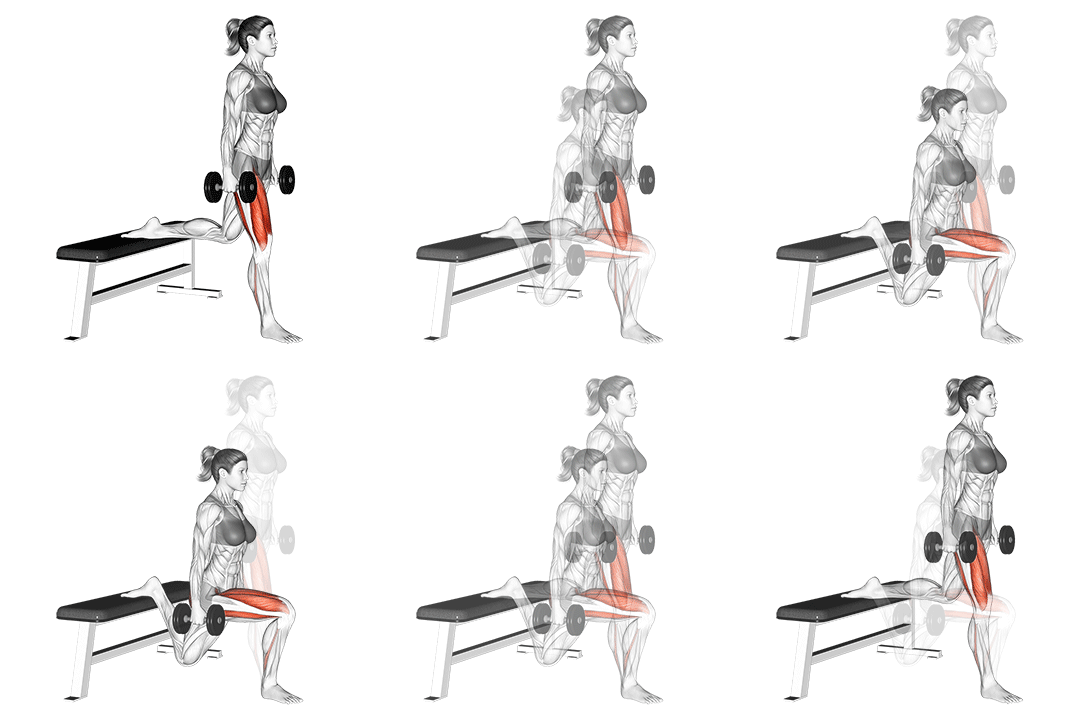
The Dumbbell Bulgarian Split Squat performs Bulgarian split squats. The unilateral deep stretch pattern produces strong VMO loading.
For VMO development, Bulgarian split squats produce strong unilateral VMO loading through deep range of motion. Run it for 3 sets of 8 to 12 reps per leg as unilateral VMO work.
Stand 2 to 3 feet in front of a bench. Place the top of the rear foot on the bench behind. Hold dumbbells in each hand at the sides. Squat down by bending the front knee deeply (the deep front knee flexion activates VMO substantially). Lower until the front thigh is below parallel. Drive back up through the front heel. The pattern produces strong unilateral VMO loading through deep knee flexion – the working leg gets full loading and the deep range hits VMO effectively. Switch legs between sets.
Sled 45 Leg Press
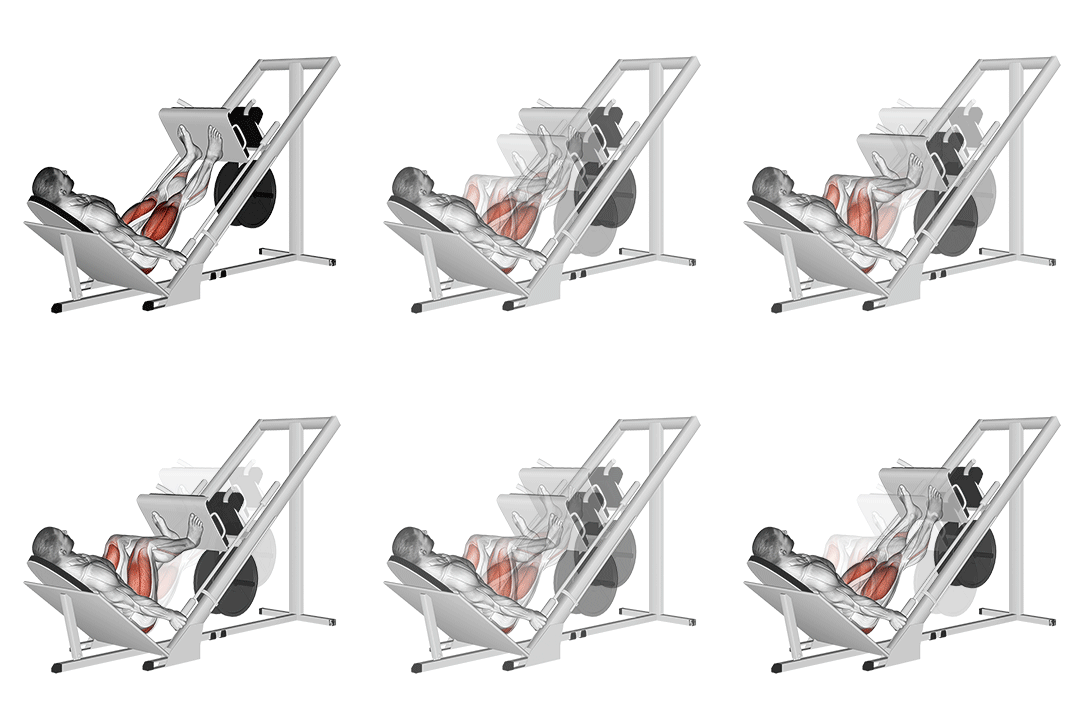
The Sled 45 Leg Press performs leg press on a 45-degree sled machine. The pattern allows extreme heavy loading for VMO mass.
For VMO development, the 45-degree leg press allows extremely heavy quad-focused loading including VMO. Run it for 3 to 4 sets of 10 to 15 reps as heavy compound VMO/quad work.
Set up on a 45-degree sled leg press machine. Sit on the seat with the back firmly against the pad. Place the feet on the platform shoulder-width with knees bent. Press the platform up by extending the knees and hips fully (full extension at top maximizes VMO activation). Lower the platform under control until the knees bend deeply (deep knee flexion + full extension = maximum VMO range). The pattern allows for extreme heavy compound quad work and produces substantial VMO loading through the heavy progressive overload it allows.
Dumbbell Step Up

The Dumbbell Step Up performs step-ups onto a bench with dumbbells. The unilateral pattern produces VMO work through knee extension.
For VMO development, step-ups produce unilateral VMO loading through the step extension. Run it for 3 sets of 10 to 12 reps per leg as unilateral VMO work.
Stand in front of a sturdy bench or platform (knee height or higher) holding dumbbells in each hand at the sides. Place one foot fully on the platform. Drive through the heel of the platform foot to step up. The quad and VMO of the working leg work through knee extension. Squeeze the quad and VMO at the top with the body fully tall (full extension activates VMO). Step back down to the floor under control. The pattern produces unilateral VMO loading and the height of the platform affects loading (higher = more VMO work).
Dumbbell Walking Lunge

The Dumbbell Walking Lunge performs walking lunges. The dynamic unilateral pattern produces VMO work.
For VMO development, walking lunges produce unilateral VMO loading through the dynamic stepping pattern. Run it for 3 sets of 16 to 20 total steps as compound dynamic VMO work.
Stand with feet hip-width holding dumbbells in each hand at the sides. Step forward with one leg into a deep lunge position, lowering the back knee toward the floor (deep front knee flexion activates VMO). Drive through the front heel to stand up while bringing the rear leg forward into the next lunge step. Continue alternating. The dynamic motion produces unilateral VMO loading. The pattern produces strong VMO and quad work alongside compound leg development.
Barbell Zercher Squat

The Barbell Zercher Squat performs squats with the barbell in the elbow crooks. The unique position produces compound quad/VMO work.
For VMO development, the Zercher squat produces unique compound quad and VMO loading. Run it for 3 sets of 6 to 10 reps as variation VMO work.
Position a barbell at upper thigh or rack height. Bend the elbows and place the barbell in the crooks of the elbows. Stand up holding the bar with the arms wrapped around the bar. Step back from the rack. Squat down by bending the knees and hips deeply while keeping the chest up. The Zercher loading position emphasizes upright torso (similar to front squat) which produces strong quad and VMO loading. Drive back up through the heels. The pattern produces unique VMO loading and is excellent for breaking through quad/VMO plateaus.
Dumbbell Goblet Squat
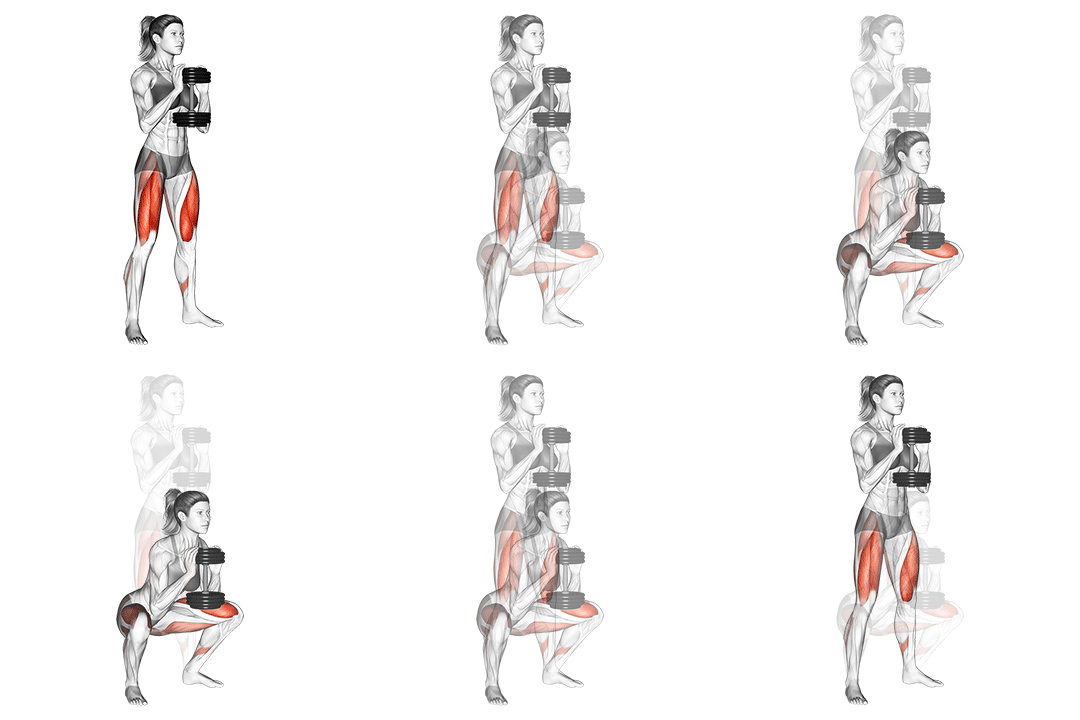
The Dumbbell Goblet Squat performs squats holding a dumbbell at the chest. The pattern produces compound VMO work with upright torso emphasis.
For VMO development, the goblet squat produces accessible compound VMO work. Run it for 3 sets of 10 to 15 reps as accessible VMO/quad work.
Stand with feet slightly wider than shoulder-width. Hold a dumbbell vertically at the chest with both hands. Squat down by bending the knees and hips while keeping the back flat and chest up. Lower until the thighs are below parallel (deep range activates VMO). The dumbbell at the chest forces upright torso and emphasizes quad/VMO loading. Drive back up through the heels. The pattern produces strong compound VMO work and is excellent for higher-rep volume work.
Lever Hack Squat

The Lever Hack Squat performs hack squats on a lever machine. The angled position produces compound quad/VMO emphasis.
For VMO development, the hack squat is one of the most quad-emphasized compound exercises with strong VMO loading. Run it for 3 to 4 sets of 8 to 12 reps as compound VMO work.
Set up on a lever hack squat machine. Position the back against the angled pad with feet on the platform shoulder-width. Place the shoulders under the support pads. Unrack the machine. Squat down by bending the knees deeply (deep range activates VMO). Lower until the thighs are below parallel. Drive back up through the heels with full knee extension at the top. The angled body position forces strong quad emphasis with substantial VMO loading. The pattern produces excellent VMO mass with reduced lower-back stress.
How To Program These Workouts
A productive VMO-focused session pulls 5 to 7 exercises from the list above. A common balanced session: lever leg extension (terminal extension), barbell front squat (compound VMO emphasis), dumbbell Bulgarian split squat (unilateral), sled 45 leg press (heavy compound), dumbbell step up (unilateral). For mass focus: sled 45 leg press, lever hack squat, lever leg extension, barbell front squat. For unilateral/variation focus: dumbbell Bulgarian split squat, dumbbell step up, dumbbell walking lunge, barbell Zercher squat. Run heavy compound work for 3 to 4 sets of 5 to 12 reps, leg extension isolation for 4 sets of 12 to 15 reps with terminal extension focus, unilateral work for 3 sets of 8 to 12 reps per leg. Total session covers 18 to 22 working sets focused on VMO/quad development.
Train VMO 1 to 2 times per week as part of complete quad programming. Most successful programs structure VMO work alongside overall quad training. The optimal pattern: include both compound leg work (squats, leg press, hack squat) using full range of motion AND dedicated leg extension isolation focused on terminal extension. The full range of motion in compound work is critical – quarter squats produce minimal VMO activation, while squats below parallel substantially increase VMO loading. Most VMO development concerns are actually quad volume concerns – if total quad volume is appropriate (18 to 22+ sets per week) with full range of motion, VMO will develop alongside the rest of the quads.
For broader leg programming, see our best quad workouts and how to grow your quads. For specific work, see our best inner quad exercises.
Final Thoughts
The best VMO exercises deliver real teardrop muscle development through training that targets the specific VMO functions: terminal knee extension activation through leg extensions, deep range of motion in compound work, unilateral patterns for balanced development, and adequate quad volume overall. The combination of leg extensions, front squats, back squats, Bulgarian split squats, leg press, hack squats, walking lunges, step-ups, Zercher squats, and goblet squats covers every functional pattern of the VMO and produces broader quad development than any single exercise approach. Many lifters discover better knee tracking, reduced patellar pain, the visible teardrop shape, and improved squat performance within 12 to 16 weeks of adding consistent VMO-focused work. For lifters dealing with knee tracking issues, undeveloped VMO appearance, or wanting to address quad imbalances, dedicated VMO training is one of the most effective interventions available.
Stay focused on full range of motion and terminal knee extension. The most common mistake lifters make in VMO training is using partial range of motion on compound work (quarter squats) and skipping the terminal extension on leg extensions. The fix: complete every squat rep with thighs reaching at least parallel (or below) for substantial VMO activation, and complete every leg extension rep to full knee extension with focused VMO contraction. Combined with adequate volume and frequency, proper full-range work produces the VMO development that partial range training never delivers.
Frequently Asked Questions
What’s the best exercise for VMO?
Leg extensions with terminal extension focus and deep compound squats are most effective. Leg extensions produce direct VMO activation through pure knee extension – the terminal extension phase (last 15 to 20 degrees) is where VMO activation peaks. Combined with deep squats (below parallel), Bulgarian split squats, leg press, and hack squats with full range of motion, these form the foundation of complete VMO development. Most successful VMO programs include both isolation and compound work.
Are leg extensions necessary for VMO?
Yes – the most direct VMO exercise. The terminal knee extension portion of the leg extension produces the strongest VMO activation of any exercise. Many lifters who struggle with VMO development have been avoiding leg extensions out of misplaced concerns about knee health (modern research has thoroughly debunked this concern for healthy individuals). Most successful VMO programs include leg extensions as primary isolation work, typically 12 to 15 reps for 3 to 4 sets with focus on full extension and brief pause at peak contraction.
How can I get the teardrop quad shape?
Combine direct VMO work with deep compound quad training and adequate volume. Leg extensions produce direct VMO loading. Deep squats (below parallel) substantially increase VMO activation compared to partial squats. Bulgarian split squats produce unilateral VMO work. Leg press and hack squats provide heavy compound loading. Combined with adequate total quad volume (18 to 22+ sets per week), full range of motion, and progressive overload over time, this approach produces the visible teardrop shape over 16 to 20+ weeks of consistent training.
Will VMO training help with knee pain?
Often yes for tracking-related knee pain. Many knee pain issues stem from imbalanced quad development – particularly weak VMO relative to other quad muscles, which causes poor patellar tracking. Dedicated VMO training (leg extensions, deep squats, terminal extension work) often resolves these tracking issues within 8 to 12 weeks of consistent work. However, structural knee issues (cartilage damage, ligament tears) require medical evaluation – persistent severe knee pain warrants professional assessment rather than self-treatment with exercise alone.
Is VMO a separate muscle?
Not exactly – VMO is the medial (inner) portion of the vastus medialis (one of the four quad muscles). VMO refers specifically to the oblique fibers of the vastus medialis that have a more horizontal orientation and stronger terminal knee extension function. Training the VMO is essentially training the medial portion of the quads with emphasis on terminal extension and deep range of motion. The exercises that develop VMO are largely the same exercises that develop the broader quads – the difference is technique emphasis (terminal extension, deep range) rather than entirely separate exercises.