Bodyweight oblique training produces real oblique development and lateral core strength through patterns that load the obliques effectively without equipment: side plank variations for sustained stability, dynamic rotational work for explosive oblique power, lateral flexion exercises for direct oblique isolation, and combined movements that integrate obliques with full-body patterns. The format works particularly well for obliques because the muscles function in three primary ways (lateral flexion, rotation, anti-rotation stability), and bodyweight progressions deliver loading patterns for all three functions accessible anywhere with no equipment. Most lifters who consistently train bodyweight oblique work 1 to 2 times per week alongside core training see measurable improvements in lateral core strength, rotational power, midsection definition (when combined with proper nutrition), and athletic stability within 6 to 10 weeks. Strong obliques support every athletic movement that involves rotation (throwing, swinging, twisting, kicking) and contribute substantially to core stability under load.
Below are ten effective bodyweight oblique exercises that cover sustained stability (side plank), dynamic rotation (bicycle twisting crunch, Russian twist, wood chop squat), direct lateral flexion (side crunch, standing side bend), combined plank-and-crunch patterns (side plank leg lift, side plank oblique crunch, elbow to knee side plank crunch, side plank hip adduction). Together they form a complete bodyweight oblique program that hits every functional pattern of the oblique muscles. A 20 to 30-minute session pulled from this list, performed 1 to 2 times per week, produces strong oblique development that complements rectus abdominis (six-pack) work.
Side Plank
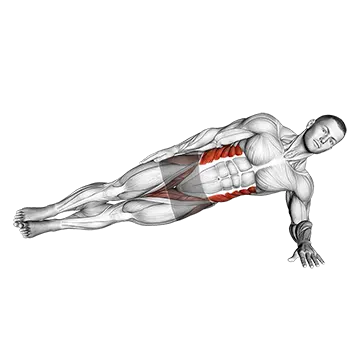
The Side Plank holds the body in a side-lying position supported on the forearm with the hips lifted and body in a straight line. The pattern produces direct oblique and lateral hip stability loading through sustained isometric contraction.
For bodyweight oblique training, the side plank is the foundational oblique exercise. The pattern hits the obliques and gluteus medius through sustained isometric loading. Run it for 3 sets of 30 to 60-second holds per side as primary oblique stability work.
Lie on one side with the forearm planted on the floor under the shoulder. Stack the feet (or stagger them for easier balance). Lift the hips up to form a straight line from head to heels. Hold the position while engaging the obliques and gluteus medius. Switch sides between sets. Maintain straight body position throughout. Build duration progressively from 20 seconds up to 60+ seconds.
Bicycle Twisting Crunch

The Bicycle Twisting Crunch performs alternating twisting crunches that bring the opposite elbow toward the opposite knee. The pattern produces strong rotational oblique loading combined with rectus abdominis work.
For bodyweight oblique training, the bicycle crunch is one of the most effective dynamic oblique exercises that exists. The pattern hits the obliques through alternating rotation. Run it for 3 sets of 15 to 20 reps per side as primary dynamic oblique work.
Lie flat on the back with hands behind the head and legs extended. Lift the head and shoulders slightly off the floor. Bring one knee up toward the chest while simultaneously rotating the torso to bring the opposite elbow toward that knee. As the elbow approaches the knee, switch sides by extending that leg and bringing the other knee up while rotating in the opposite direction. Continue alternating in a smooth bicycle motion.
Russian Twist

The Russian Twist performs seated rotational twists with the legs raised and torso leaned back. The pattern produces strong oblique rotational loading through the leaned-back position and dynamic rotation.
For bodyweight oblique training, the Russian twist produces strong oblique rotational work. The pattern hits the obliques through pure rotational motion in a challenging position. Run it for 3 sets of 15 to 20 reps per side as oblique rotational work.
Sit on the floor with knees bent and feet either flat on the floor (easier) or lifted off the floor (harder). Lean the torso back to about 45 degrees. Clasp the hands together in front of the chest or hold a light object. Rotate the torso to one side, bringing the hands toward the floor next to the hip. Rotate to the other side. Continue alternating rotations. The leaned-back position keeps continuous oblique tension throughout.
Side Crunch

The Side Crunch performs lateral crunching motion while lying on one side. The pattern produces direct oblique loading through pure lateral flexion of the spine.
For bodyweight oblique training, the side crunch produces direct oblique isolation through pure lateral flexion. The pattern hits the obliques through their primary function. Run it for 3 sets of 15 to 20 reps per side as oblique isolation work.
Lie on one side with the lower arm extended forward on the floor for support and the upper hand behind the head. Bend the knees with feet stacked. Crunch up by laterally flexing the spine, lifting the upper torso off the floor. Squeeze the obliques hard at the top. Lower under control. Switch sides between sets. The pure lateral flexion produces strong oblique isolation.
Side Plank Leg Lift

The Side Plank Leg Lift combines a side plank hold with alternating top-leg lifts. The pattern produces combined oblique stability and gluteus medius loading.
For bodyweight oblique training, the side plank leg lift produces combined oblique and lateral hip work. The pattern hits the obliques (sustained isometric) plus the gluteus medius (dynamic abduction). Run it for 3 sets of 8 to 12 reps per side as combined lateral chain work.
Set up in a side plank position with the forearm on the floor under the shoulder, hips lifted, body in a straight line. Lift the top leg up by abducting the hip while maintaining the side plank position. Lower the leg under control while keeping hips lifted. Continue lifting and lowering. Switch sides between sets. The combined oblique hold and leg abduction produces strong lateral chain work.
Side Plank Oblique Crunch

The Side Plank Oblique Crunch combines a side plank hold with crunching motion that brings the elbow and knee together on the same side. The pattern produces strong oblique loading combined with lateral stability.
For bodyweight oblique training, the side plank oblique crunch is one of the most effective oblique exercises that exists. The pattern combines oblique hold with dynamic oblique flexion. Run it for 3 sets of 8 to 12 reps per side as advanced oblique work.
Set up in a side plank position with the forearm on the floor and hips lifted. The top hand goes behind the head with elbow pointing up. From this position, crunch the top elbow and the top knee toward each other by laterally flexing while lifting the leg. Return to the side plank position and immediately repeat. Switch sides between sets. The combined hold and crunch produces strong oblique loading.
Standing Side Bend

The Standing Side Bend performs lateral flexion of the torso from a standing position. The pattern produces direct oblique loading through pure lateral flexion accessible anywhere.
For bodyweight oblique training, the standing side bend produces direct oblique loading through pure lateral spine flexion. The pattern is accessible anywhere with no floor space needed. Run it for 3 sets of 15 to 20 reps per side as accessible oblique work.
Stand with feet hip-width and one hand on the same-side hip. Place the other hand behind the head with the elbow pointing out to the side. Bend the torso to the side of the elevated arm by laterally flexing the spine. Reach the elevated elbow toward the floor on that side. Return to standing upright. Switch sides between sets. The pure lateral flexion produces strong oblique work.
Elbow to Knee Side Plank Crunch

The Elbow to Knee Side Plank Crunch performs side plank holds with elbow-to-knee crunching motion on the bottom side. The pattern produces strong combined oblique stability and dynamic flexion loading.
For bodyweight oblique training, the elbow to knee side plank crunch produces strong combined oblique work. The pattern combines side plank stability with dynamic oblique crunching. Run it for 3 sets of 8 to 12 reps per side as advanced oblique work.
Set up in a side plank position with the bottom forearm on the floor and hips lifted. From this position, drive the top knee up toward the bottom elbow by simultaneously flexing the hip and laterally flexing the torso. The bottom elbow can drive forward to meet the knee. Return to side plank and immediately repeat. Switch sides between sets. The combined motion produces strong oblique loading.
Side Plank Hip Adduction
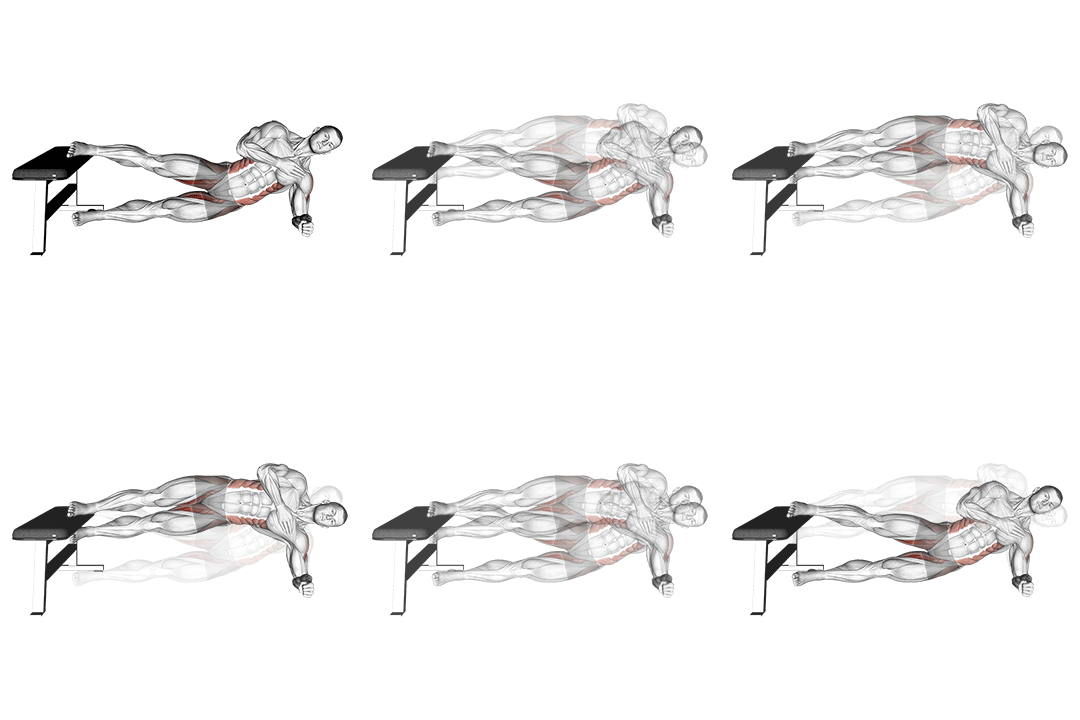
The Side Plank Hip Adduction performs side plank holds with the bottom leg lifting up to meet the top leg. The pattern produces strong combined oblique and adductor loading.
For bodyweight oblique training, the side plank hip adduction produces combined oblique and adductor work. The pattern hits the obliques through hold plus the adductors through bottom-leg lifts. Run it for 3 sets of 8 to 12 reps per side as combined oblique and adductor work.
Set up in a side plank position with the bottom forearm on the floor and hips lifted. Place the top foot on a sturdy elevated surface (a low bench or block) so the body is supported by the bottom forearm and the elevated top foot. Lift the bottom leg up to meet the top leg by adducting the hip. Lower under control. Switch sides between sets. The combined motion produces strong lateral chain work.
Bodyweight Wood Chop Squat

The Bodyweight Wood Chop Squat combines a squat with a diagonal chopping motion of the arms across the body. The pattern produces strong combined squat strength and rotational core loading.
For bodyweight oblique training, the wood chop squat produces combined rotational power and squat work. The pattern hits the obliques and rectus abdominis through dynamic rotation combined with leg strength. Run it for 3 sets of 10 to 12 reps per side as combined oblique and lower body work.
Stand with feet shoulder-width and clasp the hands together in front of the body. Squat down while bringing the clasped hands down diagonally across the body to the outside of one knee. Drive back to standing while bringing the hands back up across the body diagonally to the opposite shoulder area. Switch sides between sets or alternate per rep. The combined squat and rotation produces strong oblique loading.
How To Program These Workouts
A productive bodyweight oblique session pulls 5 to 6 exercises from the list above based on training goals. A common balanced session: side plank (3 sets x 30 to 60 sec per side), bicycle twisting crunch (3 sets x 15 to 20 per side), Russian twist (3 sets x 15 to 20 per side), side crunch (3 sets x 15 to 20 per side), standing side bend (3 sets x 15 to 20 per side). For advanced focus: side plank oblique crunch, elbow to knee side plank crunch, side plank hip adduction, side plank leg lift, wood chop squat. Run isometric work for 30 to 60-second holds per side, dynamic rotation work for 15 to 20 reps per side, lateral flexion work for 15 to 20 reps per side, and combined patterns for 8 to 12 reps per side. Total session covers 14 to 20 working sets focused on oblique development.
Train bodyweight oblique work 1 to 2 times per week as part of broader core programming. The obliques recover reasonably quickly but accumulate fatigue from compound lifting work (squats, deadlifts) that already activates them substantially. Most successful programs include oblique work either: 1) at the end of a core or ab training session, 2) as part of a dedicated full-core day, or 3) twice per week with one stability-focused session and one rotational-power session. Keep training time under 25 to 30 minutes per session. Always include both isometric (side plank) and dynamic (rotation) work for balanced oblique development.
For broader core programming, see our best ab workouts for men and best core workouts. For specific oblique work, see our best side ab workouts.
Final Thoughts
The best bodyweight oblique workouts deliver real oblique development and lateral core strength through patterns that load the obliques effectively in all three primary functions: lateral flexion, rotation, and anti-rotation stability. The combination of side plank variations, dynamic rotation, direct lateral flexion, and combined patterns covers every functional pattern of the oblique muscles and produces broader development than ignored obliques that compound work alone leaves. For lifters who want measurable lateral core strength and oblique definition, want to improve rotational power for sport performance, want to build core stability that supports compound lifting, or want to add direct oblique work to a balanced training program, dedicated bodyweight oblique training is one of the most effective options available.
Stay focused on quality over speed and balanced lateral development. The most common bodyweight oblique training mistakes include rushing through rotational exercises with poor form (which reduces oblique loading and compromises spine safety) and neglecting one side over the other (which creates lateral imbalances). The fix: control every rotational movement with intentional oblique contraction (avoid swinging or jerking), and always perform equal volume on both sides for every oblique exercise. Quality controlled reps with balanced lateral development produce stronger oblique results than rushed or asymmetric training.
Frequently Asked Questions
Are bodyweight oblique exercises effective?
Yes very effectively. The bodyweight oblique exercises in this list produce real oblique development through sustained stability work (side planks), dynamic rotation (bicycle crunches, Russian twists), direct lateral flexion (side crunches), and combined patterns. Most successful core programs include bodyweight oblique work alongside compound lifting that activates obliques as stabilizers. Bodyweight oblique work alone produces strong development for lifters with limited equipment access.
How often should I train obliques?
One to two sessions per week works for most lifters. The obliques recover reasonably quickly but accumulate fatigue from compound lifting (squats, deadlifts) that already activates them substantially. Most successful programs include direct oblique work either at the end of core training sessions, on dedicated core days, or twice per week with one stability session and one rotational power session. Daily oblique training typically produces overuse issues rather than accelerated progress.
Will side bends make my waist wider?
Generally no, especially with bodyweight side bends. The myth that side bends create a wide waist comes from heavy weighted side bends that may produce some oblique hypertrophy. Bodyweight side bends produce minimal hypertrophy compared to the strength and stability benefits, and they will not make your waist visibly wider. Most successful core programs include side bends as part of balanced oblique training. The visual width of the waist is more determined by body fat levels than oblique muscle size.
What’s the best bodyweight oblique exercise?
The side plank is arguably the most foundational and effective. It hits the obliques through sustained isometric loading that builds both strength and lateral stability while also engaging the gluteus medius. Most successful programs include side planks as primary oblique work. Other strong choices include side plank variations (with leg lift, oblique crunch, hip adduction) and dynamic rotations (bicycle crunches, Russian twists). Most successful oblique programs include both isometric and dynamic work for complete development.
Do obliques affect athletic performance?
Yes substantially. Strong obliques support nearly every athletic movement that involves rotation (throwing, swinging, twisting, kicking) and contribute to core stability under load (squatting, deadlifting, sprinting, jumping). Weak obliques limit rotational power output and can contribute to lower-back compensation issues. Most successful athletes include direct oblique training as part of overall programming. The exercises in this list produce real athletic-quality oblique strength when trained consistently with progressive difficulty.