Tight hips limit nearly every lift in the gym. Squat depth, deadlift positioning, lunge quality, and even running form all depend on adequate hip mobility, and most adults have lost meaningful hip range from years of sitting. The best hip mobility stretches restore the flexion, extension, and rotation the hips need for athletic and daily movement.
Below are ten effective hip mobility drills covering every plane of motion: deep squat holds for hip flexion, hip flexor stretches for hip extension, pigeon variations for external rotation, and dynamic circles for combined motion. Together they form a complete hip mobility routine that takes 10 to 15 minutes per day.
Squat Mobility Twist

The Squat Mobility Twist sits in a deep squat and rotates the torso side to side, often pushing one elbow against the inside of the same-side knee for a deeper stretch. It opens the hips, the inner thighs, and the thoracic spine in one combined movement.
Few mobility drills cover as much territory as the squat-with-twist. The deep squat position alone challenges hip flexion and ankle mobility; adding the rotation engages the obliques and thoracic spine. For lifters with desk-job tightness in any of these areas, this single drill produces measurable improvements within a few weeks of daily practice.
Sink into a deep squat with feet shoulder-width and toes slightly turned out. Place the elbows inside the knees and rotate the torso, reaching one arm up to the sky. Switch sides. Hold each position for a few breaths before rotating; do not rush.
Pigeon Hip Stretch
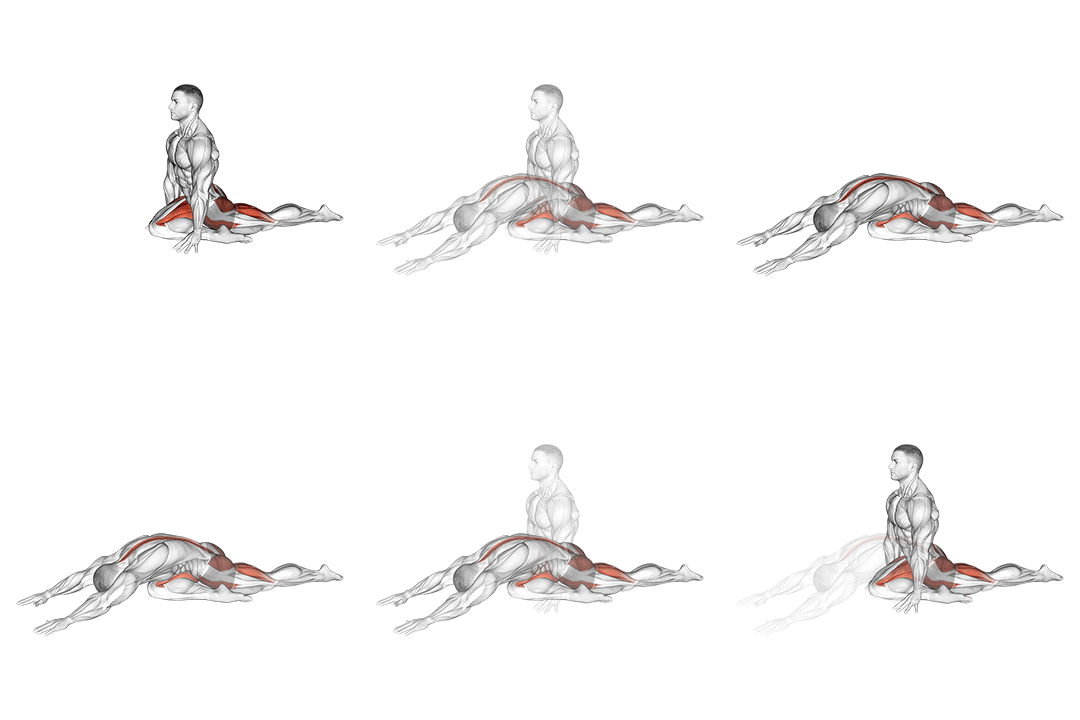
The Pigeon Hip Stretch (a yoga staple) is one of the most effective hip-opening stretches in any program. From a kneeling position, the front leg folds across the body while the back leg extends straight behind. The position deeply stretches the glute medius and external rotators of the front hip.
Most lifters carry tightness in the glute medius and the deep external rotators of the hip from sitting and from squat-heavy training. The pigeon stretch is the most direct way to release that tightness. Held for 60 to 90 seconds per side, it produces an immediate sense of relief in tight hips.
Slide one foot forward and let the same-side knee fold across the body. The other leg extends straight behind. Sink the front hip down toward the floor. Hold for 60 to 90 seconds per side, breathing slowly throughout. Use a yoga block or folded towel under the front hip for support if mobility is limited.
Full Squat Mobility

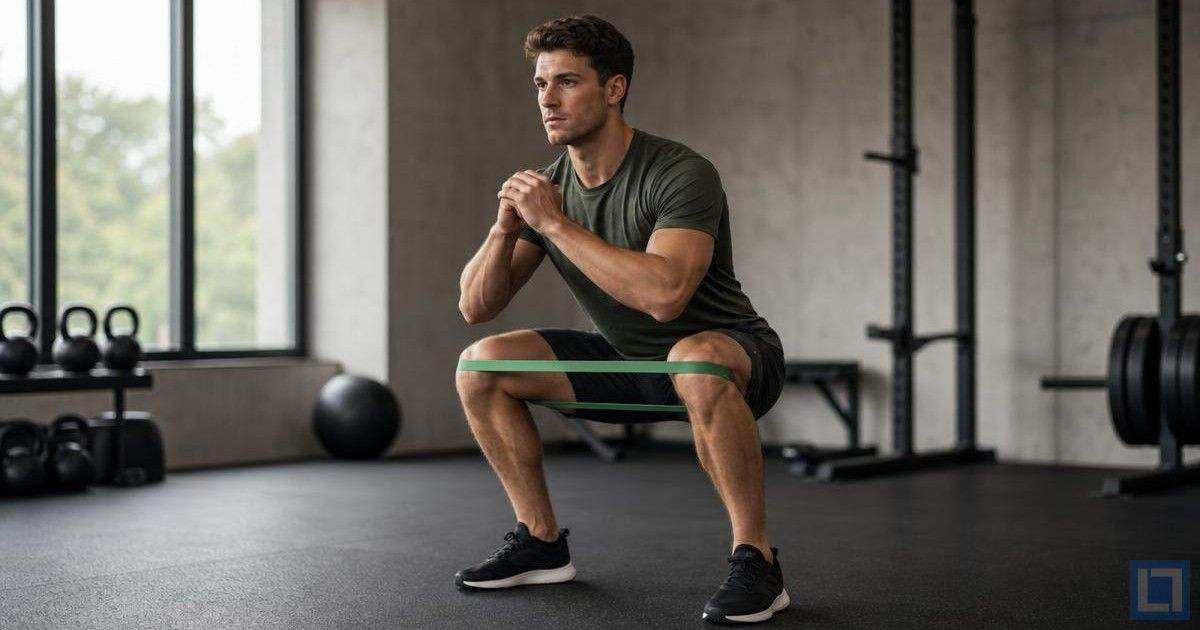
The Full Squat Mobility drill sits in the deepest possible squat position and holds it, sometimes rocking gently back and forth or shifting weight side to side to deepen the stretch. The deep squat position challenges every joint in the lower body to its end-range mobility.
The deep squat is a posture that humans hold naturally in childhood but lose access to over decades of sitting in chairs. Spending time in the deep squat (5 to 10 minutes per day, broken into smaller chunks) restores hip, knee, and ankle mobility that translates directly to better squat form, deadlift positioning, and overall lower-body movement quality.
Sink into the deepest squat your mobility allows. Heels stay flat on the floor; if they lift, hold a doorframe or sturdy post for support and shift weight back. Hold for 30 to 60 seconds. Build up to longer holds and unsupported deep squats over weeks of consistent practice.
Standing Hip Circle

The Standing Hip Circle stands on one leg and rotates the other leg in large circular motions at the hip joint, both forward and backward. The dynamic motion lubricates the hip joint and warms up every muscle attached to it.
Standing hip circles work as an excellent pre-workout warm-up because the dynamic motion takes the hip through its full range without holding any one position. Two to three minutes of hip circles before squat-heavy or sprint-heavy training noticeably improves movement quality during the actual session.
Stand on one leg with the other lifted slightly off the floor. Rotate the lifted leg in large circles at the hip joint, going both directions. Switch legs. Hold a wall or sturdy surface for balance if needed. The motion should feel smooth, not jerky.
Hip Circles Stretch

The Hip Circles Stretch performs gentle circular motions in the hips while standing or kneeling, often with hands on the hips for stability. The slow rotation warms up every muscle and ligament around the hip joint and improves rotational range of motion.
Where the standing hip circle uses one leg, this version moves the entire pelvis in a circular motion. It is one of the gentlest mobility drills available and works well as a daily mobility practice or as part of a broader warm-up before training.
Stand with feet hip-width and hands on the hips. Rotate the hips in slow, controlled circles, going both directions. Move only at the hips; the upper body stays still and tall. Continue for 30 to 60 seconds per direction.
Hip Swirls

Hip Swirls perform large, sweeping circular motions of the entire torso and hips, often standing with the feet planted. The expansive motion mobilizes the entire hip-trunk complex through every plane of motion in one drill.
Hip swirls fall into the category of “comprehensive warm-ups” — a single movement that touches mobility in multiple joints and planes. They work well at the start of a session before more specific mobility drills, especially for lifters whose entire midsection feels stiff before training.
Stand with feet shoulder-width and slightly bent knees. Move the hips in large circles, sweeping through forward, side, back, and side again. Both directions for 30 to 60 seconds each. Move smoothly without forcing any one range.
Kneeling Hip Flexor

The Kneeling Hip Flexor Stretch kneels on one knee with the other foot planted in front, then shifts the hips forward to stretch the hip flexor of the kneeling leg. It is the most direct stretch for the hip flexors that exist.
Hip flexor tightness is one of the most common limiters on athletic performance and squat depth. Sitting at a desk for years shortens the hip flexors and leaves the glutes inhibited, which produces a posture that limits both running and lifting. The kneeling hip flexor stretch directly addresses this. Done daily for 60 seconds per side, it produces measurable improvements within weeks.
Kneel on one knee with the other foot planted in front, knee bent at 90 degrees. Squeeze the glute of the kneeling leg and shift the hips forward gently. The stretch should be felt in the front of the kneeling-leg hip. Hold for 60 to 90 seconds per side.
Squat Mobility Complex
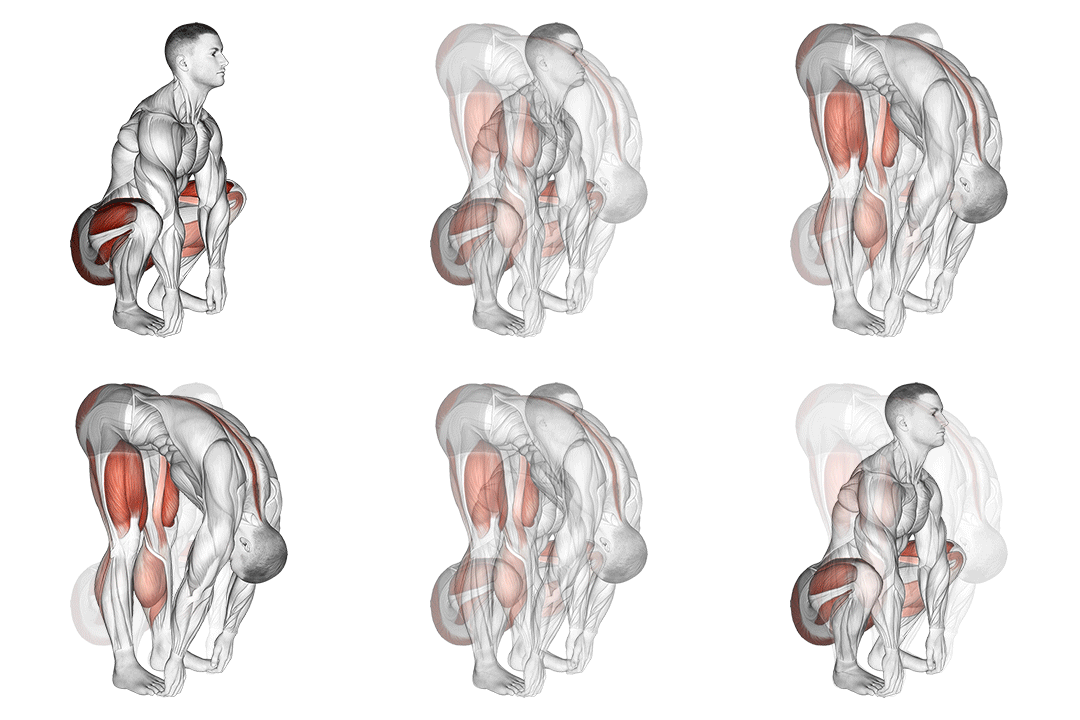
The Squat Mobility Complex strings together multiple hip mobility movements in a flowing sequence: deep squat hold, hip rotations from the squat position, side-to-side rocking, and standing-up transitions. The combined sequence trains hip mobility across multiple ranges of motion in one efficient drill.
Mobility complexes deliver more total stimulus than isolated stretches because they hit multiple end-ranges in connected motion. The squat mobility complex specifically covers hip flexion, internal and external rotation, and the transition from deep squat to standing. It is one of the highest-value pre-workout drills for lifters who squat or deadlift heavy.
Sink into a deep squat. Hold for several breaths. Rock side to side, then rotate the hips by lifting one heel at a time. Stand up using only leg drive (no hands) and immediately sink back into the squat. Repeat for 60 to 90 seconds.
Lying Hip Flexor
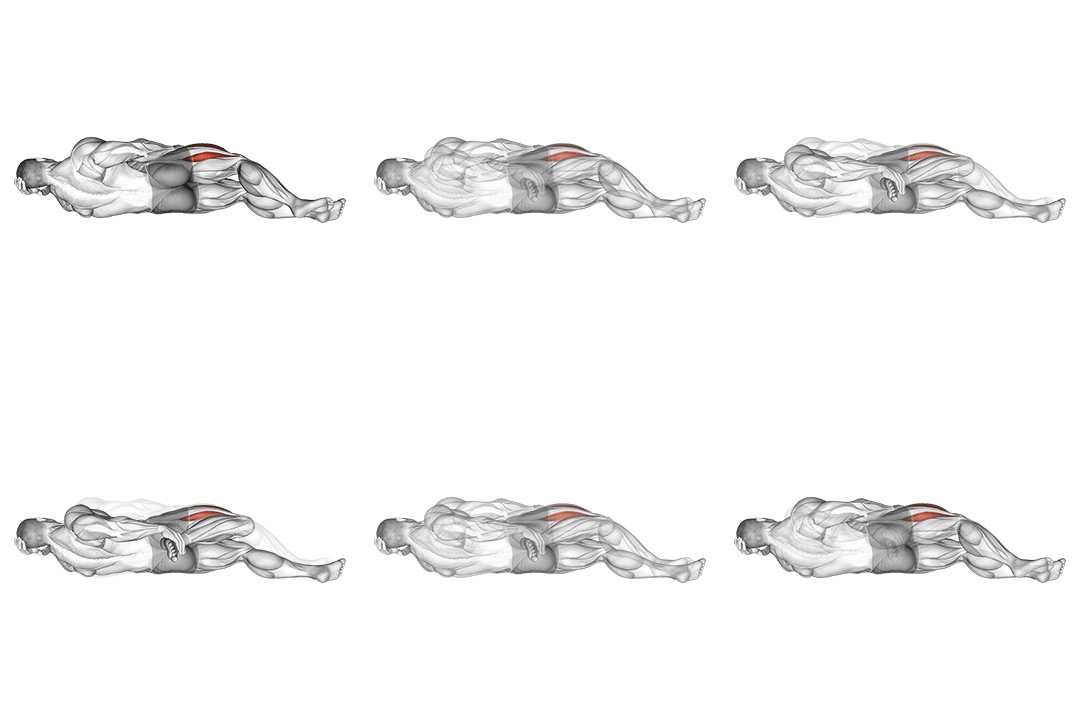
The Lying Hip Flexor Stretch lies on the back near the edge of a bench with one leg pulled to the chest and the other hanging off the edge. Gravity pulls the hanging leg down, which directly stretches the hip flexor of that leg.
For lifters who find the kneeling hip flexor stretch uncomfortable on the knee, the lying version is a gentler alternative that produces a similar (or sometimes deeper) stretch. The key advantage is that the body stays relaxed throughout, which lets the hip flexor release more thoroughly than active stretches sometimes allow.
Lie on a bench or sturdy surface near the edge. Pull one knee tightly to the chest with both arms. Let the other leg hang off the edge of the bench, fully relaxed. Hold for 60 to 90 seconds, then switch sides. The stretch should be felt in the front of the hip of the hanging leg.
Hip Extension Stretch

The Hip Extension Stretch lengthens the front of the hip in a standing or supported position, with the back leg extended behind and the front leg planted. It restores hip extension range that years of sitting tend to take away.
Hip extension is one of the most commonly lost ranges of motion in modern adults, and it is also one of the most important for athletic performance. Sprinting, jumping, and even normal walking all require full hip extension to function well. This stretch directly addresses the limitation, and combined with the kneeling hip flexor stretch, it covers the most important hip mobility most lifters lack.
Step one foot far behind the body and let the rear hip drift forward as the front knee bends slightly. Squeeze the glute of the back leg to deepen the stretch. Hold for 30 to 60 seconds per side. The stretch should be felt in the front of the rear-leg hip.
How To Program These Workouts
A productive hip mobility session combines static and dynamic work. Static stretches (pigeon, kneeling hip flexor, lying hip flexor, hip extension) work better held for 60 to 90 seconds per side. Dynamic drills (hip circles, hip swirls, squat mobility complex) work better as 30 to 60-second flows that take each joint through its full range repeatedly.
Daily mobility work produces faster results than infrequent long sessions. Five to ten minutes per day of focused hip work, six days per week, will produce noticeable changes within four to six weeks. Schedule the static work after training when the muscles are warm; the dynamic work fits well as a pre-training warm-up.
For broader mobility programming, see our best dumbbell leg workouts (which depend on good hip mobility). For the muscle archive, browse our hips exercise collection.
Final Thoughts
Hip mobility is one of the highest-leverage things a lifter can train. Every squat, deadlift, lunge, and athletic movement depends on the hips moving freely through their full range. Lifters with good hip mobility lift cleaner, recover faster, and have less chronic stiffness than lifters who skip mobility work entirely.
Build the habit. Five to ten minutes per day, every day, beats one hour-long session per week for hip mobility specifically. The body adapts to consistent, frequent stimulus better than to occasional heavy doses. Most of the drills above work without any equipment and can be done at home, in the gym, or even in an office during breaks.
Frequently Asked Questions
How long until tight hips loosen up?
Most lifters notice meaningful improvement within 4 to 6 weeks of daily mobility work. Significant changes (deeper squat depth, better lunge position, less hip discomfort) typically take 8 to 12 weeks. The pace depends on starting mobility level: lifters with severe restrictions take longer than those with moderate tightness.
How often should I do hip mobility work?
Daily for best results. The hips respond well to frequent, brief sessions: 5 to 10 minutes per day produces faster change than a single long weekly session. Scheduling mobility immediately before squat or deadlift training and during long sitting breaks delivers most of the benefit with minimal time investment.
Should I stretch before or after workouts?
Both have a place. Dynamic mobility (hip circles, hip swirls, squat mobility complex) works well as a pre-training warm-up because it warms the joints without temporarily reducing strength. Static stretches (pigeon, kneeling hip flexor) work better after training when the muscles are warm and ready to lengthen, or on rest days as a standalone mobility session.
Can hip mobility help with lower back pain?
Yes, in many cases. Lower back pain is often the result of tight hips forcing the lower back to compensate during squatting, hinging, or even sitting. Restoring hip mobility (especially extension) lets the hips do their job and takes load off the lower back. Many lifters find that consistent hip mobility work eliminates chronic lower back tightness within a few weeks.
Do I need a foam roller or other equipment?
No. All ten drills above work with no equipment. A foam roller, lacrosse ball, or yoga block can deepen some stretches (particularly the pigeon and lying hip flexor), but the foundational mobility work happens with just bodyweight and floor space. Add equipment later if specific spots remain stubborn after weeks of consistent floor work.