Standing Side Bend

Description
The standing side bend is a lateral spinal flexion stretch where you stand tall and lean to one side, stretching the obliques, intercostals, lats, and quadratus lumborum on the opposite side. It improves lateral flexibility, relieves tension from sitting, and opens the rib cage for better breathing.
Equipment Required
Standing Side Bend Instructions
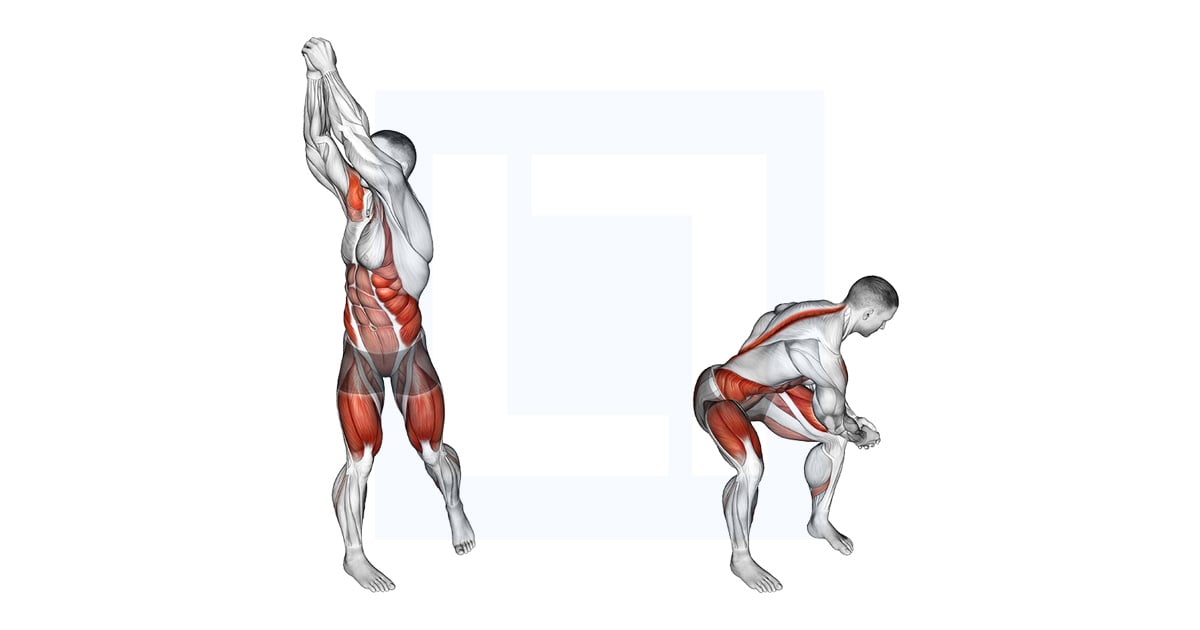
- Stand tall with feet hip-width apart. Reach both arms overhead and clasp your hands together (or hold one wrist).
- Brace your core gently and keep your hips level — do not shift them to the side.
- Lean to the right by bending at the waist. Let gravity deepen the stretch on your left side.
- Keep both feet firmly planted. Do not let your torso rotate — the bend should be purely lateral.
- Feel the stretch through your left obliques, lats, and intercostals (the muscles between your ribs).
- Hold for 15 to 30 seconds. Breathe deeply into the stretched side.
- Return to center on an inhale, then lean to the left for the same duration.
- Repeat two to three times per side.
Standing Side Bend Form & Visual

Standing Side Bend Benefits
- Stretches the obliques, lats, and intercostals
- Improves lateral spinal flexibility
- Opens the rib cage for better breathing
- Relieves tension from prolonged sitting
- No equipment needed — works anywhere
- Excellent warm-up or cool-down stretch
Standing Side Bend Muscles Worked
- External and internal obliques (stretched side)
- Quadratus lumborum (stretched side)
- Latissimus dorsi (stretched side)
- Intercostal muscles (stretched side)
Standing Side Bend Variations & Alternatives
- Side Bend (weighted)
- Seated Side Bend
- Standing Side Bend with Resistance Band
- Gate Pose (kneeling side bend)
- Crossover Standing Side Bend
- Standing Two Side Bend
- Bar Band Standing Side Bend
- Dumbbell Side Bend
- Cable Side Bend
- Band Side Bend