Building fitness at home as a beginner requires understanding the principles that produce results without equipment (effective at-home beginner training emphasizes: foundational compound bodyweight movements covering all major movement patterns – push, pull, squat, hinge, lunge, rotation, plus core; appropriate progression from accessible variations to standard versions over weeks; complete movement coverage including upper body, lower body, core, posterior chain, and cardio; consistent practice 3 to 5 times per week with adequate rest days; gradual progression of repetitions, sets, and difficulty over time; and patience with the process – meaningful fitness develops over months of consistent practice). The advantages of at-home beginner training: requires no equipment investment, accessible from any location, supports schedule flexibility, eliminates gym intimidation, and provides foundation for either continued home training or eventual gym progression. Most successful beginner programs use bodyweight foundations for the first 8 to 16 weeks, then optionally add basic equipment (dumbbells, resistance bands) for continued progression, or continue with bodyweight progressions (more advanced variations, more reps, harder progressions).
Below are ten of the most effective bodyweight exercises for beginners at home, covering compound upper-body push (push-ups), foundational lower-body (air squat, bodyweight rear lunge, bodyweight wall squat), foundational core (front plank, dead bug, side plank), glute work (glute bridge march), posterior chain (superman), and cardio (jumping jack). Together they form a complete at-home beginner program covering all major movement patterns without equipment. A 30 to 45-minute session pulled from this list, performed 3 to 4 times per week, produces strong fitness development for any beginner seeking to build strength, fitness, and movement capacity at home. Beginner at-home training is particularly valuable because it removes the barriers (equipment cost, gym membership, gym intimidation) that prevent many people from starting fitness programs.
Push Ups

The Push Ups performs bodyweight push-ups. The pattern is foundational for at-home beginners.
For at-home beginners, push-ups are foundational for upper-body development. Run it for 3 sets of 8 to 15 reps as primary upper-body work. Modify with kneeling push-ups or wall push-ups if needed.
Position into a plank with hands shoulder-width apart on the floor and the body straight from head to heels. Lower the body by bending the elbows until the chest nearly touches the floor. Push back up by extending the arms. The chest, anterior delts, and triceps work hard. The pattern is foundational for beginners – push-ups produce compound upper-body loading using only bodyweight, training chest, shoulders, and triceps simultaneously. Beginners can modify (kneeling push-ups, wall push-ups) for accessibility while progressing to standard push-ups over weeks. The most accessible upper-body exercise.
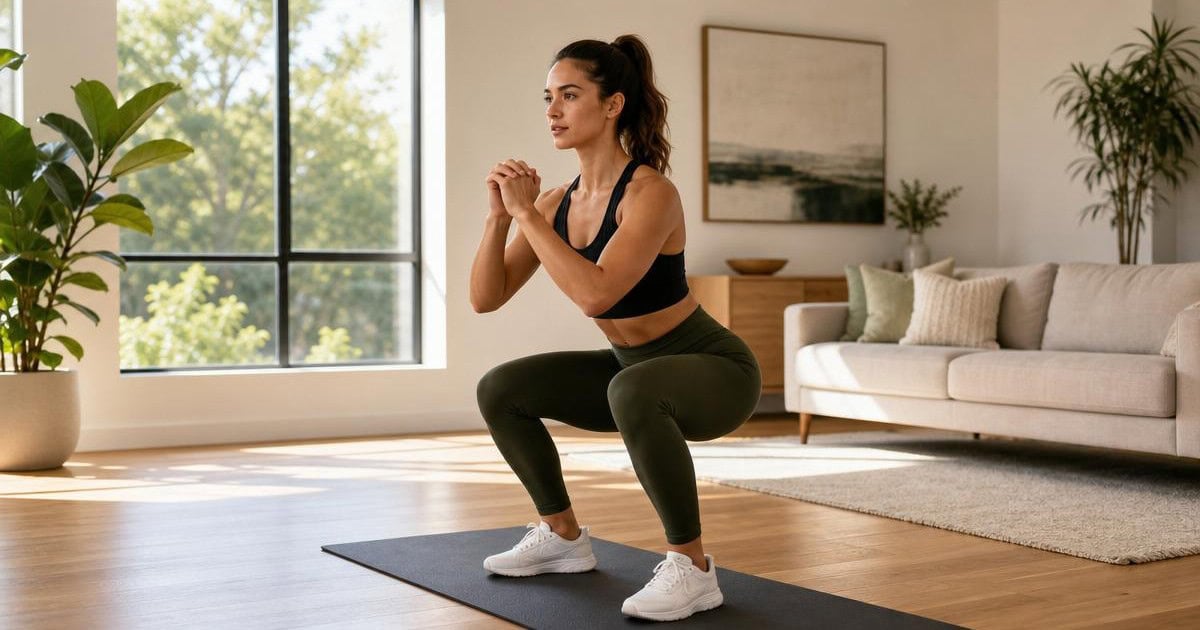
Air Squat

The Air Squat performs bodyweight squats. The pattern is foundational for at-home beginners.
For at-home beginners, air squats are foundational for lower-body development. Run it for 3 sets of 12 to 20 reps as primary lower-body work.
Stand with feet shoulder-width and toes slightly turned out. Squat down by bending the knees and hips while keeping the chest up. Lower until the thighs are parallel to the floor (or as deep as comfortable). Drive back up through the heels. The pattern is foundational for beginners – air squats produce compound lower-body loading using only bodyweight, training quads, glutes, and hips simultaneously. The most accessible lower-body exercise that translates directly to functional movement (sitting, standing, picking things up).
Front Plank
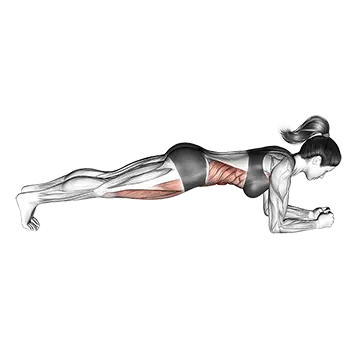
The Front Plank performs forearm plank holds. The pattern is foundational for at-home beginners.
For at-home beginners, the plank builds foundational core stability. Run it for 3 sets of 20 to 45-second holds as primary core work. Build up gradually from shorter holds.
Lie face-down on the floor. Prop up on the forearms with elbows under the shoulders. Lift the hips so the body forms a straight line from shoulders to ankles. The core works hard isometrically. Hold for the working interval. The pattern is foundational for beginners – the plank produces complete core engagement using only bodyweight, training the abs and core stabilizers simultaneously. The most accessible core exercise. Beginners can modify (kneeling plank, shorter holds) and progress over weeks. Excellent foundation for core development.
Glute Bridge March

The Glute Bridge March performs marching glute bridges. The pattern is excellent for at-home beginners.
For at-home beginners, the glute bridge march builds glute strength and core stability. Run it for 3 sets of 8 to 12 reps per leg as glute work.
Lie on the floor with knees bent and feet planted. Drive through the heels to lift the hips up by extending the hips into a glute bridge position. While maintaining bridge position, lift one leg up by flexing at the hip (marching motion). Lower back. Switch legs. Continue alternating. The glutes work hard maintaining the bridge while the core stabilizes. The pattern is excellent for beginners – it teaches glute activation, builds glute strength, and develops core stability simultaneously. Most beginners need dedicated glute work because modern lifestyles produce weak glutes.
Superman

The Superman performs the superman exercise. The pattern produces direct erector spinae loading.
For at-home beginners, the superman builds posterior chain strength supporting posture. Run it for 3 sets of 10 to 15 reps as posterior chain work.
Lie face-down on the floor with arms extended overhead. Lift the arms, chest, and legs off the floor simultaneously by contracting the lower back and glutes. Hold briefly at peak. Lower under control. The pattern produces direct erector spinae and glute activation – critical for beginners because most modern individuals have weak posterior chain (lower back, glutes, upper back) from prolonged sitting. The superman addresses this weakness without equipment. Excellent posterior chain exercise that complements front-body work for balanced beginner training.
Bodyweight Rear Lunge
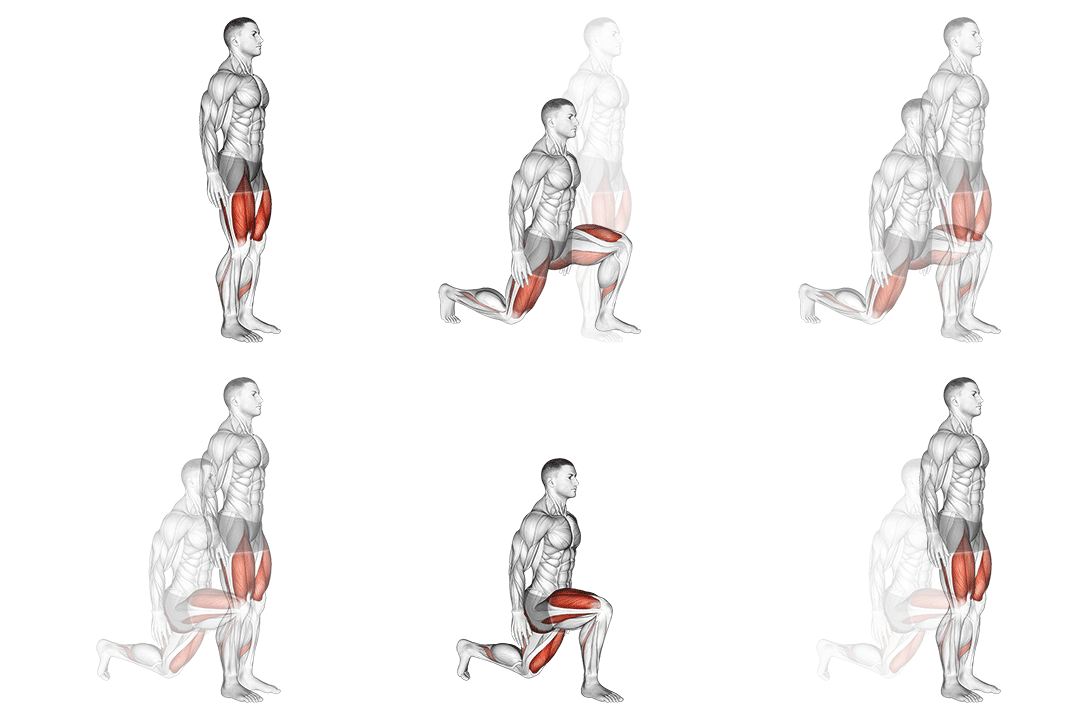
The Bodyweight Rear Lunge performs reverse lunges. The pattern is excellent for at-home beginners.
For at-home beginners, the bodyweight rear lunge builds unilateral leg strength. Run it for 3 sets of 8 to 12 reps per leg as unilateral leg work.
Stand with feet hip-width. Step backward with one leg into a lunge position, lowering the back knee toward the floor. Drive through the front heel to return to standing. Switch legs. Continue alternating. The pattern is excellent for beginners – reverse lunges are easier on the knees than forward lunges (the knee tracks more naturally), and the unilateral nature builds balanced leg strength. Beginners should master bodyweight reverse lunges before progressing to weighted variations. Excellent unilateral leg exercise for at-home training.
Dead Bug

The Dead Bug performs the dead bug core exercise. The pattern is foundational for beginner core development.
For at-home beginners, the dead bug builds anti-extension core strength. Run it for 3 sets of 8 to 10 reps per side as core work.
Lie on the back with arms extended toward the ceiling and hips/knees bent at 90 degrees. Slowly extend one arm overhead while extending the opposite leg straight, keeping the lower back pressed into the floor. Return to start. Switch sides. The core works hard maintaining lower back position. The pattern is foundational for beginner core development – the dead bug teaches proper core engagement (anti-extension) while training the abs and hip flexors. Excellent core exercise that builds the foundational core stability beginners need before progressing to more advanced patterns.
Side Plank
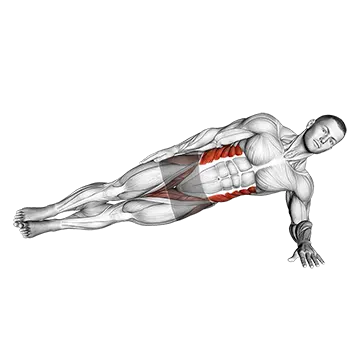
The Side Plank performs side plank holds. The pattern produces lateral core stability.
For at-home beginners, the side plank builds lateral core strength. Run it for 3 sets of 20 to 45-second holds per side as lateral core work. Modify with knee-down version if needed.
Lie on one side propped up on the elbow with the elbow under the shoulder. Lift the hips so the body forms a straight line from feet to head. The lateral core (obliques and quadratus lumborum) works hard isometrically. Hold for the working interval. Switch sides. The pattern produces direct lateral core loading – critical for complete core development because the front plank alone underdevelops the lateral core. Beginners can modify with knee-down version (one knee on floor) and progress to full side plank over weeks. Excellent lateral core exercise.
Bodyweight Wall Squat
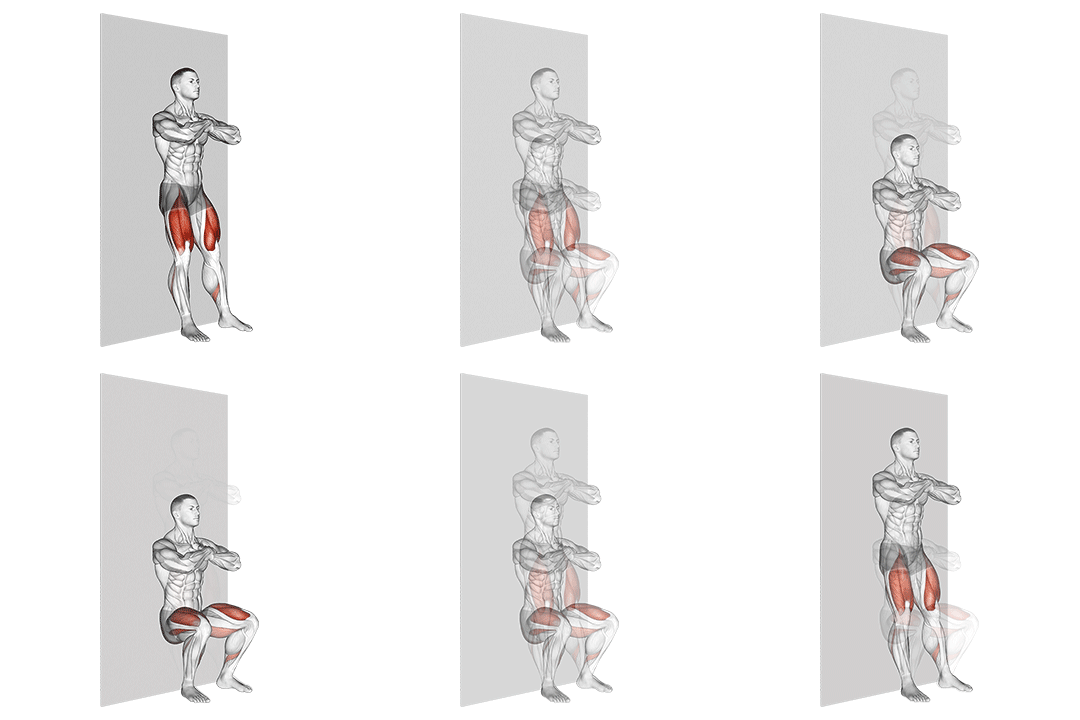
The Bodyweight Wall Squat performs wall sits. The pattern produces isometric leg loading.
For at-home beginners, the wall squat produces isometric leg strengthening. Run it for 3 sets of 30 to 60-second holds as isometric leg work.
Stand with the back against a wall. Slide down until the thighs are parallel to the floor and the knees are at 90 degrees. Hold the position with the back flat against the wall. The quads, glutes, and hips work hard isometrically. Hold for the working interval. The pattern produces isometric leg loading – excellent for beginners because the supported back position allows safe leg strengthening through isometric work. Beginners can build up gradually from shorter holds. Combined with air squats and lunges, wall squats produce complete beginner leg development.
Jumping Jack

The Jumping Jack performs jumping jacks. The pattern produces accessible cardio for at-home beginners.
For at-home beginners, jumping jacks provide accessible cardio. Run it for 3 sets of 30 to 45-second intervals as cardio work.
Stand with feet together and arms at sides. Jump up while spreading the legs out to the sides and raising the arms overhead simultaneously. Jump back to starting position. Continue at moderate pace. The legs, shoulders, and cardiovascular system all work. The pattern provides accessible bodyweight cardio – excellent for beginners because jumping jacks require no equipment, can be done anywhere, and provide both cardiovascular conditioning and full-body movement. Combined with strength exercises, jumping jacks complete the beginner at-home routine with cardio component. Build up gradually if new to cardio.
How To Program These Workouts
A productive beginner at-home session pulls 6 to 8 exercises from the list above. A common balanced session: push-ups (upper-body push – modify as needed), air squat (foundational legs), front plank (core), glute bridge march (glute), bodyweight rear lunge (unilateral legs), superman (posterior chain), dead bug (core), jumping jack (cardio). For complete beginner programming: cover all major patterns each session – push (push-ups), squat (air squat), lunge (rear lunge), hinge/glute (glute bridge march), posterior chain (superman), core (plank, dead bug, side plank), cardio (jumping jack). Run strength work for 3 sets of 8 to 15 reps, isometric work for 3 sets of 20 to 60-second holds, cardio for 3 sets of 30 to 45-second intervals.
Train at home 3 to 4 times per week with full-body sessions. Most successful beginner programs use full-body training: 1) full-body sessions 3 days/week (Monday, Wednesday, Friday) hitting all major patterns, 2) optional shorter mobility/cardio days between strength days, 3) at least 1 to 2 complete rest days. Combined with progressive overload over time (more reps, more sets, harder progressions), patience with the process, gradual increase in difficulty, adequate sleep (7 to 9 hours), proper nutrition for fitness goals, and consistent training over months, beginner at-home programs produce measurable fitness improvements. Most beginners see substantial gains in the first 8 to 16 weeks. Continued progression after the first 16 weeks may benefit from adding basic equipment (dumbbells, resistance bands) or harder bodyweight progressions.
For broader programming, see our best workouts for beginners and best bodyweight workouts. For specific work, see our best workouts for functional fitness.
Final Thoughts
The best workouts for beginners at home deliver real fitness development through bodyweight training that targets all major movement patterns without equipment: foundational upper-body push, foundational lower-body strength, unilateral leg work, glute strengthening, posterior chain work, complete core development, and cardiovascular conditioning. The combination of push-ups, air squats, planks, glute bridge marches, supermans, rear lunges, dead bugs, side planks, wall squats, and jumping jacks covers every major movement pattern beginners need and produces broader strength, fitness, body composition, and movement capacity than starting at a gym typically would. Many beginners discover meaningful fitness improvements within 8 to 16 weeks of consistent at-home practice – including more upper-body strength, more developed legs, better core stability, improved cardio capacity, weight loss for those targeting body composition, better posture, more energy in daily activities, and the foundation for either continued home training or eventual gym progression. For beginners, at-home bodyweight training is one of the most accessible and effective ways to start a fitness journey.
Stay focused on consistency over intensity as the priority for beginner at-home training. The most common mistake beginners make is starting with overly intense programs that lead to soreness, frustration, and quitting within weeks. The fix: prioritize gentle consistent practice – shorter sessions performed regularly produce far better results than aggressive sessions performed inconsistently. Start with appropriate progressions (kneeling push-ups, shorter plank holds), progress gradually over weeks (more reps, longer holds, harder variations), maintain consistency 3 to 4 times per week, allow adequate recovery, and be patient with the process. Combined with adequate sleep, proper nutrition, and gradual progression, consistent gentle practice produces the fitness improvements that aggressive starting never achieves. Beginners build fitness through patience and consistency.
Frequently Asked Questions
Can I get fit working out at home?
Yes – properly programmed home training produces real fitness results. Bodyweight training covers all major movement patterns and produces substantial strength, cardio, and body composition improvements when programmed properly with progressive overload. Combined with consistent practice (3 to 4 times per week), gradual progression of difficulty, adequate sleep, proper nutrition, and patience over months, at-home training produces measurable fitness improvements. Many highly fit individuals train primarily at home with bodyweight or basic equipment. Home training has fewer limitations than commonly assumed.
How often should beginners work out at home?
3 to 4 times per week with rest days between sessions. Most successful beginner programs use: 1) full-body sessions 3 days/week (Monday, Wednesday, Friday) hitting all major patterns, 2) optional shorter mobility or cardio sessions on other days, 3) at least 1 to 2 complete rest days for recovery. Beginners benefit from rest days because they’re adapting to new physical demands – excessive frequency without recovery produces excessive soreness and slows progress. Quality consistent practice 3 to 4 times per week produces better results than daily training without recovery.
How long should beginner workouts be?
30 to 45 minutes per session is the typical sweet spot. Most successful beginner programs use sessions lasting 30 to 45 minutes – long enough to cover all major movement patterns without producing excessive fatigue. Very short sessions (under 20 minutes) may not provide adequate training stimulus. Very long sessions (over 60 minutes) often produce excessive fatigue without proportional benefit for beginners. The structure matters more than total duration – 30 to 45 minutes hitting all major patterns produces excellent beginner results.
Do I need equipment to start working out at home?
No – bodyweight training produces excellent beginner results without equipment. The 10 exercises in this article use only bodyweight and produce complete movement pattern coverage. Beginners can train productively for 8 to 16+ weeks using only bodyweight before considering equipment. Optional basic equipment that supports continued progression: 1) resistance bands (excellent for adding load), 2) one or two pairs of dumbbells (versatile loading), 3) pull-up bar (adds vertical pulling). Most beginners benefit from establishing consistent bodyweight habits before adding equipment.
How long does it take to see results from at-home workouts?
4 to 8 weeks for measurable improvements, ongoing for substantial change. Most beginners who consistently apply 3 to 4 weekly sessions plus proper nutrition see measurable improvements within 4 to 8 weeks – including improved strength, better movement quality, increased energy, and visible body composition changes. Substantial fitness change typically takes 3 to 6+ months of consistent practice. The longer beginners maintain consistency, the better the results. Patience and consistency produce the lasting fitness improvements that aggressive shortcuts never achieve.