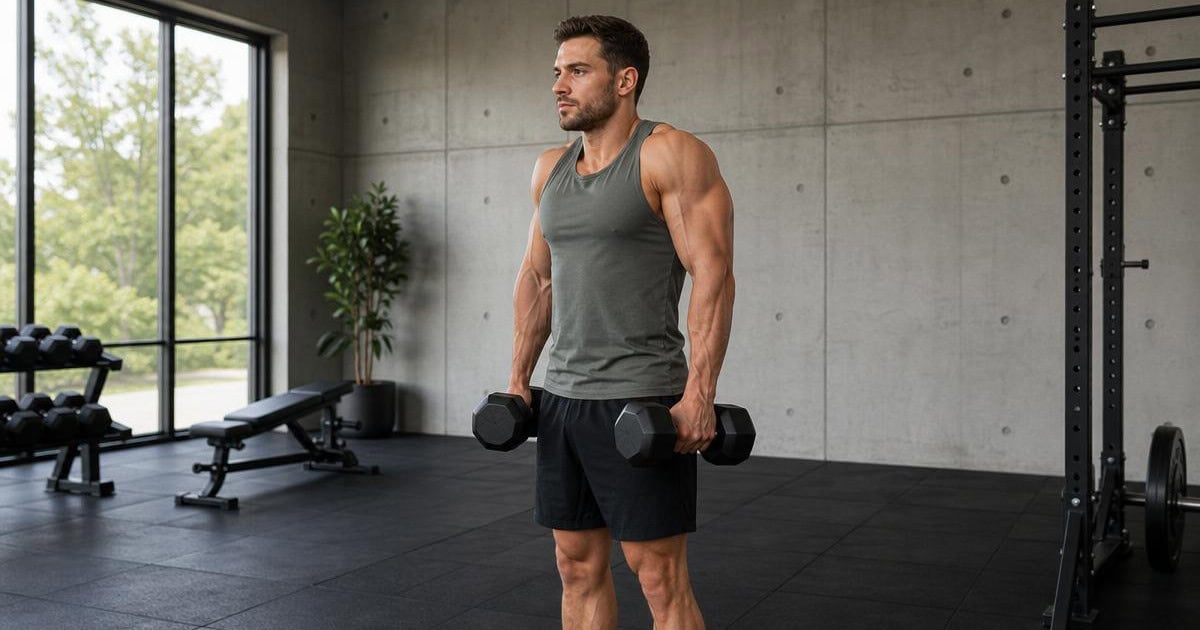
Dumbbell quad training produces real quad development through accessible equipment that doesn’t require a barbell, squat rack, or commercial gym setup. The format works particularly well for quad-focused training because dumbbells enable several quad-emphatic loading positions (front-rack, goblet, sumo) that shift loading away from the posterior chain and onto the quadriceps directly. Front-loaded variations (front squat, goblet squat, thruster) force the torso to stay upright throughout the squat motion, which keeps the loading on the quads rather than shifting to the glutes and hamstrings as back-loaded variations naturally do. Most lifters can build serious quad development through 8 to 12 weeks of consistent dumbbell quad training, especially when training prioritizes the quad-emphatic variations and includes both bilateral and unilateral compounds.
Below are ten effective dumbbell quad exercises that cover bilateral compounds (dumbbell squat, front squat, goblet squat, sumo squat), unilateral strength work (Bulgarian split squat, split squat, step-up), dynamic motion (lunge, walking lunge), and combined strength-conditioning (thruster). Together they form a complete dumbbell quad training program. Front-loaded and unilateral variations produce the strongest quad emphasis; back-loaded standard squats and lunges hit the quads while distributing loading across the lower body more evenly. Pull 5 to 7 exercises per session with at least one quad-emphatic loading position included for direct quad development.
Dumbbell Squat

The Dumbbell Squat holds a dumbbell in each hand at the sides and squats down by sitting the hips back while bending the knees. The pattern produces strong combined quad and glute loading without requiring a barbell or rack setup.
For dumbbell quad training, the standard dumbbell squat is the foundational bilateral compound. The pattern hits the quads, glutes, and hamstrings through full-range squat motion under loaded conditions. Run it for 4 sets of 8 to 12 reps as primary heavy quad work in any dumbbell quad session.
Stand tall holding a dumbbell in each hand at the sides with feet shoulder-width and toes pointed slightly out. Squat down by sitting the hips back while bending the knees, descending until the hips drop below parallel to the knees. Drive back to standing through the whole foot. Maintain upright torso throughout.
Dumbbell Front Squat
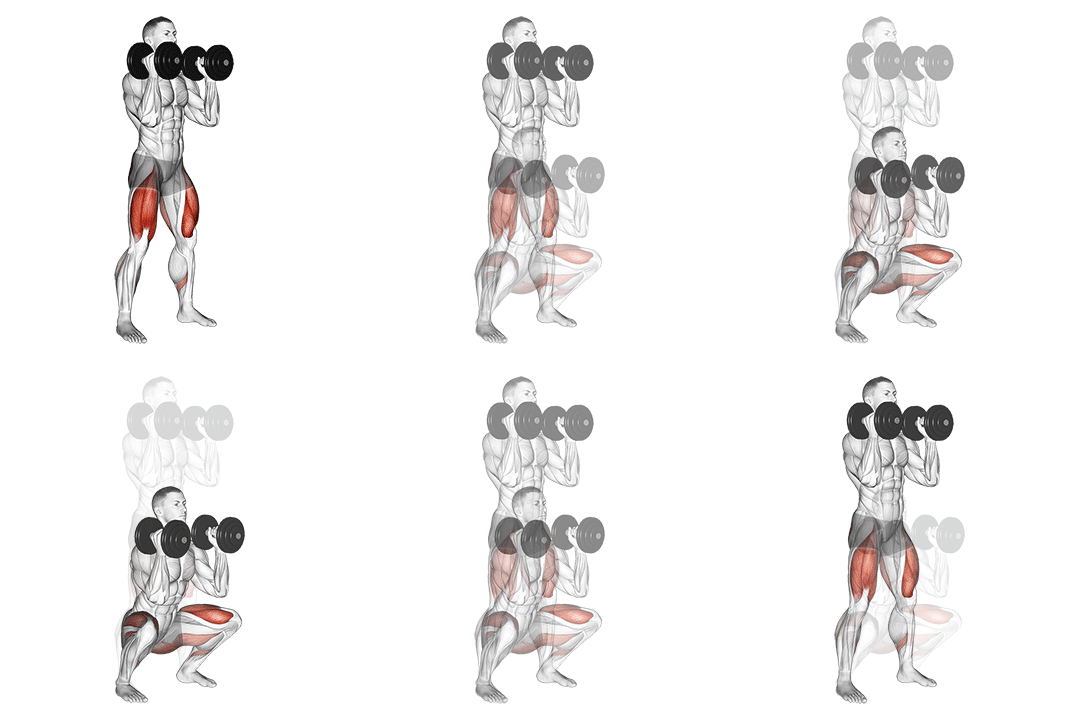
The Dumbbell Front Squat holds two dumbbells at the shoulders (front-rack position) and squats down. The front-loaded position shifts emphasis significantly toward the quads compared to back-loaded variations because the load forces upright torso position throughout the squat.
For dumbbell quad training, the front squat is one of the most quad-emphatic exercises that exists. The front-rack position forces the torso to stay vertical, which keeps the loading directly on the quads rather than shifting to the posterior chain. Run it for 4 sets of 6 to 10 reps as primary quad-focused compound work.
Stand tall holding two dumbbells at shoulder height in a front-rack position with elbows pointing forward. Stand with feet shoulder-width and toes slightly out. Squat down by sitting the hips back while bending the knees, maintaining upright torso position throughout. Drive back to standing through the whole foot.
Dumbbell Goblet Squat
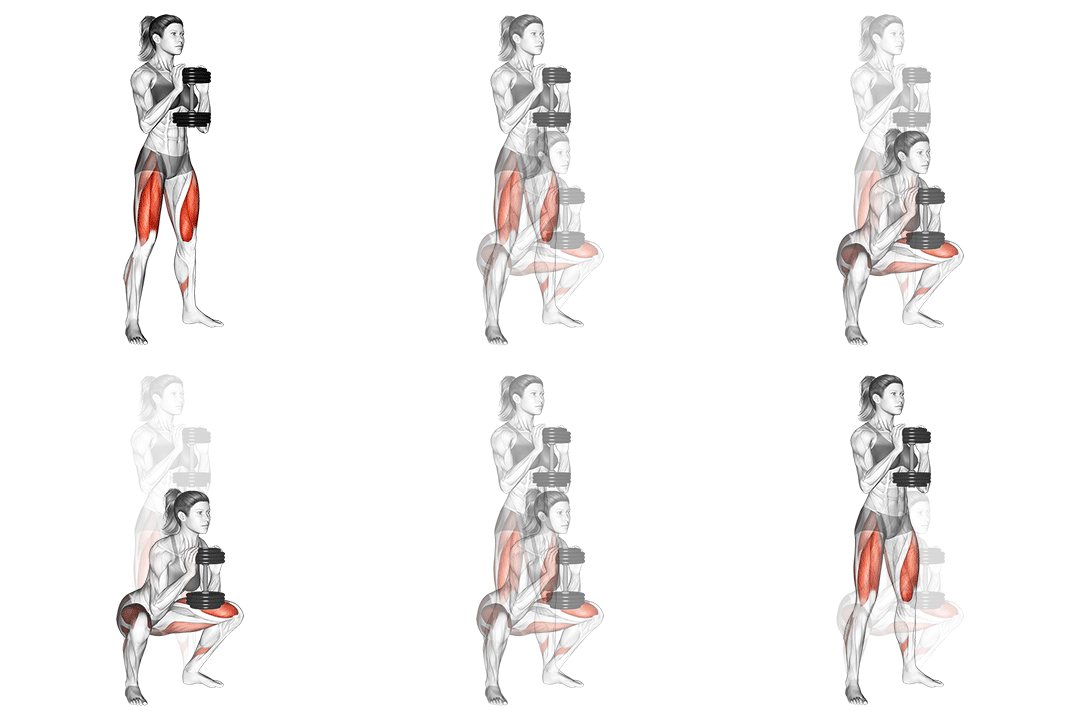
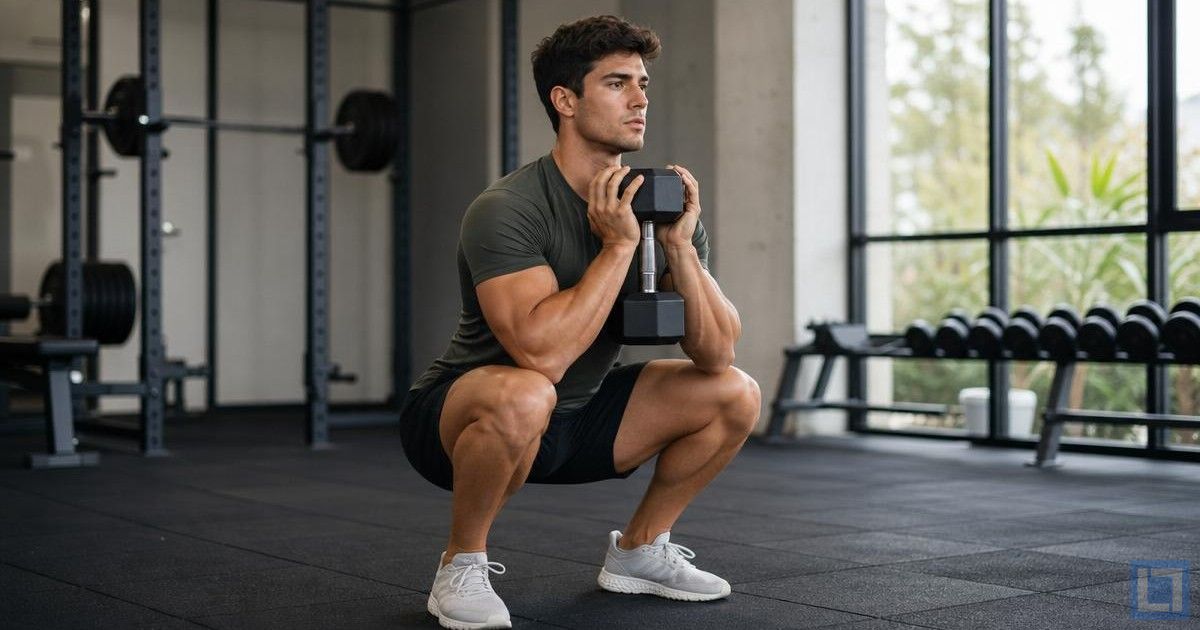
The Dumbbell Goblet Squat holds a single dumbbell vertically at the chest with both hands cupping the top end. The front-loaded position emphasizes the quads similar to front squats while being more accessible than the front-rack position.
For dumbbell quad training, the goblet squat is one of the most quad-emphatic exercises available with dumbbells. The chest-loaded position keeps the torso upright and shifts loading to the quads. Run it for 4 sets of 8 to 12 reps as primary quad-focused compound work.
Stand tall holding a single dumbbell vertically at the chest with both hands cupping the top end (like holding a goblet). Stand with feet shoulder-width and toes slightly out. Squat down by sitting the hips back while bending the knees, descending until the elbows touch the inner thighs. Drive back to standing through the whole foot.
Dumbbell Bulgarian Split Squat
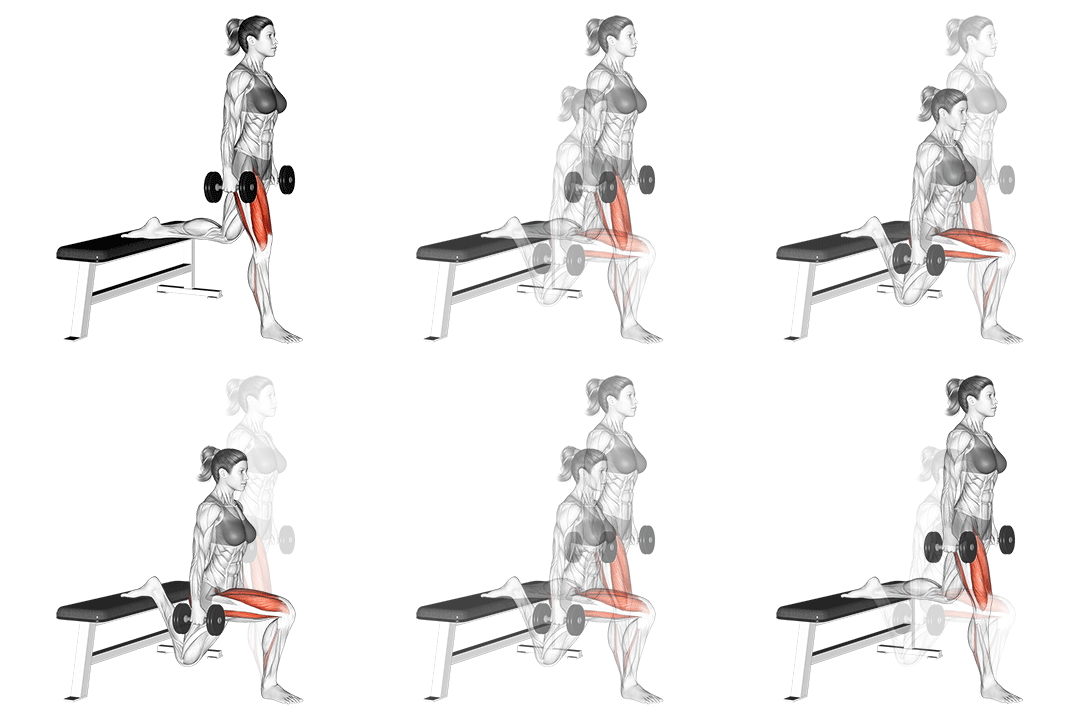
The Dumbbell Bulgarian Split Squat performs split squats with the back foot elevated on a bench while holding dumbbells at the sides. The elevated back foot puts more loading on the front leg, which produces extreme unilateral quad development.
For dumbbell quad training, the Bulgarian split squat is one of the most demanding unilateral quad exercises that exists. The back-foot-elevated position shifts almost all the loading to the front leg, which produces stronger unilateral quad development than standard split squats. Run it for 3 to 4 sets of 6 to 10 reps per leg as primary unilateral quad work.
Hold dumbbells at the sides with arms extended. Stand 2 to 3 feet in front of a bench with one foot on the bench behind the body (laces down or toe pressed into the bench top). Drop straight down by bending the front knee until the back knee approaches the floor. Drive through the front foot to push back to standing.
Dumbbell Split Squat
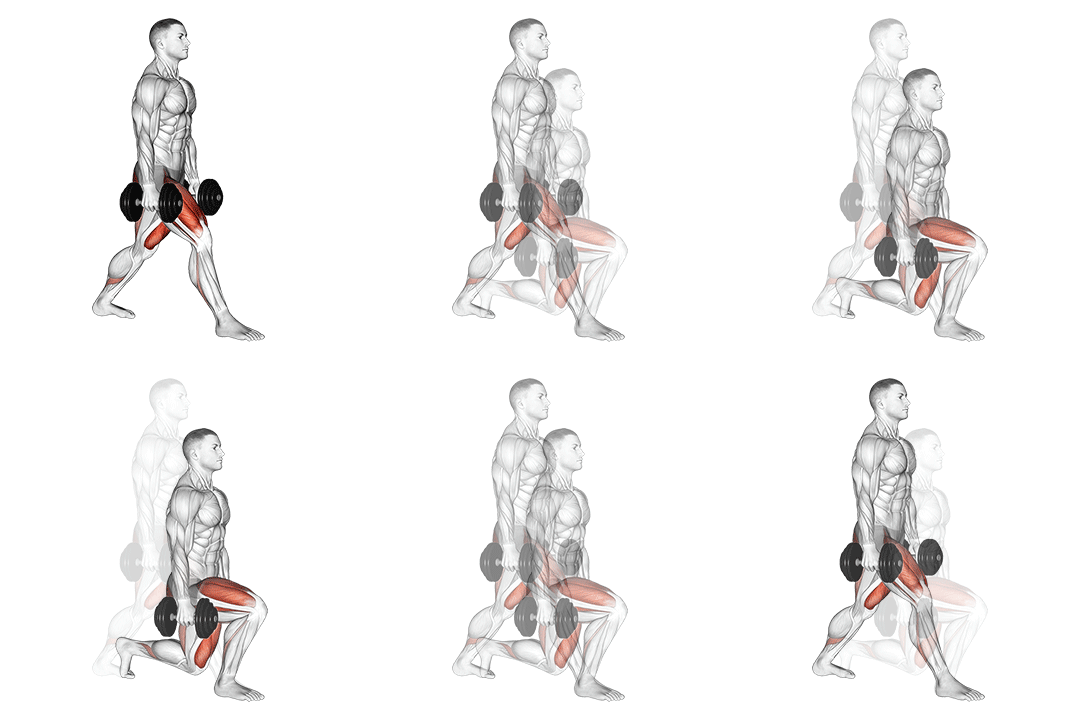
The Dumbbell Split Squat performs static lunges with feet in a forward-back stance while holding dumbbells at the sides. The pattern produces strong unilateral leg loading with both feet on the floor.
For dumbbell quad training, the standard split squat is the foundational unilateral leg exercise. The pattern hits each leg independently while being more accessible than Bulgarian split squats. Run it for 3 to 4 sets of 8 to 10 reps per leg as primary unilateral quad work.
Hold dumbbells at the sides with arms extended. Stand in a split stance with one foot 2 to 3 feet in front of the other. Drop straight down by bending both knees until the back knee approaches the floor. Drive through the front foot to push back to the start. Switch sides between sets.
Dumbbell Lunge

The Dumbbell Lunge steps forward into a long stance and lowers the back knee toward the floor before driving back to standing while holding dumbbells at the sides. The pattern produces strong dynamic unilateral quad loading.
For dumbbell quad training, the lunge produces strong dynamic unilateral leg work that complements the static loading of split squats. The dynamic step-and-return motion teaches motor patterns that translate to athletic movements. Run it for 3 sets of 8 to 10 reps per leg as dynamic unilateral quad work.
Hold dumbbells at the sides with arms extended. Stand tall with feet hip-width. Step forward into a long lunge stance, lowering the back knee toward the floor while bending the front knee. Drive through the front foot to push back to the start position. Alternate sides on each rep or do all reps on one side then switch.
Dumbbell Walking Lunge

The Dumbbell Walking Lunge performs continuous lunges by stepping forward into the next lunge after each rep. The continuous motion produces strong cardiovascular demand alongside quad and glute loading.
For dumbbell quad training that combines strength and conditioning, the walking lunge is one of the most efficient combined exercises that exists. The continuous motion produces stronger heart rate elevation than static split squats while still hitting the quads heavily. Run it for 3 sets of 12 to 16 total steps as combined quad and conditioning work.
Hold dumbbells at the sides with arms extended. Stand tall with feet hip-width. Step forward into a long lunge, lowering the back knee toward the floor. Drive up by bringing the back foot forward into the next lunge step. Continue walking forward in continuous lunges throughout the set.
Dumbbell Step Up

The Dumbbell Step Up steps onto a bench or box with one foot while holding dumbbells at the sides, driving up through the elevated foot to a standing position on the box. The pattern produces strong unilateral quad loading similar to Bulgarian split squats.
For dumbbell quad training, the step-up produces strong unilateral quad development through the explosive pushing motion. The pattern translates to athletic single-leg movements and produces strong functional strength. Run it for 3 sets of 8 to 10 reps per leg as varied unilateral quad work.
Hold dumbbells at the sides with arms extended. Stand facing a bench or box at knee height. Place one foot fully on the box. Drive through the elevated foot to step up to a fully standing position on the box. Lower under control to the start position. Switch sides between sets or alternate reps.
Dumbbell Sumo Squat

The Dumbbell Sumo Squat holds a single dumbbell at the chest with feet significantly wider than shoulder-width and toes pointed out. The wide stance emphasizes the inner quads and glutes more than standard squats.
For dumbbell quad training, the sumo squat provides varied quad loading through the wide stance. The pattern hits the inner quads (vastus medialis) more directly than standard squats while still loading the outer quads. Run it for 3 sets of 10 to 12 reps as varied quad work alongside standard squats.
Hold a single dumbbell at the chest with both hands or hold two dumbbells at the sides. Stand with feet significantly wider than shoulder-width and toes pointed out at 30 to 45 degrees. Squat down by sitting the hips back while bending the knees. Drive back to standing through the whole foot.
Dumbbell Thruster
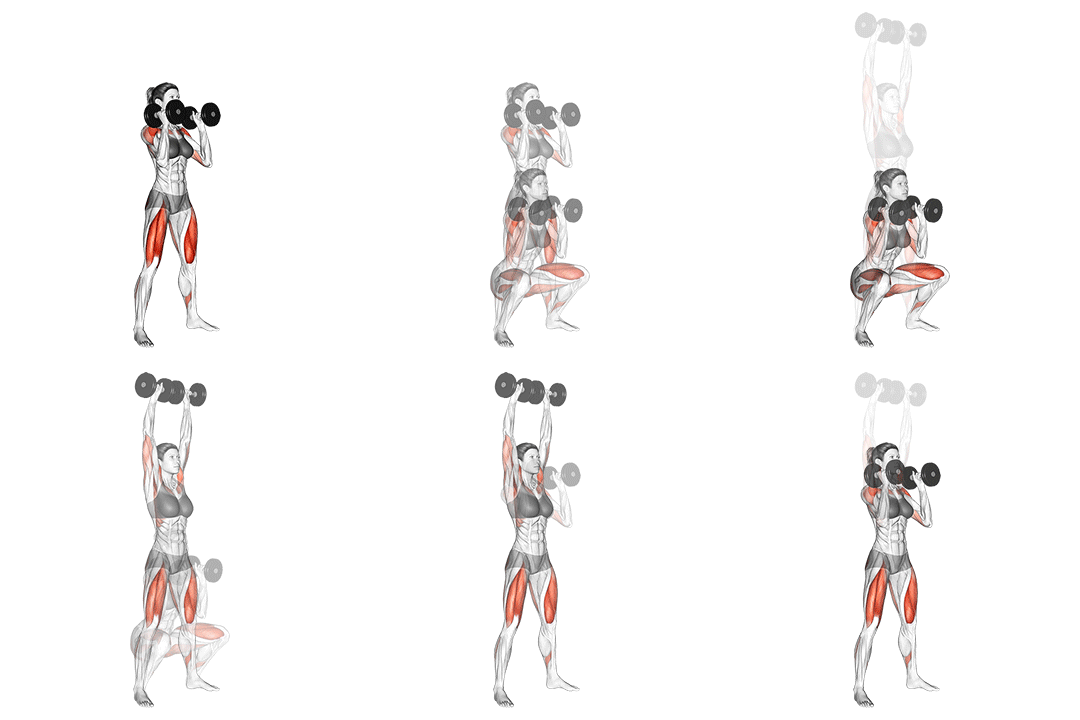
The Dumbbell Thruster combines a front squat with an overhead press by holding dumbbells at the shoulders, squatting down, then driving up through the legs to power the dumbbells overhead in a single motion. The compound movement hits the quads heavily through the squat portion.
For dumbbell quad training that combines strength and conditioning, the thruster is one of the most efficient combined exercises that exists. The pattern hits the quads through the squat while the overhead press component adds upper-body work. Run it for 3 sets of 6 to 10 reps as combined quad and full-body conditioning work.
Hold two dumbbells at the shoulders in a front-rack position with elbows pointing forward. Stand with feet shoulder-width. Squat down by sitting the hips back. Drive up explosively through the legs and use the momentum to press the dumbbells overhead to lockout. Lower the dumbbells back to the shoulders as you descend into the next squat.
How To Program These Workouts
A productive dumbbell quad session pulls 5 to 7 exercises from the list above. A balanced session includes one heavy bilateral compound (dumbbell squat or front squat), one quad-emphatic variation (goblet squat or sumo squat), one heavy unilateral exercise (Bulgarian split squat or step-up), one dynamic unilateral exercise (lunge or walking lunge), and optionally one combined strength-conditioning exercise (thruster). Run primary compounds for 4 sets of 6 to 12 reps; unilateral work for 3 sets of 6 to 10 reps per leg; conditioning work for 3 sets of 6 to 10 reps. Total session covers 14 to 18 working sets focused on quad development.
Train dumbbell quad sessions 1 to 2 times per week with full rest days between sessions. The legs recover within 48 to 72 hours of moderate training. Most successful programs include 1 to 2 dedicated quad sessions per week alongside dedicated upper-body training in upper-lower split formats, or 2 quad sessions per week as part of full-body programming. The format works particularly well as a quad-emphatic leg session paired with a hamstring-emphatic leg session for complete lower-body development. Front-loaded variations should appear in every session; back-loaded variations work as varied stimulus.
For broader leg programming, see our best dumbbell leg workouts and best inner quad workouts. For bodyweight quad work, see our best quad and glute workouts.
Final Thoughts
The best quad workouts with dumbbells deliver real quad development through accessible equipment that produces strong combined loading across bilateral compounds, unilateral strength, dynamic motion, and combined strength-conditioning work. The combination of front-loaded variations (which emphasize the quads), unilateral exercises (which produce strong single-leg quad development), and dynamic compound work covers every major quad function and produces broader development than back-loaded squat training alone. For lifters who want serious quad development without barbell equipment, want quad-emphatic training that fits home gym settings, or are recovering from injuries that limit barbell squatting, dedicated dumbbell quad training is one of the most effective options available.
Stay focused on torso position throughout every rep. The most common dumbbell quad training mistake is letting the torso fall forward during squat variations, which shifts loading from the quads to the lower back and posterior chain. The fix: prioritize front-loaded variations (front squat, goblet squat) that force upright torso position, and on back-loaded variations focus consciously on keeping the chest up throughout the squat. Quality reps with upright torso position produce stronger quad development than higher-weight reps with torso lean.
Frequently Asked Questions
Are dumbbells good for building quads?
Yes, very effectively. Dumbbells enable several quad-emphatic loading positions (front-rack, goblet, sumo) that shift loading directly onto the quads. Most lifters can build serious quad development through 8 to 12 weeks of consistent dumbbell quad training. Advanced lifters chasing maximum quad development typically benefit from adding heavy barbell front squats and leg press variations, but dumbbell training produces strong development for years of consistent practice.
Goblet squat or front squat for quads?
Both produce strong quad emphasis through front-loaded positioning. The goblet squat is more accessible for beginners (single dumbbell, easier to learn) and works well at moderate loads. The front squat enables heavier loading (two dumbbells in front-rack position) and translates more directly to barbell front squat training. Most successful programs include both: goblet squats for accessibility and front squats for heavier progressive overload.
How heavy should I dumbbell squat?
Most lifters can dumbbell squat (back-loaded) with weights roughly 50 to 70 percent of their barbell back squat 1RM total weight. For training, work in the 8 to 12 rep range with weights that allow strict form throughout. Front-loaded variations (front squat, goblet squat) typically use significantly lighter loads (40 to 60 percent of barbell back squat) due to the harder front-loading position. Beginners should start light and progress gradually as movement quality builds.
Can I build quads without a barbell?
Yes for beginners through advanced lifters. Dumbbell quad training produces real quad development for the first 12 to 24 months of consistent training. Most lifters can build the quad development of someone training with barbells using only dumbbells through varied loading positions, unilateral work, and progressive overload. Advanced lifters chasing maximum quad strength typically benefit from adding barbell front squats and leg press, but dumbbell training continues to provide useful supplementary stimulus.
How often should I train quads with dumbbells?
One to two times per week works for most lifters. The legs recover within 48 to 72 hours of moderate training. Most successful programs include 1 to 2 dedicated quad sessions per week alongside upper-body work or full-body programming. Higher frequencies (3+ quad sessions per week) typically produce accumulated fatigue without proportional growth benefit; the 1 to 2-session structure produces strong cumulative volume with adequate recovery for sustained development.