
The front delts (anterior deltoid heads) sit on the front of the shoulders and contribute heavily to overall shoulder appearance from the front view. Strong front delt development produces the rounded shoulder caps and full upper-body silhouette that defines an athletic look, and the front delts also load heavily during pressing exercises (bench press, overhead press), which means front delt strength affects performance on every chest and shoulder lift. Most lifters develop strong front delts naturally from pressing work, but dedicated isolation training produces stronger growth than indirect work alone.
Below are ten effective front delt exercises that cover dumbbell and cable front raises, resistance band variations, the Arnold press (compound front delt loading), overhead front raises, and unilateral chest-supported variations. Together they form a complete front delt training program that fits in commercial gyms, well-equipped home gyms, and minimal-equipment setups (several exercises require only a band or pair of dumbbells).
Dumbbell Front Raise

The Dumbbell Front Raise holds dumbbells at the front of the thighs and lifts them straight forward to shoulder height with arms straight or slightly bent. The exercise targets the front deltoids directly through their primary shoulder flexion function.
For front delt isolation, the dumbbell front raise is the foundational exercise. The pattern hits the anterior deltoid heads directly with minimal involvement of other shoulder muscles, which produces stronger front delt development per rep than compound pressing exercises that load the front delts as secondary movers. Run it for 3 to 4 sets of 10 to 12 reps as primary front delt isolation.
Stand tall with dumbbells held in front of the thighs, palms facing the body. Lift the dumbbells straight forward to shoulder height with arms straight or slightly bent. Pause briefly at the top. Lower under control. Avoid swinging the weight; if the load is too heavy to do strict, drop down a size.
Cable Front Raise

The Cable Front Raise stands at a cable station with a low pulley and lifts the cable handle straight forward to shoulder height. The constant tension throughout the rep produces stronger front delt loading than dumbbell variations that lose tension at the bottom.
For lifters with cable access, the cable front raise produces stronger time under tension on the front delts than dumbbell variations. The constant cable tension keeps the anterior deltoid loaded throughout the entire rep, including the bottom range where dumbbells lose tension. Run it for 3 sets of 10 to 12 reps as either the primary or secondary front delt exercise.
Stand facing away from a cable station with the low pulley on one side. Hold the cable handle in front of the body with the arm extended down. Lift the handle straight forward to shoulder height. Lower under control. Switch sides on the next set or alternate.
Band Front Raise

The Band Front Raise uses a resistance band anchored at floor level (or stepped on with the feet) and lifts the band end straight forward to shoulder height. The band format makes the exercise accessible at home with minimal equipment.
For at-home front delt training, the band front raise is the most direct equivalent to gym-based dumbbell front raises. The accommodating resistance pattern (lighter at the start, heavier at the contracted position) produces stronger contraction at the top of the rep than constant-load variations. Run it for 3 sets of 12 to 15 reps.
Stand on the middle of a resistance band with both feet (or anchor at floor level). Hold one or both band ends in front of the body. Lift the band end(s) straight forward to shoulder height with arms straight. Lower under control against the band tension.
Dumbbell Front Raise II

The Dumbbell Front Raise II performs the front raise with both arms simultaneously rather than alternating, with palms facing each other (neutral grip) rather than facing down. The neutral grip position produces slightly different muscle recruitment than standard front raises.
For variety in front delt training, the neutral-grip front raise produces slightly different stimulus than standard variations. The grip change can break through plateaus that traditional front raise work creates over time. Run it for 3 sets of 10 to 12 reps as a variation in any front delt program.
Stand tall with dumbbells held in front of the thighs, palms facing each other (neutral grip). Lift both dumbbells straight forward to shoulder height while maintaining the neutral grip. Pause briefly at the top. Lower under control.
Dumbbell Arnold Press
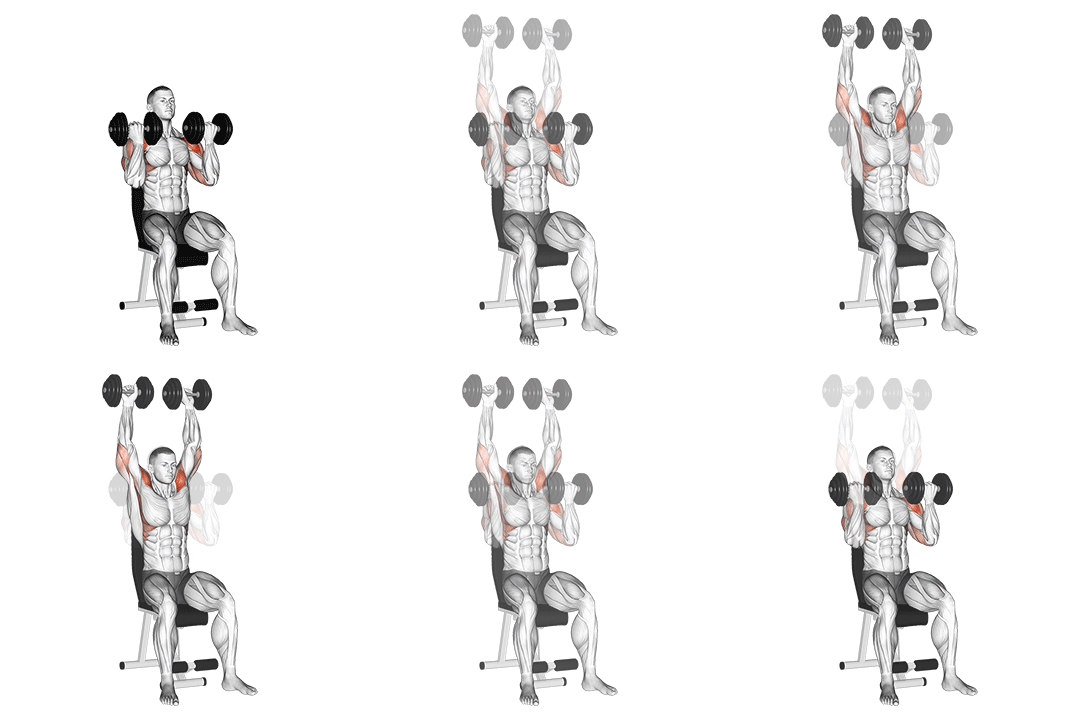
The Dumbbell Arnold Press starts with a kettlebell or dumbbell at the shoulder with palm facing the body, then rotates the arm during the press so the palm faces forward at the top. The combined pressing and rotation hits the front and side delts simultaneously.
While not a pure front delt isolation exercise, the Arnold press loads the front delts heavily through the press combined with rotation. The pattern produces stronger total shoulder development per rep than standard pressing while still emphasizing the front delts. Run it for 3 sets of 8 to 10 reps as a compound front delt exercise.
Hold dumbbells at the shoulders with palms facing the body. Press the dumbbells overhead while rotating the arms so the palms face forward at the top. Reverse the motion: lower while rotating the palms back to facing the body.
Barbell Standing Front Raise Over Head

The Barbell Standing Front Raise Over Head holds a barbell in front of the thighs and lifts it all the way overhead by raising the arms straight up rather than stopping at shoulder height. The full overhead range produces extreme front delt loading at the top.
For maximum front delt loading, the overhead front raise is one of the most demanding variations that exists. The full overhead range produces stronger contraction at the top than standard front raises that stop at shoulder height. Use significantly lighter weight than standard front raises; the demand at the top is much higher. Run it for 3 sets of 8 to 10 reps.
Stand tall with a barbell held in front of the thighs with shoulder-width grip. Lift the barbell straight forward and continue lifting all the way overhead by raising the arms straight up. Lower under control back to the start position. Use lighter weight than for standard front raises.
Dumbbell Incline One Arm Front Raise with Chest Support

The Dumbbell Incline One Arm Front Raise with Chest Support lies face-down on an incline bench with chest supported and performs unilateral front raises with one dumbbell. The chest support eliminates body sway and the unilateral pattern catches strength imbalances.
For maximum strict-form front delt training, the chest-supported one-arm front raise is one of the most effective exercises that exists. The eliminated body sway means every bit of the lifting force comes from the front delt, which produces stronger development per rep than standing variations. Run it for 3 sets of 10 to 12 reps per arm.
Set an incline bench to roughly 30 to 45 degrees. Lie face-down on the bench with chest supported. Hold a dumbbell in one hand with the arm hanging straight down. Lift the dumbbell straight forward to shoulder height while keeping the chest supported. Lower under control. Switch arms after each set.
Dumbbell Standing Alternate Vertical Front Raises

The Dumbbell Standing Alternate Vertical Front Raises hold dumbbells and alternately lift each arm vertically forward (rather than diagonally outward). The alternating pattern allows higher loading per arm and the vertical motion emphasizes the front delts directly.
The alternating vertical front raise complements bilateral front raises by producing slightly different stimulus through the unilateral motion. The pattern also catches strength imbalances and allows continuous work across the set. Run it for 3 sets of 10 to 12 reps per arm.
Stand tall with dumbbells held at the front of the thighs, palms facing the body. Lift one dumbbell straight forward and up vertically to shoulder height while the other arm stays at the start. Lower under control. Lift the opposite arm. Continue alternating.
Dumbbell Standing Front Raise Above Head

The Dumbbell Standing Front Raise Above Head lifts dumbbells from the thighs all the way overhead in a continuous front raise motion. The full overhead range produces the strongest possible loading on the front delts at the contracted position.
For peak front delt loading, the overhead dumbbell front raise produces the strongest contraction at the top position. The exercise is similar to the barbell overhead front raise but uses dumbbells, which allows independent arm motion and slightly different loading than the barbell variation. Run it for 3 sets of 8 to 10 reps with light weight.
Stand tall with dumbbells held in front of the thighs, palms facing the body. Lift the dumbbells straight forward and continue lifting all the way overhead. Lower under control back to the start. Use light to moderate weight; the overhead position significantly increases the demand.
Cable Standing Front Raise Variation

The Cable Standing Front Raise Variation uses a cable handle at a high or middle pulley and performs the front raise with a different angle than the standard low-pulley cable front raise. The angle change produces unique loading that breaks through plateaus.
For variety in cable front delt training, the angled cable front raise produces slightly different stimulus than the standard low-pulley version. The angle change can re-engage front delts that have plateaued on standard front raises. Run it for 3 sets of 10 to 12 reps as accessory work.
Set a cable handle to a high or middle pulley. Stand facing away from the cable station holding the handle in one hand. Lift the cable handle forward to shoulder height by raising the arm against the cable angle. Lower under control. Switch sides on the next set.
How To Program These Workouts
A productive front delt session pulls four to six exercises from the list above. A balanced session includes one heavy primary front raise (dumbbell front raise or cable front raise), one variation (Arnold press or overhead front raise), one chest-supported exercise (incline one-arm front raise), and one finisher (band front raise or partial-range cable variation). Run primary work for 3 to 4 sets of 8 to 12 reps; accessory work for 3 sets of 10 to 15 reps; lighter band finishers for 3 sets of 15 to 20 reps.
Train front delts 1 to 2 times per week as part of broader shoulder training. The front delts recover within 48 to 72 hours of moderate training, but they get significant indirect work from chest pressing exercises (bench press, push-ups, dips), which means dedicated front delt work compounds quickly with other upper-body training. Most lifters do well with one focused front delt session per week alongside the indirect work from chest day, or spread front delt volume across two upper-body days.
For broader shoulder programming, see our best dumbbell shoulder workouts and how to build bigger shoulders. For balanced shoulder development, see our best rear delt exercises and best side delt exercises.
Final Thoughts
The best front delt exercises produce visible anterior deltoid development through dedicated isolation work that complements the indirect front delt loading from pressing exercises. The combination of dumbbell and cable front raises, band variations, Arnold presses, and overhead progressions covers every major angle for front delt development. For lifters who want fuller, more developed shoulders from the front view, dedicated front delt training is one of the most effective options available.
Stay focused on balanced shoulder development. The most common front delt training mistake is over-emphasizing front delt work to the point of producing the unbalanced “round-shouldered” look that pulls the shoulders forward and limits the V-taper appearance. The fix: balance front delt isolation with equal or greater volume of side delt and rear delt work. The lifters with the best-looking shoulders typically have proportional development across all three deltoid heads, not maximum front delt size at the expense of the other heads.
Frequently Asked Questions
Do I need direct front delt exercises if I do bench press?
It depends on your goals and current development. The bench press loads the front delts heavily as secondary movers, which produces significant front delt development for most lifters even without dedicated isolation work. Lifters who do heavy bench pressing 2+ times per week often have well-developed front delts and need to focus more on side and rear delt work. Lifters who feel their front delts lag despite pressing benefit from adding 4 to 8 weekly sets of dedicated front delt isolation.
Can lateral raises and front raises hit the same muscle?
No. Lateral raises hit the side delts (medial deltoid heads); front raises hit the front delts (anterior deltoid heads). The two exercises target different muscle groups and produce different visual results. Most well-designed shoulder programs include both alongside rear delt work for complete shoulder development. Skipping front raises does not affect side delt development and vice versa.
How heavy should front raises be?
Lighter than most lifters think. The front delts are smaller muscles that respond best to strict form with moderate weight. Most beginners do well with 5 to 10-pound dumbbells; intermediates with 10 to 20-pound dumbbells. The right weight is whatever allows clean strict reps in the 8 to 12 rep range. Heavier weight that requires body swing or shoulder shrug compensation produces less front delt development than moderate weight done strict.
How often should I train front delts?
1 to 2 times per week works for most lifters as part of broader shoulder training. The front delts recover within 48 to 72 hours of moderate training, and they get significant indirect work from chest pressing. Most successful programs include 4 to 8 weekly sets of dedicated front delt isolation alongside the indirect work from chest day.
Should I do front raises before or after pressing?
After pressing for most lifters. Heavy pressing (bench press, overhead press) produces stronger overall development than isolation exercises and should be performed first when energy is highest. Front raises serve as accessory work that fits naturally after the primary compound lifts. Some lifters use front raises as warm-up activation before pressing; that approach also works for shoulder mobility purposes.