The lower abs are one of the hardest areas to develop, mostly because most ab programs over-emphasize trunk flexion (crunches and sit-ups) and under-train the leg-raise and reverse-crunch patterns that actually load the lower portion of the rectus abdominis. The best lower ab workouts fix that by featuring exercises that hit the lower fibers specifically.
Below are ten effective lower ab exercises organized roughly from foundational to advanced. They cover the full spectrum of lower-ab loading: bodyweight leg raises for foundation, band-loaded variations for added resistance, suspended versions for core stability, and combo movements that link patterns together.
Banded Lower Body Dead Bug

The Banded Lower Body Dead Bug adds a resistance band looped around the feet to a standard dead bug. As one leg extends, the band pulls back, creating constant tension that the core has to fight against. The result is a dead bug that loads significantly harder than the bodyweight version.
Dead bugs train anti-extension, the function the core actually performs during heavy squats and deadlifts. Adding a band intensifies that demand by making the leg extension actively pull the lower back away from the floor. The core has to brace harder to keep the back flat, which is exactly the training stimulus you want.
Loop the band around the feet and lie on your back with knees bent and arms extended overhead. Press the lower back firmly into the floor. Extend one leg out against the band, hold briefly, and return. Switch sides. Stop the rep the moment the lower back lifts off the floor.
Band Reverse Crunch

The Band Reverse Crunch loops a resistance band around the feet anchored low and lifts the hips off the floor by pulling the knees toward the chest. The band adds resistance throughout the rep, hitting the lower abs and hip flexors with constant tension.
Reverse crunches are one of the few exercises that load the lower abs directly. The standard bodyweight version is fairly easy and becomes endurance work fast. Adding band resistance keeps the movement in strength and hypertrophy territory, which is where actual ab development happens.
Anchor the band low and loop it around the feet or ankles. Lie on the back with hands at the sides for support. Pull the knees toward the chest while curling the hips off the floor. Lower under control rather than dropping back. The lower abs do the work, not the hip flexors.
Lying Leg Raise

The Lying Leg Raise lies on the back and lifts the legs from the floor up to roughly vertical, then lowers them under control. It is the most foundational lower ab exercise and the entry point to harder variations like hanging leg raises and dragon flags.
For developing the lower abs, the leg raise is hard to beat. The straight-leg version creates a long lever arm that loads the lower abdominal fibers heavily. Most lifters can train this movement productively for months without progressing to harder variations, especially with strict form and full range of motion.
Lie flat with hands at the sides or under the lower back for support. Lift the legs together from the floor up to roughly 90 degrees, then lower under control without letting the heels touch back down. Avoid swinging the legs or using momentum.
Twisted Leg Raise
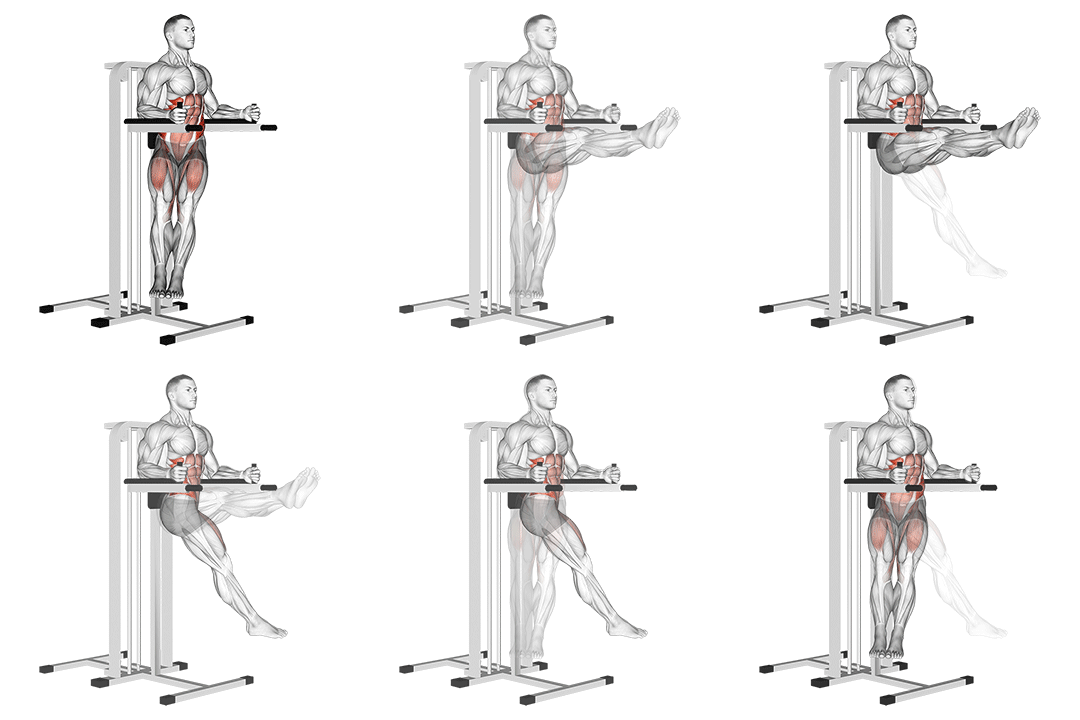
The Twisted Leg Raise adds a twist at the top of a leg raise, dropping the legs to one side before returning to center and lowering. The added rotation hits the obliques alongside the lower abs, training two functions in one exercise.
Standard leg raises hit the lower rectus abdominis but miss the obliques. Adding rotation engages them without sacrificing the lower-ab loading. The combination delivers more total core stimulus per rep, which makes it a useful efficiency upgrade when training time is limited.
Lift the legs to vertical, then twist the hips to one side and lower the legs to that side. Return to center and lower together. Alternate sides. Move slowly through the rotation; speed turns the movement into a swing rather than a controlled twist.
Reverse Crunch Kick

The Reverse Crunch Kick combines a reverse crunch with a brief upward leg kick at the top. Lying on the back, you pull the knees to the chest in a reverse crunch, then kick the legs up toward the ceiling before lowering. The kick adds a peak contraction that the standard reverse crunch lacks.
The added kick at the top makes the reverse crunch noticeably harder for the lower abs. Standard reverse crunches stop at the knee tuck, which keeps the abs under tension but never pushes them into a maximally contracted position. The kick fixes that.
Pull the knees to the chest in a controlled reverse crunch. At the top, kick the legs up toward the ceiling, lifting the hips. Lower under control to the start. Avoid letting the legs drop fast; the descent is where most of the muscle-building work happens.
Suspended Reverse Crunch

The Suspended Reverse Crunch (TRX knee tuck) holds a plank position with feet in TRX straps and tucks the knees toward the chest. The suspended feet dramatically increase core demand compared to a floor-based reverse crunch.
The challenge here comes from holding the plank position throughout. Standard reverse crunches let the lower back rest on the floor. The suspended version keeps the entire core working continuously, which makes a fairly basic-looking movement hammer the abs harder than expected.
Set up in a plank with feet in TRX straps. Tuck the knees to the chest with control rather than swinging them forward. Resist letting the lower back round downward as the knees come in. Return to a long plank between reps.
Leg Raise Oblique Crunch

The Leg Raise Oblique Crunch combines a leg raise with a side-bending crunch. As the legs lift, you crunch the trunk to one side, hitting the obliques alongside the lower abs. It is one of the most efficient combo movements for total ab development.
Most ab combo movements split focus between two patterns and dilute both. This one synchronizes the leg raise and the oblique crunch into a single coordinated effort, which means both the rectus abdominis and the obliques work hard on every rep. The total stimulus is significantly higher than either exercise alone.
Lie flat on the back. As the legs lift toward vertical, simultaneously crunch the trunk to one side, bringing the opposite shoulder toward the lifted hip. Lower under control. Alternate sides on each rep.
Lying Leg Raise to Side

The Lying Leg Raise to Side performs a leg raise but lowers the legs alternately to each side instead of straight down to the floor. The lateral motion targets the obliques in a way the standard leg raise does not.
For lifters who want oblique work without separate side-bend exercises, this leg raise variation is a strong choice. The combination of lower-ab loading (during the lift) and oblique loading (during the side-lowering phase) makes it a more complete core exercise than either pattern done alone.
Lift the legs to vertical, then lower them to one side, return to center, lower to the other side, return to center. Move slowly to keep the obliques engaged through the descent rather than letting gravity do the work.
Reverse Crunch to Dead Bug

The Reverse Crunch to Dead Bug combines two foundational core movements into one combo. From a lying position, you perform a reverse crunch, then transition into a dead bug pattern by extending opposite arm and leg. The combo trains both anti-extension (dead bug) and lower-ab flexion (reverse crunch) in one rep.
This movement is excellent at the end of a core circuit because it captures both core functions in one efficient sequence. Standard core programs separate these patterns into different exercises, but combining them produces more total stimulus per rep without significantly lengthening the workout.
Pull the knees to the chest in a reverse crunch, hold briefly. Lower the legs to a dead bug starting position with knees over hips. Extend one arm and the opposite leg, hold, return, switch sides. Repeat the full sequence.
Lying Leg Raise and Hold

The Lying Leg Raise and Hold lifts the legs to a high position and holds them there isometrically before lowering. The pause at the top adds time under tension and challenges the lower abs to maintain contraction under load.
Most ab exercises train the muscle through dynamic concentric and eccentric contractions but rarely include an isometric hold. Adding the hold targets a different muscle fiber recruitment pattern and produces growth that purely dynamic work tends to miss. Even a 3 to 5 second hold per rep is enough to make the difference noticeable.
Lift the legs to roughly 60 to 90 degrees and hold the position. Breathe normally and keep the lower back pressed firmly into the floor. Lower under control after the hold. Build hold time gradually rather than chasing long holds at the cost of form.
How To Program These Workouts
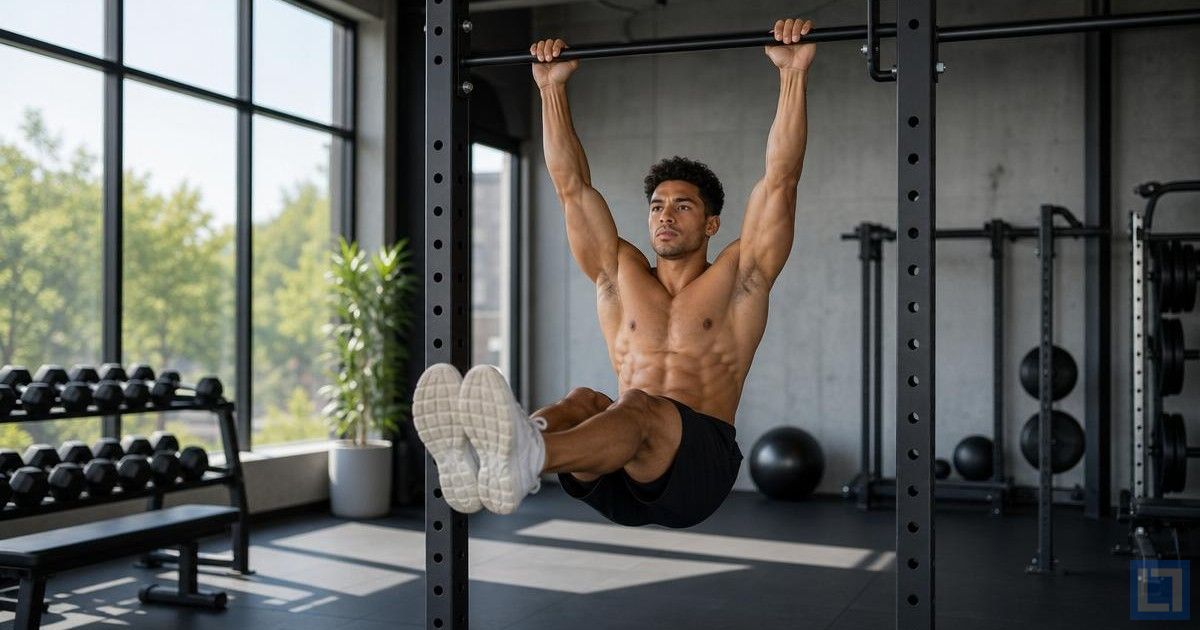
A focused lower-ab session picks three to four exercises and runs each for two to three sets. A balanced selection covers one foundational leg raise (lying or hanging), one reverse-crunch variation (standard or band-loaded), one rotational movement (leg raise oblique crunch or lying leg raise to side), and one combo or hold (reverse crunch to dead bug or leg raise and hold).
Train the lower abs two to four times per week. They recover quickly compared to larger muscle groups, so frequent training is sustainable. Combine the lower-ab work with upper-ab and oblique training in separate sessions to develop the full core rather than just one region.
For more ab-focused programming, see our best standing ab workouts and best kettlebell ab workouts. For broader core work, browse our abs exercise collection.
Final Thoughts
The best lower ab workouts go beyond the crunch and sit-up patterns most ab programs default to. The leg raise and reverse crunch families directly load the lower portion of the rectus abdominis, which is exactly the area most lifters want to develop and the area standard ab work most often misses.
Start with the lying leg raise and the basic reverse crunch. Layer in the loaded variations (banded dead bug, suspended reverse crunch) once those feel comfortable. Save the combo movements for when both foundational patterns are strong individually.
Frequently Asked Questions
Are lower abs different from upper abs?
The rectus abdominis is technically one muscle, but different exercises load different portions of it. Crunches and sit-ups emphasize the upper fibers; leg raises and reverse crunches emphasize the lower fibers. Both areas need direct work for complete ab development, which is why a complete program includes both upper and lower ab exercises.
How often should I train lower abs?
Two to four times per week works for most lifters. The lower abs recover quickly compared to larger muscle groups, so frequent training is productive. Spacing the heavier work (band-loaded, suspended) across the week with at least one rest day between heavy sessions produces better long-term results than hammering them every day.
Will lower ab exercises burn belly fat?
No, ab exercises do not target fat in the abdominal area. Spot reduction is not how the body works. Lower ab exercises build the muscle, which makes it more visible at any body fat level. Whether the abs actually show through depends on overall body composition, which is driven primarily by nutrition.
How long until I see lower ab results?
Strength gains appear within 2 to 4 weeks of consistent training. Visible changes typically take 8 to 12 weeks combined with adequate nutrition. The lower abs are particularly difficult to make visible because most lifters carry fat in the lower abdominal region last, so visible definition there often requires lower body fat than upper-ab definition.
Can I train lower abs every day?
Light bodyweight work like basic leg raises and reverse crunches can be done daily without significant overtraining risk. Heavier loaded work (banded variations, suspended movements, combo exercises) should be spaced with at least one rest day between sessions to allow recovery and adaptation.