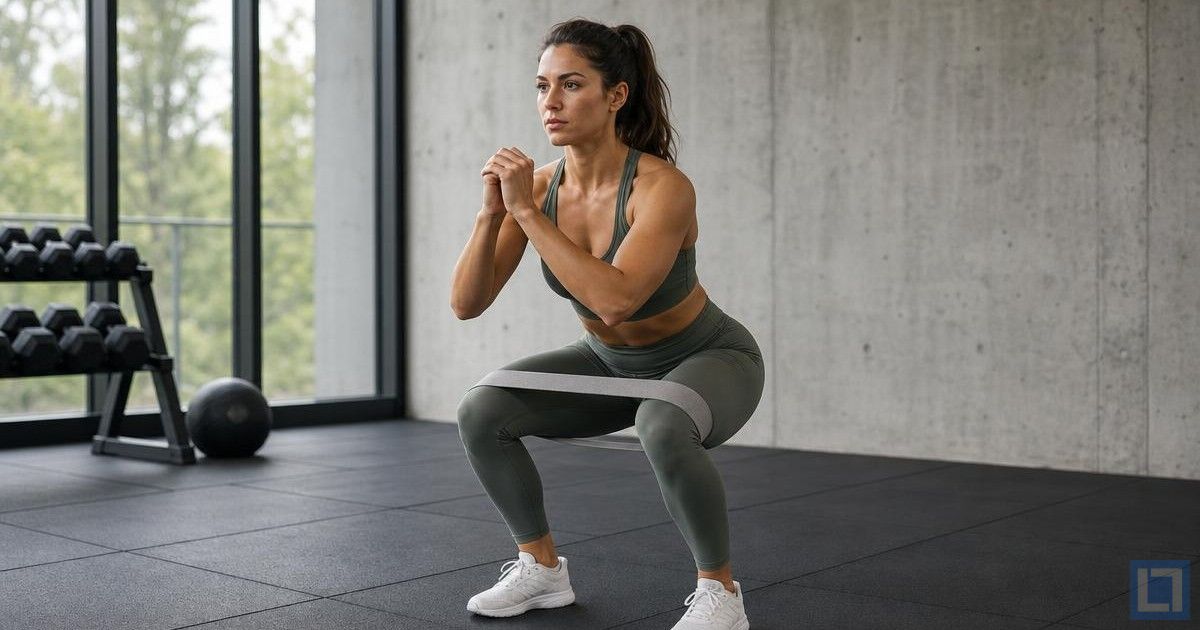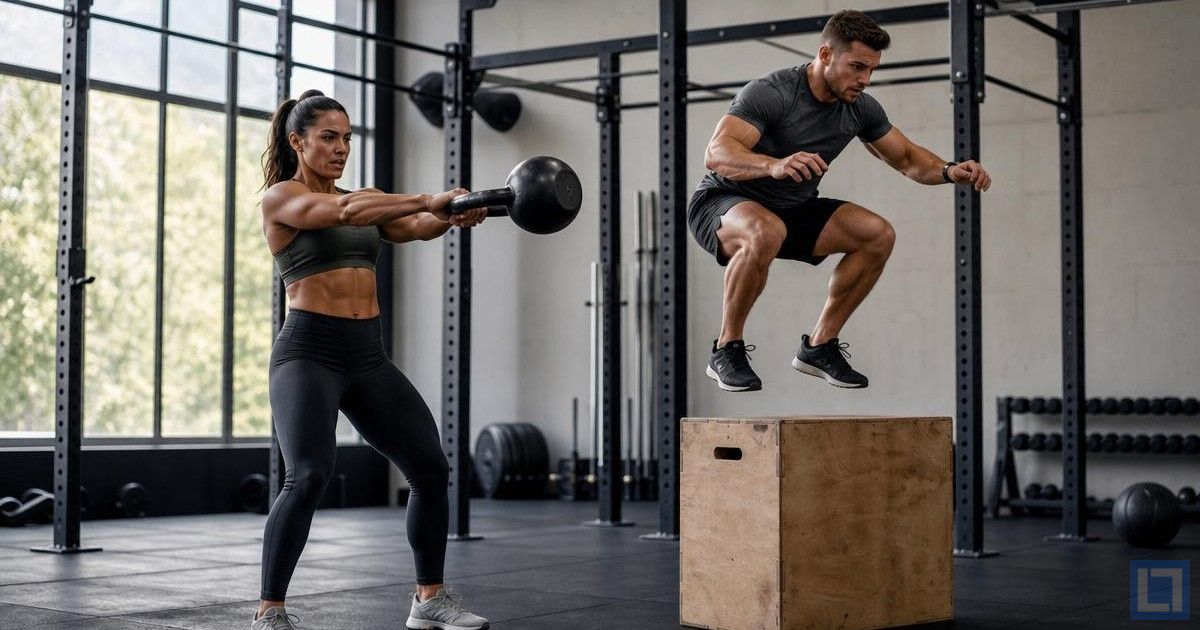
CrossFit is one of the most popular strength and conditioning programs in the world, and for good reason: the combination of constantly varied functional movements performed at high intensity produces the kind of broad fitness that no single training style can match. The best CrossFit workouts pull from a defined set of foundational movements that appear repeatedly in benchmark workouts (WODs) like Fran, Murph, Cindy, and the CrossFit Open.
Below are ten effective CrossFit movements that cover full-body explosive work, Olympic-style lifting, gymnastics movements, kettlebell ballistics, and conditioning skills. Together they form the foundation that nearly every CrossFit workout pulls from. Master these ten exercises, and any CrossFit benchmark workout becomes accessible within a few practice sessions.
Burpee

The Burpee combines a squat, push-up, and vertical jump in one continuous motion. Drop into a squat, kick the legs back into a plank, perform a push-up, jump the feet forward, and explode upward into a vertical jump. The combination drives heart rate up rapidly while hitting nearly every major muscle group.
In CrossFit programming, burpees appear in nearly every benchmark workout for good reason. The full-body recruitment and continuous motion produce the high heart rate and metabolic demand that define CrossFit conditioning. They are one of the most efficient exercises for building general fitness in minimal time.
Drop quickly into a squat with hands on the floor. Kick the legs back into a plank, perform one push-up, jump the feet forward to the squat position, then jump straight up with arms overhead. Land softly and immediately drop into the next rep. Maintain consistent pace throughout the workout.
Kettlebell Swing

The Kettlebell Swing hinges at the hips with a kettlebell held in both hands and drives the hips forward to swing the bell explosively to chest height. The exercise is the foundational hip-hinge movement in CrossFit and produces strong posterior chain power and conditioning simultaneously.
The American kettlebell swing (continuing the bell all the way overhead rather than stopping at chest height) is the standard CrossFit variation. Both versions produce strong cardiovascular response and posterior chain loading; choose based on shoulder mobility and the specific workout requirements. Run it for 50 to 100+ reps in conditioning workouts.
Hinge at the hips and let the kettlebell swing back between the legs. Drive the hips forward explosively to launch the bell forward to chest height (or overhead for American style). The arms guide the bell but do not lift it; all the power comes from the hips. Reverse the swing back through the legs.
Barbell Thruster

The Barbell Thruster combines a front squat and push press into one continuous motion: squat to depth holding the bar in the front rack, then drive up explosively while pressing the bar overhead to lockout. The exercise is one of the most demanding full-body movements that exists.
Thrusters appear in many CrossFit benchmark workouts (most famously “Fran”) because they hit the entire body in one movement and elevate heart rate quickly. The combination of leg drive and overhead pressing produces both strength and conditioning adaptations. Build technique with light weight before chasing heavier loads.
Hold the barbell in the front rack position at the shoulders. Squat to depth with chest tall. Drive up explosively, using the leg drive momentum to press the bar overhead to lockout. Lower the bar back to the rack and immediately drop into the next squat. Continue the chain of squat-to-press without pause.
Pull Up

The Pull Up hangs from a bar with an overhand grip and pulls the body up until the chin clears the bar. CrossFit programming uses both strict pull-ups (no body movement) and kipping pull-ups (using full-body momentum) depending on the workout requirements.
Pull-ups are essential CrossFit movements that test pulling strength and conditioning. Strict pull-ups produce stronger pure strength gains; kipping pull-ups allow significantly higher volume and produce better conditioning adaptations. Most CrossFit programming uses kipping pull-ups in conditioning workouts and strict pull-ups in dedicated strength sessions.
Hang fully at the bottom with arms straight. For strict reps, drive the elbows down and back to pull the chest toward the bar without using body momentum. For kipping reps, swing the body forward and back, then use the forward swing momentum to pull the body up. Lower under control or drop quickly to begin the next rep.
Push Ups

The Push Ups perform a push-up motion in standard plank position. The exercise hits the chest, shoulders, and triceps as a coordinated unit and serves as one of the most fundamental bodyweight pressing exercises in CrossFit programming.
Push-ups appear in nearly every CrossFit workout that includes pressing volume. The bodyweight loading allows high-rep volume that drives both strength and conditioning adaptations. Variations include standard push-ups, hand-release push-ups (chest fully touches the floor with arms briefly lifted), and clapping push-ups for power development.
Set up in plank position with hands directly under the shoulders and body in a straight line from head to heels. Lower the chest to within an inch of the floor by bending the elbows. Press back to lockout. Maintain tight body position throughout. For hand-release, briefly lift the hands at the bottom before pressing back up.
Wall Ball
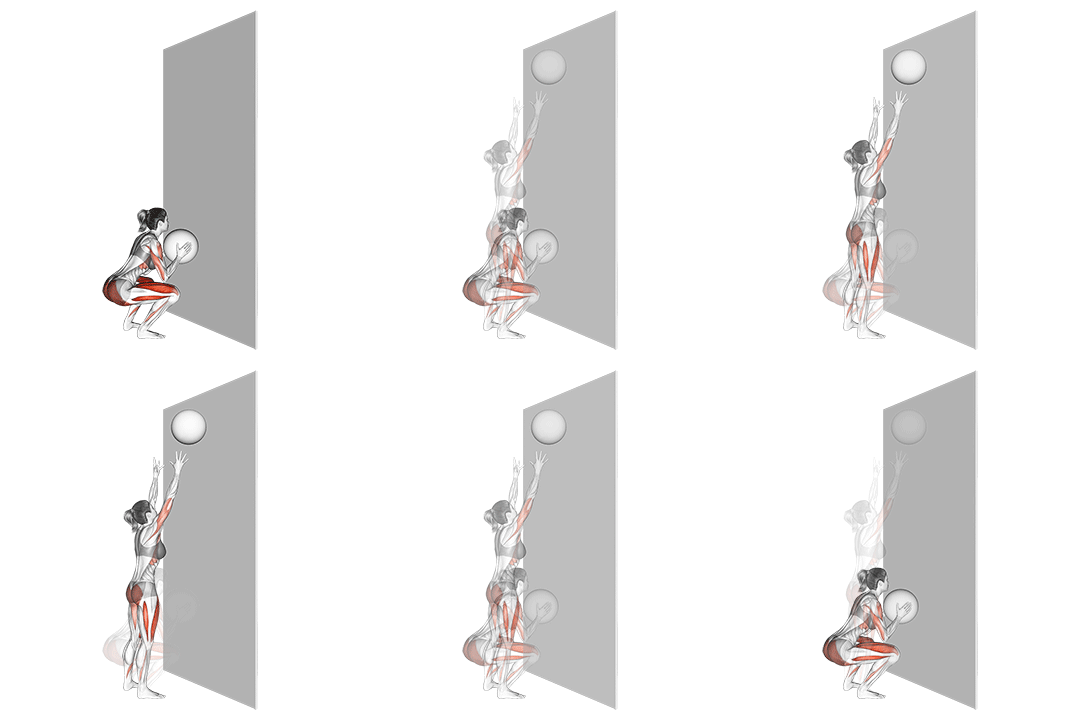
The Wall Ball holds a medicine ball at the chest, squats to depth, then drives up explosively while throwing the ball to a target on the wall (typically 10 feet for men, 9 feet for women). Catch the ball and immediately drop into the next squat.
Wall balls combine squatting, throwing, and catching into one continuous motion that produces high cardiovascular demand alongside leg and shoulder loading. They appear in many CrossFit benchmark workouts because they test both strength and conditioning in a single movement. Use medicine balls of 14 to 20 pounds for women and 20 to 25 pounds for men.
Hold the medicine ball at the chest. Squat to depth with chest tall. Drive up explosively, using the leg drive to throw the ball up to the wall target. Catch the ball as it returns and immediately drop into the next squat. Maintain consistent pace; break only when grip or technique fails.
Barbell Deadlift

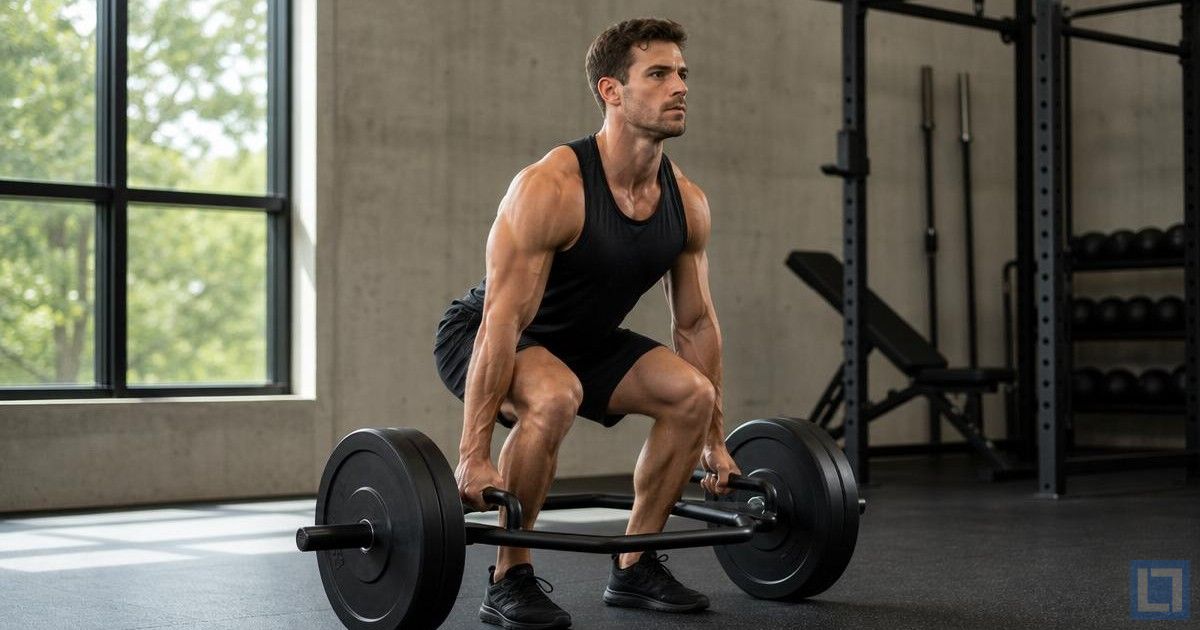
The Barbell Deadlift lifts a loaded barbell from the floor to a standing lockout position. The exercise tests pure pulling strength against gravity and serves as the heaviest CrossFit lift in most programming.
In CrossFit workouts, deadlifts appear in both heavy strength sessions and high-rep conditioning workouts. Heavy deadlifts (3 to 5 reps near maximum) build pure strength; lighter conditioning deadlifts (15 to 30+ reps with moderate weight) build muscular endurance. The combination produces complete deadlift development.
Stand with feet shoulder-width and the bar over the mid-foot. Hinge down to grip the bar with arms straight outside the legs. Drive through the floor by pushing the legs and pulling the chest up simultaneously. Lock out by squeezing the glutes at the top. Lower under control.
Barbell Front Squat

The Barbell Front Squat holds the barbell in the front rack position at the shoulders and squats to depth. The front-loaded position emphasizes the quads and core while keeping the torso more upright than back squats.
Front squats appear in CrossFit programming as both standalone strength work and as the bottom portion of complex lifts (clean, thruster). The front rack position teaches the bracing pattern that all front-loaded Olympic lifts depend on. Build technique with moderate weight before chasing heavy loads.
Hold the barbell in the front rack position at the shoulders with elbows up. Squat to depth with chest tall and elbows pointing forward. Drive up through the whole foot. The bar position will force the torso upright; if the elbows drop and the bar rolls forward, the lift fails.
Hanging Toes to Bar

The Hanging Toes to Bar hangs from a pull-up bar and lifts the toes up to touch the bar by flexing at the hips and contracting the abs. The full range of motion from full hang to overhead toe-touch produces one of the most demanding ab exercises in any program.
Toes-to-bar appear in many CrossFit workouts as the primary core conditioning exercise. The combination of hanging grip work, hip flexor demand, and ab loading produces stronger total core development than floor-based ab exercises. Most beginners need 3 to 6 months of consistent practice to perform clean reps.
Hang from a pull-up bar with arms straight. Engage the lats and core. Lift the legs up by flexing at the hips, bringing the toes to touch the bar overhead. Lower under control to a full hang. Use kipping motion in conditioning workouts to allow higher volume; use strict reps in strength work.
Jump Rope

The Jump Rope swings a rope continuously under the feet while jumping over it on every rotation. CrossFit programming uses both single-unders (one rope rotation per jump) and double-unders (two rotations per jump) depending on the workout.
Double-unders are one of the most technical CrossFit skills, and they appear in nearly every benchmark workout for good reason. The combination of cardiovascular demand, calf loading, and rhythm work produces strong conditioning adaptations alongside the skill development. Most beginners need 1 to 3 months of practice to consistently link double-unders.
Hold the rope handles with relaxed grips. Spin the rope using primarily wrist motion rather than arm motion. Jump just high enough to clear the rope; for double-unders, increase the jump height slightly while spinning the rope twice as fast. Maintain consistent rhythm and minimize rope contact mistakes.
How To Program These Workouts
A typical CrossFit workout (WOD) combines 3 to 5 of these movements into a structured format: AMRAP (as many rounds as possible in a fixed time), EMOM (every minute on the minute), for time (complete prescribed work as fast as possible), or chipper (work through a list of movements in sequence). Most WODs run 8 to 30 minutes total, depending on format.
Train CrossFit-style workouts three to five times per week. The high intensity demands appropriate recovery; daily CrossFit training produces burnout for most lifters within a few weeks. Pair CrossFit conditioning sessions with dedicated strength work (heavier compound lifts at lower reps) on separate days to develop both strength and conditioning fully.
For more conditioning programming, see our best HIIT workouts at home and best Tabata workouts. For broader strength training, see our best compound exercises for strength.
Final Thoughts
The best CrossFit workouts produce broad fitness adaptations that single-modality training (pure strength, pure cardio) cannot match. The combination of strength, power, conditioning, gymnastics, and Olympic lifting in one program develops athletes capable of performing well across nearly any physical task. For lifters who want general fitness rather than specialization in one area, CrossFit is one of the most effective training approaches available.
Stay focused on technique. CrossFit movements (especially the Olympic lifts and gymnastics skills) are technically demanding, and the high-intensity workout format makes form breakdown likely as fatigue accumulates. The lifters who get the most from CrossFit are the ones who put time into learning each movement at light loads before pushing intensity. Master the basics; performance follows.
Frequently Asked Questions
Is CrossFit good for beginners?
Yes, with appropriate scaling. CrossFit’s prescribed weights and rep counts work for advanced athletes; beginners should scale every workout to manageable loads and rep counts that allow clean technique. Most CrossFit gyms offer foundational programs (often called “On Ramp” or “Elements”) that teach the basic movements before joining regular classes. Self-trained beginners should focus on technique first and intensity second.
How often should I do CrossFit workouts?
Three to five times per week works for most lifters. The high intensity demands appropriate recovery; daily CrossFit training produces burnout for most lifters within a few weeks. Most CrossFit programming uses a 3-on-1-off pattern (three workout days followed by one rest day) or a 5-on-2-off pattern with weekend rest. Adjust based on individual recovery.
Do I need a gym to do CrossFit workouts?
Most foundational CrossFit movements can be done at home with minimal equipment: a pull-up bar, one or two kettlebells, a barbell with plates, a medicine ball, and a jump rope cover most workout requirements. CrossFit gyms (boxes) offer the community and coaching that drive faster progress, but home training works for self-motivated lifters with appropriate equipment.
Can CrossFit build muscle?
Yes, especially for beginners and intermediates. The combination of high-intensity training, varied movement patterns, and progressive loading produces real muscle growth for the first 12 to 24 months of training. Advanced lifters chasing maximum mass eventually benefit from adding dedicated bodybuilding-style training, but consistent CrossFit produces measurable muscle development at every level.
Is CrossFit dangerous?
CrossFit injury rates are similar to other strength training programs when proper coaching and scaling are used. Most CrossFit injuries come from poor technique on Olympic lifts and gymnastics movements performed at high intensity, or from inadequate scaling for beginners. The fix is straightforward: learn the movements at light loads before pushing intensity, scale appropriately for current fitness level, and prioritize technique over speed.