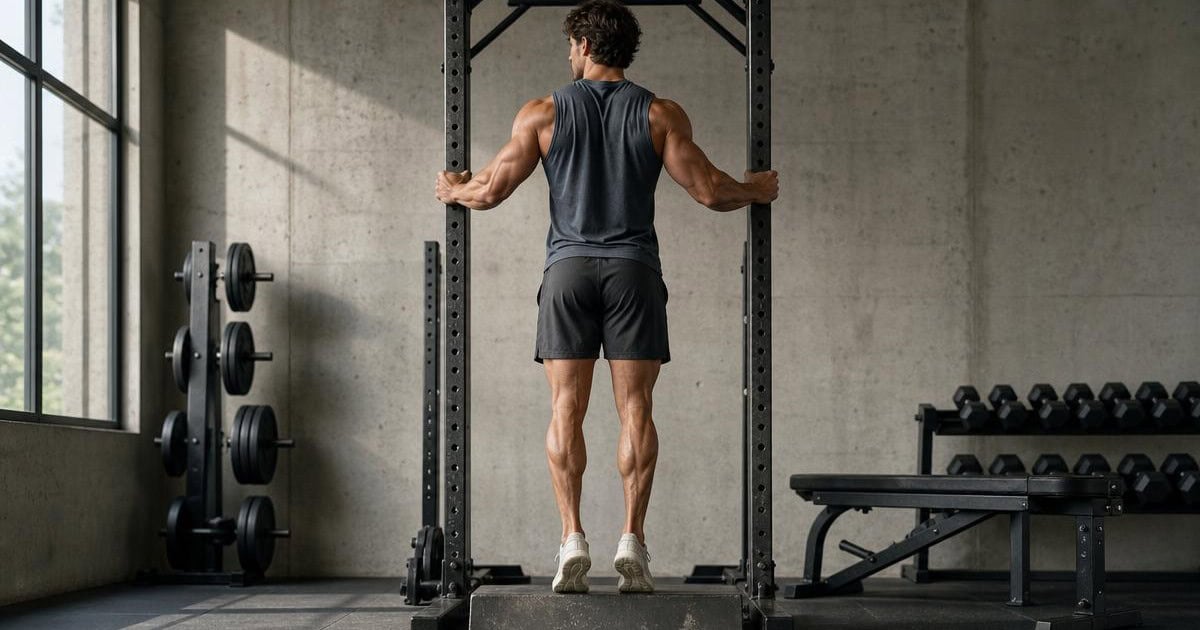
Bodyweight calf training produces real calf development through patterns that load both the gastrocnemius (the larger, two-headed muscle that gives the calf its rounded shape) and the soleus (the deeper muscle that contributes substantially to overall calf mass) — all without barbells, dumbbells, or machines. The format works particularly well for calves because they are notoriously stubborn for many lifters, requiring high frequency, full range of motion (especially the deep stretch at the bottom), and high volume to drive growth beyond what daily walking already produces. Bodyweight progressions deliver all three through accessible exercises that can be performed anywhere with no equipment beyond an elevated surface like a step or block. Most lifters who consistently train bodyweight calf work 2 to 3 times per week with proper volume and full range see measurable calf growth within 12 to 16 weeks, which dramatically outperforms the typical undertrained approach most lifters use.
Below are ten effective bodyweight calf exercises that cover bilateral loading (standing raise, elevated standing raise, walking raise), unilateral overload (single-leg off step, single-leg balance, elevated single-leg, one-leg floor), soleus emphasis (squat hold raise), deeper-range work (deficit raise with chair), and high-rep finishing (pulse raise). Together they form a complete bodyweight calf program that hits both the gastrocnemius and soleus from multiple angles. A 15 to 25-minute session pulled from this list, performed 2 to 3 times per week, produces strong calf development for home or limited-equipment training.
Bodyweight Standing Calf Raise

The Bodyweight Standing Calf Raise performs heel raises with body weight only on flat ground or a small elevated surface. The pattern produces fundamental calf loading accessible anywhere with no equipment.
For bodyweight calf training, the standing calf raise is the foundational calf exercise. The pattern hits the gastrocnemius through plantar flexion. Run it for 4 sets of 20 to 30 reps as fundamental calf mass work, especially when training without equipment or as a high-rep finisher.
Stand with feet hip-width on flat ground (or with the balls of the feet on a small block for added range). Drive up onto the balls of the feet by extending the ankles, raising the heels as high as possible. Squeeze hard at the top. Lower under control. The pattern is simple but produces real calf development when performed with full range and high reps.
Bodyweight Walking Calf Raise

The Bodyweight Walking Calf Raise performs walking on the toes for distance or time. The dynamic forward motion combined with calf loading produces both strength and conditioning benefits.
For bodyweight calf training, the walking calf raise produces combined calf strength and conditioning loading. The pattern hits the calves through dynamic plantar flexion combined with forward motion. Run it for 3 sets of 30 to 60-second walks as combined calf and conditioning work.
Stand with feet hip-width. Rise up onto the balls of the feet by extending the ankles. Walk forward on the balls of the feet while maintaining the elevated heel position. Continue for the working interval (distance or time). The combination of dynamic walking and calf loading produces strong functional calf work without equipment.
Single Leg Calf Raise Off Step

The Single Leg Calf Raise Off Step performs unilateral calf raises off a step for added range and difficulty. The pattern doubles the relative load per leg and produces strong unilateral calf development.
For bodyweight calf training, the single-leg calf raise off step is one of the most effective bodyweight calf exercises that exists. The doubled load combined with full stretch produces strong calf development. Run it for 3 sets of 12 to 20 reps per leg as primary unilateral calf work.
Stand on one foot with the ball of the working foot on a step or sturdy elevated surface, heel hanging off the back. The other foot is lifted slightly. Hold a wall or rail for balance. Lower the heel below the level of the step until the calf stretches deeply. Drive up onto the ball of the foot by extending the ankle. Squeeze at the top. Lower under control. Switch legs between sets.
Standing Single Leg Calf Raise Balance

The Standing Single Leg Calf Raise Balance performs unilateral calf raises on flat ground without support, demanding both calf work and balance. The pattern produces combined calf strength and proprioceptive challenge.
For bodyweight calf training, the single-leg balance variation produces combined calf loading and athletic balance work. The pattern hits the calf through unilateral work plus balance challenge. Run it for 3 sets of 12 to 20 reps per leg as combined calf and balance work.
Stand on one foot with the other foot lifted slightly off the floor. Without holding support, drive up onto the ball of the working foot by extending the ankle as high as possible. Hold briefly at the top. Lower under control. Maintain balance throughout the entire set. Switch legs between sets. The balance demand makes this particularly valuable for athletes.
Elevated Standing Calf Raise

The Elevated Standing Calf Raise performs heel raises with the balls of the feet elevated on a step or block, allowing the heels to drop below the platform for full calf stretch. The pattern produces stronger calf loading than flat-ground variations through extended range of motion.
For bodyweight calf training, the elevated standing calf raise produces stronger gastrocnemius loading than flat-ground variations. The deep stretch at the bottom drives growth. Run it for 4 sets of 15 to 25 reps as primary mass-building bodyweight calf work.
Stand with the balls of the feet on a step or sturdy elevated surface (3 to 6 inches high), heels hanging off the back. Hold a wall or rail for balance if needed. Lower the heels below the level of the step until the calves stretch deeply. Drive up onto the balls of the feet by extending the ankles, raising the heels as high as possible. Squeeze hard at the top. Lower under control.
Elevated Standing Single Leg Calf Raise

The Elevated Standing Single Leg Calf Raise combines unilateral loading with elevated heel position for maximum bodyweight calf loading. The pattern produces the strongest bodyweight calf loading possible.
For bodyweight calf training, the elevated single-leg variation is the most effective bodyweight calf exercise that exists. The combination of doubled relative load plus full stretch produces maximum calf loading. Run it for 3 sets of 10 to 15 reps per leg as primary heavy-loading calf work.
Stand on one foot with the ball of the working foot on a step or sturdy elevated surface, heel hanging off the back. The other foot is lifted slightly. Hold a wall or rail for balance. Lower the heel below the level of the step until the calf stretches as deeply as possible. Drive up onto the ball of the foot by extending the ankle as high as possible. Switch legs between sets.
Bodyweight Standing Pulse Calf Raise

The Bodyweight Standing Pulse Calf Raise performs calf raises with small pulse motions at the top of each rep instead of full range. The pattern produces high time-under-tension loading that accumulates calf burn quickly.
For bodyweight calf training, the pulse calf raise produces strong time-under-tension loading. The pattern hits the calves with sustained tension that drives metabolic stress. Run it for 3 sets of 30 to 50 pulse reps as finishing or burn-out work.
Stand with feet hip-width. Rise up onto the balls of the feet by extending the ankles to peak contraction position. Instead of lowering fully, perform small pulse motions at the top of the range, raising and lowering only an inch or two while maintaining peak contraction. Continue pulsing for the working set. The sustained tension produces significant calf burn.
Calf Raise from Deficit with Chair Supported

The Calf Raise from Deficit with Chair Supported performs calf raises from a deeper deficit with chair support for balance. The increased range produces stronger calf loading and stretch.
For bodyweight calf training, the deficit calf raise produces stronger calf loading through extended range of motion. The pattern hits the calves through deeper stretch than standard elevated variations. Run it for 3 sets of 12 to 20 reps as deep-range calf work.
Stand with the balls of the feet on a higher elevated surface (a thicker block or weight plates stacked) and grip the back of a chair for balance. Lower the heels as far as possible below the platform level until the calves stretch maximally. Drive up onto the balls of the feet by extending the ankles fully. The chair provides balance support so the focus stays on calf loading. Use deeper deficits as flexibility allows.
Squat Hold Calf Raise

The Squat Hold Calf Raise performs calf raises while holding a deep squat position. The bent-knee position emphasizes the soleus over the gastrocnemius and the squat hold adds combined lower-body conditioning.
For bodyweight calf training, the squat hold calf raise produces combined soleus loading and lower-body conditioning. The pattern hits the soleus (which contributes substantially to calf mass) through bent-knee plantar flexion. Run it for 3 sets of 10 to 15 reps as combined calf and conditioning work.
Stand with feet shoulder-width and squat down to a deep squat position (hips below knees). Maintain the squat hold throughout the set. Rise up onto the balls of the feet by extending the ankles, then lower the heels back down. Maintain the squat depth and torso position throughout. The bent-knee position emphasizes the soleus while the squat hold adds conditioning challenge.
One Leg Floor Calf Raise

The One Leg Floor Calf Raise performs unilateral calf raises on flat ground without elevation. The pattern produces fundamental unilateral calf loading accessible anywhere.
For bodyweight calf training, the one-leg floor calf raise is the most accessible unilateral calf exercise. The pattern hits the calves through unilateral plantar flexion without requiring any equipment. Run it for 3 sets of 15 to 25 reps per leg as fundamental unilateral calf work.
Stand on one foot on flat ground with the other foot lifted slightly. Hold a wall or sturdy surface for balance support. Drive up onto the ball of the working foot by extending the ankle as high as possible. Squeeze at the top. Lower under control until the heel touches the floor. Switch legs between sets. Use high reps because the limited range without elevation requires more volume for full calf stimulus.
How To Program These Workouts
A productive bodyweight calf program organizes these exercises across 2 to 3 weekly sessions with high volume per session. A common 2-day calf split: Day 1 (Heavy Standing): elevated single-leg calf raise (3 sets x 10 to 15 per leg), single-leg calf raise off step (3 sets x 12 to 20 per leg), pulse calf raise (3 sets x 30 to 50). Day 2 (Soleus and Volume): squat hold calf raise (3 sets x 10 to 15), elevated standing calf raise (4 sets x 15 to 25), walking calf raise (3 sets x 60 seconds). Calves respond best to a combination of heavier loading (12 to 15 reps), moderate volume (15 to 25 reps), and high-rep finishing work (30 to 50 reps). Total session time stays under 25 minutes with short rest periods between calf sets.
Train calves 2 to 3 times per week as either dedicated 15 to 25-minute sessions or as part of leg days. The calves are heavily worked through daily walking and need substantial training stimulus to grow beyond baseline. Most successful bodyweight calf programs prioritize: 1) high frequency (2 to 3 sessions per week), 2) full range of motion with deep stretch and full extension on every rep, 3) variety between standing and squat-hold variations, 4) high volume (15 to 25+ working sets per week), and 5) progressive difficulty over time. Calves respond to consistent high-volume training over months and years rather than dramatic short-term programs.
For broader calf programming, see our best calf workouts and how to grow your calves. For specific posterior chain work, see our best posterior chain workouts.
Final Thoughts
The best bodyweight calf workouts deliver real calf development through patterns that load both the gastrocnemius and soleus with full range of motion, high volume, and progressive difficulty — all without any equipment beyond an elevated surface. The combination of bilateral basics, unilateral overload, soleus emphasis, deeper-range work, and high-rep finishing covers every functional pattern of the calf and produces broader development than the typical undertrained approach most lifters use. For lifters who want measurable calf growth and have struggled with stubborn lower legs, want to train calves at home or while traveling, or want to add high-frequency calf work to their existing program, dedicated bodyweight calf training with proper volume and frequency is one of the most effective options available.
Stay focused on full range of motion and high frequency. The most common bodyweight calf training mistakes include using partial range of motion (skipping the deep stretch at the bottom or the full extension at the top) and undertraining frequency (training calves once per week with low volume). The fix: pause briefly at the bottom of every rep to feel the deep calf stretch, drive up to full plantar flexion with hard squeeze at the top, and train calves at least 2 times per week with 15 to 25+ working sets weekly. Quality high-frequency calf training produces stronger results than infrequent low-volume work.
Frequently Asked Questions
Can you build calves with bodyweight only?
Yes effectively for most lifters. The bodyweight calf exercises in this list produce real calf development through full range of motion, high volume, and unilateral overload (which doubles the relative load per leg). Many lifters build excellent calves through dedicated bodyweight training. Most successful programs include bodyweight work alongside loaded work when both are accessible, but bodyweight alone produces strong development for lifters with limited equipment access.
How many bodyweight calf raises should I do?
High volume works best. Most successful bodyweight calf programs include 15 to 25+ working sets per week across 2 to 3 sessions, with each session including 4 to 6 different calf exercises totaling 60 to 100+ working reps. Bodyweight calf work requires more volume than weighted calf work because the relative loading is lower. Lifters who add unilateral variations (which double the relative load per leg) can use somewhat lower volumes.
What’s the best bodyweight calf exercise?
The elevated single-leg calf raise produces the strongest bodyweight calf loading. The combination of doubled relative load (single-leg) plus full stretch range (elevated heel position) produces maximum calf loading without any equipment beyond a step or block. Other strong choices include single-leg calf raise off step (very similar but slightly less deficit) and squat hold calf raise (soleus emphasis). Most successful programs include all three plus 2 to 3 other variations per session.
How often should I train bodyweight calves?
Two to three times per week works for most lifters. The calves are highly fatigue-resistant due to their use in daily activities, so they recover quickly between sessions and respond well to high-frequency training. Most successful calf programs include 2 to 3 dedicated calf sessions per week (or calf work integrated into 2 to 3 leg days). Daily calf training is also effective for some lifters but requires careful management of total volume to avoid overuse injuries.
Standing vs seated bodyweight calf raises which is better?
Both for complete calf development. Standing calf raises (with knees straight) emphasize the gastrocnemius (the larger, two-headed muscle). Squat-hold or seated calf raises (with knees bent) emphasize the soleus (the deeper muscle). Both contribute substantially to overall calf size and shape. Most successful bodyweight calf programs include both standing and bent-knee variations to hit both muscles. Programs that include only one or the other produce incomplete calf development.