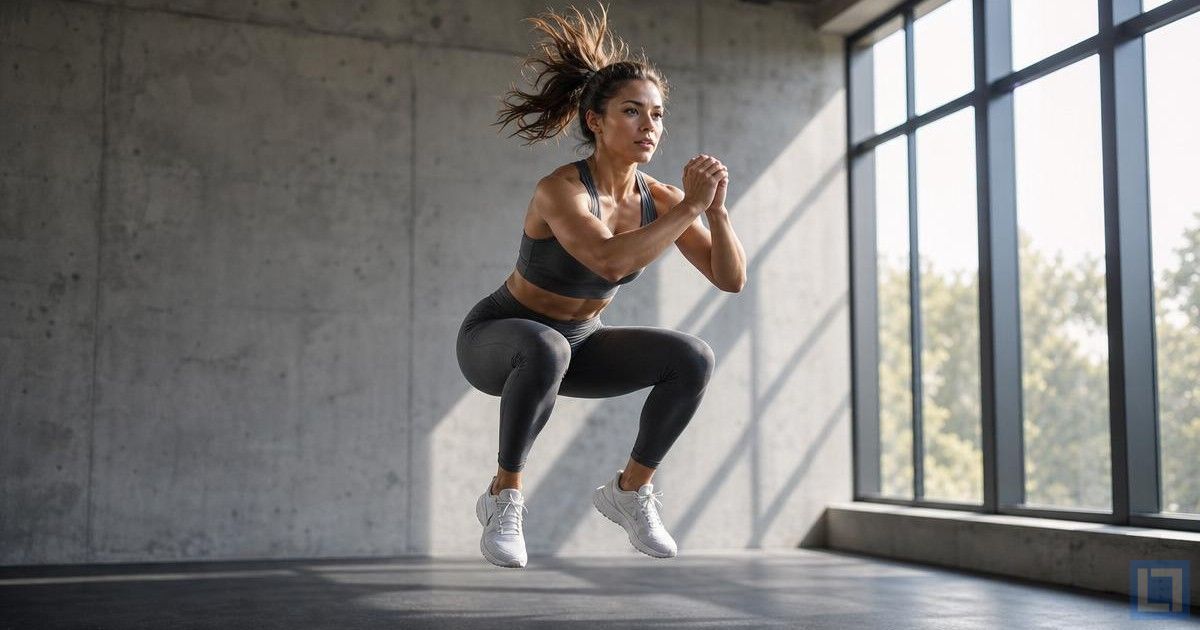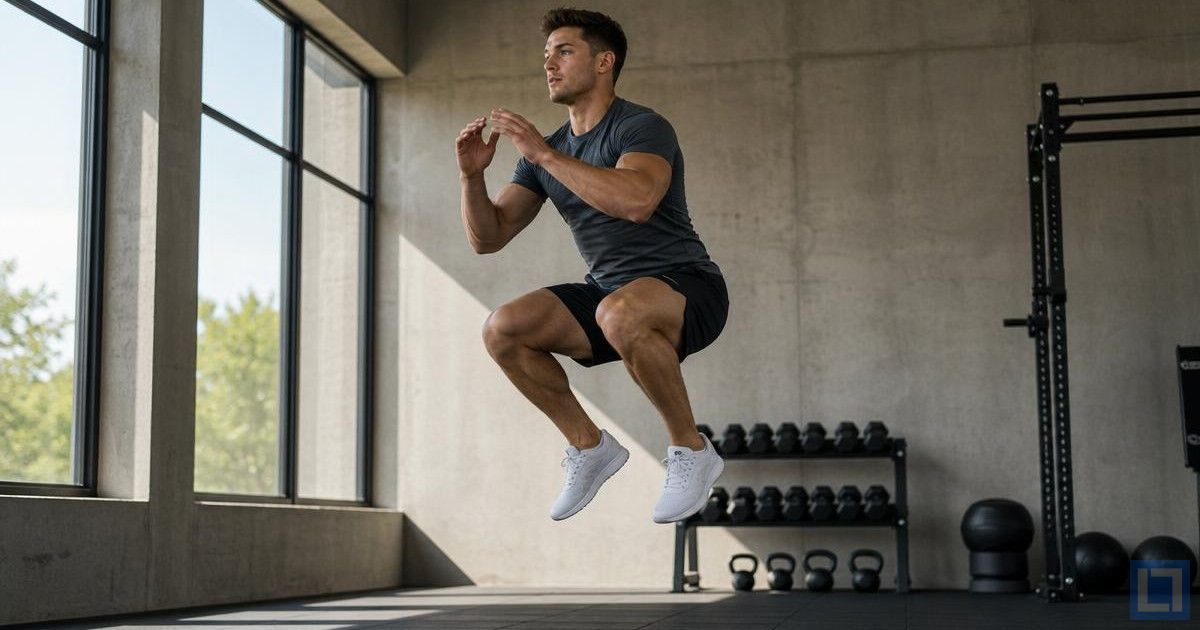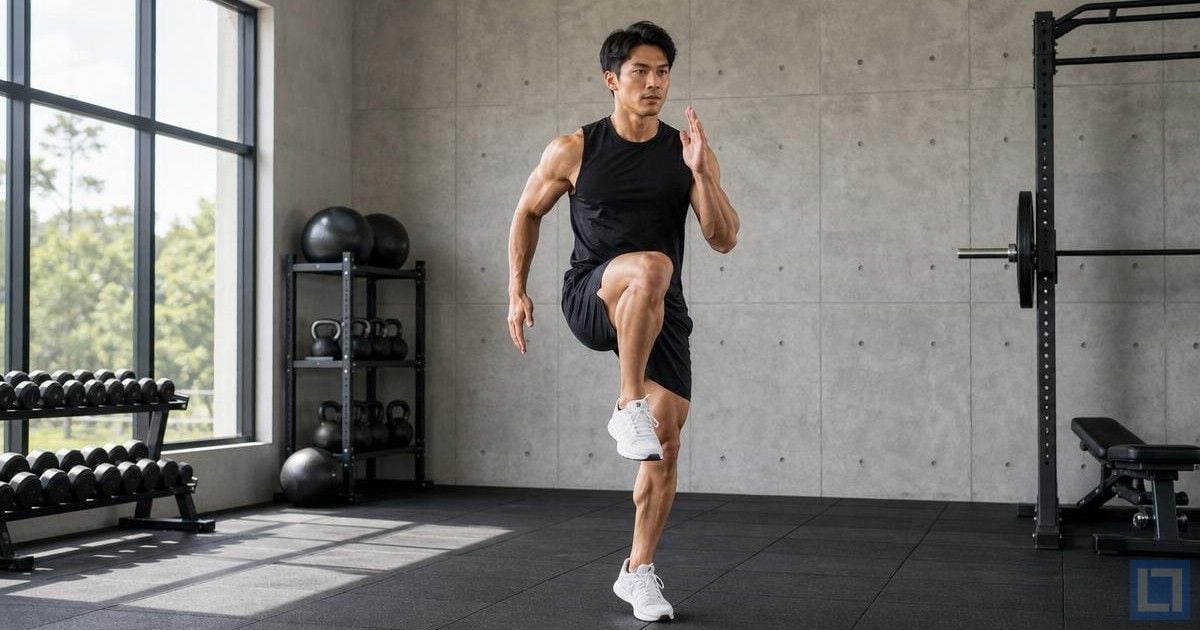
Bodyweight cardio training produces real cardiovascular fitness development through equipment-free exercises that elevate heart rate and improve aerobic capacity. The format works particularly well because it requires zero equipment investment, fits any setting (home, hotel room, park, beach), and scales naturally based on intensity rather than equipment limits. Most lifters who consistently train bodyweight cardio 3 to 5 times per week see measurable cardiovascular improvements within 4 to 6 weeks: lower resting heart rate, faster heart rate recovery between intervals, and improved aerobic capacity for daily activities. The format also produces moderate calorie burn (300 to 500 calories per 30-minute session for most lifters) that supports fat loss alongside dedicated nutrition.
Below are ten effective bodyweight cardio exercises that cover steady-state cardio (bodyweight skipping, celebratory knee drives, stationary arms throw), high-intensity work (quick feet run, alternate sprinter lunge), combined cardio and leg work (cardio lunge, high knees lunge), explosive jumping (basketball shot jump, jump step jump), and full-body conditioning (crawl to crab). Together they form a complete bodyweight cardio training program that fits in any setting. A 25 to 35-minute session pulled from this list produces strong combined cardiovascular and conditioning stimulus.
Bodyweight Skipping
The Bodyweight Skipping performs imaginary jump rope motion (without an actual rope) by hopping on the balls of the feet while rotating the wrists. The pattern produces strong cardiovascular demand at low joint impact.
For bodyweight cardio training, skipping is one of the most efficient cardio exercises that exists. The pattern produces strong heart rate elevation at relatively low joint impact compared to running or burpees. Run it for 60 to 90-second intervals as foundational cardio work.
Stand tall with feet hip-width and arms at the sides. Hop on the balls of the feet in small jumps while rotating the wrists in a jump-rope motion. Stay light and bouncy throughout the work interval. Maintain steady tempo at sustainable intensity for the full duration.
Cardio Lunge

The Cardio Lunge performs alternating lunges at high tempo, typically with a small jump or hop between sides. The pattern produces combined leg strength work and cardiovascular demand.
For bodyweight cardio training, the cardio lunge produces strong combined leg loading and cardiovascular stimulus per rep. The pattern works well as a station that combines strength and conditioning in single exercise. Run it for 30 to 45-second intervals as combined leg-and-cardio work.
Stand tall with feet hip-width. Step forward into a long lunge stance, lowering the back knee toward the floor. Drive up explosively to bring the back foot forward and step into a lunge on the opposite side. Continue alternating sides at high tempo throughout the work interval.
Crawl to Crab

The Crawl to Crab transitions between bear crawl position (face-down on hands and feet) and crab walk position (face-up on hands and feet) by rotating the body underneath. The pattern produces strong full-body conditioning combined with mobility demands.
For bodyweight cardio training, the crawl-to-crab is one of the most demanding full-body conditioning exercises that exists. The pattern combines upper body, lower body, core, and mobility demands in a single transition. Run it for 30 to 45-second intervals as advanced full-body cardio work.
Set up in a bear crawl position (face-down on hands and feet with knees hovering off the floor). Rotate the body to one side by lifting one hand and the opposite foot, then settling into a crab position (face-up on hands and feet). Reverse the rotation back to bear crawl. Continue transitioning between positions throughout the work interval.
Celebratory Knee Drives

The Celebratory Knee Drives stands with arms raised overhead and drives one knee up to waist height while pulling the elbows down to the hip in a celebration motion. The pattern produces strong cardiovascular demand alongside core engagement.
For bodyweight cardio training, the celebratory knee drives produce strong heart rate elevation through the alternating motion that engages the entire body. The pattern works well as a steady-state cardio station within longer cardio circuits. Run it for 30 to 45-second intervals as moderate cardio work.
Stand tall with feet hip-width and arms raised overhead. Drive one knee up toward the chest while pulling both arms down toward the working hip in a celebration motion. Return to the start with arms overhead. Switch knees in alternating reps at a steady tempo throughout the interval.
High Knees Lunge

The High Knees Lunge alternates between high-knee running and forward lunges, performing a high-knee on each leg before stepping into a lunge. The pattern produces combined cardio and leg work.
For bodyweight cardio training, the high knees lunge combines cardio work with strength loading per cycle. The pattern hits the legs through the lunge while the high knees keeps heart rate elevated. Run it for 30 to 45-second intervals as combined cardio and leg work.
Stand tall with feet hip-width. Drive one knee up to waist height (high knee). Step forward with that foot into a lunge by lowering the back knee toward the floor. Drive up to perform a high knee on the opposite side. Step into a lunge on that side. Continue alternating throughout the interval.
Quick Feet Run

The Quick Feet Run performs rapid foot taps on the floor in place, alternating feet at maximum tempo. The pattern produces extreme cardiovascular demand through the rapid foot motion at minimal joint impact.
For bodyweight cardio training, the quick feet run is one of the most intense cardio exercises that exists at minimal joint impact. The pattern produces extreme heart rate elevation through high-frequency foot motion. Run it for 20 to 30-second intervals as high-intensity cardio bursts.
Stand tall with feet hip-width and slightly bent knees. Tap the feet on the floor at maximum tempo, alternating between feet as quickly as possible. Stay light on the balls of the feet throughout. Continue at maximum tempo for the work interval.
Jump Step Jump

The Jump Step Jump combines a small jump with a step forward and another jump in a continuous motion pattern. The pattern produces moderate cardiovascular demand combined with explosive footwork.
For bodyweight cardio training, the jump step jump produces combined cardio work and athletic footwork training. The pattern hits the cardiovascular system while developing dynamic foot patterns. Run it for 30 to 45-second intervals as varied cardio station.
Stand tall with feet hip-width. Perform a small jump in place, then step forward with one foot and immediately perform another small jump. Step back with the same foot to the start position. Continue the jump-step-jump pattern, alternating feet between cycles throughout the interval.
Stationary Arms Throw

The Stationary Arms Throw stands in place and performs continuous overhead throwing motions with both arms while remaining stationary. The pattern hits the upper body while elevating heart rate.
For bodyweight cardio training, the stationary arms throw produces upper-body cardio work that complements the predominantly lower-body cardio exercises. The pattern fits naturally within longer cardio circuits to give the legs brief recovery while keeping the heart rate elevated. Run it for 30 to 45-second intervals as upper-body cardio station.
Stand tall with feet hip-width. Bring both arms overhead, then drive them down forcefully in an overhead throwing motion as if throwing a heavy ball. Reset the arms overhead and repeat. Continue the throwing motion at a steady tempo throughout the work interval.
Alternate Sprinter Lunge

The Alternate Sprinter Lunge performs alternating reverse lunges in a sprinter-like motion with explosive arm drive. The pattern produces strong unilateral leg loading combined with cardiovascular demand.
For bodyweight cardio training, the alternate sprinter lunge produces stronger leg loading than standard cardio lunges through the explosive sprinter mechanics. The pattern translates to athletic running and sprinting motion. Run it for 30 to 45-second intervals as athletic cardio station.
Stand tall with feet hip-width. Step back with one foot into a reverse lunge while driving the opposite arm forward in a sprinter’s arm pump. Drive up explosively to bring the back foot forward and step back with the opposite foot into a reverse lunge. Continue alternating with explosive arm drive throughout the interval.
Basketball Shot Jump

The Basketball Shot Jump performs vertical jumps with a basketball shooting motion at the apex of each jump. The pattern produces explosive vertical jumping combined with arm extension overhead.
For bodyweight cardio training, the basketball shot jump combines explosive jumping with cardiovascular work. The pattern fits well as a vertical-jumping station within bodyweight cardio circuits. Run it for 30 to 45-second intervals as explosive cardio station.
Stand tall with feet hip-width and arms held in front of the chest as if holding a basketball. Squat down briefly to load the legs. Jump straight up explosively while extending the arms overhead in a basketball shooting motion. Land softly with bent knees and immediately reset for the next jump.
How To Program These Workouts
A productive bodyweight cardio session pulls 8 to 10 exercises from the list above into a circuit format. A balanced 25-minute circuit: 8 exercises performed for 40 seconds with 20 seconds of rest between, repeated for 3 rounds. Standard exercise order alternates between high-intensity and moderate-intensity stations: bodyweight skipping (warm-up), quick feet run, cardio lunge, celebratory knee drives, jump step jump, stationary arms throw, alternate sprinter lunge, basketball shot jump. The alternating intensity pattern produces strong cardiovascular adaptations while preventing premature fatigue.
Train bodyweight cardio sessions 3 to 5 times per week alongside dedicated strength training. The format produces moderate fatigue that recovers within 24 hours, which sustains higher training frequency than heavy strength training. Most successful programs include 3 to 5 weekly bodyweight cardio sessions for lifters prioritizing cardiovascular fitness, or 2 to 3 weekly sessions for lifters balancing cardio with strength training. The format also works well as daily 10 to 15-minute sessions for lifters preferring shorter daily practice over fewer longer sessions.
For broader cardio programming, see our best at home cardio workouts and best cardio workouts for weight loss. For HIIT-specific work, see our best bodyweight hiit workouts.
Final Thoughts
The best bodyweight cardio workouts deliver real cardiovascular fitness development through equipment-free exercises that fit any setting and scale based on intensity rather than equipment investment. The combination of steady-state cardio, high-intensity work, combined leg and cardio exercises, explosive jumping, and full-body conditioning covers every major cardiovascular function and produces broader fitness development than single-modality training. For lifters who want effective cardio training without commercial gym access, want training that fits travel and outdoor settings, or need affordable cardio options, bodyweight cardio is one of the most accessible and effective options available.
Stay focused on intensity progression over time. The most common bodyweight cardio mistake is performing the same exercises at the same intensity week after week, which produces fitness maintenance rather than continued improvement. The fix: track interval times and rep counts, then progress intensity (faster tempo, longer intervals, more rounds) every 2 to 4 weeks as current intensities become easier. Quality progressive overload over months produces stronger cardiovascular development than higher session counts at static intensities.
Frequently Asked Questions
Are bodyweight cardio workouts effective?
Yes, very effectively for cardiovascular fitness, calorie burn, and conditioning. Bodyweight cardio produces real heart rate elevation, aerobic capacity improvement, and calorie burn that compares favorably to traditional cardio (running, cycling) for most lifters. The advantages include zero equipment cost, fitting any setting, and combining strength and cardio elements in single exercises. Most lifters can build excellent cardiovascular fitness through 3 to 5 weekly bodyweight cardio sessions.
How long should bodyweight cardio workouts be?
Twenty-five to thirty-five minutes per session works for most lifters. The 30-minute format hits the sweet spot between meaningful training stimulus and sustainable recovery. Most successful bodyweight cardio programs include 25 to 30-minute sessions performed 3 to 5 times per week. Shorter sessions (10 to 15 minutes) work well for daily practice; longer sessions (45+ minutes) typically produce accumulated fatigue without proportional benefit for most fitness goals.
How often should I do bodyweight cardio?
Three to five times per week works for most lifters. The format produces moderate fatigue that recovers within 24 hours, which sustains higher training frequency than heavy strength training. Most successful programs include 3 to 5 weekly bodyweight cardio sessions. Daily bodyweight cardio works well for lifters preferring shorter daily practice; lifters balancing cardio with strength training benefit from 2 to 3 weekly cardio sessions.
Bodyweight cardio or running for fitness?
Both work effectively with different benefits. Running produces sustained aerobic capacity development through longer continuous efforts; bodyweight cardio produces combined aerobic and anaerobic adaptations through varied intensity intervals plus muscular endurance. Most successful programs include both: 1 to 2 weekly running sessions for sustained aerobic capacity, plus 2 to 3 weekly bodyweight cardio sessions for combined fitness development. The combination produces broader cardiovascular fitness than either alone.
Can bodyweight cardio replace running?
Yes for general fitness and cardiovascular health goals. Bodyweight cardio produces comparable cardiovascular adaptations to running for most lifters, with the additional benefits of muscular endurance development and varied movement stimulus. Lifters training for running-specific events (5K, marathon) need to include actual running for sport-specific adaptations. Most general fitness lifters can replace running with bodyweight cardio entirely without losing cardiovascular fitness benefits.