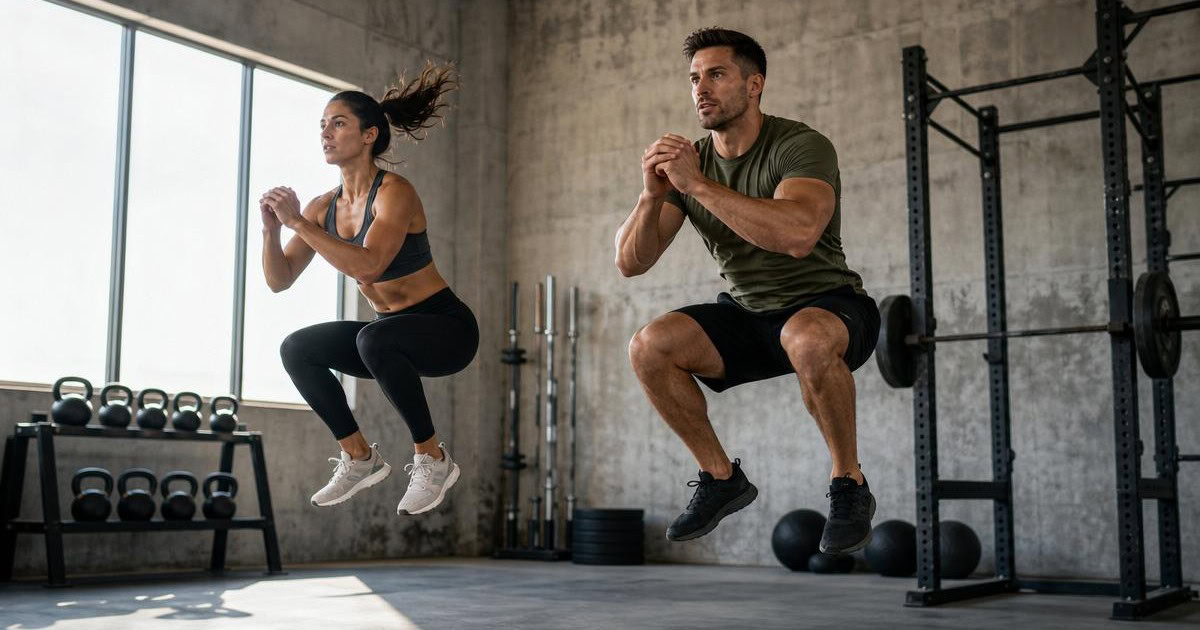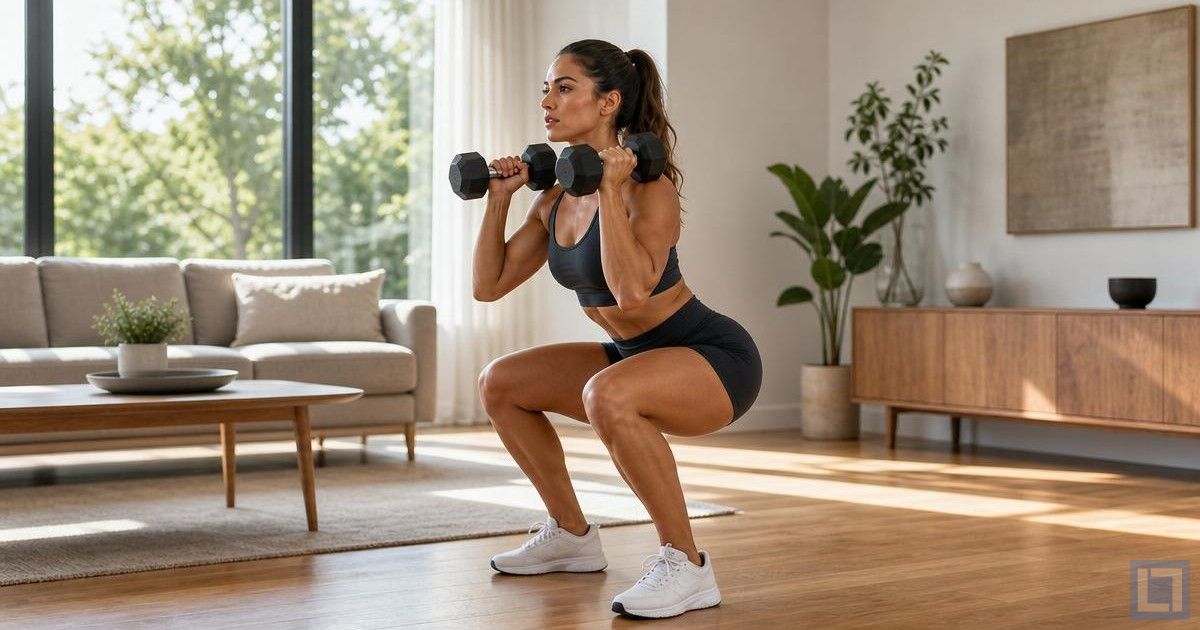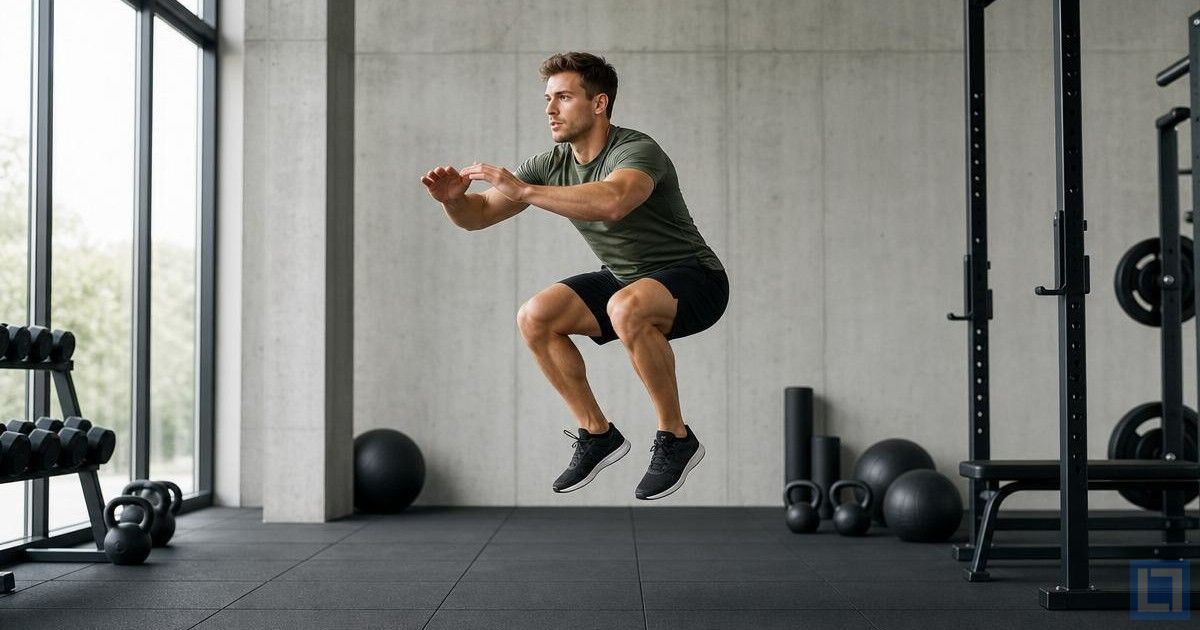
Bodyweight HIIT (high-intensity interval training) workouts produce real cardiovascular and strength gains through equipment-free interval training that fits anywhere. The format works particularly well for travelers, home gym lifters with limited equipment, and anyone wanting effective conditioning without gym access. The combination of explosive bodyweight movements (burpees, jump squats, plank jacks), sustained cardiovascular exercises (jumping jacks, butt kicks, high knees), and strength patterns (push-ups, bear crawls) produces complete fitness development through 20 to 25-minute sessions performed 3 to 4 times per week.
Below are ten effective bodyweight HIIT exercises that cover full-body conditioning (burpee, squat thrust, mountain climber), foundational cardio (jumping jacks, butt kicks, high knees with butt kicks), explosive lower-body work (jump squat), upper-body strength (push-ups), and combined patterns (plank jack, bear crawl). Together they form a complete bodyweight HIIT training program that fits in any setting from home to travel hotel rooms to outdoor parks. A 20 to 25-minute session pulled from this list produces strong fitness stimulus.
Burpee

The Burpee combines a squat thrust (down to plank), an optional push-up, and a jump back to standing in one continuous full-body motion. The exercise is one of the most demanding bodyweight HIIT exercises that exists.
For bodyweight HIIT, the burpee is the highest-density single exercise available. The combination of pressing, jumping, and core work in one rep produces extreme cardiovascular and muscular demand. Run it for 4 sets of 30-second intervals or 8 to 12 reps per round.
Stand tall with feet shoulder-width. Lower the hands to the floor and kick the feet back into a high plank position. Optional: perform a push-up. Jump the feet back to the squat position. Stand explosively (or jump for advanced). Repeat immediately into the next rep.
Mountain Climber

The Mountain Climber sets up in a high plank position and alternates driving each knee toward the chest in a running motion. The combination of plank stability and continuous leg motion produces strong full-body conditioning.
For bodyweight HIIT, the mountain climber is one of the most efficient single exercises that exists. The pattern combines core stability, leg work, and cardiovascular conditioning in one movement. Run it for 4 sets of 30 to 45-second intervals as primary core-and-cardio HIIT work.
Set up in a high plank position with hands shoulder-width apart and body in a straight line. Alternate driving each knee toward the chest in a running motion while maintaining the plank position. Keep the hips level throughout. Continue at high tempo.
Jumping Jack

The Jumping Jack jumps the feet apart while raising the arms overhead, then jumps back to the start. The continuous full-body motion produces strong cardiovascular conditioning while maintaining low joint impact.
For bodyweight HIIT, the jumping jack works as both a warm-up and a recovery exercise between higher-intensity intervals. The pattern produces sustained moderate-intensity conditioning. Run it for 4 sets of 30 to 45-second intervals as primary cardiovascular work.
Stand tall with feet together and arms at the sides. Jump the feet apart to shoulder-width while simultaneously raising the arms overhead. Jump back to the starting position. Continue at a steady tempo throughout the work interval. Land softly through the balls of the feet.
High Knees Butt Kicks

The High Knees Butt Kicks alternates between high-knee running and butt kicks. The combination produces strong cardiovascular conditioning while activating both hip flexors and hamstrings through varied motion.
For bodyweight HIIT that includes varied stimulus, the high-knees-butt-kicks combination produces strong cardiovascular adaptations through the alternating motion. The pattern keeps the workout engaging through movement variety. Run it for 4 sets of 30 to 45-second intervals.
Stand tall with arms bent at the sides. Alternate between high-knee running (driving knees up to waist height) and butt kicks (kicking heels back to glutes). Spend 4 to 5 reps per pattern before switching. Stay light on the balls of the feet throughout.
Jump Squat II

The Jump Squat II performs an explosive squat with enough force to lift the feet off the floor at the top. The plyometric loading produces strong fast-twitch muscle recruitment and cardiovascular demand.
For bodyweight HIIT that includes lower-body explosive work, the jump squat is one of the most efficient leg HIIT exercises that exists. The combination of plyometric loading and cardiovascular demand produces strong leg conditioning per rep. Run it for 4 sets of 20 to 30-second intervals or 8 to 12 reps per round.
Stand with feet shoulder-width and arms at the sides. Squat down by sitting the hips back. Drive up explosively, jumping straight up with arms swinging up for momentum. Land softly with bent knees, immediately descending into the next squat. Continue with controlled tempo.
Butt Kicks

The Butt Kicks jog in place while kicking the heels back toward the glutes with each step. The movement pattern produces strong cardiovascular conditioning while activating the hamstrings and glutes.
For bodyweight HIIT, butt kicks complement higher-intensity exercises by adding sustainable conditioning intervals. The pattern provides moderate-intensity work that allows lifters to maintain form between maximum-effort exercises. Run it for 4 sets of 30 to 45-second intervals.
Stand tall with arms bent at the sides. Jog in place while kicking the heels back toward the glutes with each step. Stay light on the balls of the feet. Maintain upright posture throughout. Continue at a steady tempo for the work interval.
Squat Thrust

The Squat Thrust combines the squat-down portion of a burpee (kicking feet back to plank, then back to squat) without the jump or push-up. The pattern produces strong full-body conditioning with reduced joint impact.
For bodyweight HIIT, the squat thrust is the burpee scaled for moderate intensity. The pattern keeps the full-body conditioning benefit while reducing the demand. Most lifters can sustain longer work intervals at squat thrusts than at full burpees. Run it for 4 sets of 30 to 45-second intervals.
Stand tall with feet shoulder-width. Lower the hands to the floor and kick the feet back into a high plank position. Jump the feet back to the squat position. Stand back up. Repeat immediately into the next rep. The exercise is a burpee without the jump and push-up.
Plank Jack

The Plank Jack sets up in a high plank position and jumps the feet apart and back together while maintaining the plank position. The combination of plank stability and dynamic leg motion produces strong core-and-cardio demand.
For bodyweight HIIT that includes core work, the plank jack combines plank stability with cardiovascular movement. The pattern produces strong core development alongside the conditioning stimulus. Run it for 4 sets of 30-second intervals as core-and-cardio work.
Set up in a high plank position with hands shoulder-width apart and body in a straight line. Jump the feet apart to shoulder-width or wider, then jump them back together. Maintain the plank position throughout (avoid letting the hips sag or pike). Continue at a steady tempo.
Bear Crawl

The Bear Crawl moves forward on hands and feet (with knees lifted slightly off the floor) by alternating opposite-side hand and foot movement. The full-body coordination produces strong conditioning along with core stability demand.
For bodyweight HIIT, the bear crawl produces unique full-body conditioning through the coordinated crawling pattern. The exercise hits the core, shoulders, and legs simultaneously. Run it for 4 sets of 30-second intervals as varied full-body HIIT work.
Set up on hands and feet with knees lifted slightly off the floor (bear plank position). Move forward by stepping the opposite-side hand and foot simultaneously. Keep the hips level and core braced throughout. Continue at a steady forward pace for the work interval.
Push Ups

The Push Ups lower the body to the floor by bending the elbows, then press back to lockout. The exercise provides strength training within the HIIT format, hitting the chest, shoulders, and triceps simultaneously.
For bodyweight HIIT that includes upper-body strength work, push-ups are non-negotiable. The pattern produces strong upper-body loading while contributing to the cardiovascular demand of the session. Run it for 4 sets of 30-second intervals or 8 to 15 reps per round.
Set up in a high plank position with hands shoulder-width apart and body in a straight line from head to heels. Lower the chest to within an inch of the floor by bending the elbows. Press back to lockout. Maintain tight body position throughout.
How To Program These Workouts
A productive bodyweight HIIT workout uses interval-based organization with 1:0.5 to 1:1 work-to-rest ratios. A standard 20 to 25-minute structure: 6 to 8 exercises performed for 30 to 45 seconds at near-maximum intensity, followed by 15 to 30 seconds of rest, repeated for 3 to 4 rounds. Common interval structures include 30 seconds work / 30 seconds rest (balanced), 40 seconds work / 20 seconds rest (high-intensity), or Tabata-style 20 seconds work / 10 seconds rest for 8 rounds.
Train bodyweight HIIT 3 to 4 times per week with full rest days between sessions. The high-intensity format produces significant cardiovascular and muscular fatigue, which requires appropriate recovery between sessions. Most lifters do well with 3 to 4 bodyweight HIIT sessions per week alongside dedicated strength training and 1 to 2 lower-intensity recovery sessions. Daily HIIT typically produces burnout within 4 to 6 weeks.
For broader HIIT programming, see our best hiit workouts at home and best hiit workouts for fat loss. For shorter sessions, see our best 10 minute hiit workouts.
Final Thoughts
The best bodyweight HIIT workouts deliver real cardiovascular conditioning and strength gains through equipment-free interval training that fits any setting. The combination of full-body conditioning, foundational cardio, explosive movements, and strength patterns produces broader fitness adaptations than pure cardio HIIT or pure strength training alone. For lifters who want effective conditioning without equipment, want to supplement weighted training with conditioning work, or need workouts in any setting, bodyweight HIIT is one of the most versatile options available.
Stay focused on technique under fatigue. The most common bodyweight HIIT mistake is letting form deteriorate as fatigue accumulates, which produces increased injury risk and reduces the actual training stimulus. The fix: scale exercise intensity based on form quality. If burpee push-ups break down by round 3, drop to no-push-up burpees. Quality reps with strict form produce stronger results than higher-rep counts with deteriorating execution. The format works because of strict execution under fatigue.
Frequently Asked Questions
Are bodyweight HIIT workouts effective?
Yes, very effectively. The combination of explosive bodyweight movements and short rest intervals produces strong cardiovascular and muscular adaptations per minute. Most lifters who consistently do 3 to 4 bodyweight HIIT sessions per week see meaningful fitness improvements within 4 to 6 weeks. The format works particularly well for fat loss when combined with appropriate nutrition.
How often should I do bodyweight HIIT?
Three to four times per week works for most lifters. The high-intensity format produces significant fatigue, which requires appropriate recovery between sessions. Daily HIIT typically produces burnout within 4 to 6 weeks. Most successful programs include 3 to 4 sessions per week alongside dedicated strength training and 1 to 2 lower-intensity sessions.
How long should bodyweight HIIT workouts be?
20 to 25 minutes works for most lifters. Shorter sessions (under 15 minutes) often miss enough volume for meaningful stimulus; longer sessions (over 35 minutes) produce diminishing returns due to fatigue. Most well-designed bodyweight HIIT workouts include 6 to 8 exercises performed for 30 to 45 seconds with 15 to 30 seconds rest, completed for 3 to 4 rounds.
Will bodyweight HIIT help me lose weight?
Yes when combined with appropriate nutrition. The combination of HIIT training and moderate caloric deficit (200 to 500 calories per day below maintenance) produces real fat loss results over 8 to 12 weeks. The HIIT format also produces strong post-exercise calorie burn (the EPOC effect) that extends fat loss benefits beyond the workout. Training alone without dietary management rarely produces significant weight loss.
Can beginners do bodyweight HIIT?
Yes with appropriate intensity scaling. Beginners should start with longer rest periods (1:1.5 ratio with 30 seconds work / 45 seconds rest) and easier exercises (jumping jacks, squats, modified burpees) before progressing to harder intervals and exercises. The format scales naturally as fitness builds; most beginners can progress to standard 1:1 ratios and harder exercises within 4 to 6 weeks of consistent training.