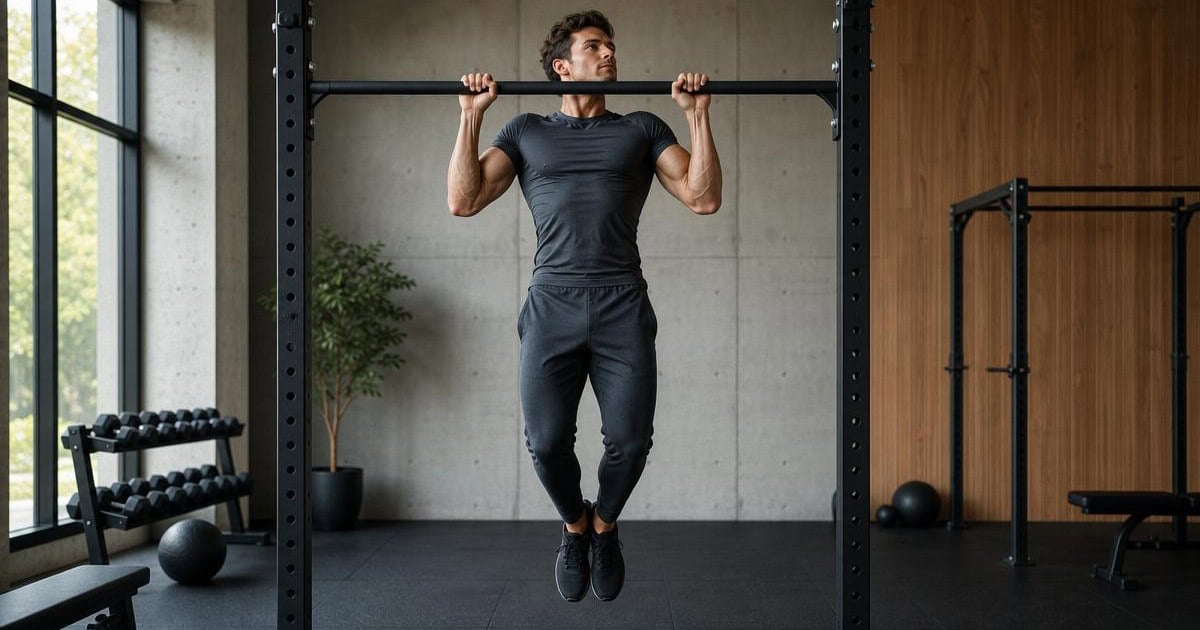
Building the V taper – the visible inverted-triangle physique with wide shoulders, broad lats, and narrow waist – requires understanding the three components that create the V taper appearance (broad shoulders from medial delt development, wide back from lat development, and narrow waist from appropriate body composition) and the training principles that develop them: dedicated lat width training (pull-ups, lat pulldowns, pullovers), medial delt isolation (lateral raises with multiple variations), upper back development (rows, rear delt work) for back thickness, foundational shoulder mass (overhead pressing), and adequate volume across all V taper components. Most lifters who want the V taper but struggle to build it are making one or more of these mistakes: training only one component (typically lats from pull-ups but not shoulder width from lateral raises), running insufficient lateral raise volume, neglecting rear delt work, training the V taper components only once per week, or using insufficient volume relative to other muscle groups. The fix involves: 1) heavy lat width work (pull-ups, lat pulldowns, pullovers), 2) high-volume lateral raise work (multiple variations) for shoulder width, 3) compound back work (rows) for back thickness, 4) rear delt isolation for complete shoulder width, 5) foundational shoulder mass (overhead pressing), and 6) appropriate body composition (lower body fat reveals the V taper).
Below are ten of the most effective exercises for building the V taper, covering primary lat width work (pull-up, cable close grip front lat pulldown, barbell bent arm pullover), shoulder width emphasis (dumbbell lateral raise, cable lateral raise), shoulder mass (barbell seated overhead press), upper back development (barbell bent over row, dumbbell bent over scapula row, lever lying T bar row), and rear delt completion (dumbbell rear delt fly). Together they form a complete V taper program. A 60 to 75-minute V taper-focused session pulled from this list, performed 1 to 2 times per week (or as primary work in upper-body sessions), produces strong V taper development for any lifter focused on building the impressive inverted-triangle physique.
Pull Up

The Pull Up performs bodyweight pull-ups. The pattern is foundational for V taper development.
For V taper development, the pull-up is foundational. The pattern produces extreme lat loading that creates the wide back essential for V taper. Run it for 4 sets of 6 to 12 reps as primary lat width work.
Hang from a pull-up bar with hands shoulder-width apart and palms facing away. Pull the body up by retracting the shoulder blades and pulling the elbows down toward the ribs until the chin reaches over the bar. Lower under control to full hang. The pattern is foundational for V taper – pull-ups produce extreme lat loading through bodyweight resistance, building the wide back development that creates the visible V taper. Most successful V taper programs prioritize pull-ups as primary work, progressing to weighted pull-ups for advanced strength.
Barbell Bent Over Row

The Barbell Bent Over Row performs barbell rows. The pattern produces compound back loading supporting V taper.
For V taper development, the bent-over row produces compound back loading. Run it for 4 sets of 6 to 10 reps as compound back work.
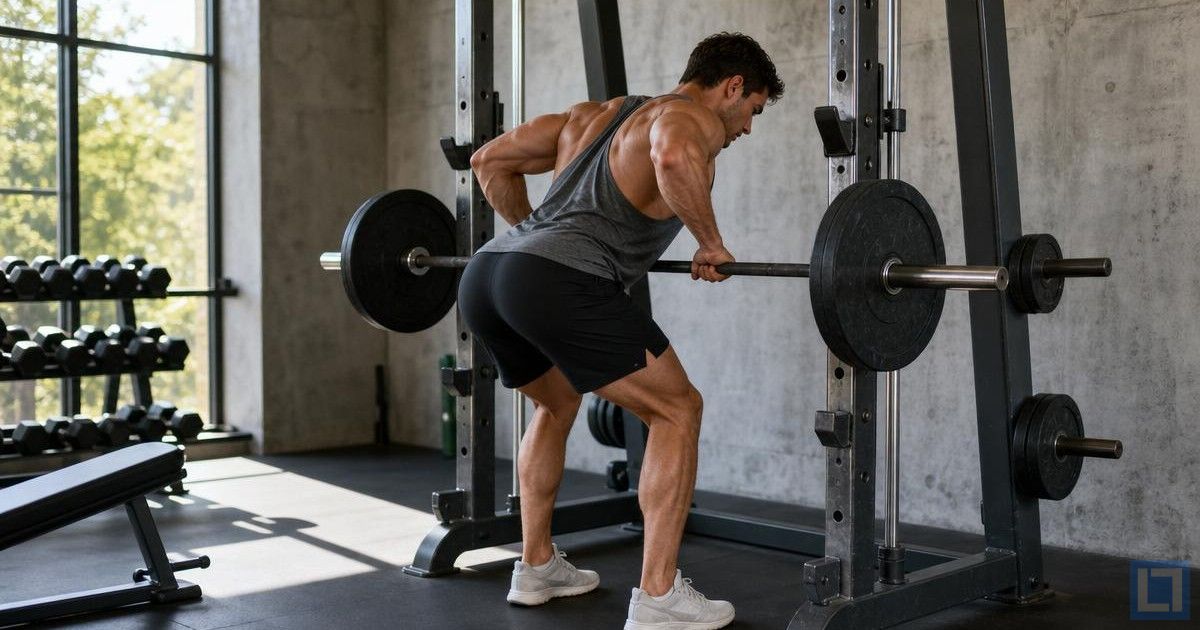
Stand with feet hip-width holding a barbell at the front of the thighs with overhand grip. Hinge forward at the hips with a flat back so the torso is at about 45 degrees. Pull the bar to the lower chest by retracting the shoulder blades and pulling the elbows back. The lats, rhomboids, mid traps, and rear delts work hard. Squeeze the shoulder blades hard at peak. Lower under control. The pattern produces compound back loading – bent-over rows build the integrated back development that combines with shoulder width to create the visible V taper.
Dumbbell Lateral Raise

The Dumbbell Lateral Raise performs lateral raises. The pattern is foundational for V taper – widens the shoulders.
For V taper development, the lateral raise is critical. Wider shoulders are essential for V taper – the medial delt creates the visible shoulder width. Run it for 4 sets of 10 to 15 reps as primary shoulder width work.
Stand with feet hip-width holding dumbbells at the sides with palms facing the body. Lift the dumbbells out to the sides by abducting the arms until they reach shoulder height. Keep slight bend in the elbows throughout. Squeeze the medial delts hard at peak. Lower under control. The pattern produces direct medial delt isolation – the medial delts create shoulder width, which combines with narrow waist to create the V taper. Most lifters with the most impressive V tapers have built them on consistent heavy lateral raise training combined with lat work.
Barbell Seated Overhead Press

The Barbell Seated Overhead Press performs strict overhead press. The pattern builds shoulder mass supporting V taper.
For V taper development, the overhead press builds the foundational shoulder mass that supports lateral raise development. Run it for 3 to 4 sets of 6 to 10 reps as compound shoulder work.
Sit on a bench with the back firmly against an upright pad. Grip a barbell slightly wider than shoulder-width with overhand grip. Unrack the bar to shoulder height. Press the bar straight overhead by extending the arms. Lower under control. The pattern produces foundational shoulder mass – heavy overhead press builds the shoulder development that supports complete shoulder appearance. Combined with lateral raises (medial delt) and lat work, overhead pressing produces the foundation of V taper development.
Cable Close Grip Front Lat Pulldown

The Cable Close Grip Front Lat Pulldown performs close-grip lat pulldowns. The pattern produces direct lat loading.
For V taper development, the lat pulldown produces direct lat loading – excellent for those who cannot yet do many pull-ups. Run it for 3 to 4 sets of 8 to 12 reps as primary lat width work.
Sit on a lat pulldown machine with the thighs secured under the pads. Grip the close-grip handle with both hands. Pull the handle down to the upper chest by retracting the shoulder blades and pulling the elbows down. The lats work hard through pure shoulder adduction. Squeeze hard at peak. Return under control. The pattern produces direct lat loading – excellent for V taper development through lat width emphasis. Cable lat pulldowns allow precise loading and lat-focused training that complements pull-up work.
Dumbbell Rear Delt Fly
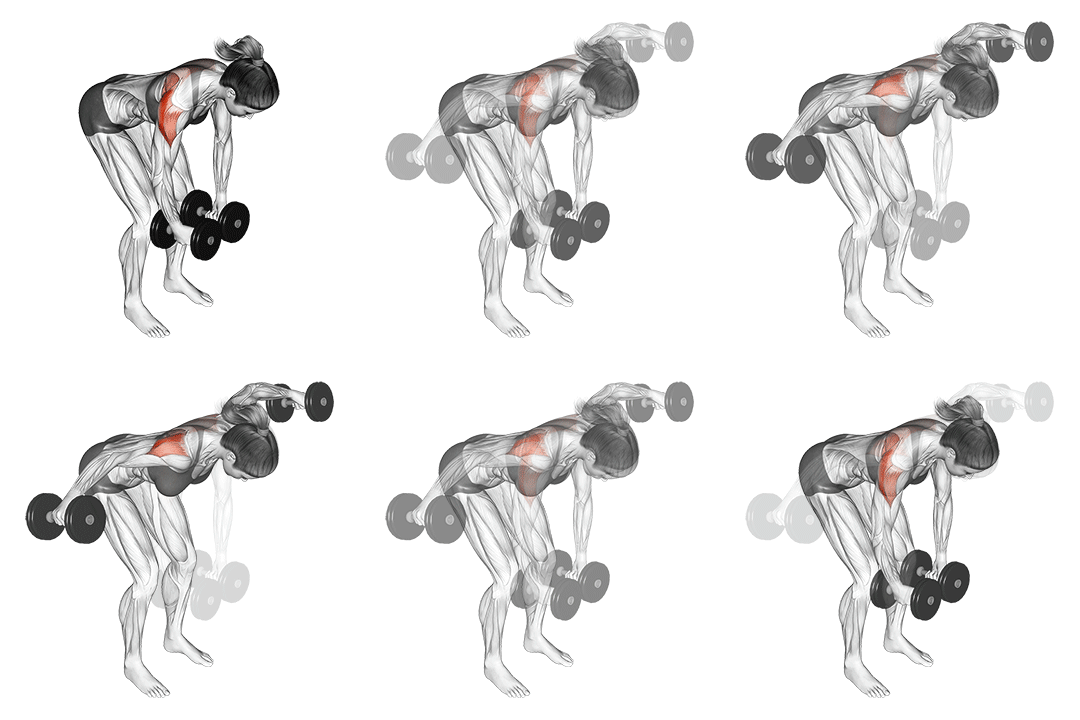
The Dumbbell Rear Delt Fly performs rear delt flies. The pattern produces direct rear delt isolation completing shoulder width.
For V taper development, the rear delt fly completes shoulder width through rear delt development. Run it for 3 to 4 sets of 12 to 15 reps as rear delt work.
Stand with feet hip-width holding dumbbells. Hinge forward at the hips with a flat back so the torso is parallel to the floor. Hold the dumbbells underneath the chest with palms facing each other. Lift the dumbbells out to the sides by raising the arms straight out to shoulder height. The rear delts and rhomboids work hard through horizontal abduction. Squeeze hard at peak. Lower under control. The pattern produces direct rear delt isolation – rear delts contribute substantially to overall shoulder width and the 3D shoulder appearance that completes V taper.
Barbell Bent Arm Pullover

The Barbell Bent Arm Pullover performs barbell pullovers. The pattern produces direct lat stretching loading.
For V taper development, the barbell pullover produces direct lat loading through stretch-position work. Run it for 3 sets of 8 to 12 reps as lat width accessory work.
Lie on a flat bench holding a barbell with both hands above the chest with elbows slightly bent. Lower the barbell back over the head by extending at the shoulders while keeping the elbows in the same bent position. Feel deep stretch in the lats. Pull the barbell back up over the chest by contracting the lats. The pattern produces direct lat loading through stretch-position emphasis – the lats work hard from extreme stretch to peak contraction. Excellent supplementary lat width work that complements pull-ups and rows.
Dumbbell Bent Over Scapula Row

The Dumbbell Bent Over Scapula Row performs scapular-focused dumbbell rows. The pattern produces upper back work supporting V taper.
For V taper development, the dumbbell scapula row produces upper back loading supporting back thickness. Run it for 3 sets of 8 to 12 reps as upper back work.
Stand with feet hip-width holding dumbbells. Hinge forward at the hips with a flat back. Pull the dumbbells back by retracting the shoulder blades and pulling the elbows back. The mid traps, rhomboids, and rear delts work hard with strong scapular retraction emphasis. Squeeze hard at peak. Lower under control. The pattern produces upper back loading with scapular retraction emphasis – excellent for the upper back development that completes V taper alongside lat width and shoulder width.
Cable Lateral Raise

The Cable Lateral Raise performs lateral raises with cables. The pattern produces shoulder width with constant tension.
For V taper development, the cable lateral raise produces shoulder width loading with constant cable tension. Run it for 3 to 4 sets of 10 to 15 reps as cable medial delt work.
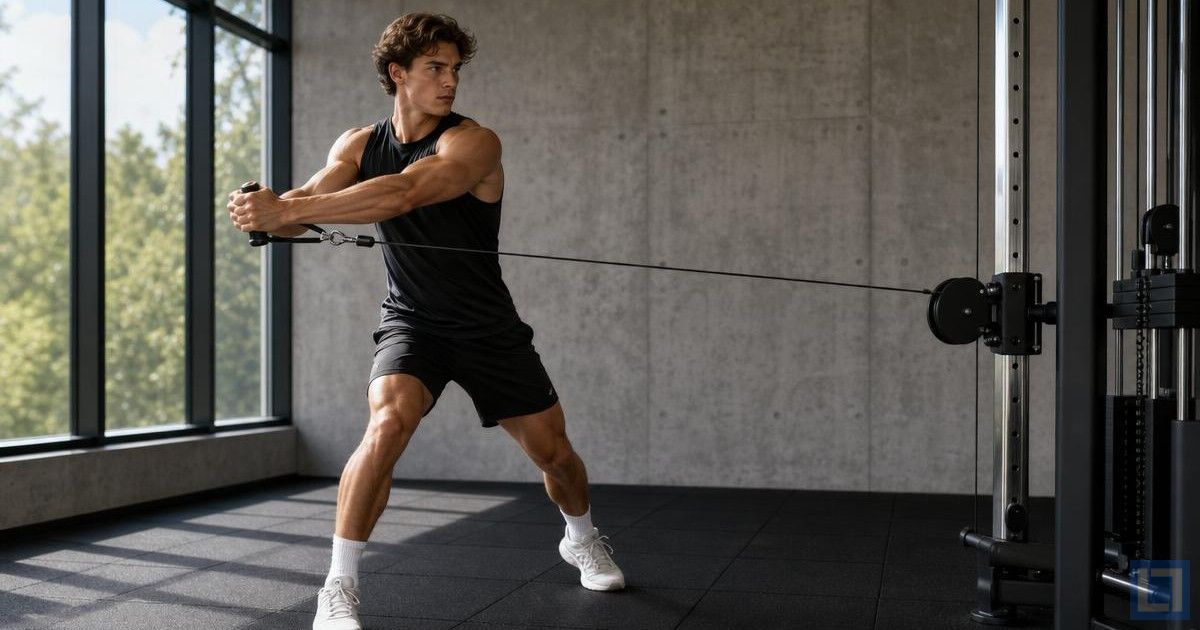
Set up a cable station with low pulley and single handle attachment. Stand sideways to the cable with the working arm farthest from the cable. Grip the handle with the working arm down at the side. Lift the handle out to the side by abducting the arm until it reaches shoulder height. The medial delt works hard against constant cable tension. Squeeze hard at peak. Return under control. The cable tension provides constant loading throughout the range – excellent variation work for medial delt and shoulder width development.
Lever Lying T Bar Row

The Lever Lying T Bar Row performs supported T-bar rows. The pattern produces compound back loading.
For V taper development, the T-bar row produces heavy compound back loading. Run it for 3 to 4 sets of 8 to 12 reps as heavy compound back work.
Lie face-down on a T-bar row machine with the chest supported on the pad. Grip the handles with both hands. Pull the handles up by retracting the shoulder blades and pulling the elbows back. The lats, mid traps, rhomboids, and rear delts work hard. Squeeze the shoulder blades hard at peak. Lower under control. The pattern produces excellent compound back loading with chest support – the supported position prevents lower back fatigue from limiting the back work, allowing focused back loading. Excellent V taper-supporting work.
How To Program These Workouts
A productive V taper session pulls 6 to 8 exercises from the list above. A common balanced session: pull-up (lat width), barbell bent over row (back thickness), dumbbell lateral raise (shoulder width), barbell seated overhead press (shoulder mass), cable close grip front lat pulldown (lat width), dumbbell rear delt fly (rear delt completion), cable lateral raise (additional shoulder width). For width focus: pull-up, dumbbell lateral raise, cable lateral raise, cable close grip front lat pulldown, barbell bent arm pullover. For complete development: include both lat width work AND shoulder width work in every session. Run heavy compound work for 3 to 4 sets of 6 to 10 reps, lateral raise variations for 3 to 4 sets of 10 to 15 reps, lat work for 3 to 4 sets of 6 to 12 reps, rear delt isolation for 3 sets of 12 to 15 reps. Total session covers 22 to 28 working sets focused on V taper development.
Train V taper components 1 to 2 times per week as part of complete upper-body programming. Most successful V taper programs structure work as: 1) primary upper-body day (heavy lat width, shoulder width, and back work), 2) accessory upper-body day (additional volume on weak points), 3) high-frequency lateral raise work (3 to 5 times per week is well-tolerated for accelerated medial delt development). The shoulders specifically tolerate higher frequency for accelerated width development. Combined with appropriate body composition (typically requires lower body fat to reveal V taper) and progressive overload, dedicated V taper training produces visible V taper development within 16 to 20 weeks for most individuals.
For broader programming, see our how to build wider shoulders and how to grow your back. For specific work, see our how to build a wider back.
Final Thoughts
Building the V taper requires applying the right training principles consistently over time: heavy lat width work for the back component, high-volume lateral raise work for the shoulder width component, compound back work for back thickness, rear delt isolation for complete shoulder width, foundational shoulder mass through overhead pressing, and appropriate body composition for visible V taper. The combination of pull-ups, barbell rows, lateral raises (multiple variations), overhead press, lat pulldowns, rear delt flies, pullovers, T-bar rows, and scapula rows covers every component of V taper development and produces broader physique development than single-component training would suggest. Most lifters who consistently apply these principles see measurable V taper development within 16 to 20 weeks – including visible shoulder width increase, broader lat development, and the impressive inverted-triangle physique that defines well-developed upper body. For lifters seeking the V taper appearance, dedicated comprehensive training is one of the most effective interventions available.
Stay focused on lateral raise volume as the most often-underdone V taper component. The most common mistake lifters make in V taper training is over-emphasizing lat work (from pull-ups they enjoy) at the expense of dedicated lateral raise volume that creates shoulder width. The fix: include 12 to 20 weekly lateral raise sets across multiple variations (dumbbell, cable) and high frequency (3 to 5 weekly sessions). The medial delts respond extremely well to high frequency and high volume, and they’re the most often-underdeveloped V taper component. Combined with adequate lat width work and appropriate body composition, high-volume lateral raise training produces the shoulder width that completes the V taper – lat-only training never achieves the V taper appearance.
Frequently Asked Questions
How do I build a V taper?
Combine wide shoulders, broad lats, and appropriate body composition. Lateral raises (high volume, multiple variations) build the medial delt that creates shoulder width. Pull-ups, lat pulldowns, and pullovers build the lat width. Combined with rear delt work for complete shoulder width, compound back work for back thickness, foundational shoulder mass (overhead press), and appropriate body composition (lower body fat reveals V taper), these form the complete V taper program. The fastest gains come from high-volume lateral raise work plus dedicated lat width training plus appropriate diet.
How long does it take to build a V taper?
16 to 20 weeks for visible V taper development, ongoing for elite physique. Most lifters who consistently apply dedicated lat width work plus high-volume lateral raises plus appropriate body composition see measurable V taper development within 16 to 20 weeks. Beginners often see faster initial development from rapid early gains. Advanced V taper development (visible at lower body fat percentages) requires years of consistent training. The visibility of V taper depends on both muscle development AND body composition.
What’s the best exercise for the V taper?
Pull-ups for lats and lateral raises for shoulder width. Pull-ups build the lat width that creates the wide back component of V taper. Lateral raises build the medial delt that creates shoulder width. Combined with rows (back thickness), rear delt flies (complete shoulder width), overhead press (shoulder mass), and lat pulldowns/pullovers (additional lat width), these exercises form the foundation of V taper development. Most lifters with impressive V tapers have built them on consistent pull-up and lateral raise training.
How often should I train for V taper?
1 to 2 times per week for compound work, plus high-frequency lateral raise work. The shoulders tolerate higher frequency than larger muscle groups – lateral raises specifically can be performed 3 to 5 times per week for accelerated medial delt development. Most successful V taper programs include: 1) 1 to 2 primary upper-body sessions per week (heavy compound work), 2) high-frequency lateral raise work (multiple weekly sessions), 3) dedicated lat width work in every upper-body session. Combined approach produces faster V taper development.
Do I need a small waist for V taper?
Yes – V taper requires both shoulder width AND narrow waist appearance. The V taper effect comes from the contrast between wide shoulders and narrow waist – both components are necessary. Reduce waist appearance through: 1) appropriate body composition (lower body fat shows the V taper better), 2) avoiding excessive direct ab oblique training (which can thicken the waist), 3) maintaining good posture which makes the waist appear narrower. Combined with developed shoulders and lats, narrow waist creates the visible V taper.