Building wider shoulders requires understanding both shoulder anatomy (the deltoid has three heads – front/anterior, medial/side, and rear/posterior – and the medial delt is THE muscle that creates shoulder width) and the training principles that develop it: dedicated medial delt isolation (lateral raises with multiple variations), compound shoulder pressing for foundational mass, rear delt development for complete shoulder width, and adequate volume across all three deltoid heads. Most lifters who want wider shoulders but struggle to grow them are making one or more of these mistakes: only training shoulders with overhead pressing (which primarily hits front delts), running insufficient lateral raise volume (the medial delt requires substantial volume to grow), training shoulders too infrequently, or completely neglecting rear delt work. The fix involves: 1) heavy compound pressing (overhead press) for foundational shoulder mass, 2) high-volume lateral raise work for the critical medial delts that create width, 3) dedicated rear delt isolation for complete shoulder development, 4) adequate weekly volume (12 to 20+ working sets per shoulder head), and 5) consistent progressive overload across all three deltoid heads.
Below are ten of the most effective exercises for building wider shoulders, covering compound shoulder pressing (barbell seated overhead press, dumbbell seated shoulder press, lever seated shoulder press, dumbbell Arnold press), medial delt isolation for width (dumbbell lateral raise, cable lateral raise, landmine lateral raise), rear delt work (dumbbell rear delt fly), front delt isolation (dumbbell front raise), and combined trap/shoulder work (barbell upright row). Together they form a complete shoulder width program. A 30 to 45-minute shoulder-focused session pulled from this list, performed 1 to 2 times per week (or as primary shoulder work in upper-body sessions), produces measurable shoulder width improvements within 12 to 16 weeks for any lifter focused on building wider, more impressive shoulders.
Dumbbell Lateral Raise

The Dumbbell Lateral Raise performs lateral raises with dumbbells. The pattern produces direct medial deltoid isolation – the muscle responsible for shoulder width.
For wider shoulders, the lateral raise is foundational. The medial delt is the muscle that creates shoulder width. Run it for 4 sets of 10 to 15 reps as primary shoulder width work.
Stand with feet hip-width holding dumbbells at the sides with palms facing the body. Lift the dumbbells out to the sides by abducting the arms until they reach shoulder height (the dumbbells should be at shoulder level with palms down). Keep slight bend in the elbows throughout. Squeeze the medial delts hard at peak. Lower under control. The pattern produces direct medial delt isolation – the medial delts are THE muscle responsible for shoulder width, and dedicated heavy lateral raise work is the most direct path to wider shoulders. Most lifters with the widest shoulders have built them on consistent heavy lateral raise training.
Barbell Seated Overhead Press

The Barbell Seated Overhead Press performs strict overhead press. The pattern is foundational compound shoulder work.
For wider shoulders, the overhead press builds the foundational shoulder mass that supports lateral raise development. Run it for 4 sets of 6 to 10 reps as primary compound shoulder work.
Sit on a bench with the back firmly against an upright pad. Grip a barbell slightly wider than shoulder-width with overhand grip. Unrack the bar to shoulder height. Press the bar straight overhead by extending the arms. Lower under control. The pattern produces foundational shoulder mass – heavy overhead press builds the front delt mass that creates shoulder caps and provides the foundational shoulder development that supports complete shoulder appearance. Combined with lateral raises (medial delt) and rear delt work, overhead pressing produces the foundation of wider shoulders.
Dumbbell Seated Shoulder Press

The Dumbbell Seated Shoulder Press performs strict overhead press with dumbbells. The pattern allows greater range of motion than barbell press.
For wider shoulders, the dumbbell shoulder press allows greater range of motion than barbell press. Run it for 3 to 4 sets of 6 to 12 reps as primary compound shoulder work.
Sit on a bench with the back firmly against an upright pad. Hold dumbbells at shoulder height with palms facing forward. Press the dumbbells straight overhead by extending the arms. Lower under control. The pattern produces strong compound shoulder loading with greater range of motion than barbell pressing. The dumbbells allow the arms to come closer together at the top and address left/right imbalances. Excellent for shoulder mass development alongside heavy barbell pressing.
Cable Lateral Raise

The Cable Lateral Raise performs lateral raises with a cable. The pattern produces medial delt loading with constant tension.
For wider shoulders, the cable lateral raise produces medial delt loading with constant tension. Run it for 3 to 4 sets of 10 to 15 reps as cable medial delt work.
Set up a cable station with low pulley and single handle attachment. Stand sideways to the cable with the working arm farthest from the cable. Grip the handle with the working arm down at the side. Lift the handle out to the side by abducting the arm until it reaches shoulder height. The medial delt works hard against constant cable tension. Squeeze hard at peak. Return under control. The cable tension provides constant loading throughout the range – the cable is harder at the bottom of the motion than dumbbells (which have minimal load at the bottom). Excellent for medial delt isolation with constant tension.
Dumbbell Rear Delt Fly
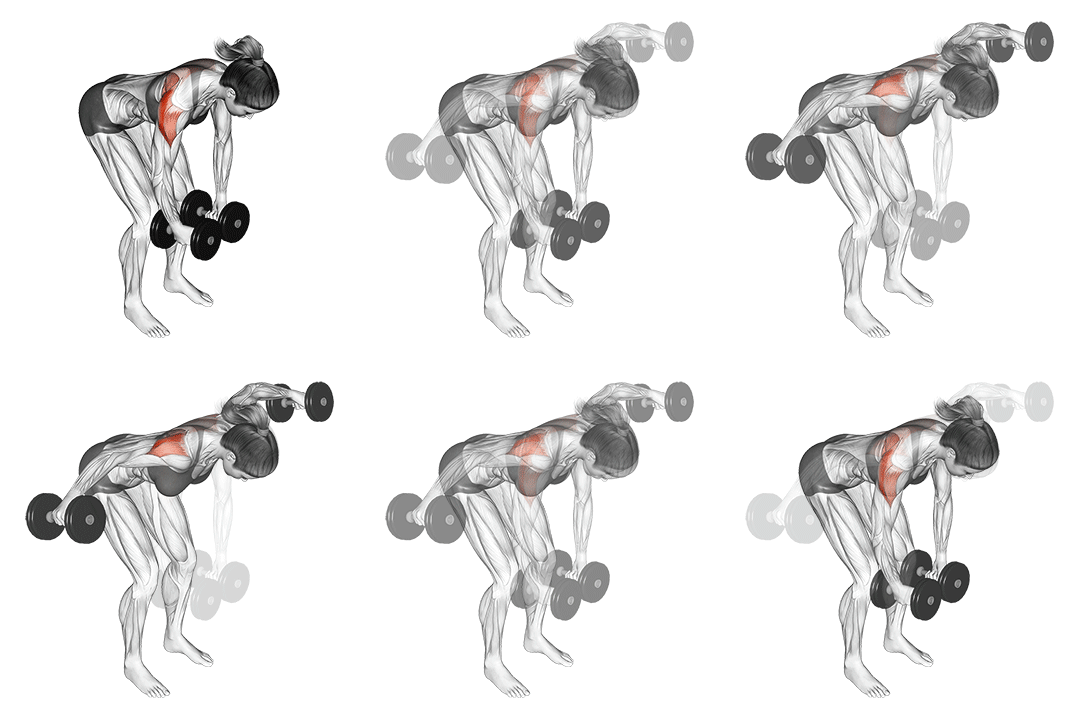
The Dumbbell Rear Delt Fly performs rear delt flies. The pattern produces direct rear delt isolation – completes shoulder width.
For wider shoulders, the rear delt fly completes the shoulder width through rear delt development. Run it for 3 to 4 sets of 12 to 15 reps as rear delt work.
Stand with feet hip-width holding dumbbells. Hinge forward at the hips with a flat back so the torso is parallel to the floor. Hold the dumbbells underneath the chest with palms facing each other. Lift the dumbbells out to the sides by raising the arms straight out to shoulder height. The rear delts and rhomboids work hard through horizontal abduction. Squeeze hard at peak. Lower under control. The pattern produces direct rear delt isolation – rear delts contribute substantially to overall shoulder width and the 3D shoulder appearance. Most lifters who train only front and medial delts miss the rear delt development that completes shoulder width.
Barbell Upright Row

The Barbell Upright Row performs upright rows with a barbell. The pattern produces combined trap and shoulder loading.
For wider shoulders, the upright row produces combined upper trap and lateral delt loading. Run it for 3 sets of 8 to 12 reps as combined trap/shoulder work.
Stand with feet hip-width holding a barbell at the front of the thighs with overhand grip. Pull the barbell straight up toward the chin by leading with the elbows. The bar should travel close to the body. The upper traps and lateral delts work hard. Squeeze the traps and delts at peak. Lower under control. The pattern produces combined trap and shoulder loading – excellent for shoulder mass and trap development. Note: upright rows can stress the shoulder for some lifters – reduce range of motion or substitute with shrugs and lateral raises if shoulder discomfort occurs.
Lever Seated Shoulder Press
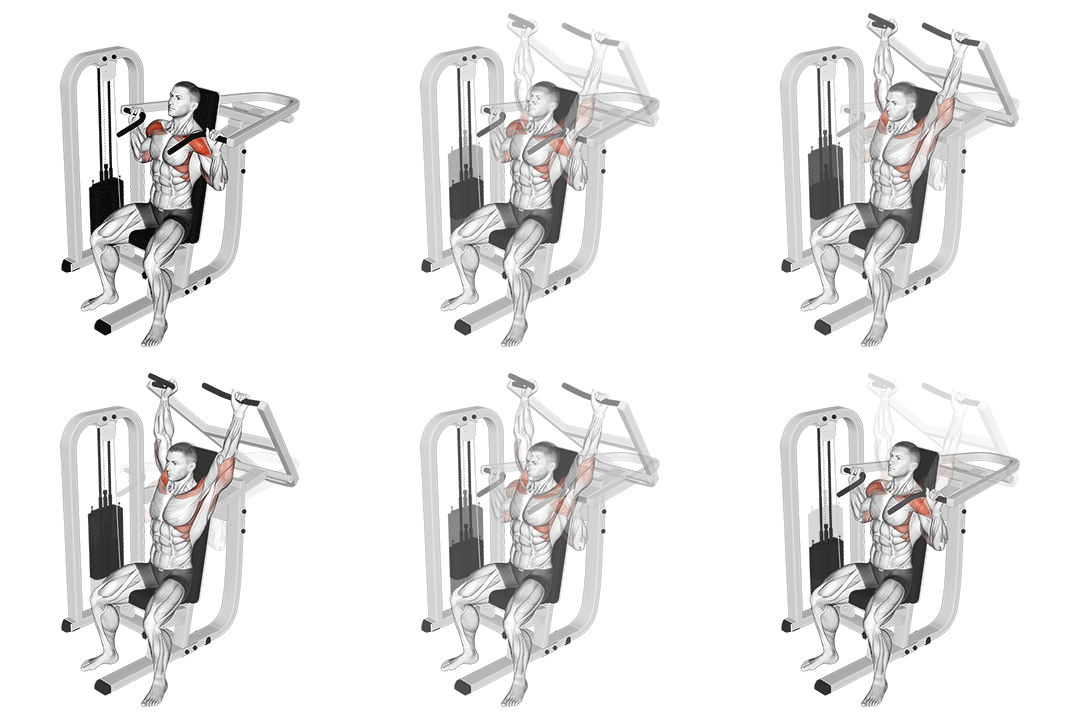
The Lever Seated Shoulder Press performs shoulder press on a lever machine. The pattern produces stable compound shoulder loading.
For wider shoulders, the lever shoulder press provides stable compound shoulder loading. Run it for 3 to 4 sets of 8 to 12 reps as machine shoulder press work.
Sit on a lever shoulder press machine with the back firmly against the pad. Grip the handles at shoulder height. Press the handles straight overhead by extending the arms. Lower under control. The pattern provides controlled compound shoulder pressing with reduced stabilization demands – excellent for safely pressing heavy shoulder loads without spotter assistance. The machine stability allows focus on the pressing work rather than stabilization. Useful variation alongside barbell and dumbbell pressing.
Dumbbell Front Raise

The Dumbbell Front Raise performs front raises with dumbbells. The pattern produces direct front delt isolation.
For wider shoulders, the front raise produces direct front delt loading. Run it for 3 sets of 10 to 12 reps as front delt isolation work.
Stand with feet hip-width holding dumbbells at the front of the thighs with palms facing the body. Lift one dumbbell forward and up by raising the arm straight to shoulder height (or slightly above). The front delt works hard through shoulder flexion. Squeeze at peak. Lower under control. Alternate arms or perform with both. The pattern produces direct front delt isolation – while the front delt is well-trained through compound pressing, dedicated isolation produces complete front delt development. Note: most lifters do not need extensive front delt isolation if they bench press regularly.
Landmine Lateral Raise

The Landmine Lateral Raise performs lateral raises using a landmine. The pattern produces medial delt loading with the landmine angle.
For wider shoulders, the landmine lateral raise produces medial delt loading from a unique angle. Run it for 3 sets of 10 to 12 reps as landmine medial delt work.
Set up a barbell in a landmine attachment. Grip the end of the barbell with one hand. Stand sideways to the landmine with the working arm farthest from the pivot. Lift the bar out to the side by abducting the arm. The medial delt works hard with the unique landmine resistance angle. Squeeze hard at peak. Return under control. The pattern produces medial delt loading with the changing resistance angle of the landmine – excellent variation work for medial delt development.
Dumbbell Arnold Press
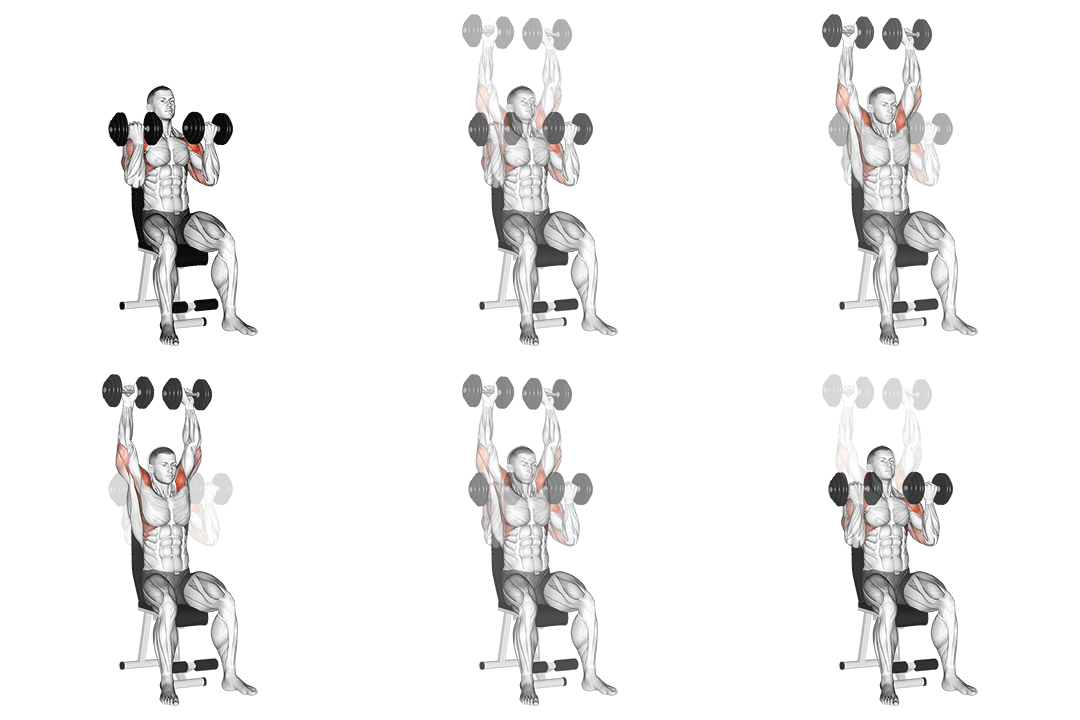
The Dumbbell Arnold Press performs Arnold press with dumbbells. The pattern combines shoulder press with rotation for complete shoulder work.
For wider shoulders, the Arnold press combines shoulder pressing with rotation for complete shoulder development. Run it for 3 to 4 sets of 8 to 12 reps as compound shoulder work.
Sit on a bench with the back firmly against an upright pad. Hold dumbbells at shoulder height with palms facing the body (not forward) – the Arnold press starting position. Press the dumbbells overhead while rotating the palms to face forward at the top. The shoulders work through both pressing and rotation. Lower under control while reversing the rotation. The pattern produces compound shoulder loading with rotation – excellent for hitting the shoulder from multiple angles in one exercise. Combined with lateral raises for medial delt isolation, Arnold presses produce complete shoulder development.
How To Program These Workouts
A productive shoulder width session pulls 5 to 7 exercises from the list above. A common balanced session: barbell seated overhead press (heavy compound), dumbbell lateral raise (heavy medial delt), cable lateral raise (constant tension medial delt), dumbbell rear delt fly (rear delt isolation), dumbbell Arnold press (combination), landmine lateral raise (variation). For width focus: dumbbell lateral raise, cable lateral raise, landmine lateral raise, dumbbell rear delt fly – prioritize medial and rear delt volume. For mass focus: barbell seated overhead press, dumbbell seated shoulder press, dumbbell Arnold press, dumbbell lateral raise. Run heavy compound pressing for 3 to 4 sets of 6 to 10 reps, lateral raise variations for 3 to 4 sets of 10 to 15 reps, rear delt work for 3 to 4 sets of 12 to 15 reps. Total session covers 18 to 24 working sets focused on shoulder development.
Train shoulders 1 to 2 times per week as part of complete upper-body programming, with each deltoid head receiving 6 to 12+ working sets per week. Most successful shoulder-building programs structure work as: 1) primary shoulder day (4 to 6 shoulder exercises with mix of compound pressing and isolation), 2) accessory shoulder work in chest day (front delt incidental work) and back day (rear delt work). The shoulders recover relatively quickly compared to larger muscle groups and tolerate higher frequency for accelerated development. Lateral raises specifically can be performed at very high frequency (3 to 5 times per week) for accelerated medial delt development – the medial delt responds well to high frequency and high volume.
For broader programming, see our best shoulder workouts and how to grow your shoulders. For specific work, see our best workouts for muscle growth.
Final Thoughts
Building wider shoulders requires applying the right training principles consistently over time: heavy compound pressing for foundational shoulder mass, high-volume lateral raise work for the critical medial delts that create width, dedicated rear delt isolation for complete shoulder development, and adequate volume across all three deltoid heads. The combination of overhead press variations, lateral raise variations (dumbbell, cable, landmine), Arnold press, rear delt flies, upright rows, and front raises covers every functional pattern of shoulder development and produces broader width than overhead press-only training would suggest. Most lifters who consistently apply these principles see measurable shoulder width improvements within 12 to 16 weeks (visible widening of the shoulder profile from front and side views). For lifters with narrow shoulders despite training, the combination of high-frequency lateral raise work, dedicated rear delt training, and adequate compound pressing volume produces the shoulder width that overhead press-dominated training never achieves.
Stay focused on lateral raise volume and frequency. The most common mistake lifters make in shoulder width training is running insufficient lateral raise volume – the medial delt requires substantial weekly volume (12 to 20+ working sets per week) to grow. The fix: include lateral raises in multiple weekly sessions (not just once per week), run them with high frequency (3 to 5 times per week is well-tolerated), use multiple variations (dumbbell, cable, landmine) for varied loading angles, and progressively overload over time. Combined with adequate compound pressing for foundational mass and dedicated rear delt work, high-volume lateral raise training produces the shoulder width that low-volume training never achieves.
Frequently Asked Questions
How can I get wider shoulders?
Heavy lateral raise volume plus compound pressing. Lateral raises (multiple variations – dumbbell, cable, landmine) target the medial delt that creates shoulder width. Run lateral raises with high frequency (2 to 5 times per week) and substantial weekly volume (12 to 20 working sets per week). Combined with foundational compound pressing (overhead press, dumbbell shoulder press, Arnold press) for shoulder mass and dedicated rear delt work for complete development, lateral raise volume produces the shoulder width that pressing alone cannot achieve.
Why aren’t my shoulders growing wider?
Most lifters with narrow shoulders make one or more of these mistakes: 1) only training shoulders with overhead pressing (which primarily hits front delts), 2) running insufficient lateral raise volume (the medial delt requires substantial weekly volume), 3) training shoulders only once per week, 4) completely neglecting rear delt work, 5) using weights too heavy on lateral raises (poor form reduces medial delt loading). The fix: include 12 to 20 weekly lateral raise sets, train shoulders 1 to 2 times per week, dedicate volume to rear delts, use moderate weight with strict form on lateral raises.
What’s the best exercise for shoulder width?
Lateral raises – multiple variations. Dumbbell lateral raises produce foundational medial delt loading. Cable lateral raises provide constant tension. Landmine lateral raises offer unique loading angles. Combined with foundational compound pressing (overhead press) for shoulder mass and dedicated rear delt work for complete development, lateral raise variations form the foundation of shoulder width development. The fastest gains come from high-volume lateral raise training across multiple variations.
How often should I train shoulders?
1 to 2 times per week minimum, with lateral raises at higher frequency. The shoulders recover quickly relative to larger muscle groups and tolerate higher frequency for accelerated development. Most successful programs include 1 to 2 dedicated shoulder sessions PLUS lateral raises at high frequency (3 to 5 times per week is well-tolerated) for accelerated medial delt development. Total weekly volume per deltoid head: 8 to 16 working sets for front delts (mostly from compound pressing), 12 to 20 working sets for medial delts, 8 to 16 working sets for rear delts.
How heavy should I do lateral raises?
Moderate weight with strict form for 10 to 15 reps. Lateral raises respond to moderate weight with strict form and full range of motion – using too-heavy weight produces poor form and reduces medial delt activation. Most successful lateral raise programs use weights that allow 10 to 15 reps with strict form, with progressive overload over time. The medial delt also responds well to higher rep ranges (12 to 20 reps) for accelerated growth. Quality reps with strict form beat ego-lifting with poor form for shoulder width development.