Growing bigger shoulders requires understanding the three-headed deltoid structure (front delts, side delts, rear delts) and applying training principles that develop each head: compound overhead pressing for foundational mass across all three heads, dedicated lateral raise work for side delt width and V-taper, dedicated rear delt work for posture and 3D shoulder appearance, dedicated front delt work for complete pressing and delt balance, and combined patterns (upright row, Cuban press) for compound shoulder development. The deltoid is uniquely demanding because each of the three heads has different functions and responds best to dedicated training. Most lifters who want bigger shoulders but struggle to grow them are making one or more of these mistakes: relying solely on overhead press without dedicated isolation, neglecting rear delts entirely (producing imbalanced shoulders and bad posture), training shoulders too infrequently (only once per week), using too-heavy lateral raise loads that force compensation, or running too-low overall volume. The fix involves: 1) compound overhead press for foundational mass, 2) dedicated side delt isolation (lateral raises) for V-taper, 3) dedicated rear delt isolation (rear delt flies) for posture and balance, 4) dedicated front delt work (front raises) for complete development, 5) combined patterns (upright row, Cuban press, push press) for variation and compound mass.
Below are ten of the most effective exercises for growing bigger shoulders, covering compound overhead press variations (barbell seated overhead press, dumbbell Arnold press, dumbbell push press), dedicated isolation for each delt head (dumbbell lateral raise, dumbbell front raise, dumbbell rear delt fly, cable lateral raise, barbell front raise), and combined compound work (barbell upright row, dumbbell Cuban press). Together they form a complete shoulder-growth program. A 45 to 60-minute shoulder-focused session pulled from this list, performed 1 to 2 times per week, produces strong shoulder development for any lifter focused on building bigger shoulders.
Barbell Seated Overhead Press

The Barbell Seated Overhead Press performs strict overhead press with a barbell. The pattern is the foundational compound shoulder mass-builder.
For shoulder growth, the seated overhead press is foundational. The pattern hits all three delt heads through compound pressing under heavy bilateral load. Run it for 4 sets of 6 to 10 reps as primary shoulder mass work.
Set up a barbell on a rack at upper chest height. Sit on a bench with the back firmly against an upright pad. Grip the barbell slightly wider than shoulder-width with overhand grip. Unrack the bar to shoulder height. Press the bar straight overhead by extending the arms. The shoulders work hard through the press while the seated position eliminates leg drive. Lower under control to shoulder height. The pattern is foundational for compound shoulder mass and produces excellent growth through heavy progressive loading.
Dumbbell Arnold Press
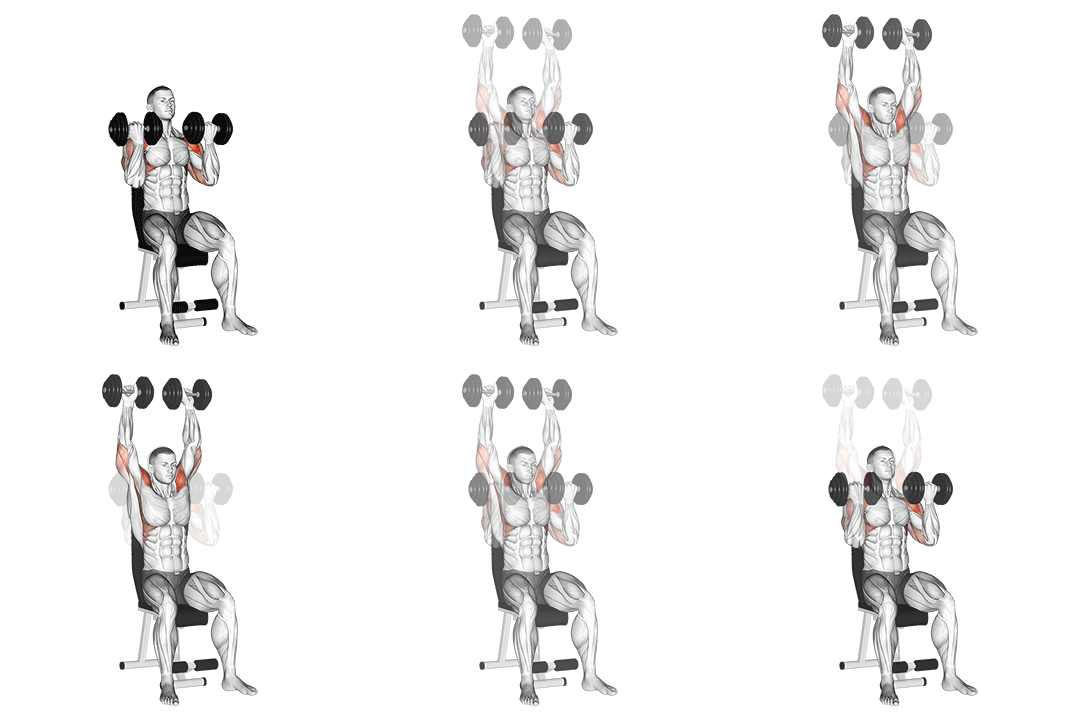
The Dumbbell Arnold Press performs Arnold-style overhead press (rotating from neutral to overhand grip). The rotational pattern produces compound work hitting all three delt heads.
For shoulder growth, the Arnold press hits all three delt heads through one fluid motion. The rotational pattern produces unique compound shoulder loading. Run it for 3 to 4 sets of 8 to 12 reps as compound shoulder work.
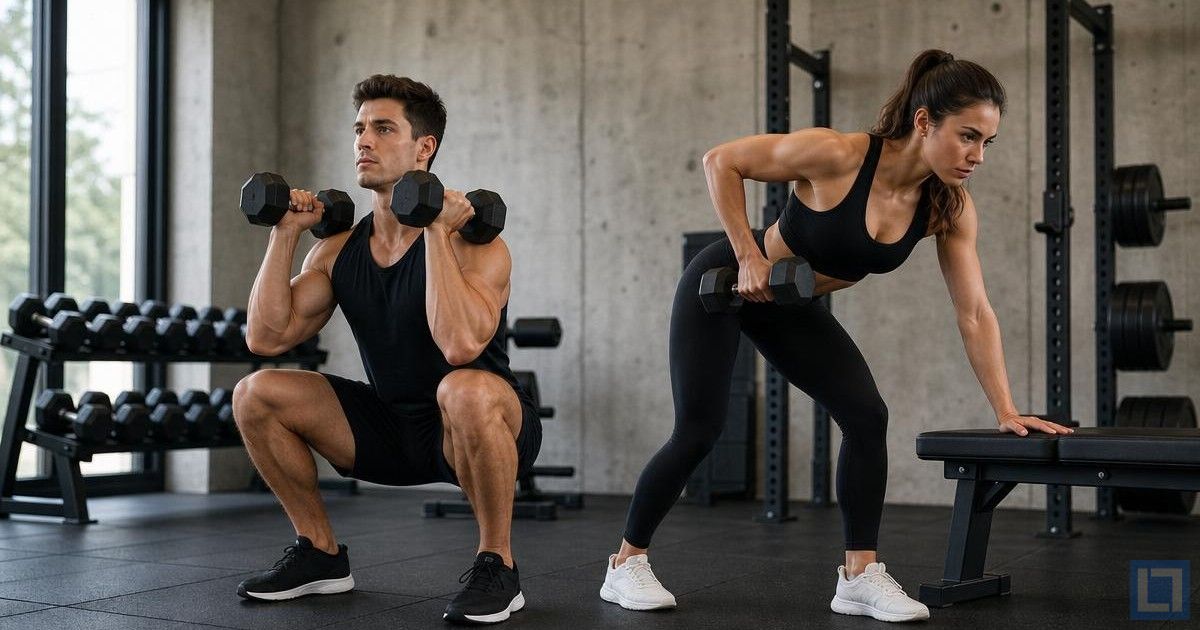
Sit or stand with dumbbells held at shoulder height with palms facing the body (neutral grip) and elbows tucked in front. Press the dumbbells overhead while rotating the wrists so palms face forward at the top. The rotation hits all three delt heads through one fluid motion. Lower under control while rotating back to the neutral grip start. The pattern produces broader shoulder development than standard overhead press and is excellent for breaking through shoulder plateaus.
Dumbbell Lateral Raise

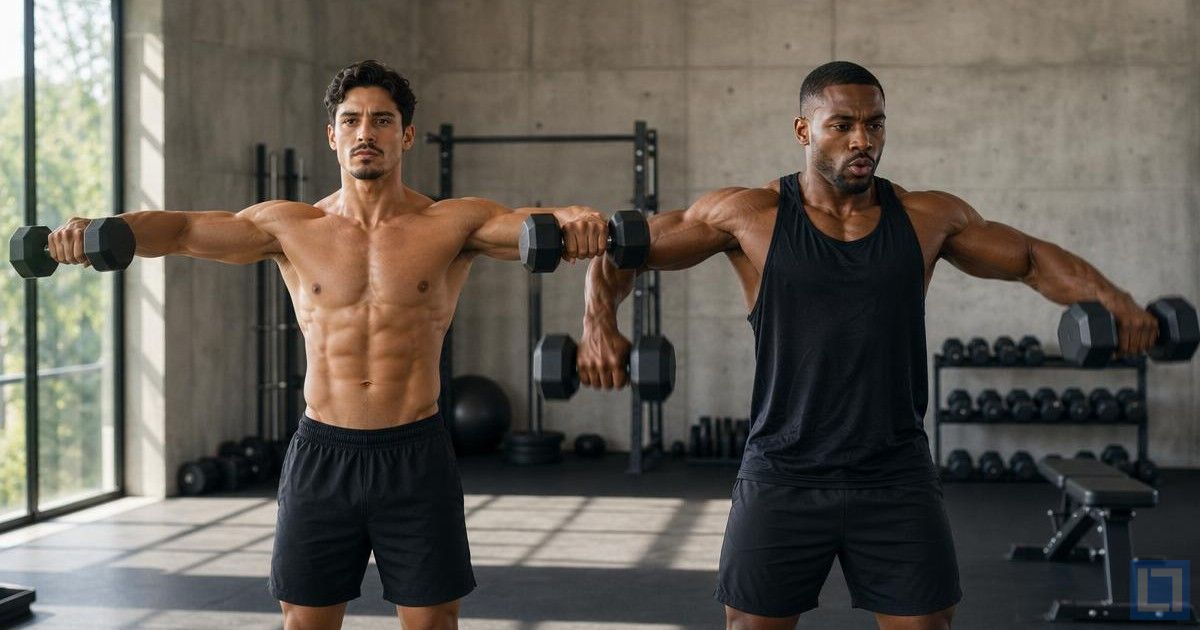
The Dumbbell Lateral Raise performs lateral raises with dumbbells. The pattern produces direct side delt isolation.
For shoulder growth, the lateral raise is the foundational side delt isolation exercise. Side delts create the V-taper appearance and shoulder width. Run it for 4 sets of 12 to 15 reps as primary side delt work.
Stand with feet hip-width holding dumbbells at the sides with palms facing the body. Keep the arms slightly bent at the elbows. Raise the arms out to the sides until the upper arms reach shoulder height. The side delts work hard through the lateral raise. Squeeze the side delts at peak contraction. Lower under control. Use lighter weights with strict form rather than heavy weights with compensation. The pattern produces direct side delt mass work essential for V-taper shoulder development.
Dumbbell Front Raise

The Dumbbell Front Raise performs front raises with dumbbells. The pattern produces direct front delt isolation.
For shoulder growth, the front raise produces direct front delt isolation. Run it for 3 sets of 10 to 12 reps as front delt isolation work.
Stand with feet hip-width holding dumbbells at the front of the thighs with palms facing the body. Keep the arms straight (slight bend at elbows). Raise the arms forward and up to shoulder height while keeping them straight. The front delts work through the raise motion. Squeeze hard at peak contraction. Lower under control. Avoid using momentum from the legs or trunk. The pattern produces direct front delt isolation that complements pressing for complete delt development.
Dumbbell Rear Delt Fly
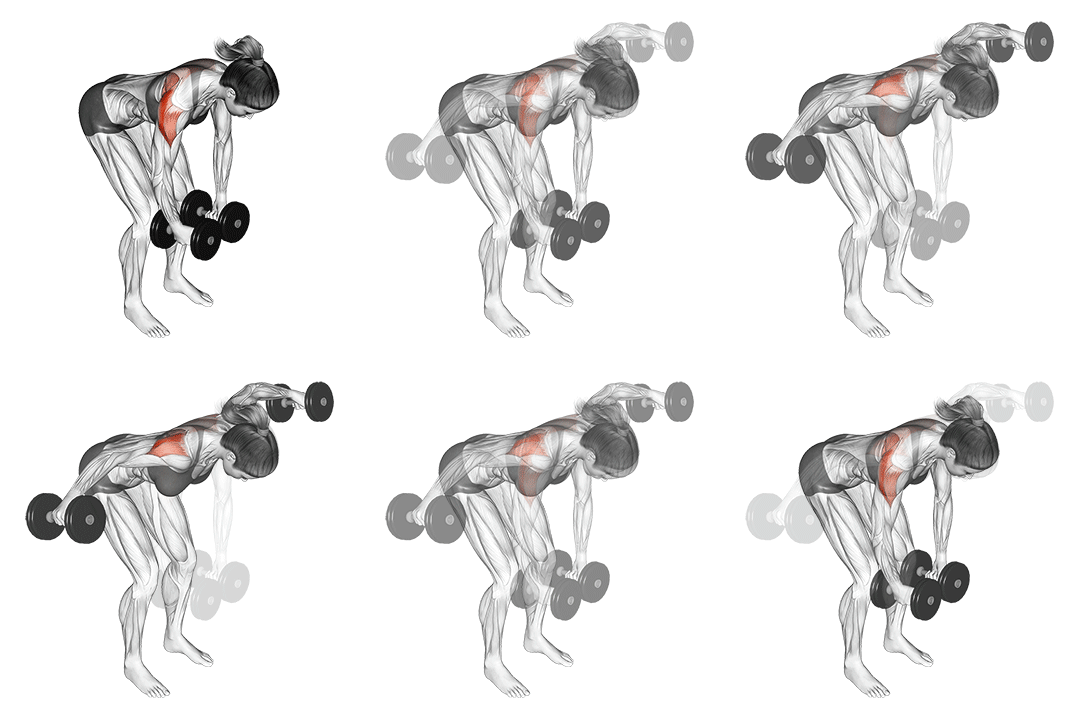
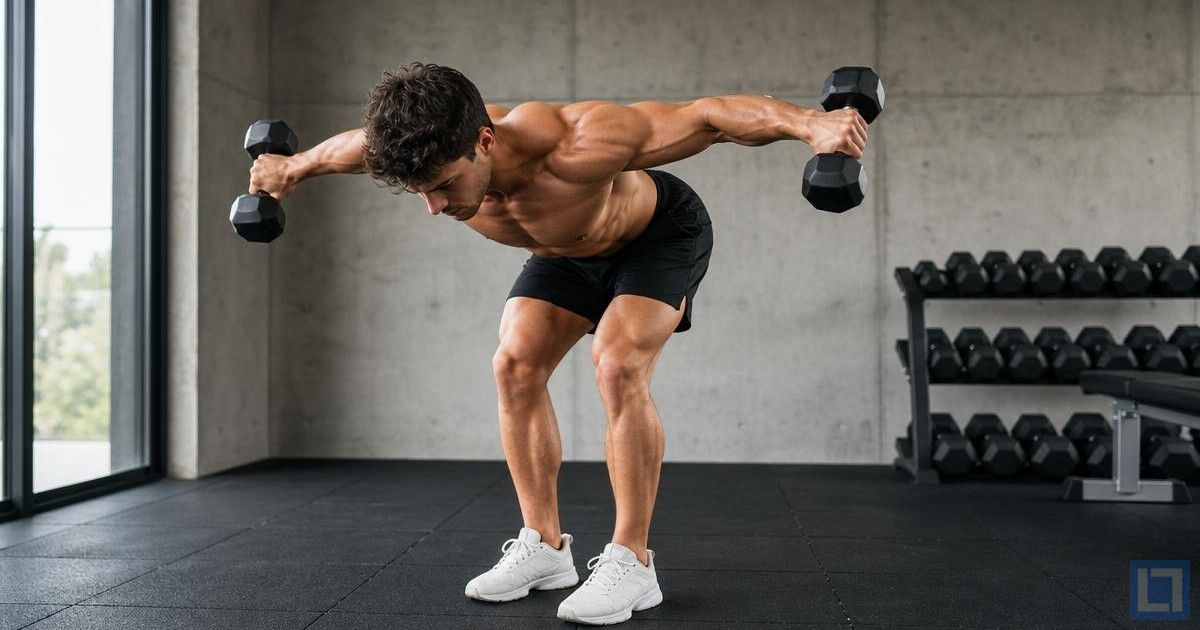
The Dumbbell Rear Delt Fly performs rear delt flies with dumbbells while bent over. The pattern produces direct rear delt isolation.
For shoulder growth, the rear delt fly is critical for complete delt development. Rear delts are often undertrained but essential for posture and 3D shoulder appearance. Run it for 3 to 4 sets of 12 to 15 reps as primary rear delt work.
Stand with feet hip-width holding dumbbells. Hinge forward at the hips with a flat back so the torso is parallel to the floor. Let the arms hang straight down. Keep slight bend in the elbows. Lift the arms out to the sides in a reverse fly motion until they reach shoulder height. The rear delts work hard through the lateral motion. Squeeze hard at peak contraction. Lower under control. The pattern is critical for posture and balanced shoulder development.
Barbell Upright Row

The Barbell Upright Row performs upright rows with a barbell. The pattern produces combined upper trap and side delt work.
For shoulder growth, the upright row produces combined trap and side delt mass. Run it for 3 sets of 10 to 12 reps as combined work.
Stand with feet hip-width holding a barbell at the front of the thighs with overhand grip slightly wider than shoulder-width. Pull the barbell straight up along the body by lifting the elbows high. The bar travels vertically up to about shoulder height. The upper traps work through elevation while the side delts work through lateral lift. Squeeze hard at peak contraction. Lower under control. The pattern produces combined trap and delt mass work.
Cable Lateral Raise

The Cable Lateral Raise performs lateral raises with a cable. The constant cable tension produces unique side delt loading.
For shoulder growth, the cable lateral raise produces continuous tension lateral loading that dumbbell variations cannot match. Run it for 3 sets of 12 to 15 reps as side delt work.
Set a cable to the lowest setting. Stand sideways to the cable machine with the working arm farthest from the cable. Hold the handle in front of the body with arm straight. Raise the arm out to the side until it reaches shoulder height. The side delt works hard through lateral abduction with continuous cable tension throughout the range. Squeeze at peak contraction. Lower under control. The pattern produces unique side delt loading complementary to dumbbell raises.
Barbell Front Raise

The Barbell Front Raise performs front raises with a barbell. The pattern produces bilateral front delt loading.
For shoulder growth, the barbell front raise produces direct bilateral front delt loading. Run it for 3 sets of 10 to 12 reps as bilateral front delt work.
Stand with feet hip-width holding a barbell at the front of the thighs with overhand grip. Keep the arms straight. Raise the barbell forward and up to shoulder height while keeping the arms straight. The front delts work through the raise. Squeeze hard at peak contraction. Lower under control. The bilateral barbell version allows for heavier loading than dumbbell front raises and produces strong front delt mass work.
Dumbbell Cuban Press

The Dumbbell Cuban Press performs combined upright row, external rotation, and overhead press. The pattern combines multiple shoulder functions.
For shoulder growth, the Cuban press produces combined shoulder mass and rotator cuff work. Run it for 3 sets of 8 to 10 reps as combined shoulder work.
Stand with feet hip-width holding dumbbells at the front of the thighs. Perform an upright row by pulling the dumbbells up along the body to shoulder level. From this position, externally rotate the upper arms so the dumbbells flip up to be in the rack position with palms forward. From the rack, press the dumbbells straight overhead. Reverse through each phase to return to start. The pattern combines side delt work, rotator cuff external rotation, and overhead pressing.
Dumbbell Push Press
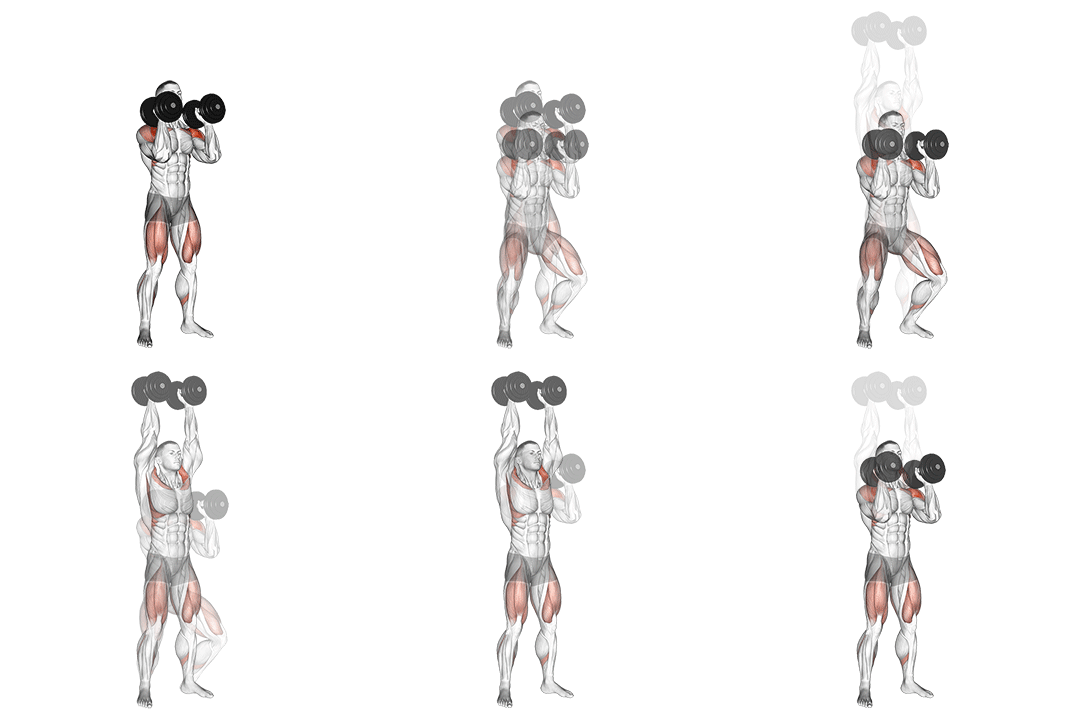
The Dumbbell Push Press performs push press with dumbbells using leg drive. The pattern enables heavier overhead loading.
For shoulder growth, the push press allows heavier overhead loading than strict press. The leg drive enables maximum overhead loading. Run it for 3 sets of 6 to 10 reps as compound shoulder work.
Stand with feet hip-width holding dumbbells at shoulder height in the rack position. Bend the knees slightly to dip. Drive explosively up by extending the knees and hips while pressing the dumbbells overhead. The leg drive provides initial momentum and the shoulders complete the press to lockout. Lower under control to the rack position. The pattern enables heavier overhead loading than strict press allows and produces compound full-body work with strong shoulder loading.
How To Program These Workouts
A productive shoulder-growth session pulls 5 to 7 exercises from the list above. A common balanced session: barbell seated overhead press (compound mass), dumbbell lateral raise (side delt), dumbbell rear delt fly (rear delt), dumbbell front raise (front delt), barbell upright row (combined). For mass focus: barbell seated overhead press, dumbbell Arnold press, dumbbell push press, barbell upright row. For isolation focus: dumbbell lateral raise, cable lateral raise, dumbbell rear delt fly, dumbbell front raise. For complete delt development: include both compound press and dedicated isolation for all three delt heads. Run compound press work for 3 to 4 sets of 6 to 12 reps, lateral raise work for 4 sets of 12 to 15 reps, front and rear delt isolation for 3 to 4 sets of 12 to 15 reps. Total session covers 18 to 22 working sets focused on shoulder development.
Train shoulders 1 to 2 times per week for optimal growth. Most lifters who struggle to grow shoulders are training them only once per week with insufficient volume on isolation work. Increasing to twice weekly often produces measurable shoulder growth within 8 to 12 weeks. The optimal pattern: one compound day focused on overhead press strength (heavy 5 to 10 reps) and one volume day focused on isolation hypertrophy (lateral raises, rear delt flies, front raises for 12 to 15 reps). Schedule with at least 48 hours between shoulder sessions. Note: shoulders are activated heavily in chest and back training (bench press activates front delts, rows activate rear delts), so total weekly shoulder volume includes activation from other sessions.
For broader shoulder programming, see our best shoulder workouts and how to build bigger shoulders. For specific delt work, see our best side delt exercises.
Final Thoughts
Growing bigger shoulders requires applying the right training principles consistently over time: compound overhead pressing for foundational mass, dedicated isolation for each of the three delt heads, varied angles for complete development, and adequate frequency and volume to drive growth. The combination of barbell overhead press, Arnold press, lateral raises (dumbbell and cable), front raises (dumbbell and barbell), rear delt flies, upright rows, Cuban presses, and push press covers every functional pattern of the shoulders and produces broader development than any single exercise approach. Most lifters who consistently apply these principles see measurable shoulder growth within 12 to 16 weeks, often producing visible V-taper improvement and 3D shoulder appearance. For lifters who have struggled to grow their shoulders despite training, the combination of dedicated isolation for all three delt heads (especially side and rear), higher frequency (twice weekly), and proper lateral raise form (lighter weights, strict form, full range) typically breaks through the plateau.
Stay focused on form over weight on isolation work. The most common mistake lifters make in shoulder training is using too-heavy weights on lateral raises and rear delt flies, forcing compensation that limits delt loading. The fix: use weights light enough that 12 to 15 reps becomes challenging with strict form (no leg drive, no trunk swing, full range of motion). Quality reps with proper form and full range produce stronger delt development than ego-driven heavy partials. Combined with progressive overload over time and dedicated focus on rear delts (which most lifters neglect), proper form produces the broad, capped shoulders that define great physiques.
Frequently Asked Questions
Why aren’t my shoulders growing?
Most lifters with stubborn shoulders make one or more of these mistakes: 1) relying only on overhead press without dedicated isolation (overhead press primarily hits front delts), 2) neglecting rear delts entirely (producing imbalanced shoulders), 3) training shoulders only once per week (insufficient frequency), 4) using too-heavy lateral raise loads that force compensation, or 5) running too-low isolation volume (less than 12 weekly sets across the three delt heads). The fix: include dedicated isolation for all three delt heads (front, side, rear), increase to 2 weekly shoulder sessions, use proper lateral raise form, target 18+ weekly working sets across delt isolation.
What’s the best exercise for bigger shoulders?
Compound overhead press for mass plus lateral raises for width. Barbell seated overhead press is the foundational mass-builder for shoulders – it produces heavy compound loading across all three delt heads. Dumbbell lateral raises are essential for side delt width and the V-taper appearance. Combined with rear delt flies (for posture and balance) and front raises (for complete development), these form the foundation of shoulder growth. The fastest gains come from combining heavy compound press with dedicated isolation for all three delt heads.
Are lateral raises necessary for bigger shoulders?
Yes – essential for side delt development and V-taper. Lateral raises produce direct side delt isolation that overhead press cannot match. The side delts (lateral head) create the V-taper appearance and visible shoulder width. Most successful shoulder programs include lateral raises as primary side delt work, typically 12 to 15 reps for 3 to 4 sets. Use light enough weight that you can complete 12 to 15 strict reps without using leg drive or trunk swing. Cable lateral raises produce unique loading complementary to dumbbell variations.
How often should I train shoulders for growth?
1 to 2 times per week works for most lifters, with 2 weekly sessions producing better growth for most. The optimal pattern: one compound day (overhead press, Arnold press, push press for 5 to 10 reps) and one isolation day (lateral raises, rear delt flies, front raises for 12 to 15 reps). Schedule with at least 48 hours between shoulder sessions. Note that shoulders are activated heavily in chest and back training, so total weekly shoulder activation includes work from those sessions.
How heavy should I lift for shoulder growth?
Heavy compound, light to moderate isolation. Compound overhead press uses heavy weights for 6 to 10 reps. Push press uses heavy weights for 6 to 10 reps. Lateral raises use light weights (typically 10 to 30 lb dumbbells) for 12 to 15 reps with strict form. Rear delt flies use light weights for 12 to 15 reps. Front raises use light to moderate weights for 10 to 12 reps. Most successful programs progressively load all exercises while never sacrificing form on isolation work – light weight with strict form beats heavy weight with compensation every time.