Thirty-minute dumbbell workouts produce real full-body fitness gains when programmed correctly. The compressed format requires high-density exercise selection (compound movements that hit multiple muscle groups per rep) and efficient transitions to maximize the training stimulus per minute. Done right, a focused 30-minute dumbbell session 4 to 5 times per week produces stronger results for most lifters than longer infrequent sessions, because the consistent frequency drives faster long-term progression than weekly marathon workouts.
Below are ten effective 30-minute dumbbell exercises that cover chest pressing (bench press, incline press), back work (bent-over row), leg training (Romanian deadlift, walking lunge, glute bridge), shoulder work (overhead press, lateral raise), arm work (biceps curl), and full-body conditioning (thruster). Together they form the foundation of any productive 30-minute dumbbell session. Pull 6 to 8 exercises per session and rotate the selection across sessions for complete training.
Dumbbell Bench Press

The Dumbbell Bench Press lies flat on a bench and presses dumbbells from chest level to lockout above the chest. The bilateral pressing pattern is the foundational chest exercise in any 30-minute dumbbell session.
For 30-minute dumbbell sessions, the bench press is the cornerstone push exercise. The pattern produces strong chest development while fitting naturally into the time-compressed format. Run it for 3 sets of 8 to 12 reps as primary push work.
Lie flat on a bench with dumbbells held at chest level, palms facing forward. Press both dumbbells up to lockout above the chest. Lower under control to chest level, allowing a deep stretch in the chest. Maintain feet planted and tight upper back throughout.
Dumbbell Bent Over Row

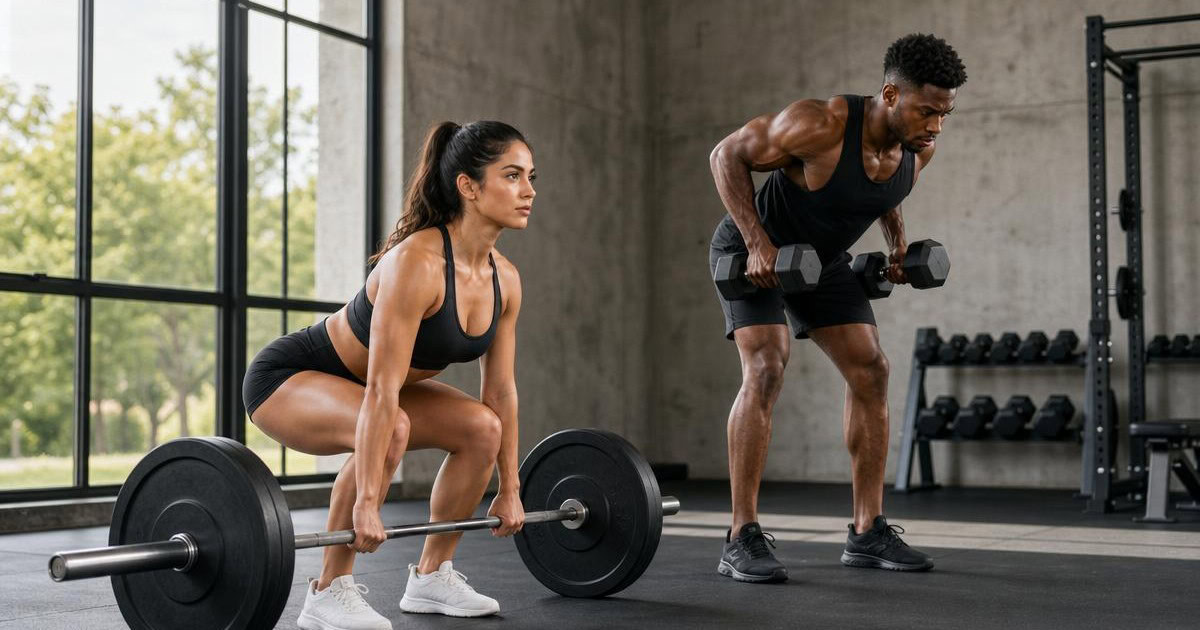
The Dumbbell Bent Over Row hinges over with dumbbells held at the sides and rows them to the ribs by pulling the elbows back. The exercise is the foundational horizontal pulling movement in any 30-minute dumbbell session.
For 30-minute dumbbell sessions, the bent-over row balances the bench press with horizontal pulling work. The combination of rowing and pressing produces broader development than push-only or pull-only sessions. Run it for 3 sets of 8 to 10 reps as primary pull work.
Stand with feet hip-width holding dumbbells at the sides. Hinge over by pushing the hips back and bending the knees slightly, lowering the torso to roughly 45 degrees. Row the dumbbells to the ribs by pulling the elbows back. Lower under control. Keep the back flat throughout.
Dumbbell Romanian Deadlift
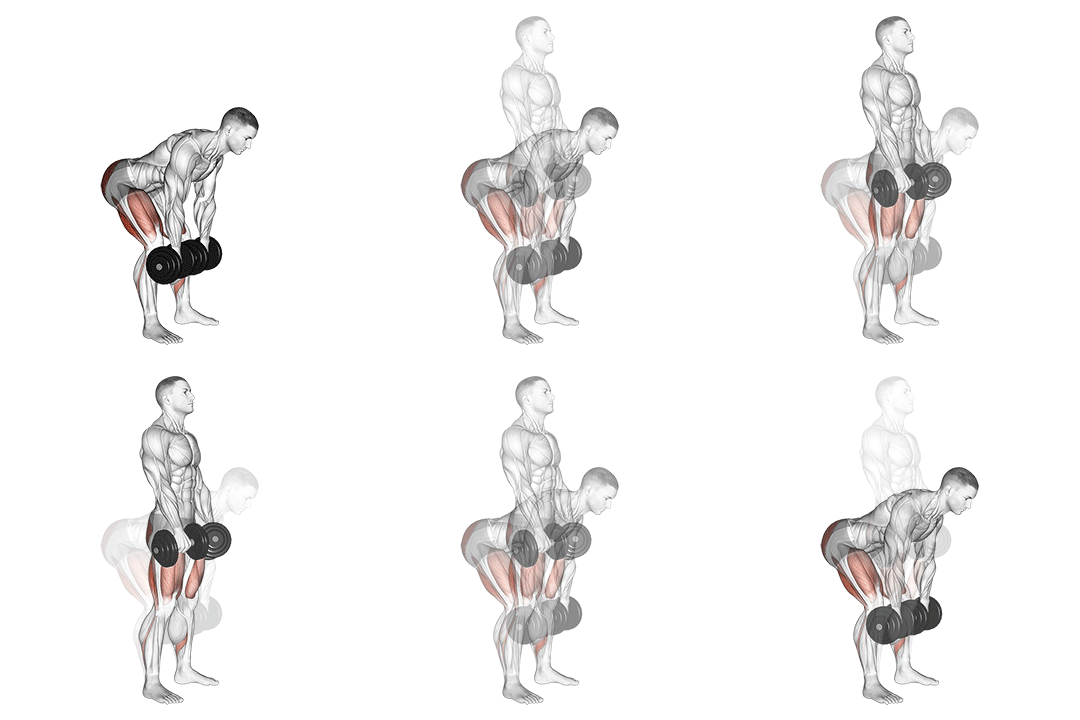
The Dumbbell Romanian Deadlift starts standing with dumbbells held at the front of the thighs and hinges at the hips with a slight knee bend, lowering the dumbbells in a controlled motion before driving the hips forward to stand.
For 30-minute dumbbell sessions that need posterior-chain work, the Romanian deadlift produces strong hamstring and glute loading in minimal time. Run it for 3 sets of 8 to 12 reps as primary hamstring and glute work.
Stand tall holding dumbbells at the front of the thighs, palms facing the body. Hinge at the hips with a slight knee bend, lowering the dumbbells in a path close to the legs until the hamstrings stretch. Drive the hips forward to stand back up. Keep the back flat throughout.
Dumbbell Walking Lunge

The Dumbbell Walking Lunge performs walking lunges while holding dumbbells at the sides. The dynamic walking pattern produces strong glute and quad development.
For 30-minute dumbbell sessions, the walking lunge is the most efficient unilateral leg exercise that exists. The pattern produces strong leg development while adding cardiovascular demand from the alternating step motion. Run it for 3 sets of 10 to 12 reps per leg as primary leg work.
Stand tall with dumbbells held at the sides. Step forward into a long lunge stance, lowering the back knee toward the floor while bending the front knee. Drive through the front foot to step the back foot forward into the next lunge. Continue walking forward for the prescribed reps.
Dumbbell Standing Overhead Press

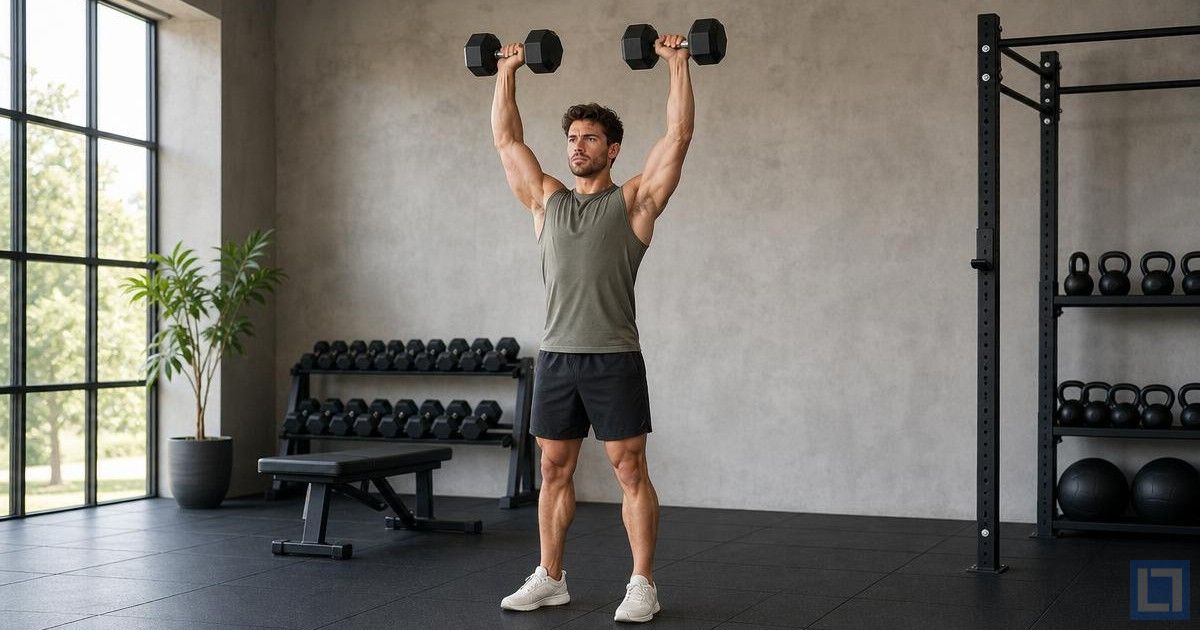
The Dumbbell Standing Overhead Press stands tall with dumbbells held at the shoulders and presses both up to lockout overhead. The bilateral compound pressing pattern produces strong shoulder development.
For 30-minute dumbbell sessions, the overhead press is the foundational shoulder exercise. The full-body bracing demand and bilateral loading produce stronger shoulder development per rep than seated pressing. Run it for 3 sets of 6 to 10 reps as primary shoulder work.
Stand tall with feet shoulder-width apart and dumbbells held at the shoulders. Press both dumbbells up to lockout overhead. Lower under control to the shoulders. Brace the core hard throughout to prevent body sway.
Dumbbell Incline Bench Press

The Dumbbell Incline Bench Press lies on an incline bench (set to 30 to 45 degrees) and presses dumbbells from chest level to lockout. The incline angle shifts loading toward the upper chest and front delts.
For 30-minute dumbbell sessions that include chest work, the incline press complements the flat bench press by hitting the upper chest more directly. Run it for 3 sets of 8 to 12 reps as secondary chest work after primary bench pressing.
Set an incline bench to 30 to 45 degrees. Sit back with dumbbells held at chest level, palms facing forward. Press both dumbbells up to lockout above the chest. Lower under control to chest level.
Dumbbells Glute Bridge

The Dumbbells Glute Bridge lies on the back with knees bent and feet planted, with dumbbells held across the hips, then drives the hips up by squeezing the glutes. The added load increases glute activation throughout the motion.
For 30-minute dumbbell sessions that need direct glute work, the glute bridge with dumbbells produces strong glute development. The pattern complements squats and lunges by hitting the glutes at the contracted position. Run it for 3 sets of 10 to 15 reps as direct glute work.
Lie flat on the back with knees bent and feet planted shoulder-width apart. Hold dumbbells across the hips with both hands. Drive the hips up by squeezing the glutes hard until the body forms a straight line from shoulders to knees. Lower under control.
Dumbbell Biceps Curl

The Dumbbell Biceps Curl holds dumbbells at the sides and curls them up toward the shoulders by bending at the elbows. The exercise is the foundational bicep mass-builder in any dumbbell session.
For 30-minute dumbbell sessions that include arm work, the biceps curl is the cornerstone bicep exercise. The pattern produces direct bicep loading and serves as accessory work after primary pulling. Run it for 3 sets of 8 to 12 reps as direct bicep work.
Stand tall with dumbbells held at the sides, palms facing forward. Curl the dumbbells up toward the shoulders by bending at the elbows. Keep the elbows pinned at the sides throughout the rep. Squeeze the biceps at the top. Lower under control to full extension.
Dumbbell Lateral Raise

The Dumbbell Lateral Raise holds dumbbells at the sides and lifts them out laterally to shoulder height. The exercise targets the side deltoids directly through their primary shoulder abduction function.
For 30-minute dumbbell sessions, the lateral raise produces visible shoulder width that complements primary overhead pressing. The pattern hits the medial deltoid heads with maximum efficiency. Run it for 3 sets of 12 to 15 reps as accessory shoulder work.
Stand tall with dumbbells held at the sides, palms facing the body. Lift the dumbbells out to the sides until the arms are roughly parallel to the floor. Pause briefly at the top. Lower under control. Avoid swinging.
Dumbbell Thruster
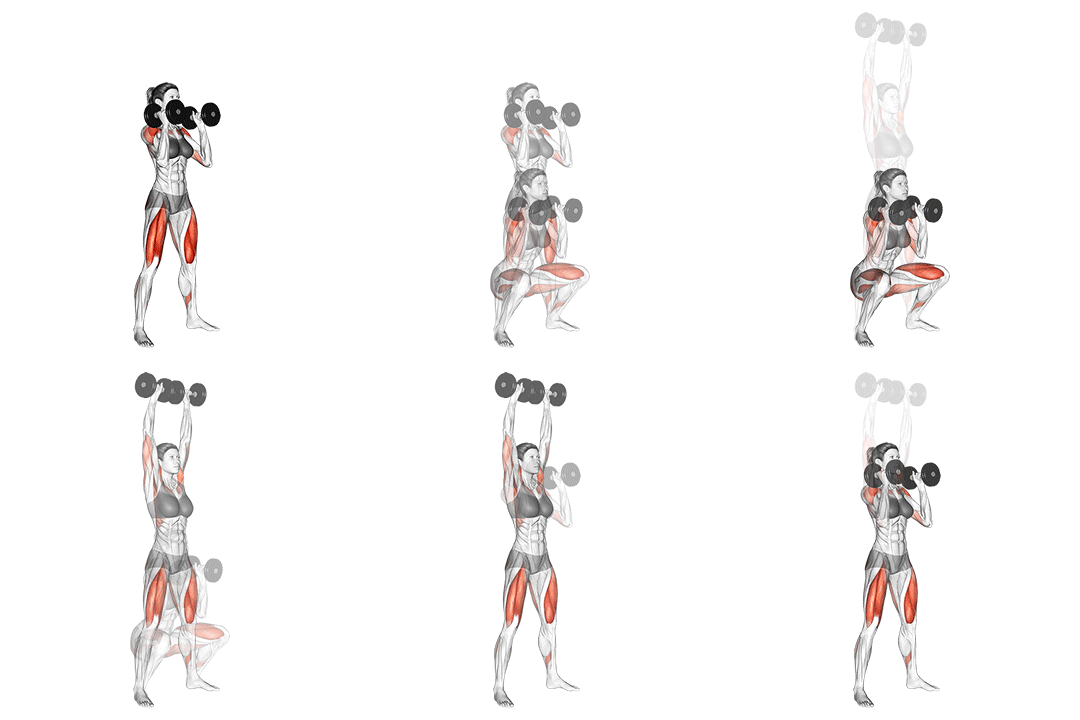
The Dumbbell Thruster combines a front squat (with dumbbells held at the shoulders) and an overhead press in one continuous motion. The combined leg drive and overhead press produces full-body conditioning per rep.
For 30-minute dumbbell sessions that include conditioning, the thruster is one of the most efficient full-body exercises that exists. The combined leg and overhead press pattern works the entire body in one rep. Run it for 3 sets of 8 to 10 reps as combined conditioning and strength work.
Stand with dumbbells held at the shoulders. Squat down to a deep front squat. Drive up explosively while pressing the dumbbells overhead in one continuous motion. Lower the dumbbells to the shoulders. Repeat immediately into the next squat.
How To Program These Workouts
A productive 30-minute dumbbell workout uses circuit-style or straight-set organization. A standard structure: 5-minute warm-up, 20 minutes of strength work (6 to 7 exercises for 3 sets each with 30 to 60 seconds rest between sets), 5 minutes of cool-down. The full-body format produces stronger fitness adaptations than body-part splits when training time is limited because every session hits every muscle group. Most lifters do well with this format alongside 1 to 2 dedicated cardio days.
Train 30-minute dumbbell sessions 4 to 5 times per week. The compact format produces moderate volume per session, which allows higher frequency than 60 to 90-minute body-part sessions. Most successful programs include 4 to 5 sessions per week alongside 1 to 2 lower-intensity days (walking, mobility work). The format also fits naturally as a daily training habit that builds long-term consistency.
For other dumbbell programming, see our best dumbbell workouts for women and best full body dumbbell workouts. For shorter sessions, see our best 30 minute workouts at home.
Final Thoughts
The best 30-minute dumbbell workouts deliver real full-body fitness through high-density training that fits any schedule. The combination of foundational compounds (bench press, row, Romanian deadlift, lunge, overhead press) and appropriate accessory work covers every major movement pattern in a sustainable time commitment. For lifters who want consistent strength training without the time barriers of longer body-part sessions, this format is one of the most effective options available.
Stay focused on consistency and progressive loading. The most common 30-minute dumbbell training mistake is treating each session as a casual easy workout, which produces no progression over time. The fix: track the dumbbell weights used and aim to add weight, reps, or sets every 2 to 4 weeks. Lifters who progress consistently across 6 to 12 months produce significantly stronger results than those who stay at the same loads indefinitely. The compressed format does not eliminate the need for progressive overload.
Frequently Asked Questions
Can I build muscle with 30 minute dumbbell workouts?
Yes for beginners and intermediates. The combination of full-body training and progressive loading produces real muscle development for the first 12 to 24 months of consistent training. Advanced lifters chasing maximum mass eventually benefit from longer body-part-focused sessions, but consistent 30-minute dumbbell training produces measurable muscle development for most physique goals when paired with appropriate nutrition.
What dumbbell weights for 30 minute workouts?
Most beginners work with 10 to 25-pound dumbbells; intermediates work with 20 to 40-pound dumbbells for primary compounds and 10 to 20-pound for isolation work. The right weight is whatever allows clean reps in your target range with strict form. A complete dumbbell setup typically includes pairs ranging from 5 to 50 pounds in 5 to 10-pound increments.
How often should I do 30 minute dumbbell workouts?
Four to five times per week works for most lifters. The compact format produces moderate volume per session, which allows higher frequency than longer body-part programs. Most successful programs include 4 to 5 sessions per week alongside 1 to 2 lower-intensity days. Daily training is feasible with appropriate variety between sessions.
Full body or body part split for 30 minute workouts?
Full body works better for the 30-minute time format. Body-part splits typically need 60 to 75 minutes per session to fit enough volume for any single muscle group; cramming a body-part session into 30 minutes produces undertrained muscle groups. Full-body sessions hit every muscle group in 30 minutes through compound movements, which works much better at this time scale.
Will 30 minute dumbbell workouts help me lose weight?
Yes, when combined with appropriate nutrition. The combination of strength work and dumbbell-based conditioning (thrusters, walking lunges) produces strong calorie burn during and after training. Most lifters who consistently do 4 to 5 30-minute sessions per week alongside a moderate caloric deficit (200 to 500 calories per day below maintenance) produce real fat loss results over 8 to 12 weeks.