Stability ball core training produces real core development through unstable-surface exercises that engage the deep stabilizer muscles traditional floor-based core work rarely reaches. The format works particularly well for core training because the ball requires constant micro-adjustments throughout every exercise, which means the deep core (transverse abdominis, internal obliques, multifidus) gets strong stimulus alongside the visible ab muscles. The ball also enables core training through patterns that fixed equipment cannot match: anti-extension rollouts and body saws, anti-rotation alternating arm work, single-leg balance with rear-foot instability, and dynamic core flexion through jack knives and pike pushups. Most lifters who consistently train stability ball core 1 to 2 times per week see measurable core strength, balance, and stability improvements within 6 to 10 weeks.
Below are ten effective stability ball core exercises that cover anti-extension training (body saw, rollout), anti-rotation work (alternating arm ups, dead bug variations), single-leg core stability (single-leg squat with rear foot on ball), dynamic core flexion (jack knife, pike pushup), oblique work (weighted lying twist), lower core (prone leg raise), and lower back strengthening (back extension with knees elevated). Together they form a complete stability ball core training program that hits every core function. A 30 to 40-minute session pulled from this list produces strong combined core development across deep stabilizers and surface muscles.
Exercise Ball Body Saw

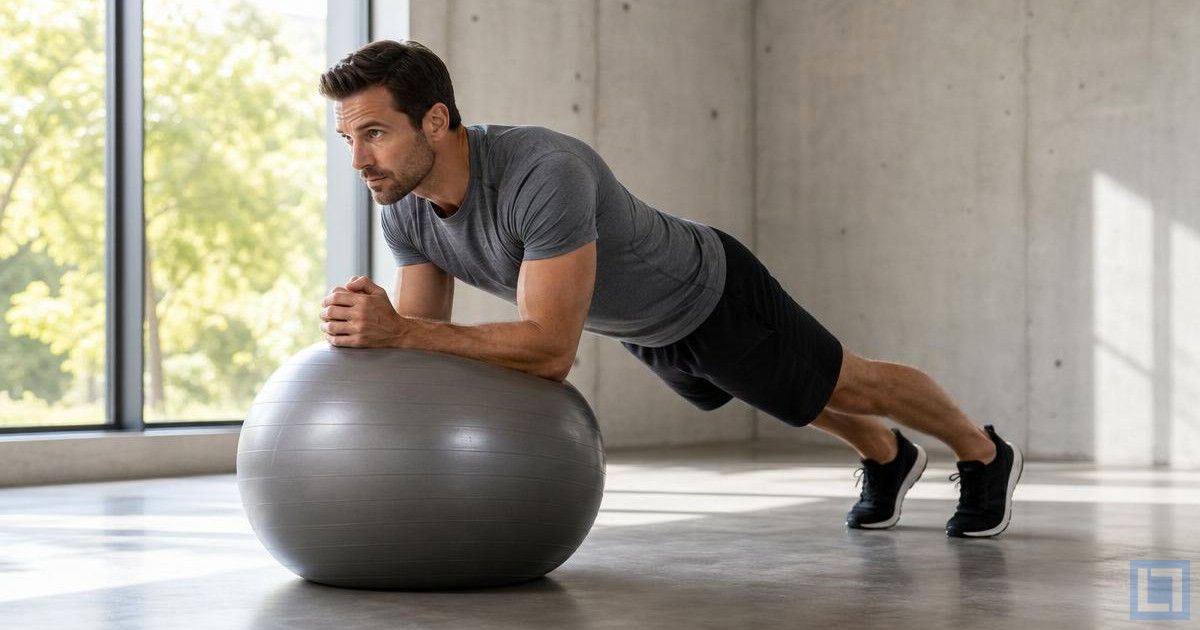
The Exercise Ball Body Saw sets up in a forearm plank position with the toes on a stability ball, then slides the body forward and backward by rolling the ball with the feet. The pattern produces strong anti-extension core loading combined with shoulder stability demand.
For stability ball core training, the body saw is one of the most direct anti-extension exercises that exists with the format. The pattern hits the deep core through dynamic anti-extension under sustained loading. Run it for 3 sets of 8 to 12 reps as foundational anti-extension work in any SB core session.
Set up in a forearm plank position with the toes resting on a stability ball. Engage the core to maintain a tight plank from head to feet. Slide the body forward by rolling the ball with the feet (the body saws forward without changing plank shape). Slide back to start by rolling the ball back. Maintain tight core tension throughout.
Exercise Ball Alternating Arm Ups

The Exercise Ball Alternating Arm Ups sets up in a high plank position with the hands on a stability ball, then alternates lifting one hand up off the ball. The pattern produces strong anti-rotation core loading through the alternating one-hand support.
For stability ball core training, the alternating arm ups produce strong anti-rotation core loading. The pattern hits the deep core through preventing trunk rotation while one arm is unsupported. Run it for 3 sets of 16 to 20 total alternations as anti-rotation core work.
Set up in a high plank position with both hands on a stability ball and feet on the floor. Engage the core to maintain a tight plank. Lift one hand off the ball and reach it forward (or up) while keeping the other hand stable on the ball. Return the hand to the ball. Switch sides on the next rep. Maintain stable trunk position throughout (no rotation or hip drop).
Stability Ball Rollout
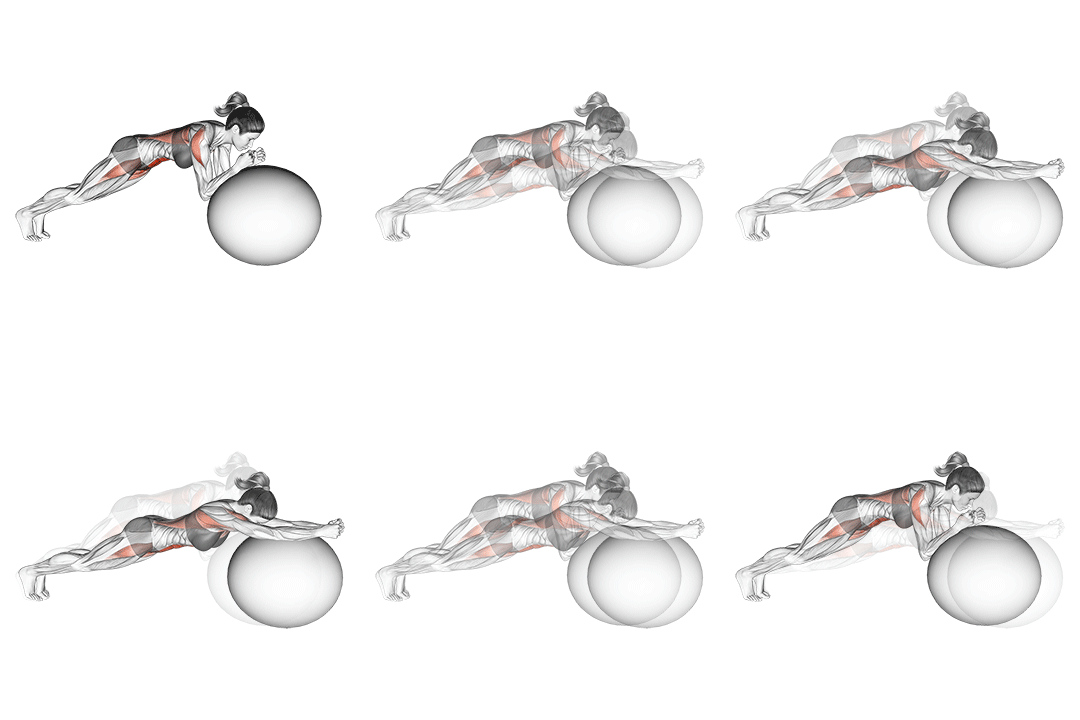
The Stability Ball Rollout kneels on the floor with the forearms on a stability ball, then rolls the ball forward by extending the arms while keeping the body in a tight plank. The pattern produces strong anti-extension core loading.
For stability ball core training, the rollout is one of the foundational anti-extension exercises that exists. The pattern hits the deep core through anti-extension under heavy loading. Run it for 3 to 4 sets of 8 to 12 reps as primary deep core work in any SB core session.
Kneel on the floor with the forearms resting on a stability ball directly below the shoulders. Engage the core to maintain a straight line from knees to head. Roll the ball forward by extending the arms while keeping the body in a tight plank position. Roll back to the start by pulling the ball back under the shoulders. Maintain core tension throughout.
Dead Bug With Stability Ball

The Dead Bug With Stability Ball performs dead bug motion while squeezing a stability ball between the opposite hand and knee. The pattern produces strong anti-extension loading combined with cross-body coordination demands.
For stability ball core training, the dead bug variation produces strong deep core anti-extension loading. The ball squeeze adds isometric tension that builds the deep abs. Run it for 3 sets of 8 to 12 reps per side as deep core work.
Lie flat on the back with arms extended toward the ceiling and knees bent at 90 degrees with feet lifted. Squeeze a stability ball between one hand and the opposite knee. Slowly extend the free arm overhead toward the floor while extending the free leg toward the floor. Press the lower back into the floor throughout. Return to start. Switch sides between reps.
Jack Knife on Ball
The Jack Knife on Ball sets up in a high plank with the shins on a stability ball, then tucks the knees toward the chest by rolling the ball forward. The pattern produces strong combined upper and lower core loading through dynamic tucking motion.
For stability ball core training, the jack knife is one of the most efficient combined core exercises that exists. The pattern hits the entire core through dynamic flexion motion combined with shoulder stability demand. Run it for 3 sets of 10 to 15 reps as primary combined core work.
Set up in a high plank position with hands on the floor and shins resting on a stability ball. Engage the core to maintain a tight plank. Tuck the knees toward the chest by rolling the ball forward with the legs. Reverse the motion to extend the legs back to the start. Maintain control throughout.
Stability Ball Single Leg Squat
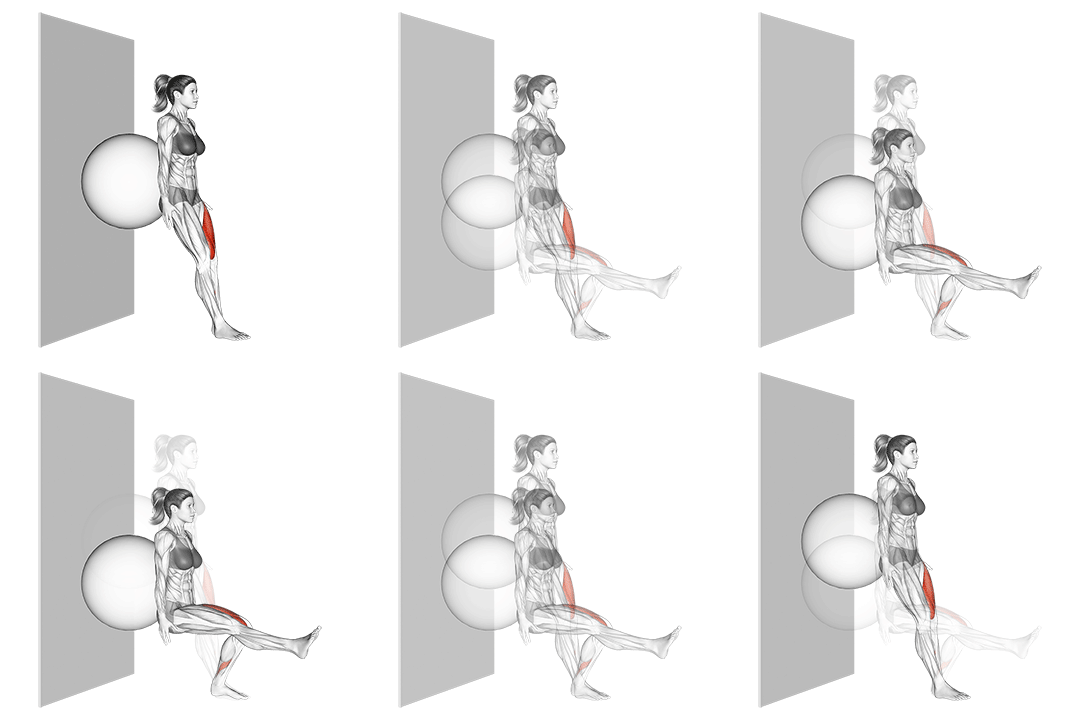
The Stability Ball Single Leg Squat performs a single-leg squat with one foot resting on a stability ball behind the body for support. The pattern produces strong combined leg, core, and balance loading through the unstable single-leg setup.
For stability ball core training, the single-leg squat produces strong combined core stability and leg loading. The unstable ball creates significant core demand for balance and trunk control. Run it for 3 sets of 8 to 10 reps per side as combined core stability and leg work.
Stand 2 to 3 feet in front of a stability ball with one foot resting on top of the ball behind the body (in a Bulgarian split-squat position with the back foot on the unstable ball). Drop straight down by bending the front knee while balancing on the unstable rear foot. Drive back to standing through the front foot. Switch sides between sets. The unstable foot creates strong core stability demand.
Exercise Ball Prone Leg Raise


The Exercise Ball Prone Leg Raise lies face-down on a stability ball with hands on the floor and lifts the legs up behind the body by engaging the lower core and glutes. The pattern produces direct lower core and lower back loading.
For stability ball core training, the prone leg raise produces direct lower core and lower back loading from a unique angle. The pattern hits the lower core and erectors through hip extension. Run it for 3 sets of 10 to 12 reps as direct lower core work.
Lie face-down on a stability ball with the ball positioned at the hips. Plant the hands on the floor in front of the ball for support. Lift the legs straight up behind the body by engaging the lower core and glutes. Lower under control. Maintain straight legs throughout.
Exercise Ball Pike Pushup

The Exercise Ball Pike Pushup sets up in a high plank with the shins on a stability ball, then pikes the hips up by rolling the ball forward while keeping the legs straight. The pattern produces strong combined core and shoulder loading.
For stability ball core training, the pike pushup adds a vertical pressing component to standard pike-style core work. The pattern hits the deep core through dynamic flexion combined with shoulder loading. Run it for 3 sets of 8 to 12 reps as combined core and shoulder work.
Set up in a high plank position with hands on the floor and shins resting on a stability ball. Pike the hips up by rolling the ball forward with the legs while keeping the legs straight. The body should form an inverted V at the top position. Reverse the motion under control to return to plank.
Weighted Lying Twist

The Weighted Lying Twist lies on a stability ball in a bridge position and rotates the trunk to one side while holding a weight overhead. The pattern produces direct oblique loading through controlled rotation under weighted load.
For stability ball core training, the weighted lying twist produces direct oblique loading and rotational control. The pattern hits the obliques through controlled rotation with the unstable ball providing additional core demand. Run it for 3 sets of 10 to 12 reps per side as direct oblique work.
Lie face-up with the upper back resting on a stability ball and feet planted on the floor (hips elevated in a bridge position). Hold a dumbbell or medicine ball overhead with both hands and arms extended. Rotate the trunk to one side, lowering the weight toward the floor. Drive back to center. Switch sides on each rep.
Exercise Ball Back Extension with Knees Off Ground

The Exercise Ball Back Extension with Knees Off Ground lies face-down on a stability ball with the legs and knees off the floor (only feet anchored), then performs back extensions. The lifted-knees position increases lower-back demand.
For stability ball core training, the elevated back extension produces stronger lower-back loading than standard versions. The lifted position increases the lever arm and erector loading. Run it for 3 sets of 10 to 12 reps as advanced lower-back work in any SB core session.
Lie face-down on a stability ball with the ball positioned at the hips. Anchor the feet against a wall (or with a partner). Lift the knees off the floor so the body forms a straight line. Extend the back by lifting the upper body up while keeping the knees lifted. Lower under control. Maintain the elevated knee position throughout.
How To Program These Workouts
A productive stability ball core session pulls 6 to 8 exercises from the list above. A balanced session includes one anti-extension exercise (body saw or rollout), one anti-rotation exercise (alternating arm ups or dead bug variation), one combined core exercise (jack knife or pike pushup), one single-leg balance exercise (single-leg squat with ball), one direct core exercise (prone leg raise or weighted twist), and one lower back exercise (back extension with knees elevated). Run anti-extension and anti-rotation work for 3 sets of 8 to 12 reps; combined core work for 3 sets of 10 to 15 reps; single-leg work for 3 sets of 8 to 10 reps per side. Total session covers 18 to 24 working sets focused on full-spectrum core development.
Train stability ball core sessions 1 to 2 times per week as part of broader core or full-body programming. The deep core recovers within 48 to 72 hours of moderate training. Most successful programs include 1 to 2 weekly stability ball core sessions, which works well as a primary core program or as supplementary deep stabilizer work alongside heavier weighted core training. The format is particularly effective for lifters with home gym setups, those wanting accessible core training, or athletes wanting deep stabilizer development that traditional crunches don’t produce. The single-leg balance work also translates directly to athletic performance and injury prevention.
For broader core programming, see our best at home core workouts and best calisthenics ab workouts. For specific core specializations, see our best lower ab workouts.
Final Thoughts
The best stability ball core workouts deliver real core development through unstable-surface training that engages the deep stabilizer muscles traditional core work rarely reaches. The combination of anti-extension exercises, anti-rotation work, single-leg balance, dynamic core flexion, oblique training, and lower back strengthening covers every major core function and produces broader development than single-modality core training. For lifters who want functional core strength that translates to athletic performance, want deep stabilizer development beyond standard crunches, or want accessible core training that fits any home setting, dedicated stability ball core training is one of the most effective options available.
Stay focused on tight core engagement throughout every rep. The most common stability ball core training mistake is letting the lower back arch during anti-extension work (rollouts, body saws) or letting the hips rotate during anti-rotation work (alternating arm ups), which both reduce the targeted training stimulus and can stress the lumbar spine. The fix: prioritize tight core engagement throughout the entire range of motion, with the lower back staying neutral or slightly rounded and the hips staying square. Quality reps with proper anti-extension and anti-rotation control produce stronger core development and reduce lower back risk.
Frequently Asked Questions
Are stability ball core workouts effective?
Yes very effectively. Stability ball core training produces strong deep stabilizer stimulus through the unstable surface, plus standard core loading through dynamic exercises like jack knives, rollouts, and body saws. The format is particularly effective for developing the deep core muscles (transverse abdominis, internal obliques, multifidus) that traditional floor-based core training rarely reaches. Most lifters see measurable core strength and stability improvements within 6 to 10 weeks of consistent practice.
What’s the difference between core and ab workouts?
Different focuses, often overlapping. Core workouts emphasize the entire core musculature (deep stabilizers, obliques, lower back, hip stabilizers) and often include anti-extension, anti-rotation, and stability work. Ab workouts emphasize the visible rectus abdominis and obliques through flexion-based exercises (crunches, leg raises, oblique twists). Most lifters benefit from combining both: core training for functional stability and athletic performance, plus ab training for visible muscle development.
How often should I do stability ball core workouts?
One to two times per week works for most lifters. The deep core recovers within 48 to 72 hours of moderate training. Most successful programs include 1 to 2 weekly stability ball core sessions of 30 to 40 minutes each. Daily core training typically produces accumulated fatigue without proportional gains, especially given the demanding stability work involved.
Can stability ball core workouts replace planks?
Yes effectively. Stability ball core exercises produce comparable or stronger core stimulus than traditional planks through the unstable surface that engages deeper stabilizer muscles. The combination of body saws, rollouts, jack knives, and pike pushups hits the same core muscles as planks while adding dynamic loading and balance demand. Most lifters benefit from making stability ball core work primary for core stability development and reducing or eliminating standard floor planks.
Are stability ball workouts good for athletes?
Yes very effectively. Stability ball core training produces deep stabilizer development, balance work, and anti-rotation strength that translate directly to athletic performance in most sports. The format is particularly effective for athletes wanting injury prevention through deep core stability, balance work for sports requiring single-leg strength, and dynamic core control for rotational athletes. Most successful athletic programs include stability ball core work 1 to 2 times per week alongside traditional strength training and sport-specific practice.