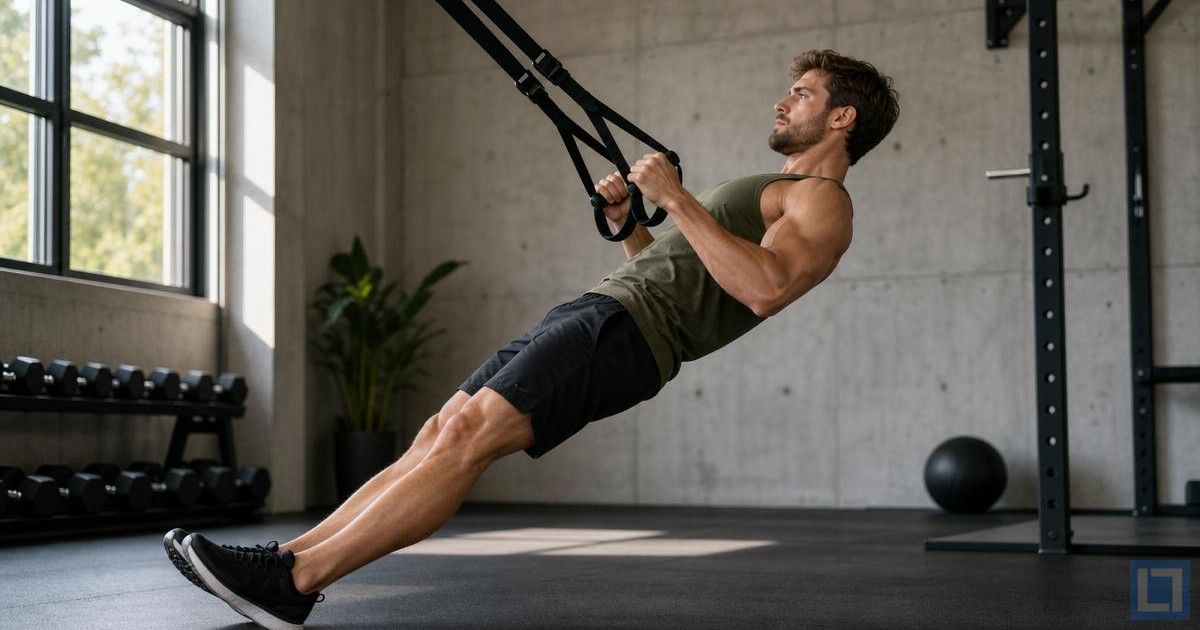
TRX core training produces real core development through suspension trainer loading that engages the entire core across multiple movement patterns. The format works particularly well for core training because the unstable straps require constant stabilization throughout every exercise, which means the deep core muscles (transverse abdominis, deep obliques, multifidus) get strong stimulus that traditional fixed-floor ab training rarely produces. The TRX also enables ab exercises through positions that floor-based training cannot match: hanging from foot cradles for jack knives and reverse crunches, kneeling rollouts under suspension load, and dynamic body saws through suspended plank positions. Most lifters who consistently train TRX core 1 to 2 times per week see measurable core strength and stability improvements within 4 to 6 weeks.
Below are ten effective TRX core exercises that cover anti-extension work (suspended abdominal fallout, ring rollout), dynamic plank work (body saw, jack knife), lower-ab focus (suspended reverse crunch), oblique training (oblique rollout, twist side, twist up), combined upper-body and core work (suspension triceps extension), and posterior-chain combination (hamstring runner). Together they form a complete TRX core training program. A 25 to 35-minute session pulled from this list produces strong stimulus for every core muscle group while developing the unique stability benefits TRX training provides.
Suspended Abdominal Fallout

The Suspended Abdominal Fallout sets up in a kneeling position with hands holding TRX handles and slowly extends the arms forward overhead, allowing the body to lower toward the floor. The pattern produces extreme anti-extension core demand.
For TRX core training, the abdominal fallout is one of the most demanding core exercises that exists. The pattern hits the entire core through anti-extension loading similar to ab wheel rollouts. Run it for 3 sets of 6 to 10 reps as primary advanced core work in any TRX core session.
Set up TRX with handles at hip-to-chest height. Kneel facing away from the anchor with both hands holding the handles in front of the chest. Slowly extend the arms forward overhead, allowing the body to lower toward the floor while maintaining a straight body line. Pull back to the start by contracting the abs hard.
Suspension Triceps Extension

The Suspension Triceps Extension performs tricep extensions while leaning forward from a TRX, lowering the body by bending at the elbows. The pattern produces strong tricep loading combined with significant core stability demand from maintaining the leaning body position.
For TRX core training that includes upper-body work, the triceps extension produces strong combined tricep and core loading. The leaning body position requires constant core engagement to maintain. Run it for 3 sets of 8 to 12 reps as combined tricep and core work within TRX core circuits.
Set up TRX with handles at head height when standing. Face away from the anchor and hold the handles overhead with arms extended. Lean forward to put body weight on the arms. Lower the body toward the floor by bending at the elbows. Press back to lockout by extending the arms while maintaining tight core.
Suspended Reverse Crunch

The Suspended Reverse Crunch sets up in a high plank position with feet in TRX foot cradles and pulls the knees toward the chest by contracting the lower abs. The pattern produces strong lower-ab loading combined with plank stability.
For TRX core training, the suspended reverse crunch is one of the most direct lower-ab exercises that exists. The pattern hits the lower abs through pure hip flexion under suspension loading. Run it for 3 sets of 10 to 15 reps as primary lower-ab work in any TRX core session.
Set up TRX foot cradles at low position. Get into a high plank position with feet in the cradles. Brace the core hard. Pull the knees toward the chest by contracting the lower abs while keeping the upper body stable. Extend the legs back to the plank position. Continue at controlled tempo.
Ring Rollout

The Ring Rollout holds gymnastic rings or TRX handles in a kneeling position and rolls the arms forward overhead, lowering the body toward the floor. The pattern produces extreme anti-extension core demand similar to ab wheel rollouts.
For TRX core training, the ring rollout is one of the most demanding ab exercises that exists. The pattern hits the entire core through deep stretch loading at the bottom position. Run it for 3 sets of 6 to 10 reps as advanced core stretch-position work.
Set up TRX or rings with handles at hip-to-chest height. Kneel and hold the handles in front of the chest. Roll the arms forward overhead by extending at the shoulders, lowering the body toward the floor while maintaining a straight body line. Reverse the motion by contracting the abs hard to return to the start.
Suspension Trainer Oblique Rollout

The Suspension Trainer Oblique Rollout performs rollout motion while rotating the body to one side, which loads the obliques alongside the rectus abdominis. The pattern combines rollout core work with rotational oblique loading.
For TRX core training that includes oblique work, the oblique rollout produces strong combined ab and oblique loading per rep. The pattern hits the abs and obliques through rotational anti-extension. Run it for 3 sets of 6 to 10 reps per side as combined ab and oblique stretch work.
Set up TRX with handles at hip-to-chest height. Kneel and hold the handles in front of the chest. Roll the arms forward overhead while rotating the body to one side, loading the oblique on that side. Reverse the motion by contracting the abs and obliques to return to the start. Switch sides between sets.
Suspension Trainer Body Saw

The Suspension Trainer Body Saw sets up in a forearm plank with feet in TRX foot cradles and saws the body forward and backward by extending and retracting the legs. The dynamic motion produces extreme abdominal demand alongside plank stability.
For TRX core training, the body saw is the foundational dynamic core exercise. The pattern hits the entire core through dynamic anti-extension loading combined with plank stability demand. Run it for 3 sets of 8 to 12 reps as primary dynamic core work.
Set up TRX foot cradles at low position. Get into a forearm plank position with feet in the cradles. Brace the core hard. Push the body forward by extending the legs (bringing the head past the elbows), then pull back by retracting the legs. Continue the sawing motion at controlled tempo throughout the set.
Suspension Trainer Twist Side

The Suspension Trainer Twist Side sets up in a plank position with feet in TRX foot cradles and rotates the hips side-to-side. The pattern produces strong oblique loading through dynamic rotation under suspension.
For TRX core training, the twist side produces direct oblique loading through controlled rotation. The pattern hits the obliques through pure trunk rotation while the suspension destabilizes the lower body. Run it for 3 sets of 8 to 12 reps per side as direct oblique work.
Set up TRX foot cradles at low position. Get into a high plank position with feet in the cradles. Rotate the hips to one side, dropping them slightly toward the floor. Reverse the rotation to the opposite side. Continue alternating in a controlled tempo while maintaining tight core throughout.
Suspension Trainer Hamstring Runner

The Suspension Trainer Hamstring Runner sets up on the back with feet in TRX foot cradles and alternates flexing each knee toward the glutes in a running motion. The pattern hits the hamstrings while engaging the glutes and core for stability.
For TRX core training that includes posterior-chain work, the hamstring runner produces strong combined hamstring, glute, and core loading. The pattern hits the often-undertrained posterior chain alongside core stability work. Run it for 3 sets of 8 to 12 reps per side as combined hamstring and core work.
Lie face-up on the floor with arms at the sides. Set up TRX foot cradles at low position with both feet in the cradles. Lift the hips into a glute bridge position. Alternate flexing each knee toward the glute while maintaining the bridge. Switch legs in a running motion at controlled tempo.
Suspension Trainer Jack Knife

The Suspension Trainer Jack Knife sets up in a high plank position with feet in TRX foot cradles and pulls the knees toward the chest in a jack-knife motion. The pattern produces strong lower-ab loading combined with significant plank stability.
For TRX core training, the jack knife is one of the most efficient combined ab exercises that exists. The pattern combines plank stability with dynamic lower-ab loading. Run it for 3 sets of 10 to 15 reps as primary combined core work in any TRX core session.
Set up TRX foot cradles at low position. Get into a high plank position with feet in the cradles. Pull the knees toward the chest by tucking the legs forward. Squeeze the abs at the contracted position. Extend the legs back to the plank position. Continue at a controlled tempo.
Suspension Trainer Twist Up

The Suspension Trainer Twist Up sets up in a plank position with feet in TRX foot cradles and rotates the body upward while pulling the knees toward the same-side elbow. The pattern combines rotation with knee-to-elbow motion for advanced oblique work.
For TRX core training, the twist up is one of the most advanced oblique exercises that exists. The pattern combines plank stability, rotation, and knee-to-elbow motion in a single exercise. Run it for 3 sets of 8 to 10 reps per side as advanced oblique and core work.
Set up TRX foot cradles at low position. Get into a high plank position with feet in the cradles. Rotate the body upward to one side while pulling the knees toward the same-side elbow. Reverse the motion to return to the plank position. Switch sides between reps in a controlled tempo.
How To Program These Workouts
A productive TRX core session pulls 6 to 8 exercises from the list above. A balanced session includes one anti-extension exercise (abdominal fallout or ring rollout), one dynamic plank (body saw or jack knife), one lower-ab exercise (suspended reverse crunch), one oblique exercise (twist side or oblique rollout), and one combined exercise (twist up or hamstring runner). Run anti-extension work for 3 sets of 6 to 10 reps; dynamic plank work for 3 sets of 8 to 12 reps; lower-ab work for 3 sets of 10 to 15 reps; oblique work for 3 sets of 8 to 12 reps per side. Total session covers 15 to 20 working sets across all core functions.
Train TRX core sessions 2 to 3 times per week alongside dedicated strength training or as standalone core work. The format produces moderate core fatigue that recovers within 24 to 48 hours. Most successful programs include 2 to 3 weekly TRX core sessions alongside dedicated strength training. The format works particularly well as a complete core program (for travelers, home gym setups) or as supplementary advanced core work alongside traditional strength training.
For broader TRX programming, see our best trx workouts and best full body trx workouts. For other core specializations, see our best trx ab workouts.
Final Thoughts
The best TRX core workouts deliver real core development through suspension trainer loading that engages the deep stabilizer muscles traditional ab training rarely reaches. The combination of anti-extension work, dynamic plank training, lower-ab focus, oblique exercises, and combined movements covers every major core function and produces broader development than single-modality core training. For lifters who want functional core strength that translates to athletic performance, want advanced core training stimulus, or have plateaued on traditional floor-based ab work, dedicated TRX core training is one of the most effective options available.
Stay focused on body angle and tension throughout every rep. The most common TRX core training mistake is letting the body sag (hip drop) during plank-based exercises or losing tension during dynamic motions, which reduces the core loading significantly. The fix: maintain a tight body line throughout every rep with constant core engagement, and adjust body angle to scale difficulty (more horizontal body equals harder reps for most TRX core exercises). Quality reps with strict tension produce stronger core development than higher rep counts with deteriorating form.
Frequently Asked Questions
Are TRX workouts good for core?
Yes, very effectively. The suspension format produces extreme core engagement throughout every exercise because the unstable straps require constant stabilization. Most TRX exercises (even non-core-specific ones like rows and presses) produce strong core stimulus, and dedicated TRX core exercises (body saw, jack knife, abdominal fallout) produce some of the most demanding core loading available with any equipment. Most successful core programs include TRX core work for the unique deep-core stimulus the format provides.
How long should TRX core workouts be?
Twenty-five to thirty-five minutes per session works for most lifters. The 30-minute format hits the sweet spot between meaningful training stimulus and sustainable recovery. Most successful TRX core programs include 25 to 30-minute sessions performed 2 to 3 times per week. Shorter sessions (15 to 20 minutes) work well for daily practice; longer sessions (45+ minutes) typically produce accumulated core fatigue without proportional benefit.
How often should I do TRX core workouts?
Two to three times per week works for most lifters. The format produces moderate core fatigue that recovers within 24 to 48 hours. Most successful programs include 2 to 3 weekly TRX core sessions alongside dedicated strength training. Daily TRX core training typically produces accumulated fatigue without proportional gains; spaced sessions sustain the format and produce stronger long-term adaptations.
Are TRX core exercises better than crunches?
Different exercises serve different goals. TRX core exercises produce stronger deep-core and stabilizer engagement than traditional floor crunches because of the unstable suspension loading. Crunches produce more direct rectus abdominis loading per rep through pure spinal flexion. Most successful core programs include both: TRX core for functional and stability work, and traditional crunch variations for direct rectus abdominis development. The combination produces stronger overall core development than either alone.
Can TRX core workouts give me a six-pack?
TRX core training builds the muscle that gives the stomach its visible shape; reducing body fat through nutrition reveals that shape. Both are required for visible abs. Most lifters need to be at 12 to 18 percent body fat for abs to show clearly. TRX core training handles the muscle-building side; sustainable nutrition handles the body fat side. The combination produces visible six-pack results over 12 to 24 weeks for most lifters with appropriate caloric management.