Landmine ab training produces real core development through unilateral and rotational loading patterns that traditional bilateral ab training rarely matches. The format works particularly well for core training because most landmine exercises challenge the core through anti-rotation demand (preventing the trunk from rotating against unilateral loading) plus rotational power (oblique twists, rotational presses), rather than just pure flexion. The combination of anti-rotation, rotational power, and traditional ab work produces broader core development than any single approach. Most lifters who consistently train landmine abs 1 to 2 times per week see measurable core strength, rotational power, and athletic performance improvements within 6 to 10 weeks. The format is particularly effective for athletes (rotational sports, contact sports), general lifters wanting functional core strength, and people training in commercial gyms with landmine attachments.
Below are ten effective landmine ab exercises that cover direct ab work (seated oblique twist), anti-rotation training (one-arm shoulder press, one-arm row, one-arm chest fly, band-loaded press), single-leg anti-rotation (single-leg RDL, one-leg stiff-leg deadlift), combined core and leg work (rear lunge, stand-up high knee), and full-body core work (kneeling thruster press). Together they form a complete landmine ab training program that hits every core function. A 30 to 40-minute session pulled from this list produces strong combined core development across rotation, anti-rotation, and stabilization work.
Barbell Sitting on Floor Oblique Twist

The Barbell Sitting on Floor Oblique Twist sits on the floor with a barbell anchored in a landmine attachment, holding the free end with both hands and rotating the trunk side-to-side. The pattern produces direct oblique loading through controlled rotation under landmine load.
For landmine ab training, the seated oblique twist is the foundational direct ab exercise. The pattern hits the obliques and rectus abdominis through rotation under heavy landmine load. Run it for 3 sets of 8 to 12 reps per side as primary direct ab work.
Set up a barbell in a landmine attachment. Sit on the floor facing the landmine with knees bent and feet planted. Hold the free end of the barbell with both hands at chest height. Rotate the trunk to one side, lowering the bar end toward the floor. Drive back to center. Switch sides on each rep. The arc motion produces strong oblique loading throughout.
Landmine Kneeling One Arm Shoulder Press

The Landmine Kneeling One Arm Shoulder Press kneels in front of a landmine and presses the bar overhead with one arm. The unilateral loading creates strong anti-rotation core demand to keep the body stable.
For landmine ab training, the kneeling one-arm press produces strong anti-rotation core loading combined with shoulder pressing. The pattern hits the deep core stabilizers that prevent body rotation under unilateral load. Run it for 3 sets of 6 to 10 reps per side as anti-rotation core work.
Set up a barbell in a landmine attachment. Kneel in front of the landmine with the body facing it. Hold the free end of the bar with one hand at shoulder height. Press the bar up and slightly forward by extending the arm overhead while keeping the body stable through core engagement. Lower under control. Switch sides between sets.
Landmine One Arm Bent Over Row

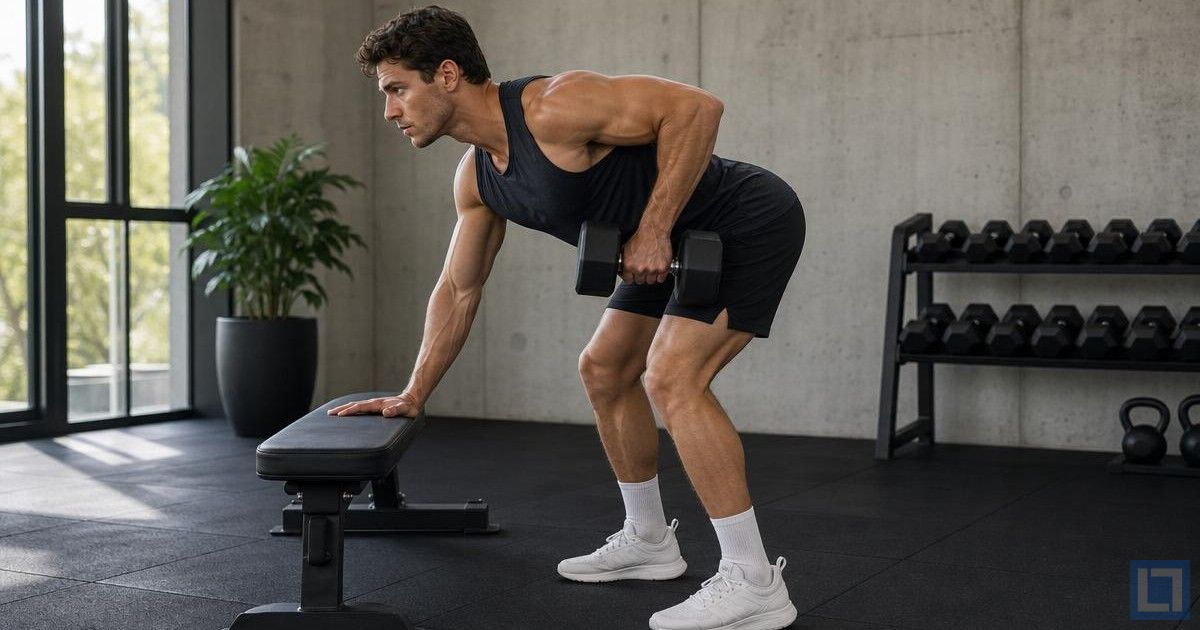
The Landmine One Arm Bent Over Row sets up bent-over with one hand gripping the free end of a barbell anchored in a landmine attachment. The unilateral pulling motion creates strong anti-rotation core demand.
For landmine ab training, the one-arm bent over row produces strong anti-rotation core loading combined with back work. The pattern hits the deep core through preventing trunk rotation during heavy unilateral pulling. Run it for 3 sets of 8 to 10 reps per side as anti-rotation and back work.
Set up a barbell in a landmine attachment. Stand alongside the bar end with feet shoulder-width. Hinge at the hips into a bent-over position. Grip the bar end with the hand closer to the bar. Pull the bar end up to the hip by retracting the shoulder blade and driving the elbow back. Lower under control. Maintain stable trunk position throughout. Switch sides between sets.
Landmine Floor One Arm Chest Fly

The Landmine Floor One Arm Chest Fly lies on the floor with one hand gripping the bar end of a landmine and performs single-arm chest fly motion. The unilateral pressing creates anti-rotation core demand to stabilize the trunk.
For landmine ab training, the floor one-arm chest fly produces strong anti-rotation core loading combined with chest work. The pattern hits the deep core through preventing trunk rotation during heavy unilateral pressing. Run it for 3 sets of 8 to 10 reps per side as anti-rotation and chest work.
Set up a barbell in a landmine attachment with the bar lowered to chest height. Lie on the floor alongside the bar end with knees bent. Grip the bar end with one hand and extend the arm up over the chest. Lower the bar end out to the side in a fly motion. Press back to start. Maintain tight trunk position throughout. Switch sides between sets.
Landmine Single Leg RDL

The Landmine Single Leg RDL performs a single-leg Romanian deadlift while holding the bar end of a landmine. The pattern produces strong combined glute, hamstring, and core anti-rotation loading.
For landmine ab training, the single-leg RDL produces strong anti-rotation core loading combined with posterior chain work. The pattern hits the deep core through balance and stabilization on one leg. Run it for 3 sets of 8 to 10 reps per side as anti-rotation and posterior chain work.
Set up a barbell in a landmine attachment. Stand on one leg facing the landmine, holding the bar end with both hands or one hand at thigh level. Hinge at the hip while extending the free leg back behind the body, lowering the bar end toward the floor. Drive back to standing by extending through the planted hip. Maintain balance throughout. Switch legs between sets.
Landmine One Leg Stiff Leg Deadlift

The Landmine One Leg Stiff Leg Deadlift performs single-leg stiff-leg deadlift motion while holding the bar end of a landmine. The pattern produces strong combined hamstring, glute, and core anti-rotation loading.
For landmine ab training, the one-leg stiff-leg deadlift produces strong anti-rotation core loading combined with hamstring work. The pattern hits the deep core through balance demand on one leg. Run it for 3 sets of 8 to 10 reps per side as anti-rotation and hamstring work.
Set up a barbell in a landmine attachment. Stand on one leg facing the landmine with the bar end held at thigh level. Keeping the working leg straight (or with a slight knee bend), hinge at the hip while extending the free leg back behind the body. Lower the bar end toward the floor. Drive back to standing. Maintain balance and trunk stability throughout.
Landmine Resistance Band One Arm Shoulder Press

The Landmine Resistance Band One Arm Shoulder Press combines a single-arm landmine press with added resistance band tension at the bar end. The combined loading creates very strong anti-rotation core demand.
For landmine ab training, the band-loaded one-arm press produces some of the strongest anti-rotation core loading possible with a landmine. The combined band and bar resistance challenges deep core stabilizers significantly. Run it for 3 sets of 6 to 10 reps per side as advanced anti-rotation work.
Set up a barbell in a landmine attachment with a resistance band looped around the bar end and the body. Stand facing the landmine with one hand gripping the bar end at shoulder height. Press the bar up and slightly forward against both the bar weight and band tension. Maintain stable trunk position throughout. Lower under control. Switch sides between sets.
Landmine Rear Lunge

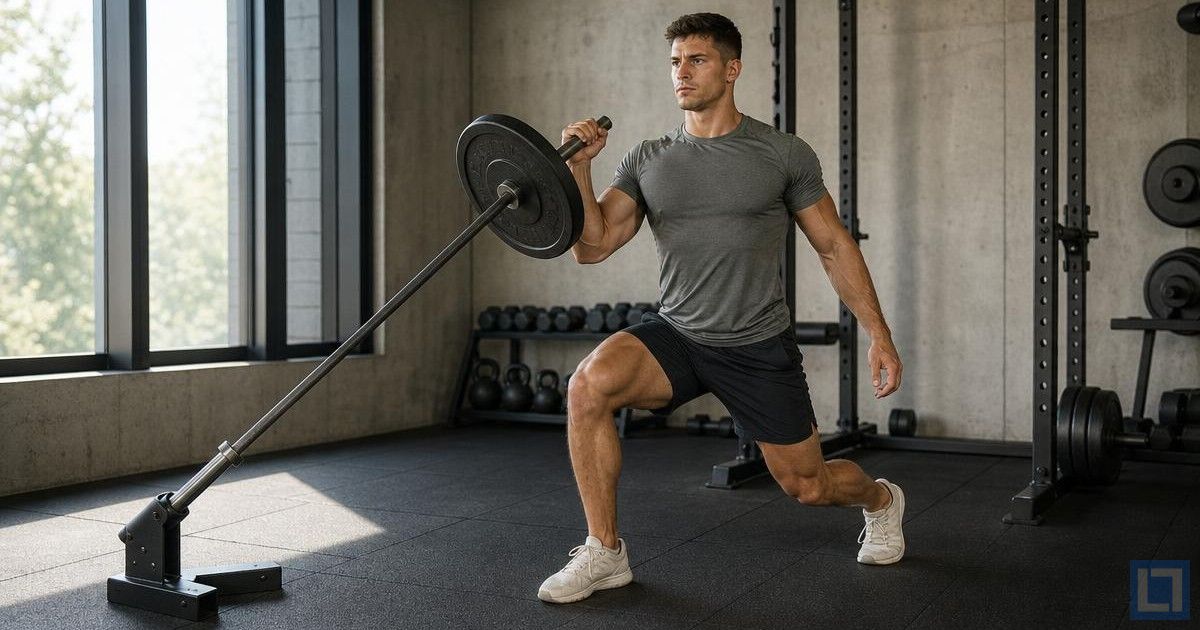
The Landmine Rear Lunge performs reverse lunges while holding the bar end of a landmine at chest height. The pattern produces strong combined leg loading with anti-rotation core demand.
For landmine ab training, the rear lunge produces strong anti-rotation core loading combined with leg work. The pattern hits the deep core through preventing trunk rotation during dynamic lunge motion. Run it for 3 sets of 8 to 10 reps per side as combined core and leg work.
Set up a barbell in a landmine attachment. Stand facing the landmine with the bar end held at chest height with both hands. Step one leg back into a reverse lunge, lowering the back knee toward the floor. Drive back to standing through the front leg. Switch legs on each rep or complete reps on one side before switching. Maintain tight trunk position throughout.
Landmine Stand Up High Knee

The Landmine Stand Up High Knee starts kneeling holding the landmine bar end, then drives up to standing with a high knee drive. The pattern combines explosive leg drive with strong core stabilization demand.
For landmine ab training, the stand-up high knee produces dynamic combined core stabilization and explosive leg loading. The pattern hits the deep core through transitioning from kneeling to standing under landmine load. Run it for 3 sets of 6 to 8 reps per side as explosive core and leg work.
Set up a barbell in a landmine attachment. Kneel on one knee facing the landmine with the bar end held at chest height. Drive up to standing by extending the planted leg while simultaneously driving the back knee up toward the chest. Reverse the motion under control to return to kneeling. Switch sides between sets. Maintain tight trunk position throughout.
Landmine Kneeling Thruster Press

The Landmine Kneeling Thruster Press combines a thruster motion with the landmine, pressing the bar end overhead while transitioning from kneeling to standing or remaining kneeling. The pattern produces strong combined core, leg, and shoulder loading.
For landmine ab training, the kneeling thruster press produces strong combined core stabilization, leg, and shoulder loading. The pattern hits the deep core through demanding multi-joint pressing under landmine load. Run it for 3 sets of 6 to 10 reps as combined full-body and core work.
Set up a barbell in a landmine attachment. Kneel on both knees facing the landmine with the bar end held at chest height with both hands. Press the bar end up and slightly forward by extending the arms overhead. Lower under control to chest height. Maintain tight kneeling position and core engagement throughout.
How To Program These Workouts
A productive landmine ab session pulls 6 to 8 exercises from the list above. A balanced session includes one direct ab exercise (seated oblique twist), one anti-rotation upper body exercise (one-arm shoulder press, one-arm row, or one-arm chest fly), one single-leg anti-rotation exercise (single-leg RDL or one-leg stiff-leg deadlift), one combined core and leg exercise (rear lunge or stand-up high knee), and one full-body core exercise (kneeling thruster press). Run direct ab work for 3 sets of 8 to 12 reps per side; anti-rotation work for 3 sets of 6 to 10 reps per side; combined work for 3 sets of 8 to 10 reps. Total session covers 18 to 24 working sets focused on rotational and anti-rotational core development.
Train landmine ab sessions 1 to 2 times per week as part of broader core or athletic programming. The deep core recovers within 48 to 72 hours of moderate training. Most successful programs include 1 to 2 weekly landmine ab sessions, which works well as primary functional core training or as supplementary anti-rotation work alongside traditional ab training. The format works particularly well as a finisher to upper-body or lower-body sessions, adding 15 to 20 minutes of focused functional core work that translates directly to athletic performance and lifts requiring strong trunk stability.
For broader ab programming, see our best at home core workouts and best calisthenics ab workouts. For specific ab specializations, see our best lower ab workouts.
Final Thoughts
The best landmine ab workouts deliver real core development through unilateral and rotational loading patterns that traditional bilateral ab training rarely matches. The combination of direct ab work, anti-rotation training, single-leg loading, and full-body core exercises covers every major core function and produces broader development than single-modality ab training. For lifters who want functional core strength that translates to sports performance, want anti-rotation training that traditional crunches don’t provide, or have access to landmine attachments and want to maximize their use, dedicated landmine ab training is one of the most effective options available.
Stay focused on bracing through the trunk, not chasing weight. The most common landmine ab training mistake is using too much weight on anti-rotation exercises, which causes the trunk to rotate or compensate (defeating the anti-rotation training stimulus). The fix: choose weights that allow the trunk to stay perfectly stable throughout the entire range of motion, with no rotation, side-bending, or compensation. Quality reps with strict anti-rotation control produce stronger functional core development than heavier weights with compensated form.
Frequently Asked Questions
What is a landmine attachment?
A landmine attachment is a steel sleeve that anchors one end of a barbell while allowing the other end to move freely in arc-shaped patterns. Most commercial gyms have landmine attachments built into power racks or as floor-anchored devices. The attachment converts a standard barbell into a versatile pivoting tool that enables exercises (rotational presses, anti-rotation work, oblique twists) that traditional barbell training cannot produce. Cost: $30 to $80 for home setups.
Are landmine ab exercises better than crunches?
Different exercises serve different goals. Landmine ab training produces strong functional core stimulus through anti-rotation and rotational patterns that crunches don’t address. Standard crunches produce direct rectus abdominis loading. Most successful programs include both: landmine work for functional core strength and rotational power, plus standard crunches and weighted ab work for direct ab muscle development. Athletes typically benefit from heavier landmine ab focus; general fitness lifters benefit from balanced inclusion.
How often should I do landmine ab workouts?
One to two times per week works for most lifters. The deep core recovers within 48 to 72 hours of moderate training. Most successful programs include 1 to 2 weekly landmine ab sessions of 30 to 40 minutes each. Daily landmine ab training typically produces accumulated fatigue without proportional gains, especially given the unilateral demands and full-body coordination required.
Do landmine workouts work for athletes?
Yes very effectively. Landmine ab training produces functional core strength, rotational power, and anti-rotation stability that translate directly to athletic performance in rotational sports (baseball, golf, tennis, hockey, lacrosse, MMA, throwing sports) and contact sports requiring strong trunk stability. The format is one of the most effective athletic core training approaches available, especially when combined with traditional strength training and sport-specific practice.
Can I do landmine workouts without a landmine attachment?
Yes with a workaround. The basic landmine setup can be replicated by wedging one end of a barbell into a corner (where two walls meet) or using a heavy plate to anchor one end of the bar. The wedged setup produces similar pivoting motion, though commercial landmine attachments offer more secure anchoring and smoother arc patterns. For home gym setups, dedicated landmine attachments cost $30 to $80 and significantly improve exercise quality and safety.