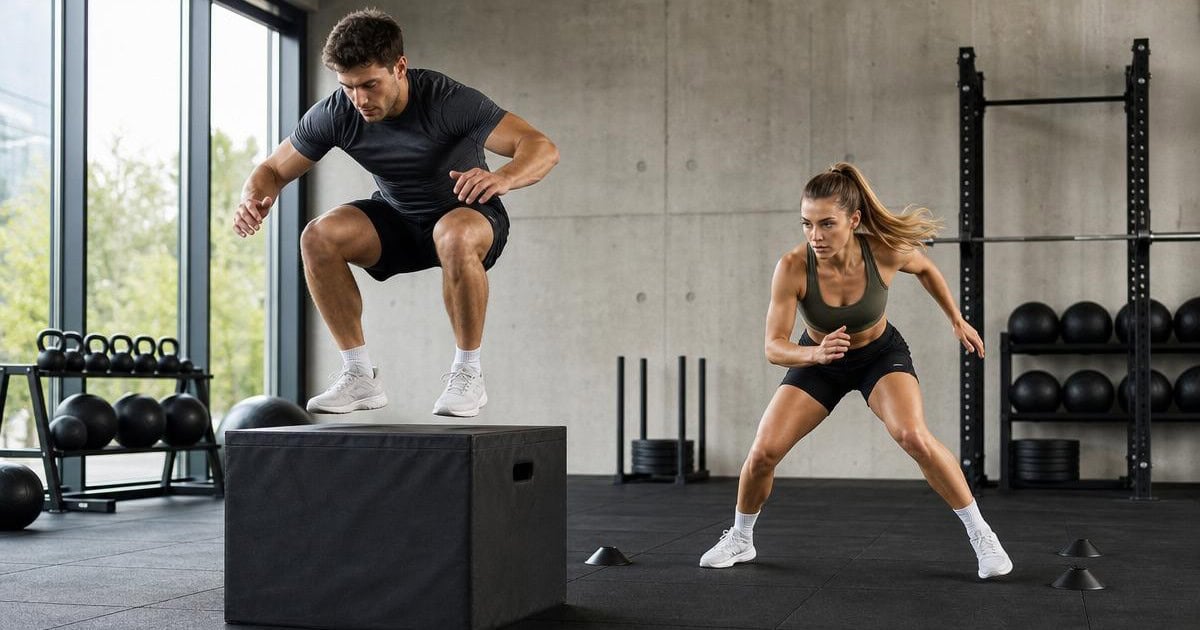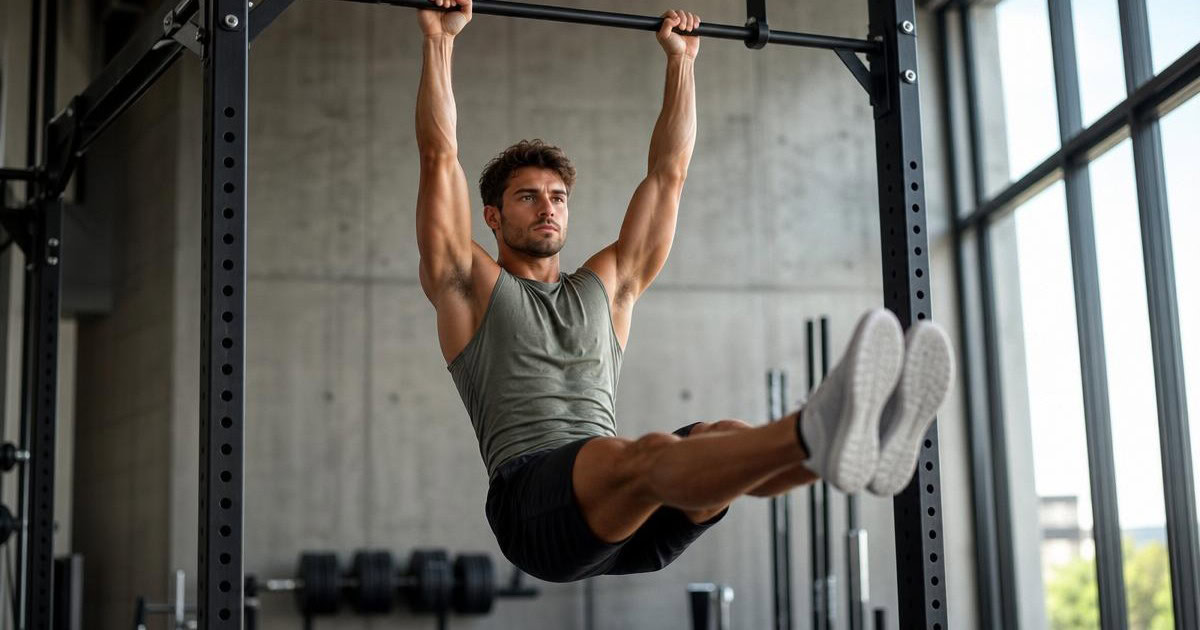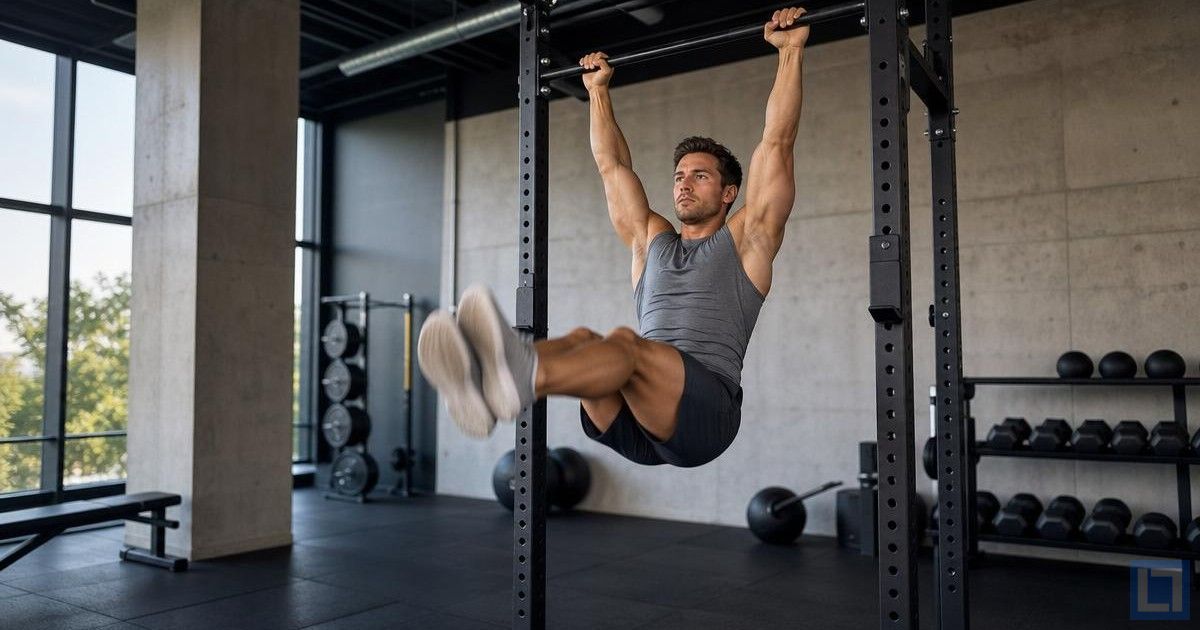
Daily ab workouts work because the core (rectus abdominis, obliques, deep transverse abdominis) recovers within 24 to 48 hours of moderate training, which allows higher training frequency than larger muscle groups that need 48 to 72 hours of recovery. Daily training produces strong cumulative volume over time (5 to 7 weekly sessions versus 2 to 3) and builds the consistent training habit that drives long-term progress. The format works best with moderate-intensity exercises that don’t produce extreme fatigue (planks, bodyweight crunches, controlled cable work) rather than high-intensity exercises that need recovery (heavy hanging leg raises, weighted ab work to failure). Most lifters who consistently train daily ab sessions for 10 to 15 minutes see measurable core strength and visible ab development within 6 to 10 weeks combined with appropriate nutrition.
Below are ten effective daily ab exercises that cover isometric core work (plank on hands), foundational ab work (bicycle twisting crunch, opposite crunch, cross twisting sit-up, V-up with clap), oblique exercises (oblique V-up, elbow-to-knee side plank crunch), lower-ab loading (seated flutter kick, cable reverse crunch), and loaded standing work (cable standing crunch). Together they form a complete daily ab training program that fits in 10 to 15 minutes per session. Pull 5 to 7 exercises per session and rotate the selection across days for varied stimulus.
Plank on Hands
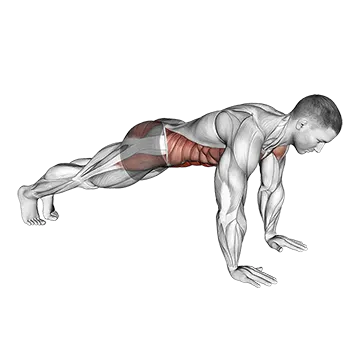
The Plank on Hands sets up in a high plank position with hands shoulder-width and body in a straight line, then holds isometrically while bracing the core. The pattern produces foundational core stability through anti-extension demand.
For daily ab training, the high plank is the foundational exercise that fits into any daily routine. The isometric hold produces moderate fatigue that recovers quickly, which makes it ideal for sustainable daily practice. Run it for 3 sets of 30 to 60-second holds as foundational daily core work.
Set up in a high plank position with hands shoulder-width and arms locked out. The body forms a straight line from head to heels. Brace the core hard, squeeze the glutes, and breathe normally. End the hold when form breaks down (hips sag or pike).
Bicycle Twisting Crunch

The Bicycle Twisting Crunch lies on the back and alternates bringing each elbow toward the opposite knee in a bicycle pedaling motion while crunching the trunk. The combined motion hits both the rectus abdominis and the obliques continuously.
For daily ab training, the bicycle crunch is one of the most efficient combined ab exercises that exists. The continuous motion produces strong upper-ab and oblique loading per set. Run it for 3 sets of 16 to 20 total reps as primary daily ab work.
Lie flat on the back with hands behind the head. Lift the legs slightly off the floor with knees bent at 90 degrees. Crunch the trunk up and rotate to bring one elbow toward the opposite knee while extending the other leg. Reverse the motion to switch sides. Continue alternating in a smooth bicycle pedaling pattern.
Opposite Crunch

The Opposite Crunch lies on the back and crunches up while reaching one hand toward the opposite knee, alternating sides on each rep. The contralateral motion hits both the upper abs and obliques.
For daily ab training, the opposite crunch produces strong combined ab and oblique loading through the alternating contralateral motion. The pattern fits naturally into daily ab routines because of its low recovery demand. Run it for 3 sets of 12 to 15 reps per side as combined ab and oblique work.
Lie flat on the back with knees bent and feet planted. Hands placed behind the head. Crunch the trunk up while reaching one hand toward the opposite knee. Lower under control. Alternate sides on each rep, continuing in a smooth tempo throughout the set.
Cable Standing Crunch

The Cable Standing Crunch faces away from a high cable pulley with a rope attachment at the upper chest and crunches the trunk down by contracting the abs against the cable resistance. The standing position allows daily-friendly loaded ab work.
For daily ab training that includes loaded core work, the standing cable crunch produces strong upper-ab loading at adjustable weights. The standing position also reduces lower-back strain compared to lying loaded crunches. Run it for 3 sets of 12 to 15 reps as loaded daily ab work.
Stand facing away from a high cable pulley with a rope attachment. Hold the rope with both hands at the upper chest. Crunch the trunk forward and down by contracting the abs while keeping the hips relatively stationary. Return under control to the start.
Oblique V Up on Floor

The Oblique V Up on Floor lies on one side and lifts the upper body and legs simultaneously to form a V shape while balancing on the side. The pattern produces strong oblique loading through the side-lying V-up motion.
For daily ab training that includes oblique work, the oblique V-up produces strong direct oblique loading per rep. The pattern hits the obliques through pure lateral flexion under bodyweight. Run it for 3 sets of 8 to 10 reps per side as direct oblique work.
Lie on one side with the bottom arm extended along the floor for support and the top arm reaching overhead. Lift the upper body and legs simultaneously, contracting the obliques to form a side V shape. Lower under control to the start. Switch sides between sets.
Seated Flutter Kick

The Seated Flutter Kick sits with the upper body leaned back and the legs lifted off the floor, then performs flutter kick motion while maintaining the seated balance position. The pattern produces sustained core demand through the balanced seated hold.
For daily ab training, the seated flutter kick combines isometric core demand (maintaining the seated lean position) with dynamic lower-ab work (the flutter kicks). The pattern fits naturally into daily routines. Run it for 3 sets of 30 to 45-second intervals as combined core and lower-ab work.
Sit on the floor with knees bent and feet lifted off the floor. Lean the upper body back to engage the core. Extend the legs out and alternate kicking them up and down in a small flutter motion. Maintain the seated lean position throughout.
Cross Twisting Sit Up

The Cross Twisting Sit Up performs a sit-up while rotating the trunk to bring one elbow toward the opposite knee at the top of the motion. The combined sit-up and rotation hits both the rectus abdominis and the obliques.
For daily ab training that combines full-range ab work with rotation, the cross-twisting sit-up produces strong combined loading. The pattern fits naturally into daily ab routines because the bodyweight loading recovers quickly. Run it for 3 sets of 8 to 10 reps per side as combined ab and oblique work.
Lie flat on the back with knees bent and feet planted. Hands placed behind the head. Sit up by contracting the abs while rotating the trunk to bring one elbow toward the opposite knee at the top. Lower under control. Alternate sides on each rep.
Elbow to Knee Side Plank Crunch

The Elbow to Knee Side Plank Crunch sets up in a side plank position and brings the top elbow toward the top knee in a side crunch motion. The pattern combines isometric oblique loading (the side plank hold) with dynamic oblique flexion.
For daily ab training that includes advanced oblique work, the side plank crunch produces stronger oblique loading than static side planks. The pattern combines the two main oblique training functions in one rep. Run it for 3 sets of 8 to 10 reps per side as advanced daily oblique work.
Set up in a side plank position with one forearm on the floor and feet stacked. From the held side plank, bring the top elbow toward the top knee by contracting the obliques. Return to the side plank position. Switch sides between sets.
V Up with Clap

The V Up with Clap performs a V-up and claps the hands above the feet at the top of the motion. The added clap increases the upper-body demand and produces stronger combined upper and lower ab loading than standard V-ups.
For daily ab training, the V-up with clap produces strong combined ab loading per rep. The pattern hits the upper and lower abs simultaneously through the combined trunk-and-leg flexion. Run it for 3 sets of 8 to 12 reps as combined ab work.
Lie flat on the back with arms extended overhead and legs straight. Simultaneously lift the legs and torso to meet at the top in a V shape, clapping the hands above the feet. Lower under control to the floor. Maintain controlled tempo throughout.
Cable Reverse Crunch

The Cable Reverse Crunch attaches an ankle strap to a low cable and performs a reverse crunch motion while lying on the back, pulling the knees toward the chest against the cable resistance. The added cable load increases lower-ab demand.
For daily ab training that includes loaded lower-ab work, the cable reverse crunch produces stronger lower-ab loading than bodyweight variations. The continuous cable tension is heaviest at the contracted position. Run it for 3 sets of 10 to 12 reps as loaded lower-ab work.
Lie on the back near a low cable pulley with an ankle strap attached to both feet. Bend the knees with feet lifted slightly. Pull the knees toward the chest against the cable resistance, lifting the hips slightly off the floor at the contracted position. Lower under control to the start.
How To Program These Workouts
A productive daily ab program organizes these exercises across rotating daily sessions. A standard 5-day rotation: Day 1 (plank, bicycle crunch, oblique V-up, cable standing crunch), Day 2 (opposite crunch, cross twisting sit-up, seated flutter kick), Day 3 (side plank crunch, V-up with clap, cable reverse crunch), Day 4 (plank, bicycle crunch, seated flutter kick), Day 5 (opposite crunch, oblique V-up, cable standing crunch). The rotation ensures varied stimulus while keeping daily sessions short and sustainable. Run isometric holds for 2 to 3 sets of 30 to 60 seconds; bodyweight ab exercises for 2 to 3 sets of 8 to 15 reps; loaded cable work for 2 to 3 sets of 10 to 15 reps.
Train daily ab sessions for 10 to 15 minutes per session, ideally as morning routines, post-workout finishers, or evening wind-down practice. The compressed format produces moderate ab fatigue that recovers within 24 hours, which sustains the daily frequency. Most successful daily ab practices include 5 to 6 sessions per week with 1 to 2 rest days for full recovery. Pure 7-day daily training works for advanced practitioners but typically benefits from at least one weekly rest day for sustained long-term practice.
For longer ab sessions, see our best 15 min ab workouts and best 20 minute ab workouts. For specific lower-ab work, see our best lower ab workouts.
Final Thoughts
The best daily ab workouts deliver real core development through sustainable daily practice that builds strong cumulative volume over time. The combination of isometric holds, foundational ab work, oblique exercises, and loaded variations covers every major core function in 10 to 15 minutes per session. For lifters who want consistent core training that fits any schedule, builds strong training habits, and produces measurable results through accumulated volume, daily ab training is one of the most effective and sustainable approaches available.
Stay focused on form quality at sustainable intensity. The most common daily ab training mistake is pushing every session to maximum intensity and producing accumulated fatigue that breaks the daily practice within 2 to 3 weeks. The fix: train daily ab sessions at moderate intensity (sets that end 1 to 2 reps before form breaks down) rather than to failure, which sustains the daily practice long-term. Quality reps with strict form across consistent daily sessions produce stronger results than higher-intensity sessions that can’t be sustained over time.
Frequently Asked Questions
Can I train abs every day?
Yes, the abs recover within 24 to 48 hours of moderate training, which allows daily training frequency. The key is moderate intensity rather than maximum intensity every session. Most successful daily ab practices include 5 to 6 weekly sessions of 10 to 15 minutes each with 1 to 2 rest days. Pure 7-day daily training works for advanced practitioners but most lifters benefit from at least one weekly rest day for full recovery and sustained long-term practice.
How long should daily ab workouts be?
Ten to fifteen minutes per session works for most lifters. The compressed format produces moderate ab fatigue that recovers within 24 hours, which sustains the daily frequency. Longer daily sessions (20+ minutes) typically produce accumulated fatigue that breaks the daily practice within a few weeks. The 10 to 15-minute format hits the sweet spot between meaningful training stimulus and sustainable daily practice.
Will daily ab workouts give me a six-pack?
Ab training builds the muscle that gives the stomach its shape; reducing body fat through nutrition reveals that shape. Both are required for visible abs. Most lifters need to be at 12 to 18 percent body fat for abs to show clearly. Daily ab training handles the muscle-building side; sustainable nutrition handles the body fat side. The combination produces visible results over 12 to 16 weeks for most lifters with appropriate caloric management.
Are bodyweight or weighted exercises better for daily abs?
Bodyweight exercises work better for daily training because they produce moderate fatigue that recovers quickly. Weighted ab work (heavy cable crunches, weighted hanging leg raises) produces stronger single-session stimulus but typically needs 48 to 72 hours of recovery. Most successful daily ab programs include mostly bodyweight exercises (planks, crunches, V-ups, side planks) with 1 to 2 moderate cable exercises per session. Heavy weighted ab work fits better in 2 to 3 weekly dedicated ab sessions.
Do I need equipment for daily ab workouts?
Most foundational exercises work with no equipment (plank, bicycle crunch, opposite crunch, oblique V-up, side plank crunch, V-up with clap, seated flutter kick). Adding cable access expands the exercise selection (cable standing crunch, cable reverse crunch). Most successful daily ab practices work with minimal equipment investment; the bodyweight foundation produces strong results for years of consistent practice without any equipment.