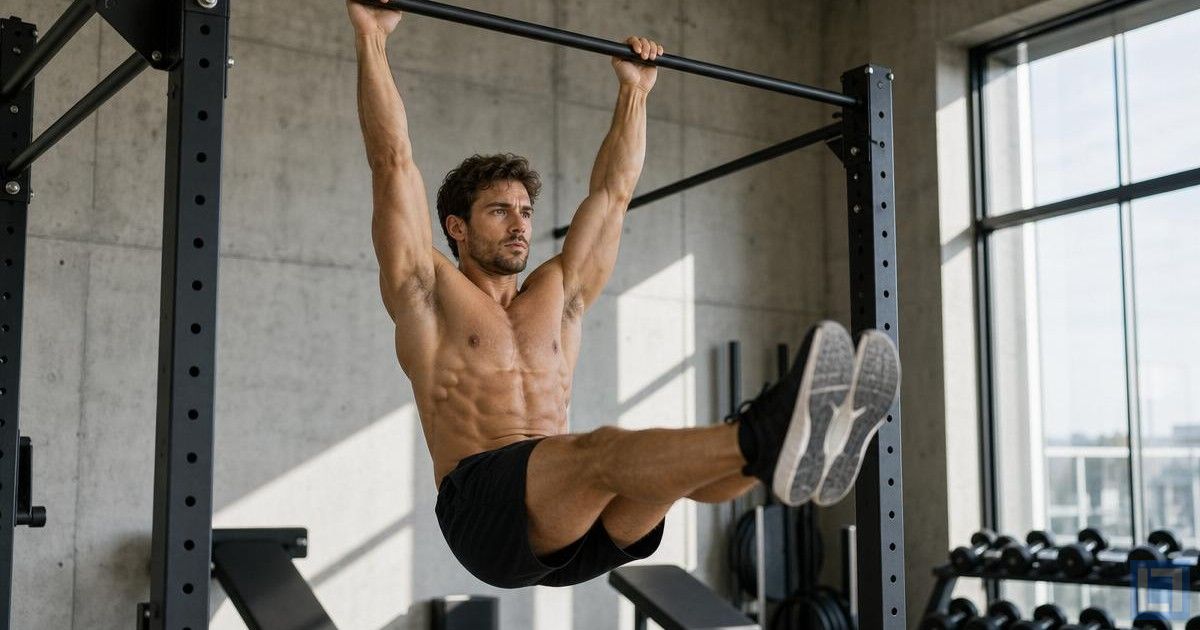
The upper abs (the upper portion of the rectus abdominis above the navel) form the visible top blocks of the six-pack. While the abs technically work as a single muscle, the upper portion responds particularly well to crunch-style movements that emphasize trunk flexion through the upper rib cage. The best upper ab workouts use this principle by focusing on partial-range crunches, weighted crunch variations, and band-loaded crunches that maximize the loading on the upper abdominal region.
Below are ten effective upper ab exercises that cover bodyweight upper-ab work (opposite crunch, bicycle crunch, quarter sit-up, seated alternate crunch, jack split crunch), band-loaded variations (band upper crunch, band bicycle crunch, band dead bug, band air bike), and weighted upper-ab work (dumbbell crunch up). Together they form a complete upper-ab training program that produces visible upper-rectus development over months of consistent practice. Pull 5 to 6 exercises per session and combine with broader core training for complete development.
Band Upper Crunch

The Band Upper Crunch anchors a resistance band overhead and pulls down with both hands while crunching the upper body forward. The band tension adds direct loading to the upper-ab portion of the crunch motion.
For upper-ab specific training, the band upper crunch produces stronger upper-rectus loading than bodyweight crunches because the band tension increases throughout the contraction. The accommodating resistance hits the upper abs at the strongest portion of the rep. Run it for 3 to 4 sets of 12 to 15 reps as primary upper-ab work.
Anchor a resistance band overhead. Kneel facing the anchor and grip the band with both hands at the head. Crunch the upper body forward by curling the trunk down toward the floor while pulling the band down. Return under control. Maintain band tension throughout.
Resistance Band Upper Body Dead Bug

The Resistance Band Upper Body Dead Bug performs the dead bug pattern while holding band ends overhead, adding upper-body resistance to the standard core stability exercise. The combination of band tension and dead bug motion produces strong upper-ab anti-extension demand.
For upper-ab stability training, the band dead bug variation adds resistance to a foundational stability exercise. The band tension pulls the arms toward the floor, which the upper abs must resist throughout the rep. Run it for 3 sets of 8 to 10 reps per side as anti-extension work.
Anchor a resistance band overhead. Lie on the back with the head close to the anchor, holding the band ends with arms extended toward the ceiling. Perform a dead bug pattern: lower the opposite arm and leg toward the floor while keeping the lower back flat. Return to the start. Switch sides.
Band Upper Body Lying Air Bike

The Band Upper Body Lying Air Bike lies on the back with bands looped around the hands and performs an air-bike motion combining upper-body and lower-body cycling against band tension. The continuous motion drives upper-ab and full-core loading.
For upper-ab cardiovascular work, the band air bike fits naturally as a high-density finisher. The combined upper and lower body motion produces strong upper-ab demand throughout the continuous tempo. Run it for 3 sets of 30 to 45-second intervals.
Lie flat on the back with resistance bands looped around the hands. Pull the bands toward the body in alternating arm motions while simultaneously performing a leg-cycling motion. Keep the lower back pressed to the floor throughout. Continue at a steady tempo for the prescribed time.
Opposite Crunch

The Opposite Crunch lies on the back and performs a crunch motion while bringing one elbow toward the opposite knee. The cross-body pattern hits the obliques along with the upper abs through combined flexion and rotation.
For upper-ab training that includes oblique work, the opposite crunch is one of the most efficient single exercises. The cross-body motion produces broader development than straight-line crunches alone. Run it for 3 sets of 12 to 15 reps per side as primary upper-ab and oblique work.
Lie flat on the back with hands behind the head and knees bent. Lift the shoulder blades off the floor. Bring one elbow across the body toward the opposite knee while curling the upper trunk. Lower under control. Switch sides on each rep or set.
Seated Alternate Crunch

The Seated Alternate Crunch sits balanced on the floor with feet lifted and alternates bringing one knee toward the chest while extending the opposite leg. The seated position with lifted feet keeps the upper abs under continuous tension throughout the set.
For continuous upper-ab loading, the seated alternate crunch produces extreme upper-rectus tension because the abs hold the upper body upright throughout the entire set rather than just contracting and releasing. Run it for 3 sets of 16 to 20 total reps.
Sit on the floor with knees bent and feet lifted slightly off the floor. Lean back to balance on the sit bones. Alternate bringing one knee toward the chest while extending the opposite leg. Maintain the lifted-feet position throughout. Continue alternating.
Jack Split Crunches

The Jack Split Crunches lie on the back and perform a crunch motion while simultaneously kicking one leg out to the side and extending the opposite arm overhead in a split jack pattern. The combination produces strong upper-ab demand alongside full-body engagement.
For upper-ab training with full-body coordination, the jack split crunch is one of the most demanding bodyweight exercises that exists. The combined arm and leg motion produces strong upper-ab loading per rep. Run it for 3 sets of 10 to 12 reps as combined upper-ab and conditioning work.
Lie flat on the back with arms at the sides. Crunch the upper body up while simultaneously bringing one knee toward the chest and extending the opposite arm overhead in a split-jack pattern. Lower under control. Switch sides on each rep.
Bicycle Twisting Crunch

The Bicycle Twisting Crunch lies on the back and alternates bringing one knee toward the chest while rotating the trunk to bring the opposite elbow toward the knee. The combined flexion and rotation hits the upper abs and obliques simultaneously.
For upper-ab and oblique training, the bicycle crunch is the most efficient single exercise that exists. The continuous tempo produces strong upper-ab loading throughout the set. Run it for 3 sets of 16 to 20 total reps as primary dynamic upper-ab work.
Lie flat on the back with hands behind the head and knees bent. Lift the shoulder blades off the floor. Bring one knee toward the chest while rotating the trunk to bring the opposite elbow toward the knee. Switch sides in a continuous bicycle motion.
Band Bicycle Crunch

The Band Bicycle Crunch performs the bicycle crunch motion with a resistance band anchored overhead and held at the head, adding band tension to the upper-ab loading throughout the rep. The combination produces stronger upper-ab development than bodyweight bicycle crunches.
For loaded upper-ab and oblique training, the band bicycle crunch produces stronger development than bodyweight bicycle crunches because of the continuous band tension. Run it for 3 sets of 12 to 16 total reps as loaded upper-ab work.
Anchor a resistance band overhead. Lie on the back with the head close to the anchor, holding the band at the head with both hands. Perform the bicycle crunch motion: alternate bringing one knee toward the chest while rotating to bring the opposite elbow toward the knee. Maintain band tension throughout.
Quarter Sit-Up

The Quarter Sit-Up lies on the back and performs a partial sit-up that lifts only the upper body off the floor (not a full sit-up to the knees). The shortened range isolates the upper-ab portion of the rep with maximum focus.
For upper-ab specific training, the quarter sit-up produces strong upper-rectus development with minimal hip flexor involvement. The shortened range eliminates the hip flexor portion of the standard sit-up, which makes it more direct for upper-ab work. Run it for 3 sets of 15 to 20 reps.
Lie flat on the back with knees bent and feet planted. Place hands behind the head or across the chest. Curl the upper body off the floor by contracting the upper abs, lifting only the shoulder blades and upper trunk off the floor. Lower under control. Avoid sitting up fully.
Dumbbell Crunch Up

The Dumbbell Crunch Up lies on the back with a dumbbell held at the chest and performs a crunch motion. The added load increases the demand on the upper abs through trunk flexion compared to bodyweight crunches.
For loaded upper-ab training, the dumbbell crunch up is one of the most direct loaded upper-ab exercises that exists. The added external weight produces stronger upper-rectus loading per rep than bodyweight crunches. Run it for 3 sets of 12 to 15 reps as loaded upper-ab work.
Lie flat on the back with knees bent and feet planted. Hold a dumbbell at the chest with both hands. Curl the trunk up to bring the chest toward the knees, keeping the dumbbell at the chest. Lower under control to the start position.
How To Program These Workouts
A productive upper ab session pulls five to six exercises from the list above. A balanced session includes one bodyweight foundational exercise (bicycle crunch or quarter sit-up), one band-loaded exercise (band upper crunch), one weighted exercise (dumbbell crunch up), and one rotational exercise (opposite crunch or seated alternate crunch). Run loaded work for 3 sets of 12 to 15 reps; bodyweight work for 3 sets of 15 to 20 reps; rotational work for 3 sets of 16 to 20 total reps.
Train upper abs 2 to 3 times per week as part of broader core training. The upper abs recover within 24 to 48 hours of moderate training, and they get significant indirect work from compound lifts (squats, deadlifts, overhead presses). Most well-designed core programs include 1 to 2 upper-ab focused exercises per session alongside broader core work (planks, lower-ab work, oblique work). Dedicated upper-ab training compounds with regular core training to produce visible upper-rectus development.
For broader ab programming, see our best lower ab workouts and best ab workouts for women. For more core training, see our best at home core workouts.
Final Thoughts
The best upper ab workouts produce visible upper-rectus development through targeted crunch variations and progressive loading patterns. The combination of bodyweight foundational exercises, band-loaded variations, and weighted crunches covers every major upper-ab function and provides the progressive overload needed to drive ongoing development. For lifters who want defined upper abs that are visible from every angle, dedicated upper-ab training combined with appropriate body fat management is one of the most effective options available.
Stay focused on strict form rather than rep counts. The most common upper ab training mistake is performing rapid uncontrolled crunches that use momentum rather than the abs to drive the motion, which produces neck strain without meaningful upper-ab development. The fix: control the tempo of every rep, particularly the eccentric (lowering) phase. A lifter who completes 12 strict slow-tempo crunches produces stronger upper-ab development than one who races through 30 momentum-driven reps. Quality reps beat quantity reps for ab training.
Frequently Asked Questions
Can you target upper abs specifically?
Partially yes. The abs technically work as a single muscle (the rectus abdominis), but research shows the upper and lower portions can be biased through exercise selection. Crunch-style movements with the lower body fixed (sit-ups, dumbbell crunch ups, band upper crunches) emphasize the upper abs more heavily; reverse crunches and leg raises emphasize the lower abs more heavily. Dedicated upper-ab work produces measurable bias toward upper-rectus development.
How often should I train upper abs?
Two to three times per week works for most lifters. The upper abs recover within 24 to 48 hours of moderate training, and they get significant indirect work from compound lifts. Most successful programs include 4 to 6 weekly sets of upper-ab focused work split across the core training sessions.
Will upper ab workouts give me a six-pack?
Upper ab training builds the upper-rectus muscle that forms the top blocks of the six-pack; reducing body fat through nutrition reveals that muscle. Both are required for visible upper abs. Most lifters need to be at 12 to 18 percent body fat for upper abs to show clearly. The upper-ab training handles the muscle-building side; sustainable nutrition handles the body fat side.
Are crunches enough for upper abs?
Crunches alone produce reasonable upper-ab development for beginners; intermediates and advanced lifters benefit from adding loaded variations (dumbbell crunch ups, band-loaded crunches) and rotational work (bicycle crunches) for continued progression. The combination of bodyweight foundational work and progressive loading covers every major upper-ab function. Pure bodyweight crunches eventually cap out as lifters get strong.
Should I train upper abs every day?
Most lifters do better with two to three sessions per week rather than daily. The upper abs recover within 24 to 48 hours of moderate training, but daily ab training often produces lower-back fatigue (the lower back stabilizes during ab work) that limits other lifts. Spacing sessions every 48 hours allows full recovery while maintaining frequent stimulus for development.