Fifteen-minute ab workouts hit the practical training duration that fits before showering, after lifting, or as a quick lunch-break session. The 15-minute format provides enough time for 6 to 8 working exercises across major core functions while remaining short enough that lifters actually complete sessions consistently. The structure typically uses circuit-style organization with 30 to 40 seconds of work per exercise and 15 to 20 seconds of rest, completed across 2 to 3 rounds. Most lifters who consistently train 15-minute ab sessions 4 to 5 times per week see measurable core strength and visible ab development within 8 to 12 weeks combined with appropriate nutrition.
Below are ten effective 15-minute ab exercises that cover loaded cable work (cable tuck reverse crunch, cable side crunch, cable kneeling crunch), advanced gymnastics-style work (hollow rock, hanging knees to elbows), core-and-cardio combinations (plank jack, mountain climber jump), loaded crunch variations (dumbbell crunch up, decline sit-up), and dynamic lateral core (side plank II). Together they form a complete 15-minute ab training program. Pull 6 to 8 exercises per session and rotate the selection across sessions for complete training.
Cable Tuck Reverse Crunch

The Cable Tuck Reverse Crunch attaches an ankle strap to a low cable and performs a reverse crunch motion while lying on the back, pulling the knees toward the chest against the cable resistance. The pattern adds significant load to the lower-ab focused reverse crunch pattern.
For 15-min ab sessions that include loaded lower-ab work, the cable tuck reverse crunch produces stronger lower-ab loading than bodyweight variations. The continuous cable tension is heaviest at the contracted position. Run it for 3 sets of 10 to 12 reps as primary loaded lower-ab work.
Lie on the back near a low cable pulley with an ankle strap attached to both feet. Bend the knees with feet lifted slightly. Pull the knees toward the chest against the cable resistance, lifting the hips slightly off the floor at the contracted position. Lower under control to the start.
Cable Side Crunch

The Cable Side Crunch kneels next to a high cable pulley and performs a lateral crunch motion, pulling the cable down to the side of the body by bending laterally. The pattern hits the obliques through pure lateral flexion under cable load.
For 15-min ab sessions, the cable side crunch is one of the most direct loaded oblique exercises that exists. The continuous cable tension produces strong oblique loading throughout the rep. Run it for 3 sets of 10 to 12 reps per side as primary loaded oblique work.
Kneel sideways next to a high cable pulley with a single handle attached. Hold the handle with the same-side hand at the head. Crunch the trunk laterally toward the same-side hip, pulling the cable down. Squeeze the obliques at the contracted position. Return under control. Switch sides between sets.
Cable Kneeling Crunch

The Cable Kneeling Crunch kneels facing a high cable pulley with a rope attachment held at the head and crunches the trunk down toward the floor. The pattern allows heavier loading than bodyweight crunches because the cable provides progressive resistance.
For 15-min ab sessions that include loaded upper-ab work, the kneeling cable crunch is the foundational loaded crunch exercise. The pattern produces strong upper-ab loading at adjustable weights. Run it for 3 to 4 sets of 10 to 15 reps as primary loaded upper-ab work.
Kneel facing a high cable pulley with a rope attachment. Hold the rope with both hands at the sides of the head. Crunch the trunk down toward the floor by contracting the abs hard, keeping the hips relatively stationary. Return under control to the start.
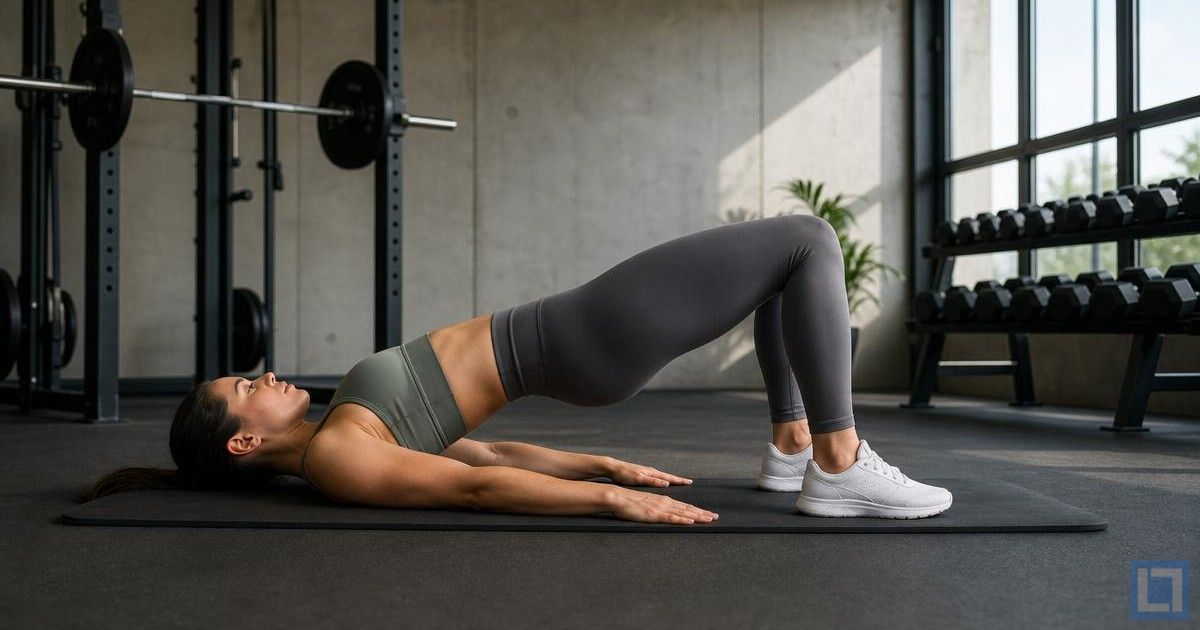
Hollow Rock
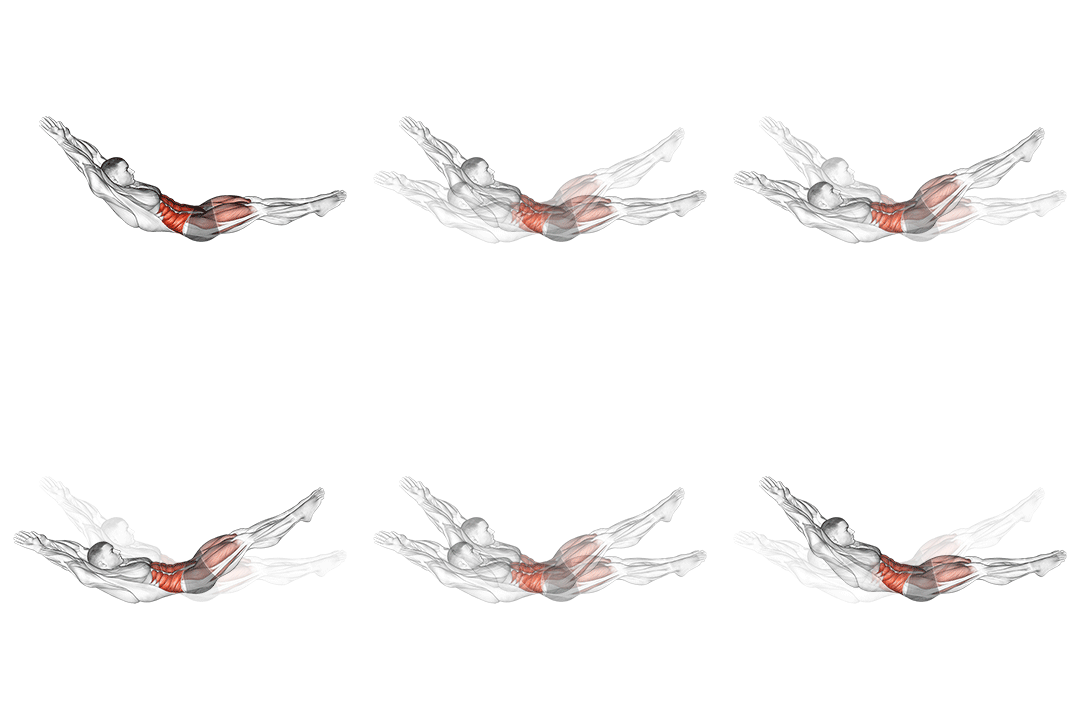
The Hollow Rock holds the hollow body position (lying on back with arms overhead, legs slightly off the floor, lower back pressed into the floor) and rocks the body back and forth dynamically. The pattern produces extreme abdominal demand alongside dynamic core stability.
For 15-min ab sessions that include advanced gymnastics-style work, the hollow rock is one of the most demanding ab exercises that exists. The pattern combines isometric core tension with dynamic motion. Run it for 3 sets of 10 to 15 reps as advanced gymnastics-style ab work.
Lie flat on the back with arms extended overhead. Press the lower back firmly into the floor. Lift the shoulder blades and legs slightly off the floor (hollow body position). Rock the body back and forth in a smooth motion while maintaining the hollow position. Continue at controlled tempo.
Plank Jack

The Plank Jack sets up in a high plank or forearm plank position and jumps the feet apart and back together while maintaining the plank position. The combination of plank stability and dynamic leg motion produces strong core-and-cardio demand.
For 15-min ab sessions that include core-and-cardio work, the plank jack combines plank stability with cardiovascular movement. The pattern produces strong core development alongside the conditioning stimulus. Run it for 3 sets of 30-second intervals as core-and-cardio work.
Set up in a high plank position with hands shoulder-width apart and body in a straight line. Jump the feet apart to shoulder-width or wider, then jump them back together. Maintain the plank position throughout (avoid letting the hips sag or pike). Continue at a steady tempo.
Side Plank II
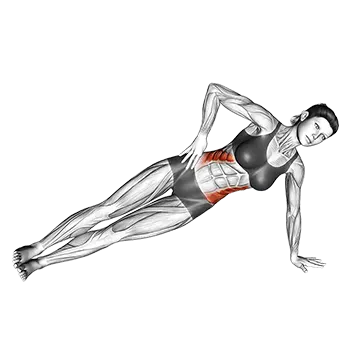
The Side Plank II is a variation of the standard side plank that adds dynamic motion (such as hip dips, leg lifts, or arm reaches) to the isometric hold. The pattern produces stronger oblique loading than static side planks alone.
For 15-min ab sessions that include advanced lateral core work, the dynamic side plank produces stronger oblique loading than static holds. The motion adds rep-based progression to the isometric position. Run it for 3 sets of 8 to 10 reps per side as advanced lateral core work.
Set up in a standard side plank position with one forearm on the floor and feet stacked. From the held position, perform dynamic motion: dip the hips toward the floor and lift back up, or lift the top leg up and down, or reach the top arm overhead and back. Switch sides between sets.
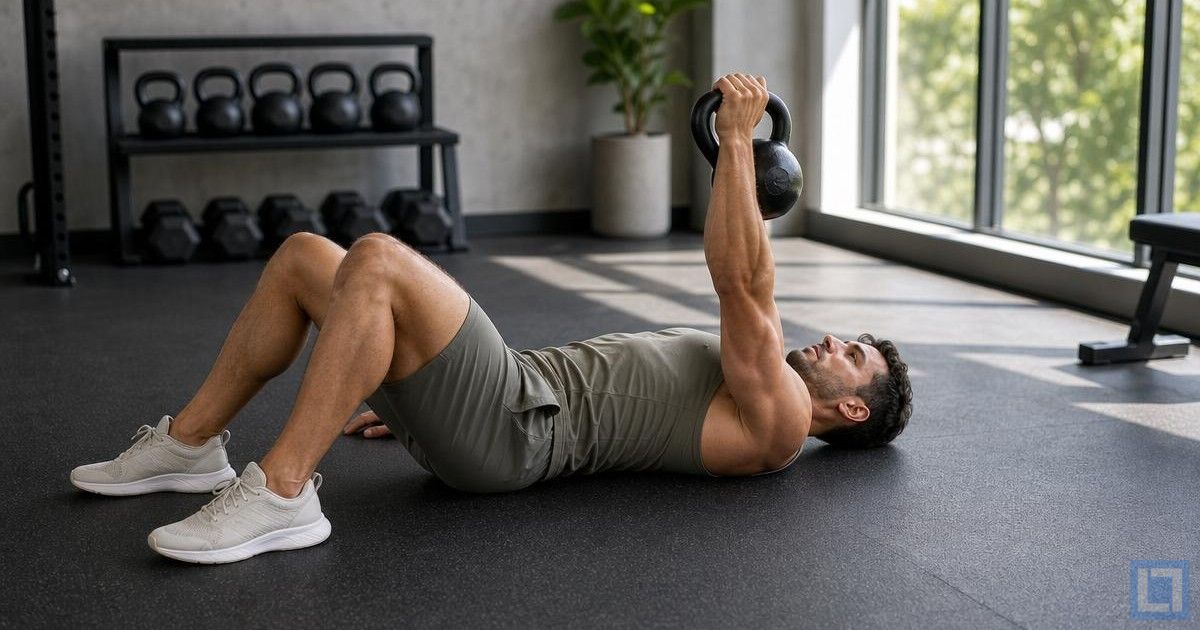
Dumbbell Crunch Up

The Dumbbell Crunch Up holds a dumbbell at the chest or extended overhead and performs a crunch up to a partial sit-up position. The added load increases the demand on the abs throughout the entire range of motion.
For 15-min ab sessions that include loaded ab work, the dumbbell crunch up produces stronger ab loading than bodyweight crunches. The added dumbbell weight scales the difficulty significantly. Run it for 3 sets of 10 to 12 reps as primary loaded ab work.
Lie flat on the back with knees bent and feet planted. Hold a dumbbell at the chest or extended overhead. Crunch the upper body up by contracting the abs while keeping the dumbbell in position. Reach the dumbbell toward the knees or feet. Lower under control to the start.
Decline Sit Up

The Decline Sit Up performs sit-ups on a decline bench with the feet anchored at the higher end. The decline angle increases the demand on the abs throughout the range of motion compared to flat sit-ups.
For 15-min ab sessions that include heavy ab work, the decline sit-up produces strong loading throughout the full sit-up range. The decline angle makes the bottom of the rep more demanding. Run it for 3 sets of 10 to 15 reps as primary heavy ab work.
Lie on a decline bench with feet anchored at the higher end and head pointing toward the floor. Sit up by contracting the abs, lifting the upper body toward the knees. Lower under control to the start. Add a weight plate or dumbbell at the chest for additional loading.
Hanging Knees to Elbows

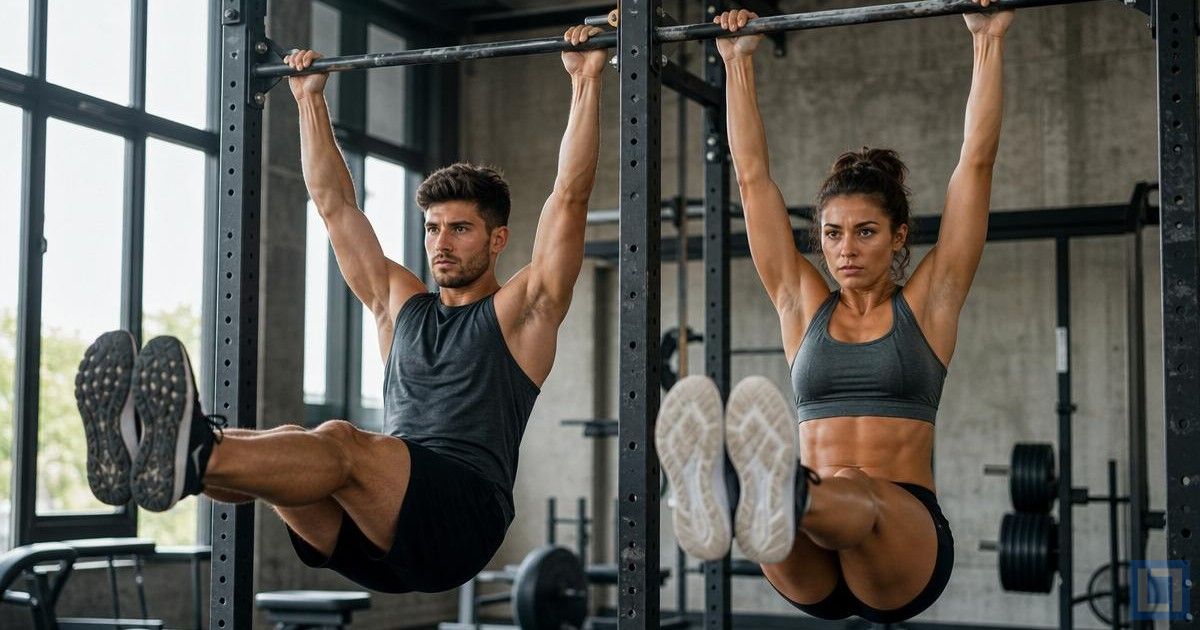
The Hanging Knees to Elbows hangs from a bar and lifts the knees toward the elbows by curling the spine and contracting the abs. The pattern is the progression toward toes-to-bar and produces extreme abdominal demand.
For 15-min ab sessions that include advanced hanging core work, the knees-to-elbows produces stronger ab loading than standard hanging knee raises. The pattern hits the entire rectus abdominis and hip flexors. Run it for 3 sets of 6 to 10 reps as advanced hanging core work.
Hang from an overhead bar with overhand grip, arms fully extended. Lift the knees up toward the elbows while curling the spine and contracting the abs. The knees should touch (or come very close to) the elbows at the top. Lower under control without swinging.
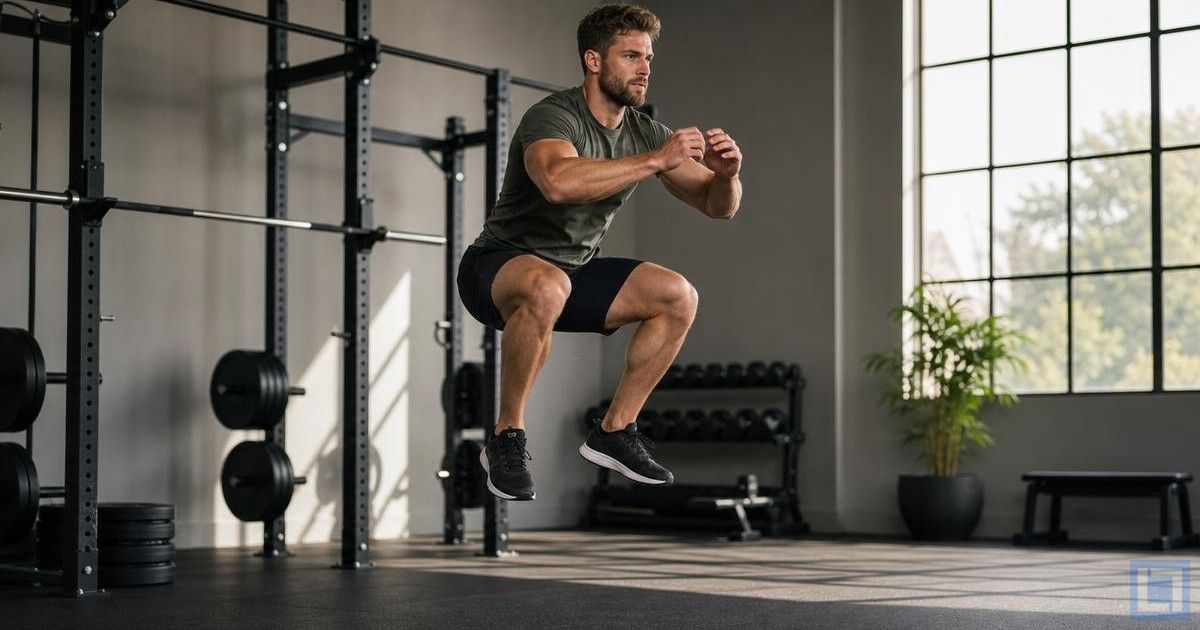
Mountain Climber Jump

The Mountain Climber Jump performs mountain climbers with explosive jumping motion as the legs alternate, lifting both feet off the floor briefly during the leg switch. The pattern produces strong cardiovascular demand alongside core stability.
For 15-min ab sessions that include core-and-cardio work, the explosive mountain climber jump produces stronger cardio output than standard mountain climbers. The plyometric component keeps heart rate elevated. Run it for 3 sets of 30-second intervals as advanced core-and-cardio work.
Set up in a high plank position. Drive one knee toward the chest. Jump explosively to switch legs, briefly lifting both feet off the floor as the knees alternate. Land softly back into the plank position. Continue at a steady explosive tempo for the work interval.
How To Program These Workouts
A productive 15-minute ab workout uses circuit-style organization. A standard 14 to 15-minute structure: 6 to 8 exercises performed for 30 to 40 seconds each with 15 to 20 seconds rest between exercises, repeated for 2 to 3 rounds. The continuous pacing produces strong metabolic stress alongside the direct ab loading. Most successful 15-minute sessions include 2 to 3 loaded exercises (cable variations, dumbbell crunch up), 2 to 3 bodyweight exercises (hollow rock, side plank, plank jack), and 1 to 2 advanced exercises (hanging knees to elbows, mountain climber jump).
Train 15-minute ab workouts 4 to 5 times per week. The compressed format produces moderate ab fatigue per session, which allows higher frequency than longer sessions. Most lifters do well with 4 to 5 dedicated 15-minute ab sessions per week alongside other training. The format works particularly well as morning routines, post-workout finishers, or daily lunch-break sessions because the 15-minute commitment fits most busy schedules.
For shorter sessions, see our 10 minute ab workouts. For longer training, see our best 20 minute ab workouts and best 30 minute ab workouts.
Final Thoughts
The best 15-minute ab workouts deliver real core development through compressed training that fits any schedule. The combination of loaded cable work, gymnastics-style exercises, core-and-cardio combinations, and loaded crunch variations covers every major core function in 15 minutes. For lifters who want serious core training that fits busy schedules, the 15-minute format is one of the most practical and sustainable options available.
Stay focused on contracted-position quality. The most common 15-minute ab training mistake is rushing through reps without pausing at the contracted position to consciously squeeze the abs, which reduces the actual training stimulus. The fix: pause briefly at the contracted position of every rep and consciously squeeze the abs hard. Quality reps with deliberate execution produce stronger results than higher-rep counts with mechanical motion. The compressed format works because of strict execution; that execution is what drives the training adaptations.
Frequently Asked Questions
Are 15 minute ab workouts effective?
Yes for most lifters. The 15-minute format provides enough time for 6 to 8 working exercises across all major core functions while remaining short enough for consistent sustainability. Most lifters who consistently train 15-minute ab sessions 4 to 5 times per week see measurable core strength and visible ab development within 8 to 12 weeks combined with appropriate nutrition. The format works particularly well as a daily training habit.
How often should I do 15 minute ab workouts?
Four to five times per week works for most lifters. The compressed format produces moderate ab fatigue per session, which allows higher frequency than longer ab training. Most successful programs include 4 to 5 dedicated 15-minute ab sessions per week alongside broader strength training. The format also works well as daily training (5 to 6 times per week) for advanced practitioners who can manage the volume.
15 minutes or 20 minutes for ab workouts?
Different formats serve different goals. 15-minute sessions work well for daily training, sustainability, and busy schedules. 20-minute sessions allow more per-exercise volume and stronger single-session stimulus. Most general lifters do well with 15 to 20-minute sessions training 4 to 5 times per week. The choice often comes down to schedule: 15 minutes fits more easily into busy days while still producing strong results.
Do I need equipment for 15 minute ab workouts?
Most exercises work with no equipment (hollow rock, plank jack, side plank, mountain climber jump). Adding cable access (or resistance bands as substitutes) expands the exercise selection significantly (cable crunches, cable side crunches). Adding dumbbells allows loaded crunch variations. A pull-up bar enables advanced hanging core work. The format scales naturally based on available equipment.
Will 15 minute ab workouts give me a six-pack?
Ab training builds the muscle that gives the stomach its shape; reducing body fat through nutrition reveals that shape. Both are required for visible abs. Most lifters need to be at 12 to 18 percent body fat for abs to show clearly. The 15-minute training handles the muscle-building side; sustainable nutrition handles the body fat side. The combination produces visible results over 12 to 16 weeks for most lifters.