At-home calisthenics training is one of the most accessible and effective fitness approaches that exists. The bodyweight format requires no equipment beyond a clear floor space, the foundational exercises are simple enough that no coaching is needed to start, and the workouts fit into any schedule (30 to 45 minutes is plenty). The best at home calisthenics workouts focus on the foundational movement patterns that the body uses for every athletic and daily-life activity: squat, push, hinge, lunge, plank, and explosive conditioning.
Below are ten effective at-home calisthenics exercises that cover squatting, pressing, planking, lunging, glute work, ab training, tricep isolation, and explosive conditioning. Together they form a complete training program that fits in any home, hotel room, or apartment with nothing more than a few square feet of floor space.
Squat

The Squat lowers the body by bending at the hips and knees, then drives back to standing. The bodyweight version is the foundational lower-body exercise in any at-home calisthenics program and serves as the entry point to all other squat-pattern variations.
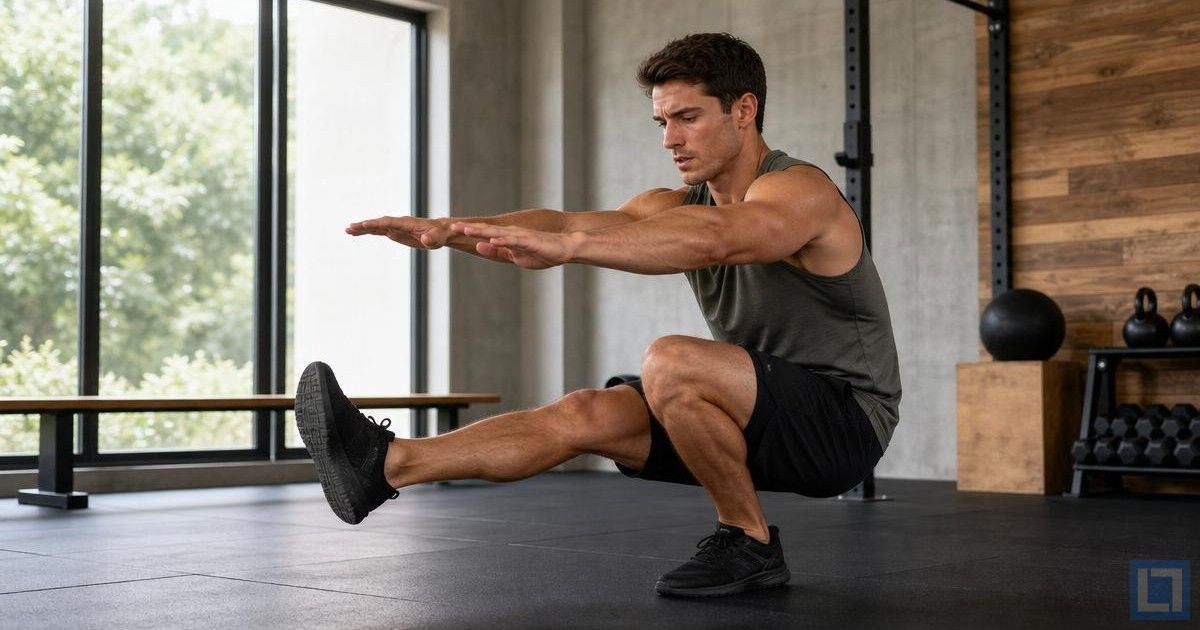
For at-home calisthenics, the bodyweight squat builds the foundational leg strength and movement quality that more advanced variations depend on. Build to 30 to 50 reps with clean form before progressing to harder unilateral variations like Bulgarian split squats and pistol squats.
Stand with feet shoulder-width and toes pointed slightly outward. Squat down by sitting the hips back while bending the knees, keeping the chest tall and weight in the heels. Drop to roughly parallel depth or as deep as mobility allows cleanly. Drive back to standing through the whole foot.
Push Ups

The Push Ups perform a push-up motion in standard plank position. The exercise hits the chest, shoulders, and triceps as a coordinated unit and serves as one of the most fundamental at-home pressing exercises.
For at-home calisthenics, push-ups are essential at every level. Beginners build pressing strength with knee push-ups and standard variations; advanced lifters use harder progressions like archer push-ups and one-arm push-ups. The pattern produces real strength gains for years of consistent training without any equipment.
Set up in plank position with hands directly under the shoulders and body in a straight line from head to heels. Lower the chest to within an inch of the floor by bending the elbows. Press back to lockout. Maintain tight body position throughout.
Front Plank
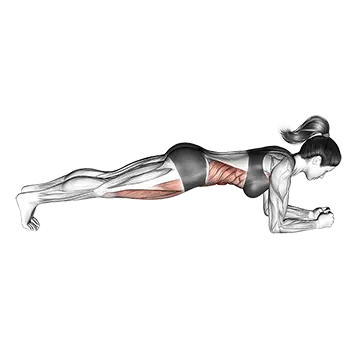
The Front Plank holds a forearm plank position with the body in a straight line from head to heels. The isometric hold builds core strength and teaches the trunk to brace under static load.
For at-home calisthenics core work, the front plank is the foundational anti-extension exercise. The bracing pattern transfers directly to harder skills like handstands, planches, and front levers. Build to 60 to 90-second clean holds before progressing to harder variations.
Set up on the forearms with elbows directly under the shoulders. Body straight from head to heels, hips not sagging or piking up. Hold the position while breathing normally. End the set when form breaks down, not when an arbitrary clock runs out.
Lunge

The Lunge steps forward into a long stance and drops the back knee toward the floor before pressing back to standing. The unilateral pattern hits each leg independently and builds the kind of single-leg strength that bilateral squatting cannot match.
For complete at-home leg training, lunges complement squats by adding the unilateral loading that catches strength imbalances. Most lifters have one leg significantly stronger than the other due to handedness; lunges equalize the development over months of consistent practice.
Step into a long stance with one leg forward. Drop straight down rather than forward; the back knee descends toward the floor while the front shin stays roughly vertical. Drive through the front heel to push back to standing. Alternate sides on each rep.
Jumping Jack

The Jumping Jack jumps the feet apart while raising the arms overhead, then jumps back to standing position. The full-body movement drives heart rate up while requiring no equipment or space beyond a few feet of clearance.
For at-home calisthenics, jumping jacks serve as both a warm-up and a sustained cardio interval. The simple motion is accessible to lifters at every fitness level, and the moderate intensity allows long continuous sets that build cardiovascular endurance over time.
Stand with feet together and arms at the sides. Jump and land with the feet shoulder-width apart while simultaneously raising the arms overhead. Reverse the motion immediately. Continue at a sustainable pace for 30 to 60 seconds.
Mountain Climber

The Mountain Climber starts in a push-up position and rapidly drives the knees toward the chest in alternating fashion. The continuous movement combines core engagement with cardiovascular demand in one efficient exercise.
For at-home calisthenics with a core training component, mountain climbers earn their place by producing strong heart rate response while loading the abs and shoulders simultaneously. The combination fits the time-efficient nature of home workouts perfectly.
Set up in a push-up position with arms straight and body in a straight line. Drive one knee toward the chest, then quickly switch and drive the other knee forward. Maintain a strong core position throughout. Continue for 30 to 60 seconds at a fast tempo.
Triceps Dip Floor

The Triceps Dip Floor sits on the floor with the hands behind the body and feet planted forward, then dips the body up and down by bending at the elbows. The floor-based version of the dip works the triceps and front delts without requiring parallel bars or a bench.
For at-home calisthenics tricep development, the floor dip is the most accessible direct tricep exercise that exists. No equipment needed, no parallel bars, no bench: just floor space and bodyweight. Run it for 3 sets of 12 to 20 reps as the primary tricep exercise.
Sit on the floor with hands placed flat behind the body, fingers pointing forward. Plant the feet flat on the floor with knees bent. Lift the hips off the floor. Lower the body by bending the elbows, then press back to the start by extending the elbows. Keep the hips lifted throughout.
Glute Bridge March

The Glute Bridge March lies on the back in a glute bridge position and alternates lifting one knee toward the chest while maintaining the bridge. The combined hip extension and unilateral leg lift produces strong glute and core demand.
For at-home glute development, the glute bridge march is one of the most effective bodyweight exercises that exists. The marching motion adds unilateral loading to the standard glute bridge, which produces stronger glute development per rep. Run it for 3 sets of 10 to 12 reps per side.
Lie flat on the back with knees bent and feet planted shoulder-width apart. Lift the hips up into a glute bridge. Maintaining the bridge, lift one knee toward the chest, then lower back to the start. Lift the opposite knee. Continue alternating without dropping the hips.
Sit-Up

The Sit-Up lies flat on the back with knees bent and feet planted, then sits up by curling the trunk forward. The classic pattern builds direct ab strength through trunk flexion against bodyweight resistance.
For at-home ab training, the sit-up rounds out a complete core program by adding direct trunk flexion to the bracing patterns of planks. Use it as the dynamic complement to static plank work; together they cover the major core training functions. Build to 20 to 30 reps with clean form.
Lie flat on the back with knees bent and feet flat on the floor. Place the hands behind the head or across the chest. Curl the trunk up to bring the chest toward the knees. Lower under control to the start position. Avoid yanking on the neck.
Burpee

The Burpee combines a squat, push-up, and vertical jump in one continuous motion. The combination drives heart rate up rapidly while hitting nearly every major muscle group, making it the most efficient single exercise in any at-home calisthenics program.
For at-home calisthenics, burpees are the most efficient single conditioning exercise that exists. The full-body recruitment and continuous motion produce the highest heart rate response per minute of any bodyweight exercise. Use them as a primary conditioning movement or as a finisher to end any session strongly.
Drop quickly into a squat with hands on the floor. Kick the legs back into a plank, perform one push-up, jump the feet forward to the squat position, then jump straight up with arms overhead. Land softly and immediately drop into the next rep.
How To Program These Workouts
A productive at-home calisthenics session pulls six to eight exercises from the list above. A balanced session includes one squat pattern (squat or lunge), one upper-body push (push-ups), one core piece (plank or sit-up), one glute exercise (glute bridge march), one tricep exercise (floor dips), and one cardio interval (jumping jacks, mountain climbers, or burpees). Run sets of 10 to 25 reps for strength exercises and 30 to 60 seconds for cardio.
Train at-home calisthenics three to five times per week. The lighter loading of bodyweight work allows higher frequency than barbell training; daily practice can work for advanced lifters as long as total volume per session stays moderate. Most beginners do well with three sessions per week (Monday/Wednesday/Friday) with rest days between for recovery.
For more bodyweight programming, see our best calisthenics workouts and best full body calisthenics workout. For specialized routines, see our beginner calisthenics workouts.
Final Thoughts
The best at home calisthenics workouts deliver complete strength training, mobility work, and cardiovascular conditioning with absolutely zero equipment requirements. The combination of foundational bodyweight movements covers every major function the body uses, and the home format makes daily training realistic in a way that gym-dependent programs cannot match.
Stay consistent. At-home training rewards consistency over intensity. A 30-minute session three times per week for 12 weeks produces stronger results than occasional 90-minute sessions. The body adapts to repeated stimulus over time; the lifters who succeed at at-home calisthenics are the ones who treat it as a regular daily habit rather than as occasional maximum-effort sessions.
Frequently Asked Questions
Are at home calisthenics workouts effective?
Yes, very effectively. The combination of foundational bodyweight movements produces real strength, muscle development, and cardiovascular conditioning for years of consistent practice. Most lifters build solid athletic physiques with at-home calisthenics alone for the first 12 to 24 months of training, and progressive variations extend that runway by another 24+ months.
How often should I do at home calisthenics?
Three to five times per week works for most lifters. The lighter loading of bodyweight work allows higher frequency than barbell training. Beginners should start with three sessions per week to allow adequate recovery; intermediates can typically handle four to five sessions.
Can I lose weight with at home calisthenics?
Yes, when combined with appropriate nutrition. The combination of strength work and cardiovascular conditioning burns significant calories during and after the session, and consistent training combined with calorie management produces fat loss over months. However, training alone without dietary management rarely produces significant weight loss.
Do I need any equipment at all?
Most exercises in this list require nothing more than a clear floor space. A few square feet of floor and an interval timer (or just a phone clock) is plenty. Beyond that, optional equipment that adds value: a yoga mat for comfort, a pull-up bar for vertical pulling, and a jump rope for additional cardio variety. None of these are required.
How long until I see results?
Most lifters feel meaningful strength improvements within 2 to 4 weeks of consistent training. Visible muscle development takes 8 to 12 weeks combined with appropriate nutrition. Major changes (significantly improved physique, advanced bodyweight skills) take 6 to 12 months of dedicated practice. Patience and consistency matter more than intensity.