Cable hamstring training produces real hamstring development through patterns that load the hamstrings with the unique advantages cables offer: constant tension throughout the entire range of motion (including peak contraction at the top of hip extension), easy progressive loading through pin-stack adjustments, and the ability to anchor at multiple heights and angles for direct loading of every hamstring function. The format works particularly well for hamstrings because the muscle group functions in two primary ways (hip extension and knee flexion), and cables deliver progressive resistance for both functions through pull through patterns (hip extension) and leg curl patterns (knee flexion) along with combined patterns like deadlifts and step-ups. Most lifters who consistently train cable hamstring work 1 to 2 times per week alongside compound lower-body movements see measurable hamstring development, improved peak contraction strength, better single-leg balance, and reduced hamstring injury risk within 8 to 12 weeks. The combination of Romanian deadlifts, pull through variations, leg curl isolation, Nordic curl progressions, and combined posterior chain patterns produces broader hamstring development than equipment-limited training would suggest.
Below are ten effective cable hamstring exercises that cover hip-hinge mass loading (cable Romanian deadlift, cable deadlift), pull through variations (cable pull through, cable kneeling pull through), direct hamstring isolation (cable standing leg curl), Nordic curl progressions (cable assisted inverse leg curl), hip extension work (cable standing hip thrust, cable standing hip extension, cable glute dominant step-up), and combined posterior chain plus core work (cable Pallof press with glute bridge). Together they form a complete cable hamstring program that hits every functional pattern of the muscle. A 25 to 35-minute session pulled from this list, performed 1 to 2 times per week, produces strong hamstring development that complements compound lower-body work.
Cable Romanian Deadlift

The Cable Romanian Deadlift performs hip-hinge motion with a cable anchored low and gripped with both hands. The cable provides constant tension throughout the movement, including peak contraction at the top.
For cable hamstring training, the Romanian deadlift is the foundational mass-building exercise. The cable’s constant tension produces strong hamstring loading through the full range. Run it for 4 sets of 8 to 12 reps as primary hamstring mass work in any cable hamstring session.
Attach a straight bar or rope to a low cable pulley. Stand facing the pulley with the bar gripped at thigh level. Step back to create tension. Hinge at the hips by sending them backward while keeping the back flat and a slight bend in the knees. Lower the bar along the legs until the hamstrings stretch deeply. Drive back to standing by extending the hips. The cable tension produces strong peak contraction loading at the top of each rep.
Cable Deadlift

The Cable Deadlift performs deadlift motion with a low cable, pulling from a deeper bottom position than standard barbell deadlifts. The pattern produces strong combined hamstring, glute, and back loading.
For cable hamstring training, the cable deadlift produces combined hamstring and posterior chain work. The pattern hits the hamstrings through compound pulling against constant cable tension. Run it for 3 to 4 sets of 8 to 10 reps as combined posterior chain work.
Attach a straight bar or rope handle to a low cable pulley. Stand facing the pulley with feet hip-width. Hinge at the hips and bend the knees to grip the handle low (mid-shin level). Drive through the heels to stand fully tall while pulling against the cable tension. Lower under control by hinging back at the hips. The cable position requires controlled tempo to maintain proper bar path along the body.
Cable Pull Through

The Cable Pull Through performs a hip-hinge pull through motion with a cable anchored low and pulled between the legs. The pattern produces strong combined glute and hamstring loading through pure hip extension.
For cable hamstring training, the pull through is one of the most effective combined glute and hamstring exercises that exists. The pattern hits the hamstrings through hip extension with cable tension at the top. Run it for 3 to 4 sets of 10 to 15 reps as combined posterior chain mass work.
Attach a rope handle to a low cable pulley. Stand facing away from the pulley with feet shoulder-width and the rope passed between the legs from behind (gripped with both hands). Step forward to create tension. Hinge at the hips by sending them backward and let the rope pull through the legs. Drive the hips forward by squeezing the glutes and hamstrings to pull the rope through. Stand fully tall at the top with the cable pulled through the legs. The pattern produces strong glute and hamstring contraction at the top.
Cable Kneeling Pull Through

The Cable Kneeling Pull Through performs pull through motion from a kneeling position with a cable anchored low. The kneeling position eliminates lower body involvement and isolates the glutes and hamstrings.
For cable hamstring training, the kneeling pull through produces clean glute and hamstring isolation. The kneeling position removes lower-body compensation. Run it for 3 sets of 12 to 15 reps as combined glute and hamstring isolation work.
Attach a rope handle to a low cable pulley. Kneel facing away from the pulley with the rope passed between the legs from behind (gripped with both hands). Sit back on the heels at the start. Drive the hips forward by squeezing the glutes and hamstrings to pull the rope through. The body should rise from sitting on heels to upright kneeling at the top. Squeeze hard at the top. Return to sitting on heels under control.
Cable Standing Leg Curl
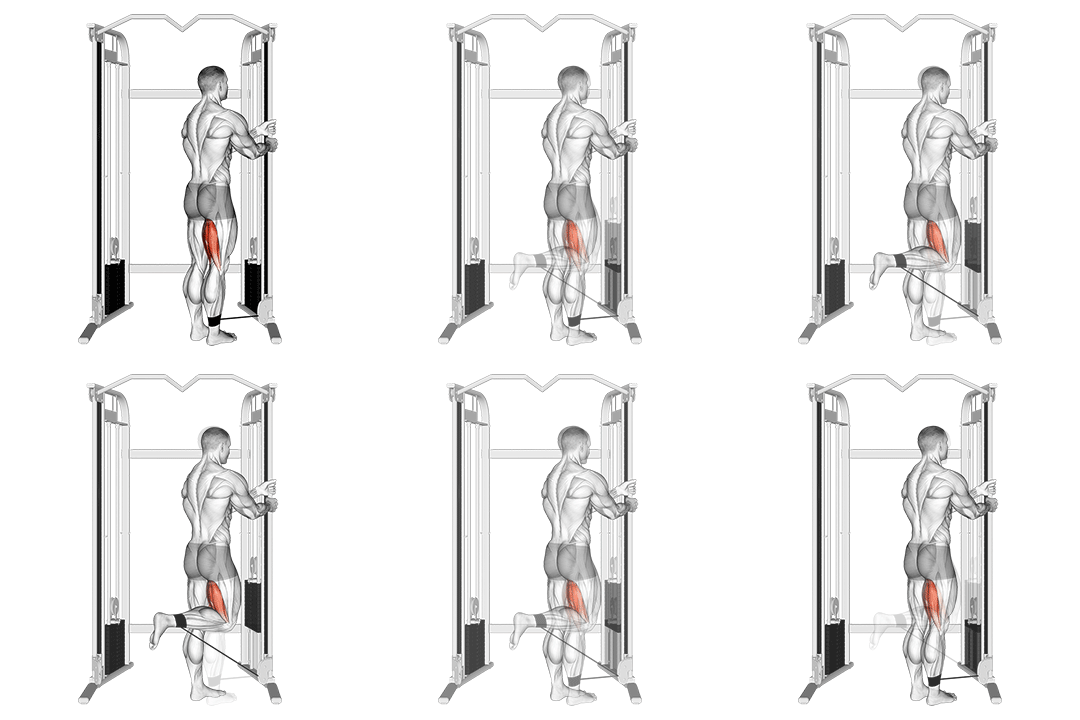
The Cable Standing Leg Curl performs hamstring curls standing with a cable anchored low and an ankle attachment. The pattern produces direct unilateral hamstring isolation through pure knee flexion.
For cable hamstring training, the standing leg curl produces strong unilateral hamstring isolation. The pattern hits each hamstring individually through controlled knee flexion against constant cable tension. Run it for 3 sets of 12 to 15 reps per leg as unilateral hamstring isolation work.
Attach an ankle cuff to a low cable pulley. Stand facing the pulley with the cuff secured around one ankle. Hold a wall or rail for balance. Bend the working knee to bring the heel up toward the glute by flexing the hamstring against the cable tension. Squeeze briefly at peak contraction. Lower under control. Switch legs between sets. The cable provides constant tension throughout the range of motion.
Cable Assisted Inverse Leg Curl

The Cable Assisted Inverse Leg Curl performs Nordic-style hamstring curls with a cable providing assistance to make the eccentric phase manageable. The pattern produces strong eccentric hamstring loading at accessible strength levels.
For cable hamstring training, the assisted inverse leg curl produces strong eccentric hamstring loading. The cable assistance allows lifters to perform Nordic-style work at intermediate strength levels. Run it for 3 sets of 6 to 8 reps as eccentric hamstring work critical for injury prevention.
Anchor a high cable with a strap or chest harness. Kneel on a soft surface with the ankles fixed (have a partner hold them or anchor them under a heavy object). Loop the cable around the chest or front of the body so it pulls upward. Slowly lower the body forward by extending the knees, controlling the descent against gravity. The cable assistance reduces the bodyweight load. Push back to starting position. Build strength toward unassisted Nordic curls over time.
Cable Standing Hip Thrust
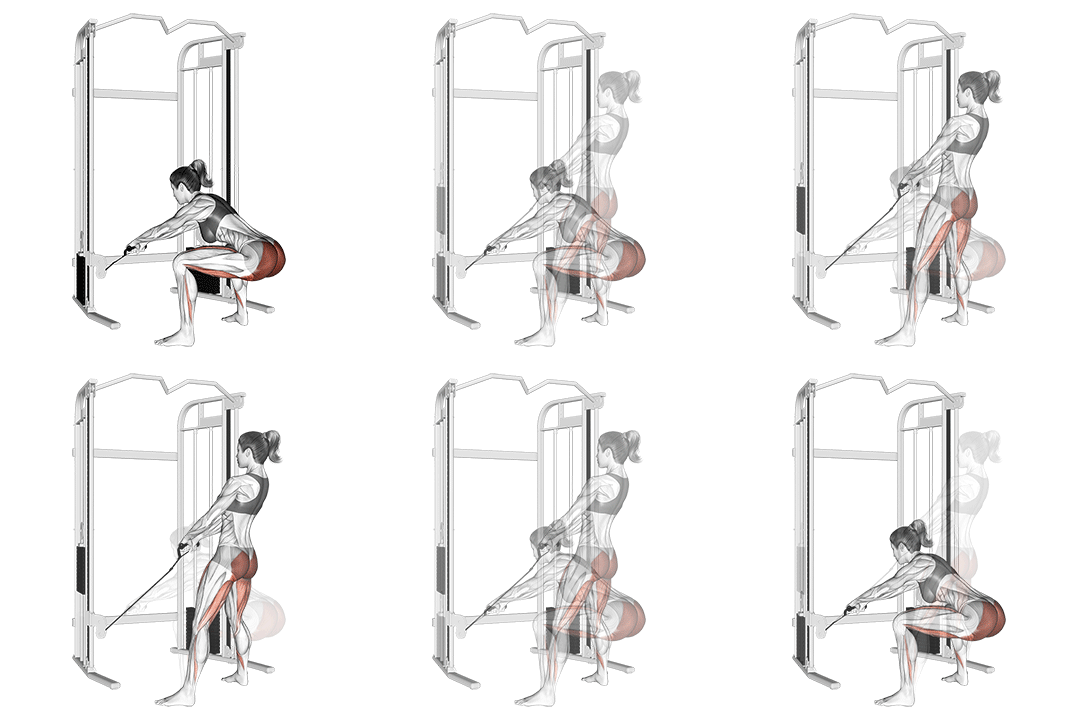
The Cable Standing Hip Thrust performs hip thrust motion standing with a cable anchored low and looped around the hips or a belt. The pattern produces strong glute and hamstring loading through hip extension.
For cable hamstring training, the standing hip thrust produces strong combined glute and hamstring loading. The pattern hits the posterior chain through hip extension against cable tension. Run it for 3 sets of 12 to 15 reps as posterior chain work.
Attach a belt or strap to a low cable pulley and secure it around the hips. Stand facing away from the pulley with feet shoulder-width and step forward to create tension. Hinge slightly at the hips. Drive the hips forward by squeezing the glutes and hamstrings against the cable tension. Hold briefly at peak hip extension. Return to starting under control. The cable tension increases at the top, producing strong peak contraction loading.
Cable Pallof Press With Glute Bridge

The Cable Pallof Press With Glute Bridge combines a glute bridge with anti-rotation Pallof press motion. The pattern produces combined posterior chain and core anti-rotation work.
For cable hamstring training, this combination exercise produces combined hamstring, glute, and core work. The pattern hits the hamstrings through hip extension while challenging the core through anti-rotation. Run it for 3 sets of 8 to 10 reps per side as combined posterior chain and core work.
Attach a single handle to a cable pulley at chest height. Lie flat on the back perpendicular to the pulley. Place feet planted on the floor knees bent. Grip the handle with both hands and hold it straight up over the chest. Lift the hips up into a glute bridge position by squeezing the glutes and hamstrings. While maintaining the hip extension, press the hands away from the chest fighting the cable tension that wants to rotate the torso. Return the hands to chest. Switch sides between sets.
Cable Standing Hip Extension

The Cable Standing Hip Extension performs unilateral hip extension with an ankle cuff attached to a low cable. The pattern produces direct unilateral glute and hamstring loading.
For cable hamstring training, the standing hip extension produces unilateral posterior chain work. The pattern hits the working leg glute and hamstring through hip extension against cable tension. Run it for 3 sets of 12 to 15 reps per leg as unilateral posterior chain work.
Attach an ankle cuff to a low cable pulley. Stand facing the pulley with the cuff secured around one ankle. Hold a wall or rail for balance support. Drive the working leg back behind the body by extending the hip while maintaining a slight bend in the knee. Squeeze the glute and hamstring hard at peak hip extension. Lower under control. Switch legs between sets. The cable tension produces strong unilateral loading.
Cable Glute Dominant Step Up

The Cable Glute Dominant Step Up performs step-ups onto an elevated surface with a cable adding tension to maintain glute and hamstring activation throughout. The pattern produces unilateral posterior chain loading combined with single-leg drive.
For cable hamstring training, the glute-dominant step-up produces combined unilateral hamstring, glute, and quad work. The pattern hits the hamstrings through hip extension during the step-up motion. Run it for 3 sets of 8 to 12 reps per leg as combined unilateral posterior chain work.
Attach a belt or strap to a low cable pulley and secure around the hips. Stand facing away from the pulley about 3 to 4 feet from a sturdy bench. Step forward to create cable tension. Place one foot fully on the bench. Drive through the heel of the bench foot to step up while squeezing the glute and hamstring to extend the hip against the cable tension. Step back down under control. Switch sides between sets.
How To Program These Workouts
A productive cable hamstring session pulls 5 to 6 exercises from the list above based on training goals. A common balanced session: cable Romanian deadlift (mass), cable pull through (combined glute/hamstring), cable standing leg curl (isolation), cable standing hip thrust (hip extension), cable assisted inverse leg curl (eccentric work). For unilateral focus: cable standing leg curl, cable standing hip extension, cable glute dominant step-up, cable Pallof press with glute bridge. Run hip-hinge work for 3 to 4 sets of 8 to 12 reps, pull through work for 3 to 4 sets of 10 to 15 reps, isolation work for 3 sets of 12 to 15 reps per leg, and eccentric work for 3 sets of 6 to 8 reps. Total session covers 14 to 20 working sets focused on hamstring development.
Train cable hamstring work 1 to 2 times per week as part of broader lower-body programming. The hamstrings recover from training in 48 to 72 hours but accumulate fatigue from compound work and from running/sprinting. Most successful programs include cable hamstring work either: 1) at the end of a leg day after compound deadlifts and squats (cables work well as accessory and isolation work), 2) on a dedicated posterior chain day, or 3) split across 2 leg days with one heavy strength day and one cable-focused volume day. Keep training time under 30 to 35 minutes per session. The cable’s constant tension allows higher rep ranges for productive hypertrophy work.
For broader hamstring programming, see our best hamstring workouts and how to grow your hamstrings. For specific posterior chain work, see our best posterior chain workouts.
Final Thoughts
The best cable hamstring workouts deliver real hamstring development through patterns that effectively load the hamstrings with the unique advantages cables offer: constant tension, easy progressive overload, and multiple anchor positions. The combination of Romanian deadlifts, pull through variations, direct isolation, Nordic curl progressions, hip extension work, and combined patterns covers every functional pattern of the hamstring and produces broader development than barbell-only training for many lifters. For lifters who want measurable hamstring size and strength improvements, want to add constant-tension peak contraction loading to existing hamstring programs, want to develop posterior chain capacity through pull through patterns, or want to build Nordic curl strength through assisted progressions, dedicated cable hamstring work is one of the most effective options available.
Stay focused on hip-hinge mechanics and peak contraction work. The most common cable hamstring training mistakes include rounding the lower back during cable Romanian deadlifts (which shifts work from hamstrings to lower back) and not driving the hips fully through to peak contraction on pull through and hip thrust variations (which limits glute and hamstring loading at the top). The fix: maintain a flat back position throughout every hip-hinge exercise, and on pull through and hip extension exercises, drive the hips fully forward with hard glute and hamstring squeeze at the top. Quality reps with full peak contraction produce stronger hamstring development than partial reps with heavier weights.
Frequently Asked Questions
Are cable workouts effective for hamstrings?
Yes very effectively. Cables produce real hamstring development through hip-hinge variations (cable Romanian deadlifts, deadlifts), pull through patterns (most effective for combined glute and hamstring work), direct isolation (standing leg curls), Nordic curl progressions (assisted inverse leg curls), and hip extension work (standing hip thrusts, glute-dominant step-ups). The cable’s constant tension produces strong loading through the full range of motion. Most successful hamstring programs include cable work alongside compound lifting that activates the hamstrings through heavy loading.
Cable pull through vs Romanian deadlift?
Both effective for different goals. Cable pull throughs produce strong combined glute and hamstring loading through hip extension with peak contraction at the top, ideal for posterior chain development without heavy compound loading. Romanian deadlifts produce strong stretched-position hamstring loading through hip-hinge motion, ideal for hamstring mass work. Most successful programs include both: Romanian deadlifts as primary mass work and pull throughs as accessory work focused on peak contraction. The combination produces broader hamstring development than either alone.
How heavy should cable work be for hamstrings?
Moderate to heavy depending on the exercise. Cable Romanian deadlifts and deadlifts can use heavy weights (typically 80 to 200+ pounds for advanced lifters). Pull through variations use moderate weights (50 to 150 pounds) because the lever arm position requires control. Isolation work like standing leg curls uses lighter weights (15 to 50 pounds per leg). Most successful programs progressively load all exercises until 8 to 15 reps becomes challenging, then increase weight by 5 to 10-pound increments. Form quality matters more than absolute weight.
How often should I train hamstrings with cables?
One to two cable hamstring sessions per week works for most lifters. The hamstrings recover from training in 48 to 72 hours but accumulate fatigue from compound work that activates them substantially. Most successful programs include cable hamstring work either at the end of a leg day after compound deadlifts and squats, on a dedicated posterior chain day, or split across 2 leg days. Three or more weekly heavy hamstring sessions typically produces overuse injuries rather than accelerated growth.
Can cables replace barbell deadlifts for hamstrings?
For some lifters yes, for others as a complement. Cable hamstring exercises produce real hamstring development through patterns that load the hamstrings with constant tension throughout the range of motion. Lifters who can not access barbells (limited equipment, recovery from injury) can build excellent hamstrings through dedicated cable training combined with bodyweight progressions. Lifters with full equipment access typically include both for maximum development. The cable’s constant tension complements the heavy progressive overload that barbell deadlifts provide.