Bike racing-focused training transforms cycling performance by building the foundational leg strength for cycling power, posterior chain strength for balanced power production, unilateral capacity matching cycling’s single-leg nature, glute strength for hip extension power, deep core endurance for cycling posture, lateral core for out-of-saddle efforts, posterior chain support for upright spinal extension, calf strength for complete pedal stroke, and posterior shoulder support for cycling-related postural issues across road racing, criterium, time trial, mountain biking competition, gravel racing, and professional cycling. Cyclists who consistently train strength and conditioning 1 to 2 times per week alongside cycling training see measurable improvements: more cycling power through stronger legs, longer cycling endurance through fatigue resistance, more powerful sprinting and climbing, addressed posterior chain weakness common in cyclists, fewer overuse injuries (especially the knee, lower back, and shoulder issues common in cyclists), faster recovery between rides, more efficient cycling mechanics through balanced strength, and the integrated capacity that supports breakthrough race performances. Strength training is increasingly common in modern cycling – the research consistently shows that cyclists who lift outperform cyclists who only ride.
Below are ten effective strength and conditioning exercises for bike racers that cover compound leg strength (barbell squat, barbell Romanian deadlift), unilateral leg work (dumbbell Bulgarian split squat, dumbbell walking lunge), glute strengthening (barbell glute bridge), core stability (front plank, side plank), posterior chain (superman), calf strengthening (bodyweight standing calf raise), and posture correction (cable standing face pull). Together they form a complete bike racing-focused program. A 30 to 45-minute session pulled from this list, performed 1 to 2 times per week alongside cycling training, produces strong development for recreational cyclists, competitive amateur racers, and professional cyclists. Strength-focused training is particularly valuable for cyclists because cycling-specific demands produce specific limitations that cycling alone cannot address optimally.
Barbell Squat

The Barbell Squat performs back squats. The compound pattern is foundational for bike racing.
For bike racers, the squat builds foundational leg strength supporting cycling power. Run it for 3 to 4 sets of 6 to 10 reps as primary leg work.
Set up a barbell on a rack at upper back height. Position the bar across the upper back. Step back with feet shoulder-width. Squat down by bending the knees and hips. Lower until the thighs are parallel to the floor. Drive back up through the heels. The pattern builds foundational leg strength critical for bike racing – cycling power production depends primarily on quad and glute strength, and heavy squats produce the foundational leg capacity that supports faster sprinting, more powerful climbing, longer race endurance, and the integrated leg strength that defines competitive cycling. Strong squat numbers correlate with cycling power.
Barbell Romanian Deadlift

The Barbell Romanian Deadlift performs Romanian deadlifts. The pattern builds posterior chain for cyclists.
For bike racers, the RDL builds posterior chain strength critical for cycling. Run it for 3 sets of 8 to 12 reps as posterior chain work.
Stand with feet hip-width holding a barbell at the front of the thighs. Hinge at the hips by sending them backward while keeping the back flat and legs nearly straight. Lower the barbell along the legs until the hamstrings stretch deeply. Drive back to standing by extending the hips. The pattern builds posterior chain strength critical for cyclists – hamstring and glute strength contribute substantially to cycling power, and addressing posterior chain weakness (common in cyclists who only train cycling-specific patterns) supports balanced power production and prevents the lower back issues common in long cycling careers.
Dumbbell Bulgarian Split Squat
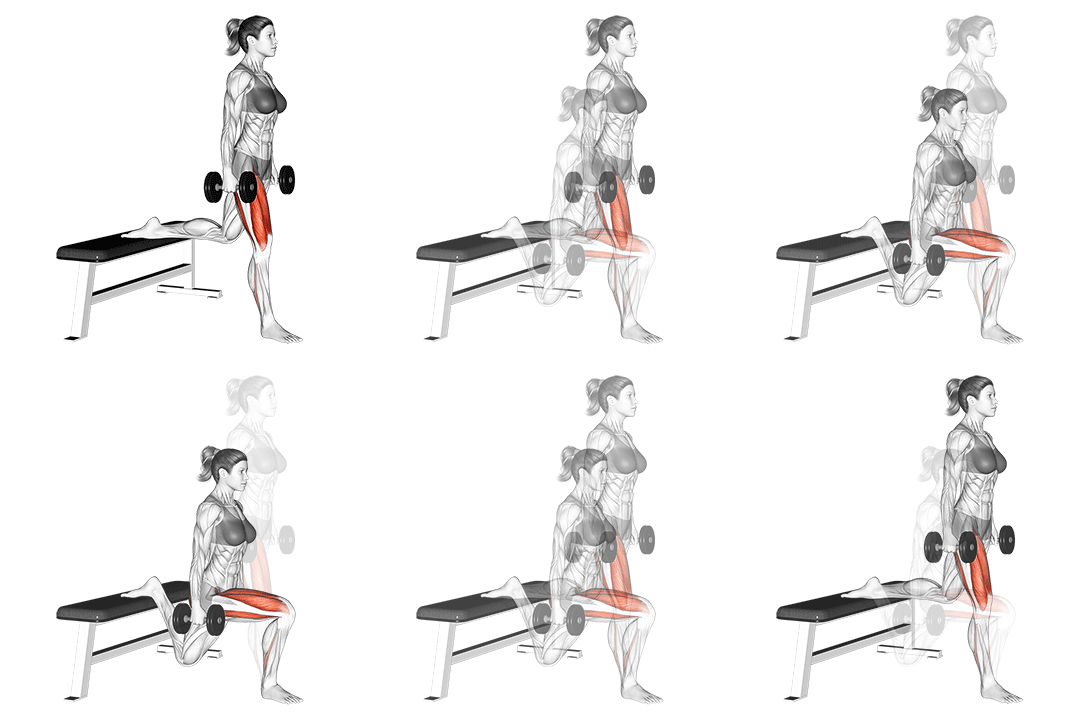
The Dumbbell Bulgarian Split Squat performs Bulgarian split squats. The unilateral pattern is critical for cyclists.
For bike racers, Bulgarian split squats build unilateral leg strength matching cycling mechanics. Run it for 3 sets of 8 to 10 reps per leg as unilateral work.
Stand 2 to 3 feet in front of a bench. Place the top of the rear foot on the bench behind. Hold dumbbells in each hand at the sides. Squat down by bending the front knee deeply. Lower until the front thigh is parallel to the floor. Drive back up through the front heel. The pattern hits each leg individually with full loading – critical for cyclists because cycling is fundamentally a single-leg activity (one leg drives while the other recovers), and unilateral training matches cycling mechanics. Strong unilateral legs support balanced cycling power and address the asymmetries that develop with extensive cycling.
Dumbbell Walking Lunge

The Dumbbell Walking Lunge performs walking lunges. The dynamic pattern builds cyclist leg strength.
For bike racers, walking lunges build dynamic single-leg strength. Run it for 3 sets of 14 to 18 total steps as dynamic leg work.
Stand with feet hip-width holding dumbbells in each hand at the sides. Step forward with one leg into a lunge position, lowering the back knee toward the floor. Drive through the front heel to stand up while bringing the rear leg forward into the next lunge step. Continue alternating. The dynamic pattern develops unilateral leg strength complementing cycling – the dynamic nature provides movement patterns different from cycling, supporting overall leg development and preventing the strength imbalances that can develop from cycling-only training.
Barbell Glute Bridge
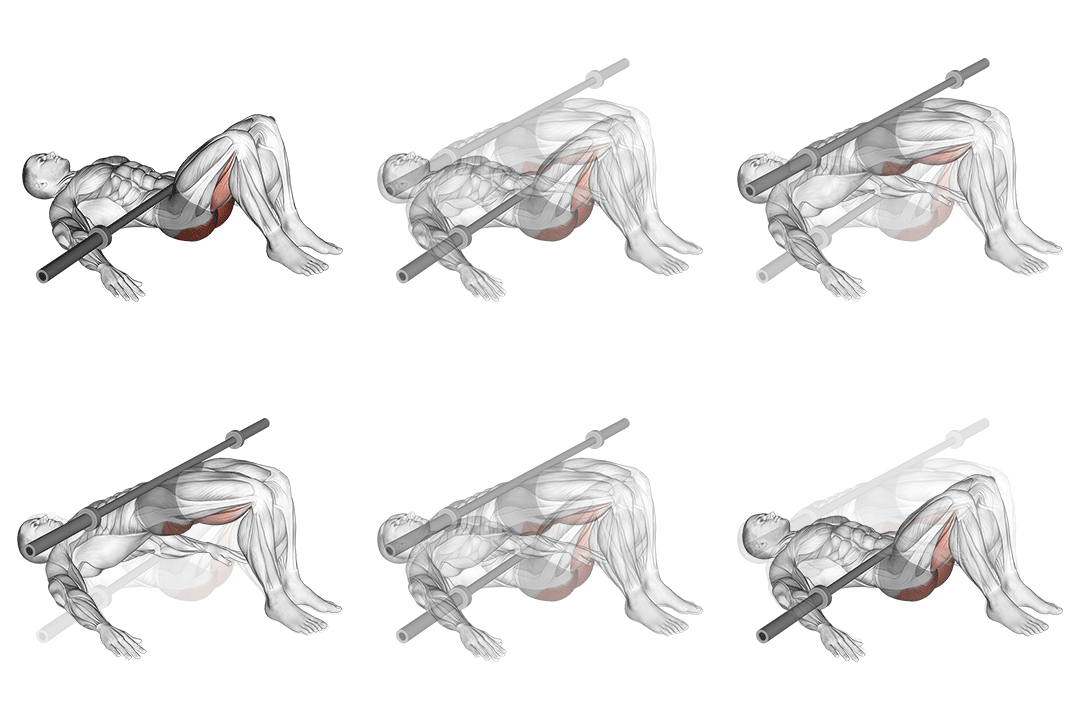
The Barbell Glute Bridge performs glute bridges. The pattern produces direct glute strengthening for cyclists.
For bike racers, the glute bridge produces direct glute strengthening critical for cycling power. Run it for 3 sets of 10 to 12 reps as glute work.
Lie on the floor with knees bent and feet planted. Position a barbell across the hips. Drive through the heels to lift the hips up by extending the hips. The body forms a straight line from shoulders to knees at the top. The glutes work hard. Squeeze at peak hip extension. Lower under control. The pattern produces direct glute strengthening – critical for cyclists because the glutes contribute substantially to cycling power production, and weak glutes (a common issue in cyclists who underuse the glutes during cycling) limit power output. Strong glutes support better cycling performance through improved hip extension power.
Front Plank
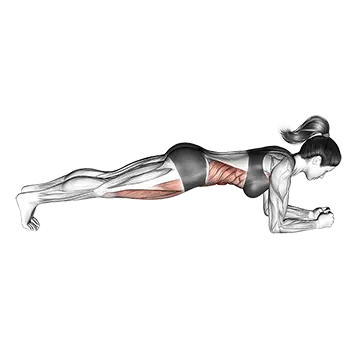
The Front Plank performs forearm plank holds. The pattern builds isometric core for cycling.
For bike racers, the plank builds the isometric core stability essential for cycling posture. Run it for 3 sets of 45 to 90-second holds as primary core work.
Lie face-down on the floor. Prop up on the forearms with elbows under the shoulders. Lift the hips so the body forms a straight line from shoulders to ankles. The core works hard isometrically. Hold for the working interval. The pattern builds the isometric core strength cyclists need – maintaining proper cycling posture through long rides depends on sustained core engagement, transferring power from the legs through the core to the pedals, and resisting the postural breakdown that occurs during fatigue. Strong core endurance supports cycling performance through long stages.
Side Plank
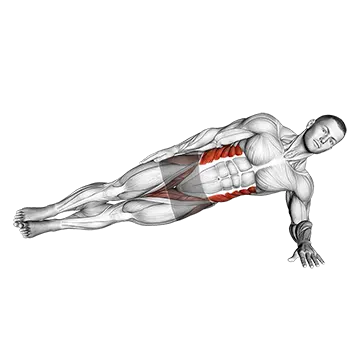
The Side Plank performs side plank holds. The pattern produces lateral core stability for cyclists.
For bike racers, the side plank produces lateral core stability supporting cycling posture. Run it for 3 sets of 30 to 60-second holds per side as lateral core work.
Lie on one side propped up on the elbow with the elbow under the shoulder. Lift the hips so the body forms a straight line from feet to head. The lateral core (obliques and quadratus lumborum) works hard isometrically. Hold for the working interval. Switch sides. The pattern produces lateral core stability – critical for cyclists because cornering, climbing standing on the pedals, and out-of-saddle efforts depend on lateral core strength. Combined with front planks, side planks build complete core stability for cycling.
Superman

The Superman performs the superman exercise. The pattern produces direct erector spinae loading for cyclists.
For bike racers, the superman builds erector spinae strength supporting cycling posture. Run it for 3 sets of 10 to 15 reps as posterior chain work.
Lie face-down on the floor with arms extended overhead. Lift the arms, chest, and legs off the floor simultaneously by contracting the lower back and glutes. Hold briefly at peak. Lower under control. The pattern produces direct erector spinae and glute activation – critical for cyclists because strong erector spinae support the prolonged forward-lean cycling posture, and weak erector spinae contribute to the lower back fatigue and pain common during long cycling stages. Combined with core work, posterior chain strengthening produces integrated cycling support.
Bodyweight Standing Calf Raise

The Bodyweight Standing Calf Raise performs bodyweight calf raises. The pattern strengthens calves for cycling.
For bike racers, calf raises strengthen the calves contributing to cycling power. Run it for 3 sets of 15 to 25 reps as calf strengthening, daily.
Stand on a flat floor with feet hip-width. Lift the heels up to rise onto the balls of the feet by extending at the ankles. Hold briefly at peak. Lower under control with eccentric loading. The pattern produces calf strengthening – critical for cyclists because the calves contribute to the pedaling motion, particularly during the downstroke phase. Strong calves support cycling power through the entire pedal stroke and prevent the calf cramping common during long stages or hot conditions.
Cable Standing Face Pull

The Cable Standing Face Pull performs cable face pulls. The pattern is foundational for cycling posture.
For bike racers, face pulls address cycling-related rounded shoulder posture. Run it for 3 sets of 12 to 15 reps as posterior shoulder work.
Set up a cable with rope attachment at face height. Grip both ends of the rope with palms down. Step back so the cable is taut. Pull the rope toward the face by retracting the shoulder blades and externally rotating the arms. The rear delts and external rotators work hard. Squeeze hard at peak. Return under control. The pattern is foundational for cycling posture correction – the prolonged forward-lean cycling position produces rounded shoulder posture and posterior shoulder weakness. Daily face pulls address these cycling-specific postural issues and prevent the chronic shoulder and neck problems common in cyclists.
How To Program These Workouts
A productive bike racer strength session pulls 5 to 7 exercises from the list above. A common balanced session: barbell squat (foundational legs), barbell Romanian deadlift (posterior chain), dumbbell Bulgarian split squat (unilateral), barbell glute bridge (glute), front plank (core endurance), side plank (lateral core), cable standing face pull (posture). For typical cyclist programming: 1 strength session per week during peak racing season (cycling emphasis) and 2 sessions per week during base/off-season (strength emphasis). Run heavy compound work for 3 to 4 sets of 6 to 10 reps, unilateral work for 3 sets of 8 to 12 reps per leg, core work for 3 sets of 45 to 90-second holds, posterior shoulder for 3 sets of 12 to 15 reps.
Train cyclist strength 1 to 2 times per week year-round. Base/off-season (winter): 2 weekly strength sessions emphasizing strength building. Pre-season: 2 weekly sessions transitioning toward maintenance. Race season: 1 weekly maintenance session prioritizing cycling performance. Tapering: minimal strength work to maintain freshness. Schedule strength work either: 1) on dedicated S&C days separate from key rides, 2) on hard ride days (combine difficulty), or 3) on easy ride days (allow recovery for next hard ride). Avoid heavy strength work the day before key rides or races. Combined with adequate cycling volume, proper nutrition, and recovery, strength training improves cycling performance and dramatically reduces the chronic overuse injuries common in cyclists.
For broader programming, see our best workouts for cyclists and best workouts for triathletes. For specific work, see our how to grow your quads.
Final Thoughts
The best workouts for bike racing deliver real cycling performance improvements through strength and conditioning that targets the specific demands of cycling: foundational leg strength for power, posterior chain for balanced production, unilateral capacity for cycling mechanics, glute strength for hip extension, deep core endurance for posture, lateral core, posterior chain support, calf strengthening, and posture correction for cycling-related issues. The combination of squats, RDLs, Bulgarian split squats, walking lunges, glute bridges, planks, side planks, supermans, calf raises, and face pulls covers every functional pattern of cycling and produces broader athletic development than cycling alone could provide. Many cyclists discover more cycling power, longer endurance, more powerful sprinting and climbing, addressed posterior weakness, fewer overuse injuries, faster recovery, more efficient mechanics, and breakthrough race performances within 8 to 12 weeks of adding consistent strength work. For cyclists seeking better performance, dedicated strength training is one of the most effective interventions available – the research is clear that cyclists who lift outperform those who only ride.
Stay focused on injury prevention plus power development as priorities for bike racing strength training. The most common mistake cyclists make is avoiding strength training entirely (fearing it will compromise cycling performance) or doing inappropriate strength training. The fix: prioritize injury prevention plus power-focused strength training – foundational compound lifts, unilateral leg work, glute strengthening, core endurance, and posterior shoulder work at appropriate volumes (1 to 2 sessions per week) that complement cycling rather than compete with it. Combined with proper cycling training, adequate recovery, and balanced programming, strength training produces the cycling improvements that cycling-only training never achieves. Strength training extends cycling careers and improves performance simultaneously.
Frequently Asked Questions
Should bike racers lift weights?
Yes – properly programmed strength training improves cycling performance and dramatically reduces injury risk. The research consistently shows that cyclists who lift outperform those who only ride. Strength training produces: more cycling power through stronger legs, longer endurance, more powerful sprinting and climbing, addressed posterior chain weakness, fewer overuse injuries, faster recovery, more efficient mechanics, and breakthrough race performances. Modern competitive cyclists all incorporate dedicated strength training. The myth that lifting compromises cycling is misplaced – moderate loads with proper programming improve performance.
How can cyclists generate more power?
Heavy compound strength training plus cycling specifics. Heavy squats and Romanian deadlifts build the foundational leg strength that determines cycling power output. Bulgarian split squats build unilateral capacity matching cycling mechanics. Glute bridges address glute weakness common in cyclists. Combined with appropriate cycling training (interval work, threshold training), proper nutrition, adequate recovery, and consistent training over months, this comprehensive approach produces measurable cycling power improvements within 8 to 12 weeks.
How can cyclists prevent lower back pain?
Posterior chain strengthening plus core endurance plus posture correction. Strong erector spinae (supermans) and glutes (glute bridges) address the posterior chain weakness underlying cycling-related lower back pain. Core endurance (planks, side planks) supports proper cycling posture. Face pulls address rounded shoulder posture. Combined with proper bike fit and consistent training, this approach prevents the lower back issues common in cyclists who only train cycling.
How often should cyclists train strength?
1 to 2 sessions per week year-round. Off-season: 2 weekly sessions emphasizing strength. Race season: 1 weekly maintenance session. Tapering: minimal strength work. Schedule strength work on dedicated S&C days, hard ride days, or easy ride days based on personal recovery. Avoid heavy strength work before key rides or races. Combined with adequate cycling volume and proper nutrition, this frequency improves performance without interfering with cycling.
Will lifting weights make me a slower cyclist?
No – properly programmed strength training improves cycling performance. The myth of lifting making cyclists slower comes from improperly programmed bodybuilding-style training. Quality cyclist-focused strength training prioritizes movement-specific patterns, moderate loads, low to moderate volume, and cyclist-specific patterns rather than maximum hypertrophy. Cyclists using moderate loads with proper programming typically maintain or reduce body weight while building functional strength that improves cycling power and durability.