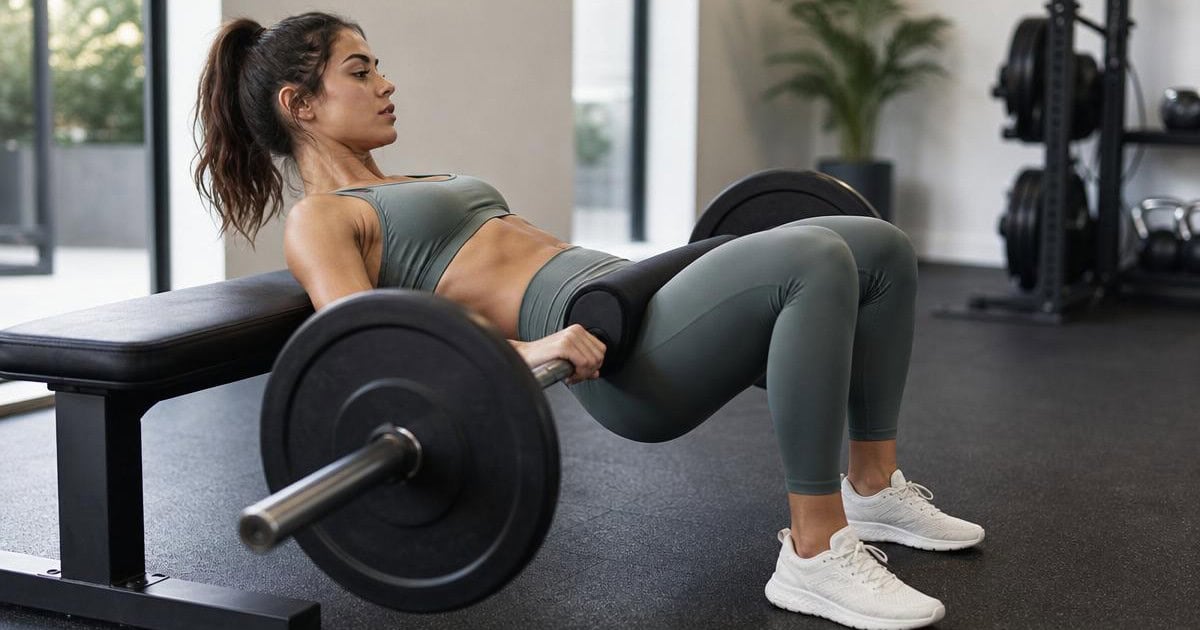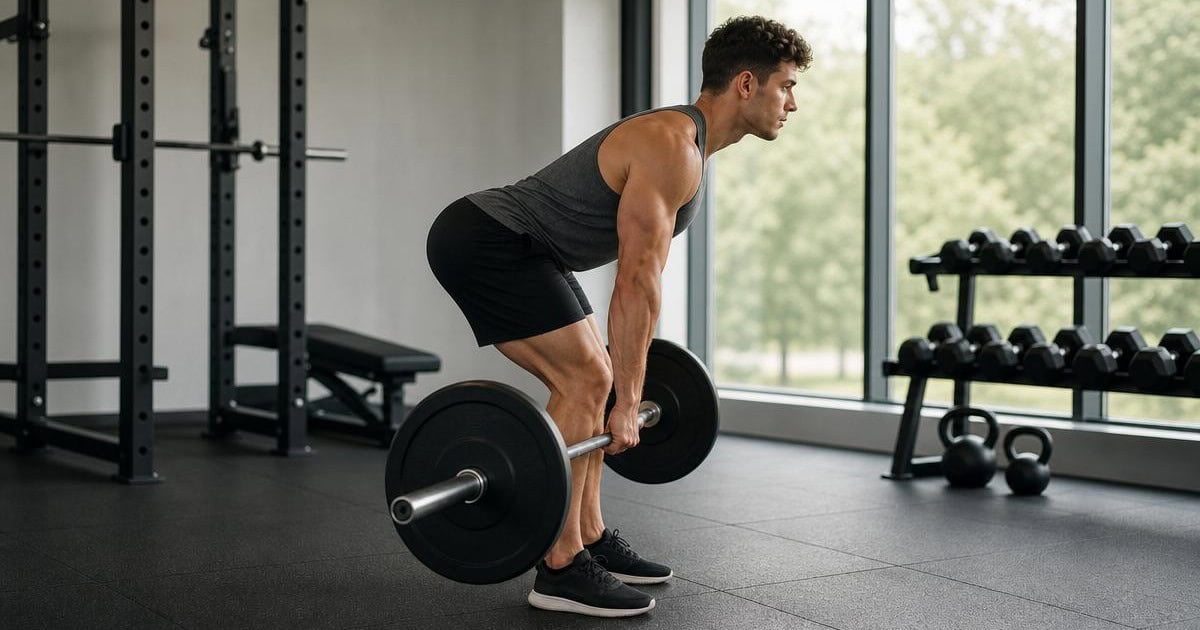
Cycling-focused strength training transforms power output and reduces injury risk by building the lower-body strength, posterior chain power, and core stability that high-output cycling demands. Cyclists who consistently train strength 1 to 2 times per week alongside ride volume see measurable improvements: higher power output through stronger compound leg strength, better hill climbing performance through stronger glute hip extension, improved sprinting power through anaerobic strength capacity, reduced lower back issues through stronger core and posterior chain, better seated and aero position maintenance through core stability, and reduced knee/hip injury risk through unilateral strength balance. The most effective cyclist-focused strength programs prioritize compound bilateral movements (squats, Romanian deadlifts, hip thrusts) for foundational leg and glute power, dedicated unilateral patterns (Bulgarian split squats, walking lunges, step-ups) that mirror cycling’s alternating leg drive, posterior chain emphasis (Romanian deadlifts, hip thrusts) for forward propulsion power, and core stability work (planks, side planks, dead bugs) for posture and power transfer.
Below are ten effective strength exercises for cyclists that cover bilateral compound work (barbell squat, dumbbell goblet squat, hip thrusts, barbell Romanian deadlift), unilateral patterns mirroring pedal stroke (dumbbell Bulgarian split squat, dumbbell walking lunge, dumbbell step up), and core stability work (front plank, side plank, dead bug). Together they form a complete cyclist-focused strength program. A 30 to 45-minute session pulled from this list, performed 1 to 2 times per week alongside cycling volume, produces strong strength development that improves cycling performance and reduces injury risk.
Barbell Squat

The Barbell Squat performs back squats with a barbell. The compound pattern hits quads, glutes, and hamstrings — all primary muscles in cycling.
For cyclists, the barbell squat builds the foundational lower-body power that drives pedaling output. Run it for 3 to 4 sets of 5 to 8 reps as primary leg strength work.
Set up a barbell on a rack at upper back height. Position the bar across the upper back. Step back from the rack with feet shoulder-width. Squat down by bending the knees and hips. Lower until the thighs are parallel to the floor. Drive back up through the heels by extending the knees and hips. The pattern builds the foundational quad and glute strength that translates directly to cycling power output. Heavy compound squat strength is a strong predictor of cycling power for most riders.
Dumbbell Bulgarian Split Squat
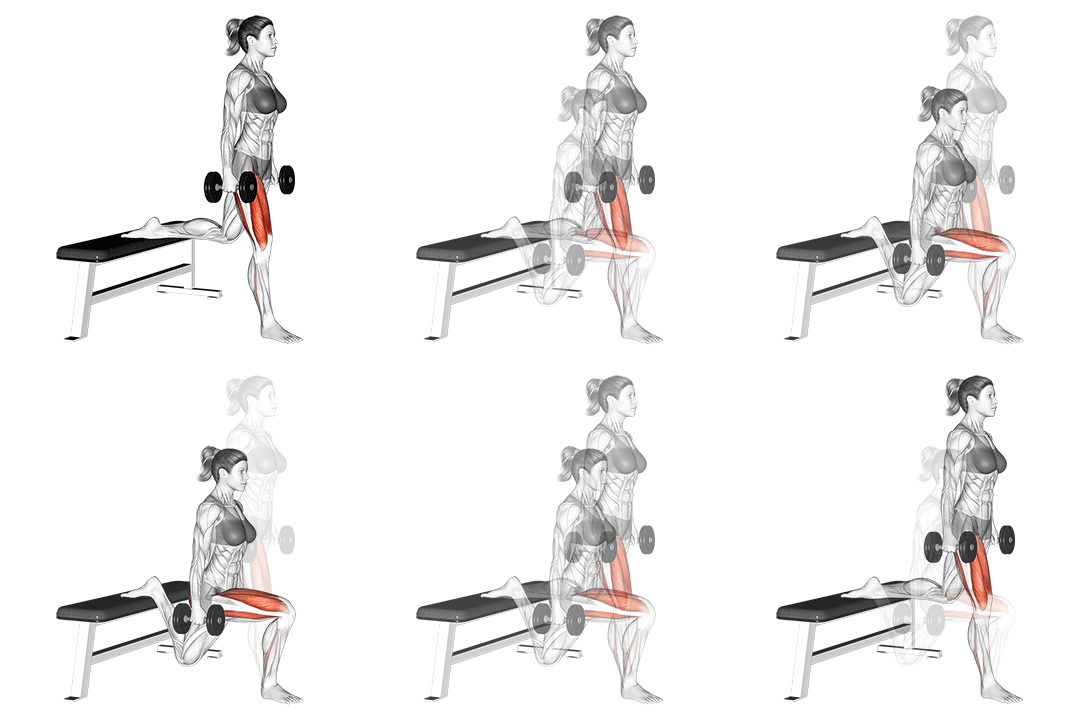
The Dumbbell Bulgarian Split Squat performs Bulgarian split squats with dumbbells. The unilateral pattern mirrors cycling’s single-leg pedal stroke.
For cyclists, the Bulgarian split squat builds unilateral leg strength that translates directly to pedaling. Run it for 3 sets of 8 to 10 reps per leg as primary unilateral work.
Stand 2 to 3 feet in front of a bench. Place the top of the rear foot on the bench behind. Hold dumbbells in each hand at the sides. Squat down by bending the front knee. Lower until the front thigh is parallel to the floor. Drive back up through the front heel. The pattern hits each leg individually with full loading and develops the single-leg strength critical for cycling pedal stroke power. Switch legs between sets.
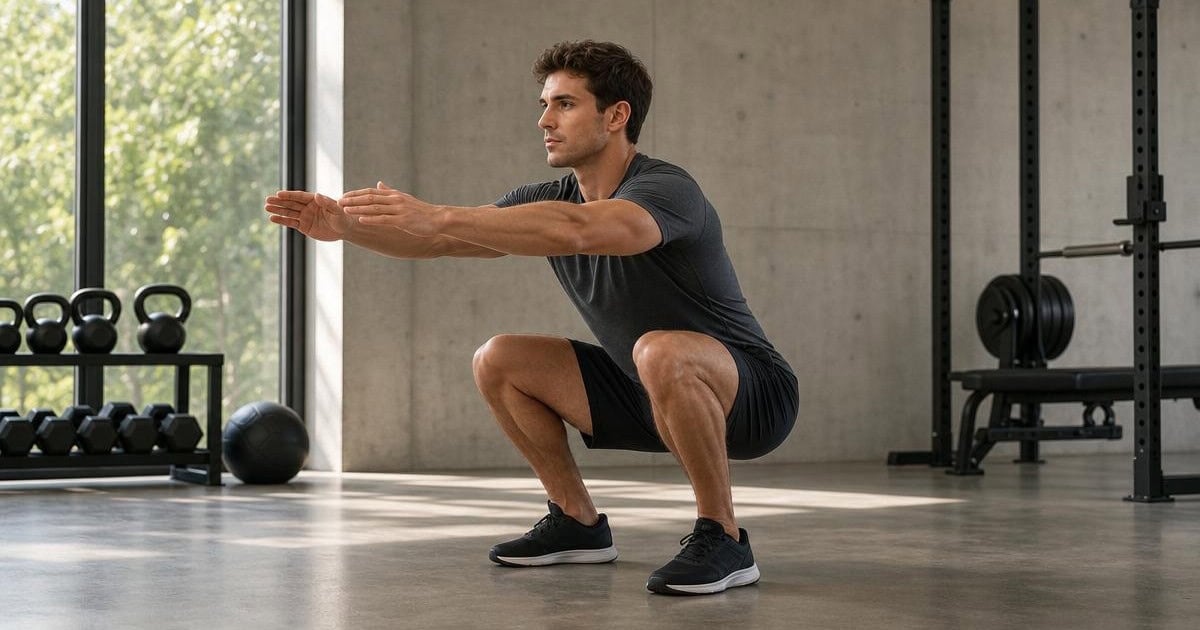
Dumbbell Goblet Squat
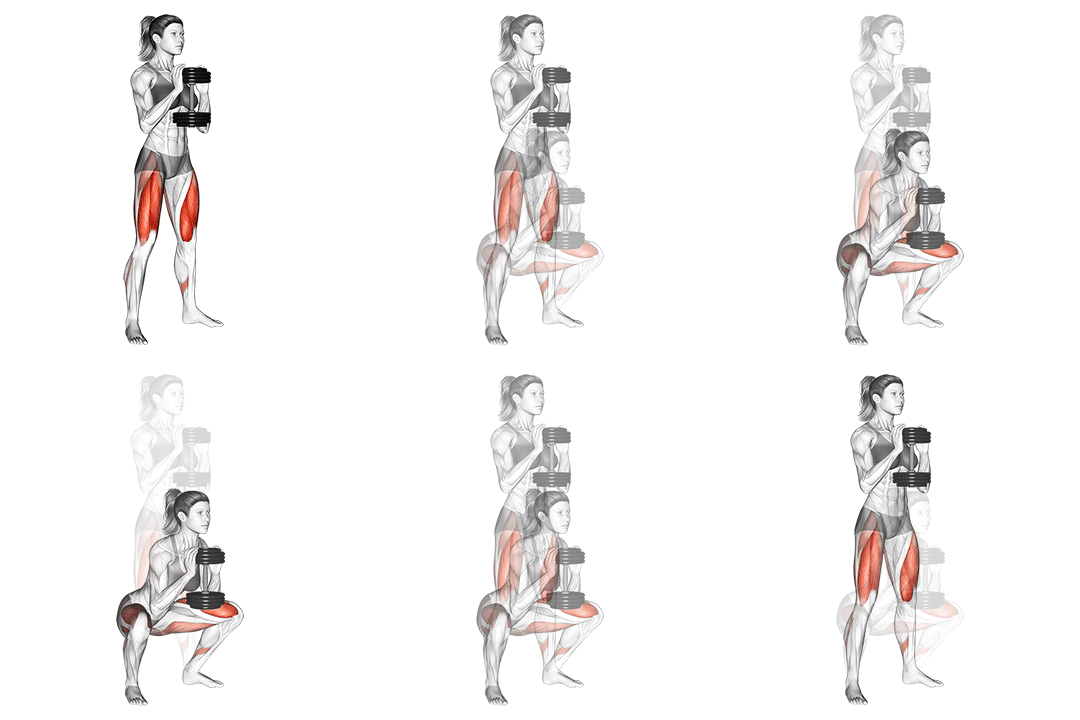
The Dumbbell Goblet Squat performs squats holding a dumbbell at the chest. The pattern produces compound leg work with upright torso emphasis.
For cyclists, the goblet squat builds compound leg strength with the upright posture cycling requires. Run it for 3 sets of 10 to 12 reps as compound leg work.
Stand with feet slightly wider than shoulder-width. Hold a dumbbell vertically at the chest with both hands. Squat down by bending the knees and hips while keeping the back flat and chest up. Lower until the thighs are parallel to the floor. The dumbbell at the chest forces upright torso position similar to cycling posture. Drive back up through the heels. The pattern produces strong compound leg work that develops cycling power.
Hip Thrusts

The Hip Thrusts perform hip thrust motion with the upper back on a bench and weight on the hips. The pattern produces extreme glute hip extension critical for cycling.
For cyclists, the hip thrust builds the glute power that drives pedaling output. Strong glutes are one of the leading predictors of cycling power. Run it for 3 to 4 sets of 8 to 12 reps as primary glute work.
Set up with the upper back resting on a bench. Sit with the hips on the floor and knees bent. Position weight across the hips. Drive through the heels to lift the hips up by extending the hips fully. The body forms a straight line from shoulders to knees at the top. The glutes work extraordinarily hard through hip extension. Squeeze hard at peak hip extension. Lower under control. The pattern produces some of the most effective glute loading for cyclists.
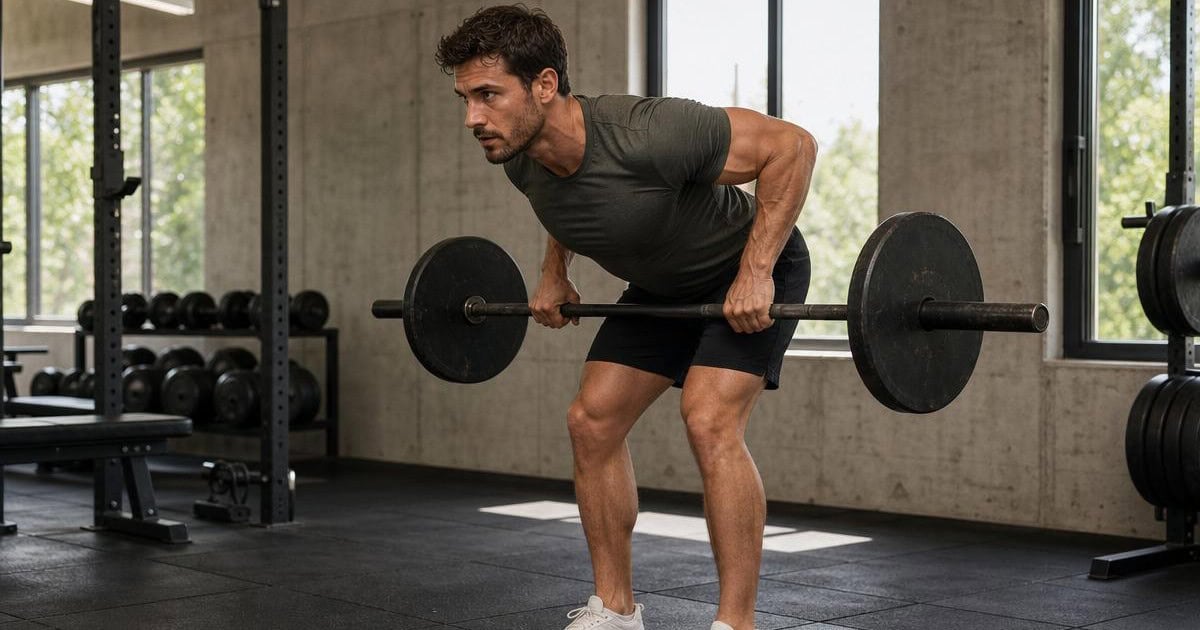
Barbell Romanian Deadlift

The Barbell Romanian Deadlift performs Romanian deadlifts with a barbell. The hip-hinge pattern builds posterior chain critical for cycling power.
For cyclists, the RDL builds hamstring and glute power for the upstroke and forward propulsion phases of pedaling. Run it for 3 sets of 8 to 12 reps as primary posterior chain work.
Stand with feet hip-width holding a barbell at the front of the thighs. Hinge at the hips by sending them backward while keeping the back flat and legs nearly straight. Lower the barbell along the legs until the hamstrings stretch deeply. Drive back to standing by extending the hips. Squeeze the glutes and hamstrings hard at the top. The pattern builds the posterior chain power critical for cycling, particularly for hill climbing and high-power efforts.
Dumbbell Walking Lunge

The Dumbbell Walking Lunge performs walking lunges with dumbbells. The dynamic unilateral pattern mirrors pedaling motion.
For cyclists, walking lunges develop dynamic single-leg strength. The forward-stepping pattern mirrors cycling’s alternating leg drive. Run it for 3 sets of 16 to 20 total steps as compound dynamic work.
Stand with feet hip-width holding dumbbells in each hand at the sides. Step forward with one leg into a lunge position, lowering the back knee toward the floor. Drive through the front heel to stand up while bringing the rear leg forward into the next lunge step. Continue alternating. The dynamic forward motion mirrors cycling’s alternating leg pattern. The pattern produces unilateral strength with athletic transfer.
Front Plank
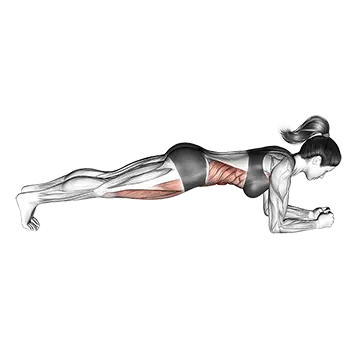
The Front Plank performs forearm plank holds. The pattern builds core stability critical for power transfer in cycling.
For cyclists, the plank builds the core that maintains posture and transfers power efficiently from upper body to legs. Weak core leaks watts. Run it for 3 sets of 30 to 60-second holds as primary core work.
Lie face-down on the floor. Prop up on the forearms with elbows under the shoulders. Lift the hips so the body forms a straight line from shoulders to ankles. The core works hard isometrically to maintain the position. Hold for the working interval. The pattern builds the core stability cyclists need to maintain proper posture on the bike and efficiently transfer power from upper body to legs without losing energy through trunk movement.
Side Plank
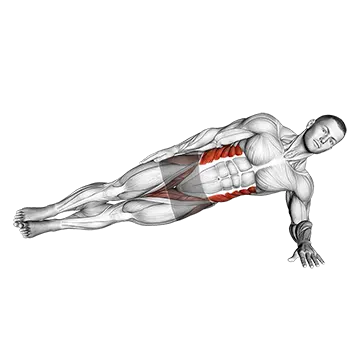
The Side Plank performs side plank holds. The pattern builds lateral core strength for cycling stability.
For cyclists, the side plank builds the obliques and lateral stability needed to keep the bike steady during high-power efforts. Run it for 3 sets of 30-second holds per side as lateral core work.
Lie on one side with the body straight. Prop up on one forearm with the elbow under the shoulder. Lift the hips up so the body forms a straight line from feet to head. The obliques and glute medius work hard. Hold for the working interval. Switch sides between sets. The pattern builds the lateral core strength that prevents bike sway during sprints and hard efforts.
Dumbbell Step Up

The Dumbbell Step Up performs step-ups with dumbbells. The single-leg drive pattern mirrors pedaling.
For cyclists, step-ups build single-leg power that mirrors the single-leg drive of each pedal stroke. Run it for 3 sets of 10 to 12 reps per leg as unilateral work.
Stand in front of a sturdy bench or platform holding dumbbells in each hand at the sides. Place one foot fully on the platform. Drive through the heel of the platform foot to step up. The quad and glute of the working leg work through extension. Squeeze at the top. Step back down to the floor under control. The pattern produces unilateral strength that translates to cycling power.
Dead Bug

The Dead Bug performs dead bug core exercise. The pattern builds deep core stability for cycling posture.
For cyclists, the dead bug develops deep core stability that maintains proper bike posture. Run it for 3 sets of 10 to 12 reps per side as deep core work.
Lie on the back with arms extended toward the ceiling and knees bent at 90 degrees with shins parallel to the floor. Slowly extend one leg toward the floor while extending the opposite arm overhead. Keep the lower back pressed firmly into the floor. Return to start and switch sides. The deep core works hard. The pattern builds the deep core stability cyclists need for maintaining aero and seated positions.
How To Program These Workouts
A productive cyclist-focused strength session pulls 4 to 6 exercises from the list above. A common balanced session: barbell squat (compound), dumbbell Bulgarian split squat (unilateral), hip thrusts (glute), front plank (core), barbell Romanian deadlift (posterior chain). For power focus: barbell squat, hip thrusts, barbell Romanian deadlift, dumbbell Bulgarian split squat. For unilateral focus: dumbbell Bulgarian split squat, dumbbell walking lunge, dumbbell step up. Run compound work for 3 to 4 sets of 5 to 8 reps, unilateral work for 3 sets of 8 to 10 reps per leg, hip thrust work for 3 to 4 sets of 8 to 12 reps, and core work for 3 sets of 30 to 60-second holds. Total session covers 12 to 18 working sets focused on cycling-specific strength.
Train strength 1 to 2 times per week as part of complete cycling programming. Most successful cyclist programs schedule strength work either: 1) on rest days for full recovery, or 2) immediately after an easy ride (combined recovery day). Avoid heavy strength work the day before hard cycling intervals or races. Athletes in off-season build phases include 2 weekly strength sessions, athletes in race phases reduce to 1 maintenance session. Cyclists should prioritize strength work in the off-season (4 to 6 months before A-races) for maximum strength gains, then transition to maintenance during the race season.
For broader cycling programming, see our best cycling strength workouts and best workouts for mountain biking. For specific power work, see our best leg workouts for athletes.
Final Thoughts
The best workouts for cyclists deliver real cycling performance improvements through strength training that targets the specific demands of high-output cycling: lower-body strength for power output, posterior chain power for hill climbing and sprinting, unilateral strength for pedal stroke balance, and core stability for posture and power transfer. The combination of barbell squats, Bulgarian split squats, hip thrusts, Romanian deadlifts, walking lunges, step-ups, and plank variations covers every functional pattern of cycling and produces broader athletic development than ride volume alone would suggest. Many cyclists discover higher power output, faster climbing, stronger sprints, and reduced lower back issues within 8 to 12 weeks of adding consistent strength work to their training. For cyclists seeking higher functional threshold power, better hill climbing, stronger sprint efforts, reduced injuries, or broader athletic development, dedicated strength training is one of the most effective interventions available.
Stay focused on cycling-specific strength rather than maximum strength. The most common mistake cyclists make with strength training is either avoiding it (out of fear of bulking) or training too heavy/too often (which interferes with cycling recovery). The fix: prioritize moderate to heavy loads with strict form, 1 to 2 strength sessions per week, and place sessions away from hard cycling days. Cyclists need cycling-specific strength, not bodybuilder-level mass. Quality strength work in moderate volumes produces faster cycling and reduced injuries without the bulk concerns that scare cyclists away from the weights room.
Frequently Asked Questions
Should cyclists lift weights?
Yes very effectively. Research consistently shows cyclists who strength train 1 to 2 times per week produce higher power output and ride faster than cyclists who only ride. Strength training produces: higher functional threshold power, better hill climbing, stronger sprint efforts, reduced lower back issues, and improved injury resilience. The fear of bulking from strength training is misplaced – cyclists using moderate loads 1 to 2 times per week build cycling-specific strength without significant mass gain that would slow them down.
How often should cyclists do strength training?
1 to 2 sessions per week works for most cyclists. Athletes in off-season build phases (4 to 6 months before A-races) include 2 weekly strength sessions for maximum strength development. Athletes in race season reduce to 1 maintenance session per week. Schedule strength work either on cycling rest days for full recovery, or immediately after an easy ride. Avoid heavy strength work the day before hard cycling intervals or races. The off-season is the best time for cyclist strength gains.
Are squats good for cyclists?
Yes very effectively. Barbell squats build the foundational quad, glute, and hamstring strength that translates directly to cycling power output. Heavy compound squat strength is a strong predictor of cycling power for most riders. Most successful cyclist programs include squats as primary compound mass work, typically 5 to 8 reps. Combined with hip thrusts (for glute hip extension power) and Romanian deadlifts (for posterior chain power), squats form the foundation of cycling-specific strength.
Will lifting weights make me a slower cyclist?
No – the opposite. Properly programmed strength training (moderate to heavy loads, 1 to 2 times per week, away from hard cycling days) consistently improves cycling performance: higher power, faster climbing, stronger sprints. The myth of strength training slowing cyclists comes from improperly programmed strength work. Quality strength work at appropriate volumes builds cycling-specific strength without unwanted bulk and produces measurable performance improvements within 8 to 12 weeks.
How heavy should cyclists lift?
Moderate to heavy with strict form. Compound work like barbell squats, hip thrusts, and Romanian deadlifts uses heavy weights (5 to 8 reps with 3 to 4 sets). Unilateral work uses moderate weights (8 to 10 reps per leg). Core work uses bodyweight or moderate loads (30 to 60-second holds). Most successful cyclist programs progressively load over training cycles while never sacrificing form. The goal is cycling-specific strength, not bodybuilder-level maximum strength.