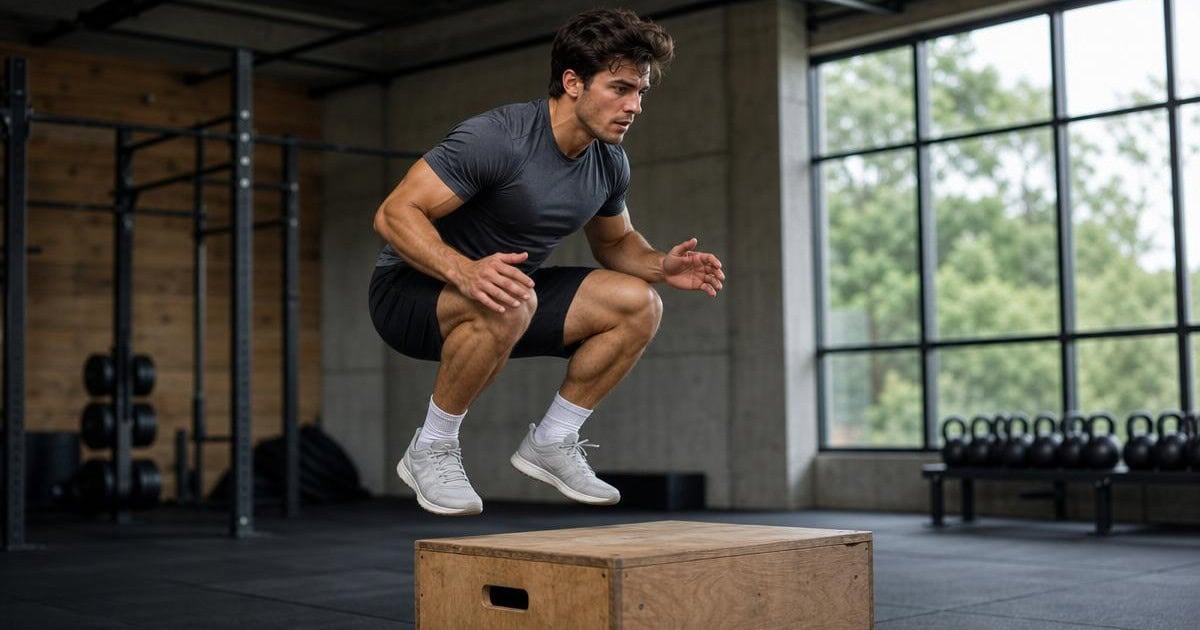
Vertical jump training produces real jumping ability improvements through exercises that build the specific physical qualities that produce vertical leap: maximum strength (the foundation that determines force production capacity), explosive power (rate of force development for converting strength into fast contractions), reactive power (stretch-shortening cycle utilization for jump-after-jump scenarios), and triple extension (coordinated hip, knee, and ankle extension that produces vertical lift). The format works particularly well for athletes in sports where vertical jump matters (basketball, volleyball, football, soccer) because dedicated jump training over 8 to 12 weeks produces measurable inch increases that pure sport play rarely produces. Most athletes who consistently follow a structured vertical jump training program see 2 to 6 inches of vertical jump improvement within 8 to 12 weeks, with continued gains over 6 to 12 months of dedicated training.
Below are ten effective vertical jump exercises that cover maximum strength (barbell squat), explosive power (jump squat, weighted squat jump, kettlebell swing, RDL to jump shrug), reactive power (broad jump to vertical, depth jump to broad jump), unilateral jumping (single-leg box jump, single-leg jumping glute bridge), and form-specific training (knee tuck jump). Together they form a complete vertical jump program that builds every physical quality vertical jumping demands. A 30 to 45-minute session pulled from this list, performed 2 to 3 times per week alongside sport practice, produces strong vertical jump development for any sport that demands jumping ability.
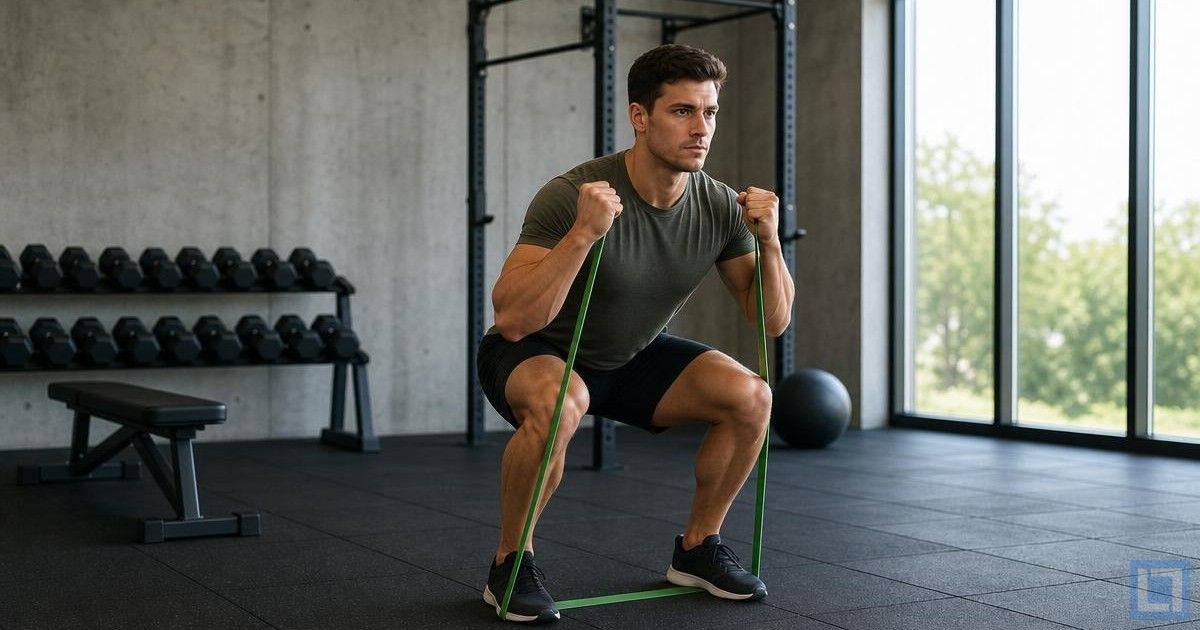
Barbell Squat

The Barbell Squat performs full-depth squats with a barbell across the upper back. The pattern produces foundational lower body strength that drives vertical jump improvements through increased force production capacity.
For vertical jump training, the barbell squat is one of the most important exercises that exists. The pattern hits the quads, glutes, and posterior chain through heavy loading that builds the maximum force production capacity vertical jumping requires. Run it for 4 to 5 sets of 3 to 5 reps as primary heavy strength work, foundational to vertical jump development.
Set up a barbell at the back of a power rack at upper back height. Position the bar across the upper back (high or low bar position) and grip just outside shoulder-width. Step back from the rack and stand with feet shoulder-width. Squat down by sitting the hips back and bending the knees until the thighs are at least parallel to the floor. Drive back to standing through the heels by extending the knees and hips. Maintain neutral spine throughout.
Jump Squat

The Jump Squat performs explosive squat motion ending with a vertical jump, then absorbs the landing back into the squat. The pattern produces explosive power loading that translates directly to vertical jump performance.
For vertical jump training, the jump squat is one of the most directly applicable exercises that exists. The pattern hits the legs through dynamic concentric extension that mirrors vertical jump mechanics. Run it for 4 to 5 sets of 3 to 5 reps with full recovery (90 to 180 seconds between sets) as primary explosive power work.
Stand with feet shoulder-width. Squat down by sitting the hips back. Explosively extend the legs and hips to jump straight up vertically as high as possible. Land softly with bent knees, immediately resetting for the next rep. Use full recovery between reps and sets to maintain maximum jump height. The explosive extension and full power output build the rate of force development vertical jumping requires.
Single Leg Box Jump

The Single Leg Box Jump performs explosive single-leg jumps onto an elevated surface. The pattern produces strong unilateral power loading critical for sport-specific vertical jumping (basketball, volleyball, athletic jumps off one leg).
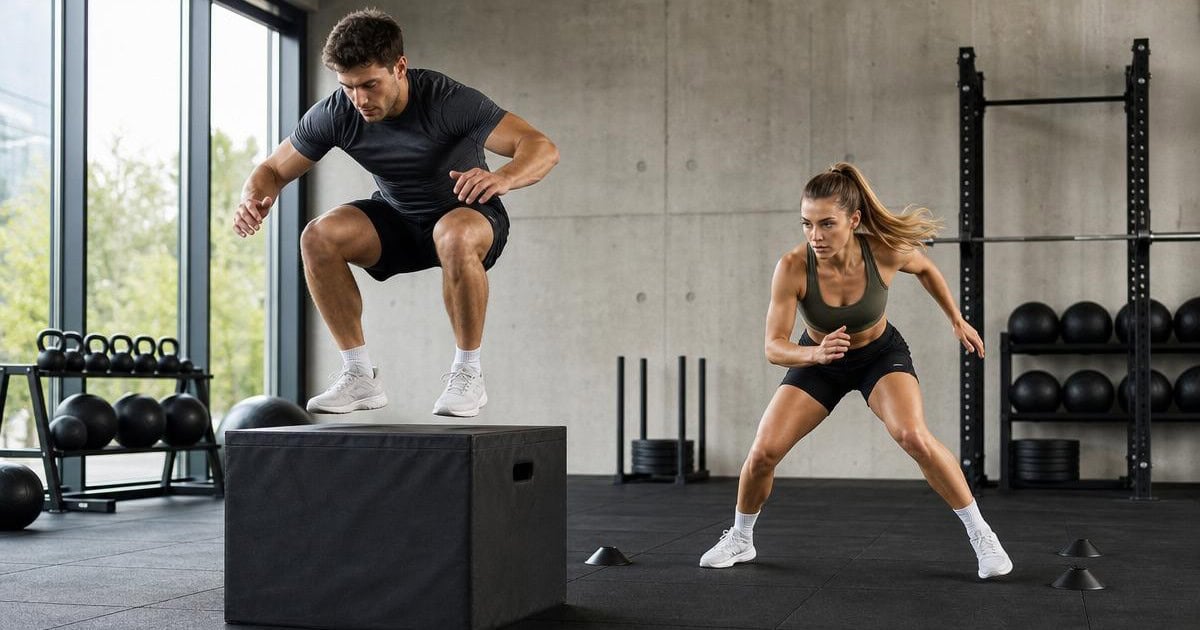
For vertical jump training, the single-leg box jump produces strong unilateral power loading that translates to sport-specific jumping. The pattern hits the legs through unilateral explosive loading. Run it for 3 to 4 sets of 3 to 5 reps per leg as advanced unilateral power work, with full recovery between sets.
Stand on one foot in front of a stable plyo box (12 to 24 inches high depending on ability). Squat down slightly on the working leg. Explosively jump from the single leg up onto the box, landing on both feet on the box. Step back down (don’t jump back) and reset on the working leg. Switch legs between sets. Use a box height that allows a clean controlled landing; jumping too high produces injury risk.
Broad Jump to Vertical

The Broad Jump to Vertical combines a horizontal broad jump with an immediate vertical jump on landing. The pattern trains the rapid eccentric-to-concentric transition critical for jump-after-jump scenarios in sport.
For vertical jump training, the broad jump to vertical produces strong combined horizontal and vertical power work with rapid transition. The pattern hits the stretch-shortening cycle critical for athletic jumping. Run it for 3 sets of 4 to 5 reps as advanced reactive power work, with full recovery between reps.
Stand with feet shoulder-width at one end of a clear space. Squat down and swing the arms back, then explosively extend through the legs and arms to perform a horizontal broad jump as far as possible. Land softly on both feet and immediately rebound into a maximum vertical jump. Land softly and reset. The rapid transition from horizontal landing to vertical takeoff trains reactive power.
Depth Jump to Broad Jump

The Depth Jump to Broad Jump steps off a low box, lands, and immediately rebounds into a horizontal broad jump. The pattern produces strong reactive power loading through the stretch-shortening cycle.
For vertical jump training, the depth jump to broad jump is one of the most effective reactive power exercises that exists. The pattern hits the stretch-shortening cycle through high-intensity drop landing followed by rapid concentric power. Run it for 3 sets of 3 to 4 reps as advanced plyometric work, with full recovery between reps.
Stand on top of a low box (12 to 18 inches). Step off the box (do not jump off) and land with bent knees on both feet. Immediately rebound into a maximum broad jump for distance. Land softly. Reset on the box. The rapid landing-to-jumping transition produces strong reactive power work. Use a low box; high boxes produce excessive landing force without proportional power benefit.
Knee Tuck Jump

The Knee Tuck Jump performs maximum vertical jumps while tucking the knees toward the chest at the peak. The pattern produces strong vertical power loading combined with hip flexor activation.
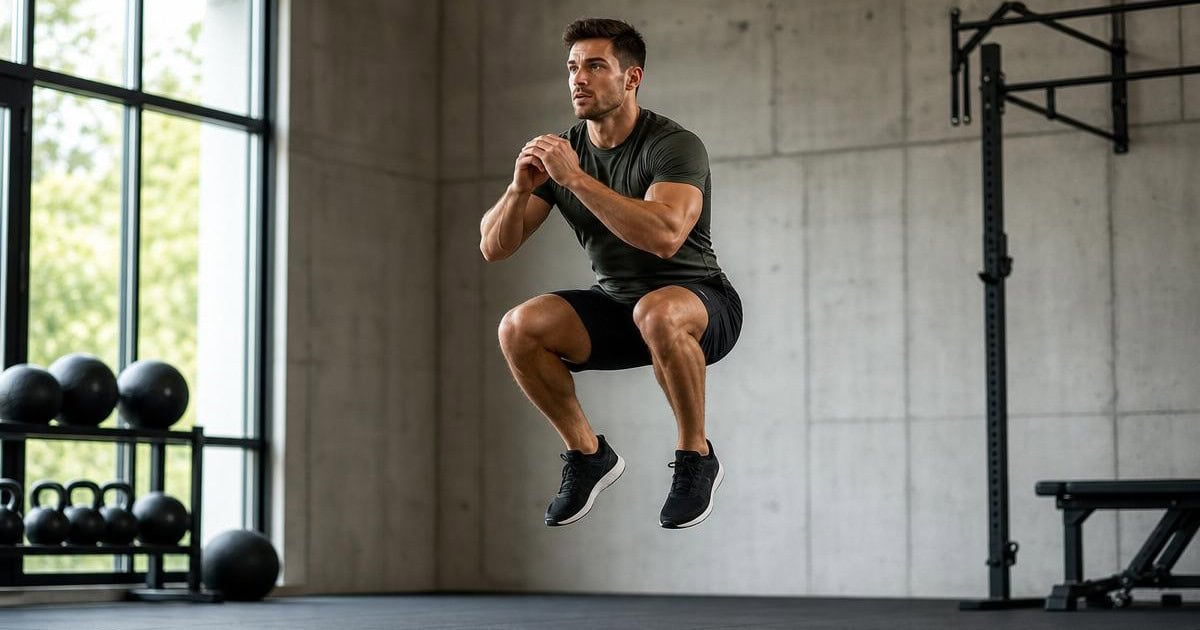
For vertical jump training, the knee tuck jump produces strong vertical power loading. The pattern hits the legs and hip flexors through maximum vertical extension followed by tuck. Run it for 3 sets of 5 to 8 reps as explosive jump training, with 60 to 90 seconds rest between sets.
Stand with feet shoulder-width. Squat down slightly and swing the arms back. Explosively extend through the legs and arms to jump straight up vertically. At the peak of the jump, drive the knees up toward the chest in a tuck position. Land softly with bent knees and immediately reset for the next rep. The tuck adds hip flexor work and reinforces vertical jumping form.
Kettlebell Swing

The Kettlebell Swing performs powerful hip-hinge swings with a kettlebell, driving the bell forward and up through hip extension. The pattern produces strong posterior chain power loading that translates directly to vertical jump performance through trained hip extension speed.
For vertical jump training, the kettlebell swing is one of the most effective posterior chain power exercises that exists. The pattern hits the glutes and hamstrings through explosive hip extension that mirrors the hip drive vertical jumping requires. Run it for 4 sets of 8 to 12 reps as primary posterior chain power work.
Stand with feet hip-width holding a kettlebell with both hands in front of the body. Hinge at the hips by sending them backward and swing the kettlebell back between the legs. Explosively drive the hips forward to swing the kettlebell up to chest height. Use the hips not the arms for power. Let the kettlebell swing back between the legs and immediately drive again. The explosive hip extension trains the same pattern that powers vertical jumps.
Dumbbell RDL to Jump Shrug

The Dumbbell RDL to Jump Shrug combines a Romanian deadlift hip-hinge with an explosive jump shrug at the top. The pattern produces strong combined posterior chain loading and explosive triple extension critical for vertical jumping.
For vertical jump training, the RDL to jump shrug produces strong combined posterior chain strength and explosive triple extension work. The pattern hits the entire posterior chain through hip-hinge plus explosive extension. Run it for 4 sets of 5 to 6 reps as combined strength and power work.
Stand with feet hip-width holding dumbbells in front of the thighs. Hinge at the hips to lower the dumbbells along the legs (Romanian deadlift). At full hinge, explosively reverse direction by extending the hips powerfully, finishing with a shrug of the shoulders and a slight jump off the floor. Land and immediately reset for the next rep. The combined hinge-and-explode pattern trains the explosive hip extension vertical jumping demands.
Single Leg Jumping Glute Bridge

The Single Leg Jumping Glute Bridge performs explosive single-leg glute bridges that finish with a jumping motion. The pattern produces strong combined unilateral hip extension power critical for sport-specific single-leg vertical jumping.
For vertical jump training, the single-leg jumping glute bridge produces strong unilateral hip extension power. The pattern hits the glutes and hamstrings through dynamic single-leg loading. Run it for 3 sets of 6 to 8 reps per leg as unilateral power work.
Lie flat on the back with one foot planted on the floor (knee bent) and the other leg extended out straight. Drive the hips up explosively into a single-leg glute bridge, generating enough force at the top to slightly leave the floor with the planted foot. Land softly back on the planted foot and immediately reset for the next rep. Switch legs between sets. The explosive single-leg pattern translates to single-leg jumping ability.
Weighted Squat Jump with Plate

The Weighted Squat Jump with Plate performs jump squats while holding a weight plate against the chest. The pattern produces moderate-load explosive power work that bridges between heavy strength and unloaded jumps.
For vertical jump training, the weighted squat jump bridges heavy strength work and unloaded plyometric jumps. The pattern hits the legs through moderate-load explosive extension. Run it for 3 to 4 sets of 3 to 5 reps as bridge power work between heavy squats and unloaded jumps.
Stand with feet shoulder-width holding a weight plate (10 to 25 pounds typically) against the chest with both hands. Squat down by sitting the hips back. Explosively extend through the legs and hips to jump straight up vertically as high as possible while maintaining the plate position. Land softly with bent knees and immediately reset for the next rep. Use a moderate weight that allows close-to-maximum jump height; too heavy reduces the power benefit.
How To Program These Workouts
A productive vertical jump program organizes these exercises across 2 to 3 weekly sessions, structured around the strength-power continuum. A common 2-day weekly structure: Day 1 (Heavy Strength and Power): barbell squat (heavy strength), jump squat (explosive power), kettlebell swing (posterior chain power), single-leg jumping glute bridge (unilateral power). Day 2 (Reactive Power and Plyometrics): weighted squat jump (bridge power), depth jump to broad jump (reactive), broad jump to vertical (combined), single-leg box jump (unilateral plyometric), knee tuck jump (form work). Run heavy strength work for 4 to 5 sets of 3 to 5 reps, explosive power work for 4 to 5 sets of 3 to 6 reps with full recovery (90 to 180 seconds between sets), and plyometric work for 3 sets of 3 to 5 reps with full recovery. Total session covers 12 to 18 working sets focused on jump development.
Train vertical jump sessions 2 to 3 times per week alongside sport practice or general training. The combination of strength work, explosive power work, and plyometric work produces strong but recoverable training stimulus when properly programmed. Most successful vertical jump programs include: 1) 2 to 3 weekly jump-focused strength sessions of 30 to 45 minutes, 2) full recovery between sets and sessions (the explosive nature of the work demands fresh nervous system), 3) progressive periodization (start with strength emphasis, transition to power emphasis, peak with plyometric emphasis over 8 to 12 weeks), and 4) reduced volume in the final 1 to 2 weeks before testing or competition. Avoid heavy jump training 2 to 3 days before key tests or games.
For broader athletic programming, see our best workouts for explosive legs and best workouts for power. For specific basketball training, see our best workouts for basketball.
Final Thoughts
The best workouts to increase vertical jump deliver real measurable jumping ability improvements through exercises that build the specific physical qualities vertical leaping demands: maximum strength, explosive power, reactive power, and triple extension. The combination of heavy squats, explosive jump variations, plyometrics, and unilateral work covers every physical demand of vertical jumping and produces broader development than sport play alone. For athletes who want measurable inch increases on their vertical (2 to 6+ inches in 8 to 12 weeks for most athletes), want to dunk a basketball or spike higher in volleyball, want to improve their athletic explosiveness for any sport that demands jumping, dedicated vertical jump training is one of the most effective investments athletes can make.
Stay focused on strength foundation and full recovery. The most common vertical jump training mistake is skipping the strength foundation (heavy squats and pulls) and jumping directly to plyometric work without the underlying strength to support it. The fix: prioritize heavy strength work (barbell squat, kettlebell swing) for 4 to 6 weeks before transitioning emphasis to explosive power and plyometric work. The second most common mistake is insufficient recovery between sets and sessions; explosive jump work demands a fresh nervous system, and incomplete recovery produces reduced jump heights and increased injury risk. Quality high-intensity training with full recovery produces stronger results than high-volume training that compromises explosive output.
Frequently Asked Questions
How long does it take to increase vertical jump?
Two to six inches of vertical jump improvement within 8 to 12 weeks for most athletes who follow a structured program. Continued gains over 6 to 12 months can produce 4 to 10+ inches of total improvement for dedicated athletes. The rate of improvement depends on training age (newer trainees gain faster), starting strength levels (stronger athletes have higher ceilings), and program quality (structured periodization beats random training). Most athletes see noticeable improvements within 4 to 6 weeks of dedicated training.
What’s the best exercise to increase vertical jump?
The barbell squat for the foundation, plus dedicated jump training for the conversion. The barbell squat builds the maximum strength that determines force production capacity, but strength alone doesn’t produce jumping; it must be converted to explosive power through dedicated jump work (jump squats, kettlebell swings, plyometrics). Most successful vertical jump programs include both heavy strength work and explosive jump training in the same program, with the proportional emphasis shifting toward jumps as the program progresses.
Should I lift heavy or do plyometrics for vertical jump?
Both in proper sequence. Heavy strength work (barbell squats) builds the foundational strength that determines maximum force production. Plyometric work (depth jumps, jump squats) converts that strength into explosive power and reactive ability. Most successful vertical jump programs use both: 4 to 6 weeks of strength emphasis (heavy squats, posterior chain work), then 4 to 6 weeks of power emphasis (jump squats, kettlebell swings), then 2 to 4 weeks of reactive power emphasis (plyometrics, depth jumps). The sequence matters; jumping immediately to plyometrics without strength foundation produces injury risk and limited gains.
How often should I train vertical jump?
Two to three times per week works for most athletes. The high-intensity nature of explosive jump training demands full nervous system recovery between sessions; daily jump training typically produces overuse injuries and reduced gains rather than accelerated progress. Most successful programs include 2 to 3 weekly jump-focused sessions plus 1 to 2 weekly recovery sessions or sport practice. The total weekly jump volume should be moderate (12 to 20 high-intensity jumps per session); high-volume jumping is less effective than low-volume high-intensity work.
Can plyometrics alone increase vertical jump?
For some athletes yes, but limited gains compared to combined programs. Pure plyometric programs produce some vertical jump improvement (typically 1 to 3 inches) but plateau quickly without the strength foundation to support continued power development. Combined programs (heavy strength plus plyometrics) produce 2 to 6+ inch improvements over 8 to 12 weeks. Most athletes plateau on pure plyometric programs within 4 to 6 weeks; the strength foundation is essential for continued vertical jump progress beyond initial gains.