Building strength and fitness at the gym as a beginner requires understanding the principles that produce results with proper equipment access (effective gym beginner training emphasizes: foundational compound barbell exercises – the squat, bench press, deadlift, and overhead press are the cornerstone of gym strength training and produce the most efficient stimulus possible, supplementary work covering all major movement patterns – vertical pulling, horizontal pulling, isolation work for arms; complete pattern coverage including squat, hinge, push, pull, vertical pull, and core; consistent practice 3 to 4 times per week with adequate rest days; gradual progression of weight over time as form improves; and patience with the process – meaningful gym strength develops over months of consistent practice). The advantages of gym beginner training over home training: heavier loading possible (essential for substantial strength development), variety of equipment supporting all movement patterns, social environment supporting consistency, professional environment with proper equipment, and faster progression than bodyweight-only training allows. Most successful gym beginner programs use full-body training 3 days per week or upper/lower split 4 days per week, focusing on compound barbell lifts as primary work plus supplementary exercises for complete development.
Below are ten of the most effective exercises for beginners at the gym, covering foundational compound barbell lifts (barbell squat, barbell bench press, barbell deadlift, barbell standing military press), supplementary compound work (dumbbell bench press, dumbbell bent over row), vertical pulling (cable wide grip lat pulldown), arm isolation (dumbbell biceps curl, cable pushdown), and core stability (front plank). Together they form a complete gym beginner program covering all major movement patterns. A 45 to 60-minute session pulled from this list, performed 3 to 4 times per week, produces strong fitness development for any beginner seeking to build strength, muscle mass, and gym confidence. Gym beginner training is particularly valuable because the gym environment supports the heavy progressive loading that produces substantial strength and muscle development.
Barbell Squat

The Barbell Squat performs back squats. The compound pattern is foundational for gym beginners.
For gym beginners, the back squat is foundational for lower-body development. Run it for 3 to 4 sets of 5 to 8 reps as primary lower-body work. Start with empty bar and progress weight gradually.
Set up a barbell on a rack at upper back height. Position the bar across the upper back. Step back with feet shoulder-width. Squat down by bending the knees and hips. Lower until the thighs are parallel to the floor. Drive back up through the heels. The pattern is foundational for gym beginners – the back squat is the single most important lower-body exercise. Beginners benefit from starting with empty bar (45 lbs) and progressing weight gradually as form improves. Most successful gym programs feature heavy back squats as primary leg work because no other exercise replicates the compound lower-body stimulus.
Barbell Bench Press

The Barbell Bench Press performs flat bench press. The pattern is foundational for gym beginners.
For gym beginners, the bench press is foundational for upper-body pressing. Run it for 3 to 4 sets of 5 to 8 reps as primary pressing work. Always use a spotter or safety pins.
Lie on a flat bench with the eyes directly under the barbell. Grip the bar with hands wider than shoulder-width. Unrack the bar and position it over the chest. Lower the bar to the chest by bending the elbows. Press the bar back up by extending the arms. The pattern is foundational for gym beginners – the bench press is the most important upper-body pressing exercise and the foundation of upper-body development. Beginners must use proper safety (spotter or safety pins) to prevent injury. Master the movement with light weight before progressing.
Barbell Deadlift

The Barbell Deadlift performs barbell deadlifts. The pattern is foundational for gym beginners.
For gym beginners, the deadlift is foundational for posterior chain development. Run it for 3 sets of 5 to 8 reps as primary posterior chain work. Master form with light weight before progressing.
Stand with feet hip-width with a barbell on the floor over the mid-foot. Hinge at the hips and bend the knees to grip the bar. Drive through the heels while extending the hips and knees to lift the bar from the floor. Stand fully tall at the top. Lower under control. The pattern is foundational for gym beginners – the deadlift is the most important posterior chain exercise and produces the most compound stimulus possible. Beginners must master the hip hinge pattern and form with light weight (or RDLs as a regression) before progressing weight. Excellent foundational compound exercise.
Dumbbell Bench Press

The Dumbbell Bench Press performs dumbbell bench press. The pattern is excellent for gym beginners.
For gym beginners, the dumbbell bench press provides accessible variation. Run it for 3 sets of 8 to 12 reps as variation pressing work.
Lie on a flat bench holding dumbbells at chest level with palms facing forward. Press the dumbbells up by extending the arms while bringing the dumbbells slightly toward the centerline at the top. Lower under control to deep stretch position at the chest. The pattern is excellent for gym beginners – dumbbell pressing requires no spotter (dumbbells can be safely set down if needed), addresses left/right asymmetries, and provides variation alongside barbell work. Excellent beginner pressing exercise that complements barbell bench press for complete upper-body development.
Dumbbell Bent Over Row

The Dumbbell Bent Over Row performs dumbbell rows. The pattern is foundational for gym beginners.
For gym beginners, the dumbbell bent-over row produces foundational pulling strength. Run it for 3 sets of 8 to 12 reps as pulling work.
Stand with feet hip-width holding dumbbells in each hand at the sides. Hinge forward at the hips with a flat back so the torso is parallel to the floor. Pull the dumbbells up to the lower chest by retracting the shoulder blades and pulling the elbows back. The lats, rhomboids, mid traps, and rear delts work hard. Squeeze the shoulder blades hard at peak. Lower under control. The pattern is foundational for gym beginners – rowing exercises are essential for back development and balance with pressing exercises. Beginners must include dedicated pulling work to balance bench pressing volume. Foundational pulling exercise.
Barbell Standing Military Press

The Barbell Standing Military Press performs standing overhead press. The pattern is foundational for shoulder development.
For gym beginners, the standing military press produces foundational shoulder strength. Run it for 3 sets of 5 to 8 reps as primary shoulder work.
Stand with feet hip-width holding a barbell at shoulder height with overhand grip. Press the bar straight overhead by extending the arms. Lower under control to shoulder height. The pattern produces compound shoulder strength – the standing military press is the most important pressing exercise for shoulder development and produces compound shoulder stimulus that no other exercise replicates. Foundational exercise for complete upper-body development that builds standing pressing strength. Use proper form and progress weight gradually.
Cable Wide Grip Lat Pulldown
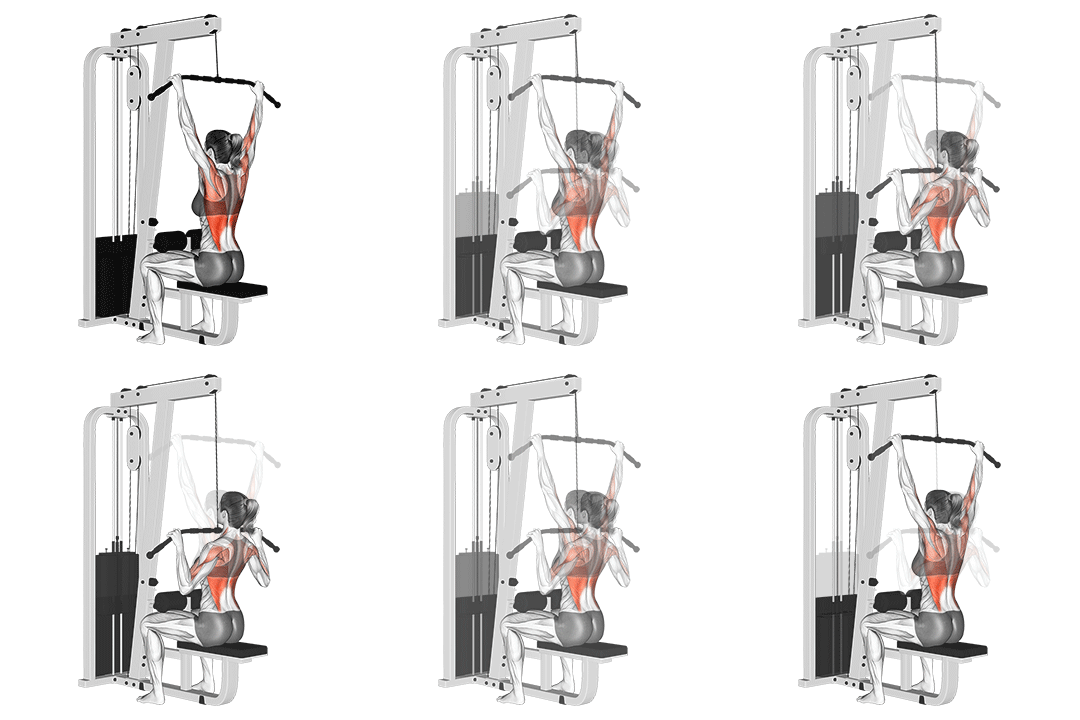
The Cable Wide Grip Lat Pulldown performs lat pulldowns. The pattern is foundational for gym beginners building back development.
For gym beginners, the lat pulldown produces foundational back development. Run it for 3 sets of 8 to 12 reps as vertical pulling work.
Sit at a lat pulldown machine with knees secured under the pad. Grip the bar with hands wider than shoulder-width. Pull the bar down to the upper chest by retracting the shoulder blades and pulling the elbows down. The lats, lower traps, and biceps work hard. Squeeze hard at peak. Return under control. The pattern is foundational for gym beginners – pulldowns are accessible alternatives to pull-ups and produce excellent back development. Beginners benefit from pulldowns while building strength toward bodyweight pull-ups. Foundational vertical pulling exercise.
Dumbbell Biceps Curl

The Dumbbell Biceps Curl performs dumbbell biceps curls. The pattern produces direct biceps loading.
For gym beginners, the dumbbell biceps curl produces direct biceps strengthening. Run it for 3 sets of 10 to 12 reps as biceps work.
Stand with feet hip-width holding dumbbells in each hand at the sides with palms facing forward. Curl the dumbbells up by flexing at the elbows. The biceps work hard. Squeeze at peak. Lower under control. The pattern produces direct biceps isolation – excellent supplementary arm work for gym beginners after compound work. While compound exercises (rows, pulldowns) train the biceps secondarily, dedicated isolation work develops arm size. Foundational biceps exercise for arm development.
Cable Pushdown

The Cable Pushdown performs cable tricep pushdowns. The pattern produces direct triceps loading.
For gym beginners, the cable pushdown produces direct triceps strengthening. Run it for 3 sets of 10 to 15 reps as triceps work.
Stand facing a cable station with the cable at high position. Grip the bar or rope attachment with both hands at chest level. Press the cable down by extending the elbows until the arms are straight. The triceps work hard through pure elbow extension. Squeeze hard at peak. Return under control. The pattern produces direct triceps isolation – excellent supplementary arm work alongside compound pressing. Foundational triceps exercise that develops the larger arm muscle. Combined with biceps work, pushdowns produce balanced arm development.
Front Plank
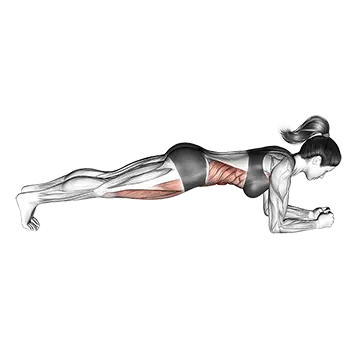
The Front Plank performs forearm plank holds. The pattern is foundational for gym beginners.
For gym beginners, the plank produces foundational core stability. Run it for 3 sets of 30 to 60-second holds as core work.
Lie face-down on the floor. Prop up on the forearms with elbows under the shoulders. Lift the hips so the body forms a straight line from shoulders to ankles. The core works hard isometrically. Hold for the working interval. The pattern is foundational for gym beginners – the plank is the most accessible core exercise and produces complete core engagement using only bodyweight. Beginners can progress hold duration over weeks and add variations as they advance. Foundational core exercise for any beginner program.
How To Program These Workouts
A productive gym beginner session pulls 6 to 8 exercises from the list above. A common balanced full-body session: barbell squat (legs – heavy), barbell bench press (push – heavy), dumbbell bent-over row (pull – heavy), barbell standing military press (overhead push), dumbbell biceps curl (biceps), cable pushdown (triceps), front plank (core). For 3-day full-body programs: alternate squat/deadlift between sessions, alternate bench/overhead between sessions. For 4-day upper/lower splits: 2 lower body days (squat-focused, deadlift-focused) and 2 upper body days (bench-focused, overhead-focused). Run heavy compound work for 3 to 4 sets of 5 to 8 reps, supplementary compound for 3 sets of 8 to 12 reps, isolation for 3 sets of 10 to 15 reps, core for 3 sets of 30 to 60-second holds.
Train at the gym 3 to 4 times per week with progressive overload. Most successful beginner programs use: 1) full-body sessions 3 days/week (Monday, Wednesday, Friday) hitting all major patterns each session, OR upper/lower split 4 days/week (Monday upper, Tuesday lower, Thursday upper, Friday lower), 2) progressive overload (adding 5 lbs per session for upper body, 10 lbs for lower body until plateau, then deload and rebuild), 3) at least 1 to 2 complete rest days. Combined with proper warm-ups (5 minutes light cardio plus dynamic mobility plus warm-up sets), patience with progression, gradual weight increases, adequate sleep (7 to 9 hours), proper nutrition for fitness goals, and consistent training over months, beginner gym programs produce measurable strength and muscle improvements. Most beginners see substantial gains in the first 6 to 12 months (the ‘beginner gains’ phase) when consistent.
For broader programming, see our best workouts for beginners and best workouts for beginners at home. For specific work, see our how to build a stronger squat.
Final Thoughts
The best workouts for beginners at the gym deliver real strength and muscle development through training that targets all major movement patterns with proper equipment: foundational compound barbell lifts producing maximum strength and muscle stimulus, supplementary compound work for complete development, vertical pulling for back development, arm isolation for direct arm work, and core stability for foundational support. The combination of squats, bench press, deadlifts, military press, dumbbell bench press, bent-over rows, lat pulldowns, biceps curls, pushdowns, and planks covers every major movement pattern beginners need and produces broader strength, muscle mass, and gym confidence than bodyweight-only training would allow. Many beginners discover meaningful strength and muscle improvements within 8 to 16 weeks – including increased compound lift numbers (substantial squat, bench, deadlift improvements), visible muscle development, better body composition, more energy in daily activities, increased gym confidence, better posture, and the foundation for either continued strength training or transitioning to specialized training (powerlifting, bodybuilding, athletic training). The gym beginner phase typically produces the fastest gains of an entire training career.
Stay focused on consistent progressive overload as the priority for gym beginner training. The most common mistake beginners make is changing programs constantly (program hopping) without giving any program time to produce results, missing the consistency required for progressive overload. The fix: pick one program and stick with it for at least 12 to 16 weeks before considering changes – focus on consistent attendance (3 to 4 weekly sessions) and progressive weight increases. Add 5 lbs per session for upper body lifts, 10 lbs for lower body lifts, until plateau, then deload and rebuild. Combined with proper form, adequate recovery, and patience over months, consistent progressive overload produces the substantial strength and muscle improvements that program hopping never achieves. Beginner gains depend on consistency and patience.
Frequently Asked Questions
What workout should a beginner do at the gym?
Compound barbell lifts plus supplementary work covering all patterns. Start with: barbell squat (legs), barbell bench press (push), barbell deadlift (hinge), barbell standing military press (overhead), dumbbell bent-over row (pull), lat pulldown (vertical pull), biceps curl (arms), cable pushdown (arms), front plank (core). Use full-body programming 3 days per week or upper/lower split 4 days per week. Focus on compound lifts as primary work, master form with light weight, then progress weight gradually over weeks. The first 6 to 12 months (‘beginner gains’) produce the fastest progress of an entire training career.
How often should beginners go to the gym?
3 to 4 times per week with rest days between sessions. Most successful beginner programs use: 1) full-body sessions 3 days/week (Monday, Wednesday, Friday) hitting all major patterns, OR 2) upper/lower split 4 days/week. Beginners benefit from rest days because they’re adapting to new physical demands – excessive frequency without recovery slows progress. Quality consistent practice 3 to 4 times per week produces better results than daily training without recovery. Combined with progressive overload over months, this frequency produces measurable beginner gains.
How long should beginner gym workouts be?
45 to 75 minutes per session is the typical sweet spot. Most successful beginner programs use sessions lasting 45 to 75 minutes – long enough to cover compound lifts plus supplementary work without producing excessive fatigue. Very short sessions (under 30 minutes) may not provide adequate training stimulus for compound lift development. Very long sessions (over 90 minutes) often produce excessive fatigue without proportional benefit for beginners. Quality matters more than duration – 45 to 75 minutes hitting compound lifts plus accessories produces excellent beginner results.
Should beginners use machines or free weights?
Free weights as primary, machines for supplementary work. Compound barbell lifts (squat, bench press, deadlift, overhead press) produce the most efficient stimulus possible and form the foundation of beginner training. Machines (lat pulldowns, cable pushdowns, machine work) provide excellent supplementary work for additional volume, isolation work, and exercises that are difficult with free weights. Most successful beginner programs use both: free weights for primary compound work, machines and dumbbells for supplementary exercises. The combination produces the most complete development.
How long does it take to see beginner gym results?
4 to 8 weeks for measurable improvements, 6 to 12 months for substantial change. Most beginners who consistently apply 3 to 4 weekly sessions plus progressive overload plus proper nutrition see measurable improvements within 4 to 8 weeks – including increased compound lift weights, visible muscle development, and improved body composition. Substantial change typically takes 6 to 12 months of consistent practice (the ‘beginner gains’ phase produces the fastest gains of an entire training career). The longer beginners maintain consistency with progressive overload, the better the long-term results.