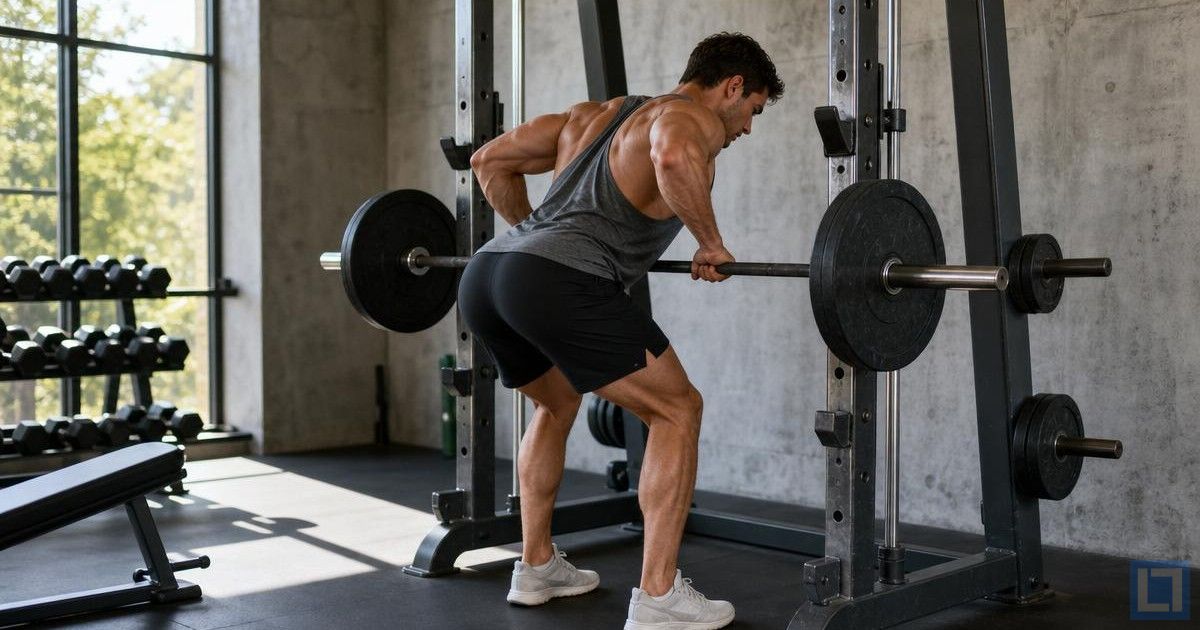
The barbell bench press has anchored serious chest training for over a hundred years, and for good reason: no other exercise produces stronger pressing development per rep. Adding a few well-chosen variations (incline, decline, close-grip, pause work) covers the full chest from every angle and builds the kind of complete chest development that single-exercise programs cannot match. The best barbell chest workouts respect this hierarchy: heavy bench pressing is the priority, and accessory variations exist to fill in the gaps.
Below are ten effective barbell chest exercises that cover flat, incline, decline, close-grip, and pullover variations, plus pause and pin variations for advanced lifters chasing strength gains. Together they form a complete chest training program that requires nothing more than a barbell, a bench, and a power rack.
Barbell Bench Press

The Barbell Bench Press is the foundational upper-body lift in any serious chest program. Lying flat on a bench, you lower the bar to the chest under control and press it back to lockout. It is one of the three competition lifts in powerlifting and the most-tested measure of upper-body pressing strength.
No barbell chest program runs without the flat bench press. The bilateral pressing pattern produces stronger total-body strength than any other upper-body lift, and the chest, front delts, and triceps all get heavy loading. Train it 1 to 2 times per week in the 3 to 6 rep range as the primary chest exercise.
Plant the feet flat with the legs creating tension to drive into the bar. Pull the shoulder blades together hard and arch the upper back slightly. Lower the bar under control to the lower chest. Pause briefly if the program calls for it, then drive the bar up and slightly back toward the face for the strongest pressing line.
Barbell Incline Bench Press

The Barbell Incline Bench Press performs the bench press on a bench inclined to roughly 30 to 45 degrees. The incline angle shifts emphasis to the upper chest (clavicular pectoralis) and front deltoids, which fills in the area that flat bench tends to underdevelop.
For visible upper-chest development, incline pressing is essential. Most lifters who only flat bench end up with a flat upper chest and overly developed lower chest; incline pressing rebalances the development. Run it as a primary lift on a separate day from flat bench, for 3 to 4 sets in the 5 to 8 rep range.
Set the bench to roughly 30 to 45 degrees. Lower the bar to the upper chest just below the collarbone. Press back to lockout. The path stays directly over the shoulder joint rather than the lower chest. Steep angles (60+ degrees) shift too much emphasis to the front delts and away from the upper chest.
Barbell Decline Bench Press

The Barbell Decline Bench Press performs the bench press on a bench declined so the head sits below the feet. The decline angle shifts emphasis to the lower chest fibers and produces strong loading through the bottom-of-chest contraction.
For complete chest development, decline pressing fills the gap between flat and incline work. The lower chest responds best to decline angles, and including decline pressing in a chest program produces fuller-looking chest development from every angle. Run it for 3 sets in the 6 to 10 rep range as accessory work.
Lock the feet under the decline bench foot pads. Lower the bar to the lower chest. Press back to lockout. The decline angle reduces shoulder involvement compared to flat bench, which makes it easier on the shoulders for many lifters. Use a spotter; the decline position makes failed reps harder to escape.
Barbell Close Grip Bench Press

The Barbell Close Grip Bench Press performs the bench press with the hands roughly shoulder-width apart rather than the standard wide grip. The close grip shifts emphasis to the triceps and inner chest while still loading the entire pressing pattern.
Close-grip bench pressing is the most direct tricep mass-builder in any barbell program. The compound pressing pattern allows much heavier loading than isolation tricep exercises, and the inner-chest emphasis adds chest development that wider grips do not produce. Run it for 3 sets in the 6 to 10 rep range as a tricep-focused chest exercise.
Set the hands roughly shoulder-width apart on the bar. Lower the bar to the lower chest with the elbows tucked close to the body throughout. Press back to lockout. The bar path travels in a straighter line than wide-grip bench because the grip width does not require the bar to drift back during the press.
Barbell Pause Incline Bench Press

The Barbell Pause Incline Bench Press performs the incline bench press with a 1 to 3-second pause at the chest position before each rep. The pause eliminates stretch reflex (the spring-back energy that helps push the bar off the chest in standard reps), which produces purer pressing strength.
For lifters who plateau on standard incline pressing, pause variations break through plateaus by removing the assistance of the bottom-position bounce. The strength gains from pause work transfer back to standard pressing as faster bar speed and more confident lockouts. Run them for 3 sets of 4 to 6 reps with moderate weight.
Set up for an incline bench press. Lower the bar to the upper chest under control. Pause for 1 to 3 seconds with the bar resting on the chest (not bouncing off it). Press back to lockout. The pause requires lighter weight than standard incline; expect to use 80 to 90 percent of typical incline pressing weight.
Barbell Bent Arm Pullover

The Barbell Bent Arm Pullover lies on a bench with the bar held over the chest and lowers the bar back behind the head with elbows slightly bent, then pulls back to the start position. The motion stretches the chest and lats simultaneously through a deep range of motion.
Pullovers are one of the most underrated chest exercises in modern training. The deep stretch at the bottom hits chest fibers that pressing exercises miss, and the lat involvement adds back work to the chest exercise efficiently. Run it for 3 sets of 8 to 12 reps as accessory work after pressing.
Lie flat on a bench with the bar held above the chest with arms slightly bent. Lower the bar back behind the head while maintaining the slight elbow bend. Feel the chest and lats stretch at the bottom. Pull the bar back to the start position. Use moderate weight; the stretch is what produces the benefit.
Barbell Pin Chest Press

The Barbell Pin Chest Press performs the bench press starting from pins set at chest level rather than from the top position. Each rep starts with a dead stop at the bottom, which removes the stretch reflex entirely and trains pure pressing strength from a static start.
Pin presses are one of the most effective tools for building bench press strength out of the bottom position. The dead stop at the bottom eliminates any assistance from elastic energy, which forces the chest and triceps to do all the work. Run them for 4 sets of 3 to 6 reps as a strength-builder during dedicated training blocks.
Set safety pins on a power rack at the chest level. Lower the bar onto the pins and pause briefly. Press the bar from the pins back to lockout without bouncing. Use lighter weight than standard bench press; expect to use 75 to 85 percent of typical bench pressing weight.
Barbell Floor Chest Press

The Barbell Floor Chest Press lies on the floor with a barbell held above the chest and presses it to lockout. The floor limits the eccentric range of motion (elbows stop at the floor before reaching the chest), which protects the shoulders during heavy pressing.
For lifters with shoulder issues that limit standard bench press range, the floor press is the most direct alternative that maintains heavy compound loading. The protected range at the bottom also makes it useful for lockout-focused training because the press starts roughly halfway through the standard range. Run it for 3 sets of 5 to 8 reps.
Lie flat on the floor with a barbell held above the chest. Lower the bar by bending the elbows until the upper arms touch the floor. Press back to lockout without bouncing the elbows off the floor. The reduced range allows heavier loads than standard bench pressing for many lifters.
Barbell Decline Wide Grip Pullover

The Barbell Decline Wide Grip Pullover performs a pullover on a decline bench with a wider hand position on the bar. The decline angle increases the range of motion at the bottom of the rep, while the wide grip emphasizes the chest more than the lats.
For lifters who already include standard pullovers, the decline wide-grip variation extends the loading angle and produces deeper chest stretch. The combination of decline angle and wide grip targets the lower chest fibers from a unique direction that other chest exercises do not match. Use it as an occasional variation rather than the primary pullover.
Lie on a decline bench with feet locked and a barbell held above the chest in a wide grip. Lower the bar back behind the head with arms slightly bent. Pull back to the start by squeezing the chest and lats. Use moderate weight to allow clean range of motion.
Barbell Lying Close Grip Press

The Barbell Lying Close Grip Press lies flat on a bench with a close grip on the barbell and performs the bench press motion with elbows tucked close to the body. The close grip emphasizes the triceps heavily while still loading the chest as a secondary mover.
Close-grip pressing serves dual purposes in any chest program: tricep mass-building and inner-chest development. Lifters with strong tricep development through close-grip work see meaningful improvements in their standard bench press lockout because the tricep is the limiting factor at the top of the press. Run it for 3 sets of 6 to 10 reps as a secondary pressing exercise.
Set the hands roughly shoulder-width apart on the bar. Lie flat on a bench. Lower the bar to the lower chest with the elbows tucked close to the body. Press back to lockout. The bar path stays directly over the shoulder joint rather than drifting back like a standard bench press.
How To Program These Workouts
A productive barbell chest session pulls four to six exercises from the list above. A balanced session includes one heavy primary press (flat or incline bench), one secondary angle (whichever was not the primary), one tricep-focused variation (close-grip bench press or close-grip lying press), and one accessory (pullover or floor press). Run primary lifts for 4 to 5 sets of 3 to 6 reps; accessories for 3 sets of 6 to 12 reps.
Train chest one to two times per week. The chest recovers within 48 to 72 hours of moderate training, but heavy bench pressing combined with shoulder and tricep work creates significant total upper-body fatigue. Most powerlifters and serious lifters bench press once or twice per week with one heavy session and one variation-focused session.
For broader chest programming, see our best dumbbell chest workouts and how to build a bigger chest. To browse the equipment library, explore our barbell exercises collection.
Final Thoughts
The best barbell chest workouts produce the most direct chest strength gains of any training tool that exists. The combination of heavy bench pressing and well-chosen variations covers the full chest function in a way other equipment cannot match. For lifters chasing maximum chest size and strength, the barbell remains the most efficient piece of equipment available.
Stay focused on the foundation. Most lifters who fail to build big chests fail because they spread their effort across too many variations and never master the basic flat bench press. The opposite approach (picking the bench press as the foundation, adding 2 to 3 variations as accessories, and progressing slowly over months) produces the strongest chest development. Strength is built through repetition, not novelty.
Frequently Asked Questions
How often should I bench press?
Most lifters do well benching once or twice per week. Once-per-week heavy bench pressing produces strong gains for beginners and intermediates. Twice-per-week (one heavy session and one lighter variation session) produces faster progress for advanced lifters who can recover the additional volume. Three times per week is reserved for advanced lifters running specialized peaking programs.
Should I bench press with a paused or touch-and-go style?
Both have value. Paused bench pressing produces stronger raw pressing strength because it removes the stretch reflex assistance; touch-and-go bench pressing allows heavier total loading. Most powerlifters train both: paused work during strength blocks and touch-and-go work during volume blocks. For general lifting, alternating the two over training cycles works well.
Do I need incline bench press for chest development?
Yes if upper-chest development matters. Flat bench press alone tends to produce a flat upper chest while leaving the lower chest dominant. Incline pressing fills in the upper chest and produces fuller, more balanced chest development. Most well-designed chest programs include at least one incline variation per week.
How wide should my bench press grip be?
Standard competition grip is roughly 1.5 times shoulder-width with the index fingers on the rings of the bar. Narrower grips (shoulder-width) shift emphasis to the triceps; wider grips (slightly outside the rings) emphasize the chest more. Most lifters do best with a moderate grip slightly inside the rings, which balances chest and tricep loading.
Why is my bench press stuck?
Most bench press plateaus come from one of three issues: weak triceps (the lockout fails), weak chest (the rep gets stuck off the chest), or stalled volume progression. Address whichever applies: weak triceps need close-grip pressing and direct tricep work; weak chest needs wider-grip pressing and chest-focused variations; stalled volume progression needs a structured periodization plan with planned weekly load increases over 8 to 12 week blocks.