The posterior delts (rear delts) – the back portion of the deltoid muscle – are critical for complete shoulder development, balanced upper-body appearance, and shoulder health, contributing substantially to overall shoulder mass when developed alongside the anterior and medial delts. The posterior delts activate strongest during: direct horizontal abduction patterns (rear delt flies, cable rear delt flies, band pull-aparts) for direct isolation – the most important posterior delt exercise pattern, horizontal pulling with high elbow position (face pulls, cable rear delt rows) for posterior delt isolation through rowing, compound rowing patterns (bent-over rows, dumbbell rows) for compound posterior delt work, and varied isolation modalities (cable, dumbbell, band, supported) for complete posterior delt stimulus. Most lifters severely underdevelop the posterior delts because: 1) heavy compound pressing (bench press, overhead press) develops anterior delts substantially while contributing minimally to posterior delts, 2) most lifters neglect dedicated posterior delt isolation, 3) the posterior delts respond to higher volume than typically programmed. Note: posterior delt development is critical for both aesthetic shoulder appearance (developed rear delts visibly fill out the shoulder from rear and side angles) and shoulder health (rear delts balance front delts and prevent the postural and shoulder issues common with anterior dominance).
Below are ten of the most effective exercises for posterior delt development, covering primary posterior delt isolation (dumbbell rear delt fly, cable seated rear delt fly with chest support, cable seated rear lateral raise, band pull apart), high-elbow rowing for posterior delts (cable rear delt row, dumbbell seated bent over rear delt row, cable standing face pull), compound posterior delt work (barbell bent over row, dumbbell bent over row), and posterior delt and trap work (barbell upright row). Together they form a complete posterior delt program. A 30 to 45-minute posterior delt-focused session pulled from this list, performed 1 to 2 times per week (or as integrated work alongside complete shoulder training), produces strong posterior delt development for any lifter focused on building developed rear delts, balanced shoulders, or improved shoulder health.
Dumbbell Rear Delt Fly
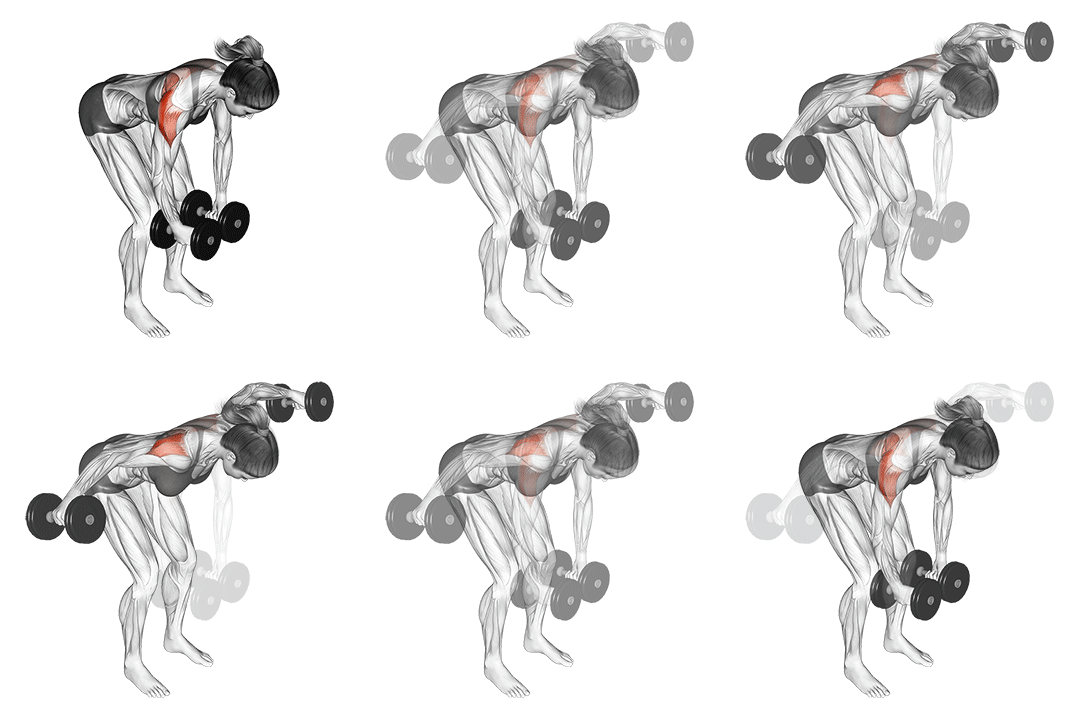
The Dumbbell Rear Delt Fly performs rear delt flies. The pattern is foundational for posterior delt development.
For posterior delt development, the dumbbell rear delt fly is foundational. Run it for 4 sets of 12 to 15 reps as primary posterior delt work.
Stand with feet hip-width holding dumbbells. Hinge forward at the hips with a flat back so the torso is parallel to the floor. Hold the dumbbells underneath the chest with palms facing each other. Lift the dumbbells out to the sides by raising the arms straight out to shoulder height. The rear delts and rhomboids work hard through horizontal abduction. Squeeze hard at peak. Lower under control. The pattern is foundational for posterior delt development – the rear delt fly produces direct posterior delt isolation through pure horizontal abduction. The posterior delts are typically underdeveloped relative to anterior delts, and dedicated rear delt fly training produces the most direct posterior delt loading possible.
Barbell Bent Over Row

The Barbell Bent Over Row performs barbell rows. The pattern produces compound posterior delt loading.
For posterior delt development, the bent-over row produces compound posterior delt work. Run it for 3 to 4 sets of 6 to 10 reps as compound posterior delt work.
Stand with feet hip-width holding a barbell at the front of the thighs with overhand grip. Hinge forward at the hips with a flat back so the torso is at about 45 degrees. Pull the bar to the lower chest by retracting the shoulder blades and pulling the elbows back. The lats, rhomboids, mid traps, and rear delts work hard. Squeeze the shoulder blades hard at peak. Lower under control. The pattern produces compound posterior delt loading – while primarily a back exercise, bent-over rows produce substantial posterior delt work through the horizontal pulling pattern. Excellent supplementary posterior delt work alongside isolation.
Cable Seated Rear Delt Fly with Chest Support

The Cable Seated Rear Delt Fly With Chest Support performs supported cable rear delt flies. The pattern produces controlled posterior delt isolation.
For posterior delt development, the cable seated rear delt fly with chest support produces controlled isolation. Run it for 3 sets of 12 to 15 reps as variation work.
Sit on a bench with chest support facing two cable pulleys at chest height. Grip the handles with arms extended in front. Pull the handles out to the sides by retracting the shoulder blades and abducting the arms. The rear delts work hard with constant cable tension and the chest pad eliminating body english. Squeeze hard at peak. Return under control. The pattern produces controlled posterior delt isolation with chest support – the support eliminates body english that often compensates during rear delt work, producing pure rear delt loading with constant cable tension. Excellent variation alongside dumbbell rear delt flies.
Cable Rear Delt Row

The Cable Rear Delt Row performs cable rear delt rows. The pattern produces direct posterior delt loading through rowing motion.
For posterior delt development, the cable rear delt row produces direct rear delt loading. Run it for 3 sets of 10 to 12 reps as posterior delt work.
Set up a cable station with rope or dual handle attachment at chest or face height. Grip the handles with hands wide and arms extended. Pull the handles toward the face/upper chest by retracting the shoulder blades and pulling the elbows out to the sides (high elbow row). The rear delts work hard through horizontal abduction with arm rowing. Squeeze hard at peak. Return under control. The pattern produces rear delt loading through wide-elbow rowing – the high elbow position emphasizes posterior delts more than typical rows. Excellent posterior delt work that combines rowing with isolation.
Dumbbell Bent Over Row

The Dumbbell Bent Over Row performs dumbbell rows. The pattern produces compound posterior delt loading variation.
For posterior delt development, dumbbell rows provide variation rowing that loads posterior delts. Run it for 3 sets of 8 to 12 reps as compound posterior delt variation.
Stand with feet hip-width holding dumbbells in each hand at the sides. Hinge forward at the hips with a flat back so the torso is parallel to the floor. Pull the dumbbells up to the lower chest by retracting the shoulder blades and pulling the elbows back. The lats, rhomboids, mid traps, and rear delts work hard. Squeeze the shoulder blades hard at peak. Lower under control. The pattern produces compound back and posterior delt loading – dumbbells allow different range of motion than barbell and address left/right asymmetries. Combined with barbell rowing, dumbbells produce complete posterior delt and back development.
Cable Standing Face Pull

The Cable Standing Face Pull performs cable face pulls. The pattern produces direct posterior delt and external rotator loading.
For posterior delt development, the face pull produces direct posterior delt loading with shoulder health benefits. Run it for 3 to 4 sets of 12 to 15 reps as posterior delt and shoulder health work.
Set up a cable with rope attachment at face height. Grip both ends of the rope with palms down. Step back so the cable is taut. Pull the rope toward the face by retracting the shoulder blades and externally rotating the arms (so the hands separate at the face). The rear delts and external rotators work hard. Squeeze hard at peak. Return under control. The pattern produces direct posterior delt loading combined with external rotation – critical for posterior delt development and shoulder health. The face pull is one of the most efficient posterior delt exercises and contributes to overall shoulder durability through external rotator strengthening.
Barbell Upright Row

The Barbell Upright Row performs barbell upright rows. The pattern produces posterior delt and trap loading.
For posterior delt development, the barbell upright row provides additional posterior delt and trap work. Run it for 3 sets of 8 to 10 reps as posterior delt and trap variation.
Stand with feet hip-width holding a barbell at the front of the thighs with overhand grip (slightly wider than shoulder-width). Lift the bar straight up close to the body until it reaches upper chest height, leading with the elbows. The medial delts, posterior delts, and upper traps work hard. Lower under control. The pattern produces medial delt, posterior delt, and trap loading – the upright row trains multiple shoulder regions through the abduction pattern. Note: use moderate weight and avoid extreme range to prevent shoulder impingement. Use wider grip rather than narrow to reduce shoulder stress.
Dumbbell Seated Bent Over Rear Delt Row

The Dumbbell Seated Bent Over Rear Delt Row performs seated bent-over dumbbell rear delt rows. The pattern produces controlled posterior delt loading.
For posterior delt development, the seated bent-over rear delt row produces controlled posterior delt isolation. Run it for 3 sets of 10 to 12 reps as controlled posterior delt work.
Sit on a bench holding dumbbells. Hinge forward at the hips with a flat back so the torso rests on or near the thighs. Hold the dumbbells underneath with palms facing each other. Pull the dumbbells out and up by retracting the shoulder blades and lifting the elbows wide. The rear delts work hard through horizontal abduction with rowing motion. Squeeze hard at peak. Lower under control. The pattern produces controlled posterior delt loading – the seated bent-over position eliminates body english and isolates the rear delts through wide-elbow rowing. Excellent variation alongside standing rear delt flies.
Band Pull Apart
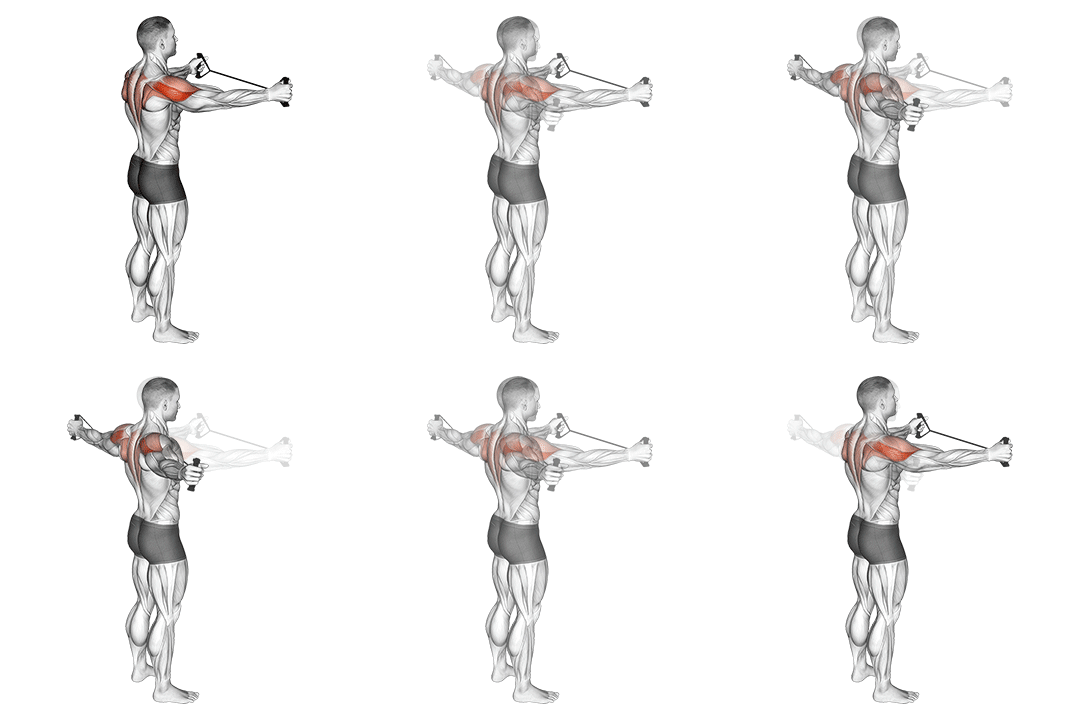
The Band Pull Apart performs band pull-aparts. The pattern produces direct posterior delt and rhomboid loading.
For posterior delt development, the band pull apart produces high-volume posterior delt work. Run it for 3 to 4 sets of 15 to 25 reps as posterior delt volume work.
Stand holding a resistance band with both hands, arms extended forward at shoulder height with hands shoulder-width apart. Pull the band apart by retracting the shoulder blades and abducting the arms out to the sides. The rear delts and rhomboids work hard. Squeeze hard at peak. Return under control. The pattern produces direct posterior delt loading with band resistance – excellent for high-volume posterior delt work that complements heavier dumbbell and cable work. The band pull-apart is also useful as a daily mobility/activation exercise for posterior delt development and shoulder health.
Cable Seated Rear Lateral Raise

The Cable Seated Rear Lateral Raise performs cable rear lateral raises. The pattern produces posterior delt loading with cable tension.
For posterior delt development, the cable seated rear lateral raise produces posterior delt loading with constant cable tension. Run it for 3 sets of 12 to 15 reps as posterior delt variation.
Sit on a low bench between two cable pulleys at low position. Grip the cable handles with crossed cables (left hand grips right cable, right hand grips left cable). Lift the handles out to the sides by retracting the shoulder blades and abducting the arms in horizontal plane. The rear delts work hard with constant cable tension. Squeeze hard at peak. Return under control. The pattern produces posterior delt loading with constant tension – the cable resistance maintains tension throughout the range, producing more time under tension than free-weight versions. Excellent variation alongside dumbbell rear delt flies.
How To Program These Workouts
A productive posterior delt session pulls 5 to 7 exercises from the list above. A common balanced session: dumbbell rear delt fly (heavy primary), cable standing face pull (volume isolation), barbell bent over row (compound), cable seated rear delt fly with chest support (controlled), band pull apart (high-volume), dumbbell seated bent over rear delt row (controlled rowing). For shoulder balance focus: heavy posterior delt isolation (dumbbell rear delt fly, cable face pull, cable rear lateral raise) plus high-volume work (band pull apart). For high volume: include 4 to 5 different posterior delt variations across the week (dumbbell, cable, band, supported) for varied stimulus. Run isolation work for 3 to 4 sets of 10 to 15 reps, compound work for 3 sets of 6 to 10 reps, high-volume work for 3 sets of 15 to 25 reps.
Train posterior delts 2 to 3 times per week as part of complete shoulder programming. The posterior delts respond well to higher frequency and volume than typically programmed. Most successful posterior delt programs include: 1) primary posterior delt day (heavy rear delt isolation plus compound rowing), 2) secondary posterior delt work (face pulls, band pull-aparts on other training days), 3) integrated posterior delt work in regular training. The posterior delts respond well to higher volume – 16 to 24 weekly working sets focused on posterior delt development produces accelerated growth. Combined with progressive overload and varied training modalities (free weights, cables, bands, supported), dedicated posterior delt training produces visible development within 12 to 16 weeks for most lifters.
For broader programming, see our how to build bigger delts and best medial delt exercises. For specific work, see our best anterior delt exercises.
Final Thoughts
The best posterior delt exercises deliver real shoulder balance and aesthetic improvement through training that targets the rear shoulder muscles: primary posterior delt isolation through varied rear delt fly patterns, high-elbow rowing for posterior delt isolation through rowing, compound rowing patterns for compound posterior delt work, varied training modalities (free weights, cables, bands, supported) for complete stimulus, and high frequency/volume due to posterior delt response to dedicated training. The combination of dumbbell rear delt flies, bent-over rows, cable rear delt flies, cable rear delt rows, dumbbell rows, face pulls, upright rows, supported rear delt rows, band pull-aparts, and cable rear lateral raises covers every functional pattern of posterior delt development. Many lifters discover more developed rear delts visible from rear and side views, more balanced shoulder appearance, improved posture, more developed all three delt heads, and improved shoulder health within 12 to 16 weeks of adding consistent posterior delt work. For lifters seeking complete shoulder development, dedicated posterior delt training is one of the most effective interventions available.
Stay focused on high-volume posterior delt isolation as the priority for posterior delt development. The most common mistake lifters make in shoulder training is severely under-training the posterior delts (often doing only minimal volume – 2 to 4 sets per week). The fix: prioritize posterior delts with the same dedicated volume given to chest and anterior delts – 16 to 24 weekly working sets across multiple posterior delt variations (dumbbell rear delt flies, face pulls, cable variations, band pull-aparts). The posterior delts respond well to higher frequency and volume because: 1) they’re typically underdeveloped due to chronic neglect, 2) they’re a small muscle group that recovers quickly, 3) they respond to varied training modalities. Combined with appropriate compound work, focused high-volume posterior delt isolation produces the rear delt development that minimal training never achieves.
Frequently Asked Questions
How can I build my rear delts?
High-volume rear delt isolation plus face pulls plus compound rowing. Heavy rear delt flies produce direct posterior delt isolation – the most important posterior delt exercise pattern. Face pulls develop direct rear delt loading combined with external rotation. Combined with cable rear delt rows (high-elbow rowing), bent-over rows (compound), band pull-aparts (high-volume), and varied isolation (cable, supported, band), these form the foundation of posterior delt development. The fastest gains come from dedicated high-volume posterior delt isolation across multiple training sessions per week.
What’s the best rear delt exercise?
Dumbbell rear delt flies plus face pulls. Heavy dumbbell rear delt flies produce the most direct posterior delt loading possible – they specifically target the rear delts through pure horizontal abduction. Face pulls develop direct rear delt loading combined with external rotation, contributing to both rear delt development and shoulder health. Combined with cable variations (constant tension), bent-over rows (compound), upright rows (compound multi-region), supported rear delt rows (controlled), band pull-aparts (high-volume), and cable rear lateral raises (variation), rear delt flies and face pulls form the foundation of posterior delt development.
How often should I train rear delts?
2 to 3 times per week with varied modalities. The posterior delts respond well to higher frequency and volume than larger muscle groups. Most successful posterior delt programs include rear delt work 2 to 3 times per week using varied modalities: heavy dumbbell rear delt flies (primary), face pulls (constant tension), cable variations, band pull-aparts (high-volume). Total weekly posterior delt volume should be 16 to 24+ working sets across the variations for accelerated growth.
How long does it take to build rear delts?
12 to 16 weeks for measurable improvement, ongoing for substantial development. Most lifters who consistently apply heavy posterior delt isolation plus compound rowing plus adequate volume see measurable rear delt improvement within 12 to 16 weeks. Beginners often see initial gains within 6 to 8 weeks. Substantial rear delt development requires 6 to 12+ months of consistent training. The posterior delts are highly trainable but require dedicated isolation work – they grow visibly faster than larger muscle groups when given dedicated attention.
Why are my rear delts so weak?
Almost certainly insufficient training volume. Most lifters severely under-train posterior delts because: 1) heavy compound pressing develops front delts substantially while contributing minimally to rear delts, 2) most lifters neglect dedicated posterior delt isolation, 3) the posterior delts respond to higher volume than typically programmed. The fix: prioritize 16 to 24 weekly working sets across multiple posterior delt variations (rear delt flies, face pulls, cable variations, band pull-aparts). Rear delts respond rapidly to dedicated training – most lifters who add focused rear delt work see visible improvement within 8 to 12 weeks.