Barbell shoulder training produces strong shoulder development through the heaviest loading patterns available. The bilateral barbell hold allows lifters to push significantly more weight than dumbbell or machine variations, which drives faster strength and mass development per session. The combination of compound pressing (overhead press, pin press, squat-to-press) and accessory work (upright rows, front raises, shrugs) produces complete shoulder development across all three deltoid heads (front, side, rear) plus the surrounding traps and stabilizers.
Below are ten effective barbell shoulder exercises that cover compound pressing (standing shoulder press, pin press, squat-to-press, Bradford press), upright rowing variations (shoulder-grip and standard upright row), accessory raises (front raise, incline shoulder raise), and trap work (power shrug, overhead shrug). Together they form a complete barbell shoulder training program that fits in any gym with a barbell and squat rack. A 45 to 60-minute session pulled from this list produces strong shoulder stimulus across every major shoulder function.
Barbell Shoulder Grip Upright Row

The Barbell Shoulder Grip Upright Row pulls a barbell from hip level up to chin or chest height by lifting the elbows up and out. The shoulder-width grip variation emphasizes the medial and front delts more than wider grip variations.
For barbell shoulder training, the upright row is one of the most direct shoulder mass-builders that exists. The pattern hits the medial and anterior delts simultaneously through the lifting motion. Run it for 3 to 4 sets of 8 to 12 reps as compound shoulder work.
Stand tall holding a barbell at hip level with shoulder-width grip and palms facing the body. Lift the bar up the front of the body by raising the elbows up and out. Pause briefly at chin or chest height. Lower under control to the start.
Barbell Standing Shoulder Pin Press

The Barbell Standing Shoulder Pin Press starts with the barbell at the chest position (or slightly lower) and presses overhead from a dead-stop pin position in a power rack. The pin start eliminates the stretch reflex and emphasizes pure pressing strength.
For barbell shoulder strength training, the pin press is one of the most effective strength-building variations that exists. The dead-stop start forces the shoulders to press without rebound assistance. Run it for 3 to 4 sets of 4 to 6 reps as primary shoulder strength work.
Set up safety pins in a power rack at chest level. Place the loaded barbell on the pins. Stand with the bar at the chest position. Press the bar overhead to lockout. Lower under control back to the pins. Reset before each rep; do not bounce off the pins.
Barbell Squat to Shoulder Press
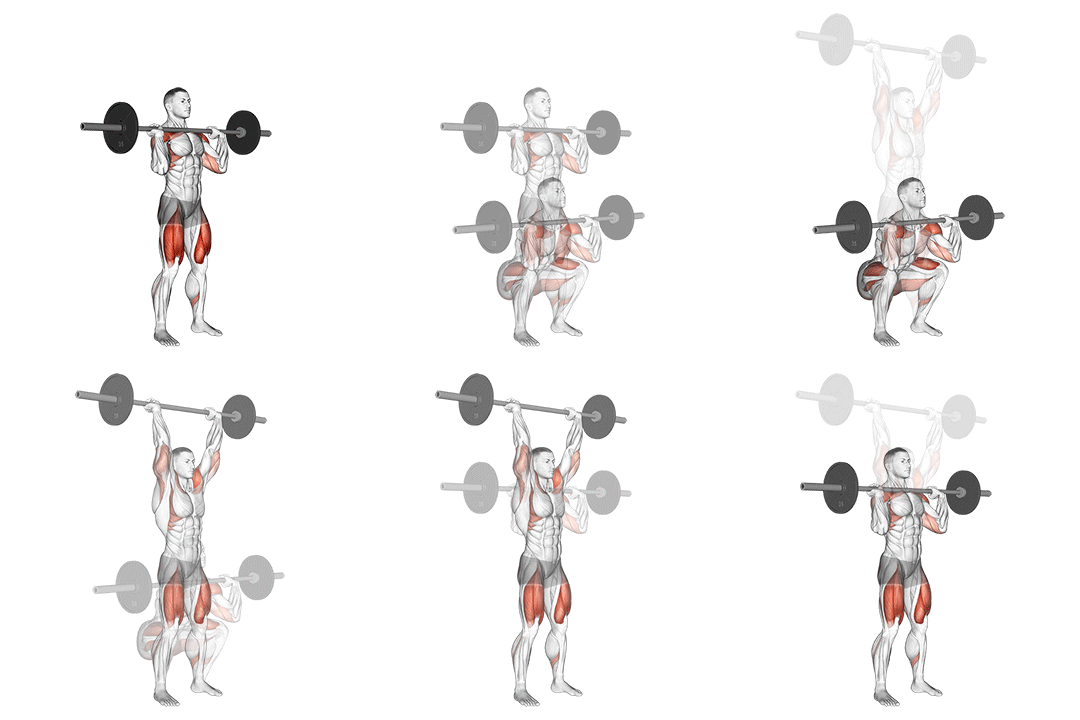
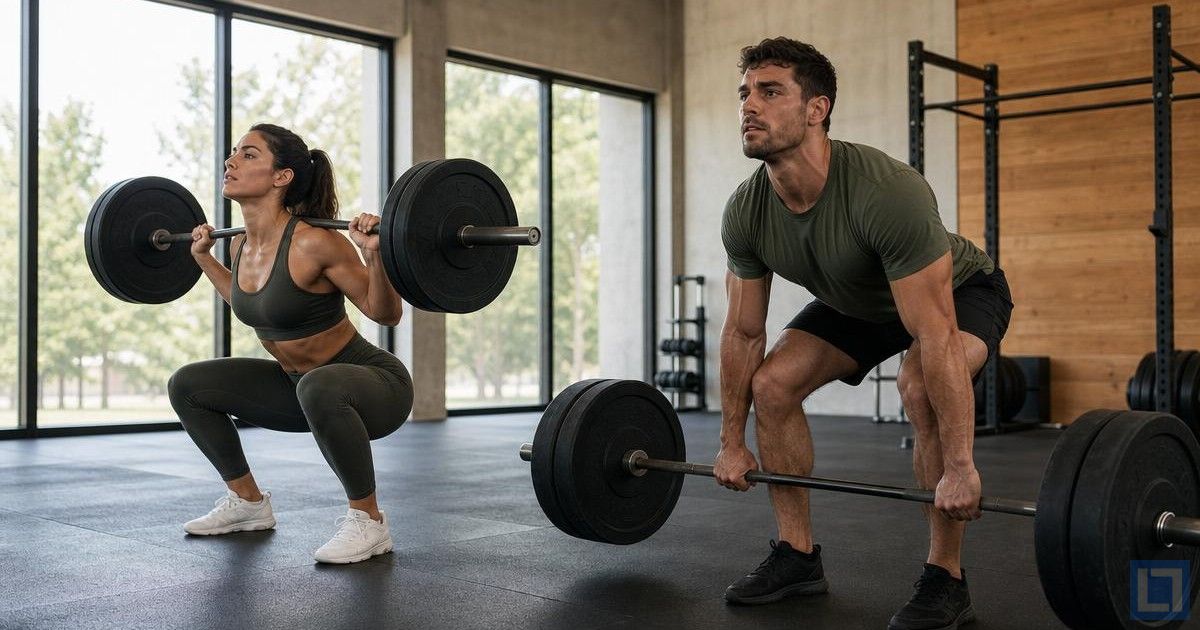
The Barbell Squat to Shoulder Press combines a back squat with an overhead press in one continuous motion. The combined leg drive and overhead press produces full-body conditioning along with strong shoulder loading.
For barbell shoulder training that includes leg integration, the squat-to-press is one of the most efficient compound exercises that exists. The full-body pattern works the entire body in one rep. Run it for 3 sets of 8 to 10 reps as combined conditioning and strength work.
Set up under a barbell with the bar across the upper back. Step back to clear the rack. Squat down to a deep back squat. Drive up explosively. As the body straightens, transition the bar from the upper back to the front of the shoulders and press overhead in one continuous motion.
Barbell Standing Shoulders Press

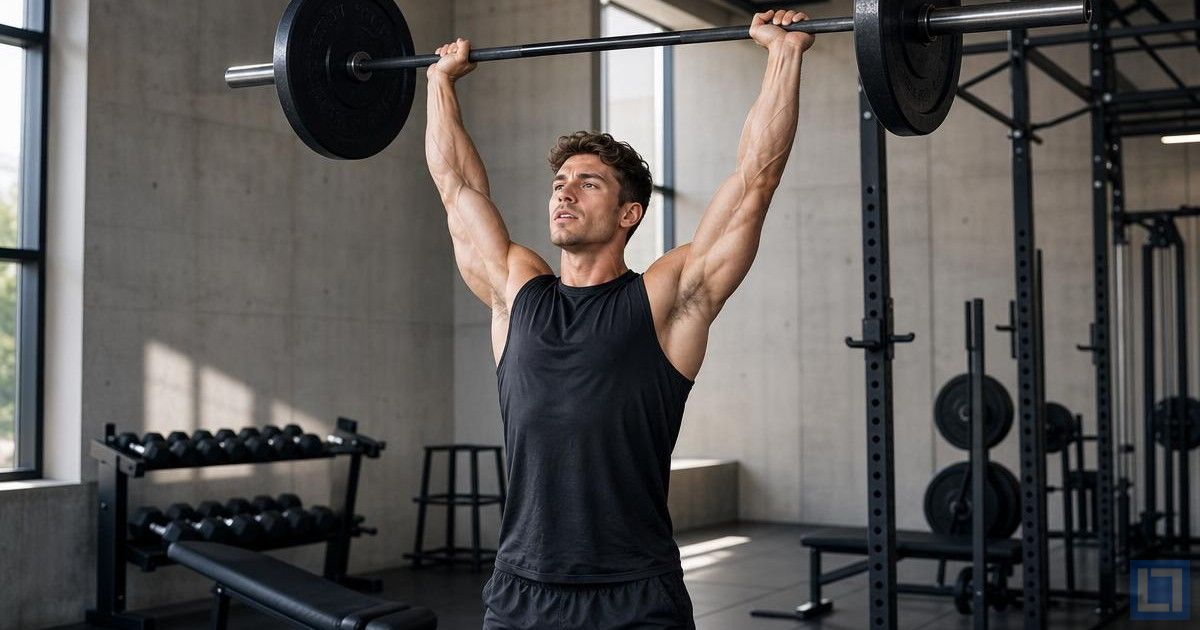
The Barbell Standing Shoulders Press stands tall with a barbell held at the chest and presses straight up to lockout overhead. The exercise is the foundational compound shoulder exercise and the strongest single shoulder mass-builder.
For barbell shoulder training, the standing shoulder press (also called the overhead press or military press) is the cornerstone exercise. The bilateral barbell loading and full-body bracing demand produce stronger shoulder development per rep than any other exercise. Run it for 4 to 5 sets of 5 to 8 reps as primary shoulder work.
Stand tall with feet shoulder-width and a barbell held at the front of the shoulders, hands slightly wider than shoulder-width. Press the bar straight up to lockout overhead, moving the head out of the way as the bar passes. Lower under control to the shoulders. Brace the core hard throughout.
Barbell Incline Shoulder Raise

The Barbell Incline Shoulder Raise lies face-down on an incline bench with a barbell held in front of the body and raises the bar by lifting the shoulders off the bench. The pattern targets the rear delts and posterior shoulder muscles.
For barbell rear delt training, the incline shoulder raise is one of the most direct rear-delt exercises that exists. The chest-supported position eliminates lower-back demand and isolates the rear delts. Run it for 3 sets of 12 to 15 reps as accessory rear-delt work.
Set an incline bench to roughly 45 degrees. Lie face-down on the bench. Hold a barbell with shoulder-width grip, arms hanging straight down. Raise the bar by lifting the shoulders off the bench, squeezing the rear delts at the top. Lower under control.
Barbell Power Shrug

The Barbell Power Shrug performs an explosive shrug with a heavy barbell, often using a slight knee dip and hip drive to add power to the shrugging motion. The pattern produces strong upper-trap loading.
For barbell trap training, the power shrug allows heavier loading than strict shrugs because the leg drive contributes to the lift. The pattern hits the upper traps with maximum loading. Run it for 3 to 4 sets of 6 to 10 reps as primary trap work.
Stand tall with a heavy barbell held at the front of the thighs, hands shoulder-width. Dip slightly at the knees, then drive explosively upward through the legs while shrugging the shoulders straight up toward the ears. Lower under control to the start.
Barbell Front Raise

The Barbell Front Raise holds a barbell at the front of the thighs and lifts the bar straight forward and up to shoulder height. The pattern targets the front deltoids directly through their primary shoulder flexion function.
For barbell front-delt training, the front raise is the most direct front-delt isolation exercise that exists. The bilateral barbell loading allows heavier loads than single-arm dumbbell variations. Run it for 3 sets of 10 to 12 reps as accessory front-delt work after primary overhead pressing.
Stand tall with a barbell held at the front of the thighs, palms facing the body. Lift the bar straight forward and up to shoulder height with relatively straight arms. Pause briefly at the top. Lower under control.
Barbell Upright Row

The Barbell Upright Row pulls a barbell from hip level up to chin or chest height by lifting the elbows up and out. The standard width upright row hits the medial delts and traps.
For barbell shoulder mass training, the upright row produces strong combined delt and trap loading. The pattern hits the medial delts more than other compound shoulder exercises. Run it for 3 sets of 8 to 12 reps as accessory shoulder work.
Stand tall holding a barbell at hip level with hands slightly closer than shoulder-width and palms facing the body. Lift the bar up the front of the body by raising the elbows up and out. Pause briefly at chin or chest height. Lower under control to the start.
Barbell Overhead Shrug
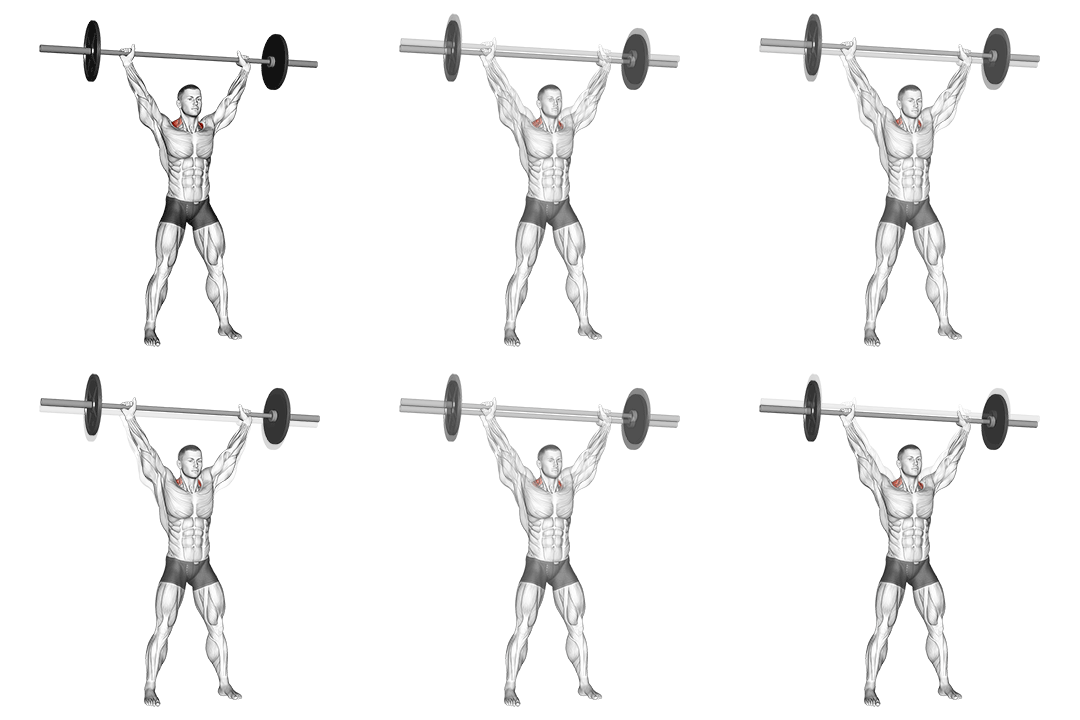
The Barbell Overhead Shrug holds a barbell pressed overhead and shrugs the shoulders by elevating them. The overhead position emphasizes the upper traps in the lockout position.
For barbell shoulder stability and upper-trap training, the overhead shrug produces unique loading at the lockout position. The pattern strengthens the upper traps while improving overhead pressing lockout strength. Run it for 3 sets of 8 to 10 reps as accessory upper-trap and shoulder-stability work.
Press a barbell overhead to lockout with shoulder-width grip. Maintain the overhead position while shrugging the shoulders straight up toward the ears. Lower the shoulders without bending the elbows. The bar should not move significantly; only the shoulders shrug.
Barbell Standing Bradford Press

The Barbell Standing Bradford Press alternates pressing a barbell from the front rack position to behind the neck and back to the front, without locking out at the top. The continuous pressing motion produces strong shoulder loading throughout.
For advanced barbell shoulder training, the Bradford press is one of the most demanding shoulder exercises that exists. The continuous tension pattern produces strong shoulder development without the lockout rest period of standard pressing. Run it for 3 sets of 6 to 10 reps as advanced shoulder work.
Stand tall with a barbell at the front rack position. Press the bar up just past the head, then lower behind the neck (not all the way to the shoulders). Press back up just past the head, then lower to the front rack. Continue alternating front and back without full lockout.
How To Program These Workouts
A productive barbell shoulder session pulls six to eight exercises from the list above. A balanced session includes one primary compound pressing exercise (standing shoulder press), one secondary pressing variation (pin press or squat-to-press), one upright row variation, one front-delt isolation (front raise), one rear-delt exercise (incline shoulder raise), and one trap exercise (power shrug or overhead shrug). Run primary compounds for 4 to 5 sets of 5 to 8 reps; secondary exercises for 3 to 4 sets of 8 to 12 reps; isolation work for 3 sets of 10 to 15 reps.
Train barbell shoulders 1 to 2 times per week as part of broader pushing or shoulder-day training. The shoulders recover within 48 to 72 hours of moderate training, but they get significant indirect work from any chest pressing exercise (bench press, incline press) which limits how much direct shoulder work is needed. Most successful programs include 1 to 2 dedicated shoulder sessions per week alongside chest pressing that produces secondary shoulder loading.
For more shoulder programming, see our best dumbbell shoulder workouts and best at home shoulder workouts. For shoulder mobility, see our best shoulder mobility exercises.
Final Thoughts
The best barbell shoulder workouts deliver real shoulder development through the heaviest loading patterns available in any training modality. The combination of foundational compound pressing, upright rowing variations, accessory raises, and trap work covers every major shoulder function and produces broader development than dumbbell-only or machine-only programs. For lifters with barbell access who want serious shoulder mass and strength, this format is one of the most effective options available.
Stay focused on shoulder health alongside heavy loading. The most common barbell shoulder training mistake is performing every exercise at maximum intensity, which produces accumulated rotator cuff fatigue over weeks. The fix: balance heavy compound pressing (overhead press, pin press) with lighter accessory work (front raises, rear delt exercises, rotator cuff work) that maintains shoulder health. A lifter who runs heavy press + light accessory work produces stronger long-term shoulder development than one who runs heavy on every exercise.
Frequently Asked Questions
Are barbell shoulder workouts effective?
Yes, very effectively. The bilateral barbell loading produces stronger shoulder development per rep than dumbbell or machine variations because lifters can use significantly heavier loads. The compound pressing pattern also produces secondary chest and tricep development that broadens the training stimulus. Most successful upper-body programs include barbell shoulder pressing as a foundational exercise.
How heavy should barbell shoulder press be?
Most beginners can press 65 to 95 pounds for sets of 5 to 8; intermediates work with 95 to 145 pounds; advanced lifters often work with 145 to 200+ pounds. The right weight is whatever allows clean reps in your target range with strict form. The barbell shoulder press is significantly heavier than dumbbell pressing because both arms work together rather than independently.
How often should I do barbell shoulder workouts?
One to two times per week works for most lifters. The shoulders recover within 48 to 72 hours of moderate training, but they get significant indirect work from chest pressing. Most successful programs include 1 to 2 dedicated shoulder sessions per week alongside chest pressing that produces secondary shoulder loading.
Standing or seated barbell shoulder press?
Standing produces broader development; seated allows heavier weights. Standing pressing requires full-body bracing which produces additional core and stability adaptations along with the shoulder work. Seated pressing eliminates lower-body involvement and allows the shoulders to push closer to maximum loads. Most successful programs include both: standing for compound development, seated for raw strength work.
Are upright rows safe for shoulders?
Yes when performed correctly. Upright rows performed to chest height with strict form produce strong shoulder development without the impingement risk that high-pull-style upright rows can cause. Most lifters do well limiting the bar height to chest level rather than pulling all the way to the chin. Lifters with existing shoulder issues should ease into upright rows with light weight and conservative range of motion.