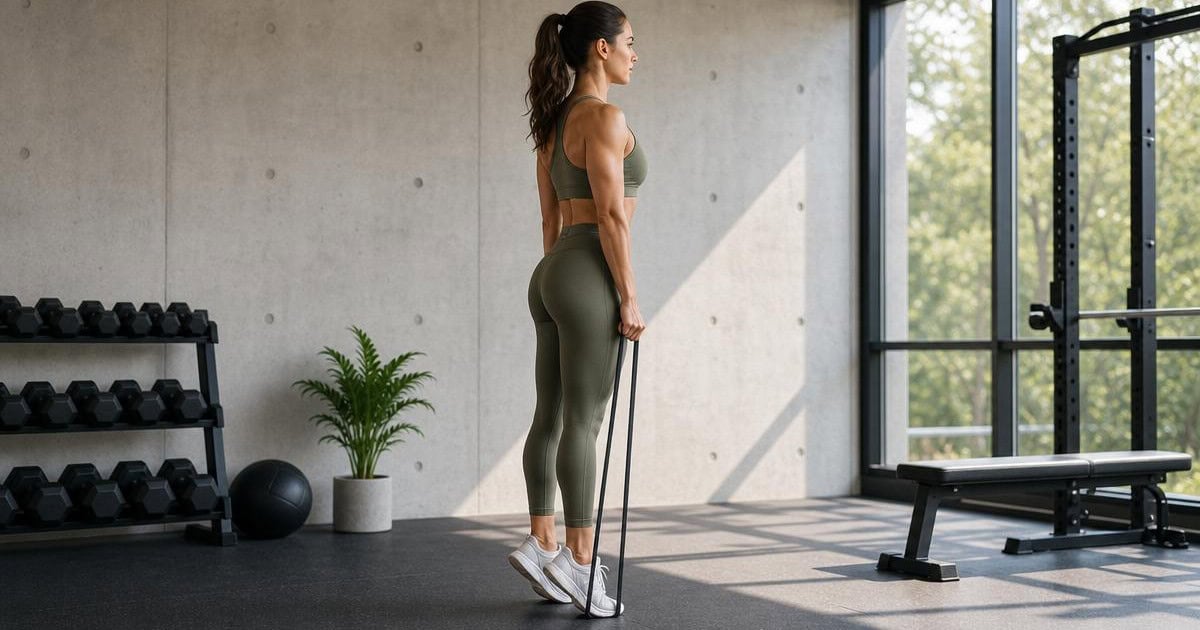
Resistance band calf training produces real calf development and ankle health through patterns that load the calves and ankle stabilizers with the unique advantages bands offer: progressive tension that increases through the concentric phase exactly where the calves are most mechanically advantaged at full plantar flexion, accessibility for home or travel training, dedicated foot and ankle stabilizer work that other equipment can not easily provide, and explosive jump training options. The format works particularly well for calves because the muscle group has two distinct functions (gastrocnemius for straight-leg plantar flexion, soleus for bent-knee plantar flexion) plus important ankle stabilizers (peroneals, inverters) that all respond well to band loading patterns. Most lifters who consistently train resistance band calf work 1 to 3 times per week alongside compound lower-body movements (or alone for home-only training) see measurable calf development, improved ankle health and stability, reduced risk of ankle sprains, and better athletic performance within 8 to 16 weeks. The combination of standing calf raises, single-leg variations, foot stabilizer work, and explosive jumping produces broader calf and ankle development than equipment-limited training would suggest.
Below are ten effective resistance band calf exercises that cover standing gastrocnemius work (resistance band calf raise, band calf raise, band single leg calf raise), seated direct calf isolation (resistance band foot plantar flexion), explosive power work (resistance band jump squat, resistance band long jump, band skier), and ankle stabilizer work (resistance band foot eversion, resistance band foot inversion, resistance band foot external rotation). Together they form a complete band calf and ankle program. A 20 to 30-minute session pulled from this list, performed 1 to 3 times per week, produces strong calf development plus important ankle stability work.
Resistance Band Calf Raise

The Resistance Band Calf Raise performs standing calf raises with a resistance band underfoot for added resistance. The band tension increases at peak plantar flexion where the calves are most mechanically advantaged.
For resistance band calf training, the band calf raise is the foundational gastrocnemius exercise. The band’s progressive tension produces strong peak contraction loading. Run it for 4 sets of 12 to 15 reps as primary calf mass work.
Stand with feet hip-width on a resistance band, gripping the band ends with both hands at the shoulders or sides. The band underfoot provides resistance against plantar flexion. Stand fully tall through the body. Lift the heels off the floor by extending through the toes (plantar flexion) against the band tension. Squeeze the calves hard at the top. Lower the heels under control. The band tension at peak contraction produces strong calf loading.
Band Calf Raise

The Band Calf Raise performs standing calf raises with a band variation, similar to the resistance band calf raise but with technique adjustments. The pattern produces consistent calf loading.
For resistance band calf training, the band calf raise produces foundational calf work. The pattern continues to emphasize gastrocnemius. Run it for 3 to 4 sets of 12 to 15 reps as variation calf work.
Stand on a resistance band with both feet, holding the band ends in both hands. Stand on a small platform or weight plate (about 2 inches elevation) with the balls of the feet on the edge and heels hanging off if possible for full range. Lift the heels by plantar flexing through the toes against band tension. Squeeze hard at the top. Lower under control. The platform elevation allows full range of motion combined with band-progressive loading.
Band Single Leg Calf Raise
The Band Single Leg Calf Raise performs unilateral calf raises with a resistance band. The single-leg position effectively doubles the relative loading per calf.
For resistance band calf training, the single leg calf raise produces strong unilateral calf work. The single-leg position is highly effective. Run it for 3 sets of 10 to 15 reps per leg as primary unilateral calf work.
Stand on one foot on a resistance band, holding the band ends with both hands at the shoulders or sides. The other foot can rest behind for balance. Lift the heel of the standing foot by extending through the toes against band tension. Squeeze the calf hard at the top. Lower under control. Switch legs between sets. The single-leg position produces strong unilateral calf loading equivalent to many weighted variations.
Resistance Band Foot Plantar Flexion

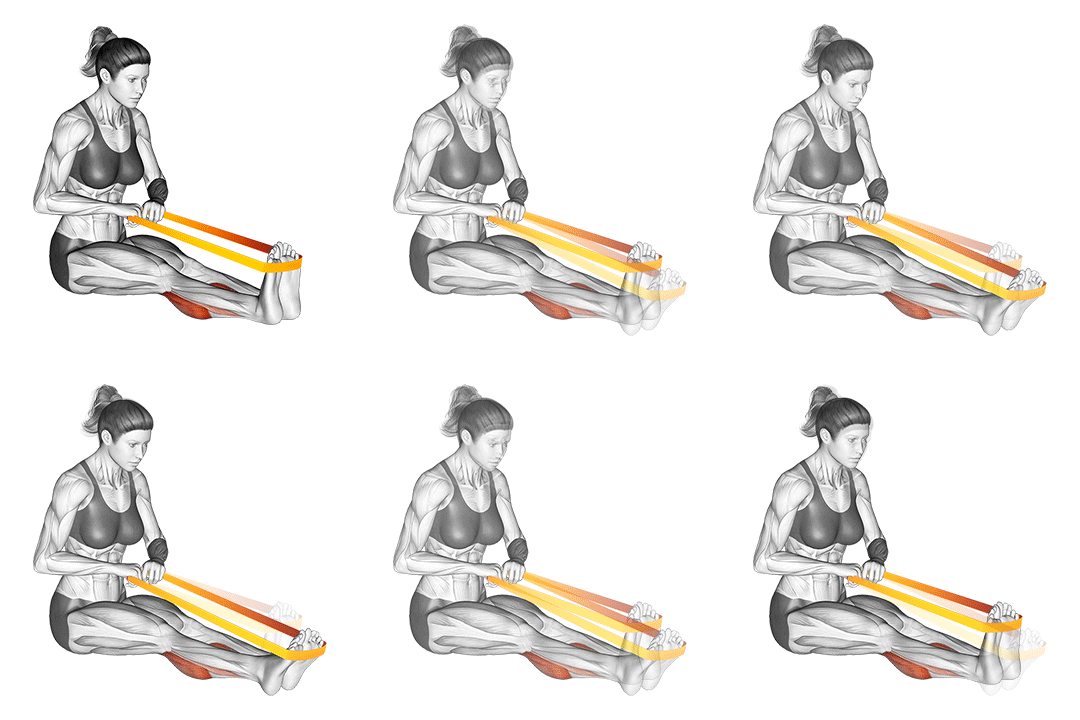
The Resistance Band Foot Plantar Flexion performs seated plantar flexion against a resistance band. The pattern produces direct calf and ankle loading through pure plantar flexion.
For resistance band calf training, the foot plantar flexion produces direct calf isolation. The seated position eliminates body compensation. Run it for 3 sets of 12 to 15 reps as direct calf isolation work.
Sit on the floor with one or both legs extended forward. Loop a resistance band around the ball of the foot and grip the band ends with both hands. Pull the band tight to create tension. Push the foot forward (point the toes) by extending through the ankle (plantar flexion) against band tension. Squeeze the calf hard at peak plantar flexion. Return under control. The seated position produces clean ankle and calf isolation without bodyweight compensation.
Resistance Band Jump Squat

The Resistance Band Jump Squat performs explosive jump squats with band resistance. The pattern produces dynamic calf loading through explosive plantar flexion combined with full-body conditioning.
For resistance band calf training, the jump squat produces explosive calf power work. The pattern hits the calves through dynamic plantar flexion. Run it for 3 sets of 8 to 12 reps as explosive calf and full-body work.
Stand on a resistance band with feet hip-width holding the band ends at the shoulders. Squat down by bending the knees. Drive explosively up by extending the hips, knees, and ankles (triple extension) against band resistance. The calves work hard through the explosive plantar flexion. Land softly back into squat position. Repeat for reps. The pattern produces explosive calf power plus full-body conditioning.
Resistance Band Long Jump

The Resistance Band Long Jump performs explosive horizontal jumps with band resistance. The pattern produces dynamic calf and full-body explosive power loading.
For resistance band calf training, the long jump produces explosive calf and full-body work. The horizontal motion adds athletic conditioning. Run it for 3 sets of 6 to 10 jumps as explosive athletic work.
Anchor a resistance band behind and loop it around the waist. Stand facing forward with feet hip-width. Jump forward as far as possible by driving explosively through the hips, knees, and ankles against the band resistance pulling backward. Land softly. The calves work hard through the explosive plantar flexion. The pattern produces explosive athletic calf power plus full-body conditioning.
Resistance Band Foot Eversion

The Resistance Band Foot Eversion performs lateral foot rotation against a resistance band. The pattern produces direct loading on the peroneal muscles (lateral lower leg) for ankle stability.
For resistance band calf training, the foot eversion produces important peroneal muscle work for ankle health. The pattern addresses commonly weak lateral foot muscles. Run it for 3 sets of 12 to 15 reps per foot as ankle stability work.
Sit on the floor with the legs extended and a resistance band anchored to the side. Loop the band around the working foot. Rotate the foot outward (away from the body) against the band tension. The lateral foot muscles (peroneals) work to evert the foot. Return under control. Switch sides between sets. The pattern is critical for ankle stability and reducing risk of ankle sprains. Many programs neglect these stabilizers.
Resistance Band Foot Inversion

The Resistance Band Foot Inversion performs medial foot rotation against a resistance band. The pattern produces direct loading on the inner foot muscles for arch support and ankle stability.
For resistance band calf training, the foot inversion produces important inner foot muscle work. The pattern addresses arch support and ankle stability. Run it for 3 sets of 12 to 15 reps per foot as ankle stability work.
Sit on the floor with the legs extended and a resistance band anchored to the opposite side. Loop the band around the working foot. Rotate the foot inward (toward the body) against the band tension. The inner foot muscles work to invert the foot. Return under control. Switch sides between sets. The pattern produces important arch support work and complements eversion work for complete ankle stability.
Resistance Band Foot External Rotation

The Resistance Band Foot External Rotation performs rotational foot motion with a band. The pattern produces direct loading on the foot rotators and complements basic ankle work.
For resistance band calf training, the foot external rotation produces ankle rotational stability work. The pattern hits the rotators that contribute to overall ankle health. Run it for 3 sets of 12 to 15 reps per foot as ankle stability and rotation work.
Sit on the floor with the working leg extended and a resistance band anchored to the side. Loop the band around the working foot. Rotate the foot externally (away from midline with rotational motion) against the band tension. The deep foot rotators work through the motion. Return under control. Switch sides between sets. The pattern complements eversion and inversion work for complete foot and ankle stability.
Band Skier

The Band Skier performs alternating ski-like motion with resistance bands. The pattern produces dynamic calf and full-body coordination work through repetitive alternating motion.
For resistance band calf training, the band skier produces dynamic calf endurance and coordination work. The pattern hits the calves through repetitive plantar flexion. Run it for 3 sets of 30 to 60 seconds as dynamic calf endurance work.
Anchor a resistance band overhead and grip the band ends with both hands. Stand with feet hip-width. Perform alternating ski motion – both arms drive backward together while the heels lift through plantar flexion (rising on toes briefly), then return forward as the heels lower. Continue the alternating skier motion in continuous rhythm. The pattern produces dynamic calf endurance work plus full-body coordination conditioning. Use as a finisher or conditioning work.
How To Program These Workouts
A productive resistance band calf session pulls 4 to 6 exercises from the list above based on training goals. A common balanced session: resistance band calf raise (gastrocnemius mass), band single leg calf raise (unilateral), resistance band foot plantar flexion (direct isolation), resistance band foot eversion (ankle stability), resistance band jump squat (explosive). For ankle health focus: resistance band foot eversion, resistance band foot inversion, resistance band foot external rotation, resistance band foot plantar flexion. Run calf raise work for 3 to 4 sets of 12 to 15 reps, unilateral work for 3 sets of 10 to 15 reps per leg, ankle stability work for 3 sets of 12 to 15 reps per foot, and explosive work for 3 sets of 8 to 12 reps. Total session covers 12 to 18 working sets focused on calf and ankle development.
Train resistance band calf work 1 to 3 times per week as part of broader lower-body or home-training programming. The calves are highly fatigue-resistant due to their use in daily walking and standing, so they recover quickly between sessions and tolerate higher frequency than other muscle groups. Most successful programs include band calf work either: 1) at the end of a leg day after compound work, 2) on dedicated calf days for specialization, or 3) split across multiple lower-body sessions for high frequency. Athletes recovering from ankle injuries often benefit from daily light ankle stabilizer work for joint health.
For broader calf programming, see our best calf workouts and how to grow your calves. For specific ankle work, see our best ankle stability workouts.
Final Thoughts
The best resistance band calf workouts deliver real calf development plus important ankle stability work through patterns that effectively load the calves and ankle stabilizers without weights or machines. The combination of standing calf raises, unilateral variations, direct foot plantar flexion, ankle stabilizer work, and explosive power patterns covers every functional pattern of the calves and ankle complex and produces broader development than equipment-limited training would suggest. The band’s progressive tension throughout the concentric phase produces strong peak contraction loading exactly where the calves are most mechanically advantaged. For lifters who train at home, while traveling, or with limited equipment access, want to add ankle stabilizer work to existing programs (often missed in traditional calf training), or want to build athletic explosive power through band-resisted jumps, dedicated resistance band calf training is one of the most effective options available.
Stay focused on full range of motion and ankle stabilizer work. The most common resistance band calf training mistakes include using partial range of motion on calf raises (which limits calf loading dramatically) and skipping ankle stabilizer work (foot eversion, inversion) entirely (which leaves the ankle vulnerable to sprains and instability). The fix: use full range from deep stretch to full plantar flexion on every rep, and include foot eversion and inversion work in calf sessions for balanced ankle development. Quality reps with full range and balanced training produce stronger calf and ankle development than calf-raise-only programs.
Frequently Asked Questions
Are resistance bands effective for calves?
Yes effectively for most lifters. Resistance bands produce real calf development through standing calf raises (gastrocnemius mass), seated plantar flexion (direct isolation), unilateral variations (which effectively double relative loading per calf), and explosive jump patterns. The band’s progressive tension increases through the concentric phase, producing strong peak contraction loading. Many lifters build excellent calves through dedicated band training, particularly when combining single-leg variations with explosive jump work.
Can resistance bands replace calf raise machines?
For most lifters yes. Band calf raises produce real gastrocnemius loading through progressive tension that mirrors much of the loading pattern of weighted calf raise machines. Lifters who can not access machines (home training, travel) can build excellent calves through dedicated band training. Lifters with full equipment access typically include both for maximum development: machines for foundational mass and bands for accommodating resistance variations or peak contraction work.
Are foot eversion and inversion exercises really useful?
Yes very for ankle health and injury prevention. Foot eversion (lateral foot rotation) and inversion (medial foot rotation) train the ankle stabilizers (peroneals and inverters) that prevent ankle sprains and provide foot/arch support. These muscles are often weak in most lifters because traditional calf training (calf raises) doesn’t target them. Most successful ankle health programs include eversion and inversion work as part of overall calf training. Lifters with history of ankle sprains particularly benefit from regular ankle stabilizer work.
How heavy should bands be for calves?
Medium to heavy for calf raises, light to medium for ankle stabilizers. Calf raises can use heavy bands (50 to 100+ pounds resistance, often combining multiple bands) for productive calf loading. Single-leg variations use medium bands (25 to 50 pounds). Foot eversion/inversion uses light to medium bands (15 to 30 pounds) because the small ankle muscles require control. Most successful programs progressively load all exercises until 12 to 15 reps becomes challenging.
How often should I train calves with bands?
One to three sessions per week works for most lifters. The calves are highly fatigue-resistant due to their use in daily walking and standing, so they recover quickly between sessions. Most successful programs include band calf work either at the end of leg days, on dedicated calf days, or split across multiple days for high frequency. Lifters with stubborn calf development often respond well to high-frequency training (3 to 5 times per week with managed volume).