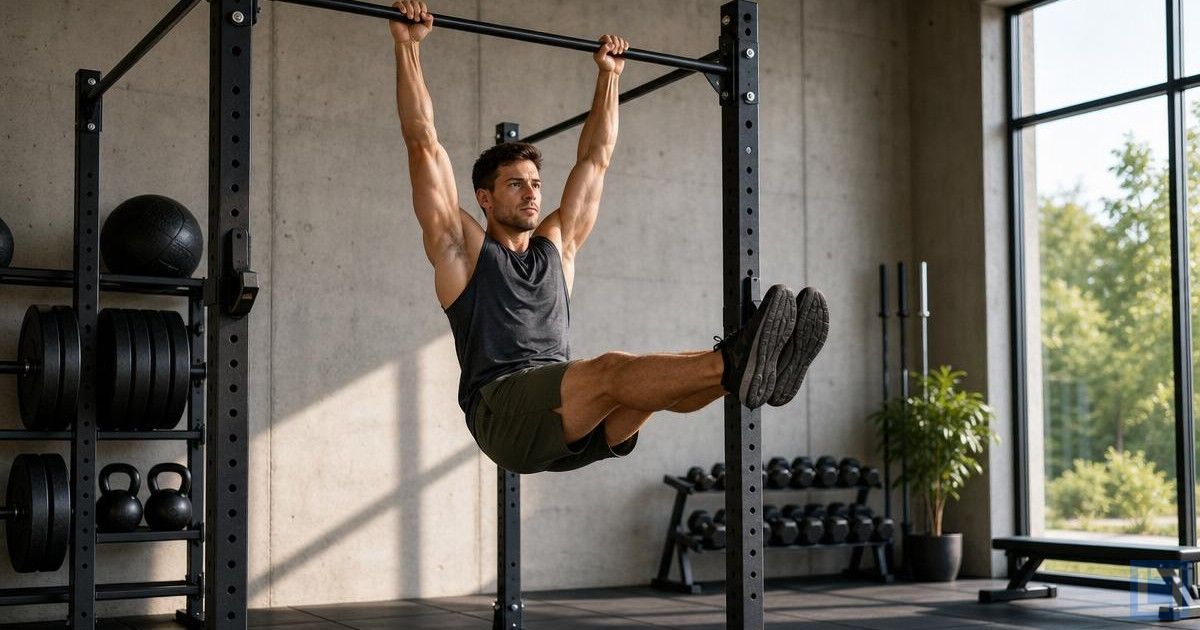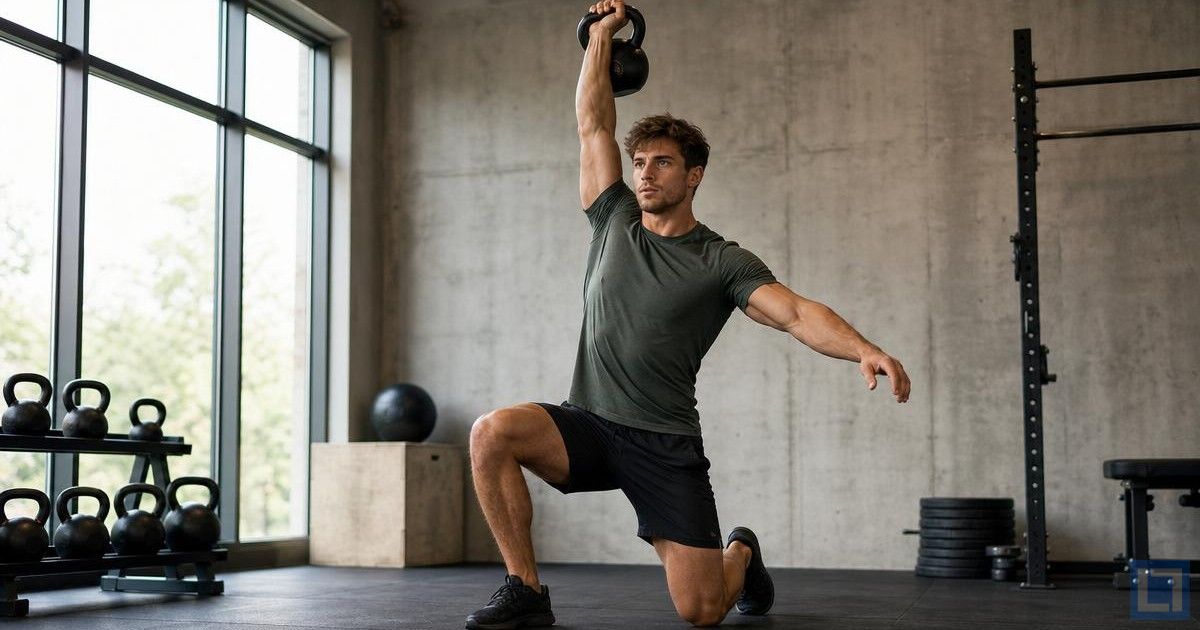
Kettlebells produce real arm development across every major function the arm muscles serve. The combination of bicep curls, tricep extensions, forearm work, and compound exercises that hit the arms heavily as secondary movers covers the biceps, triceps, brachialis, brachioradialis, and forearm flexors and extensors in one piece of equipment. The best kettlebell arm workouts use this versatility to deliver complete arm training in 30 to 45 minutes with one or two kettlebells.
Below are ten effective kettlebell arm exercises that cover bicep isolation, tricep isolation in multiple positions, forearm work through carries and wrist curls, and compound movements (presses, rows) that hit the arms heavily as secondary movers. Together they form a complete arm training program for home gyms, garages, and travel scenarios.
Kettlebell Biceps Curl

The Kettlebell Biceps Curl holds a kettlebell at the side and curls it up toward the shoulder. The bell shape produces a different loading pattern than dumbbells because the weight hangs below the handle, which extends the lever arm and makes curling slightly harder per pound.
For kettlebell-only arm training, the biceps curl is the foundational direct bicep exercise. The unique loading pattern of the kettlebell produces strong bicep development per rep, and the bell handle position naturally creates a slight rotation that hits the biceps brachii from a useful angle. Run it for 3 sets of 8 to 12 reps per arm.
Stand tall with a kettlebell at the side. Curl the bell up toward the shoulder by bending at the elbow. Keep the elbow pinned to the side throughout. Lower under control to full extension. Switch arms or alternate as preferred.
Kettlebell Concentration Curl

The Kettlebell Concentration Curl sits on a bench or chair with the elbow braced against the inside of the thigh and curls the kettlebell up toward the shoulder. The braced elbow eliminates body sway and isolates the biceps maximally.
For pure bicep isolation in any kettlebell program, the concentration curl is the most direct exercise that exists. The braced elbow position prevents momentum cheating and forces the bicep to do all the work, which produces stronger development per rep than standing variations. Run it for 3 sets of 10 to 12 reps per arm.
Sit on a bench with feet wide apart. Hold a kettlebell in one hand with the elbow braced against the inside of the thigh on the same side. Curl the bell up toward the shoulder slowly. Squeeze the bicep hard at the top. Lower under control. Switch arms after each set.
Kettlebell Overhead Triceps Extension

The Kettlebell Overhead Triceps Extension holds a kettlebell overhead with both hands and lowers it behind the head by bending at the elbows, then extends back to the start. The exercise targets the long head of the triceps directly through full overhead range of motion.
For tricep mass development, the overhead extension is one of the most effective exercises that exists. The overhead position elongates the long head of the triceps and produces stronger growth in the muscle that gives the upper arm its full appearance from the back. Run it for 3 sets of 10 to 12 reps as the primary tricep exercise.
Stand or kneel holding a single kettlebell overhead with both hands cupping the top of the bell. Lower the kettlebell behind the head by bending at the elbows, keeping the upper arms vertical. Extend back to the start by straightening the elbows. Use moderate weight; this is a technique-focused movement.
Kettlebell Lying Triceps Extension Skull Crusher

The Kettlebell Lying Triceps Extension Skull Crusher lies on a bench or floor with a kettlebell held above the chest with both hands and lowers it toward the forehead by bending at the elbows. The lying position eliminates body sway and produces strong tricep isolation.
For complete tricep development, the skull crusher complements overhead extensions by hitting the triceps from a different angle. The combination of overhead and lying extensions covers all three tricep heads more thoroughly than either alone. Run it for 3 sets of 8 to 12 reps as accessory work.
Lie flat on a bench or the floor. Hold a kettlebell with both hands cupping the top end, arms extended straight up above the chest. Lower the kettlebell toward the forehead by bending at the elbows. Keep the upper arms still and pointed at the ceiling. Press back to the start by extending the elbows.
Kettlebell Standing One Arm Extension

The Kettlebell Standing One Arm Extension holds a kettlebell overhead in one hand and lowers it behind the head by bending at the elbow, then extends back to lockout. The unilateral version catches strength imbalances between the arms and adds significant core demand.
Single-arm tricep work is one of the most underrated bodybuilding tools that exists. The unilateral loading catches the strength imbalance most lifters develop from years of bilateral training, and the asymmetric load demands core bracing that produces functional carryover beyond just arm size. Run it for 3 sets of 10 to 12 reps per arm.
Stand tall with a kettlebell held overhead in one hand. Lower the kettlebell behind the head by bending at the elbow, keeping the upper arm vertical. Extend back to lockout overhead by straightening the elbow. Switch arms after each set.
Kettlebell Farmers Walk

The Kettlebell Farmers Walk holds heavy kettlebells at the sides and walks for distance or time. The continuous walking under heavy load trains the entire arm (forearms, biceps, triceps as stabilizers) along with the grip and traps.
For complete arm development, forearm and grip work matters as much as bicep and tricep training. The farmers walk is the most efficient single forearm exercise that exists, and the heavy loading produces real arm thickness through the entire forearm region. Use it as a finisher for 3 to 4 sets of 30 to 60-second walks.
Hold heavy kettlebells at the sides with a strong grip. Walk with normal posture: tall spine, shoulders back, eyes forward. End the set when grip gives out or form breaks down. Both indicators are good signals to stop.
Kettlebell Farmers Carry

The Kettlebell Farmers Carry holds heavy kettlebells at the sides for time without walking. The static loading produces continuous forearm and grip work while the upper back stabilizes against the heavy loads.
For lifters with limited space who cannot walk during farmers walks, the static carry produces nearly identical forearm and grip development. The continuous tension also builds the kind of grip endurance that transfers to deadlifts, pull-ups, and other heavy pulling exercises. Run it for 3 to 4 sets of 30 to 60-second holds.
Hold heavy kettlebells at the sides with a strong grip. Stand tall with shoulders back. Maintain perfect posture for the duration of the hold. End the set when grip gives out or the shoulders round forward. Both are signals to stop.
Kettlebell Strict Press

The Kettlebell Strict Press holds a single kettlebell in the rack position at the shoulder and presses it overhead to lockout. While primarily a shoulder exercise, the strict press hits the triceps heavily through the lockout portion.
For combined shoulder and tricep development in arm-focused kettlebell programs, the strict press is one of the most efficient exercises that exists. The compound loading produces stronger tricep development than isolation exercises alone for lifters who use full overhead range of motion. Run it for 3 to 4 sets of 6 to 10 reps per arm.
Hold a kettlebell in the rack position at the shoulder. Press the bell straight up to lockout overhead, keeping the body rigid throughout. Lower under control to the rack. The triceps work hardest at the lockout; emphasize the full extension at the top of every rep.
Kettlebell Bent Over Row

The Kettlebell Bent Over Row hinges at the hips with kettlebells in both hands and rows them to the lower chest. While primarily a back exercise, the bent-over row hits the biceps heavily through the pulling portion.
For combined back and bicep development, the bent-over row is one of the most efficient exercises that exists. The compound loading produces stronger bicep development than isolation curls alone, and the back work fills out the upper-body arm region with the rear delts and lats. Run it for 3 sets of 8 to 12 reps.
Hinge at the hips with a flat back and a slight knee bend, kettlebells hanging straight down. Pull the bells to the lower chest or upper abdomen, squeezing the shoulder blades together at the top. Lower under control. Avoid jerking the bells with body momentum.
Kettlebell Wrist Curl

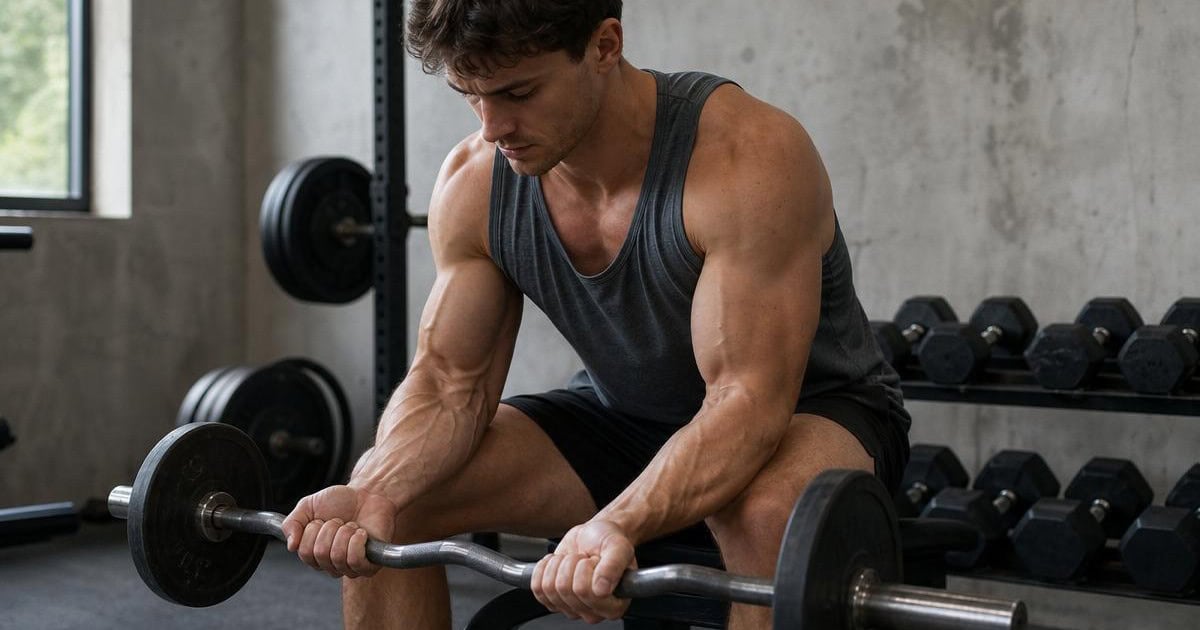
The Kettlebell Wrist Curl rests the forearm on the thigh or a bench with the wrist hanging off the edge and curls a kettlebell using only wrist motion. The exercise isolates the forearm flexors directly through their primary wrist flexion function.
For complete forearm development, direct wrist work complements the grip-focused loading of farmers walks. The wrist curl produces the kind of forearm thickness that builds the visible muscle running from the wrist to the elbow. Run it for 3 sets of 12 to 15 reps per side as a finisher.
Sit on a bench with the forearm resting on the thigh, palm facing up, wrist hanging just past the knee. Hold a light kettlebell. Lower the kettlebell as far as the wrist allows by extending the wrist back, then curl it back up by flexing the wrist. Switch sides after each set.
How To Program These Workouts
A productive kettlebell arm session pulls six to eight exercises from the list above. A balanced session includes one bicep curl variation (standing or concentration), one tricep extension (overhead or skull crusher), one unilateral arm exercise (one-arm extension), one forearm exercise (farmers walk or wrist curl), and one compound (strict press or bent-over row). Run isolation exercises for 3 sets of 8 to 12 reps; compounds for 3 sets of 6 to 10 reps; carries for 30 to 60 seconds.
Train arms one to two times per week. The arms recover within 48 to 72 hours of moderate training, but they get significant indirect work from chest day, back day, and shoulder day, which means dedicated arm work compounds quickly with other upper-body training. Most lifters program one focused arm session per week alongside the indirect arm work from other sessions.
For more arm programming, see our best dumbbell bicep workouts and best dumbbell tricep workouts. For broader kettlebell programming, see our best kettlebell workouts.
Final Thoughts
The best kettlebell arm workouts deliver complete arm development without requiring barbells, cable machines, or specialized arm-training equipment. The combination of direct isolation work, forearm-focused carries, and compound exercises that hit the arms heavily produces fuller, more balanced arm development than isolation-only programs achieve. For home lifters and travelers, kettlebells are one of the most versatile arm-training tools available.
Pay attention to elbow position. The most common arm training mistake is letting the elbows drift forward during curls or out to the sides during tricep work, which shifts loading away from the target muscle. The fix: pin the elbows to the sides during curls and keep them pointing straight at the ceiling during overhead extensions. Strict elbow position produces stronger arm development than heavier weight with sloppy form.
Frequently Asked Questions
What kettlebell weight should I use for arm workouts?
Most intermediate lifters work with 8 to 16 kg kettlebells (18 to 35 pounds) for direct arm exercises (curls, extensions) and 24 to 32 kg (53 to 70 pounds) for forearm carries. The right weight is whatever allows clean reps in your target range with strict form. Heavier weight with poor form produces less benefit than moderate weight with strict technique.
Can kettlebells build big arms?
Yes, especially for beginners and intermediates. The combination of direct isolation work and compound exercises produces real arm development for years before lifters bump up against the load ceiling barbells eventually surpass. The kettlebell shape also produces unique forearm and grip stimulus that dumbbells cannot fully replicate.
How often should I train arms with kettlebells?
One to two times per week works for most lifters. The arms recover quickly, but they get significant indirect work from chest day, back day, and shoulder day, which means dedicated arm sessions compound with other upper-body training. Most lifters do well with one focused arm session per week.
Do I need light kettlebells for arm training?
Yes, lighter than for primary kettlebell exercises. Most arm exercises (curls, extensions) are best performed with 8 to 16 kg bells, while swing and squat training typically uses 16 to 32 kg bells. A complete kettlebell setup for arm training includes at least one lighter bell (8 to 12 kg) alongside the heavier bells used for compound work.
Are kettlebells better than dumbbells for arms?
Different equipment have different strengths. Dumbbells allow more precise weight selection and easier hand positioning for some isolation exercises. Kettlebells produce unique loading patterns due to the bell-below-handle design and add stronger forearm and grip stimulus. Most lifters benefit from both: dumbbells for primary heavy work, kettlebells for variety and forearm-focused training.