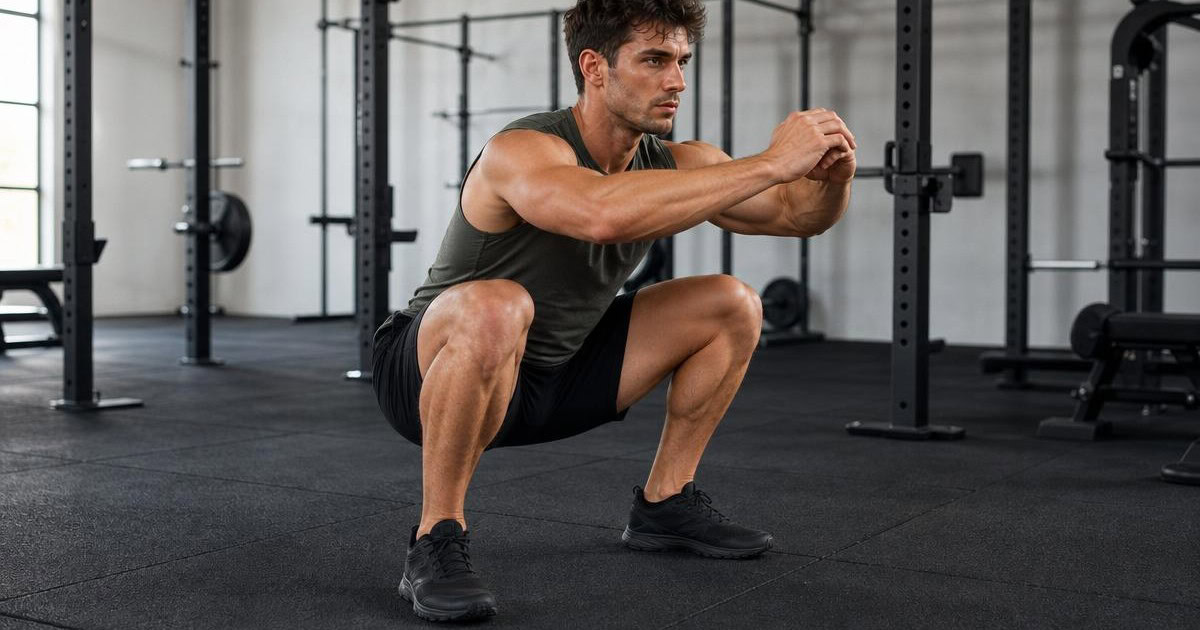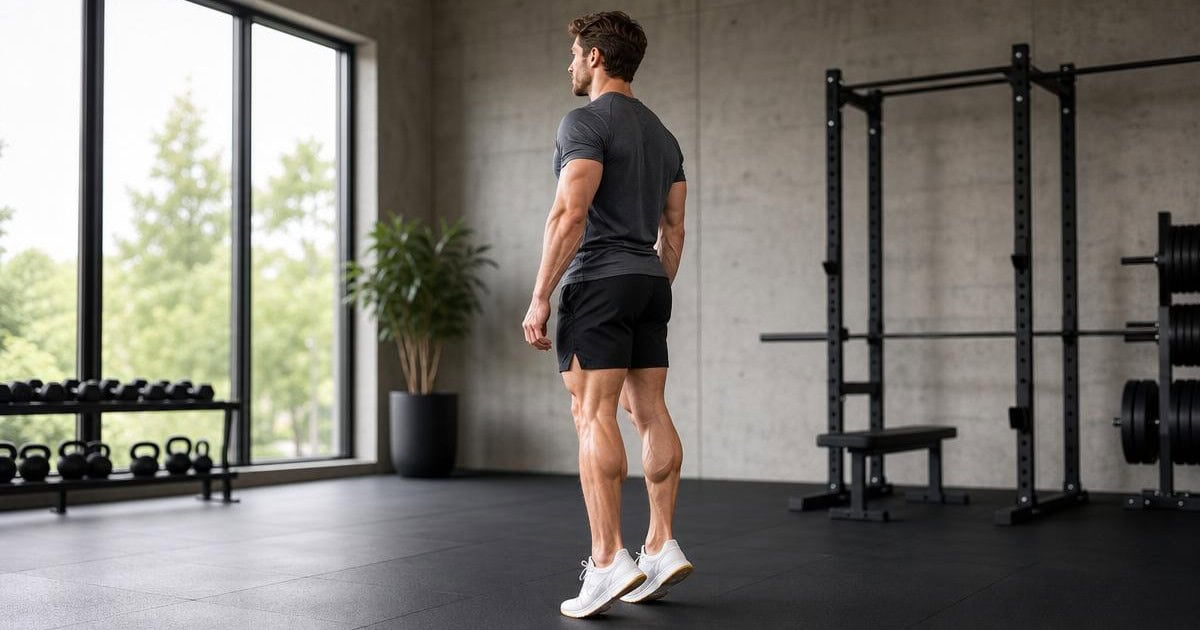
The gastrocnemius – the larger, two-headed calf muscle on the back of the lower leg (with medial and lateral heads) – is one of the most genetically determined muscles but responds well to dedicated training across volume, intensity, and frequency. The gastrocnemius contributes substantially to lower-leg mass, athletic performance (especially jumping and running), the diamond-shaped calf appearance from the back, and the calf development that completes well-developed lower bodies. The gastrocnemius activates strongest during: standing calf raise patterns (where the knee is straight) for primary gastrocnemius loading – the most important calf exercise pattern (the soleus, the deeper calf muscle, requires bent-knee positions like seated calf raises), heavy weighted calf raises (dumbbell, barbell, machine, Smith machine) for foundational compound loading with progressive overload, plyometric work (jump squats, box jumps) for explosive calf loading and athletic calf function, high-volume work (bodyweight calf raises, jump rope) for calf endurance and high training volume that calves respond to, and stretching for proper calf function. Most lifters who want bigger calves benefit from training calves 2 to 4 times per week with appropriate volume distributed across heavy, moderate, plyometric, and high-volume work for complete gastrocnemius development. Calves are notoriously stubborn but respond to consistent high-frequency, high-volume training when properly programmed.
Below are ten of the most effective exercises for gastrocnemius development, covering primary heavy weighted calf raises (dumbbell standing calf raise, barbell standing calf raise, lever standing calf raise, smith standing leg calf raise), high-volume bodyweight work (bodyweight standing calf raise), explosive plyometric loading (jump squat, jump box), high-volume conditioning (jump rope), endurance and stability (toe walk), and calf flexibility (standing gastrocnemius calf stretch). Together they form a complete gastrocnemius program. A 30 to 45-minute calf-focused session pulled from this list, performed 2 to 4 times per week (or as integrated work in regular leg training), produces strong gastrocnemius development for any lifter focused on bigger calves, more developed lower legs, or improved athletic calf function.
Dumbbell Standing Calf Raise

The Dumbbell Standing Calf Raise performs weighted calf raises. The pattern is foundational for gastrocnemius development.
For gastrocnemius development, the dumbbell standing calf raise is foundational. Run it for 4 sets of 10 to 15 reps as primary heavy gastrocnemius work.
Stand holding dumbbells in each hand at the sides. Position the balls of the feet on a slightly elevated surface (or stand flat). Lift the heels up to rise onto the balls of the feet by extending at the ankles. Hold briefly at peak. Lower under control to deep stretch position. The pattern is foundational for gastrocnemius development – the gastrocnemius (the larger, two-headed calf muscle) responds best to standing calf raise patterns where the knee is straight. Heavy weighted calf raises produce the most direct gastrocnemius loading possible. Most lifters with the most developed calves have built them on heavy standing calf raise training.
Barbell Standing Calf Raise

The Barbell Standing Calf Raise performs barbell calf raises. The pattern produces heavy compound calf loading.
For gastrocnemius development, the barbell standing calf raise produces heavy compound calf loading. Run it for 3 to 4 sets of 8 to 12 reps as heavy compound calf work.
Position a barbell on the upper back as for a back squat. Stand with feet hip-width on a slightly elevated surface (or flat floor). Lift the heels up to rise onto the balls of the feet by extending at the ankles. Hold briefly at peak. Lower under control to deep stretch. The pattern produces heavy compound calf loading – the barbell variation allows substantially heavier loads than dumbbells, producing maximum gastrocnemius stimulus through heavy progressive overload. Excellent variation for advanced lifters seeking maximum calf development.
Lever Standing Calf Raise

The Lever Standing Calf Raise performs machine standing calf raises. The pattern produces convenient heavy calf loading.
For gastrocnemius development, the lever standing calf raise produces convenient heavy loading. Run it for 3 to 4 sets of 10 to 15 reps as machine calf work.
Set up on a standing calf raise machine with the shoulders under the pads. Position the balls of the feet on the platform. Lift the heels up to rise onto the balls of the feet by extending at the ankles. Hold briefly at peak. Lower under control to deep stretch. The pattern produces convenient heavy calf loading – the machine eliminates balance and loading concerns, allowing focused calf loading with progressive overload. Excellent foundational calf exercise that supports complete gastrocnemius development through consistent heavy loading.
Bodyweight Standing Calf Raise

The Bodyweight Standing Calf Raise performs bodyweight calf raises. The pattern produces accessible high-volume calf work.
For gastrocnemius development, the bodyweight standing calf raise produces accessible high-volume work. Run it for 3 to 4 sets of 20 to 30 reps as high-volume calf work.
Stand on a flat floor with feet hip-width. Lift the heels up to rise onto the balls of the feet by extending at the ankles. Hold briefly at peak. Lower under control with eccentric loading. The pattern produces accessible high-volume calf loading – bodyweight variations allow daily training with high reps. Combined with heavy weighted variations, bodyweight calf raises support high training volume that the calves respond to. Single-leg variations add intensity to bodyweight work.
Smith Standing Calf Raise

The Smith Standing Leg Calf Raise performs Smith machine standing calf raises. The pattern produces stable heavy calf loading.
For gastrocnemius development, the smith standing leg calf raise produces stable heavy calf loading. Run it for 3 to 4 sets of 10 to 15 reps as smith machine calf work.
Position under a Smith machine bar with the bar on the upper traps. Position the balls of the feet on a slightly elevated surface (or flat). Lift the heels up to rise onto the balls of the feet by extending at the ankles. Hold briefly at peak. Lower under control to deep stretch. The pattern produces stable heavy calf loading – the Smith machine eliminates balance concerns while allowing heavy loading similar to free-weight barbell calf raises. Excellent variation for heavy progressive calf training without balance limitations.
Jump Squat

The Jump Squat performs explosive jump squats. The pattern produces explosive gastrocnemius loading.
For gastrocnemius development, jump squats produce explosive plyometric calf loading. Run it for 3 sets of 5 to 8 reps as plyometric calf work.
Stand with feet shoulder-width. Squat down to about quarter-depth. Explosively drive up and jump as high as possible by extending the hips, knees, and ankles. Land softly with bent knees. Reset and repeat. The pattern produces explosive plyometric calf loading – jump squats train the calves through the explosive ankle extension that occurs during jumping. Excellent calf training for athletes because plyometric loading produces different stimulus than slow tempo calf raises and contributes to athletic calf function.
Jump Box

The Jump Box performs box jumps. The pattern produces maximum explosive calf loading.
For gastrocnemius development, box jumps produce maximum explosive calf loading. Run it for 3 sets of 5 to 8 reps as explosive plyometric work.
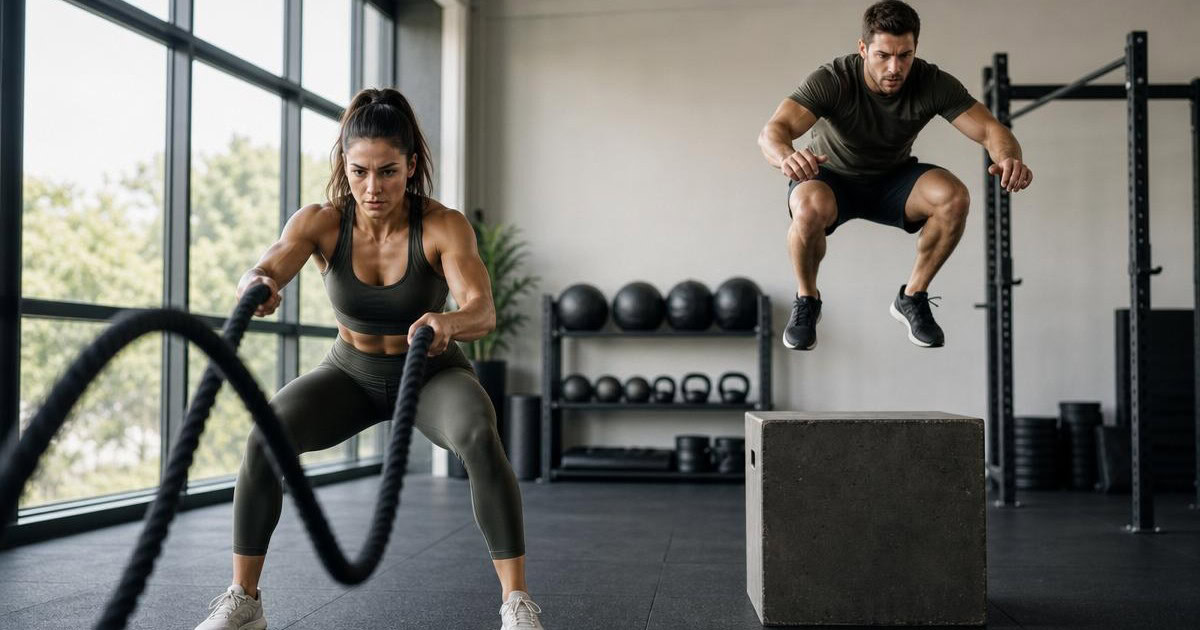
Stand in front of a box about knee to mid-thigh height. Squat down to a quarter-squat position. Explosively jump up onto the box by extending hips, knees, and ankles, landing softly on top of the box with bent knees. Step down. The pattern produces maximum explosive calf and triple-extension power – box jumps train the calves through the highest possible explosive demands. Excellent plyometric calf work that develops athletic calf function alongside heavy strength training.
Jump Rope

The Jump Rope performs jump rope. The pattern produces high-volume calf endurance.
For gastrocnemius development, jump rope produces high-volume calf endurance. Run it for 3 sets of 60 to 120-second intervals as calf endurance work.
Stand holding a jump rope with the rope behind the body. Swing the rope over the head and jump over it as it passes under the feet. Continue at moderate pace. The calves work through repetitive small jumps. The pattern produces high-volume calf endurance loading – jump rope trains the calves through hundreds of repetitions per session, building calf endurance that complements strength work. Excellent calf conditioning that supports overall calf development through high training volume.
Toe Walk

The Toe Walk performs walking on toes. The pattern produces calf endurance and stability work.
For gastrocnemius development, toe walking produces calf endurance work. Run it for 3 sets of 30 to 45-second walks as calf endurance work.
Stand on the balls of the feet with heels lifted. Walk forward maintaining the toe position with heels off the ground. Continue for the working interval. The calves work hard isometrically and through repeated calf raises. The pattern produces calf endurance plus stability loading – toe walking trains the calves through dynamic isometric loading combined with stability demands. Excellent functional calf exercise that develops calf endurance and ankle stability simultaneously.
Standing Gastrocnemius Calf Stretch

The Standing Gastrocnemius Calf Stretch performs the wall calf stretch. The pattern produces calf stretching.
For gastrocnemius development, the calf stretch produces calf flexibility. Run it for 3 sets of 30 to 60-second holds per side as flexibility work, daily.
Stand facing a wall about 2 feet away. Place hands on the wall at shoulder height. Step one leg back with the heel down and knee straight. Lean forward into the wall to feel deep stretch through the calf. Hold for 30 to 60 seconds. Switch sides. The pattern produces direct gastrocnemius stretching – critical for calf development because flexible calves train through fuller range of motion than tight calves. Daily stretching supports calf function and prevents the tightness that limits calf training and contributes to injury.
How To Program These Workouts
A productive gastrocnemius session pulls 5 to 7 exercises from the list above. A common balanced session: dumbbell standing calf raise (heavy primary – moderate to high reps), barbell standing calf raise (heavy compound), lever standing calf raise (machine variation), bodyweight standing calf raise (high volume), jump squat (plyometric), jump rope (endurance), standing gastrocnemius calf stretch (flexibility). For maximum calf mass: prioritize heavy weighted calf raises (dumbbell, barbell, machine) with progressive overload across multiple weekly sessions. For athletic calf function: include plyometric work (jump squats, box jumps) plus endurance work (jump rope, toe walks). Run heavy weighted work for 3 to 4 sets of 10 to 15 reps with full range of motion (deep stretch and full contraction), bodyweight high-volume for 3 to 4 sets of 20 to 30 reps, plyometric for 3 sets of 5 to 8 reps.
Train gastrocnemius 2 to 4 times per week as part of complete leg programming. The calves respond particularly well to high frequency because: 1) they’re notoriously stubborn and benefit from frequent stimulation, 2) they’re a high-endurance muscle group accustomed to daily walking demands, 3) they require both strength and endurance work for complete development. Most successful calf programs include: 1) primary calf day (heavy weighted calf raises plus accessories), 2) secondary calf day (different angles and high-volume), 3) integrated calf work in regular leg training, 4) optional daily bodyweight calf practice. Total weekly calf volume should be 16 to 24+ working sets across heavy weighted, high-volume, and plyometric patterns. The calves benefit from more volume than typically programmed.
For broader programming, see our how to grow your calves and how to build bigger calves. For specific work, see our best calf exercises.
Final Thoughts
The best gastrocnemius exercises deliver real calf development through training that targets the larger calf muscle through multiple training modalities: heavy weighted calf raises for primary loading, machine variations for convenient heavy work, high-volume bodyweight work for endurance, explosive plyometric loading for athletic calf function, high-volume conditioning, endurance and stability work, and flexibility for proper function. The combination of dumbbell, barbell, machine, and Smith machine calf raises plus bodyweight work, jump squats, box jumps, jump rope, toe walks, and calf stretches covers every functional pattern of gastrocnemius development and produces broader lower-leg, athletic, and aesthetic development than partial training would suggest. Many lifters discover bigger calf circumference, more developed diamond-shape from behind, more calf size visible from all angles, more powerful jumping and running, more impressive overall lower-body development, and the integrated lower-leg strength that supports athletic function within 12 to 24 weeks of adding consistent comprehensive calf work. Calves are stubborn but responsive to consistent high-volume training.
Stay focused on high frequency plus full range of motion as priorities for gastrocnemius development. The most common mistake lifters make in calf training is doing too few sessions per week (1 to 2 times) with partial range of motion, producing minimal calf development. The fix: prioritize calf training 2 to 4 times per week with deep stretch at the bottom and full contraction at the top of every rep. Combined with heavy progressive overload, varied training modalities (heavy weighted, high-volume, plyometric), and consistent practice over 6+ months, frequent full-range calf training produces the calf development that infrequent partial-range training never achieves. Calves are stubborn but respond to consistent dedicated training – patience and frequency matter more than session intensity.
Frequently Asked Questions
How can I build bigger calves?
Heavy weighted calf raises plus high frequency plus full range of motion. Heavy weighted standing calf raises (dumbbell, barbell, machine, Smith) produce the most direct calf loading possible. High frequency (2 to 4 times per week) addresses the stubborn nature of calf development. Full range of motion (deep stretch at bottom, full contraction at top) maximizes stimulus per rep. Combined with high-volume bodyweight work, plyometric loading (jump squats, box jumps), endurance work (jump rope, toe walks), and stretching, these form the foundation of calf development.
What’s the best calf exercise?
Heavy weighted standing calf raises. Heavy weighted standing calf raises (dumbbell, barbell, machine, or Smith machine) produce the most direct gastrocnemius loading possible – they specifically target the larger calf muscle through standing position with knee straight. Combined with bodyweight high-volume work, plyometric loading (jump squats, box jumps), endurance work (jump rope, toe walks), and flexibility (calf stretches), heavy weighted standing calf raises form the foundation of calf development. The standing position is essential for gastrocnemius emphasis.
Why won’t my calves grow?
Multiple contributing factors. Most calf training failures result from: 1) infrequent training (only 1 to 2 times per week), 2) partial range of motion limiting stimulus, 3) inadequate volume (too few sets per week), 4) lack of progressive overload, 5) only heavy work without variety, 6) only one calf exercise variation. The fix: prioritize 2 to 4 weekly calf sessions with full range of motion, progressive overload, and varied training modalities (heavy weighted, high-volume, plyometric). Calves are stubborn but respond to consistent dedicated training – most failures result from undertraining.
How often should I train calves?
2 to 4 times per week as part of complete leg programming. The calves respond particularly well to high frequency because they’re stubborn and benefit from frequent stimulation. Most successful programs include: 1) primary calf day (heavy weighted plus accessories), 2) secondary calf day (different angles and high-volume), 3) integrated calf work in regular leg training, 4) optional daily bodyweight calf practice. Total weekly calf volume should be 16 to 24+ working sets across heavy weighted, high-volume, and plyometric patterns. Calves benefit from more frequency than typically programmed.
How long does it take to build bigger calves?
12 to 24 weeks for measurable improvement, ongoing for substantial development. Most lifters who consistently apply heavy weighted calf raises plus high frequency plus full range of motion plus adequate volume see measurable calf improvement within 12 to 24 weeks. Beginners often see initial gains within 8 to 12 weeks. Substantial calf development typically takes 12+ months of consistent training. Calves are notoriously stubborn but respond to consistent dedicated training – patience and consistency are required for substantial development.