Resistance band ab training produces strong core development through portable equipment that combines progressive loading with anti-rotation and rotational stability work that bodyweight ab training cannot easily replicate. The format works particularly well for ab development because the variable band tension produces continuous resistance throughout every rep (lightest at the start, heaviest at peak contraction), which drives strong contracted-position loading that fixed weights struggle to match. Bands also enable specific ab training functions that other equipment can’t access well: anti-rotation work (Pallof press), rotational training (kneeling woodchop), and combined dead bug variations that load the deep core stabilizers through controlled motion.
Below are ten effective resistance band ab exercises that cover lower-ab work (band leg lift, band reverse crunch), deep core stability (anti-rotation dead bug, upper body dead bug, Pallof press), rotational training (kneeling woodchop), oblique training (band side plank, band side plank glute raise), and combined ab loading (band bicycle crunch, band upper crunch). Together they form a complete resistance band ab training program. A 20 to 30-minute session pulled from this list produces strong core development across every major ab function, especially the anti-rotation and rotational work that traditional ab training often misses.
Resistance Band Leg Lift
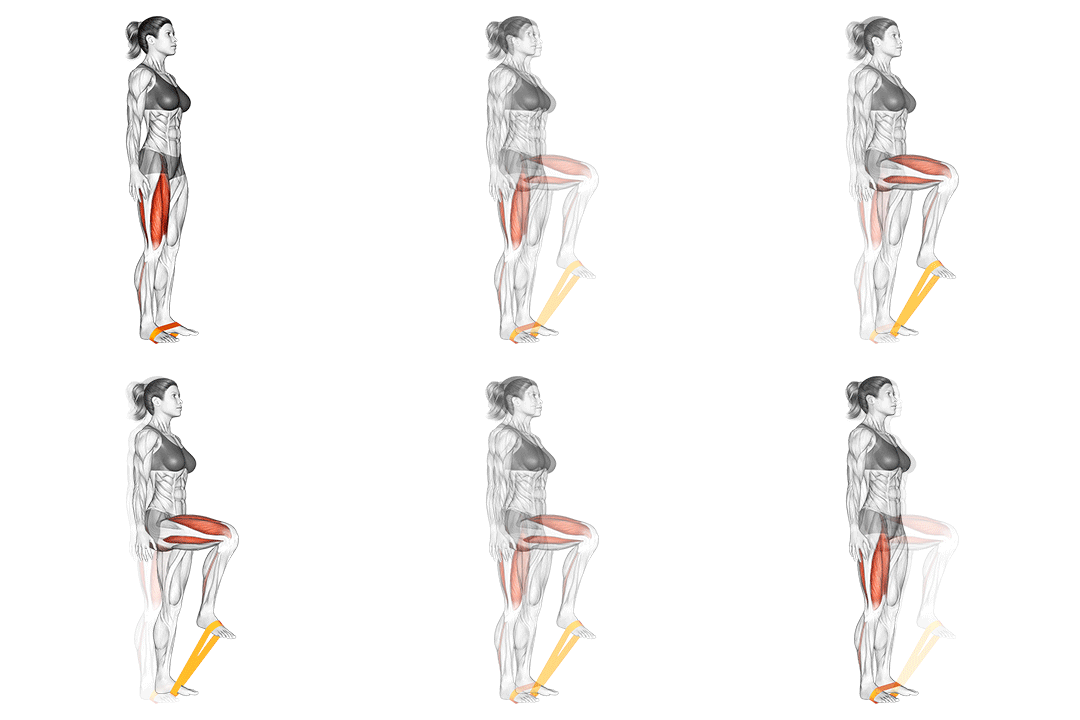
The Resistance Band Leg Lift lies on the back with a resistance band looped around the ankles and anchored to a low post, then performs leg lifts against the band resistance. The added band tension increases lower-ab demand throughout the rep.
For resistance band ab training, the band leg lift is the foundational lower-ab exercise. The pattern hits the lower abs through pure hip flexion under continuous band tension. Run it for 3 sets of 10 to 15 reps as primary lower-ab work.
Lie flat on the back with a resistance band looped around the ankles and anchored to a low post behind the body. Lift the legs straight up against the band resistance until the legs are perpendicular to the floor. Lower under control to the start without letting the heels touch the floor.
Resistance Band Reverse Crunch

The Resistance Band Reverse Crunch attaches a band around the ankles or feet with anchored resistance behind the body and performs reverse crunches by pulling the knees toward the chest. The added band tension increases the lower-ab demand significantly.
For resistance band ab training, the reverse crunch produces stronger lower-ab loading than bodyweight versions. The continuous band tension is heaviest at the contracted position. Run it for 3 sets of 10 to 12 reps as loaded lower-ab work.
Lie on the back near a low post with a resistance band looped around the feet and anchored behind the body. Bend the knees with feet lifted slightly. Pull the knees toward the chest against the band resistance, lifting the hips slightly off the floor at the contracted position. Lower under control to the start.
Resistance Band Anti Rotation Dead Bug

The Resistance Band Anti-Rotation Dead Bug lies on the back with a resistance band held overhead with both hands, then performs dead bug motions while resisting the rotational pull of the band. The pattern produces strong anti-rotation core demand.
For resistance band ab training, the anti-rotation dead bug is one of the most direct deep core stability exercises that exists. The pattern hits the deep abs and obliques through controlled anti-rotation under load. Run it for 3 sets of 8 to 12 reps per side as deep core stability work.
Lie on the back with a resistance band anchored to one side at low height. Hold the band with both hands and arms extended straight up toward the ceiling. The band tries to pull the arms toward the anchor side. Resist the rotation while extending the opposite arm and leg toward the floor. Return and switch sides between sets.
Resistance Band Upper Body Dead Bug

The Resistance Band Upper Body Dead Bug lies on the back with a resistance band anchored overhead and held with both hands, then performs dead bug motions with the legs while the band pulls the arms toward the anchor. The pattern produces strong upper-body anti-extension demand.
For resistance band ab training, the upper body dead bug produces strong combined deep core and upper-body stability work. The pattern hits the deep abs through anti-extension under upper-body load. Run it for 3 sets of 8 to 12 reps per side as combined core and stability work.
Lie on the back with a resistance band anchored overhead. Hold the band with both hands and arms extended toward the ceiling. The band tries to pull the arms overhead. Resist the pull while alternating extending the opposite arm and leg toward the floor. Switch sides on each rep.
Resistance Band Kneeling Woodchop

The Resistance Band Kneeling Woodchop kneels on the floor with a resistance band anchored at high position and pulls the band down and across the body in a woodchop motion. The pattern produces strong rotational ab and oblique loading.
For resistance band ab training, the kneeling woodchop is the foundational rotational ab exercise with bands. The pattern hits the obliques and rotational core through pure trunk rotation under continuous band tension. Run it for 3 sets of 10 to 12 reps per side as rotational ab work.
Anchor a resistance band at high position. Kneel sideways to the anchor with the inside knee down and the outside knee up. Hold the band with both hands extended overhead toward the anchor. Pull the band down and across the body to the outside hip. Return under control. Switch sides between sets.
Resistance Band Horizontal Pallof Press

The Resistance Band Horizontal Pallof Press stands sideways to an anchored band at chest height and presses the band straight out from the chest while resisting the rotational pull. The pattern produces strong anti-rotation core demand.
For resistance band ab training, the Pallof press is one of the most direct anti-rotation exercises that exists. The pattern hits the deep core through pure anti-rotation under continuous band tension. Run it for 3 sets of 10 to 12 reps per side as anti-rotation core work.
Anchor a resistance band at chest height. Stand sideways to the anchor with both hands holding the band at the chest. Press the band straight out from the chest while resisting the rotational pull toward the anchor. Hold briefly at full extension. Return to the chest. Switch sides between sets.
Resistance Band Side Plank

The Resistance Band Side Plank sets up in a side plank position with a resistance band anchored above and held with the top hand, applying additional load to the side plank position. The added band resistance increases oblique demand throughout the hold.
For resistance band ab training that includes oblique work, the band side plank produces stronger oblique loading than bodyweight side planks. The added band tension increases the demand on the working obliques. Run it for 3 sets of 30 to 60-second holds per side as loaded oblique work.
Set up in a side plank position with one forearm on the floor and feet stacked. Anchor a resistance band above and hold the band end with the top hand. Maintain the side plank position while the band adds resistance to the oblique side. Switch sides between sets.
Resistance Band Side Plank Glute Raise
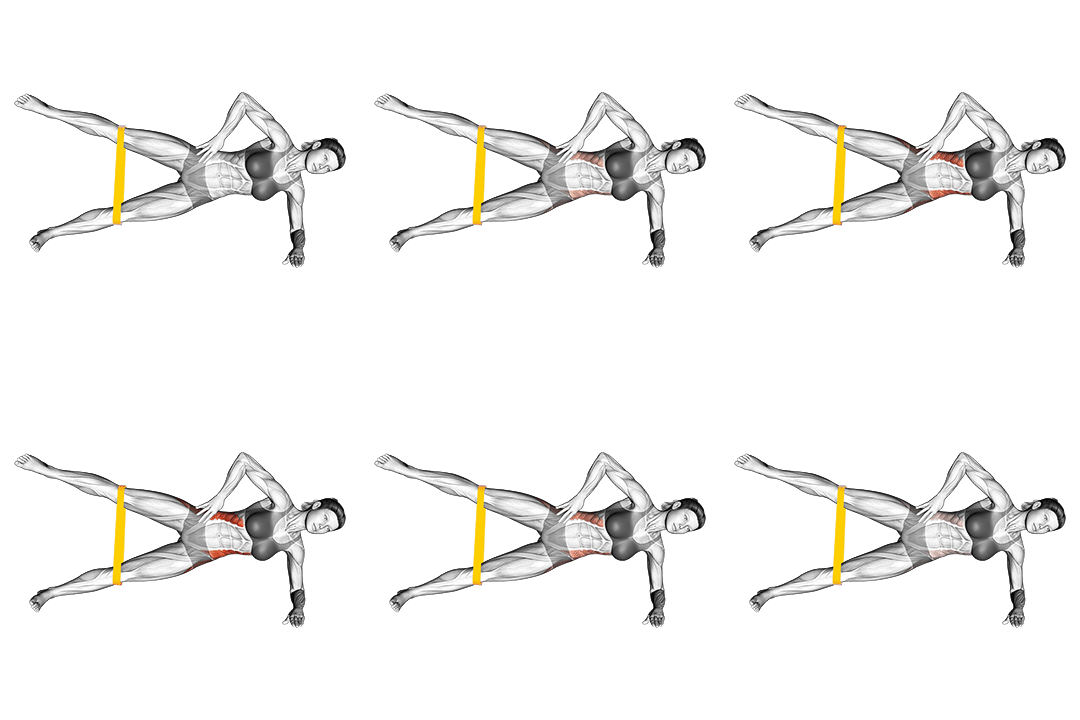
The Resistance Band Side Plank Glute Raise sets up in a side plank position with a resistance band looped around the legs above the knees, then raises the top leg against the band resistance. The pattern combines oblique loading with glute medius work.
For resistance band ab training that includes combined work, the side plank glute raise produces strong combined oblique and glute medius loading. The pattern hits both muscle groups simultaneously. Run it for 3 sets of 8 to 12 reps per side as combined oblique and glute work.
Loop a resistance band around the legs above the knees. Set up in a side plank position with feet stacked. Maintain the side plank while raising the top leg against the band resistance by abducting the hip. Lower under control. Switch sides between sets.
Band Bicycle Crunch

The Band Bicycle Crunch lies on the back with a resistance band looped around the ankles and performs bicycle crunch motion against the band resistance. The added band tension increases the demand on the legs throughout the bicycle motion.
For resistance band ab training, the band bicycle crunch produces stronger combined ab and oblique loading than bodyweight bicycle crunches. The added band tension increases the lower-ab demand. Run it for 3 sets of 16 to 20 total reps as combined ab and oblique work.
Lie flat on the back with a resistance band looped around the ankles. Lift the legs slightly off the floor with knees bent. Crunch the trunk up and rotate to bring one elbow toward the opposite knee while extending the other leg against the band resistance. Switch sides in a smooth bicycle pedaling pattern.
Band Upper Crunch

The Band Upper Crunch lies on the back with a resistance band anchored overhead and held with both hands at the chest, then performs crunches against the band resistance. The pattern produces strong upper-ab loading through resistance throughout the rep.
For resistance band ab training, the band upper crunch is one of the most direct upper-ab exercises with bands. The pattern hits the rectus abdominis through resistance loading that bodyweight crunches cannot match. Run it for 3 sets of 10 to 15 reps as direct upper-ab work.
Lie flat on the back with knees bent and feet planted. Anchor a resistance band overhead and hold the band ends with both hands at the chest. Crunch the upper body up by contracting the abs against the band resistance. Squeeze the abs at the contracted position. Lower under control to the start.
How To Program These Workouts
A productive resistance band ab session pulls 5 to 7 exercises from the list above. A balanced session includes one lower-ab exercise (band leg lift or reverse crunch), one anti-rotation exercise (Pallof press or anti-rotation dead bug), one rotational exercise (kneeling woodchop), one oblique exercise (band side plank), and one upper-ab exercise (band upper crunch). Run primary band ab work for 3 sets of 10 to 15 reps; anti-rotation work for 3 sets of 10 to 12 reps per side; isometric holds for 3 sets of 30 to 60 seconds per side. Total session covers 14 to 18 working sets across all major ab functions.
Train resistance band ab sessions 2 to 4 times per week alongside dedicated strength training. The format produces moderate core fatigue that recovers within 24 to 48 hours. Most successful programs include 2 to 3 weekly band ab sessions alongside bodyweight ab work for additional volume. The combination produces stronger core development than single-modality ab training. The format works particularly well for travelers, home gym setups, or anyone wanting portable ab training options.
For broader band programming, see our best resistance band workouts and best full body resistance band workouts. For lower-ab specialization, see our best lower ab workouts.
Final Thoughts
The best resistance band ab workouts deliver real core development through portable equipment that combines progressive loading with the anti-rotation and rotational training that bodyweight ab work cannot easily replicate. The combination of lower-ab loading, deep core stability work, rotational training, oblique exercises, and combined ab loading covers every major ab function and produces broader development than single-modality training. For lifters who want effective ab training without commercial gym access, want anti-rotation work that traditional ab exercises miss, or need portable training options, resistance band ab training is one of the most versatile options available.
Stay focused on band tension throughout every rep. The most common resistance band ab training mistake is allowing the band to go slack at any point during the exercise (which eliminates the loading) or rushing through reps without maintaining controlled tension. The fix: choose band difficulty that produces challenging tension at the peak-contraction position while still allowing strict form throughout the full range. Quality reps with consistent band tension produce stronger ab development than reps with band slack or excessive resistance that breaks form.
Frequently Asked Questions
Can resistance bands build abs?
Yes, very effectively. The variable band tension produces continuous resistance throughout every rep, which drives strong contracted-position loading. Bands also enable anti-rotation and rotational ab work that bodyweight ab training cannot easily replicate. Most lifters who consistently train resistance band abs 2 to 3 times per week see measurable core strength and visible ab development within 6 to 10 weeks combined with appropriate body fat management.
Are bands or weights better for abs?
Different equipment serves different goals. Resistance bands produce strong contracted-position loading and enable anti-rotation work that weights struggle with. Weights produce more consistent loading throughout each rep and enable heavier progressive overload. Most successful ab programs include both: resistance band work for anti-rotation and rotational training, and weighted work (cable crunches, weighted leg raises) for additional muscle thickness.
How often should I train abs with bands?
Two to four times per week works for most lifters. The format produces moderate core fatigue that recovers within 24 to 48 hours. Most successful programs include 2 to 3 weekly band ab sessions alongside bodyweight ab work for additional volume. Daily band ab training is possible at moderate intensity but most lifters benefit from at least 2 weekly rest days for full recovery.
What size bands do I need for ab exercises?
Most lifters need a set of 3 to 4 light to medium bands (5 to 50 pounds equivalent) for ab training. The abs respond to moderate loads with high reps rather than maximum loads. Long-loop bands (4 feet) work well for compound ab exercises (Pallof press, woodchop); shorter bands work well for connecting to ankles or feet (leg lift, reverse crunch). The complete ab-focused band kit costs $20 to $50 and lasts for years of consistent training.
Can band ab workouts give me a six-pack?
Band ab training builds the muscle that gives the stomach its visible shape; reducing body fat through nutrition reveals that shape. Both are required for visible six-pack abs. Most lifters need to be at 12 to 18 percent body fat for abs to show clearly. Band ab training handles the muscle-building side; sustainable nutrition handles the body fat side. The combination produces visible six-pack results over 12 to 24 weeks for most lifters with appropriate caloric management.