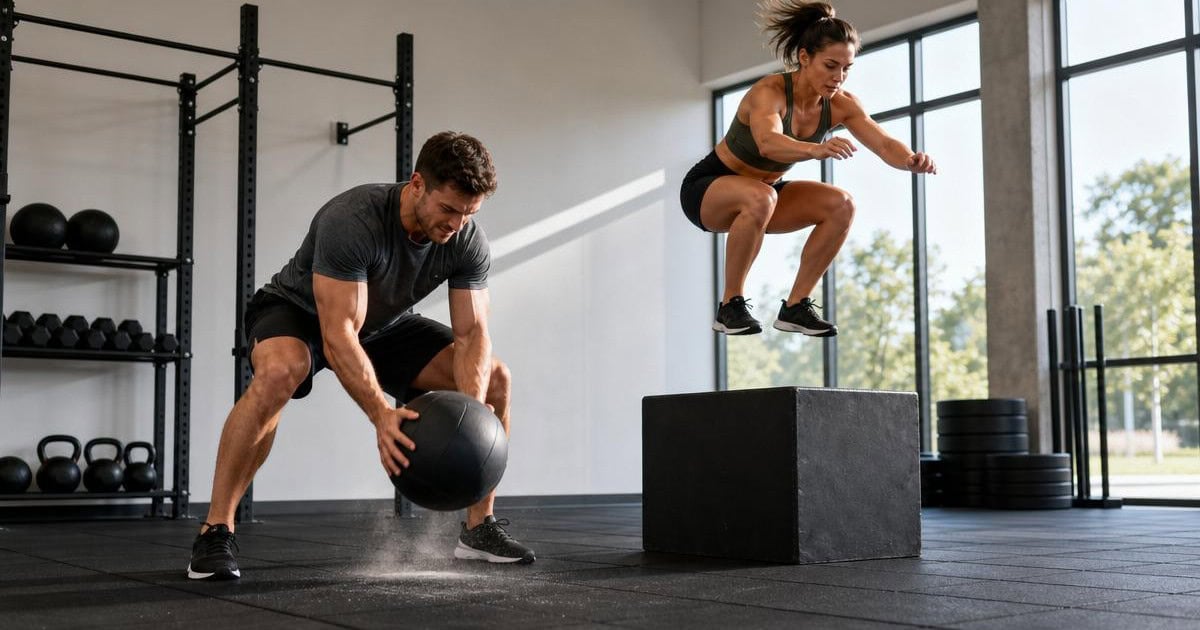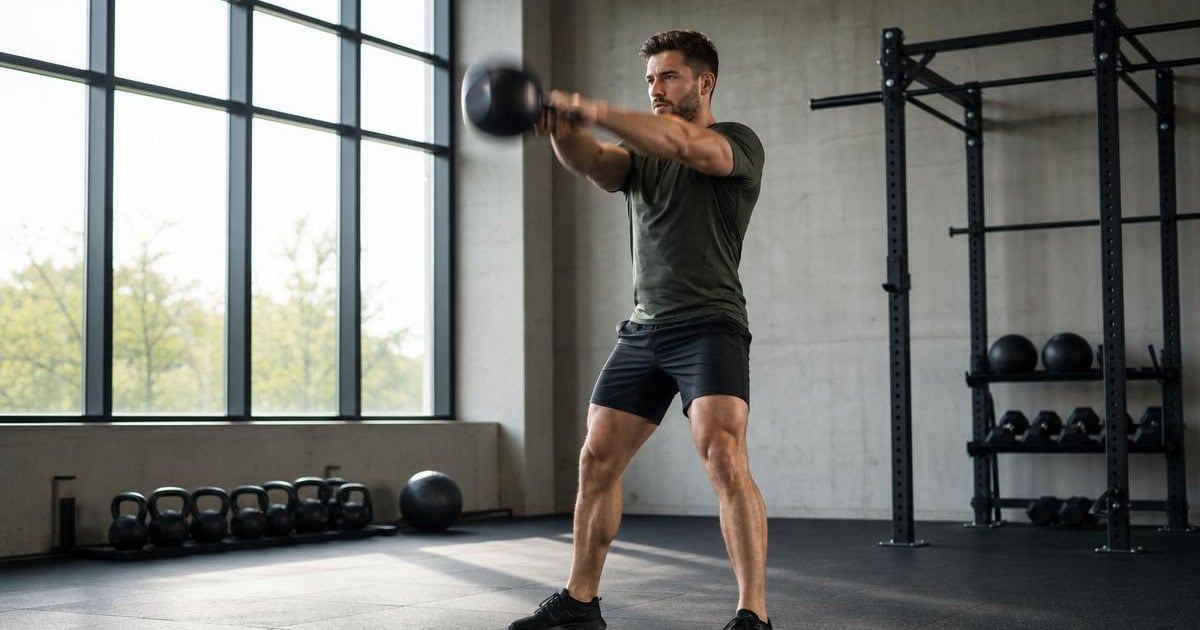
Building explosive power requires understanding both power physiology (power = force × velocity, meaning power is built through both strength development AND speed development) and the training principles that develop it: foundational compound strength as the prerequisite (heavy squats, deadlifts), explosive lifting variations (jump squats, power cleans), plyometric training for the stretch-shortening cycle (depth jumps, single-leg box jumps), rotational power for athletic versatility (medicine ball throws), unilateral patterns for sport-specific power (Bulgarian split squats), and proper periodization that balances strength and speed work. Most lifters and athletes who want more explosive power but struggle to develop it are making one or more of these mistakes: training for strength alone without speed development, training for speed alone without adequate strength foundation, missing plyometric work, neglecting Olympic lift variations, training power with too much volume per session (which produces fatigue rather than power), or not using maximum intent on power exercises. The fix involves: 1) heavy compound foundations for strength (squats, deadlifts), 2) explosive lifting variations with maximum intent (jump squats, power cleans), 3) plyometric work for stretch-shortening cycle development (depth jumps, single-leg box jumps), 4) rotational power for athletic versatility (medicine ball throws), 5) unilateral power for sport-specific transfer (Bulgarian split squats), and 6) proper recovery between explosive efforts (60+ seconds between sets) for maximum quality.
Below are ten of the most effective exercises for building explosive power, covering foundational strength (barbell squat, barbell deadlift, dumbbell Bulgarian split squat), explosive lifting (jump squat, power clean), plyometric training (depth jump, single leg box jump), rotational power (medicine ball rotational throw, medicine ball overhead slam), and posterior chain power (barbell Romanian deadlift). Together they form a complete explosive power program. A 45 to 60-minute power-focused session pulled from this list, performed 1 to 3 times per week (or as integrated work alongside your regular training), produces strong explosive power development for athletes, lifters, and individuals focused on building explosive athletic capacity.
Barbell Squat

The Barbell Squat performs back squats. The compound pattern is foundational for explosive power.
For explosive power, the squat is foundational. Heavy squat strength correlates strongly with explosive power output. Run it for 4 sets of 3 to 6 reps as foundational explosive power work.
Set up a barbell on a rack at upper back height. Position the bar across the upper back. Step back with feet shoulder-width. Squat down by bending the knees and hips. Lower until the thighs are parallel to the floor. Drive back up through the heels EXPLOSIVELY – the concentric phase should be as fast as possible while maintaining proper form. The pattern is foundational for explosive power – heavy squat strength relative to bodyweight correlates strongly with vertical jump capacity, sprint speed, and all explosive athletic actions. Build foundational squat strength (1.5x to 2x bodyweight) before maximizing explosive intent.
Jump Squat

The Jump Squat performs explosive jump squats. The pattern is direct vertical explosive power training.
For explosive power, the jump squat is direct training. Run it for 3 to 4 sets of 5 to 8 reps as primary explosive lower-body power work with maximum intent.
Stand with feet shoulder-width. Squat down by bending the knees and hips to about parallel. Drive explosively up by extending the knees, hips, and ankles while jumping off the floor. Maximize jump height on every rep. Land softly with knees bent. Reset between reps for maximum explosive intent (rest 60+ seconds between sets). The pattern is direct vertical explosive power training – the movement trains the exact pattern of vertical jumping and athletic explosiveness. Maximum-intent jump squats produce direct explosive power improvement.
Depth Jump

The Depth Jump performs depth jumps. The pattern is advanced plyometric training for elite explosive power.
For explosive power, the depth jump trains the stretch-shortening cycle critical for elite explosive athletics. Run it for 3 to 4 sets of 3 to 5 reps as advanced plyometric work.
Stand on a sturdy box (12 to 24 inches for most athletes). Step off the box (do not jump off) and land softly with knees bent. Immediately upon landing, explode upward into a maximum vertical jump. The pattern trains the stretch-shortening cycle (eccentric to concentric transition) that produces elite explosive power – the depth jump is one of the most effective advanced plyometric exercises for power development. Note: depth jumps are advanced training – athletes should establish a strength foundation (1.5x bodyweight squat) before incorporating depth jumps to manage injury risk.
Medicine Ball Rotational Throw
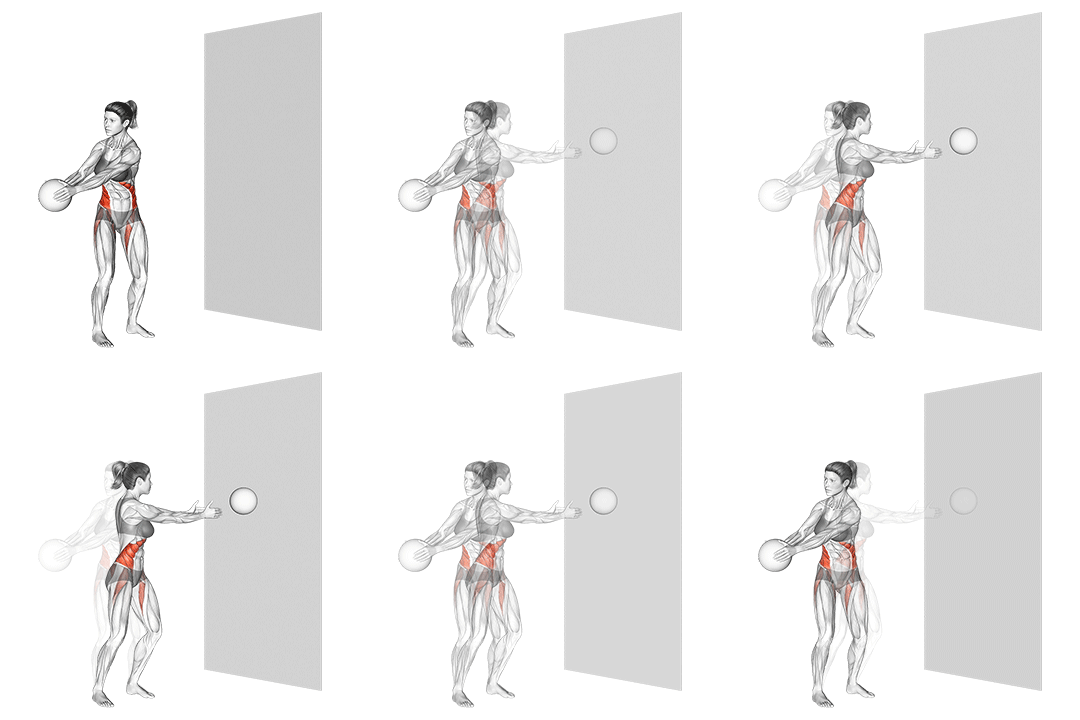
The Medicine Ball Rotational Throw performs explosive rotational throws. The pattern is direct rotational power training.
For explosive power, the rotational throw builds rotational explosive power for athletic actions. Run it for 4 sets of 6 to 8 throws per side as primary rotational power work.
Stand sideways to a wall holding a medicine ball with both hands at chest level. Rotate the hips and torso explosively away from the wall, then reverse explosively to throw the ball into the wall. Catch the ball on rebound. The hip-driven rotational pattern trains explosive rotational power critical for many athletic actions – hitting, throwing, swinging, striking all rely on rotational power. Excellent for translating gym strength to rotational athletic performance.
Barbell Deadlift

The Barbell Deadlift performs barbell deadlifts. The pattern produces compound full-body loading for foundational power.
For explosive power, the deadlift builds the foundational strength that supports explosive power. Run it for 3 to 4 sets of 3 to 5 reps as heavy compound power work.
Stand with feet hip-width with a barbell on the floor over the mid-foot. Hinge at the hips and bend the knees to grip the bar. Drive through the heels EXPLOSIVELY while extending the hips and knees to lift the bar from the floor. Stand fully tall at the top with full lockout. Lower under control. The pattern produces compound full-body loading – heavy deadlifts build the foundational posterior chain strength that drives explosive sprinting, jumping, and all athletic actions involving hip extension. Combined with squat strength, deadlift strength forms the foundation of explosive power.
Single Leg Box Jump

The Single Leg Box Jump performs unilateral box jumps. The pattern produces unilateral explosive power.
For explosive power, the single-leg box jump builds unilateral explosive power critical for sprinting and athletic movement. Run it for 3 to 4 sets of 3 to 5 reps per leg as unilateral plyometric work.
Stand on one leg in front of a sturdy box (start with low boxes – 12 to 18 inches – and progress higher with practice). Bend the supporting knee slightly to load. Drive explosively up off the supporting leg while jumping onto the box. Land softly on both feet on the box. Step down (do not jump down). Reset and switch legs. The pattern develops the unilateral explosive power critical for athletic movement – sprinting is fundamentally a series of single-leg explosive efforts, and unilateral plyometrics build that exact capacity.
Power Clean

The Power Clean performs Olympic-style power cleans. The pattern is THE most direct exercise for full-body explosive power.
For explosive power, the power clean is the most direct exercise possible. The Olympic lift trains explosive triple extension (ankles, knees, hips) under load. Run it for 4 sets of 3 to 5 reps as primary explosive power work.
Stand with feet hip-width with a barbell on the floor over the mid-foot. Grip the bar with hands slightly wider than shoulder-width. Drive through the heels EXPLOSIVELY while extending the hips, knees, and ankles (triple extension). Pull the bar up the body as the legs extend. As the bar reaches chest height, drop under and catch the bar across the front of the shoulders. Stand up. The pattern is THE most direct full-body explosive power training – power cleans train explosive triple extension under heavy load, which transfers to virtually every athletic explosive action. Note: power cleans are technical Olympic lifts that benefit from coaching for proper technique.
Barbell Romanian Deadlift

The Barbell Romanian Deadlift performs Romanian deadlifts. The hip-hinge pattern builds posterior chain power.
For explosive power, the RDL builds posterior chain power that drives explosive hip extension. Run it for 3 sets of 6 to 10 reps as posterior chain power work.
Stand with feet hip-width holding a barbell at the front of the thighs. Hinge at the hips by sending them backward while keeping the back flat and legs nearly straight. Lower the barbell along the legs until the hamstrings stretch deeply. Drive back to standing EXPLOSIVELY by extending the hips. The pattern builds the posterior chain power critical for explosive athletic movement – sprinting, jumping, and most explosive actions rely heavily on hip extension power, and strong glutes and hamstrings (developed through RDLs) directly produce more powerful explosive movement.
Medicine Ball Overhead Slam

The Medicine Ball Overhead Slam performs explosive overhead slams. The pattern produces vertical explosive power training.
For explosive power, the overhead slam trains explosive vertical power and full-body coordination. Run it for 3 to 4 sets of 6 to 10 slams as explosive power work.
Stand with feet shoulder-width holding a medicine ball overhead with both hands. Drive the ball down explosively to the floor by hinging forward at the hips and using the entire body. Catch the ball on the rebound (or pick it up). Reset and repeat. The pattern trains explosive vertical power through dynamic full-body coordination – the overhead slam involves explosive hip flexion combined with arm action, training a different explosive pattern than vertical jumping. Excellent for vertical explosive power and conditioning.
Dumbbell Bulgarian Split Squat
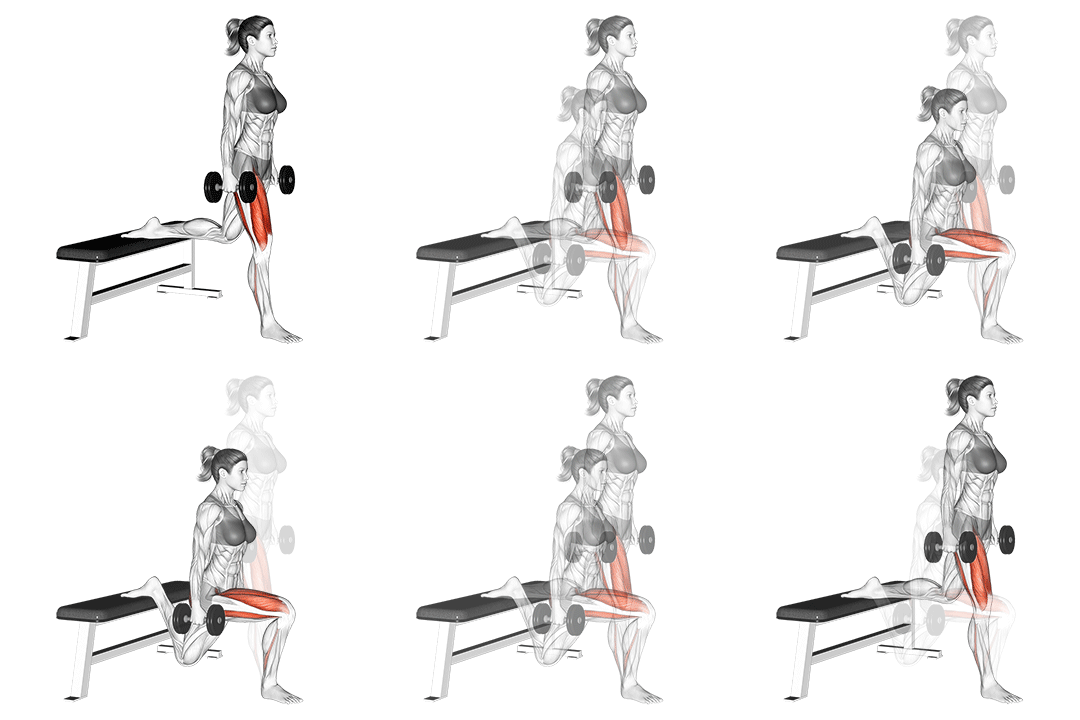
The Dumbbell Bulgarian Split Squat performs Bulgarian split squats. The unilateral pattern builds unilateral explosive power.
For explosive power, Bulgarian split squats build the unilateral leg strength that supports unilateral explosive power. Run it for 3 sets of 6 to 10 reps per leg as unilateral power-supporting work.
Stand 2 to 3 feet in front of a bench. Place the top of the rear foot on the bench behind. Hold dumbbells in each hand at the sides. Squat down by bending the front knee deeply. Lower until the front thigh is parallel to the floor. Drive back up through the front heel EXPLOSIVELY. The pattern builds the unilateral leg strength that supports explosive power – sprinting and many explosive actions are unilateral, and strong unilateral leg strength supports better unilateral explosive performance.
How To Program These Workouts
A productive explosive power session pulls 5 to 7 exercises from the list above. A common balanced session: barbell squat (foundational strength), power clean (Olympic lift), jump squat (explosive), depth jump (plyometric), medicine ball rotational throw (rotational), barbell romanian deadlift (posterior chain). For lower-body power focus: barbell squat, jump squat, depth jump, single leg box jump, barbell romanian deadlift, dumbbell bulgarian split squat. For full-body power focus: power clean, jump squat, medicine ball rotational throw, medicine ball overhead slam, depth jump. Run heavy compound work for 3 to 4 sets of 3 to 6 reps with explosive intent, Olympic lifts for 4 sets of 3 to 5 reps, jump squats for 3 to 4 sets of 5 to 8 reps with maximum intent and full recovery, plyometrics for 3 to 4 sets of 3 to 5 reps with full recovery (60+ seconds), rotational power for 3 to 4 sets of 6 to 8 throws per side.
Train explosive power 1 to 3 times per week as part of complete programming. Most successful power programs structure work as: 1) primary power day (5 to 7 power exercises with mix of heavy strength, Olympic lifts, plyometrics, rotational), 2) integrated power work in regular strength sessions (explosive intent on compound lifts), 3) optional second power day with reduced volume for athletes prioritizing power. The nervous system requires substantial recovery between power-focused sessions – 24 to 48 hours minimum between heavy power work. Total weekly power-focused volume should be moderate – quality maximum-intent reps produce more power development than high-volume submaximal work. Combined with adequate recovery and full-effort intent, dedicated power training produces measurable improvement within 8 to 12 weeks.
For broader programming, see our best workouts for vertical jump and best workouts for speed. For specific work, see our best workouts for explosive power.
Final Thoughts
Building explosive power requires applying the right training principles consistently over time: foundational compound strength as the prerequisite for power development, explosive lifting variations with maximum intent, plyometric training for stretch-shortening cycle development, rotational power for athletic versatility, unilateral patterns for sport-specific transfer, and proper recovery between explosive efforts. The combination of squats, jump squats, depth jumps, medicine ball rotational throws, deadlifts, single-leg box jumps, power cleans, RDLs, medicine ball slams, and Bulgarian split squats covers every component of explosive power and produces broader athletic development than strength-only or speed-only training would suggest. Most lifters and athletes who consistently apply these principles see measurable explosive power improvement within 8 to 12 weeks – including higher vertical jumps, faster sprint times, more powerful athletic movements, and the explosive capacity that supports elite athletic performance. For athletes seeking better performance and lifters seeking explosive capacity, dedicated power training is one of the most effective interventions available.
Stay focused on quality and intent rather than volume. The most common mistake people make in power training is using too much volume which produces fatigue rather than power development. The fix: prioritize maximum-intent reps with full recovery between sets (60+ seconds for plyometrics) over high-volume submaximal work. Power develops through quality maximum-effort efforts, not through fatiguing high-volume work. Combined with foundational strength training (which provides the force component of power) and proper periodization (alternating strength-emphasis and power-emphasis phases), maximum-intent power training produces the explosive capacity that volume-focused training never achieves. Quality beats quantity for power development.
Frequently Asked Questions
How can I build explosive power?
Combine foundational strength with explosive lifting and plyometrics. Heavy squats and deadlifts build the foundational strength prerequisite for power (force component). Jump squats and power cleans train explosive lifting (velocity component). Depth jumps and single-leg box jumps train the stretch-shortening cycle. Combined with rotational power (medicine ball throws), unilateral patterns (Bulgarian split squats), and posterior chain (RDLs), these form the foundation of explosive power. The fastest gains come from foundational strength + explosive lifting + plyometrics with adequate recovery.
What’s the best exercise for explosive power?
Olympic lifts (power clean) plus heavy squats with explosive intent. Power cleans train explosive triple extension (ankles, knees, hips) under heavy load – the most direct full-body explosive power training possible. Heavy squats performed with explosive intent build foundational strength while training power. Combined with jump squats (direct explosive vertical power), depth jumps (plyometric), and medicine ball throws (rotational power), these form the foundation of explosive power development. Most elite athletic programs prioritize Olympic lift variations as primary power work.
How long does it take to build explosive power?
8 to 12 weeks for measurable improvement, ongoing for elite power. Most lifters and athletes who consistently apply foundational strength + explosive lifting + plyometrics see measurable power improvement within 8 to 12 weeks – higher vertical jumps (typically 2 to 6+ inches), faster sprint times, more powerful athletic movements. Continued development beyond 12 weeks comes from progressive overload, increased explosive load, and varied power patterns. Elite athletic power requires years of dedicated training.
How often should I train for explosive power?
1 to 3 times per week with adequate recovery. The nervous system requires substantial recovery between power-focused sessions – 24 to 48 hours minimum between heavy power work. Most successful power programs include: 1) primary power day (5 to 7 power exercises), 2) integrated power work in regular strength sessions (explosive intent on compounds), 3) optional second power day with reduced volume. Total weekly power-focused volume should be moderate – quality maximum-intent reps produce more power than high-volume work.
Do I need to lift heavy to build power?
Yes – foundational strength is the prerequisite for explosive power. Power = force × velocity, meaning power requires both force (strength) and velocity (speed). Without foundational strength, power development plateaus quickly. Most successful power programs include: 1) foundational compound strength (squats, deadlifts at 1.5x bodyweight as a baseline goal), 2) explosive lifting variations (jump squats, power cleans at moderate-heavy loads), 3) plyometrics (depth jumps, box jumps for the velocity component). Strong AND fast produces optimal power – one without the other limits development.