Increasing the vertical jump requires understanding both the science of jumping (a vertical jump combines maximum strength, explosive power, the stretch-shortening cycle, and motor pattern efficiency) and the training principles that develop it: heavy compound strength (squats build foundational leg strength), explosive power work (jump squats train the actual movement), plyometrics (depth jumps train the stretch-shortening cycle), unilateral patterns (Bulgarian split squats and single-leg box jumps address imbalances), posterior chain work (RDLs and glute bridges build hip extension power), quad strength (front squats), and calf development (calf raises support the final ankle push-off). Most athletes who want a higher vertical jump but plateau are missing one or more of these training elements: insufficient heavy compound strength relative to bodyweight, insufficient explosive power training, no plyometric work, neglected posterior chain or calf development, or imbalances limiting bilateral jump capacity. The right vertical jump program addresses each of these elements through specific exercises and progressive overload over time.
Below are ten of the most effective exercises for increasing the vertical jump, covering compound strength foundations (barbell squat, barbell front squat, barbell romanian deadlift, barbell glute bridge), explosive power and plyometrics (jump squat, single leg box jump, depth jump), unilateral patterns (dumbbell Bulgarian split squat, dumbbell walking lunge), and supporting development (standing calf raise). Together they form a complete vertical jump development program. A 45 to 60-minute vertical jump-focused session pulled from this list, performed 2 to 3 times per week, produces measurable vertical jump improvements (typically 2 to 6+ inches added to vertical jump height for committed athletes within 12 to 16 weeks) for basketball players, volleyball players, track athletes, and anyone seeking higher vertical jump capacity.
Barbell Squat

The Barbell Squat performs back squats. The compound pattern builds foundational lower-body strength critical for vertical jump.
For vertical jump development, the squat is foundational. Strong squats correlate directly with vertical jump capacity. Run it for 4 sets of 3 to 8 reps as primary lower-body strength work.
Set up a barbell on a rack at upper back height. Position the bar across the upper back. Step back with feet shoulder-width. Squat down by bending the knees and hips. Lower until the thighs are parallel to the floor. Drive back up through the heels explosively. The pattern builds the foundational leg strength that drives vertical jump – research consistently shows that squat strength relative to bodyweight correlates strongly with vertical jump capacity. Athletes with strong squats jump higher than athletes with weak squats. Build a foundation of 1.5x to 2x bodyweight squat for serious vertical jump development.
Jump Squat

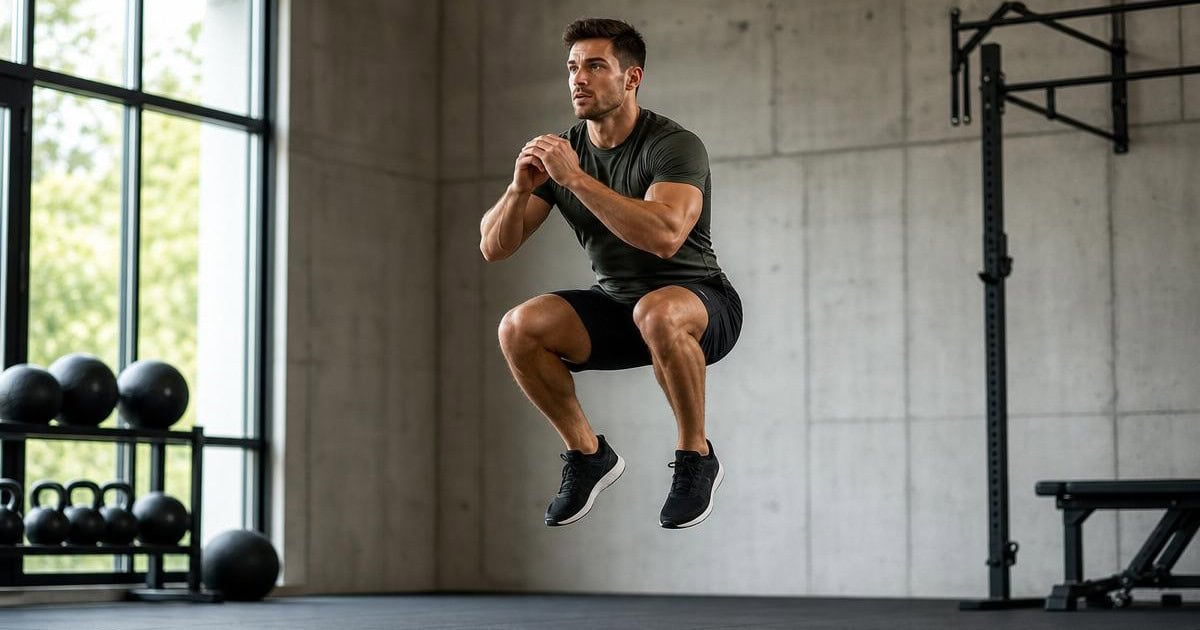
The Jump Squat performs explosive jump squats. The pattern is the most direct vertical jump training exercise.
For vertical jump development, the jump squat is direct vertical jump training. Run it for 3 to 4 sets of 5 reps as explosive vertical jump work with maximum intent.
Stand with feet shoulder-width. Squat down by bending the knees and hips to about parallel. Drive explosively up by extending the knees, hips, and ankles while jumping off the floor. Maximize jump height on every rep. Land softly with knees bent. Reset between reps for maximum explosive intent (rest 30+ seconds between reps if needed). The pattern is the most direct vertical jump training – the movement is essentially identical to a vertical jump test. Maximum-effort jump squats produce direct vertical jump improvement through specific motor pattern training and explosive power development.
Barbell Romanian Deadlift

The Barbell Romanian Deadlift performs Romanian deadlifts. The hip-hinge pattern builds posterior chain critical for vertical jump.
For vertical jump development, the RDL builds posterior chain power that drives the jump. Run it for 3 sets of 5 to 8 reps as posterior chain work.
Stand with feet hip-width holding a barbell at the front of the thighs. Hinge at the hips by sending them backward while keeping the back flat and legs nearly straight. Lower the barbell along the legs until the hamstrings stretch deeply. Drive back to standing by extending the hips. The pattern builds the posterior chain power critical for vertical jumping – the second half of a vertical jump (after the knees pass full flexion) is essentially explosive hip extension, and strong posterior chain (developed through RDLs) directly produces higher jumps.
Dumbbell Bulgarian Split Squat
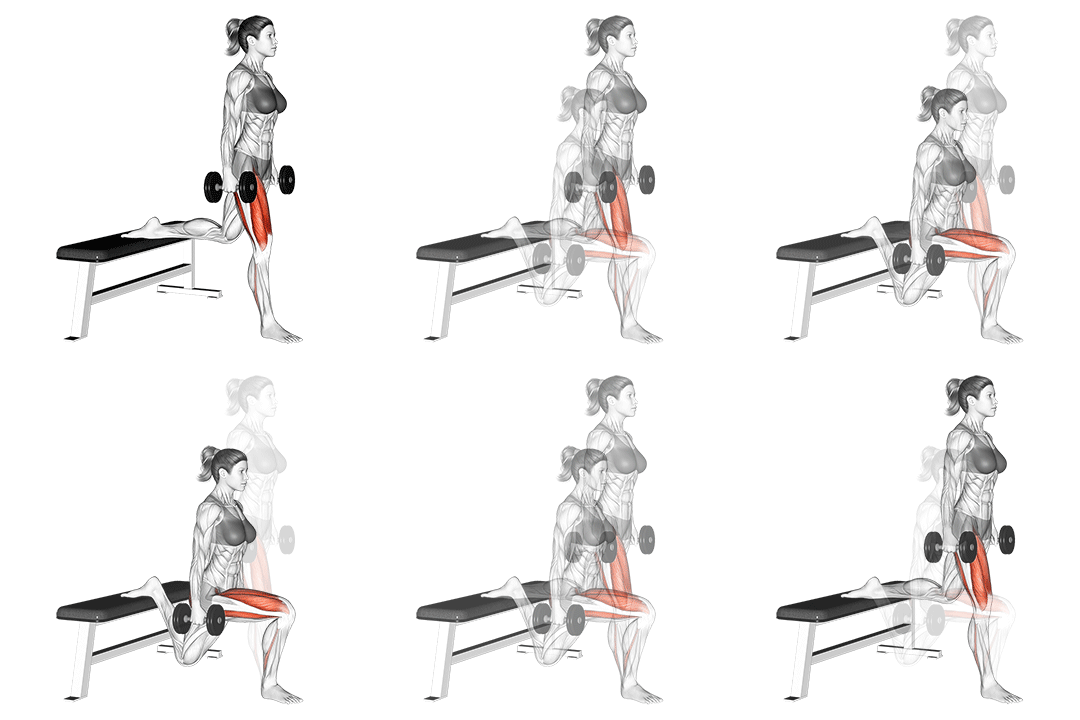
The Dumbbell Bulgarian Split Squat performs Bulgarian split squats. The unilateral pattern addresses imbalances that limit jump height.
For vertical jump development, Bulgarian split squats address left/right imbalances and build supporting unilateral strength. Run it for 3 sets of 8 to 10 reps per leg as unilateral leg work.
Stand 2 to 3 feet in front of a bench. Place the top of the rear foot on the bench behind. Hold dumbbells in each hand at the sides. Squat down by bending the front knee. Lower until the front thigh is parallel to the floor. Drive back up through the front heel. The pattern hits each leg individually and addresses the left/right imbalances common in athletes that limit bilateral jump height. Many vertical jump plateaus stem from imbalances – addressing them through unilateral work often produces measurable jump improvements within 6 to 8 weeks.
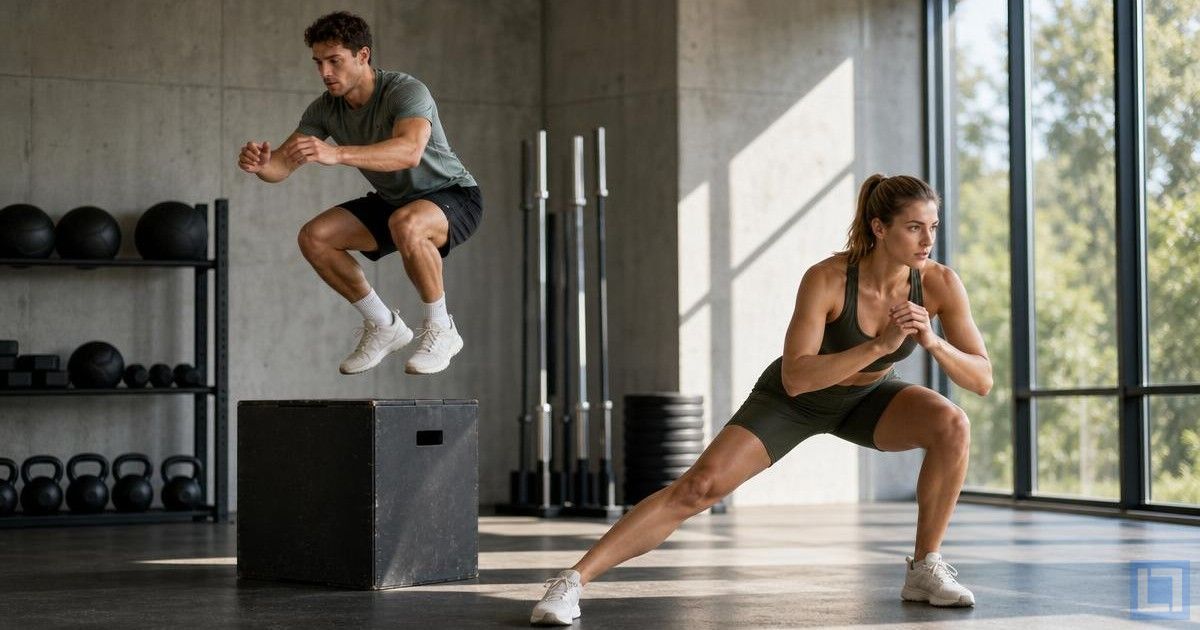
Single Leg Box Jump

The Single Leg Box Jump performs unilateral box jumps. The pattern develops single-leg explosive power critical for jumping.
For vertical jump development, the single-leg box jump builds unilateral explosive power that supports both single-leg and bilateral jumps. Run it for 3 to 4 sets of 3 to 5 reps per leg as explosive unilateral work.
Stand on one leg in front of a sturdy box (start with low boxes – 12 to 18 inches – and progress higher with practice). Bend the supporting knee slightly to load. Drive explosively up off the supporting leg while jumping onto the box. Land softly on both feet on the box. Step down (do not jump down). Reset and switch legs. The pattern develops unilateral explosive power critical for sport-specific jumping (most basketball, volleyball, and track jumps happen unilaterally) and translates well to bilateral vertical jump development.
Barbell Front Squat

The Barbell Front Squat performs front squats. The upright pattern builds quad strength supporting vertical jump.
For vertical jump development, the front squat builds quad strength and upright squat patterning. Run it for 3 to 4 sets of 5 to 8 reps as quad-emphasis squat work.
Set up a barbell on a rack at upper chest height. Position the barbell at the front of the shoulders with elbows up high. Step back from the rack. Squat down by bending the knees and hips while keeping the back vertical. Lower until the thighs are below parallel. Drive back up through the heels. The pattern produces strong quad emphasis through the upright torso requirement and supports vertical jump development – quad strength is one of the primary determinants of vertical jump height. Combined with back squats and explosive work, front squats produce complete leg strength for jumping.
Dumbbell Walking Lunge

The Dumbbell Walking Lunge performs walking lunges. The dynamic pattern builds unilateral leg strength.
For vertical jump development, walking lunges develop dynamic unilateral leg strength. Run it for 3 sets of 16 to 20 total steps as unilateral accessory work.
Stand with feet hip-width holding dumbbells in each hand at the sides. Step forward with one leg into a lunge position, lowering the back knee toward the floor. Drive through the front heel to stand up while bringing the rear leg forward into the next lunge step. Continue alternating. The dynamic pattern develops unilateral leg strength and supports vertical jump development through addressed imbalances and added training volume. Combined with bilateral strength work, walking lunges contribute to the overall leg development that drives vertical jump improvement.
Standing Calf Raise

The Standing Calf Raise performs standing calf raises. The pattern builds calf strength critical for jumping.
For vertical jump development, the calf raise builds the calf strength essential for the final ankle push-off in jumping. Run it for 4 sets of 8 to 15 reps as primary calf work.
Stand with feet hip-width on a flat surface (or with the balls of the feet on a slightly elevated surface for added range of motion). Rise up onto the toes by extending the ankles. The calves work hard through plantar flexion. Squeeze the calves hard at peak extension. Lower under control to a deep stretch at the bottom. The pattern is critical for vertical jump – the final push-off in jumping comes from ankle plantar flexion (calves), and strong calves contribute meaningfully to vertical jump height. Most vertical jump programs include heavy calf work as supporting development.
Barbell Glute Bridge
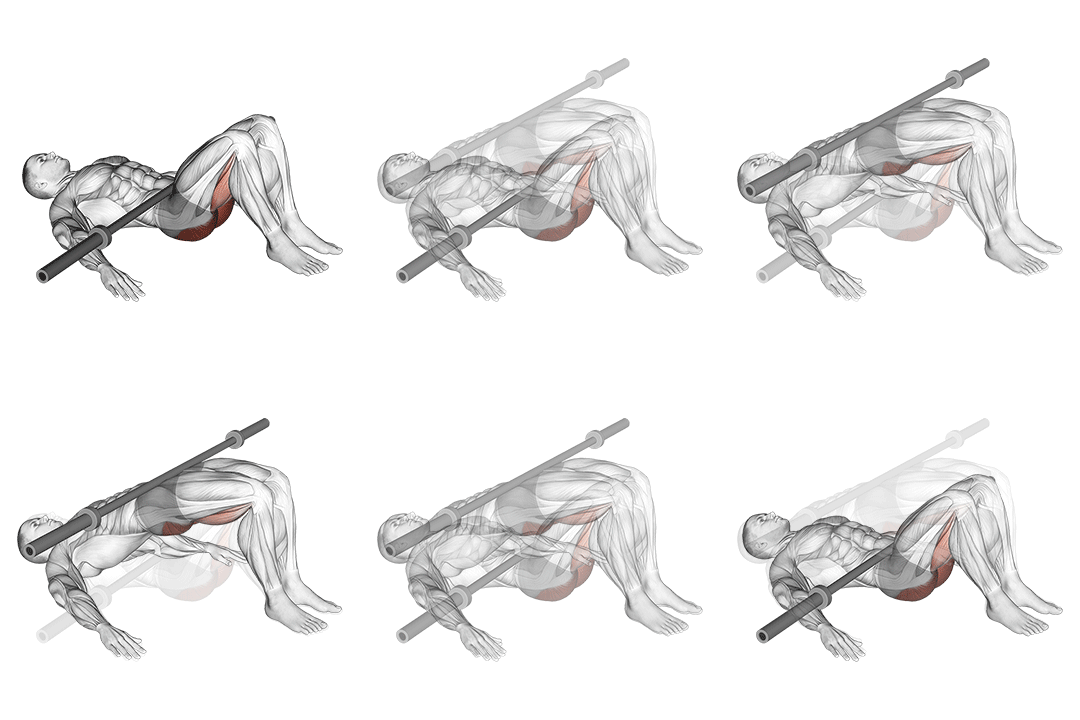
The Barbell Glute Bridge performs glute bridges. The pattern builds glute hip extension critical for jumping.
For vertical jump development, the glute bridge builds glute power that drives forward propulsion in jumping. Run it for 3 to 4 sets of 8 to 12 reps as glute hip extension work.
Lie on the floor with knees bent and feet planted. Position a barbell across the hips. Hold the bar in place. Drive through the heels to lift the hips up by extending the hips. The body forms a straight line from shoulders to knees at the top. The glutes work hard. Squeeze at peak hip extension. Lower under control. The pattern builds the glute strength essential for vertical jumping – glutes are the primary muscle that drives forward propulsion in jumps, and strong glutes substantially contribute to vertical jump height. Combined with RDLs, glute bridges build complete posterior chain power.
Depth Jump

The Depth Jump performs depth jumps (drop from a box and immediately jump up). The pattern is advanced plyometric vertical jump training.
For vertical jump development, the depth jump trains the stretch-shortening cycle that produces explosive jumps. Run it for 3 to 4 sets of 3 to 5 reps as advanced plyometric work.
Stand on a sturdy box (12 to 24 inches for most athletes). Step off the box (do not jump off) and land softly with knees bent. Immediately upon landing, explode upward into a maximum vertical jump. The pattern trains the stretch-shortening cycle (eccentric to concentric transition) that produces explosive jumping power. The depth jump is one of the most effective advanced plyometric exercises for vertical jump development. Note: depth jumps are advanced training – athletes should establish a foundation of strength (1.5x bodyweight squat) before incorporating depth jumps to manage injury risk.
How To Program These Workouts
A productive vertical jump session pulls 5 to 7 exercises from the list above, balancing strength, power, and plyometrics. A common balanced session: barbell squat (heavy strength), jump squat (explosive power), depth jump (plyometric), dumbbell Bulgarian split squat (unilateral), barbell romanian deadlift (posterior chain). For strength focus: barbell squat, barbell front squat, barbell romanian deadlift, barbell glute bridge. For power focus: jump squat, single leg box jump, depth jump, dumbbell bulgarian split squat. Run heavy compound strength for 3 to 4 sets of 3 to 8 reps, explosive power work for 3 to 4 sets of 3 to 5 reps with maximum intent (rest 60+ seconds between sets), plyometrics for 3 to 4 sets of 3 to 5 reps with full recovery, unilateral work for 3 sets of 8 to 10 reps per leg.
Train vertical jump-focused work 2 to 3 times per week with appropriate sequencing within each session: warm-up first, then plyometrics and explosive work (when fresh), then heavy strength work, then accessory work last. Quality over quantity is critical – explosive and plyometric exercises require maximum effort with full recovery between sets. Schedule with at least 48 hours between heavy lower-body sessions for full recovery. Most successful vertical jump programs follow 12 to 16 week cycles that progress through strength foundation phases, power development phases, and peaking phases. Athletes preparing for specific events (combine testing, basketball season, volleyball season) often peak with reduced volume and increased explosive intensity in the final 2 to 4 weeks.
For broader programming, see our best workouts for explosive power and best workouts for basketball. For specific work, see our best workouts for speed.
Final Thoughts
The best workouts for vertical jump deliver real jump height improvements through training that targets the specific demands of jumping: heavy compound strength for foundational leg power, explosive power work for jump-specific motor patterns, plyometrics for stretch-shortening cycle development, unilateral patterns for addressed imbalances, posterior chain work for hip extension power, quad development for the upward drive, and calf strength for the final ankle push-off. The combination of squats (back and front), RDLs, jump squats, depth jumps, Bulgarian split squats, single-leg box jumps, walking lunges, calf raises, glute bridges, and supporting work covers every element of vertical jump development and produces broader lower-body athleticism than any single training approach. Most committed athletes who consistently apply these principles see measurable vertical jump improvements within 12 to 16 weeks (typically 2 to 6+ inches added to vertical jump height). For athletes seeking higher vertical jumps for sports performance, combine testing preparation, or general athletic development, dedicated vertical jump training is one of the most effective interventions available.
Stay focused on quality over quantity in explosive work. The most common mistake athletes make in vertical jump training is performing explosive and plyometric work with insufficient effort or with too many reps that produce fatigue rather than power development. The fix: perform jump squats, depth jumps, and box jumps with absolute maximum effort on every rep, with full rest between sets (60+ seconds), and with limited total volume (15 to 25 total explosive reps per session maximum). Combined with progressive heavy strength training and adequate recovery, quality explosive work produces the vertical jump improvements that high-volume, low-intensity training never achieves.
Frequently Asked Questions
How can I increase my vertical jump?
Combine heavy compound strength with explosive power work and plyometrics. Heavy squats build the foundational strength that supports vertical jump. Jump squats train the actual jumping movement with maximum effort. Depth jumps train the stretch-shortening cycle. Combined with posterior chain work (RDLs, glute bridges), unilateral patterns (Bulgarian split squats), and calf development, these form the foundation of vertical jump development. Most committed athletes see 2 to 6+ inches of jump improvement within 12 to 16 weeks of consistent training.
What’s the most important exercise for vertical jump?
Heavy squats and explosive jump squats. Research consistently shows that squat strength relative to bodyweight correlates strongly with vertical jump capacity – athletes with strong squats jump higher than athletes with weak squats. Jump squats train the explosive vertical movement directly. Combined with plyometrics (depth jumps), posterior chain work (RDLs), and unilateral patterns (Bulgarian split squats), heavy squats and jump squats form the foundation of vertical jump training.
How long does it take to increase vertical jump?
12 to 16 weeks for measurable improvement, ongoing for advanced athletes. Most committed athletes see measurable vertical jump improvements (typically 2 to 6 inches) within 12 to 16 weeks of consistent dedicated training. Beginners often see faster initial gains (3 to 8 inches in first cycle). Advanced athletes (already at 30+ inch vertical jumps) progress slower but continue improving with proper programming. Long-term vertical jump development requires patience, progressive overload, and proper periodization across years of training.
Should I do plyometrics for vertical jump?
Yes after building a strength foundation. Plyometrics (especially depth jumps) train the stretch-shortening cycle that produces explosive jumping power. However, plyometrics produce best results when combined with foundational strength – athletes should establish a foundation of 1.5x bodyweight squat before incorporating depth jumps to manage injury risk. Once strength foundation is established, depth jumps and other plyometrics produce significant vertical jump development. Combined with strength training, plyometrics typically add 2 to 4 inches to vertical jump height in committed athletes.
Can squats really make me jump higher?
Yes – strongly correlated. Research consistently shows squat strength relative to bodyweight correlates strongly with vertical jump capacity. Athletes who progress from 1x bodyweight squat to 2x bodyweight squat typically see substantial vertical jump improvements (often 4 to 8 inches). The mechanism: stronger squats produce more force during the jumping movement, and force production is the primary determinant of jump height. Combined with explosive power training and plyometrics, heavy squat strength is one of the most effective interventions for vertical jump development.