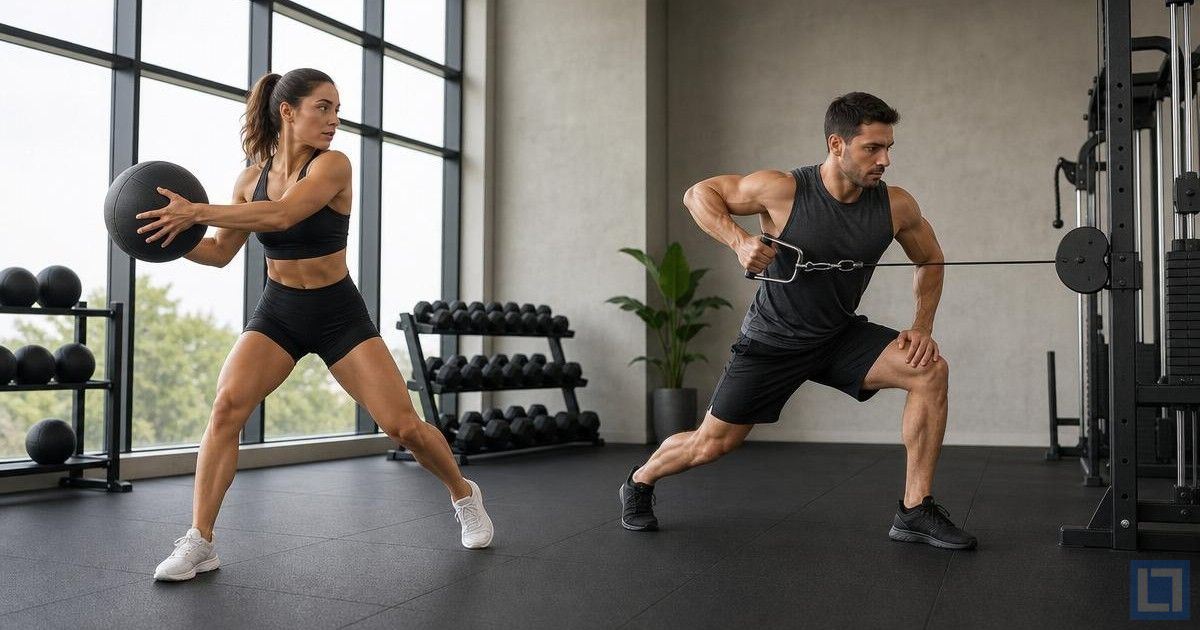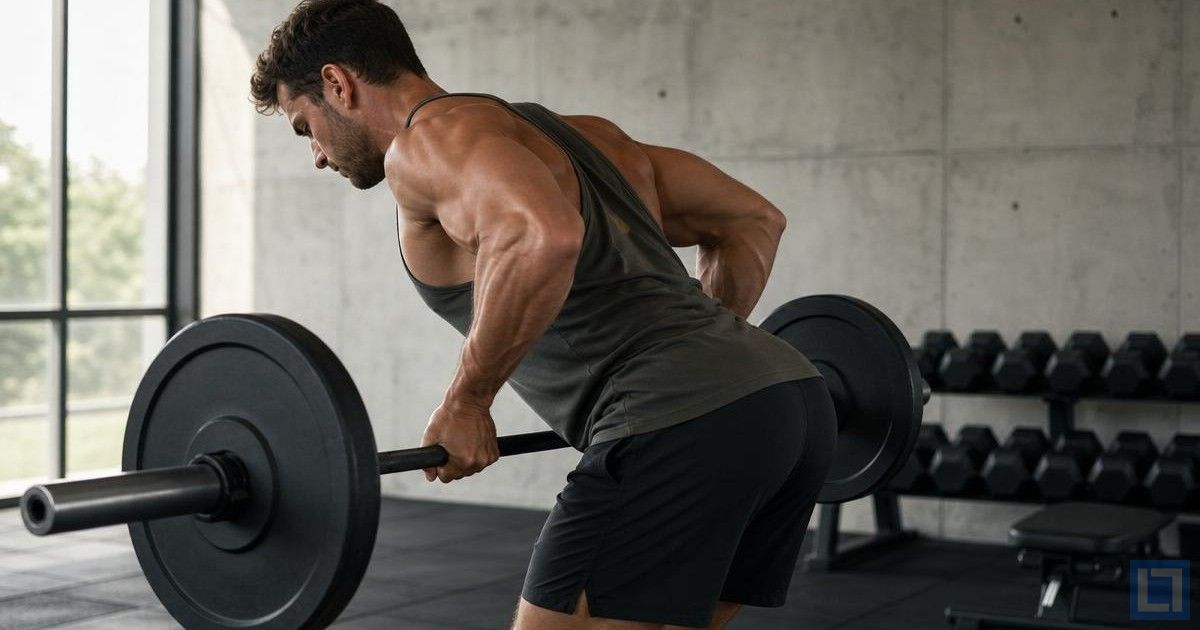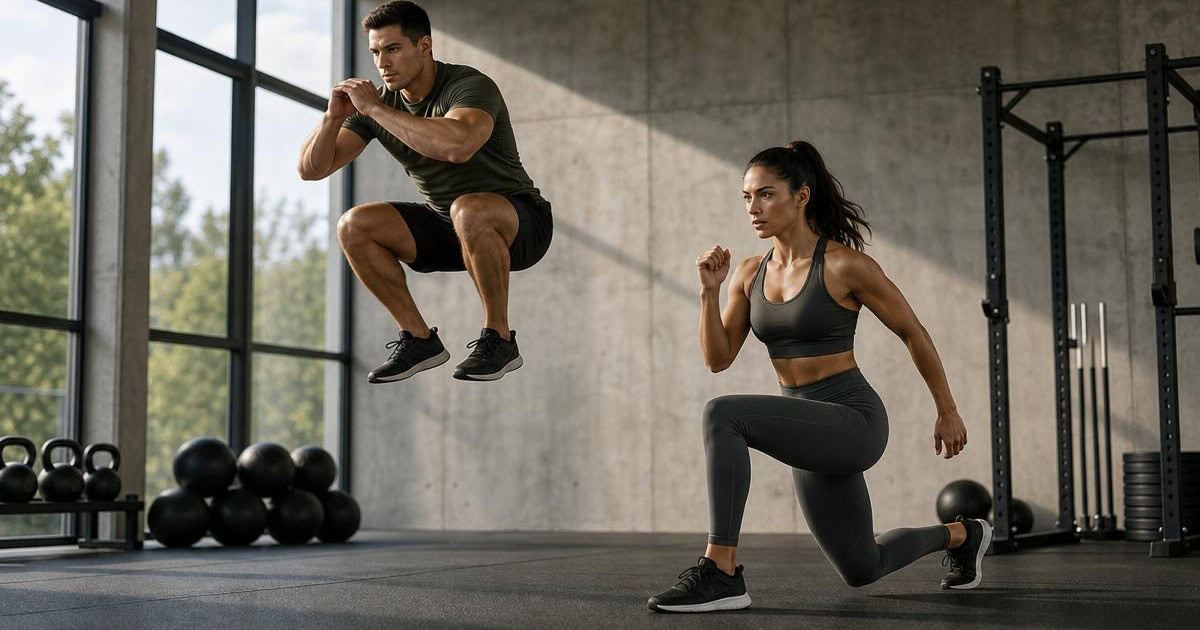
Explosive power is the ability to produce force quickly – the rate at which muscles can generate force rather than the maximum force they can produce. Explosive power separates great athletes from merely strong ones, and drives performance in any sport involving sprinting, jumping, throwing, striking, or rapid direction changes. Building explosiveness requires both the strength foundation that allows force production and the rate-of-force-development training that makes that production fast.
These ten exercises cover the complete explosive power toolkit. Plyometrics (jump squats, box jumps, explosive push-ups) train rapid eccentric-to-concentric power production. Explosive lifts (hang cleans, kettlebell swings, power shrugs, thrusters) train explosive force under load. Foundational strength lifts (squats, deadlifts) build the maximum strength that limits explosive output. Rotational work (medicine ball throws) addresses rotational explosive power. Together they build complete explosive development across the full spectrum of athletic power.
Jump Squat

The Jump Squat performs explosive bodyweight squats. The plyometric pattern is foundational for explosive leg power.
For explosive power, jump squats train the lower body to produce force quickly. Run it for 3 to 4 sets of 5 to 8 reps as foundational explosive work.
Stand with feet shoulder-width and hands at the chest or sides. Squat down to a quarter squat depth. Drive up explosively to jump straight up. Land softly with knees bent and immediately descend into the next squat. The plyometric pattern develops explosive leg power – foundational because explosive sports performance comes from rapid force production through the legs. Excellent foundational power exercise that translates directly to sprint acceleration, vertical jump, and any sport requiring explosive lower body action.
Kettlebell Swing

The Kettlebell Swing performs hip-hinge driven kettlebell swings. The pattern is foundational for explosive hip extension.
For explosive power, kettlebell swings train explosive hip extension. Run it for 3 to 4 sets of 10 to 15 reps as explosive hip work.
Stand with a kettlebell on the floor between the feet. Hinge at the hips and grip the kettlebell with both hands. Swing the kettlebell back between the legs, then drive the hips forward explosively to swing the kettlebell up to roughly chest height. Let it swing back down between the legs. Continue. The explosive hip-hinge pattern develops explosive hip extension power – foundational for sprinting, jumping, and any sport requiring explosive hip drive. The hip extension power that drives speed and power in athletic movement comes from the same hip drive trained in this exercise.
Barbell Deadlift

The Barbell Deadlift performs conventional deadlifts. The compound pattern builds the foundational strength explosive power requires.
For explosive power, deadlifts build the strength foundation that explosive movements require. Run it for 3 to 4 sets of 3 to 5 reps as foundational strength work.
Stand with a barbell over mid-foot, feet hip-width. Hinge at the hips and bend the knees to grip the bar with hands shoulder-width. Drive the floor away by extending hips and knees together to lift the bar. Stand fully tall, then lower under control. The pattern develops the maximum strength foundation that explosive power production depends on – explosive force is rate-limited by maximal strength, meaning stronger lifters can produce force faster than weaker lifters even when performing identical movements. Strong deadlifts directly support explosive performance through this strength foundation.
Smith Hang Clean

The Smith Hang Clean performs hang cleans with a Smith machine. The pattern trains explosive triple extension under load.
For explosive power, hang cleans develop explosive triple extension under load. Run it for 3 to 5 sets of 3 to 5 reps as primary explosive power work.
Set up at a Smith machine with the bar at thigh height. Stand inside the bar with hands shoulder-width or slightly wider. Lift the bar to hang at thigh height. Explosively extend the hips, knees, and ankles together (triple extension) while pulling the bar up and shrugging. Catch the bar at shoulder height in a quarter squat. Lower to thigh height and repeat. The pattern trains explosive triple extension under significant load – the same movement pattern that drives jumping, sprinting, and explosive athletic performance. Foundational power exercise for athletes.
Medicine Ball Rotational Throw
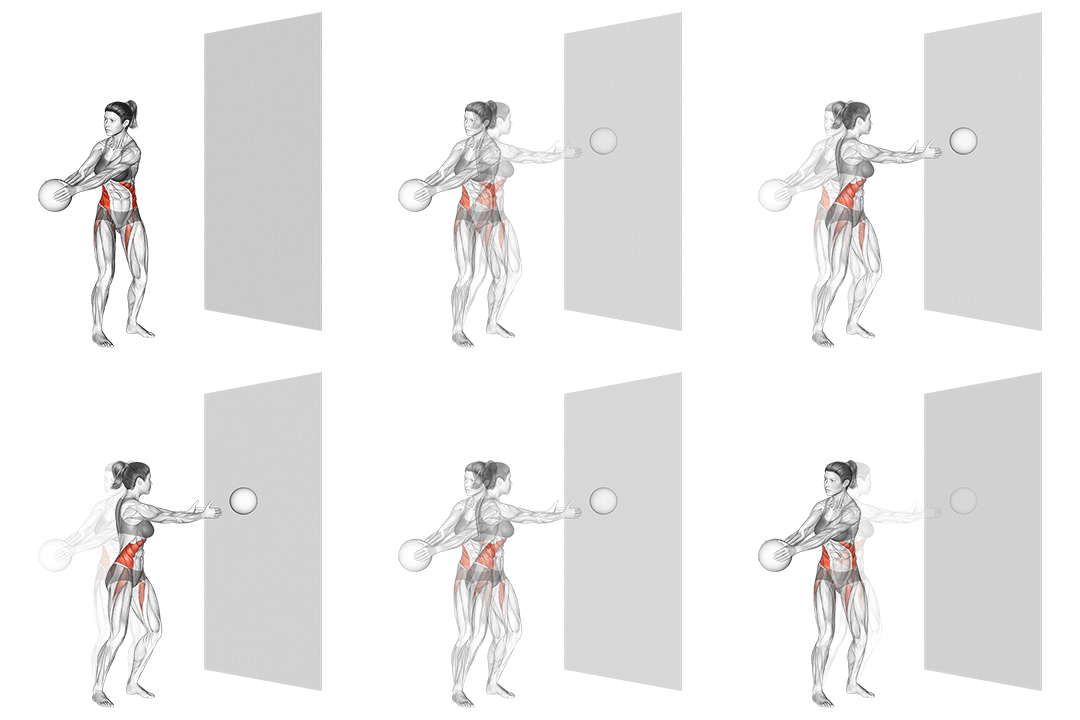
The Medicine Ball Rotational Throw performs explosive rotational throws against a wall. The pattern develops rotational power.
For explosive power, rotational throws develop trunk rotation power. Run it for 3 sets of 5 to 8 reps per side as rotational power work.
Stand 3 to 4 feet from a wall, side-on, holding a medicine ball at the chest. Rotate the body away from the wall, then explosively rotate toward the wall while throwing the ball forcefully. Catch on the rebound and reset. The pattern develops rotational power – critical for any sport involving rotation including throwing, swinging, and striking. Many athletic movements depend on the trunk rotation power that this exercise develops, and rotational training is often underemphasized in general explosive training programs.
Dumbbell Thruster
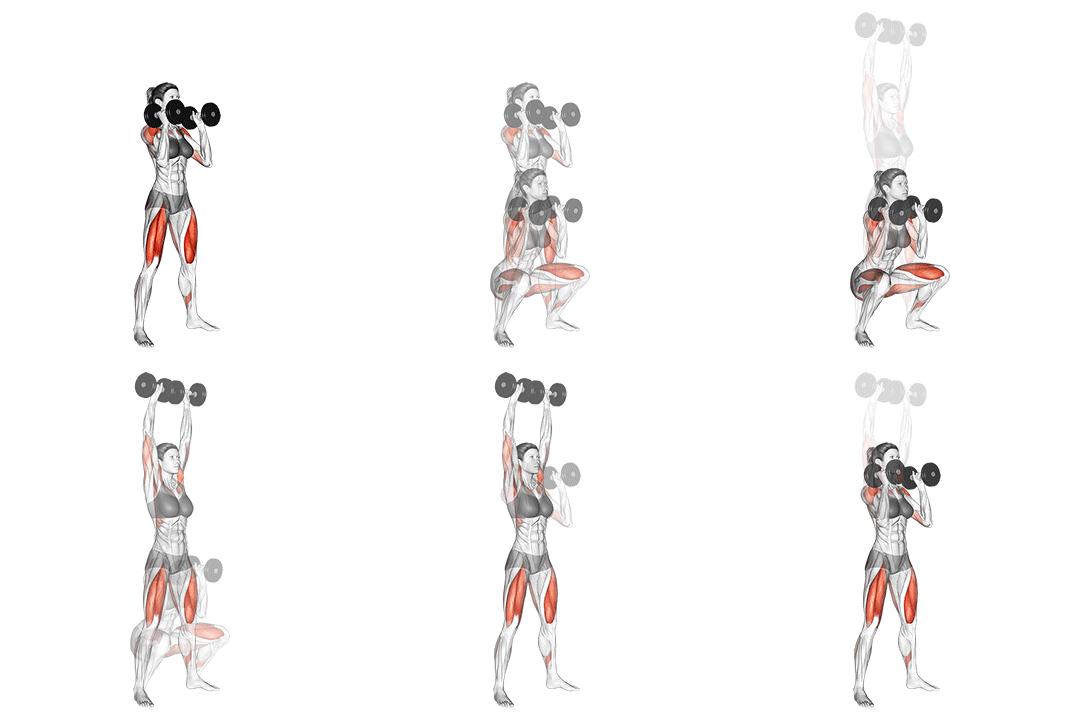
The Dumbbell Thruster performs squat-to-press combinations. The combined pattern builds full-body explosive coordination.
For explosive power, thrusters develop full-body explosive coordination under load. Run it for 3 sets of 6 to 10 reps as full-body explosive work.
Hold dumbbells at the shoulders with palms facing each other. Squat down by bending the knees and hips. As the body rises out of the squat, press the dumbbells overhead by extending the elbows. Lower the dumbbells back to the shoulders as the body descends into the next squat. The combined squat-press pattern develops full-body explosive coordination – the rapid transition from squat drive to overhead press demands the kind of full-body power production that translates to sport performance. Excellent integrated power exercise that builds explosive coordination through the kinetic chain.
Barbell Squat

The Barbell Squat performs back squats. The compound pattern builds the leg strength foundation explosive power requires.
For explosive power, squats build the maximal leg strength foundation. Run it for 3 to 4 sets of 4 to 6 reps as foundational strength work.
Set up a barbell on a rack at upper back height. Position the bar across the upper back. Step back with feet shoulder-width. Squat down by bending the knees and hips. Lower until the thighs are parallel to the floor or below. Drive back up through the heels. The pattern develops maximal leg strength – foundational for explosive power because rapid force production is rate-limited by maximal strength. Stronger legs produce force faster than weaker legs in identical movements. Strong squats provide the strength foundation that all explosive lower body movement depends on.
Jump Box Over

The Jump Box Over performs explosive jumps over a box. The plyometric pattern develops reactive power and athletic coordination.
For explosive power, box jumps develop reactive jumping power. Run it for 3 sets of 4 to 6 reps as reactive power work.
Stand in front of a sturdy box at appropriate height. Squat down to a quarter squat. Drive up explosively, jumping over the box and landing on the far side. Reset and repeat back over. The plyometric pattern develops reactive power and athletic coordination – the rapid eccentric-to-concentric loading and the demand to clear height develops the explosive jumping ability that translates to sport performance. Excellent variation alongside jump squats because the box height demand forces full effort each rep rather than allowing sub-maximal jumping.
Barbell Power Shrug

The Barbell Power Shrug performs explosive shrugs from a partial pull. The explosive pattern develops upper body explosive power.
For explosive power, power shrugs develop explosive trap and upper back power. Run it for 3 to 4 sets of 4 to 6 reps as explosive upper body work.
Stand with a barbell at thigh height (from a rack or after a partial pull from the floor). Drive the hips and bend the knees slightly. Explosively extend the hips and shrug the shoulders up forcefully, attempting to elevate the bar through trap power. Lower under control. Repeat. The explosive pattern develops explosive trap and upper back power – critical for athletic movements involving explosive upper body action. Excellent variation that builds explosive upper body power complementing the lower body explosive work for complete kinetic chain power development.
Push Ups

The Push Up performs bodyweight pushups. The accessible pattern can be performed explosively to develop upper body power.
For explosive power, explosive push-ups develop upper body explosive power. Run it for 3 sets of 5 to 8 explosive reps as upper body plyometric work.
Set up in a high plank position with hands shoulder-width apart, body in a straight line. Lower the body by bending the elbows until the chest is just above the floor. Press up explosively to leave the floor with the hands. Land softly and immediately descend into the next rep. The pattern develops explosive upper body power – the explosive concentric drive develops the same upper body power production that supports throwing, pushing, and striking movements. Accessible plyometric exercise that builds upper body explosive power without specialized equipment.
How To Program These Workouts
Explosive power training works best with 2 to 3 explosive sessions per week, often combined with strength training or programmed before strength work when the nervous system is fresh. Total weekly explosive volume should remain moderate because rate-of-force-development work demands neural recovery.
Structure sessions with explosive work first while fresh. Sample week: Day 1 – jump squats, hang cleans, box jumps, then squat strength work. Day 2 – kettlebell swings, medicine ball throws, explosive push-ups, then deadlift strength work. Day 3 – power shrugs, thrusters, plyometrics, then conditioning. Use 3 to 5 sets of 3 to 6 reps for explosive lifts (with full recovery between sets), 3 sets of 4 to 8 reps for plyometrics, and integrated strength work to build the foundation that supports explosive output.
Progressive overload drives explosive power gains differently than pure strength training. Add intensity (height, weight, complexity) when current loading becomes too easy for full effort. Track jump heights, throw distances, and explosive lift loads to monitor progress. Explosive development requires both consistent training and recovery – too much volume without recovery degrades explosive output rather than improving it. Quality over quantity drives explosive results.
Final Thoughts
These ten exercises cover the complete explosive power toolkit. The plyometric work develops rapid force production. The explosive lifts train force under load. The foundational strength work builds the maximum strength that supports explosive output. The rotational work addresses rotational power for sport-specific demands. Together they build complete explosive development across all the patterns that athletic performance requires.
Building explosiveness requires consistent training that respects both the demand for high-quality work and the need for adequate recovery. Athletes who train explosive work with proper intensity, technical quality, and recovery typically demonstrate substantially better explosive output than those who treat it as just another conditioning component. The combination of foundational strength work and dedicated explosive training produces the explosive performance that distinguishes elite athletes from merely strong ones.
Frequently Asked Questions
What is explosive power?
Explosive power is the rate of force production – how quickly muscles can generate force rather than the maximum force they can produce. It is critical for sports involving sprinting, jumping, throwing, striking, or rapid direction changes, and depends on both maximum strength and the neural ability to recruit muscle fibers rapidly.
How is explosive training different from strength training?
Strength training emphasizes maximum force production through heavy loads and slower movements. Explosive training emphasizes rapid force production through plyometrics, Olympic-style lifts, and explosive variations. Explosive training requires lighter loads moved with maximum velocity, while strength training uses heavier loads moved at controlled speeds.
How often should explosiveness be trained?
2 to 3 explosive sessions per week works well for most athletes, often integrated with strength training. The volume should remain moderate because rate-of-force-development work demands neural recovery. More volume does not produce more results – quality of effort and recovery matters more than total work.
Do explosive lifts require Olympic lifting expertise?
Olympic lifts (snatch, clean and jerk) require substantial coaching to perform safely and effectively. However, simpler explosive lifts (kettlebell swings, hang cleans, power shrugs, thrusters) provide most of the explosive training benefit without the technical complexity. Most athletes can develop substantial explosive power with these simpler variations and avoid the technical learning curve of full Olympic lifts.
Will lifting heavy weights make athletes slower or less explosive?
No – properly programmed strength training improves explosive performance for most athletes. The maximum strength foundation actually limits explosive output, meaning stronger athletes can produce force faster than weaker athletes in identical movements. The key is combining strength training with dedicated explosive work, not replacing one with the other.