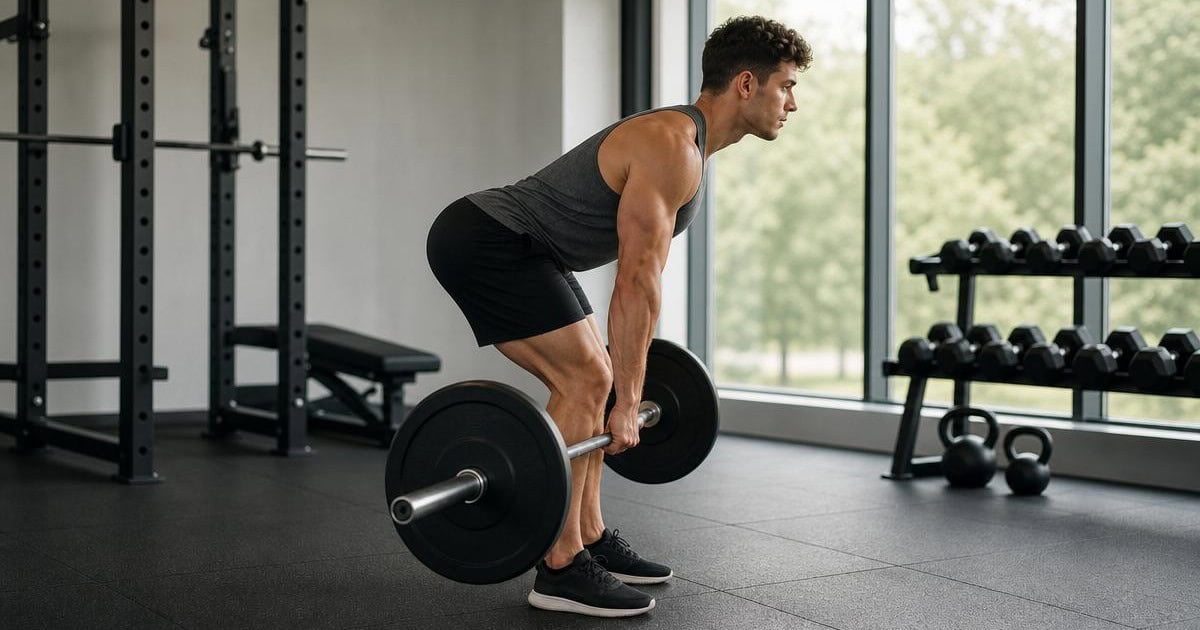
The lower back (lumbar erector spinae and supporting deep stabilizers) is responsible for spine extension, supporting heavy lifts, maintaining posture, and providing the trunk stability that virtually all athletic and lifting performance requires. A strong, resilient lower back produces: better deadlift and squat capacity through compound trunk stability, reduced lower back pain from desk work and heavy lifting, improved athletic performance through better trunk integrity, longer training careers through reduced injury risk, and better posture through stronger erector endurance. Most lifters who experience lower back pain have undertrained the lower back relative to their pressing and squatting volume, or use poor hip-hinge mechanics that force the lower back to compensate. The right lower back training combines heavy compound work (deadlifts, RDLs, good mornings), dedicated isolation (hyperextensions, supermans), supporting glute work, dynamic posterior chain work (kettlebell swings), and stabilization patterns (planks, bird dogs).
Below are ten of the most effective exercises for lower back development and resilience, covering compound posterior chain work (barbell deadlift, barbell Romanian deadlift, dumbbell Romanian deadlift, barbell good morning), direct isolation (hyperextension, superman), supporting glute work (barbell glute bridge), dynamic patterns (kettlebell swing), and stabilization training (front plank, bird dog). Together they form a complete lower back training program. A 30 to 45-minute lower-back-focused session pulled from this list, performed 1 to 2 times per week, produces strong lower back development for any lifter focused on building lower back strength, addressing lower back issues, or supporting heavier lifting performance.
Barbell Deadlift

The Barbell Deadlift performs barbell deadlifts from the floor. The pattern produces compound full-back loading including extreme lower back work.
For lower back development, the deadlift is foundational. The entire posterior chain including lower back works hard isometrically and through extension. Run it for 3 to 4 sets of 3 to 6 reps as heavy compound work.
Stand with feet hip-width with a barbell on the floor over the mid-foot. Hinge at the hips and bend the knees to grip the bar with hands just outside the legs. Drive through the heels while extending the hips and knees to lift the bar from the floor. The lower back (erectors) works hard isometrically to maintain spinal position throughout the lift. Stand fully tall at the top. Lower under control. The pattern builds the foundational lower back strength that defines all heavy lifting performance.
Barbell Romanian Deadlift

The Barbell Romanian Deadlift performs Romanian deadlifts. The hip-hinge pattern builds posterior chain including lower back work.
For lower back development, the RDL builds posterior chain strength with significant lower back loading. Run it for 3 sets of 8 to 12 reps as primary posterior chain work.
Stand with feet hip-width holding a barbell at the front of the thighs. Hinge at the hips by sending them backward while keeping the back flat and legs nearly straight. Lower the barbell along the legs until the hamstrings stretch deeply. Drive back to standing by extending the hips. The lower back (erectors) works hard isometrically to maintain spinal position throughout the hinge. The pattern builds the lower back strength alongside hamstring and glute development.
Barbell Good Morning

The Barbell Good Morning performs good mornings with a barbell on the upper back. The hip-hinge pattern produces direct lower back and posterior chain loading.
For lower back development, the good morning produces direct loading on the lower back through the hip-hinge pattern. Run it for 3 sets of 8 to 12 reps as posterior chain work.
Set up a barbell on the upper back as for a squat. Stand with feet hip-width. Hinge at the hips by sending them backward while keeping the back flat and legs nearly straight. The torso lowers toward parallel to the floor while the back stays flat. The lower back (erectors) and hamstrings work hard. Drive back to standing by extending the hips. Use moderate weights with strict form – this exercise places significant lower back loading and requires excellent technique.
Hyperextension

The Hyperextension performs back hyperextensions on a hyperextension bench. The pattern produces direct lower back isolation.
For lower back development, hyperextensions are foundational direct lower back work. Run it for 3 sets of 12 to 15 reps as primary lower back isolation.
Set up on a hyperextension bench with the hips on the pad and feet secured. Lower the upper body forward by hinging at the hips. Extend back up by extending the hips until the body forms a straight line (do not hyperextend beyond neutral). The lower back (erectors) works hard through extension. Squeeze at peak. Lower under control. The pattern produces direct lower back isolation and is foundational for building lower back strength and endurance. Add weight (plate held to chest) for advanced strength.
Superman

The Superman performs prone superman holds on the floor. The pattern produces direct lower back work using bodyweight.
For lower back development, supermans provide accessible direct lower back work. Run it for 3 sets of 10 to 15 reps or 30-second holds as accessible lower back work.
Lie face-down on the floor with arms extended overhead and legs straight. Lift the arms, chest, and legs off the floor by extending the back and hips. The lower back (erectors) works hard through extension. Hold at peak for 1 to 3 seconds. Lower under control. The pattern produces direct lower back work using only bodyweight – excellent for beginners and those without access to hyperextension equipment, and excellent as accessory work alongside heavier compound lifts.
Barbell Glute Bridge
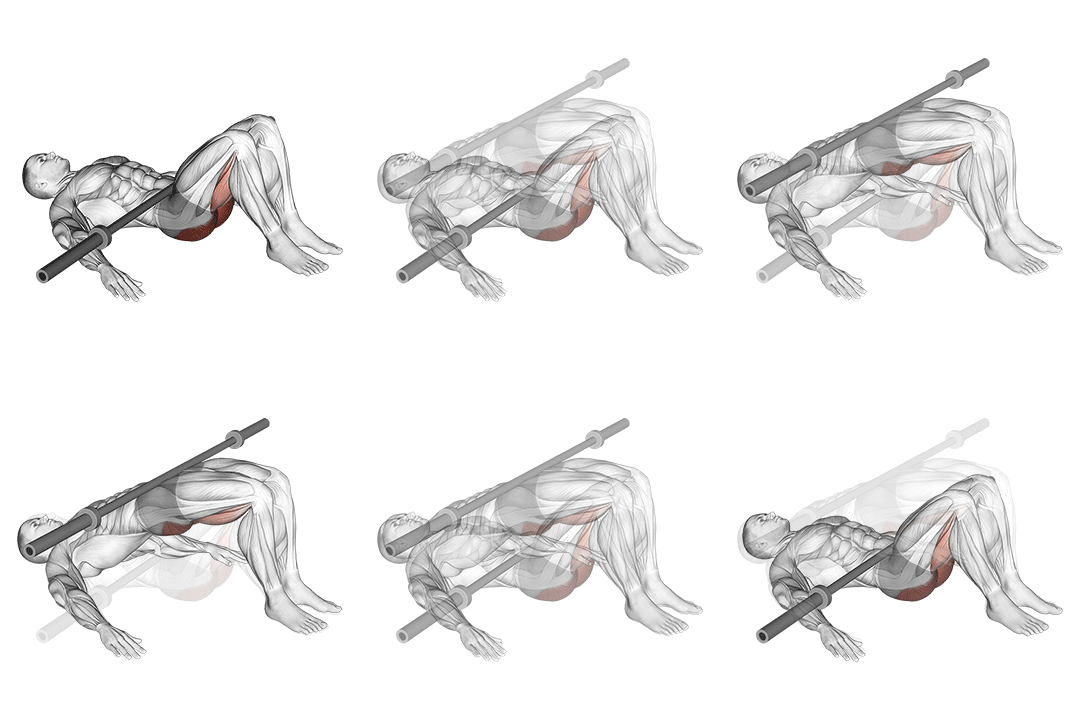
The Barbell Glute Bridge performs glute bridges with a barbell on the hips. The pattern produces hip extension that supports lower back health.
For lower back development, the glute bridge strengthens the glutes that support proper lower back function. Run it for 3 sets of 10 to 15 reps as glute and hip extension work.
Lie on the floor with knees bent and feet planted. Position a barbell across the hips (use a barbell pad). Hold the bar in place. Drive through the heels to lift the hips up by extending the hips. The body forms a straight line from shoulders to knees at the top. The glutes work hard. Squeeze at peak hip extension. Lower under control. The pattern strengthens glutes – critical for lower back health because weak glutes force the lower back to compensate during hip extension.
Kettlebell Swing

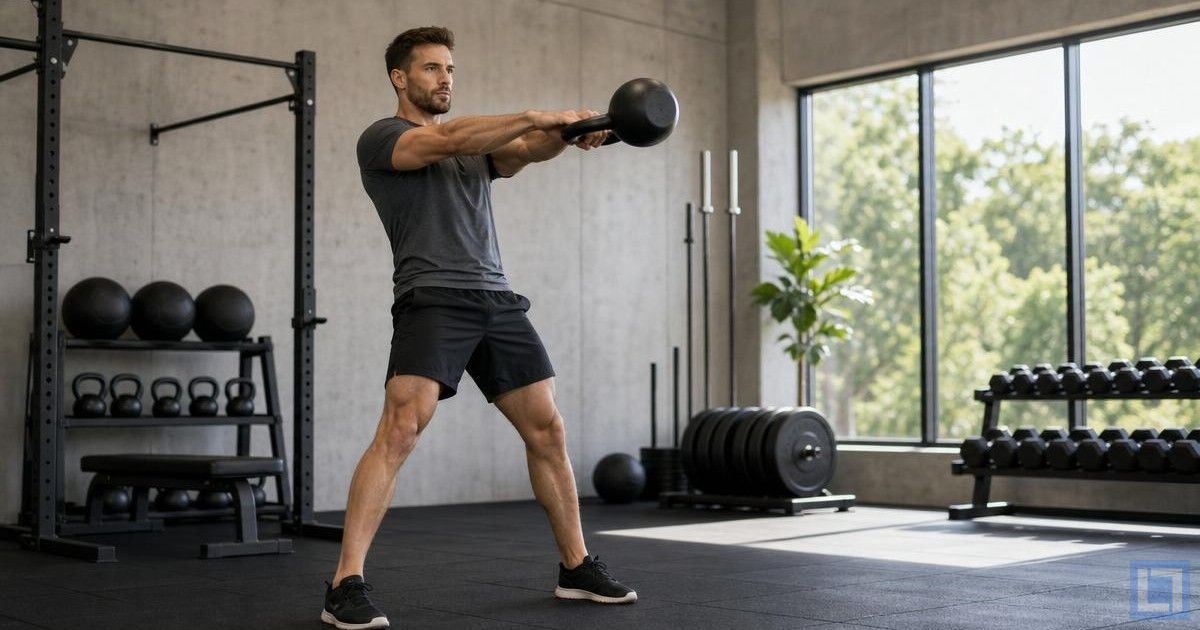
The Kettlebell Swing performs kettlebell swings using hip hinge and explosive hip extension. The pattern produces dynamic posterior chain work.
For lower back development, kettlebell swings build dynamic posterior chain endurance and lower back resilience. Run it for 3 sets of 12 to 20 swings as dynamic posterior chain work.
Stand with feet shoulder-width with a kettlebell on the floor in front. Hinge at the hips and grip the kettlebell. Swing the kettlebell back between the legs by hinging at the hips. Drive the hips forward explosively to swing the kettlebell up to chest level. The kettlebell travels in an arc driven by explosive hip extension. The pattern builds dynamic posterior chain power and lower back endurance. The hip-driven motion teaches proper hip hinge mechanics critical for lower back health.
Dumbbell Romanian Deadlift
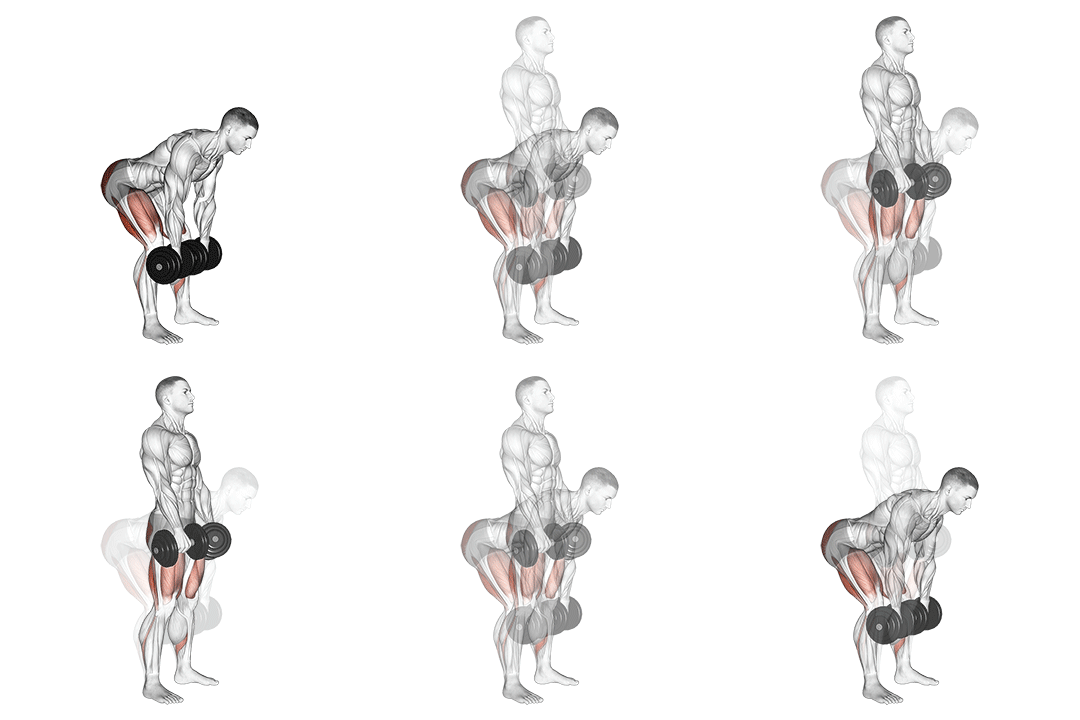
The Dumbbell Romanian Deadlift performs Romanian deadlifts with dumbbells. The accessible pattern builds posterior chain and lower back work.
For lower back development, the dumbbell RDL provides accessible posterior chain work. Run it for 3 sets of 10 to 12 reps as accessible posterior chain work.
Stand with feet hip-width holding dumbbells at the front of the thighs. Hinge at the hips by sending them backward while keeping the back flat and legs nearly straight. Lower the dumbbells along the legs until the hamstrings stretch deeply. Drive back to standing by extending the hips. Squeeze the glutes and hamstrings hard at the top. The pattern builds posterior chain and lower back strength with accessible dumbbell loading – excellent for those without barbell access or as a lighter complement to barbell RDLs.
Front Plank
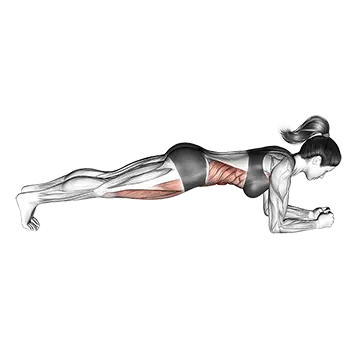
The Front Plank performs forearm plank holds. The pattern builds isometric core and lower back support.
For lower back development, the plank builds the core stability that supports lower back health. Run it for 3 sets of 30 to 60-second holds as core stability work.
Lie face-down on the floor. Prop up on the forearms with elbows under the shoulders. Lift the hips so the body forms a straight line from shoulders to ankles. The core works hard isometrically including the lower back muscles that maintain spine position. Hold for the working interval. The pattern builds the isometric core strength and lower back support that prevents lower back issues during heavy lifting and daily activities.
Bird Dog
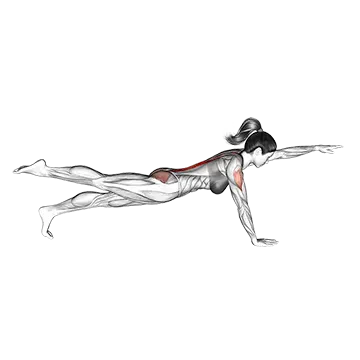
The Bird Dog performs prone bird dog exercise (alternating opposite arm/leg extension on hands and knees). The pattern produces stabilization training for the lower back.
For lower back development, the bird dog teaches anti-rotational lower back stability. Run it for 3 sets of 10 to 12 reps per side as accessible lower back stability work.
Get on hands and knees with the back flat (neutral spine). Extend one arm forward and the opposite leg back simultaneously while maintaining flat back position. Hold briefly at peak. Return to start and switch sides. The lower back works hard to prevent rotation and maintain spine position against the limb movement. The pattern builds anti-rotational lower back stability that prevents back injuries during dynamic activities and supports proper movement patterns.
How To Program These Workouts
A productive lower-back-focused session pulls 4 to 6 exercises from the list above. A common balanced session: barbell deadlift (heavy compound), barbell Romanian deadlift (posterior chain), hyperextension (isolation), front plank (stabilization), bird dog (anti-rotation). For mass focus: barbell deadlift, barbell Romanian deadlift, barbell good morning, hyperextension. For health/resilience focus: hyperextension, superman, front plank, bird dog, barbell glute bridge. Run heavy compound work for 3 to 4 sets of 3 to 8 reps, moderate compound work for 3 sets of 8 to 12 reps, isolation and stabilization work for 3 sets of 10 to 15 reps or 30 to 60-second holds. Total session covers 12 to 18 working sets focused on lower back development.
Train lower back 1 to 2 times per week as part of complete training programming. Heavy compound work (deadlifts, RDLs, good mornings) belongs in 1 weekly session typically combined with leg or back work. Dedicated lower back isolation and stabilization work (hyperextensions, supermans, planks, bird dogs) can be done 2 to 3 times per week including as warm-up or accessory work. The combination of heavy weekly mass work plus regular stabilization training produces the best lower back development and resilience. Always prioritize form over load – lower back training with poor form produces injuries rather than strength.
For broader programming, see our best workouts for posterior chain and best deadlift workouts. For lower back health, see our best workouts for lower back pain.
Final Thoughts
The best lower back exercises deliver real lower back strength and resilience improvements through training that targets the specific lower back functions: compound posterior chain work for mass and strength, dedicated isolation for direct erector loading, supporting glute work for proper hip extension mechanics, dynamic patterns for posterior chain endurance, and stabilization training for anti-rotational integrity. The combination of deadlifts, Romanian deadlifts, good mornings, hyperextensions, supermans, glute bridges, kettlebell swings, planks, and bird dogs covers every functional pattern of the lower back and produces broader development than any single exercise approach. Many lifters discover stronger lifts, reduced lower back pain, better posture, and reduced injury rates within 8 to 12 weeks of adding consistent lower back work. For lifters dealing with lower back pain, plateau on heavy lifts, or wanting to build a more resilient lower back, dedicated lower back training is one of the most effective interventions available.
Stay focused on form over load on all lower back work. The most common mistake lifters make is using too-heavy loads that force form breakdown – particularly on deadlifts and good mornings where rounded backs produce injuries rather than strength. The fix: prioritize strict form (flat back, proper hip hinge, controlled reps) over maximum weight. Build progressively over months and years rather than weeks. Combined with adequate stabilization work and supporting glute work, proper form produces the strong, resilient lower back that supports long lifting careers without injury.
Frequently Asked Questions
What’s the best exercise for lower back strength?
Barbell deadlifts and Romanian deadlifts produce the heaviest compound lower back loading. The deadlift requires the entire posterior chain including lower back to work hard isometrically and through extension. Combined with good mornings (direct hip-hinge loading), hyperextensions (direct isolation), and stabilization work (planks, bird dogs), these form the foundation of complete lower back development. The strongest lower backs are built on heavy compound work combined with dedicated isolation and stabilization training.
How often should I train lower back?
1 to 2 times per week heavy plus 2 to 3 times per week light stabilization. Heavy compound work (deadlifts, RDLs, good mornings) belongs in 1 weekly session. Dedicated lower back isolation and stabilization (hyperextensions, supermans, planks, bird dogs) can be done 2 to 3 times per week including as warm-up or accessory work. The combination of heavy weekly mass work plus regular stabilization produces the best lower back development. More than 1 weekly heavy session typically produces overuse issues.
Are deadlifts good for the lower back?
Yes – excellent for lower back strength when performed with proper form. The deadlift produces the heaviest compound lower back loading available – the entire posterior chain including lower back works hard isometrically and through extension. However, deadlifts with poor form (rounded backs, ego-driven loads) cause injuries rather than strength. The fix: maintain flat back position, use moderate to heavy loads with strict form, progress gradually. Properly performed deadlifts build the strongest possible lower back.
Will lower back exercises help with back pain?
Often yes for muscular and weakness-based lower back pain. Most lower back pain develops from: 1) weak lower back relative to demands, 2) weak glutes forcing lower back compensation, 3) poor stabilization producing anti-rotational weakness, 4) tight hips creating poor hip-hinge mechanics. Dedicated lower back training (hyperextensions, supermans), supporting glute work (glute bridges), and stabilization training (planks, bird dogs) often resolves these issues within 8 to 12 weeks. However, structural issues require medical evaluation.
Should I train lower back if it hurts?
Light stabilization work yes, heavy compound work no until pain resolves. If experiencing lower back pain: 1) avoid heavy compound work (deadlifts, squats, good mornings) until pain resolves, 2) include light stabilization work (planks, bird dogs, supermans) which often helps recovery, 3) include glute work (glute bridges) which reduces lower back compensation, 4) consult medical professionals for persistent or severe pain. Most muscular lower back issues respond well to light stabilization training while heavy work would worsen them.