The upper glutes – including the upper portion of the gluteus maximus and the gluteus medius – are critical for both aesthetic glute development (the upper glutes create the visible ‘shelf’ shape that defines impressive glute development from the side view) and functional movement (the upper glutes stabilize the pelvis during single-leg movement, prevent hip drop during running, and provide the lateral stability that prevents knee valgus during squats and lunges). The upper glutes activate strongest during: hip extension exercises with elevated shoulders (hip thrusts), glute-focused isolation work (glute bridges, kickbacks), externally rotated hip positions (frog pumps), unilateral movements (step-ups, Bulgarian split squats), lateral hip patterns (side lunges, side leg raises), and the lockout phase of compound posterior chain work (deadlifts, RDLs). Most lifters who want bigger upper glutes need to emphasize: dedicated heavy hip thrust training as the foundation, glute bridge variations for direct loading, frog pumps for external rotation emphasis, lateral patterns for gluteus medius development, and unilateral work for balanced upper glute development.
Below are ten of the most effective exercises for upper glute development, covering primary glute isolation (barbell glute bridge, barbell hip thrust, bodyweight frog pump), unilateral upper glute work (single leg glute bridge with knee to chest, dumbbell Bulgarian split squat, dumbbell step up), direct upper glute isolation (cable kickback), compound posterior chain (barbell romanian deadlift, barbell deadlift), and lateral upper glute work (dumbbell side lunge). Together they form a complete upper glute program. A 30 to 45-minute upper glute-focused session pulled from this list, performed 1 to 2 times per week (or as primary glute work in lower-body sessions), produces strong upper glute development for any lifter focused on building the visible upper glute shape, addressing upper glute weakness, or supporting hip stability.
Barbell Glute Bridge
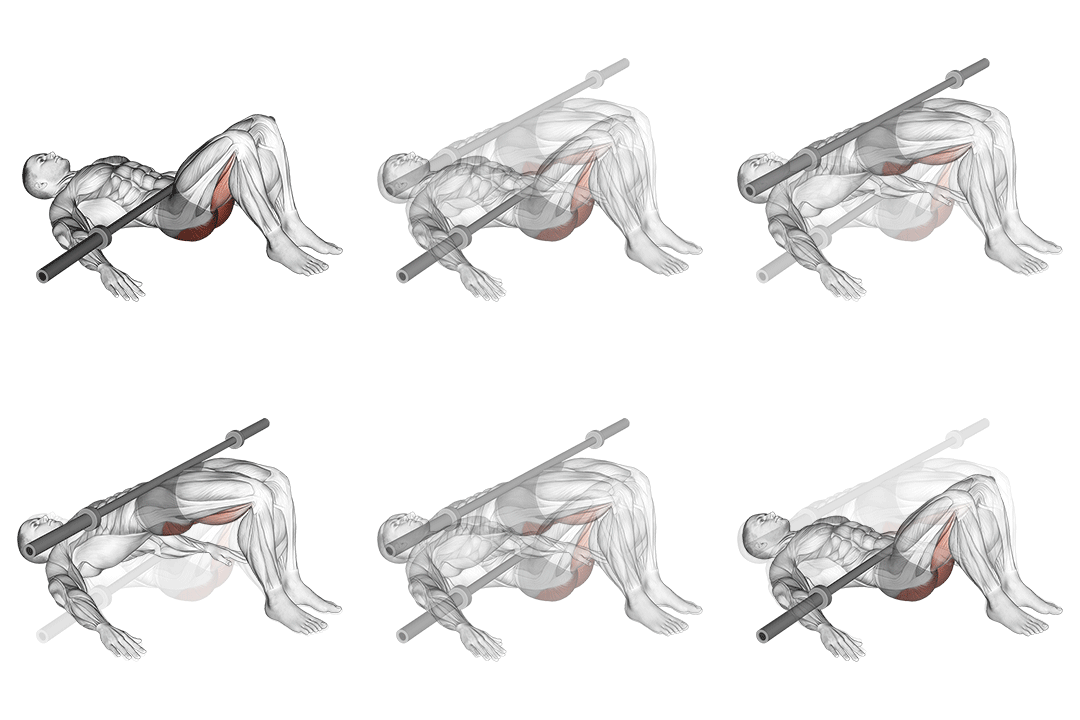
The Barbell Glute Bridge performs glute bridges. The pattern produces direct upper glute loading.
For upper glute development, the glute bridge is foundational. The pattern produces the most direct upper glute loading possible. Run it for 4 sets of 10 to 15 reps as primary upper glute work.
Lie on the floor with knees bent and feet planted. Position a barbell across the hips. Hold the bar in place. Drive through the heels to lift the hips up by extending the hips. The body forms a straight line from shoulders to knees at the top. The glutes work hard – particularly the upper glute (gluteus maximus upper portion and gluteus medius). Squeeze at peak hip extension. Lower under control. The pattern produces direct upper glute loading – the gluteus maximus upper portion activates strongly during the lockout phase, building the upper glute mass that creates the visible upper glute shape.
Barbell Hip Thrust

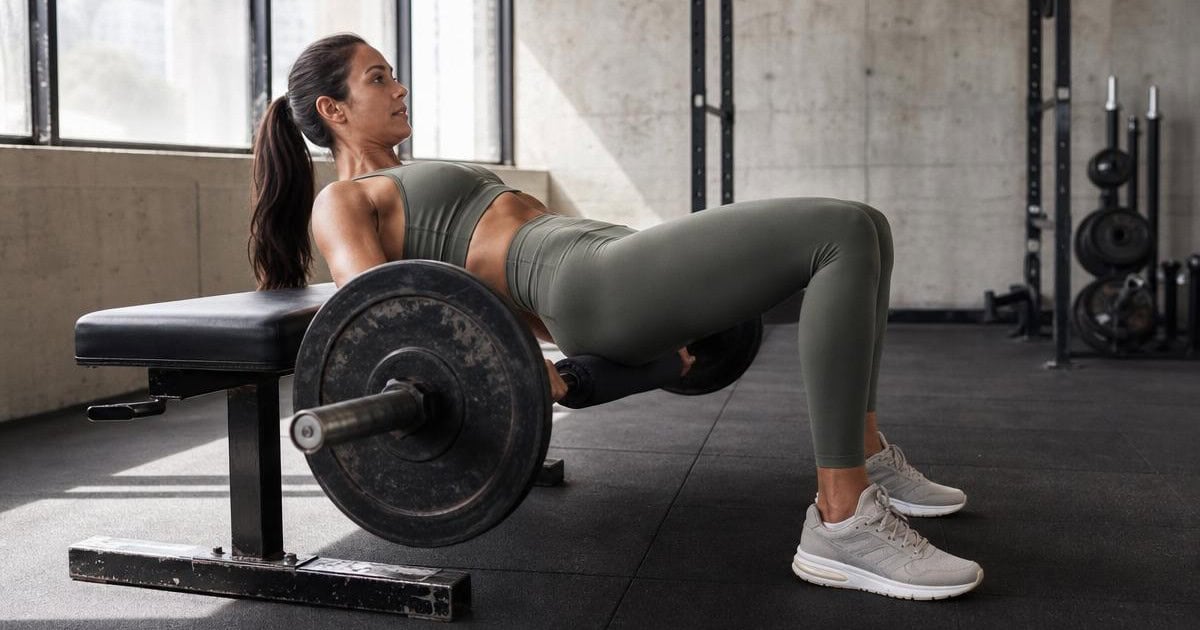
The Barbell Hip Thrust performs hip thrusts with shoulders elevated. The pattern produces extreme upper glute loading.
For upper glute development, the hip thrust produces the most direct heavy upper glute loading possible. Run it for 4 sets of 8 to 12 reps as primary heavy upper glute work.
Sit on the floor with the upper back resting against a bench. Position a barbell across the hips. Hold the bar in place. Drive through the heels to lift the hips up by extending the hips until the body forms a straight line from shoulders to knees. The glutes work hard at peak hip extension. Squeeze hard at peak. Lower under control. The pattern produces extreme upper glute loading – the elevated shoulder position allows for greater range of motion than glute bridges, and hip thrusts allow heavier loading than any other glute-specific exercise. The single most effective heavy upper glute builder.
Single Leg Glute Bridge with Knee to Chest

The Single Leg Glute Bridge with Knee to Chest performs unilateral glute bridges. The pattern produces unilateral upper glute loading.
For upper glute development, the single-leg glute bridge produces unilateral upper glute work. Run it for 3 sets of 10 to 12 reps per leg as unilateral upper glute work.
Lie on the back with one knee bent and foot planted on the floor. Pull the opposite knee to the chest with the hands. Drive through the heel of the planted foot to lift the hips up by extending the hip. The working glute and hamstring work hard through unilateral hip extension. Squeeze at peak. Lower under control. The pattern produces unilateral upper glute loading – addresses left/right asymmetries common in glute development and ensures both upper glutes develop equally. Switch legs between sets.
Cable Kickback

The Cable Kickback performs cable glute kickbacks. The pattern produces direct upper glute isolation.
For upper glute development, the cable kickback produces direct upper glute isolation through pure hip extension. Run it for 3 to 4 sets of 12 to 15 reps as upper glute isolation work.
Set up a cable station with low pulley and ankle strap attachment. Attach the strap to the ankle of the working leg. Stand facing the cable with hands on a stable support for balance. Extend the working leg straight back behind the body by extending the hip. The upper glute works hard through pure hip extension. Squeeze hard at peak. Return under control. The pattern produces direct upper glute isolation with constant cable tension – excellent for upper glute volume work and emphasizing peak contraction.
Dumbbell Bulgarian Split Squat
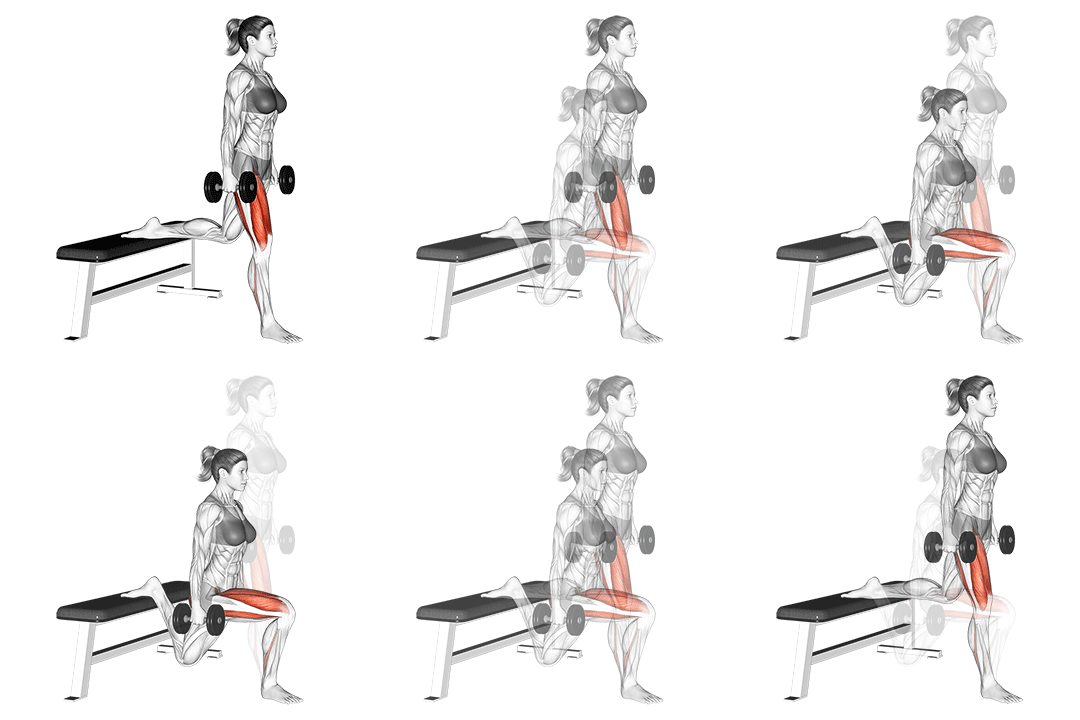
The Dumbbell Bulgarian Split Squat performs Bulgarian split squats. The unilateral pattern produces strong upper glute loading.
For upper glute development, Bulgarian split squats produce strong unilateral upper glute work through deep hip flexion and extension. Run it for 3 sets of 8 to 10 reps per leg as unilateral upper glute work.
Stand 2 to 3 feet in front of a bench. Place the top of the rear foot on the bench behind. Hold dumbbells in each hand at the sides. Squat down by bending the front knee deeply. Lower until the front thigh is parallel to the floor. Drive back up through the front heel. The pattern hits each leg individually with full glute loading – the upper glute works hard through the deep hip flexion at the bottom and powerful hip extension at the top.
Barbell Romanian Deadlift

The Barbell Romanian Deadlift performs Romanian deadlifts. The hip-hinge pattern produces upper glute loading.
For upper glute development, the RDL produces upper glute loading through deep hip hinge. Run it for 3 sets of 8 to 12 reps as posterior chain upper glute work.
Stand with feet hip-width holding a barbell at the front of the thighs. Hinge at the hips by sending them backward while keeping the back flat and legs nearly straight. Lower the barbell along the legs until the hamstrings stretch deeply. Drive back to standing by extending the hips. The pattern produces upper glute loading through the hip hinge pattern – the upper glute works hard during the lockout phase. Combined with hip thrust variations, RDLs produce comprehensive upper glute development through both hip extension and hip hinge patterns.
Barbell Deadlift

The Barbell Deadlift performs barbell deadlifts. The pattern produces compound upper glute loading.
For upper glute development, the deadlift produces compound upper glute loading through heavy hip extension. Run it for 3 to 4 sets of 4 to 6 reps as heavy compound upper glute work.
Stand with feet hip-width with a barbell on the floor over the mid-foot. Hinge at the hips and bend the knees to grip the bar. Drive through the heels while extending the hips and knees to lift the bar from the floor. Stand fully tall at the top. Lower under control. The pattern produces extreme compound loading on the entire posterior chain including upper glutes – heavy deadlifts produce some of the heaviest possible upper glute stimulus through the hip extension lockout phase.
Bodyweight Frog Pump

The Bodyweight Frog Pump performs frog pumps. The pattern produces direct upper glute isolation through external rotation.
For upper glute development, the frog pump produces direct upper glute isolation through the externally rotated hip position. Run it for 3 to 4 sets of 15 to 25 reps as direct upper glute isolation.
Lie on the floor with the soles of the feet pressed together (knees bent and out to the sides like a frog). The externally rotated hip position emphasizes the upper glute. Drive through the outside edges of the feet to lift the hips up. The upper glutes work hard with strong external rotation emphasis. Squeeze hard at peak. Lower under control. The pattern produces direct upper glute isolation with the frog position – excellent finishing exercise that emphasizes peak contraction in the upper glute.
Dumbbell Step Up

The Dumbbell Step Up performs step-ups with dumbbells. The pattern produces unilateral upper glute work.
For upper glute development, the step-up produces unilateral upper glute work during the drive-up phase. Run it for 3 sets of 8 to 12 reps per leg as unilateral upper glute work.
Stand in front of a sturdy box or bench (knee-height for most lifters). Hold dumbbells at the sides. Step up onto the box with one leg, driving through the heel of the lifting leg until standing fully upright on the box. Step back down with control. Switch legs. The pattern produces unilateral upper glute loading – the upper glute works hard to extend the hip and drive the body up onto the box. Excellent unilateral upper glute work.
Dumbbell Side Lunge

The Dumbbell Side Lunge performs weighted side lunges. The pattern produces lateral hip work for upper glute and abductor development.
For upper glute development, the dumbbell side lunge produces lateral hip work that emphasizes the upper glute and abductors. Run it for 3 sets of 8 to 12 reps per side as lateral upper glute work.
Stand with feet wide apart holding dumbbells at the sides. Shift weight to one side by bending that knee while keeping the other leg straight. Lower until the bent knee is at about 90 degrees. Drive back to standing through the bent leg heel. Switch sides. The pattern produces lateral hip work – the gluteus medius and upper glute work hard through the lateral movement and unilateral hip extension. Excellent for lateral upper glute development that complements compound posterior chain work.
How To Program These Workouts
A productive upper glute session pulls 5 to 7 exercises from the list above. A common balanced session: barbell hip thrust (heavy primary), barbell glute bridge (volume primary), single leg glute bridge with knee to chest (unilateral), barbell romanian deadlift (posterior chain), bodyweight frog pump (external rotation isolation), dumbbell side lunge (lateral). For mass focus: barbell hip thrust, barbell glute bridge, barbell deadlift, barbell romanian deadlift, dumbbell bulgarian split squat. For isolation focus: barbell hip thrust, barbell glute bridge, cable kickback, bodyweight frog pump, dumbbell step up. Run heavy hip thrust work for 3 to 4 sets of 6 to 12 reps, glute bridge volume for 3 to 4 sets of 10 to 15 reps, isolation work for 3 to 4 sets of 12 to 20 reps, unilateral work for 3 sets of 8 to 12 reps per leg.
Train upper glutes 1 to 2 times per week as part of complete glute programming. Most successful upper glute programs structure work as: 1) primary glute day (5 to 7 exercises with mix of heavy compound, isolation, and unilateral work), 2) accessory upper glute work in second leg/glute session (additional volume work, frog pumps, lateral patterns), 3) integrated upper glute development through compound posterior chain work (deadlifts, RDLs). The upper glutes recover relatively quickly and tolerate higher frequency for accelerated development. Total weekly upper glute volume should be 12 to 20+ working sets across compound, isolation, and unilateral patterns.
For broader programming, see our how to build bigger glutes and best workouts for glutes. For specific work, see our best lower glute exercises.
Final Thoughts
The best upper glute exercises deliver real upper glute development through training that targets the gluteus maximus upper portion and gluteus medius: heavy hip thrust training as the foundation, glute bridge variations for direct loading, frog pumps for external rotation emphasis, lateral patterns for gluteus medius development, unilateral work for balanced development, and compound posterior chain work for integrated upper glute loading. The combination of hip thrusts, glute bridges (bilateral and unilateral), kickbacks, Bulgarian split squats, RDLs, deadlifts, frog pumps, step-ups, and side lunges covers every functional pattern of the upper glutes and produces broader glute development than any single training approach. Many lifters discover the visible upper glute shelf, more complete glute development, and better hip stability within 12 to 16 weeks of adding consistent upper glute work. For lifters with underdeveloped upper glutes or seeking the visible upper glute shape, dedicated upper glute training is one of the most effective interventions available.
Stay focused on heavy hip thrust as the priority upper glute exercise. The most common mistake lifters make in upper glute training is over-emphasizing isolation work (band kickbacks, frog pumps) at the expense of heavy hip thrust loading. The fix: prioritize heavy barbell hip thrusts as the primary upper glute exercise – hip thrusts allow heavier loading than any other glute-specific movement and produce the most efficient upper glute stimulus possible. Complement hip thrust foundations with glute bridges (volume), isolation work (kickbacks, frog pumps), and unilateral patterns, but don’t substitute lighter accessory work for heavy hip thrust loading. Combined with progressive overload over time, heavy hip thrust-focused training produces the upper glute development that isolation-only training never achieves.
Frequently Asked Questions
What are the upper glutes?
The upper portion of the gluteus maximus and the gluteus medius. The glutes consist of three muscles: gluteus maximus (largest), gluteus medius (upper outer), and gluteus minimus (deep). The upper glutes (upper gluteus maximus and gluteus medius) create the visible ‘shelf’ shape from the side view and provide critical hip stability during single-leg movement. The upper glutes activate strongest during hip thrusts, glute bridges, frog pumps, lateral hip patterns, and the lockout phase of compound posterior chain work.
How do I get the upper glute shelf?
Heavy hip thrust training plus comprehensive glute work. Barbell hip thrusts produce the most direct heavy upper glute loading possible. Combined with glute bridges (volume work), frog pumps (external rotation), lateral patterns (side lunges), unilateral work (Bulgarian split squats, step-ups), and compound posterior chain (deadlifts, RDLs), these exercises produce the visible upper glute shelf within 12 to 16 weeks. The visible shelf also requires adequate body composition to show through.
Why is upper glute development important?
For aesthetic glute shape and hip stability. The upper glutes create the visible shelf shape from the side view that defines impressive glute development. Beyond aesthetics, the upper glutes provide critical hip stability during single-leg movement – they prevent hip drop during running, prevent knee valgus during squatting, and support proper movement patterns. Weak upper glutes contribute to lower back pain, knee issues, and movement dysfunction. Combined with overall glute development, upper glute training produces both aesthetic and functional benefits.
What’s the best exercise for upper glutes?
Barbell hip thrusts. Hip thrusts produce the most direct heavy upper glute loading possible – the elevated shoulder position allows for greater range of motion than glute bridges, and hip thrusts allow heavier loading than any other glute-specific exercise. Combined with glute bridges (volume), frog pumps (external rotation isolation), unilateral work (Bulgarian split squats, step-ups), and lateral patterns (side lunges), hip thrusts form the foundation of upper glute development. Most lifters with the most impressive upper glutes have built them on consistent heavy hip thrust training.
How often should I train upper glutes?
1 to 2 times per week as part of complete glute programming. Most successful upper glute programs include 5 to 7 glute exercises per primary session plus optional accessory work in second leg/glute session. The upper glutes recover relatively quickly and tolerate higher frequency for accelerated development. Total weekly upper glute volume should be 12 to 20+ working sets across compound, isolation, and unilateral patterns. Combined with heavy hip thrust loading, dedicated upper glute volume produces measurable development within 12 to 16 weeks.