Isolation exercises produce direct muscle loading that compound exercises cannot match for specific hypertrophy goals. While compound lifts (squats, deadlifts, bench press) produce broader strength and total muscle development, isolation exercises hit individual muscles with focused volume and specific stretch positions that drive targeted hypertrophy. The best hypertrophy programs combine compound lifts (for foundational mass) with isolation exercises (for visible muscle development), and the isolation work becomes increasingly important as lifters progress beyond the beginner stage when compound lifts alone stop producing visible aesthetic changes.
Below are ten foundational isolation exercises that cover every major muscle group: shoulders (lateral raise, front raise, rear delt fly), arms (dumbbell curl, barbell curl, cable pushdown), chest (dumbbell fly), legs (leg extension, leg curl), and traps (dumbbell shrug). Together they form the isolation foundation of any productive hypertrophy program. Add 1 to 3 isolation exercises per major muscle group per week alongside foundational compound lifts to drive faster visible muscle development.
Dumbbell Lateral Raise

The Dumbbell Lateral Raise holds dumbbells at the sides and lifts them out laterally to shoulder height with arms straight or slightly bent. The exercise targets the medial deltoid heads directly through their primary shoulder abduction function.
For shoulder hypertrophy, the lateral raise is the most direct isolation exercise that exists. The pattern hits the medial delts (the muscle responsible for visible shoulder width) with maximum efficiency. Run it for 3 to 4 sets of 12 to 15 reps as primary medial-delt isolation work.
Stand tall with dumbbells held at the sides, palms facing the body. Lift the dumbbells out to the sides until the arms are roughly parallel to the floor. The motion comes from the shoulders, not the traps; keep the shoulders down throughout the rep. Pause briefly at the top. Lower under control.
Dumbbell Biceps Curl

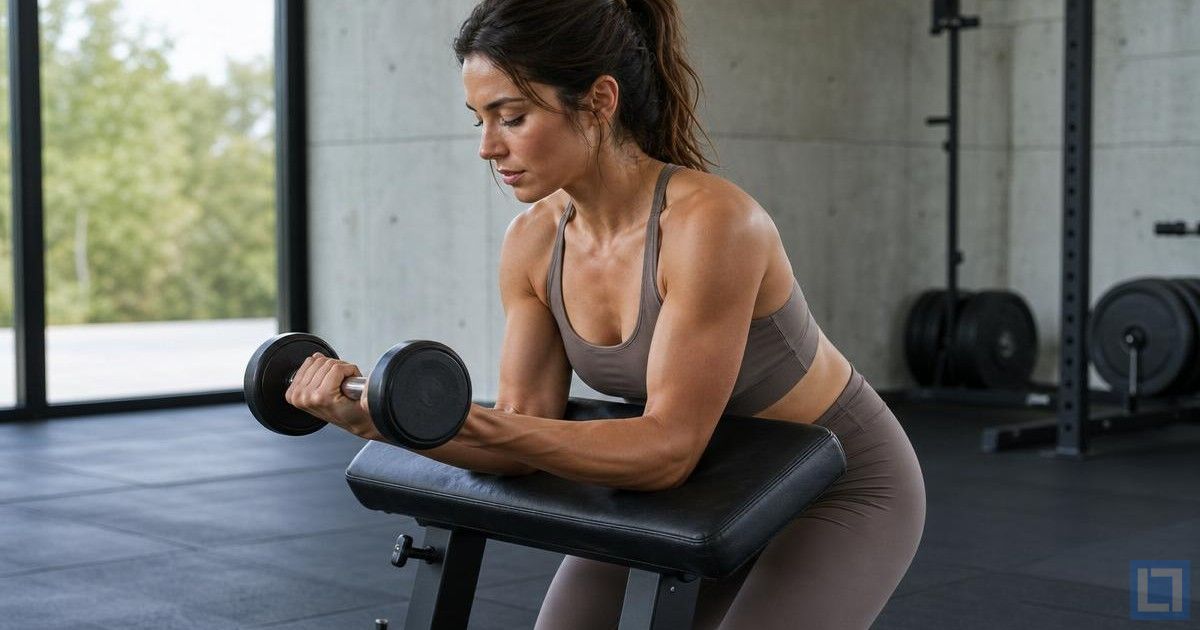
The Dumbbell Biceps Curl holds dumbbells at the sides and curls them up toward the shoulders by bending at the elbows. The exercise is the foundational bicep isolation exercise.
For bicep hypertrophy, the dumbbell curl is the standard isolation exercise. The unilateral pattern catches strength imbalances and the dumbbell handle allows wrist rotation that adds peak contraction loading. Run it for 3 to 4 sets of 8 to 12 reps as primary bicep isolation.
Stand tall with dumbbells held at the sides, palms facing forward. Curl the dumbbells up toward the shoulders by bending at the elbows. Keep the elbows pinned at the sides throughout the rep. Squeeze the biceps at the top. Lower under control to full extension.
Cable Pushdown

The Cable Pushdown anchors a cable rope or bar overhead and pushes the cable down by extending at the elbows. The pattern isolates the triceps through pure elbow extension.
For tricep hypertrophy, the cable pushdown is the most direct tricep isolation exercise that exists. The continuous cable tension produces strong tricep loading throughout the entire range. Run it for 3 to 4 sets of 12 to 15 reps as primary tricep isolation.
Anchor a cable rope or bar at the top of a cable machine. Stand facing the machine with the cable gripped at chest level. Keep the elbows pinned at the sides. Push the cable down by extending the elbows fully. Squeeze the triceps at the bottom. Return under control.
Dumbbell Fly

The Dumbbell Fly lies on a bench with dumbbells held above the chest and lowers the dumbbells out to the sides in a wide arc, then squeezes them back to the start. The pattern isolates the chest through pure horizontal adduction.
For chest hypertrophy, the dumbbell fly produces strong direct chest loading without the secondary shoulder and tricep involvement of pressing. The pattern hits the pec major through its primary horizontal adduction function. Run it for 3 to 4 sets of 10 to 12 reps as primary chest isolation work.
Lie flat on a bench with dumbbells held above the chest, arms slightly bent. Lower the dumbbells out to the sides in a wide arc until you feel a deep stretch in the chest. Squeeze the chest to bring the dumbbells back to the start. Use lighter weight than for pressing.
Lever Leg Extension

The Lever Leg Extension uses a leg extension machine to isolate the quadriceps through knee extension. The fixed bar path eliminates compensation and isolates the quads for pure extension work.
For quad hypertrophy, the leg extension is the most direct quadriceps isolation exercise that exists. The pattern hits the quads (especially the rectus femoris and vastus muscles) without involving the glutes or hamstrings. Run it for 3 to 4 sets of 12 to 15 reps as primary quad isolation work.
Sit on a leg extension machine with the legs under the resistance pads. Adjust the seat so the knees align with the machine pivot. Extend the knees to lift the resistance until the legs are nearly straight. Squeeze the quads at the top. Lower under control.
Lever Seated Leg Curl

The Lever Seated Leg Curl uses a leg curl machine in seated position to isolate the hamstrings through knee flexion. The seated position eliminates lower-back demand and isolates the hamstrings.
For hamstring hypertrophy, the seated leg curl is one of the most direct hamstring isolation exercises that exists. The pattern hits the hamstrings (especially the biceps femoris and semitendinosus) through their knee flexion function. Run it for 3 to 4 sets of 10 to 12 reps as primary hamstring isolation work.
Sit on a leg curl machine with the legs over the resistance pad. Adjust the seat so the knees align with the machine pivot. Curl the legs back by bending the knees, pulling the resistance pad toward the back of the legs. Squeeze the hamstrings at the bottom. Return under control.
Dumbbell Rear Delt Fly
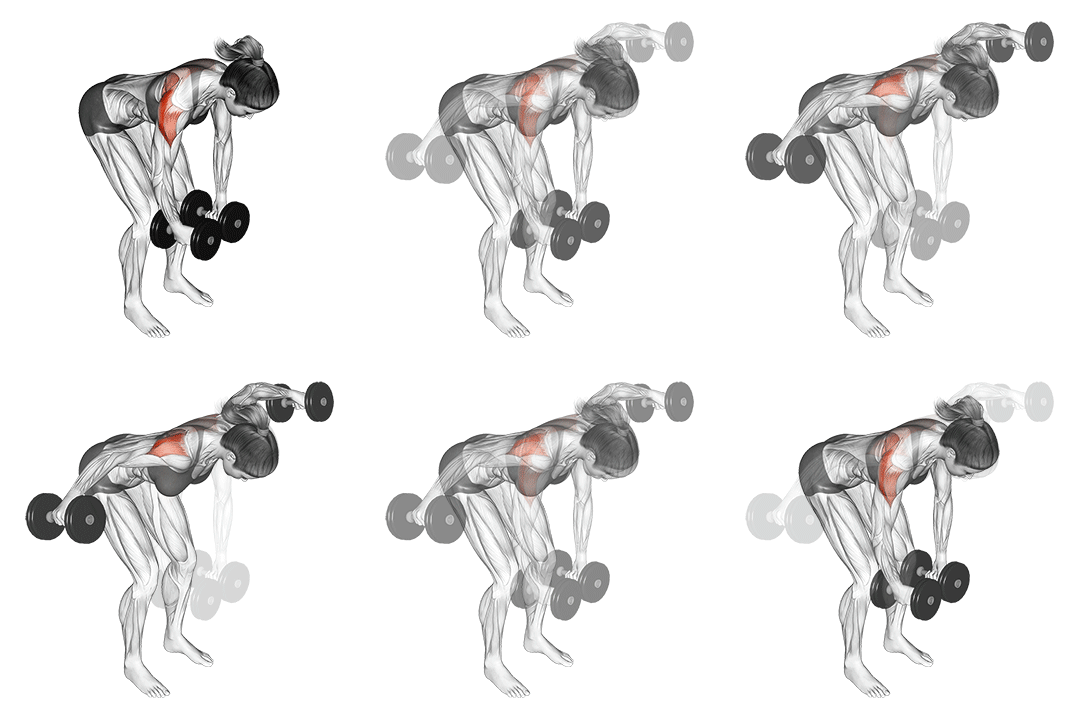
The Dumbbell Rear Delt Fly hinges over with dumbbells held below the chest and lifts the dumbbells out to the sides in a wide arc, targeting the rear deltoids and upper back.
For rear-delt hypertrophy, the rear delt fly is the most direct isolation exercise that exists. The pattern hits the rear delts (often weak in lifters who do heavy pressing) directly through their primary shoulder horizontal abduction function. Run it for 3 to 4 sets of 12 to 15 reps as primary rear-delt work.
Hinge over from the hips with dumbbells held below the chest and arms slightly bent. Lift the dumbbells out to the sides in a wide arc until the arms are roughly parallel to the floor. Squeeze the rear delts at the top. Lower under control. Maintain a flat back throughout.
Dumbbell Shrug

The Dumbbell Shrug holds dumbbells at the sides and shrugs the shoulders straight up toward the ears, then lowers under control. The exercise targets the upper traps directly.
For trap hypertrophy, the dumbbell shrug is the standard isolation exercise. The pattern hits the upper traps with maximum efficiency through their primary shoulder elevation function. Run it for 3 sets of 12 to 15 reps as accessory trap work.
Stand tall with dumbbells held at the sides, palms facing the body. Shrug the shoulders straight up toward the ears, keeping the arms straight throughout. Pause briefly at the top of the contraction. Lower under control to the start. Avoid rotating the shoulders during the rep.
Barbell Curl

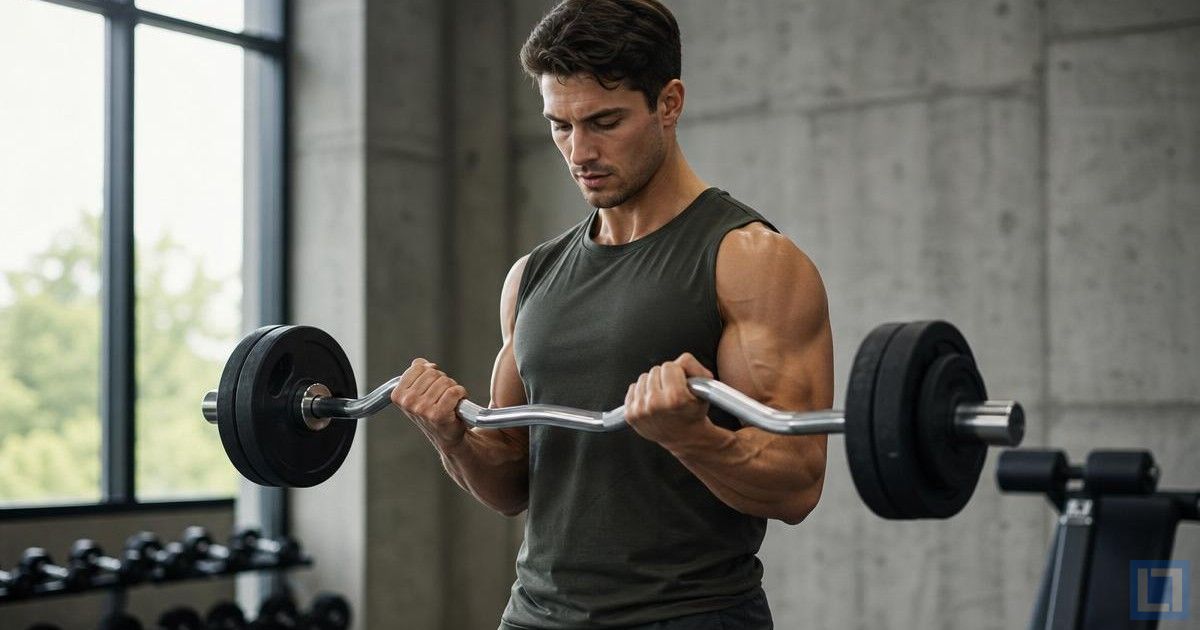
The Barbell Curl holds a barbell at the front of the thighs and curls it up toward the shoulders by bending at the elbows. The exercise is the foundational bicep mass-builder and produces stronger bicep loading per rep than dumbbell curls due to bilateral loading.
For bicep hypertrophy, the barbell curl complements dumbbell curls by allowing heavier total loading. The combination of barbell curls (heavy bilateral) and dumbbell curls (unilateral with rotation) produces broader bicep development than either alone. Run it for 3 to 4 sets of 8 to 12 reps as primary bicep mass work.
Stand tall with a barbell held at the front of the thighs, hands shoulder-width with palms facing forward. Curl the bar up toward the shoulders by bending at the elbows. Squeeze the biceps at the top. Lower under control to full extension. Keep the elbows pinned at the sides throughout.
Dumbbell Front Raise

The Dumbbell Front Raise holds dumbbells at the front of the thighs and lifts them straight forward and up to shoulder height. The pattern targets the front deltoids directly.
For front-delt hypertrophy, the front raise is the most direct front-delt isolation exercise that exists. The pattern hits the anterior deltoid heads through their primary shoulder flexion function. Run it for 3 sets of 10 to 12 reps as accessory front-delt work after primary overhead pressing.
Stand tall with dumbbells held at the front of the thighs, palms facing the body. Lift the dumbbells straight forward and up to shoulder height with relatively straight arms. Pause briefly at the top. Lower under control. Alternate sides or lift both arms simultaneously.
How To Program These Workouts
A productive hypertrophy program organizes isolation exercises after compound lifts in each session. A standard structure: open with primary compounds (bench press, squat, deadlift, overhead press) for 4 to 5 sets of 5 to 8 reps, then add 2 to 4 isolation exercises specific to the target muscle groups for 3 to 4 sets of 10 to 15 reps each. The compounds build foundational mass and strength; the isolation work drives visible muscle development through focused volume.
Run isolation exercises for 3 to 4 sets of 10 to 15 reps with 60 to 90 seconds rest between sets. The moderate rep ranges and shorter rest periods (compared to compound lifts) produce strong metabolic stress and mechanical tension, both of which drive hypertrophy. Most successful hypertrophy programs include 12 to 20 weekly sets per muscle group from the combination of compound lifts and isolation exercises, with isolation work providing 4 to 10 of those weekly sets per muscle.
For broader hypertrophy programming, see our best bodybuilding program and best compound exercises for strength. For specific muscle development, see our how to build bigger biceps.
Final Thoughts
The best isolation exercises for hypertrophy deliver focused muscle development that compound lifts cannot match. The combination of foundational compound lifts (for total mass and strength) and isolation exercises (for visible muscle development) covers every aspect of hypertrophy training. For lifters who want to develop visible muscle definition beyond what compound lifts alone produce, dedicated isolation work is one of the most important programming components available.
Stay focused on the contracted position of every isolation exercise. The most common isolation training mistake is treating isolation exercises like compound lifts (heavy weight, momentum-driven reps), which eliminates the targeted muscle loading that makes isolation work effective. The fix: use moderate weight, control the tempo (especially the eccentric/lowering phase), and squeeze the target muscle hard at the contracted position. Isolation exercises drive hypertrophy through focused muscle tension; sacrificing that focus for heavier weights produces weaker results.
Frequently Asked Questions
Are isolation exercises necessary for hypertrophy?
Yes for visible muscle development beyond what compound lifts alone produce. Compound lifts build foundational mass and strength; isolation exercises drive the focused muscle development that produces visible definition (arm peaks, shoulder caps, defined quads). Most successful hypertrophy programs combine both: compound lifts for foundation, isolation work for development. Beginners can produce significant muscle development from compounds alone for the first 6 to 12 months; isolation work becomes increasingly important as training experience builds.
How many isolation exercises per workout?
Two to four isolation exercises per workout works for most lifters. Most successful programs run 1 to 2 primary compound lifts followed by 2 to 4 isolation exercises specific to the target muscle groups for that day. The total session length stays at 60 to 90 minutes with this structure, which produces sustainable training volume.
How heavy should isolation exercises be?
Use weights that allow clean reps in the 10 to 15 rep range with strict form. Isolation exercises require lighter loads than compound lifts because they isolate single muscles rather than working multiple muscle groups together. Most isolation exercises use 30 to 50 percent of the weight used for equivalent compound lifts. The combination of moderate weight, full range of motion, and controlled tempo drives hypertrophy more effectively than heavy weight with poor form.
Compound or isolation exercises first?
Compounds first, isolation second. Compound lifts require maximum focus and energy because they involve multiple muscle groups and heavier loads. Performing isolation exercises first produces muscle pre-fatigue that limits compound lift performance. Most successful programs always run compounds first while energy is highest, then move to isolation work as fatigue builds.
How often should I do isolation exercises?
Most lifters do well with 2 to 3 sessions per week per muscle group, with isolation work distributed across those sessions. Smaller muscle groups (biceps, triceps, side delts, calves) recover faster and can handle 2 to 3 isolation sessions per week. Larger muscle groups (quads, hamstrings, chest) typically benefit from 1 to 2 isolation sessions per week alongside the indirect work from compound lifts.