The biceps brachii (biceps) – the two-headed muscle on the front of the upper arm including the long head and short head – is one of the most prominent arm muscles, contributing substantially to arm aesthetics, pulling strength, and the developed arm appearance that characterizes well-developed physiques. While the biceps make up roughly one-third of upper arm mass (less than the triceps), they are the most visible arm muscle from the front and contribute substantially to the arm peak and width that define impressive arms. The biceps activate strongest during: heavy compound curling patterns (barbell curls) for foundational compound loading – the most important biceps exercise pattern, direct isolation work (dumbbell curls, concentration curls) for targeted biceps stimulus, brachialis emphasis (hammer curls) for the muscle underneath the biceps that contributes to arm thickness, stretched positions (incline curls, preacher curls) for long head emphasis and biceps stretch, peak contraction (concentration curls) for biceps activation, and compound pulling (pull-ups, chin-ups, rows) for compound biceps loading. Most lifters who want bigger biceps benefit from training biceps 2 to 3 times per week with appropriate volume distributed across compound, isolation, brachialis, stretch, and peak contraction work for complete biceps development.
Below are ten of the most effective exercises for biceps brachii development, covering primary compound biceps work (barbell alternate biceps curl, dumbbell biceps curl), brachialis emphasis (dumbbell hammer curl), stretched position emphasis (barbell preacher curl, dumbbell incline biceps curl, cable incline biceps curl), compound biceps loading (pull-up, chin-up, barbell bent-over row), and peak contraction (dumbbell concentration curl). Together they form a complete biceps program. A 30 to 45-minute biceps-focused session pulled from this list, performed 1 to 2 times per week (or as integrated work in pull days), produces strong biceps development for any lifter focused on bigger arms, more developed biceps, or stronger pulling performance.
Barbell Alternate Biceps Curl

The Barbell Alternate Biceps Curl performs alternating barbell biceps curls. The pattern is foundational for biceps development.
For biceps development, the barbell biceps curl is foundational. Run it for 4 sets of 8 to 12 reps as primary heavy biceps work.
Stand with feet hip-width holding a barbell at the front of the thighs with underhand grip (palms forward) at shoulder-width. Curl the bar up by flexing at the elbows. The biceps work hard. Squeeze hard at peak. Lower under control. The pattern is foundational for biceps development – heavy barbell curls produce the most direct biceps loading possible through the heaviest possible pattern. Most lifters with the most developed biceps have built them on consistent heavy barbell curl training. The most direct biceps mass-building exercise.
Dumbbell Biceps Curl

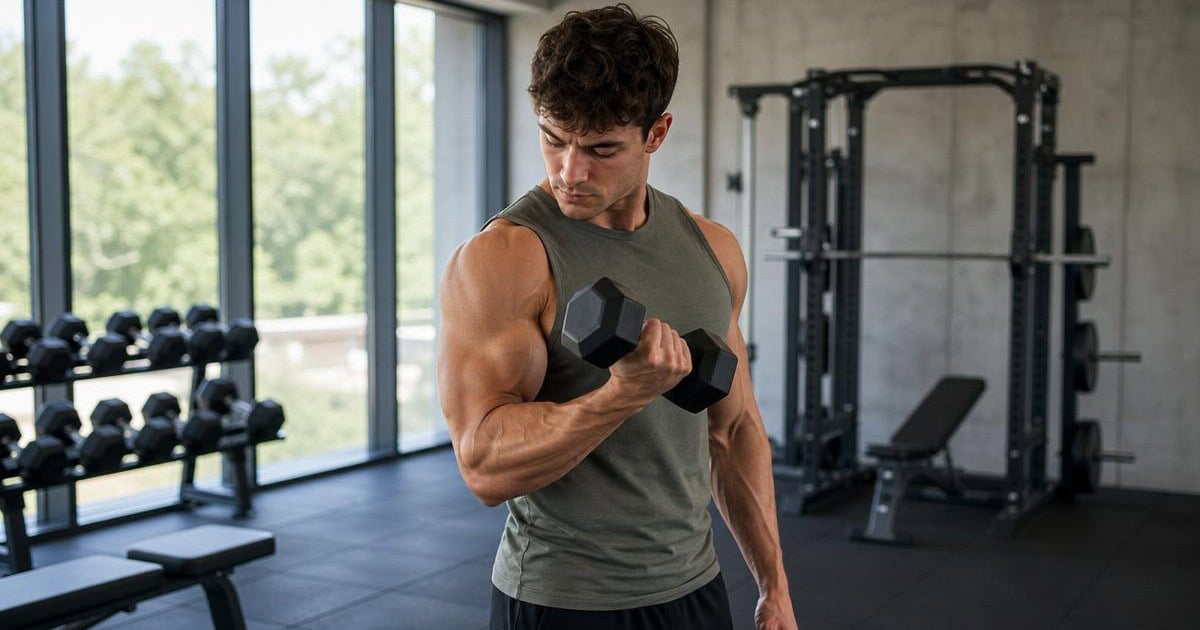
The Dumbbell Biceps Curl performs dumbbell biceps curls. The pattern produces direct biceps loading.
For biceps development, the dumbbell biceps curl produces direct biceps isolation. Run it for 3 to 4 sets of 8 to 12 reps as primary biceps isolation work.
Stand with feet hip-width holding dumbbells in each hand at the sides with palms facing forward. Curl the dumbbells up by flexing at the elbows. The biceps work hard. Squeeze at peak. Lower under control. The pattern produces direct biceps isolation – the dumbbell variation allows different range of motion and addresses left/right asymmetries. Combined with barbell curls, dumbbell curls produce complete biceps development through balanced loading. Foundational biceps exercise that complements compound work.
Dumbbell Hammer Curl

The Dumbbell Hammer Curl performs hammer curls. The pattern produces brachialis and biceps loading.
For biceps development, the hammer curl produces brachialis emphasis (the muscle underneath the biceps). Run it for 3 sets of 10 to 12 reps as brachialis work.
Stand with feet hip-width holding dumbbells in each hand at the sides with palms facing each other (neutral grip). Curl the dumbbells up by flexing at the elbows while maintaining neutral grip. The biceps and brachialis work hard. Squeeze at peak. Lower under control. The pattern produces brachialis emphasis – the brachialis (the muscle underneath the biceps) responds best to neutral grip variations and contributes substantially to upper arm thickness. Critical for complete arm development because brachialis development pushes the biceps up and increases visible arm size.
Barbell Preacher Curl

The Barbell Preacher Curl performs preacher curls. The pattern produces biceps stretch and isolation.
For biceps development, the preacher curl produces biceps stretch and isolation. Run it for 3 sets of 8 to 12 reps as biceps stretch work.
Sit at a preacher curl bench with the upper arms resting on the pad. Hold a barbell with underhand grip at shoulder-width. Curl the bar up by flexing at the elbows. Squeeze at peak. Lower under control allowing the biceps to stretch deeply at the bottom. The pattern produces biceps stretch and isolation – the preacher position prevents body english and forces strict biceps loading through the deepest possible stretch. Excellent for biceps development because the stretched position emphasizes the long head and produces biceps loading through the most challenging range.
Dumbbell Incline Biceps Curl

The Dumbbell Incline Biceps Curl performs incline dumbbell curls. The pattern produces biceps stretch loading.
For biceps development, the incline biceps curl produces deep biceps stretch. Run it for 3 sets of 8 to 12 reps as long head emphasis work.
Lie back on an incline bench (45 to 60 degrees) holding dumbbells in each hand with arms hanging straight down. Curl the dumbbells up by flexing at the elbows while keeping the upper arms perpendicular to the floor. Squeeze at peak. Lower under control allowing deep biceps stretch. The pattern produces deep biceps stretch loading – the incline position with arms behind the body produces extreme biceps stretch that emphasizes the long head. Critical for complete biceps development because the long head responds best to stretched positions.
Cable Incline Biceps Curl

The Cable Incline Biceps Curl performs incline cable biceps curls. The pattern produces incline biceps with constant tension.
For biceps development, the cable incline biceps curl produces incline loading with constant cable tension. Run it for 3 sets of 10 to 12 reps as long head emphasis with constant tension.
Set up an incline bench facing a low cable pulley. Lie back on the bench holding the cable handle. Curl the handle up by flexing at the elbow. The biceps work hard with constant cable tension. Squeeze at peak. Lower under control. The pattern produces incline biceps loading with constant cable tension – the cable provides more consistent tension than dumbbells throughout the range of motion. Excellent variation for long head emphasis with maximum time under tension.
Pull Up

The Pull Up performs bodyweight pull-ups. The pattern produces compound biceps loading.
For biceps development, pull-ups produce compound biceps loading. Run it for 3 sets of 5 to 10 reps as compound biceps work.
Hang from a pull-up bar with hands shoulder-width apart and palms facing away. Pull the body up by retracting the shoulder blades and pulling the elbows down toward the ribs until the chin reaches over the bar. Lower under control to full hang. The pattern produces compound biceps loading – while primarily a back exercise, pull-ups train the biceps substantially through elbow flexion. Heavy pull-ups (with added weight when bodyweight becomes easy) produce significant biceps mass stimulus alongside back development. Combined with curls, pull-ups build complete arm and back development.
Chin Up

The Chin Up performs underhand pull-ups. The pattern produces biceps-emphasized compound loading.
For biceps development, chin-ups produce biceps-emphasized compound loading. Run it for 3 sets of 6 to 10 reps as biceps-emphasized compound work.
Hang from a pull-up bar with hands shoulder-width apart and palms facing toward the body (underhand grip). Pull the body up by flexing at the elbows and retracting the shoulder blades until the chin reaches over the bar. Lower under control to full hang. The pattern produces biceps-emphasized compound loading – the underhand grip position emphasizes biceps activation more than overhand pull-ups, making chin-ups one of the best compound biceps exercises available. Critical for complete biceps development because compound biceps loading produces different stimulus than isolation work.
Barbell Bent Over Row

The Barbell Bent Over Row performs barbell rows. The pattern produces compound biceps loading.
For biceps development, the bent-over row produces compound biceps loading. Run it for 3 sets of 6 to 10 reps as compound biceps and back work.
Stand with feet hip-width holding a barbell at the front of the thighs with overhand grip. Hinge forward at the hips with a flat back so the torso is at about 45 degrees. Pull the bar to the lower chest by retracting the shoulder blades and pulling the elbows back. The lats, rhomboids, mid traps, rear delts, and biceps work hard. Squeeze the shoulder blades hard at peak. Lower under control. The pattern produces compound biceps loading – while primarily a back exercise, heavy rows train the biceps substantially through elbow flexion under heavy loads. Excellent compound biceps stimulus alongside dedicated isolation work.
Dumbbell Concentration Curl

The Dumbbell Concentration Curl performs concentration curls. The pattern produces direct biceps peak contraction.
For biceps development, the concentration curl produces biceps peak contraction. Run it for 3 sets of 10 to 12 reps as biceps peak contraction work.
Sit on a bench with feet wider than shoulder-width. Hold a dumbbell in one hand with the elbow braced against the inner thigh of the same side. Curl the dumbbell up by flexing at the elbow with strong peak contraction. The biceps work hard with peak contraction at the top. Squeeze hard at peak. Return under control. Switch sides. The pattern produces excellent biceps peak contraction – the concentration position with elbow braced eliminates body english and forces strict biceps loading with strong peak squeeze. Excellent isolation work alongside compound biceps training.
How To Program These Workouts
A productive biceps session pulls 5 to 7 exercises from the list above. A common balanced session: barbell alternate biceps curl (heavy compound primary), dumbbell biceps curl (isolation), dumbbell hammer curl (brachialis), barbell preacher curl (stretch), dumbbell incline biceps curl (long head), chin-up (compound), dumbbell concentration curl (peak contraction). For complete biceps development: include compound curling, isolation, brachialis emphasis, stretched positions, and peak contraction. For long head emphasis (the source of biceps peak): prioritize incline curls and preacher curls in stretched positions. For arm thickness: prioritize hammer curls (brachialis) alongside biceps work. Run heavy compound work for 3 to 4 sets of 6 to 12 reps, isolation work for 3 to 4 sets of 8 to 15 reps.
Train biceps 1 to 2 times per week as part of complete pulling programming. Most successful biceps programs structure work as: 1) primary biceps day or pull day (heavy compound plus isolation), 2) secondary biceps work in upper body or pull session, 3) integrated biceps work from compound pulling (pull-ups, chin-ups, rows contribute to biceps development). The biceps respond well to varied training stimulus across multiple weekly sessions. Combined with progressive overload and adequate volume (12 to 18+ weekly working sets focused on biceps), dedicated biceps training produces visible development within 12 to 16 weeks for most lifters.
For broader programming, see our how to grow your arms and how to build bigger biceps. For specific work, see our best biceps exercises.
Final Thoughts
The best biceps brachii exercises deliver real biceps development through training that targets the two-headed biceps muscle plus the supporting brachialis: foundational compound curling for primary biceps loading, direct isolation for targeted stimulus, brachialis emphasis for arm thickness, stretched positions for long head emphasis, peak contraction for activation, and compound pulling for complete arm and back integration. The combination of barbell curls, dumbbell curls, hammer curls, preacher curls, incline curls, cable incline curls, pull-ups, chin-ups, rows, and concentration curls covers every functional pattern of biceps development and produces broader arm, pulling, and aesthetic development than partial training would suggest. Many lifters discover bigger biceps peak, more developed arm thickness, more arm size, more pulling strength, more impressive overall arm development, and the integrated upper-body strength that defines well-developed physiques within 12 to 16 weeks of adding consistent comprehensive biceps work. For lifters seeking complete biceps development, dedicated multi-pattern biceps training is one of the most effective interventions available.
Stay focused on the long head as the priority for biceps peak development. The most common mistake lifters make in biceps training is doing only standard curls without dedicated stretched-position work that emphasizes the long head – producing flat biceps without the peak appearance that characterizes developed arms. The fix: prioritize incline curls and preacher curls (both produce stretched-position long head emphasis) alongside foundational compound curls. The long head responds specifically to stretched positions where the long head is fully lengthened. Combined with hammer curls (brachialis for arm thickness), compound pulling (pull-ups, chin-ups), and adequate volume, complete biceps training produces the biceps peak development that standard curl-only training never achieves.
Frequently Asked Questions
How can I build bigger biceps?
Heavy compound curling plus dedicated isolation plus stretched-position work. Heavy barbell curls produce foundational compound biceps loading – the most important biceps exercise. Heavy dumbbell curls produce direct isolation. Combined with hammer curls (brachialis), preacher curls (stretch), incline curls (long head), pull-ups (compound), chin-ups (biceps-emphasized compound), rows (compound), and concentration curls (peak contraction), these form the foundation of complete biceps development. The fastest gains come from heavy compound curling plus dedicated isolation across multiple weekly sessions.
What’s the best biceps exercise?
Heavy barbell biceps curls. Heavy barbell biceps curls produce the most direct biceps loading possible – they specifically target the biceps through the heaviest possible compound curling pattern. Combined with dumbbell curls (isolation), hammer curls (brachialis), preacher curls (stretch), incline curls (long head), cable incline curls (constant tension), pull-ups (compound), chin-ups (biceps-emphasized), rows (compound), and concentration curls (peak), heavy barbell curls form the foundation of biceps development. Most lifters with the most developed biceps have built them on consistent heavy curl training plus dedicated isolation.
How do I build the biceps peak?
Stretched-position work plus appropriate development. The biceps peak (the bunched appearance at the top of the biceps when flexed) depends primarily on the long head, which responds best to stretched positions. Incline curls (arms behind the body) and preacher curls (full biceps stretch) produce the most direct long head emphasis. Combined with appropriate compound and isolation work plus consistent training over 6+ months, this approach produces measurable biceps peak development. The mechanism: peak depends on long head development through stretched positions.
How often should I train biceps?
1 to 2 times per week as part of complete pulling programming. The biceps respond well to varied training stimulus across multiple weekly sessions. Most successful programs include: 1) primary biceps day or pull day (heavy compound plus isolation), 2) secondary biceps work in upper body session, 3) integrated biceps work from compound pulling. Total weekly biceps volume should be 12 to 18+ working sets across compound, isolation, brachialis, stretch, and peak contraction patterns.
How long does it take to build bigger biceps?
12 to 16 weeks for measurable improvement, ongoing for substantial development. Most lifters who consistently apply heavy compound curling plus dedicated isolation plus stretched-position work plus adequate volume see measurable biceps improvement within 12 to 16 weeks. Beginners often see initial gains within 8 to 12 weeks. Substantial biceps development requires 6 to 12+ months of consistent training. The biceps are highly responsive to dedicated training when properly progressively overloaded across multiple training patterns.