Beginner resistance band training produces real strength and movement quality development through accessible equipment that fits any setting (home, travel, outdoor). The format works particularly well for beginners because resistance bands provide variable tension throughout every rep (heaviest at peak contraction, lightest at the start), which produces strong contracted-position loading that fixed weights cannot match. Bands also scale naturally from very light (looped 1-inch bands for rotator cuff work) to very heavy (heavy power bands for advanced lifters), which means a complete beginner training program works with minimal equipment investment. Most beginners can build to intermediate fitness levels through 6 to 12 months of consistent band training before adding free weights or fixed equipment.
Below are ten effective beginner resistance band exercises that cover full-body upper-body work (band skier, band push-up, band punch), lower-body strength (band squat, band lunge, band jump squat), hip and glute work (band walk, band clam), lateral movement (band shuttle), and rotator cuff health (standing external rotation). Together they form a complete beginner band training program. Pull 6 to 8 exercises per session and progress to harder bands or higher reps as strength builds. The combination produces broader fitness development per training session than most equipment-free training options.
Resistance Band Skier

The Resistance Band Skier anchors a band overhead and performs a skiing-style pulldown motion with both arms, similar to a cross-country skier’s arm motion. The pattern produces strong combined back, tricep, and core engagement for beginners.
For beginner resistance band training, the band skier is one of the most accessible upper-body exercises that exists. The pattern teaches the basic pulldown motion that translates to standing and seated pulldown variations. Run it for 3 sets of 12 to 15 reps as foundational pulling work.
Anchor a resistance band overhead. Stand facing the anchor with a band end in each hand. Pull both arms down past the hips by extending the arms forward and down (like a cross-country skier’s arm motion). Return under control to the start with arms extended overhead.
Resistance Band Shuttle

The Resistance Band Shuttle anchors a band at hip height and performs lateral shuttle steps while maintaining tension on the band. The pattern produces strong lateral hip engagement and translates to athletic side-to-side movement.
For beginner resistance band training, the band shuttle is one of the most direct lateral movement exercises that exists. The pattern hits the hip abductors that traditional forward-focused training often misses. Run it for 3 sets of 30 to 45-second intervals as lateral hip work.
Anchor a resistance band at hip height. Stand sideways to the anchor with the band attached around the waist. Shuffle laterally away from the anchor against the band resistance. Continue shuffling for the prescribed time. Switch directions between sets.
Resistance Band Lunge
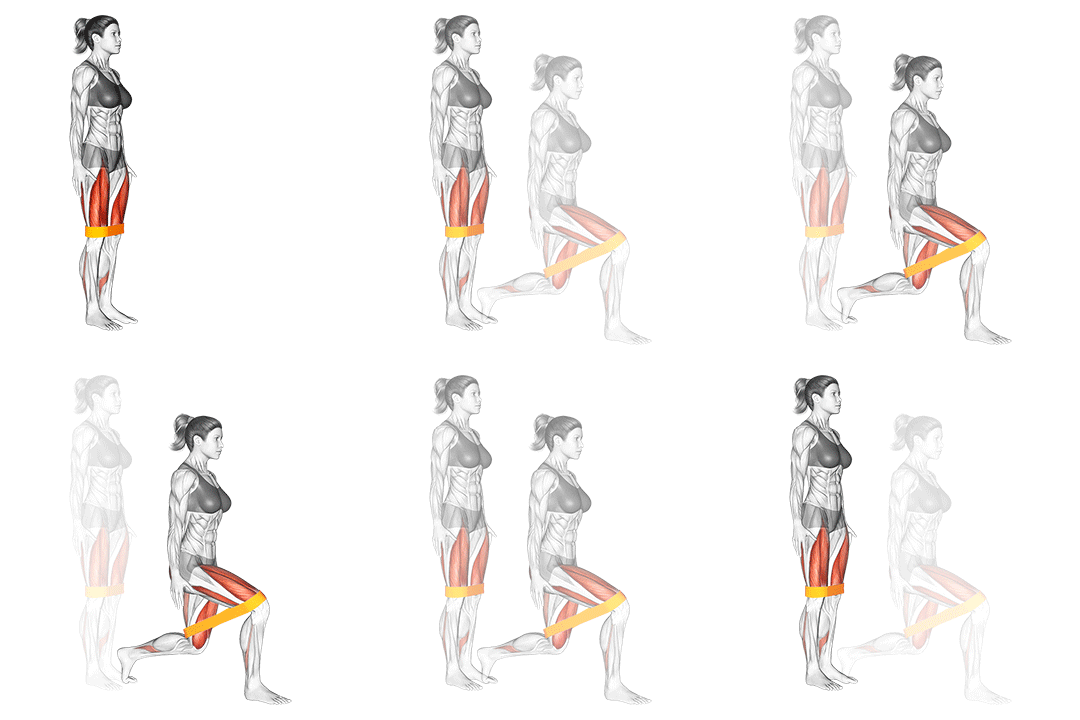
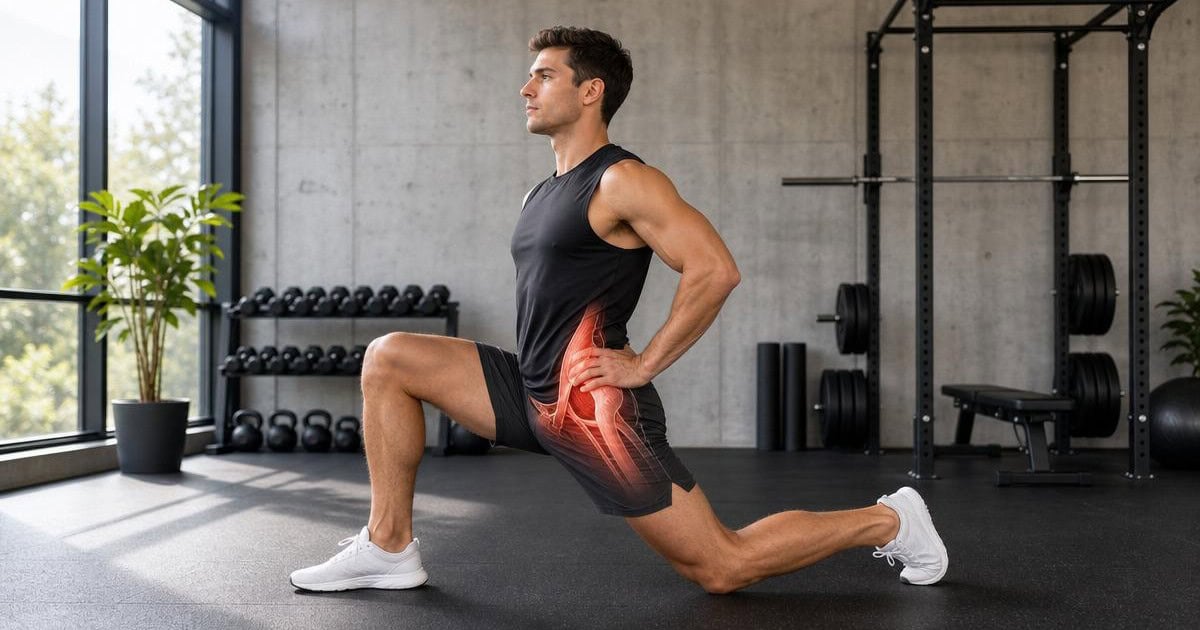
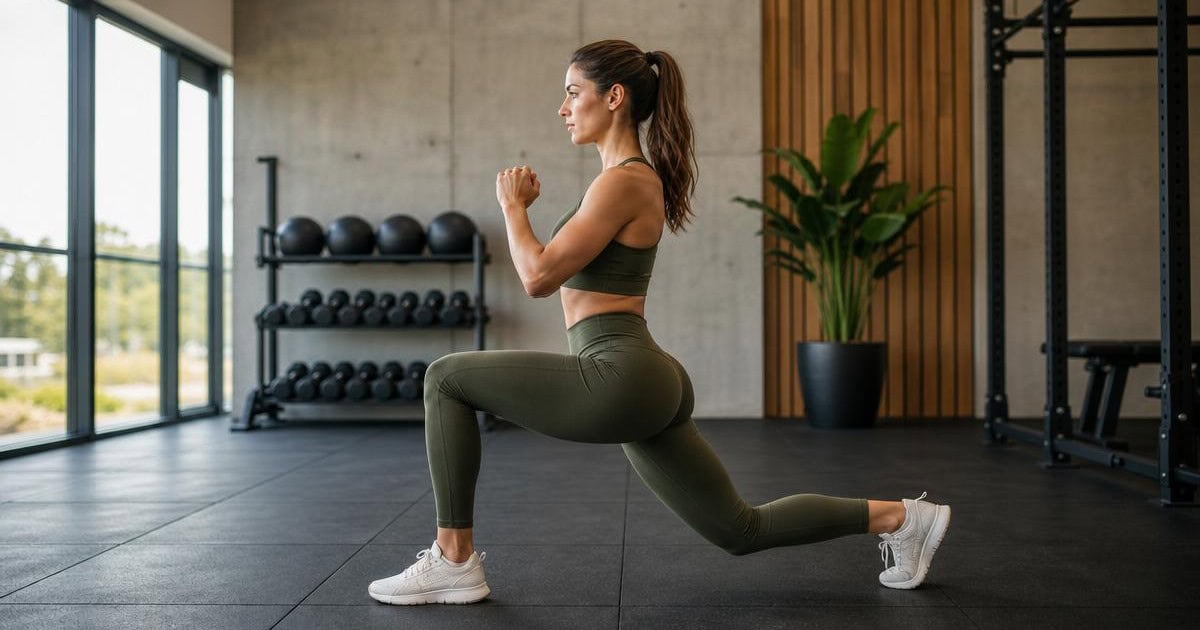
The Resistance Band Lunge performs forward lunges while a band provides resistance at the front foot. The added band tension increases the demand on the front-leg quadriceps, glutes, and hamstrings.
For beginner resistance band training, the band lunge produces strong combined leg loading through the unilateral lunge motion with band-added resistance. The pattern teaches proper lunge mechanics with progressive resistance. Run it for 3 sets of 8 to 10 reps per leg as primary band leg work.
Anchor a resistance band at low position (around an ankle or low post). Step into a lunge stance with one foot forward and the band attached around the front foot or ankle. Step forward into a lunge by lowering the back knee toward the floor. Drive through the front foot to step back to the start. Switch sides between sets.
Resistance Band Walk
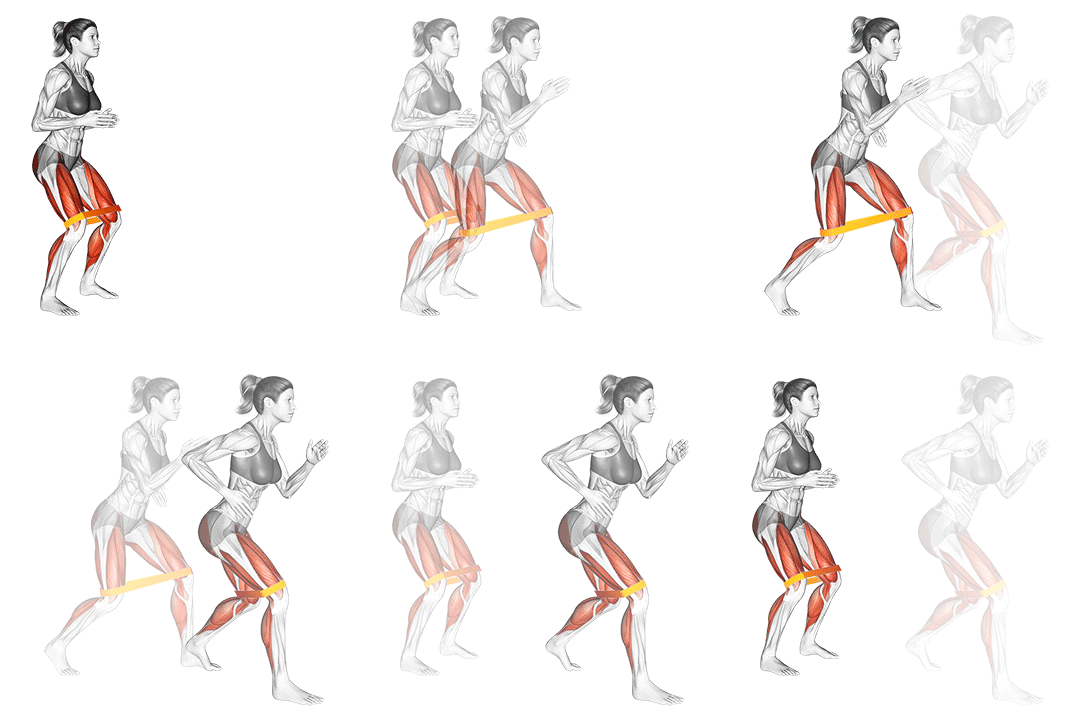
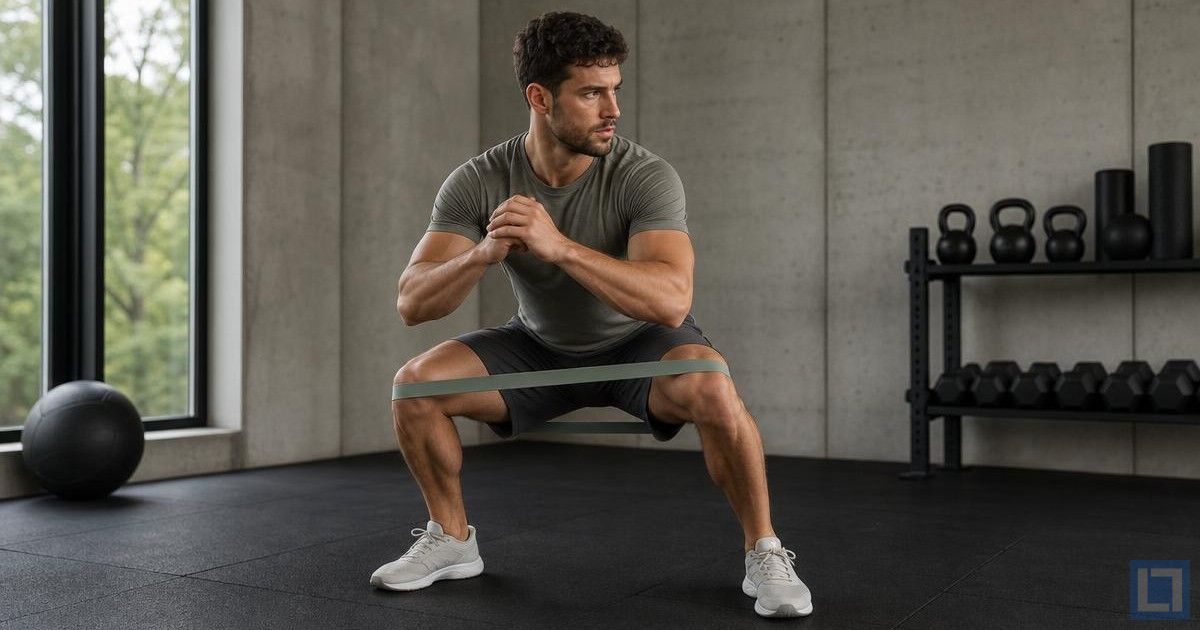
The Resistance Band Walk loops a resistance band around the legs above the knees and walks laterally or forward while maintaining tension on the band. The pattern produces extreme glute medius and hip abductor loading.
For beginner resistance band training, the band walk is one of the most direct glute-medius exercises that exists. The pattern hits the often-undertrained side glutes that contribute to hip stability. Run it for 3 sets of 12 to 15 steps in each direction as primary side-glute work.
Loop a resistance band around the legs above the knees. Stand with feet shoulder-width and a slight squat position. Walk laterally by stepping the lead foot out against the band resistance, then bringing the trailing foot in to maintain tension. Continue for the prescribed steps. Switch directions between sets.
Resistance Band Clam

The Resistance Band Clam loops a resistance band around the legs above the knees and lies on the side, then opens the top knee away from the bottom knee against the band resistance. The pattern produces direct glute medius loading.
For beginner resistance band training, the band clam is one of the foundational hip and glute medius exercises. The pattern hits the side glutes through pure external rotation under band resistance. Run it for 3 sets of 10 to 15 reps per side as glute medius isolation work.
Loop a resistance band around the legs above the knees. Lie on one side with knees bent at roughly 90 degrees and feet stacked. Open the top knee away from the bottom knee by contracting the glute medius (like a clam shell opening). Lower under control. Keep feet stacked throughout. Switch sides between sets.
Resistance Band Punch

The Resistance Band Punch anchors a band behind the body at chest height and performs alternating forward punches against the band resistance. The pattern produces strong chest, shoulder, and tricep loading combined with core stability demand.
For beginner resistance band training, the band punch produces strong combined upper-body loading through dynamic punching motion. The pattern translates to athletic punching power and produces functional upper-body conditioning. Run it for 3 sets of 30 to 45-second intervals per side as combined upper-body and conditioning work.
Anchor a resistance band at chest height behind the body. Hold the band ends with both hands at the chest. Punch one arm forward at chest height, extending fully against the band resistance. Return under control. Punch with the opposite arm. Continue alternating in a smooth tempo.
Resistance Band Squat

The Resistance Band Squat performs squats while standing on a resistance band with the band ends held at the shoulders. The added band tension increases the demand throughout the squat motion, especially at lockout.
For beginner resistance band training, the band squat produces strong leg loading without barbell equipment. The accommodating resistance increases as the lifter stands up, which makes the lockout the hardest position. Run it for 3 sets of 8 to 12 reps as primary band leg work.
Stand on a resistance band with feet shoulder-width. Hold the band ends at the shoulders with elbows pointed forward. Squat down by sitting the hips back while bending the knees. Drive back to standing through the whole foot, fighting against the band tension at lockout.
Resistance Band Push-up

The Resistance Band Push-up performs push-ups with a resistance band looped across the upper back and held under the hands. The added band tension increases the demand throughout the push-up motion, especially at lockout.
For beginner resistance band training that includes upper-body pressing, the band push-up produces stronger pressing loading than bodyweight push-ups. The accommodating resistance scales the difficulty significantly. Run it for 3 sets of 6 to 12 reps as advanced beginner pressing work.
Loop a resistance band across the upper back. Hold the band ends in each hand on the floor. Set up in a push-up position. Lower the chest to within an inch of the floor by bending the elbows. Press back to lockout while fighting against the added band resistance.
Resistance Band Standing External Rotation

The Resistance Band Standing External Rotation anchors a band at elbow height and performs external rotation of the shoulder by rotating the arm outward with the elbow tucked at the side. The pattern produces direct rotator cuff loading.
For beginner resistance band training that includes shoulder health work, the external rotation is the foundational rotator cuff exercise. The pattern targets the often-neglected rotator cuff muscles that contribute to shoulder stability. Run it for 3 sets of 12 to 15 reps per side as primary rotator cuff work.
Anchor a resistance band at elbow height. Stand sideways to the anchor with the working arm farthest from the anchor. Hold the band with the elbow tucked at the side and bent at 90 degrees. Rotate the arm outward (away from the body) by externally rotating the shoulder, keeping the elbow at the side. Return under control. Switch sides between sets.
Resistance Band Jump Squat

The Resistance Band Jump Squat performs explosive jump squats while standing on a resistance band with the band ends held at the shoulders. The added band tension increases the demand at lockout and produces strong loaded plyometric loading.
For beginner resistance band training that includes explosive work, the band jump squat produces strong loaded plyometric loading. The pattern translates to athletic explosive power. Run it for 3 sets of 6 to 8 reps as explosive lower-body work with conservative band resistance.
Stand on a resistance band with feet shoulder-width and the band ends at the shoulders. Squat down by sitting the hips back. Drive up explosively, jumping straight up while the band fights the upward motion. Land softly with bent knees. Reset before each rep.
How To Program These Workouts
A productive beginner resistance band program organizes these exercises across 3 weekly full-body sessions. A standard structure: Workout A (band squat, band push-up, band skier, band walk, band external rotation), Workout B (band lunge, band punch, band shuttle, band clam, band external rotation), Workout C (band jump squat, band push-up, band skier, band walk, band lunge). Run primary compounds for 3 sets of 8 to 12 reps; accessory work for 3 sets of 12 to 15 reps; conditioning intervals for 3 sets of 30 to 45 seconds. Progress to harder bands or higher rep ranges every 2 to 3 weeks as strength builds.
Train 3 days per week with full rest days between sessions for the first 4 to 6 weeks. The new training stimulus produces moderate fatigue that requires recovery for beginners. Most successful beginner band programs include 3 weekly full-body sessions (Monday/Wednesday/Friday) with progressive band difficulty over time. Lifters who progress consistently can transition to upper-lower or push-pull-legs splits after 8 to 12 weeks of foundational band training, or transition to free weights once they’ve built basic movement patterns and strength foundations.
For broader band programming, see our best resistance band workouts and best full body resistance band workouts. For specific muscle groups, see our best resistance band glute workouts.
Final Thoughts
Beginner resistance band workouts deliver real strength and movement quality development through accessible equipment that fits any setting. The combination of upper-body work, lower-body strength, hip and glute exercises, lateral movement, and rotator cuff health covers every major movement pattern and produces broader fitness development than most beginner training options. For new lifters who want to start training without commercial gym access, want to begin with low-injury-risk equipment, or are recovering from injury and need progressive resistance training, beginner resistance band programs are one of the most accessible and effective options available.
Stay focused on band tension throughout every rep. The most common beginner resistance band mistake is allowing the band to go slack at any point during the exercise (which eliminates the loading) or stretching the band so far that the resistance becomes unmanageable. The fix: choose band difficulty that produces challenging tension at the peak-contraction position while still allowing strict form throughout the full range. Quality reps with consistent band tension produce stronger results than reps with band slack or excessive resistance that breaks form.
Frequently Asked Questions
Are resistance bands good for beginners?
Yes, very effectively. Resistance bands produce strong strength development with low injury risk, scale naturally from very easy to very hard, fit any setting (home, travel, outdoor), and cost significantly less than free weights. Most beginners can build to intermediate fitness levels through 6 to 12 months of consistent band training. The variable tension (lightest at start, heaviest at peak contraction) is particularly well-suited to beginner motor learning.
What resistance bands should beginners buy?
Most beginners need a set of 4 to 5 looped resistance bands ranging from light (5 to 15 pounds equivalent) to heavy (50 to 80 pounds equivalent), plus an anchor strap for door anchors. The complete starter kit costs $30 to $80 and lasts for years of consistent training. Long-loop bands (4 feet) work better for compound exercises (squat, push-up); short-loop bands work better for hip and glute work (clam, walk).
Can you build muscle with just resistance bands?
Yes for beginners through intermediate levels. Resistance bands produce real muscle growth for the first 6 to 18 months of consistent training, especially when paired with progressive overload (using harder bands or higher reps over time). Most beginners can build the foundational fitness level of someone who lifts weights 2 to 3 days per week using only resistance bands. Advanced lifters wanting maximum muscle growth typically benefit from adding free weights, but bands continue to provide useful supplementary stimulus.
How often should beginners train with resistance bands?
Three times per week with full rest days between sessions works for most beginners. The new training stimulus produces moderate fatigue that requires recovery. Most successful beginner band programs include 3 weekly full-body sessions during the first 4 to 6 weeks. After establishing the training habit and recovery patterns, lifters can progress to 4 to 5 weekly sessions with split routines (upper-lower or push-pull-legs).
Resistance bands or dumbbells for beginners?
Different equipment serves different goals. Resistance bands cost less, fit smaller spaces, and produce lower injury risk during the learning phase. Dumbbells produce more consistent loading throughout each rep and translate more directly to barbell training. Most successful beginner programs work with either equipment alone for the first 6 to 12 months, with many lifters benefiting from adding the second equipment type after building foundational fitness with their starting choice.