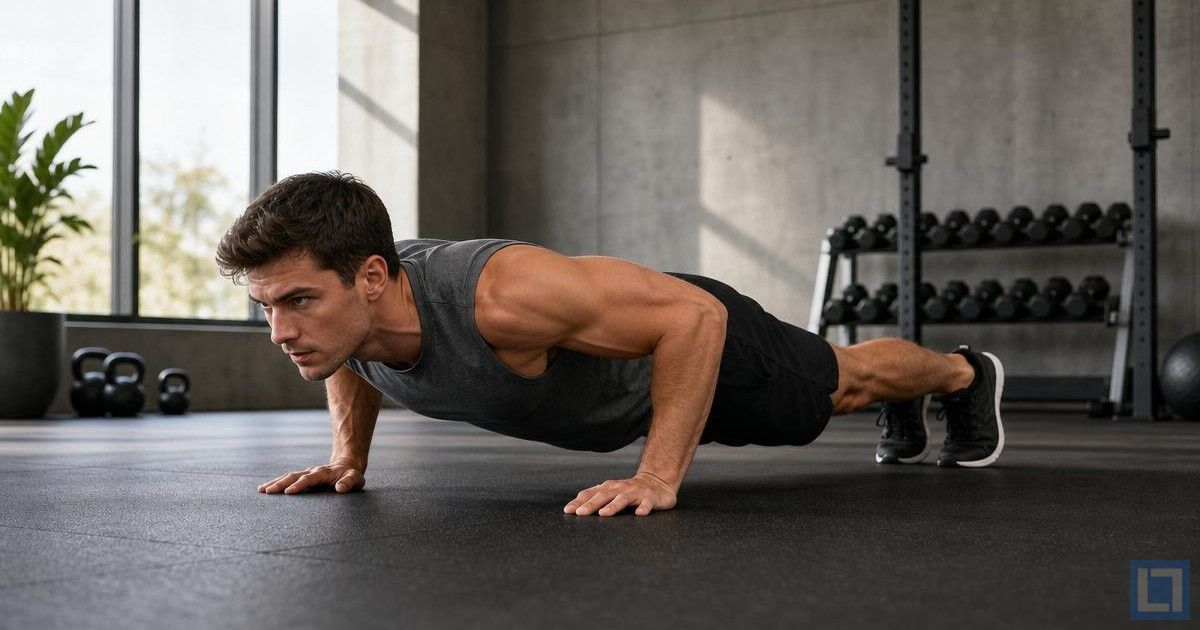
The push-up is one of the most foundational upper-body exercises that exists. The pattern hits the chest, shoulders, triceps, and core simultaneously through a movement that requires no equipment and works in any environment. Despite the simplicity, most lifters do push-ups with form errors that limit the strength and muscle gains the exercise can produce. Proper push-up technique is the difference between an exercise that builds real strength over years and a sloppy approximation that produces little benefit.
This guide covers proper push-up form (setup, execution, and breathing), the most common technique mistakes that limit progression, the progressive variations from knee push-ups (for absolute beginners) to advanced one-arm and clap push-ups (for advanced lifters), and programming strategies that produce visible strength and muscle gains over months of consistent practice. The exercise is simple but the details matter enormously.
Proper Push-Up Form
A proper push-up requires precise body position, a clean motion path, and consistent tension throughout the rep. Most form errors come from rushing through the setup; spending an extra few seconds on positioning produces stronger reps than dozens of sloppy ones.
The setup. Start in a high plank position with hands placed slightly wider than shoulder-width and directly under the shoulders (not in front of them). Fingers point forward or slightly outward. Body forms a straight line from head to heels with the core braced firmly and the glutes squeezed. Look at a point on the floor a few inches in front of the hands to keep the neck neutral. The hips should not sag toward the floor or pike up toward the ceiling; both errors compromise the loading on the target muscles.
The descent. Lower the chest to within an inch of the floor by bending the elbows. The elbows track at roughly 45 degrees from the body (not flared straight out at 90 degrees, which stresses the shoulders, and not pinned tight to the ribs, which limits chest activation for general fitness). Maintain the straight body line throughout the descent; the hips should not drop or rise. Lower under control rather than dropping; a 2 to 3-second descent produces stronger stimulus than rushed reps.
The press. Press back to lockout by extending the elbows. The chest, shoulders, and triceps should drive the press; do not let the hips lead the motion (which usually indicates the upper body is too weak for the variation). At lockout, the elbows are straight but not hyperextended, the shoulders are pushed away from the ears (protracted), and the body remains in the straight head-to-heels line. Inhale on the descent, exhale on the press, or use whatever breathing pattern allows continuous core bracing.
The Most Common Push-Up Mistakes
Most push-up errors fall into a few common patterns. Each one is fixable with focused attention; lifters who clean up these issues usually see immediate strength gains because the exercise starts working the intended muscles.
Hip sag. The most common mistake is letting the hips sag toward the floor as the upper body fatigues. The sag changes the loading pattern, shifts work away from the chest, and creates lower-back stress. The fix: brace the core hard before each rep and squeeze the glutes throughout the set. If hip sag still occurs, the variation is too difficult; regress to knee push-ups or incline push-ups until the strength catches up.
Half reps. Many lifters lower the chest only halfway to the floor, which cuts the range of motion that produces strength gains. The fix: lower the chest to within an inch of the floor on every rep. If full-range push-ups are too difficult, regress to knee or incline variations and hit full range there rather than doing half-range standard push-ups.
Flared elbows. Some lifters set the elbows at 90 degrees from the body during the descent. The position stresses the shoulder joint and shifts loading away from the chest. The fix: track the elbows at roughly 45 degrees from the body. The elbow position should fall somewhere between flared (90 degrees) and tucked (close to the ribs); the 45-degree compromise produces the best chest activation with the least shoulder stress.
Forward head position. Looking forward (lifting the head) compresses the cervical spine and breaks the straight body line. The fix: look at a point a few inches in front of the hands. The neck should align with the rest of the spine, not lift up to look ahead.
Push-Up Progressions: Beginner To Advanced
Push-up training progresses through clear stages from beginner to advanced. The variations below cover the full spectrum; lifters should pick the variation that allows 6 to 12 strict reps and progress to harder variations as strength builds.
Incline Push Up

The Incline Push Up places the hands on an elevated surface (couch, chair, sturdy table) and performs the push-up with the body angled upward. The elevated hand position reduces the bodyweight loading on the upper body, which makes the exercise accessible to beginners.
For lifters who cannot yet do strict standard push-ups, incline variations are the appropriate starting point. The exercise builds the same pattern as standard push-ups with reduced loading, which allows beginners to focus on form quality rather than struggling through reps. Build to 15 to 20 strict reps before progressing to standard push-ups.
Bent Side Knee Push Up

The Bent Side Knee Push Up performs the push-up on the knees rather than the toes. The reduced lever arm makes the exercise easier than standard push-ups while still loading the chest, shoulders, and triceps through similar movement patterns.
Knee push-ups are the alternative beginner progression to incline push-ups. Both work; lifters can choose whichever feels more natural. The kneeling format works particularly well for lifters without elevated surfaces available. Build to 12 to 15 strict reps before progressing to standard push-ups.
Push Ups

The Push Ups perform the standard push-up motion in plank position with hands and toes as the contact points. The exercise is the foundational pushing movement that all other variations build from.
Standard push-ups are the foundational exercise that every lifter should master. The pattern produces real strength gains for years of consistent practice and serves as the entry point for harder variations. Build to 20 to 30 strict reps before progressing to advanced variations or weighted push-ups.
Intermediate Push-Up Variations
Once standard push-ups become easy (20+ reps), the variations below add specific challenges that drive continued progression.
Decline Push Up

The Decline Push Up places the feet on an elevated surface (couch, chair, bench) and performs the push-up with the body angled downward. The elevated feet shift loading toward the upper chest and shoulders, producing stronger upper-chest emphasis than standard push-ups.
Decline push-ups are the progression beyond standard push-ups for upper chest and shoulder development. The angle change shifts the loading and increases the difficulty significantly. Run them for 3 sets of 8 to 12 reps as the primary chest exercise once standard push-ups become too easy for strength progression.
Diamond Push Up

The Diamond Push Up brings the hands together under the chest with thumbs and index fingers forming a diamond shape, then performs the push-up. The narrow hand position emphasizes the triceps and inner chest more than standard push-ups.
Diamond push-ups produce stronger tricep stimulus than standard push-ups while still loading the chest. The pattern fills the gap between general push-up training and dedicated tricep exercises. Run them for 3 sets of 8 to 12 reps as accessory tricep work or as a chest variation.
Pike Push Up

The Pike Push Up sets up in an inverted V position with the hips piked toward the ceiling and presses the head toward the floor. The vertical pressing pattern emphasizes the shoulders heavily, which makes it the most accessible bodyweight shoulder exercise that exists.
Pike push-ups are the foundational bodyweight shoulder exercise. The inverted angle shifts loading from chest to shoulders, which fills the gap between push-up variations and full handstand pressing. Build to 10 to 12 strict reps before progressing to elevated pike push-ups or wall handstand pressing.
Advanced Push-Up Variations
For advanced lifters who have mastered standard, decline, diamond, and pike push-ups, the variations below add explosive demand and unilateral loading that produce continued progression.
Clap Push Up

The Clap Push Up performs an explosive push-up where the hands leave the floor at the top of the press, allowing time to clap before catching the body again. The plyometric loading produces strong explosive power development on top of standard push-up strength.
Clap push-ups are the foundational plyometric pushing exercise. The explosive demand produces athletic power development that standard push-ups cannot match. Run them for 3 to 4 sets of 5 to 8 reps as power work, with full recovery between sets to maintain explosive intent on every rep.
Pseudo Planche Push-up

The Pseudo Planche Push-up performs the push-up with the hands positioned at the hips rather than at the chest, fingers pointing back toward the feet. The forward lean creates extreme shoulder loading that builds toward the full planche position used in advanced calisthenics.
For lifters working toward advanced bodyweight skills (planche, one-arm push-ups), pseudo planche push-ups build the foundational shoulder strength and lean position. Run them for 3 sets of 6 to 10 reps as a progression exercise. The pattern is significantly harder than it looks; even strong lifters often struggle with 5 strict reps initially.
How To Program Push-Ups For Strength And Mass
Push-up programming follows a structure designed to build progressive strength and muscle development through consistent practice. The framework below produces consistent gains for most lifters who follow it for 12+ weeks.
Train push-ups two to three times per week. The chest, shoulders, and triceps recover within 48 to 72 hours of moderate training. Most productive programs do one heavier session (advanced variations, lower reps) and one to two lighter sessions per week (standard variations, higher reps for volume).
Run 12 to 18 weekly working sets across all push-up variations. The combination of standard push-ups (or appropriate progression for current strength) plus harder variations produces stronger development than running only one variation. Most well-designed programs include three to four push-up variations across the training week.
Progress to harder variations once 20 strict reps become easy. Most lifters benefit from staying with one variation until they hit 20 strict reps for 3 sets, then progressing to the next harder variation. Trying to progress too quickly produces sloppy form that limits long-term gains; staying too long at one variation limits strength progression once the variation becomes easy.
For broader push-related programming, see our best bodyweight chest workouts and how to build a bigger chest. For broader bodyweight training, see our best calisthenics workouts.
Final Thoughts
The push-up is one of the most underrated foundational exercises in any training program. Proper form combined with progressive variations produces real strength and muscle development for years of consistent practice, and the equipment-free nature makes the exercise accessible in any environment. Most lifters dramatically underestimate how much chest, shoulder, and tricep development they can build through dedicated push-up training combined with appropriate progression.
Stay focused on form quality over rep count. The most common push-up training mistake is chasing rep PRs through sloppy form rather than building strength through strict reps. The fix: pick the variation that allows 6 to 12 strict reps and stay there until the form is perfect, then progress. Lifters who prioritize strict form over rep counts produce stronger long-term gains and stay injury-free longer than those who chase numbers at any cost.
Frequently Asked Questions
How many push-ups should I be able to do?
Beginner-level (men): 5 to 10 strict reps. Intermediate-level: 15 to 25 strict reps. Advanced-level: 40+ strict reps or advanced variations like clap push-ups and pseudo planche push-ups. Beginner-level (women): 3 to 8 strict reps. Intermediate-level: 12 to 20 strict reps. Advanced-level: 30+ strict reps or advanced variations. The rep counts assume strict full-range form; sloppy reps do not count toward these benchmarks.
How often should I do push-ups?
Two to three times per week works for most lifters. The chest, shoulders, and triceps recover within 48 to 72 hours of moderate training. Daily push-up training is feasible for short periods (push-up challenges of 30 to 60 days) but typically produces burnout if continued for months. Most productive programs space push-up sessions every 48 to 72 hours.
Will push-ups give me bigger chest muscles?
Yes for beginners and intermediates. The combination of progressive push-up variations and consistent training produces real chest development for the first 12 to 24 months of training. Advanced lifters chasing maximum chest size eventually benefit from heavy bench pressing and other loaded exercises that allow heavier loading than bodyweight progressions, but consistent push-up training produces measurable chest development at every level for years of consistent practice.
Should I do push-ups every day?
Not recommended for ongoing training. Daily push-up challenges work for short-term goals (30 to 60 day periods), but daily training over months typically produces burnout, sticky shoulder issues, and form degradation. The standard 2 to 3 sessions per week with rest days between produces stronger long-term gains for most lifters.
What if I cannot do a single push-up?
Start with regression variations: incline push-ups (hands on a couch or chair) or knee push-ups. Both reduce the load enough that absolute beginners can perform clean reps. Build to 15 to 20 strict reps in the regression variation before progressing to standard push-ups. Most beginners can complete the regression progression in 4 to 8 weeks of consistent training.