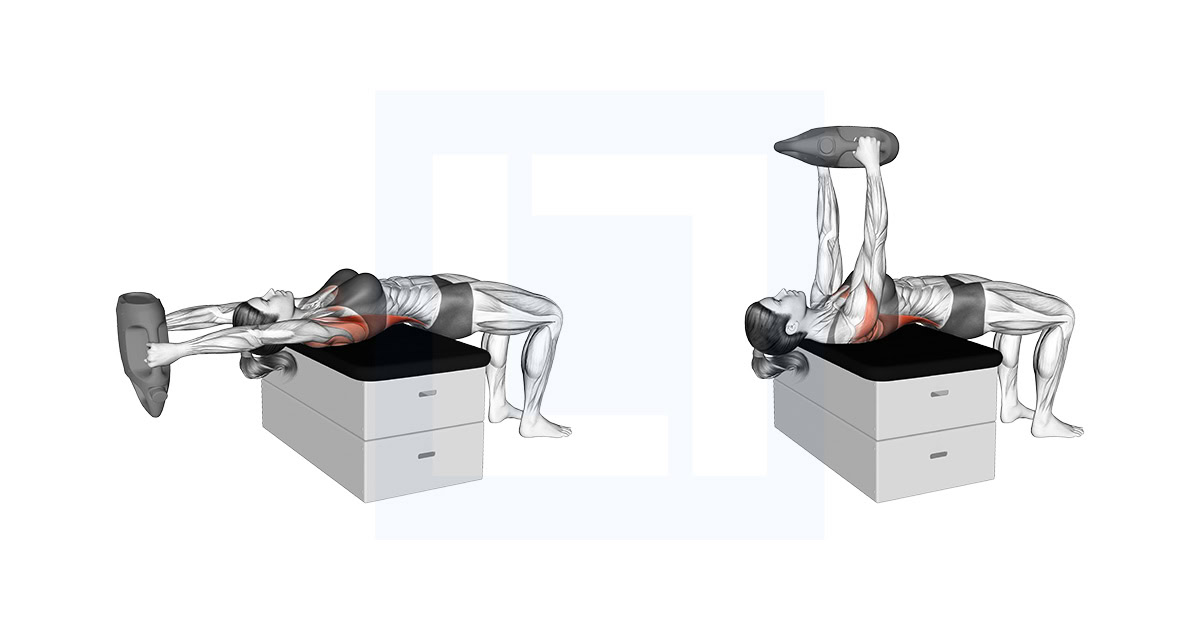
Incline Push Up

Description
The incline push-up is a regression of the standard push-up where you place your hands on an elevated surface (bench, box, or wall) instead of the floor. The higher your hands, the easier the lift. It is the best progression step between kneeling push-ups and full push-ups, and a useful warm-up for experienced lifters.
Muscle Group
Equipment Required
Incline Push Up Instructions
- Place your hands on a sturdy elevated surface (bench, box, or counter) slightly wider than shoulder-width, fingers pointing forward.
- Step your feet back so your body forms a straight line from heels to head.
- Brace your core hard. Pull your shoulders down and back. Keep your hips level.
- Lower your chest toward the surface by bending at the elbows. Tuck your elbows at roughly 45 degrees from your torso.
- Lower until your chest lightly touches or comes within an inch of the surface.
- Press back up by extending at the elbows, driving your hands into the surface.
- Lock out at the top with arms fully extended. Maintain the straight body line throughout.
- Progress to a lower surface as you get stronger. Eventually transition to floor push-ups.
Incline Push Up Form & Visual

Incline Push Up Benefits
- Effective progression step toward full push-ups
- Easily scalable by changing surface height
- Builds the chest, triceps, and shoulders with reduced load
- Trains core stability through the plank position
- No equipment needed beyond a sturdy surface
- Excellent warm-up for experienced lifters
Incline Push Up Muscles Worked
- Pectoralis major
- Triceps brachii
- Anterior deltoid
- Serratus anterior
- Core (stabilizer)
Incline Push Up Variations & Alternatives
- Kneeling Push-Up (regression)
- Standard Push-Up (next progression)
- Decline Push-Up (harder)
- Diamond Push-Up
- Wide-Grip Incline Push-Up
- Close-Grip Incline Push-Up
- Tempo Incline Push-Up
- Wall Push-Up (easiest regression)
- Suspender Incline Push-Up
- Incline Scapula Push-Up