Olympic lifting training produces real explosive power development through exercises that develop the highest-power output of any movement humans can produce: the snatch, the clean and jerk, and their power and pull variations. The format is the foundation of competitive Olympic weightlifting and a primary tool of athletic strength and conditioning for explosive sport performance because Olympic lifts produce the highest measured peak power output (watts per kilogram) of any exercise. The lifts develop combined triple extension (hip, knee, ankle), upper-back pulling strength, overhead stability, front squat strength, and full-body coordination — physical qualities that translate directly to athletic performance in nearly every sport that demands explosive movement (basketball, football, sprinting, jumping, throwing). Most lifters who consistently train Olympic lifting 2 to 3 times per week alongside general strength work see measurable improvements in vertical jump, sprint speed, athletic explosiveness, and total-body coordination within 8 to 16 weeks. Olympic lifting requires significant technical instruction; new lifters benefit substantially from coaching to learn proper movement patterns.
Below are ten effective Olympic lifting exercises that cover the competition lifts (barbell snatch, barbell clean and jerk), accessible power variations (power clean, power snatch, power jerk), pulling accessory work (clean pull, clean high pull, snatch deadlift), front squat strength (clean grip front squat), and accessible kettlebell variations (kettlebell clean and press). Together they form a complete Olympic lifting program that builds technical proficiency on the competition lifts while developing the strength foundations that limit Olympic lifting numbers. A 60 to 90-minute Olympic lifting session pulled from this list, performed 2 to 3 times per week alongside general strength work, produces strong explosive power development and Olympic lift technical proficiency.
Barbell Snatch
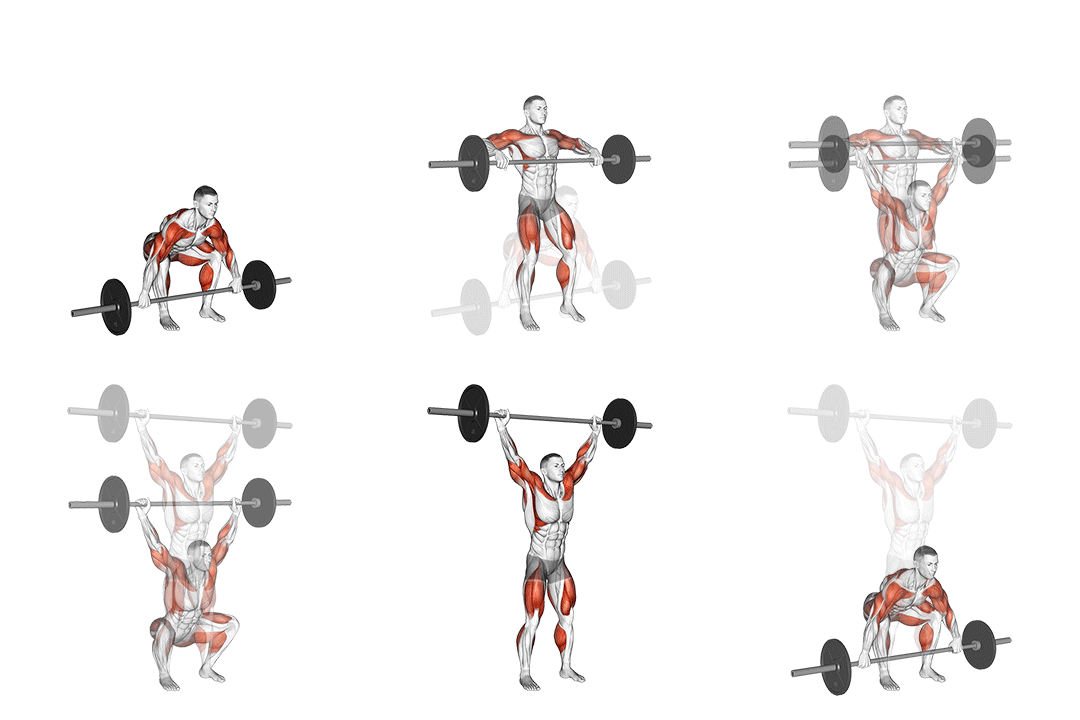
The Barbell Snatch performs a full Olympic snatch — pulling the barbell from the floor to fully overhead in one continuous motion catching in a deep overhead squat. The pattern is one of the most technically demanding and athletically valuable exercises that exists.
For Olympic lifting training, the snatch is one of the two competition lifts in Olympic weightlifting. The pattern produces full-body explosive power loading combined with overhead mobility and strength. Run it for 4 to 6 sets of 1 to 3 reps as primary technical and power work in any Olympic lifting session.
Set up a barbell with weight plates at the floor. Stand with feet hip-width and grip the bar with a wide snatch grip (typically wider than shoulder-width). Hinge at the hips with neutral spine and chest up. Pull the bar up the thighs explosively by extending hips, knees, and ankles (triple extension) while shrugging the shoulders. As the bar reaches max height, drop quickly under the bar by pulling under into a deep overhead squat with arms locked overhead. Stand up to complete the lift. Reset for each rep.
Power Clean

The Power Clean performs a clean motion catching the bar at the front rack with the hips above parallel (power position rather than full clean depth). The pattern produces strong explosive triple extension loading without requiring full clean mobility.
For Olympic lifting training, the power clean is one of the most accessible Olympic-style movements that exists. The pattern hits triple extension explosive power without the deep front squat receiving position. Run it for 4 to 5 sets of 3 to 5 reps as primary explosive power work.
Set up a barbell with weight plates at the floor. Stand with feet hip-width and grip the bar with a clean grip (slightly wider than shoulder-width). Hinge at the hips with neutral spine. Pull the bar up the thighs explosively by extending hips, knees, and ankles while shrugging the shoulders. As the bar reaches max height, drop quickly under by pulling the elbows around to receive the bar at the front rack with the hips at quarter to half squat depth. Stand up to complete the lift.
Barbell Power Jerk

The Barbell Power Jerk performs an overhead jerk catching the bar with the hips above parallel and feet flat. The pattern produces strong combined leg drive and overhead pressing power without requiring split jerk mobility.
For Olympic lifting training, the power jerk is the most accessible jerk variation. The pattern hits leg drive plus overhead pressing through dynamic motion. Run it for 4 sets of 2 to 4 reps as primary jerk work.
Set up a barbell on a rack at shoulder height. Step under the bar and rack it across the front of the shoulders (front rack position). Step back from the rack with feet hip-width. Dip down by bending the knees while keeping the torso upright (about 4 to 6 inches drop). Drive up explosively through the legs and immediately punch the bar overhead by extending the arms while dipping slightly under. Catch the bar overhead with arms locked and feet flat. Stand fully tall to complete.
Barbell Clean and Jerk

The Barbell Clean and Jerk performs a full clean (pulling the bar from floor to front rack) immediately followed by a jerk (driving the bar overhead). The pattern is one of the two competition lifts in Olympic weightlifting.
For Olympic lifting training, the clean and jerk is the highest-skill Olympic lift and produces maximum total-body explosive loading. The pattern hits triple extension followed by overhead drive. Run it for 4 to 6 sets of 1 to 3 reps as primary technical and power work.
Set up a barbell with weight plates at the floor. Perform a clean: pull the bar from the floor explosively and catch in front rack at full squat depth, then stand up. From the front rack standing position, perform the jerk: dip and drive the bar overhead, catching in either split position or power position with arms locked. Stand fully tall to complete. The combined movement produces the strongest total-body explosive output of any single exercise.
Barbell Clean Pull
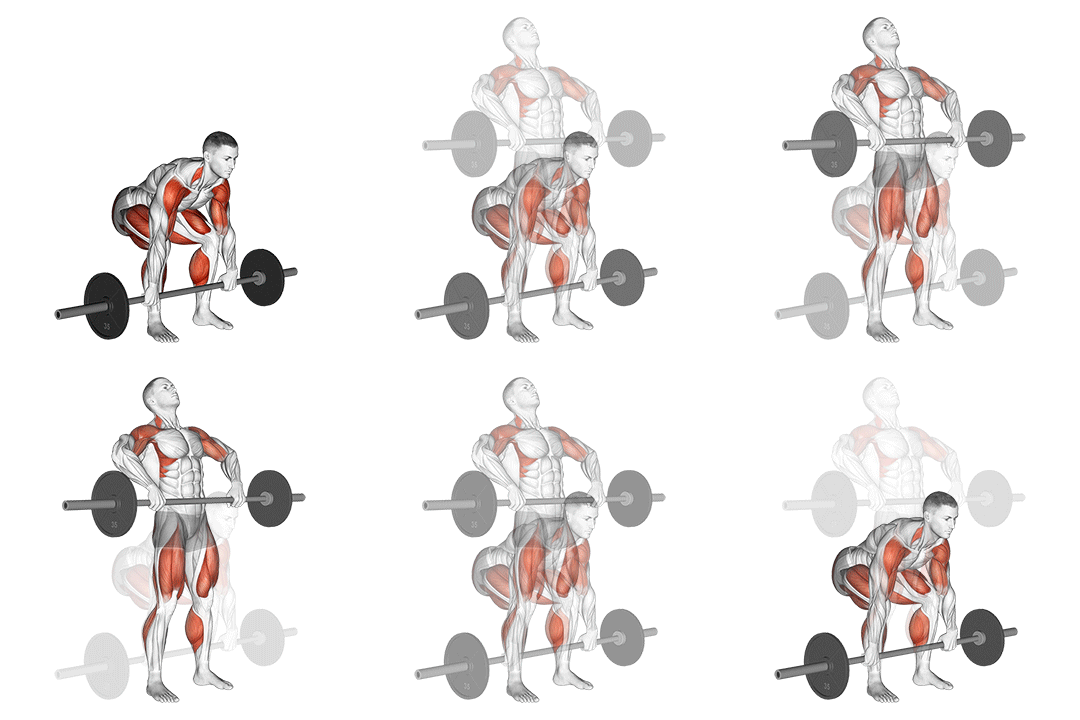
The Barbell Clean Pull performs the pulling phase of a clean without the catch, emphasizing the explosive triple extension and high pull that drives Olympic lifts. The pattern produces strong technical and power development.
For Olympic lifting training, the clean pull develops the foundational pulling power that underlies the clean. The pattern hits triple extension and high pull mechanics without the catch requirement. Run it for 4 sets of 3 to 5 reps as Olympic lifting accessory and pulling power work.
Set up a barbell at the floor. Stand with feet hip-width and grip the bar with a clean grip. Hinge at the hips with neutral spine. Pull the bar up the thighs explosively by extending hips, knees, and ankles (triple extension) while simultaneously shrugging the shoulders. The bar should reach hip or upper waist height. Lower under control. Reset for each rep. The pull develops power without the technical catch demand.
Barbell Clean High Pull
The Barbell Clean High Pull adds a high pull motion at the top of a clean pull, finishing with the elbows pulling up high to bring the bar to chest level. The pattern produces strong upper-back and trap loading combined with the pulling power.
For Olympic lifting training, the clean high pull develops both pulling power and upper-back strength. The pattern hits triple extension plus the high pull that completes the bar acceleration. Run it for 3 to 4 sets of 3 to 5 reps as combined pulling and upper-back work.
Set up a barbell at the floor. Stand with feet hip-width and grip with a clean grip. Pull the bar up the thighs explosively by extending hips, knees, and ankles. As the bar reaches max acceleration, finish by pulling the elbows up high to continue the bar acceleration to chest level (similar to an upright row finish). The bar should reach chest or chin height. Lower under control. The high pull finish develops upper-back strength and bar speed.
Barbell Snatch Deadlift
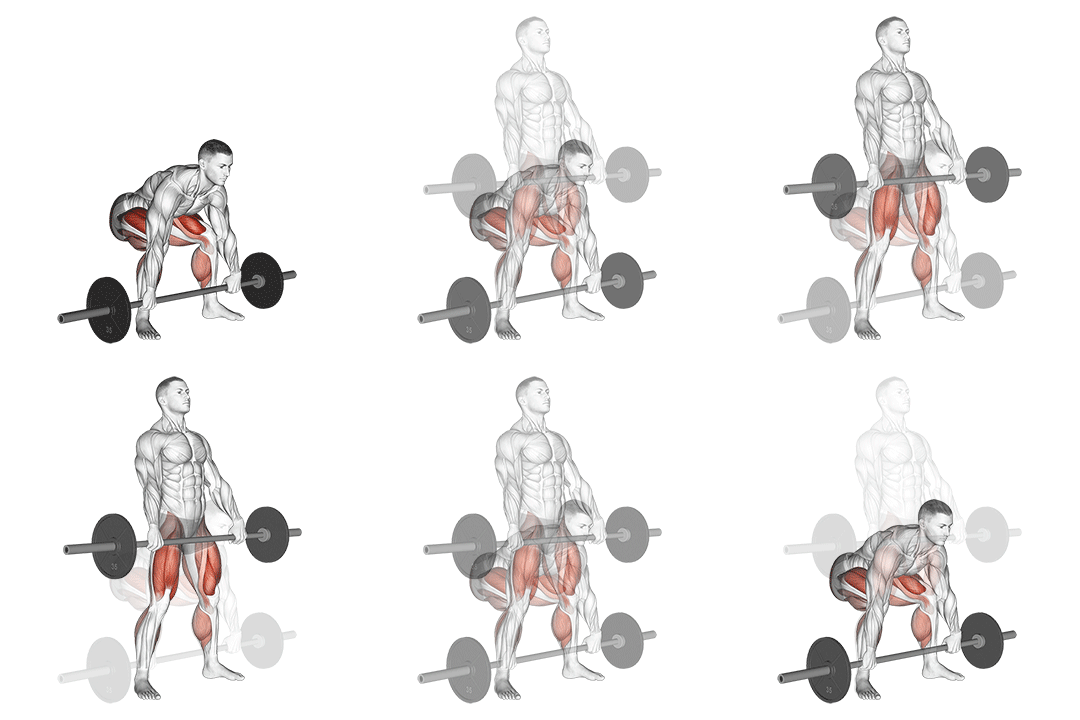

The Barbell Snatch Deadlift performs a controlled deadlift with the wide snatch grip, building the pulling strength foundation for the snatch. The pattern produces strong posterior chain and grip loading.
For Olympic lifting training, the snatch deadlift builds the pulling strength foundation for the snatch. The pattern hits the posterior chain through the snatch-specific pulling position. Run it for 4 sets of 3 to 5 reps as Olympic lifting strength accessory work.
Set up a barbell at the floor. Stand with feet hip-width and grip the bar with a wide snatch grip (wider than shoulder-width). Hinge at the hips with neutral spine, chest up, and the bar over the midfoot. Pull the bar up the legs by extending the hips and knees in a controlled deadlift motion. Stand fully tall with the bar at hip level. Lower under control. The wide grip and snatch-specific positioning build the foundation for the full snatch.
Barbell Clean Grip Front Squat

The Barbell Clean Grip Front Squat performs front squats with the bar racked using the clean grip (fingertips on the bar with elbows pointing forward). The pattern builds the front squat strength critical for the clean and jerk.
For Olympic lifting training, the clean grip front squat builds the front squat strength that limits clean and jerk numbers. Most clean and jerks are limited by front squat strength, not pulling strength. Run it for 4 sets of 3 to 5 reps as Olympic lifting strength accessory work.
Set up a barbell on a rack at shoulder height. Step under the bar with feet shoulder-width and rack the bar across the front of the shoulders with elbows pointing forward (clean grip with fingertips on the bar). Step back. Squat down by bending the knees while keeping the torso upright and the elbows high. Descend to full depth (hips below knees if mobility allows). Drive back to standing through the heels. Maintain elbow position throughout.
Barbell Power Snatch
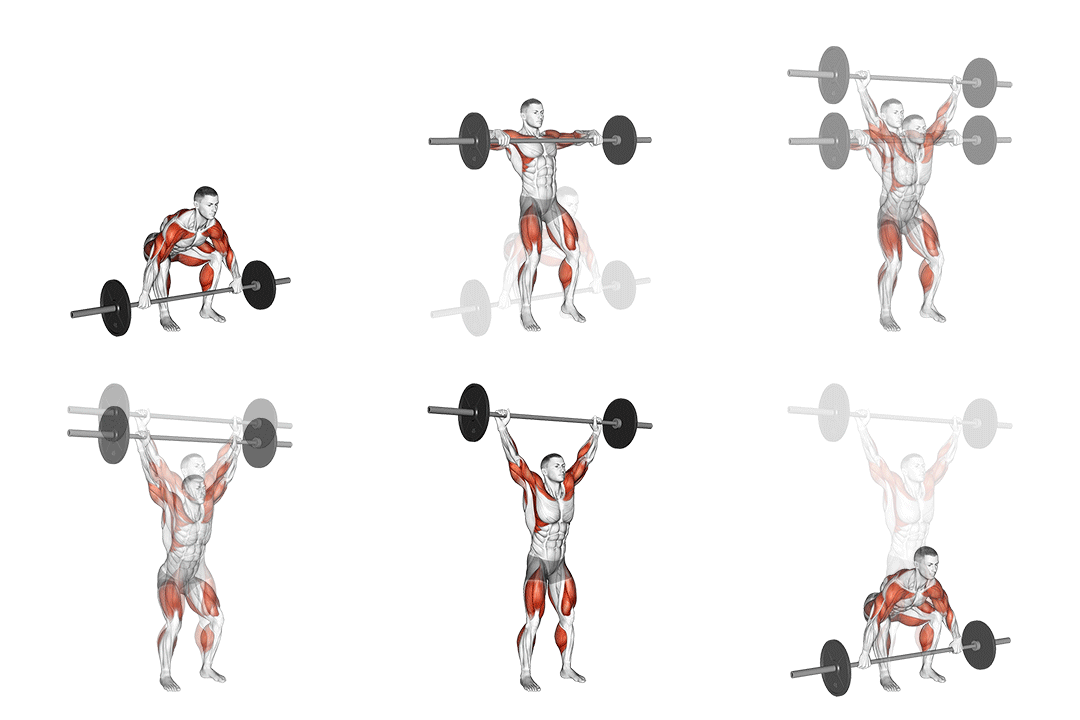
The Barbell Power Snatch performs a snatch motion catching the bar with the hips above parallel rather than in a deep overhead squat. The pattern produces strong explosive triple extension plus overhead catch without requiring full overhead squat mobility.
For Olympic lifting training, the power snatch is one of the most accessible snatch variations. The pattern hits triple extension and overhead catch without the deep overhead squat receiving position. Run it for 4 to 5 sets of 2 to 4 reps as accessible power work.
Set up a barbell at the floor. Stand with feet hip-width and grip the bar with a wide snatch grip. Pull the bar up the thighs explosively by extending hips, knees, and ankles while shrugging. As the bar reaches max height, drop quickly under by pulling under into a quarter to half overhead squat with arms locked overhead. Stand up to complete the lift. Reset for each rep. The power catch is more accessible than the full snatch for most lifters.
Kettlebell Clean and Press

The Kettlebell Clean and Press performs a kettlebell clean (pulling the kettlebell from the floor or hang to the front rack) immediately followed by an overhead press. The pattern produces combined explosive pulling and pressing work using a kettlebell.
For Olympic lifting training, the kettlebell clean and press builds the explosive pulling-and-pressing pattern using more accessible kettlebell loading. The pattern hits the same fundamental movement pattern as the barbell clean and press without requiring the full barbell setup. Run it for 3 to 4 sets of 5 to 8 reps per arm as accessible Olympic-style work.
Stand with feet hip-width and a kettlebell on the floor between the feet. Hinge at the hips and grip the kettlebell with one hand. Pull the kettlebell up explosively by extending the hips, catching it at the front rack position (kettlebell resting on the forearm with elbow pinned at the side). From the front rack, press the kettlebell overhead by extending the arm. Lower under control. Switch arms between sets. The combined motion produces strong explosive work.
How To Program These Workouts
A productive Olympic lifting program organizes these exercises across 2 to 3 weekly sessions structured around the competition lifts. A common 2-day weekly structure: Day 1 (Snatch focus): barbell snatch (5 sets x 1 to 3), barbell power snatch (3 sets x 2 to 4), barbell snatch deadlift (4 sets x 3 to 5), barbell clean grip front squat (4 sets x 3 to 5). Day 2 (Clean and Jerk focus): barbell clean and jerk (5 sets x 1 to 3), power clean (4 sets x 3 to 5), barbell power jerk (4 sets x 2 to 4), barbell clean pull (4 sets x 3 to 5), barbell clean high pull (3 sets x 3 to 5). Run competition lifts for 4 to 6 sets of 1 to 3 reps with full recovery (2 to 4 minutes between sets), power variations for 4 to 5 sets of 2 to 4 reps, and pulling accessories for 3 to 4 sets of 3 to 5 reps. Total session covers 16 to 25 working sets focused on Olympic lifting development.
Train Olympic lifting 2 to 3 times per week as the primary focus of training cycles for explosive power development. Olympic lifting requires full nervous system recovery between sessions because the high-velocity, high-skill nature of the lifts demands maximum focus and freshness. Most successful Olympic lifting programs include: 1) 2 to 3 weekly Olympic lifting sessions of 60 to 90 minutes each, 2) full recovery between sets and sessions (2 to 4 minutes between heavy sets), 3) consistent technical practice (the lifts are highly skill-dependent), 4) general strength accessory work (back squats, deadlifts, presses) to build foundational strength, and 5) coaching feedback for technique refinement. Avoid heavy Olympic lifting in fatigued or rushed conditions; technique breakdown produces injury risk and limited gains.
For broader power programming, see our best workouts for power and best workouts to increase vertical jump. For specific posterior chain work, see our best posterior chain workouts.
Final Thoughts
The best Olympic lifting workouts deliver real explosive power development through exercises that produce the highest measured peak power output of any movements humans can perform. The combination of competition lifts, power variations, pulling accessory work, and front squat strength covers every component of Olympic lifting and produces broader athletic explosive development than any other single training modality. For athletes who want measurable improvements in vertical jump, sprint speed, athletic explosiveness, and total-body coordination, want to compete in Olympic weightlifting, or want to develop the highest-quality power output their bodies can produce, dedicated Olympic lifting training is one of the most effective options available. The lifts require significant technical practice; new Olympic lifters benefit substantially from coaching.
Stay focused on technique quality and full recovery between sets. The most common Olympic lifting mistakes include sacrificing technique to chase weight (which produces injury risk and limited progress) and incomplete recovery between heavy sets (which compromises the explosive output that drives Olympic lifting gains). The fix: prioritize technique refinement over weight increases, take 2 to 4 minutes between heavy sets, and seek qualified coaching for technique feedback. Olympic lifting is one of the most skill-dependent strength training modalities, and most lifters benefit substantially from coached instruction during the learning phase. Quality technique with appropriate recovery produces stronger results than ego-driven heavy lifts with broken form.
Frequently Asked Questions
Should beginners do Olympic lifting?
Yes, but with proper coaching and progression. Olympic lifting is highly technical and requires significant practice to perform safely and effectively. Most successful beginners start with: 1) coaching from a qualified Olympic lifting instructor for technique instruction, 2) light weights for technique mastery (often just an empty barbell for weeks), 3) gradual progression through power variations before full lifts, and 4) consistent practice over months. Beginners who try to learn Olympic lifting from videos alone often develop poor technique that limits future progress and increases injury risk. Quality coaching is one of the highest-value investments for new Olympic lifters.
Power clean or full clean which is better?
Both depending on goals. Power cleans (catching the bar with hips above parallel) are more accessible and produce strong explosive triple extension power for athletic development. Full cleans (catching at full depth) produce maximum loading and are required for competitive Olympic weightlifting. Most successful athletic strength programs use power cleans as the primary movement; most successful Olympic lifting programs use full cleans as the primary movement. The choice depends on whether the goal is athletic power development (power cleans typically suffice) or competitive Olympic weightlifting (full cleans required).
How often should I do Olympic lifts?
Two to three times per week works for most lifters. The high-skill, high-velocity nature of Olympic lifts demands full nervous system recovery between sessions; daily Olympic lifting typically produces overuse injuries and reduced gains rather than accelerated progress. Most successful programs include 2 to 3 weekly Olympic lifting sessions of 60 to 90 minutes each plus 1 to 2 weekly general strength sessions for foundational work (squats, deadlifts, presses). Competitive Olympic lifters often train 4 to 6 days per week but with structured periodization and recovery protocols.
What’s the difference between Olympic lifting and CrossFit?
Olympic lifting (or Olympic weightlifting) is a competitive sport with two lifts (snatch and clean and jerk) where lifters compete to lift maximum weight. CrossFit is a fitness methodology that includes Olympic lifts as part of varied workouts but also includes gymnastics, cardio, and other modalities. Most Olympic lifters specialize in technique mastery for the snatch and clean and jerk; most CrossFit athletes use Olympic lifts as one component of broader fitness training. The exercises are the same, but the training focus and competitive structure differ significantly.
Are Olympic lifts good for building muscle?
Less effective than traditional bodybuilding for pure hypertrophy. Olympic lifts are explosive power movements that develop primarily fast-twitch muscle fibers and total-body coordination, but they don’t accumulate the time-under-tension volume that drives maximum hypertrophy. Most successful Olympic lifters supplement Olympic training with traditional strength and bodybuilding work (squats, deadlifts, presses, rows) for muscle mass. For lifters whose primary goal is muscle size, traditional bodybuilding training produces better results than Olympic lifting alone, though Olympic lifts can be a productive component of overall programming.