Dumbbell hamstring training produces real hamstring development through dumbbell loading that fits any home gym, hotel room, or commercial gym setup. The format works because dumbbells allow effective hip-hinge training (Romanian deadlifts, stiff-leg deadlifts), unilateral work (single-leg deadlift, Bulgarian split squat), knee-flexion isolation (lying leg curl), hip-extension contracted-position work (hip thrust, glute bridge), and combined patterns (good morning, walking lunge). The combination produces complete hamstring development that hits both major hamstring functions (hip extension and knee flexion) and works the muscles through their full strength curve.
Below are ten effective dumbbell hamstring exercises that cover hip-hinge work (Romanian deadlift, stiff-leg deadlift, conventional deadlift, good morning), unilateral work (single-leg deadlift, Bulgarian split squat, walking lunge), knee-flexion isolation (lying leg curl), and contracted-position hip-extension work (hip thrust, glute bridge). Together they form a complete dumbbell hamstring training program that fits any setting. A 45 to 60-minute session pulled from this list produces strong hamstring stimulus across both major hamstring functions.
Dumbbell Romanian Deadlift
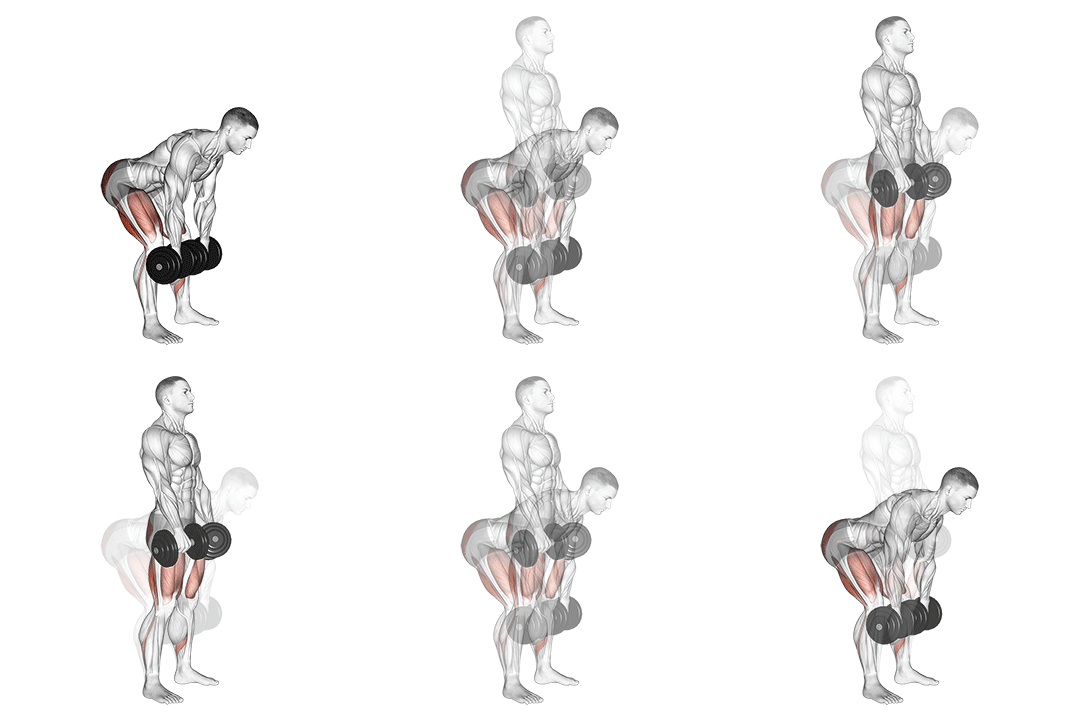
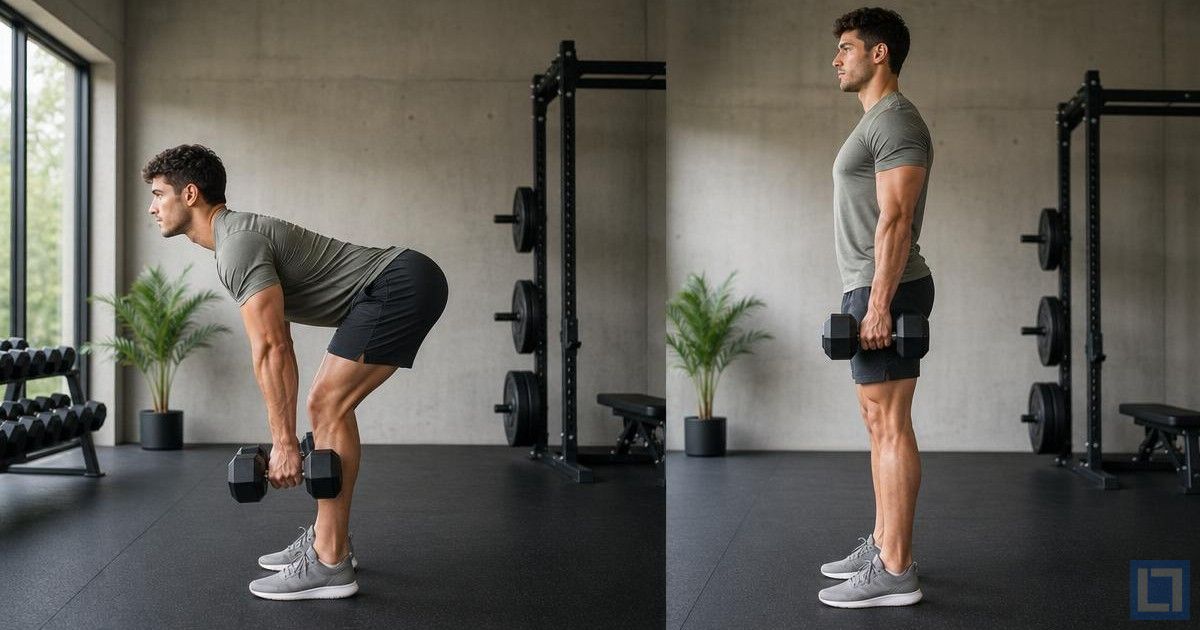
The Dumbbell Romanian Deadlift starts standing with dumbbells held at the sides and hinges at the hips with a slight knee bend, lowering the dumbbells in a controlled motion before driving the hips forward to stand. The exercise produces extreme stretch loading on the hamstrings at the bottom position.
For dumbbell hamstring training, the Romanian deadlift is non-negotiable. The pattern hits the hamstrings through their primary hip-extension function while loading them in the stretched position where they grow most. Run it for 4 sets of 8 to 12 reps as foundational hamstring work in any productive dumbbell hamstring program.
Stand tall with dumbbells held at the sides, palms facing the body. Hinge at the hips with a slight knee bend, lowering the dumbbells in a path close to the legs until the hamstrings stretch fully. Drive the hips forward to stand back up. Keep the back flat and dumbbells close to the body throughout.
Dumbbell Stiff Leg Deadlift

The Dumbbell Stiff Leg Deadlift performs the deadlift pattern with the legs nearly fully extended (slight knee bend only). The straight legs eliminate the assistance from the quads and isolate the hamstrings under stretch.
For maximum hamstring stretch loading, the dumbbell stiff-leg deadlift is one of the most direct exercises that exists. The straight legs eliminate the knee-bend assistance and isolate the hamstrings under stretch. Run it for 3 sets of 8 to 10 reps as advanced stretch-loading hamstring work.
Stand tall with dumbbells held at the sides. Stand with feet shoulder-width and legs nearly straight (slight knee bend only). Hinge at the hips by pushing the hips back, lowering the dumbbells along the legs until the hamstrings stretch fully. Drive back to standing. Use lighter loads than Romanian deadlifts due to the increased range of motion.
Dumbbell Deadlift

The Dumbbell Deadlift starts with dumbbells on the floor and lifts them to standing position by hinging at the hips and extending through the legs. The exercise mimics conventional deadlift mechanics with dumbbell loading.
For dumbbell hamstring training that includes broader posterior-chain work, the conventional deadlift produces strong hamstring loading along with full posterior chain demand. The pattern works as primary heavy pulling for lifters without barbell access. Run it for 3 to 4 sets of 6 to 8 reps as primary heavy posterior-chain work.
Stand with feet hip-width with dumbbells on the floor outside the feet. Hinge at the hips and bend the knees to grip the dumbbells. Drive through the legs and pull the dumbbells up close to the body until standing fully upright. Reverse the motion under control. Reset before each rep.
Dumbbell Single Leg Deadlift
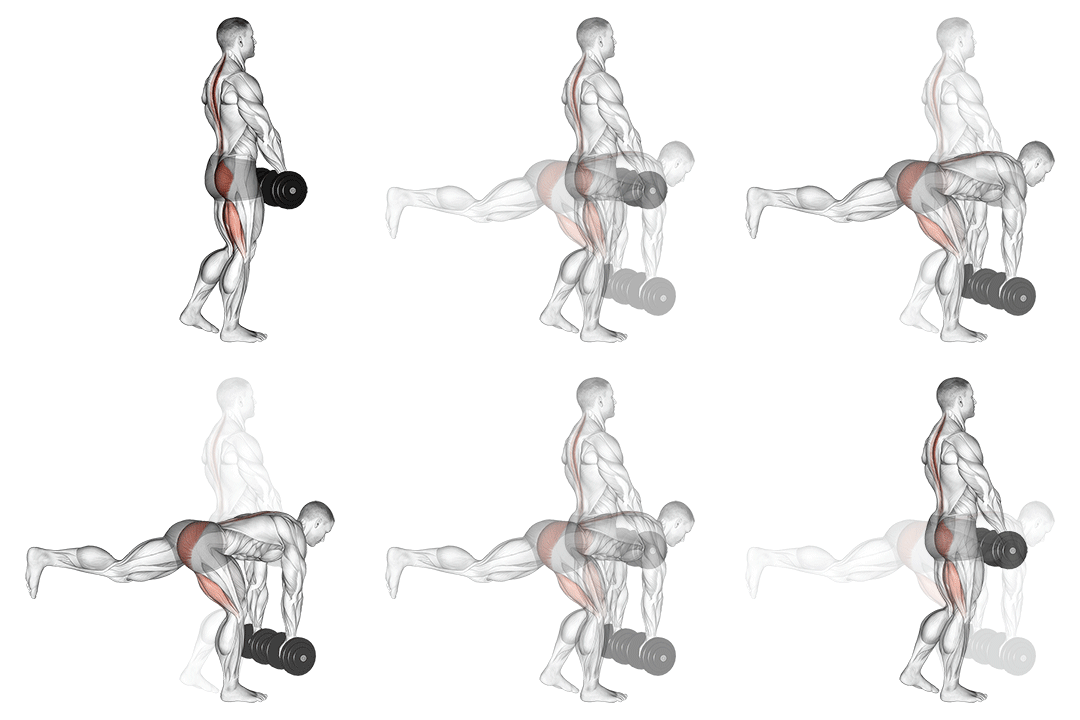
The Dumbbell Single Leg Deadlift performs a Romanian deadlift on one leg while balancing on the planted foot. The unilateral pattern produces strong unilateral hamstring loading along with significant balance and stability demand.
For unilateral dumbbell hamstring training, the single-leg deadlift catches strength imbalances that bilateral pulling cannot match. The pattern hits the working leg’s hamstring directly through unilateral hip-hinge motion. Run it for 3 sets of 8 to 10 reps per leg as primary unilateral hamstring work.
Stand on one leg holding a dumbbell in the opposite-side hand. Hinge at the hips while extending the free leg behind for balance, lowering the dumbbell toward the floor in front of the planted foot. Keep the back flat and the working leg with a slight knee bend. Drive the hips forward to stand back up. Switch sides between sets.
Dumbbell Lying Leg Curl

The Dumbbell Lying Leg Curl lies face-down with a dumbbell held between the feet and curls the dumbbell up by flexing at the knees. The exercise isolates the hamstrings through pure knee flexion, the secondary function of the hamstrings.
For complete dumbbell hamstring development, the lying leg curl is the foundational knee-flexion exercise. The hamstrings have two primary functions (hip extension and knee flexion); deadlift-pattern exercises hit hip extension while leg curls hit knee flexion. Run it for 3 sets of 10 to 12 reps as primary knee-flexion hamstring work.
Lie face-down on a flat bench with feet hanging off the end. Place a dumbbell between the feet (squeeze the dumbbell with both feet). Curl the dumbbell up by contracting the hamstrings, bringing the heels toward the glutes. Lower under control to the start.
Dumbbell Good Morning

The Dumbbell Good Morning holds a dumbbell at the chest or behind the head and hinges at the hips with a slight knee bend, lowering the torso forward before driving back to standing. The pattern produces strong hamstring and lower-back loading through the hinge motion.
For dumbbell hamstring training that includes broader posterior-chain work, the good morning produces stronger hamstring loading per rep than most other hamstring exercises because the load position above the hips creates a long lever arm. The pattern requires careful technique. Run it for 3 sets of 8 to 10 reps as accessory hamstring work.
Stand tall holding a dumbbell at the chest or behind the head. Stand with feet shoulder-width and a slight knee bend. Hinge at the hips by pushing the hips back, lowering the torso toward parallel to the floor. Drive the hips forward to stand back up. Keep the back flat throughout.
Dumbbell Hip Thrust

The Dumbbell Hip Thrust sits on the floor with the upper back braced against a bench and a dumbbell across the hips, then drives the hips up by squeezing the glutes. The pattern produces extreme glute and hamstring loading at the contracted position.
For dumbbell hamstring training that includes hip-extension work at the contracted position, the hip thrust produces strong combined glute and hamstring loading. The pattern complements deadlift-pattern exercises by hitting the contracted-position end of the hamstring strength curve. Run it for 3 sets of 10 to 12 reps as combined glute-and-hamstring work.
Sit on the floor with the upper back braced against a bench. Position a dumbbell across the hips. Drive the hips up by squeezing the glutes hard until the body forms a straight line from shoulders to knees. Lower under control. Maintain upper back contact with the bench throughout.
Dumbbell Bulgarian Split Squat
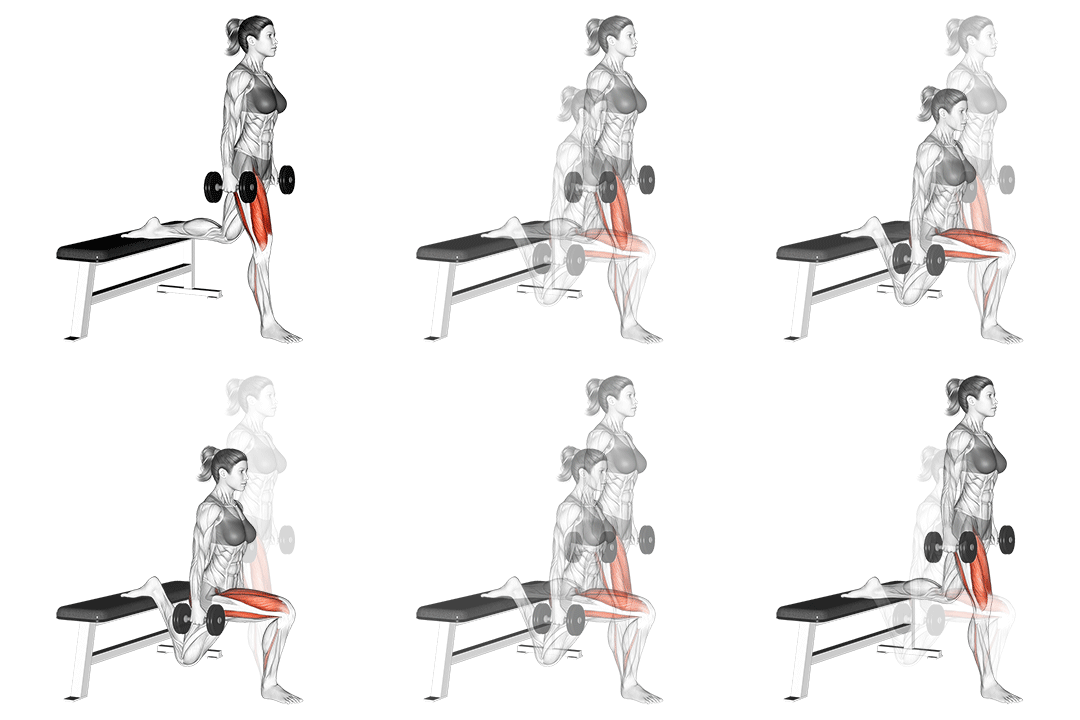
The Dumbbell Bulgarian Split Squat sets up in a split stance with the rear foot elevated on a bench and squats while holding dumbbells at the sides. The unilateral pattern produces strong loading on the hamstring of the front leg.
For unilateral dumbbell hamstring training, the Bulgarian split squat is one of the most demanding single-leg exercises that exists. The pattern hits the front-leg hamstring through deep hip-flexion-to-extension range. Run it for 3 sets of 8 to 10 reps per leg as advanced unilateral leg work.
Stand 2 to 3 feet in front of a bench. Place the top of one foot on the bench behind. Hold dumbbells at the sides. Drop straight down by bending the front knee until the back knee approaches the floor. Drive through the front foot to push back to the start position. Switch sides between sets.
Dumbbell Walking Lunge

The Dumbbell Walking Lunge performs walking lunges while holding dumbbells at the sides. The walking pattern adds dynamic loading to the unilateral lunge motion and produces strong single-leg hamstring loading.
For dumbbell hamstring training that includes dynamic unilateral work, the walking lunge produces strong combined leg development. The pattern hits the hamstrings of both legs through the alternating motion. Run it for 3 sets of 8 to 10 reps per leg as dynamic unilateral hamstring work.
Hold dumbbells at the sides. Step forward into a long lunge stance, lowering the back knee toward the floor while bending the front knee. Drive through the front foot to step the back foot forward into the next lunge. Continue alternating sides while walking forward.
Dumbbells Glute Bridge

The Dumbbells Glute Bridge lies flat on the floor with knees bent and dumbbells positioned across the hips, then drives the hips up by squeezing the glutes. The pattern produces strong glute and hamstring loading at the contracted position.
For dumbbell hamstring training that includes accessible glute-bridge work, the dumbbell glute bridge produces strong combined glute and hamstring loading at the contracted position. The pattern works well as warm-up or volume work alongside heavier exercises. Run it for 3 sets of 12 to 15 reps as accessible glute-and-hamstring work.
Lie flat on the back with knees bent and feet planted shoulder-width apart. Position dumbbells across the hips. Drive the hips up by squeezing the glutes hard until the body forms a straight line from shoulders to knees. Lower under control.
How To Program These Workouts
A productive dumbbell hamstring session pulls five to seven exercises from the list above. A balanced session includes one heavy hip-hinge compound (dumbbell Romanian deadlift), one stretch-loading exercise (stiff-leg deadlift), one knee-flexion isolation (lying leg curl), one unilateral exercise (single-leg deadlift or Bulgarian split squat), and one contracted-position exercise (dumbbell hip thrust). Run heavy compounds for 4 sets of 8 to 12 reps; stretch-loading work for 3 sets of 8 to 10 reps; isolation and contracted-position work for 3 sets of 10 to 15 reps. Total session covers 15 to 20 working sets.
Train dumbbell hamstring sessions 1 to 2 times per week as part of broader leg programming. The hamstrings recover within 48 to 72 hours of moderate training, but heavy compound lifts (Romanian deadlift, conventional deadlift) require longer recovery. Most successful programs include 1 to 2 dedicated hamstring sessions per week with 12 to 20 weekly sets of direct hamstring work. Advanced lifters with strong recovery often benefit from twice-weekly hamstring sessions with different exercise emphasis.
For broader leg programming, see our best dumbbell leg workouts and best at home hamstring workouts. For hamstring-specific guidance, see our how to grow your hamstrings.
Final Thoughts
The best hamstring workouts with dumbbells deliver real hamstring development through equipment that fits any home gym or training setting. The combination of hip-hinge work, unilateral exercises, knee-flexion isolation, and contracted-position loading covers both major hamstring functions and produces complete development that produces visible muscular separation and rear-leg shape. For lifters with dumbbell-only equipment, lifters wanting to add dumbbell work to existing programs, or lifters needing effective hamstring training without barbell access, dumbbell hamstring training is one of the most accessible and effective options available.
Stay focused on the stretch position of every Romanian deadlift rep. The most common dumbbell hamstring training mistake is cutting the range of motion short on Romanian deadlifts (stopping the dumbbells at mid-thigh instead of below the knees), which significantly reduces the actual hamstring stimulus. The fix: lower the dumbbells until the hamstrings stretch fully (typically just below the knee for most lifters with good hip mobility) on every rep. Quality reps with full range produce stronger hamstring development than higher-weight reps with cut-short ranges. The hamstrings grow most when loaded under stretch; respecting that pattern through deliberate execution drives the development.
Frequently Asked Questions
Are dumbbells good for hamstring training?
Yes, very effectively. Dumbbells allow effective hip-hinge training (Romanian deadlifts), unilateral work (single-leg deadlift), knee-flexion isolation (lying leg curl), and contracted-position work (hip thrust, glute bridge). The format produces complete hamstring development that hits both major hamstring functions. Most lifters who consistently do dumbbell hamstring work see measurable development within 8 to 12 weeks combined with appropriate nutrition.
How heavy should dumbbells be for hamstrings?
Most lifters need a range from medium (20 to 35 pounds per dumbbell for accessory work) to heavy (50 to 80+ pounds per dumbbell for Romanian deadlifts and conventional deadlifts). The right weight is whatever produces challenging loading throughout the prescribed reps with strict form. Most successful dumbbell hamstring setups include 3 to 5 different weights for varied training loads. Lifters with limited dumbbell weights can compensate with higher rep ranges and slower tempos.
Dumbbells or barbell for hamstring growth?
Both work; the choice depends on goals and equipment access. Barbell training (especially Romanian deadlift, conventional deadlift) allows heavier total loading through bilateral training. Dumbbells allow unilateral work that catches strength imbalances and produce more comfortable wrist positioning on certain exercises. Most successful programs include both: barbells for foundational mass-building, dumbbells for unilateral work and varied stimulus. Lifters with only dumbbell access can build serious hamstrings through consistent dumbbell training.
How often should I train hamstrings with dumbbells?
One to two times per week works for most lifters. The hamstrings recover within 48 to 72 hours of moderate training, but heavy compound lifts (Romanian deadlift) require longer recovery. Most successful programs include 1 to 2 dedicated hamstring sessions per week with 12 to 20 weekly sets of direct hamstring work. Advanced lifters with good recovery often benefit from twice-weekly hamstring sessions.
Can I build big hamstrings with only dumbbells?
Yes for general hamstring development. The combination of progressive dumbbell training (using heavier dumbbells as you get stronger), appropriate volume, and consistent nutrition produces real hamstring development for years of consistent practice. Advanced lifters chasing maximum hamstring size eventually benefit from heavy barbell work that allows loads dumbbells cannot match, but consistent dumbbell training produces measurable development at every level for general physique goals.