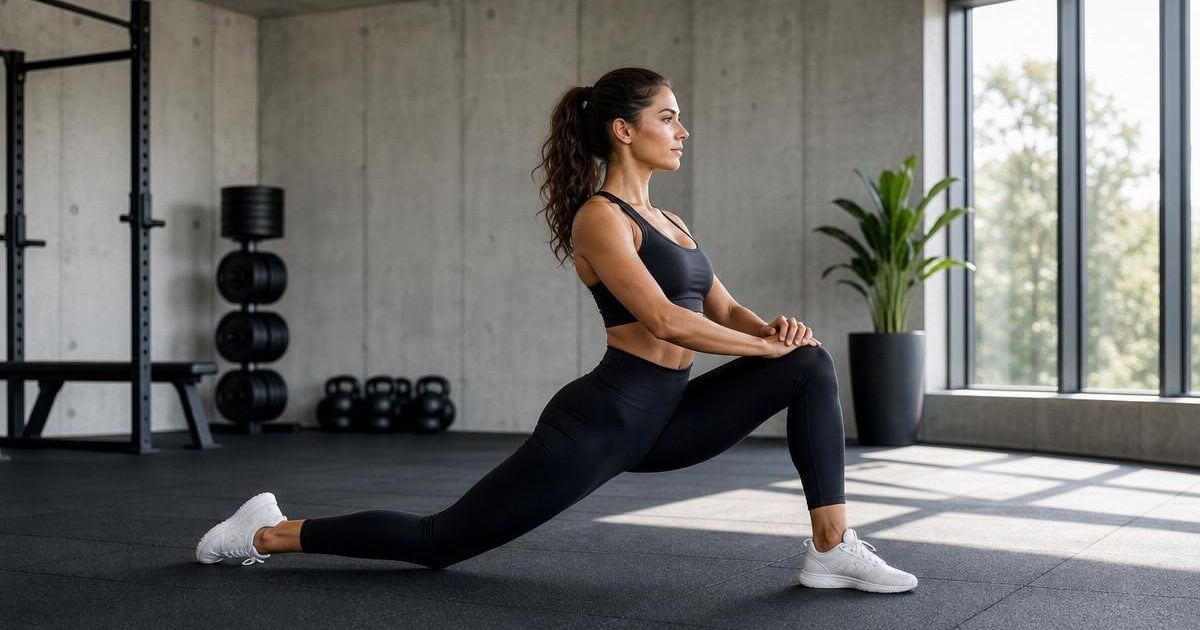
Improving hip mobility requires understanding both the anatomy of the hip joint (the hip moves in multiple planes – flexion, extension, abduction, adduction, internal/external rotation – all of which can be limited by tight muscles, weak muscles, or poor movement patterns) and the training principles that develop it: dedicated stretching for tight muscles (hip flexors, glutes, inner thighs, hamstrings), strength training that builds full range of motion (deep squats, RDLs, glute bridges), combination patterns that train mobility under load (Bulgarian split squats, Cossack squats), and high-frequency consistent work that allows the connective tissue and muscles to adapt to expanded ranges. Most people with limited hip mobility are dealing with one or more of these issues: tight hip flexors from prolonged sitting, tight glutes from inactivity or imbalance, tight inner thighs limiting lateral movement, weak posterior chain limiting hip extension, poor hip hinge patterning, or weak unilateral hip strength. The right hip mobility program addresses each of these through specific stretches, strength work, and combination exercises.
Below are ten of the most effective exercises for improving hip mobility, covering combined mobility sequences (worlds greatest stretch), targeted stretching for specific muscles (kneeling hip flexor stretch, lying glute stretch, pigeon hip stretch, frog pose mandukasana), mobility under load (cossack squats, dumbbell goblet squat), combined strength/mobility work (dumbbell Bulgarian split squat, barbell romanian deadlift, barbell glute bridge). Together they form a complete hip mobility program. A 15 to 25-minute hip mobility session pulled from this list, performed 4 to 7 times per week (or as integrated work alongside your regular training), produces measurable hip mobility improvement within 4 to 8 weeks of consistent training for most individuals – including better squat depth, reduced lower back pain, improved athletic performance, and the reduced injury risk that mobile hips provide.
Worlds Greatest Stretch

The Worlds Greatest Stretch performs the worlds greatest stretch sequence. The pattern is foundational hip mobility work.
For hip mobility, the worlds greatest stretch is foundational – hits hip flexors, hamstrings, glutes, and thoracic mobility in one sequence. Run it for 2 sets of 5 to 8 reps per side as primary mobility work.
Start in a push-up position. Step the right foot up to outside the right hand into a deep lunge. Drop the right elbow down toward the inside of the right ankle. Hold briefly. Reach the right hand up toward the ceiling, opening the chest. Hold briefly. Return the hand down and step back to push-up position. Switch sides. The pattern hits hip flexor mobility (rear leg extension), hamstring mobility (front leg), glute mobility (rotation), and thoracic spine mobility (rotation reach) in one combined sequence. Excellent foundational mobility work that addresses multiple movement patterns simultaneously.
Kneeling Hip Flexor Stretch
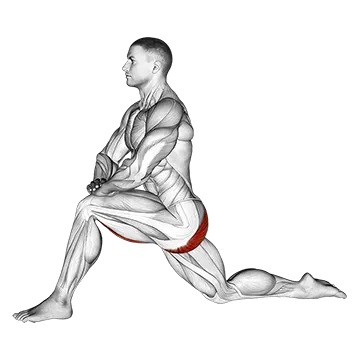
The Kneeling Hip Flexor Stretch performs kneeling hip flexor stretches. The pattern directly addresses tight hip flexors.
For hip mobility, the kneeling hip flexor stretch directly addresses the tight hip flexors common from sitting. Run it for 2 to 3 sets of 30 to 60-second holds per side as primary hip flexor work.
Kneel on one knee with the other foot planted in front in a 90/90 lunge position (front knee at 90 degrees, back knee at 90 degrees). Keep the torso upright. Squeeze the back glute hard while gently pushing the hips forward. Feel a deep stretch in the front of the hip on the back leg side. Hold for 30 to 60 seconds. Switch sides. The pattern directly addresses the tight hip flexors that develop from prolonged sitting – hip flexor tightness is one of the most common mobility issues and contributes to lower back pain, poor squat depth, and reduced athletic performance.
Dumbbell Bulgarian Split Squat
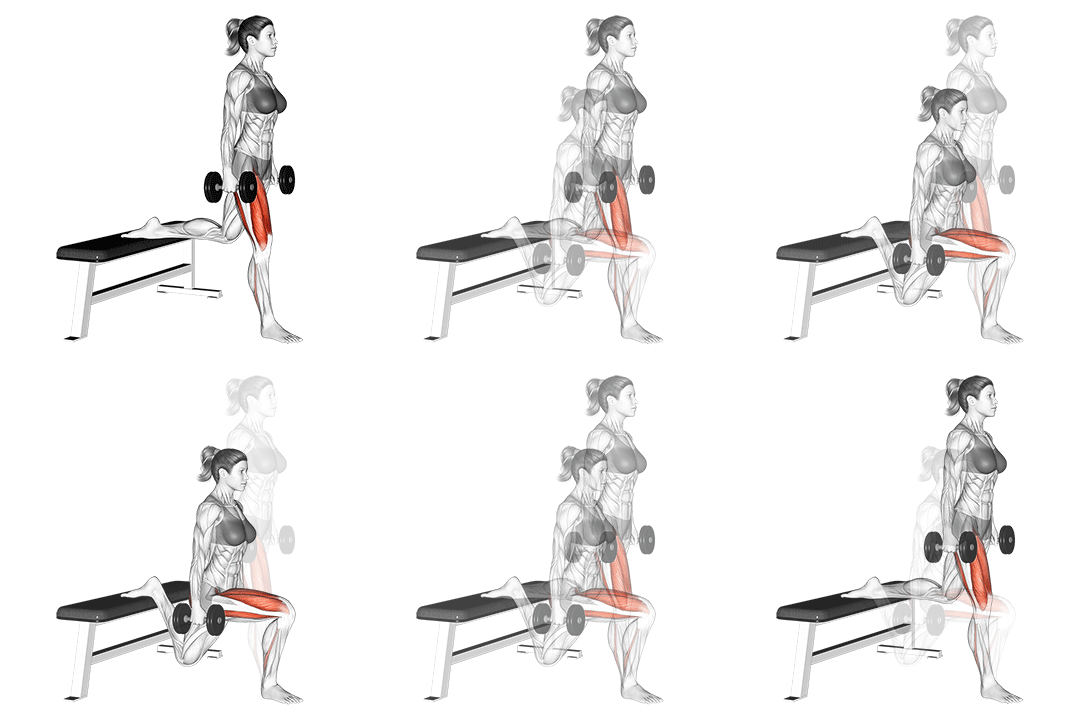
The Dumbbell Bulgarian Split Squat performs Bulgarian split squats. The pattern combines strength with hip mobility under load.
For hip mobility, Bulgarian split squats train hip mobility while building strength. Run it for 3 sets of 8 to 10 reps per leg as combined mobility/strength work.
Stand 2 to 3 feet in front of a bench. Place the top of the rear foot on the bench behind. Hold dumbbells in each hand at the sides. Squat down by bending the front knee deeply while feeling a stretch in the hip flexor of the back leg. Drive back up through the front heel. The pattern combines strength building with hip mobility loading – the back leg position produces a continuous hip flexor stretch under load while the working leg builds strength. Excellent for combining mobility and strength training in one exercise.
Cossack Squats
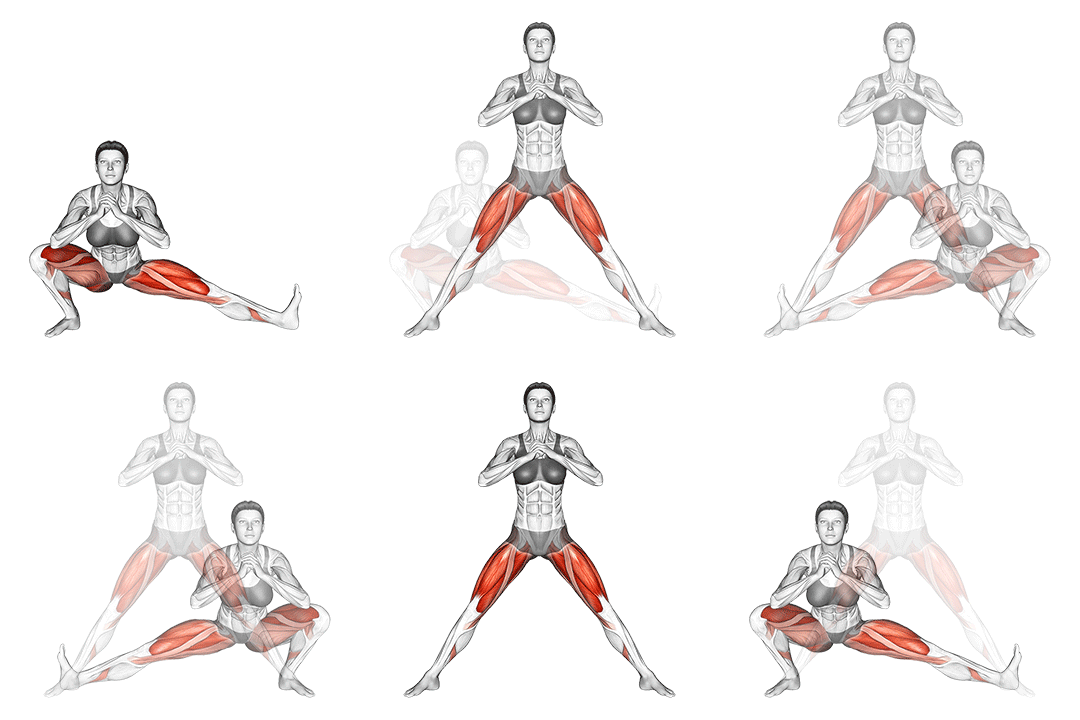
The Cossack Squats perform Cossack squats. The pattern produces extreme lateral hip mobility loading.
For hip mobility, Cossack squats produce extreme lateral hip mobility through deep lateral squat position. Run it for 3 sets of 8 to 10 reps per side as lateral hip mobility work.
Stand with feet wide apart (about 2x shoulder-width). Shift weight to one side by bending that knee deeply while keeping the other leg straight. The straight leg foot should be flat on the ground or with toes pointed up. Lower until you reach maximum stretch in the inner thigh of the straight leg. Drive back to center and switch sides. The pattern produces extreme lateral hip mobility – addresses tight inner thigh and hip mobility issues that affect lateral movement, deep squat capacity, and overall hip range of motion. Excellent for lateral mobility development.
Dumbbell Goblet Squat
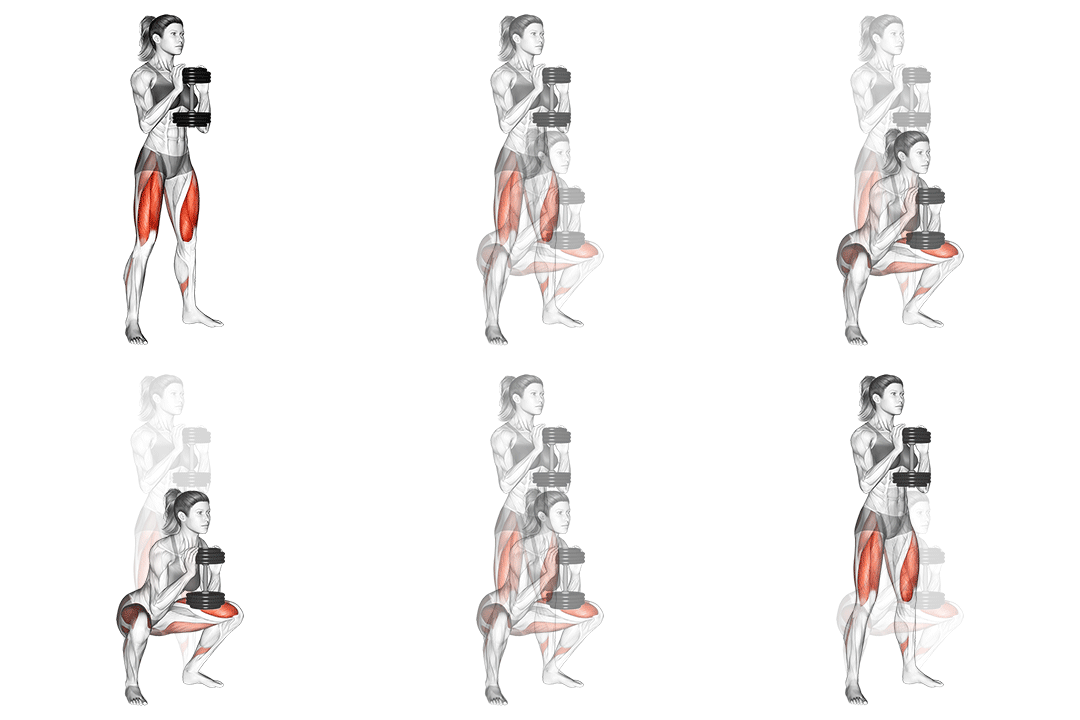
The Dumbbell Goblet Squat performs goblet squats. The pattern trains squat-specific hip mobility under load.
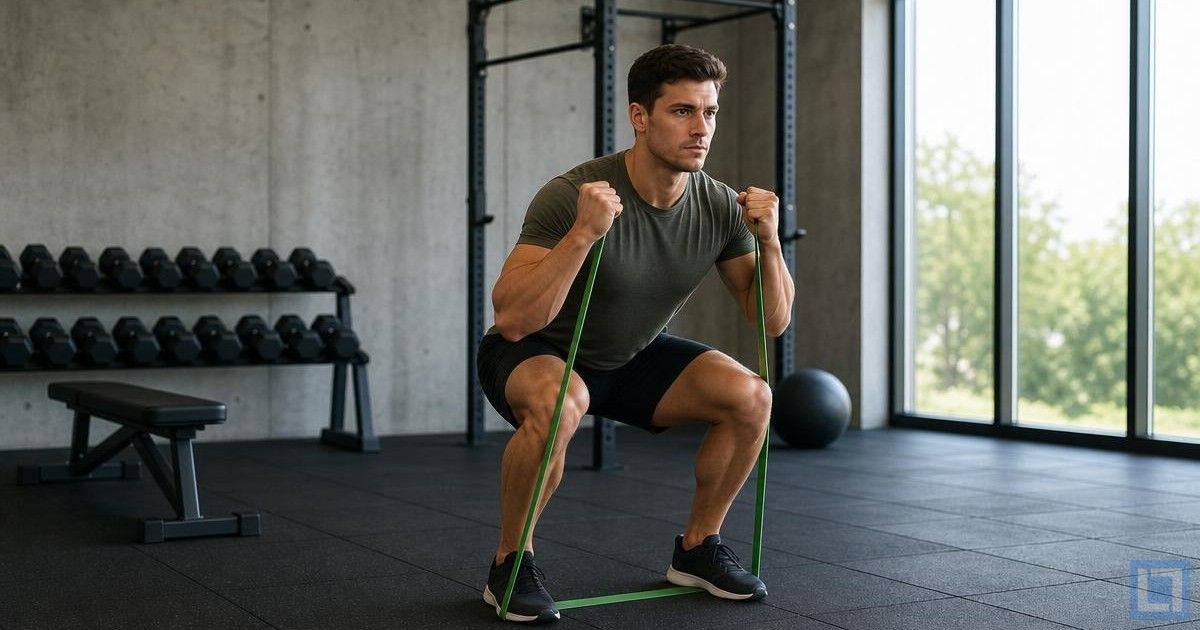
For hip mobility, the goblet squat trains deep squat hip mobility under load. Run it for 3 sets of 10 to 15 reps as combined mobility/strength work.
Stand with feet shoulder-width holding a dumbbell at the chest with both hands (cup the top end of the dumbbell). Squat down deeply by bending the knees and hips – the front-loaded position counterbalances the squat and allows for deeper depth than back squats for many people. Lower until the elbows touch the inside of the knees (signature goblet squat depth). Drive back up. The pattern trains deep squat-specific hip mobility while building strength – excellent for working through hip mobility limitations that prevent deep squatting.
Barbell Romanian Deadlift

The Barbell Romanian Deadlift performs Romanian deadlifts. The pattern trains hip hinge mobility under load.
For hip mobility, the RDL trains hip hinge mobility while building posterior chain strength. Run it for 3 sets of 8 to 10 reps as combined mobility/strength work.
Stand with feet hip-width holding a barbell at the front of the thighs. Hinge at the hips by sending them backward while keeping the back flat and legs nearly straight. Lower the barbell along the legs until the hamstrings stretch deeply. Drive back to standing by extending the hips. The pattern trains the hip hinge pattern critical for athletic movement and addresses tight hamstrings/poor hip hinge mobility while building posterior chain strength. Many hip mobility issues stem from poor hip hinge patterning – RDL training resolves both mobility and pattern issues simultaneously.
Lying Glute Stretch
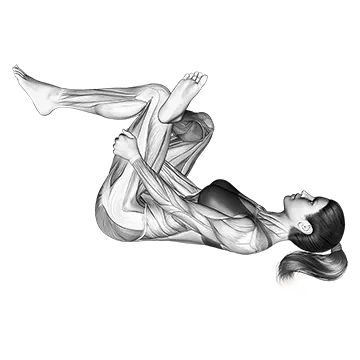
The Lying Glute Stretch performs lying glute stretches. The pattern directly addresses tight glutes that limit hip mobility.
For hip mobility, the lying glute stretch directly addresses tight glutes. Run it for 2 to 3 sets of 30 to 60-second holds per side as primary glute mobility work.
Lie on the back. Cross one ankle over the opposite thigh (figure-4 position). Pull the bottom thigh toward the chest with both hands. Feel a deep stretch in the glute of the crossed leg. Hold for 30 to 60 seconds. Switch sides. The pattern directly addresses tight glutes that limit hip mobility – tight glutes contribute to lower back pain, restricted hip rotation, and impaired squat depth. Most successful hip mobility programs include daily glute stretching for accelerated mobility improvement.
Pigeon Hip Stretch
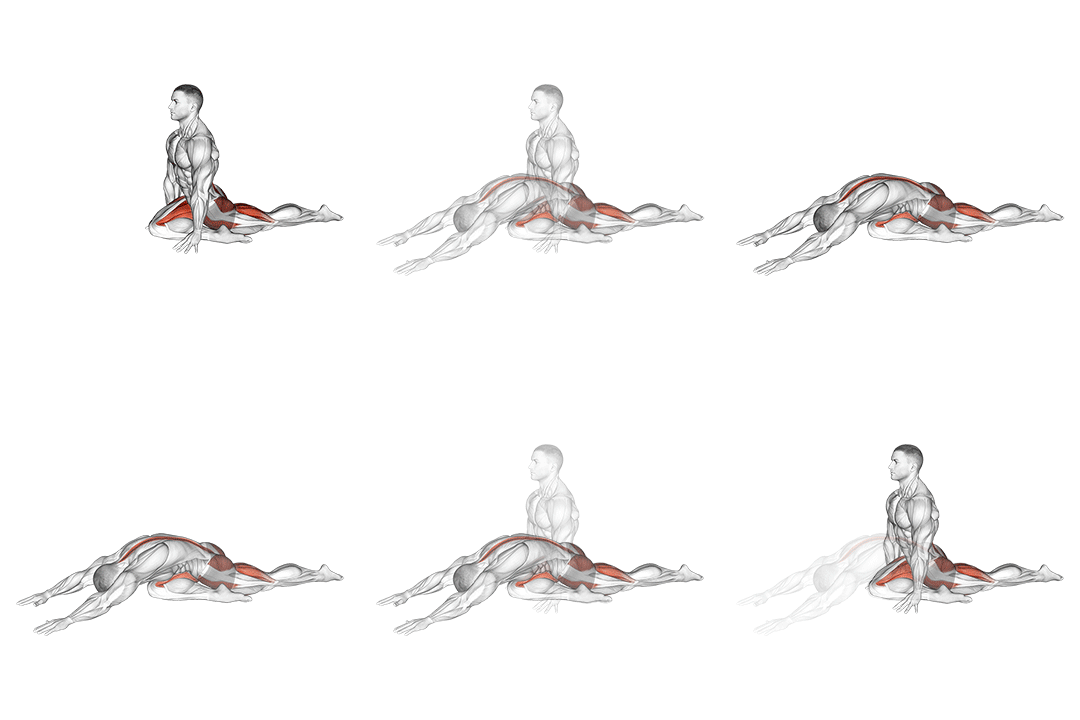
The Pigeon Hip Stretch performs pigeon hip stretches. The pattern produces deep glute and hip rotator stretching.
For hip mobility, the pigeon stretch produces deep glute and hip external rotator stretching. Run it for 2 sets of 60 to 90-second holds per side as deep hip mobility work.
Start in a downward dog or push-up position. Bring one knee forward toward the same-side hand while extending the other leg straight back behind. Lower the front shin to the floor (the front shin should be roughly perpendicular to the body). Lower the chest toward the floor for deeper stretch (or stay upright for less intense version). Feel deep stretching in the front glute and hip rotators. Hold for 60 to 90 seconds. Switch sides. The pattern produces some of the deepest possible hip mobility loading – addresses tight glutes and external rotators that commonly limit hip range of motion.
Barbell Glute Bridge
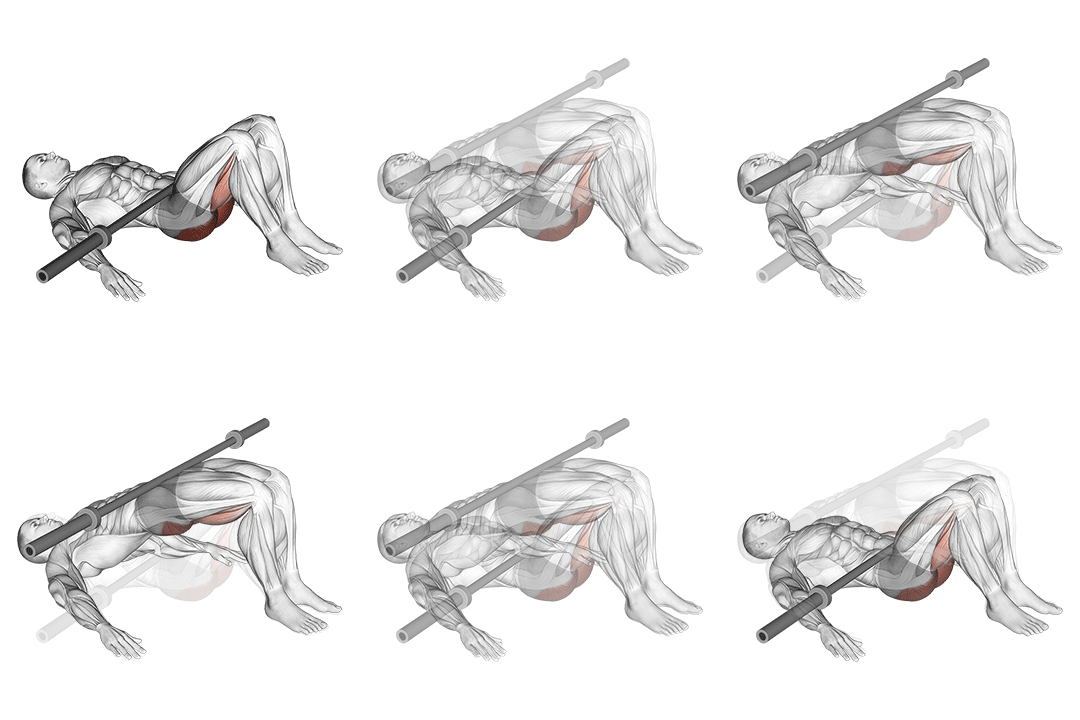
The Barbell Glute Bridge performs glute bridges. The pattern builds hip extension strength supporting hip mobility.
For hip mobility, the glute bridge builds hip extension strength and combines glute strengthening with hip flexor stretching. Run it for 3 sets of 10 to 15 reps as combined strength/mobility work.
Lie on the floor with knees bent and feet planted. Position a barbell across the hips. Hold the bar in place. Drive through the heels to lift the hips up by extending the hips. The body forms a straight line from shoulders to knees at the top. The glutes work hard while hip flexors stretch at peak hip extension. Squeeze at peak. Lower under control. The pattern builds hip extension strength while simultaneously stretching tight hip flexors at peak extension – excellent combined exercise for hip mobility improvement and glute strengthening.
Frog Pose Mandukasana
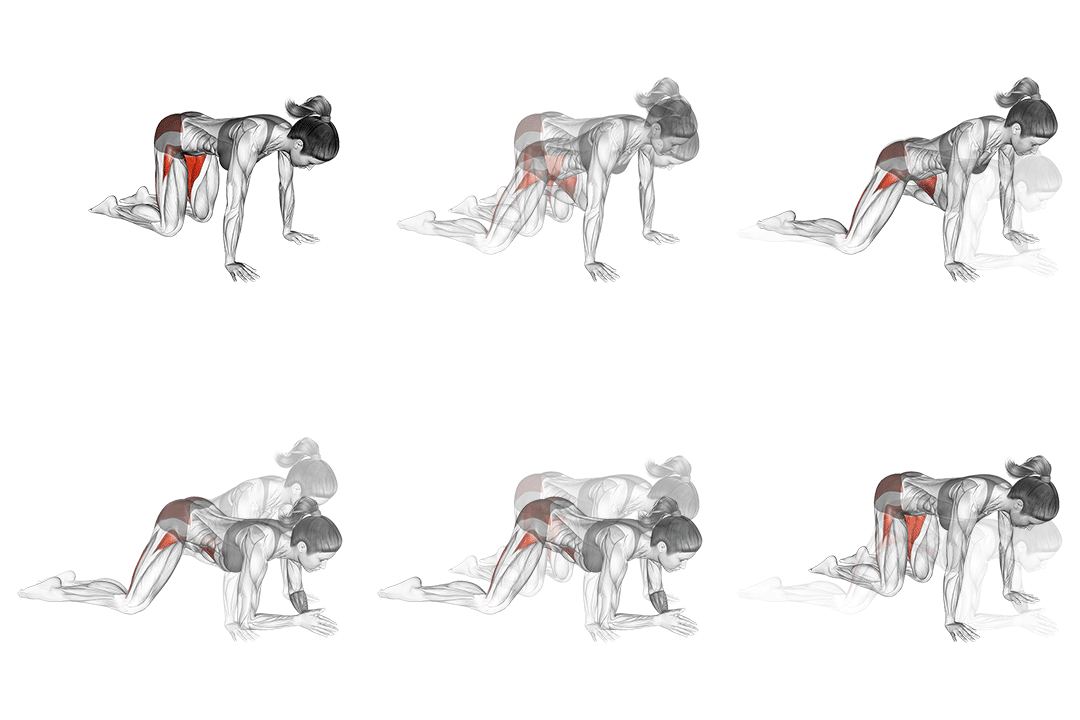
The Frog Pose Mandukasana performs the frog pose stretch. The pattern produces extreme hip abduction mobility.
For hip mobility, the frog pose produces extreme hip abduction mobility. Run it for 2 sets of 60 to 90-second holds as deep hip mobility work.
Start on hands and knees. Spread the knees wide apart while keeping the ankles in line with the knees (feet pointed outward). Lower the forearms to the floor while maintaining the wide knee position. Press the hips back toward the heels. Feel deep stretching in the inner thighs and hips. Hold for 60 to 90 seconds (this is intense – work into the position gradually). The pattern produces some of the deepest possible inner thigh and hip abduction mobility – addresses tight inner thighs that limit lateral movement, deep squat positions, and overall hip range of motion.
How To Program These Workouts
A productive hip mobility session pulls 5 to 7 exercises from the list above. A common balanced session: worlds greatest stretch (warm-up sequence), kneeling hip flexor stretch (hip flexors), lying glute stretch (glutes), cossack squats (lateral mobility), dumbbell goblet squat (deep squat mobility), pigeon hip stretch (deep glute), frog pose mandukasana (inner thigh). For pure mobility focus: worlds greatest stretch, kneeling hip flexor stretch, lying glute stretch, pigeon hip stretch, frog pose mandukasana, cossack squats. For combined strength/mobility focus: dumbbell Bulgarian split squat, barbell romanian deadlift, barbell glute bridge, dumbbell goblet squat. Run static stretching for 2 to 3 sets of 30 to 90-second holds, mobility under load for 3 sets of 8 to 12 reps per side, combined strength/mobility for 3 sets of 8 to 15 reps.
Train hip mobility 4 to 7 times per week for accelerated improvement. Most successful hip mobility programs incorporate work as: 1) daily targeted stretching (kneeling hip flexor stretch, lying glute stretch, pigeon stretch) for tight muscles, 2) 2 to 3 weekly dedicated mobility sessions (5 to 7 exercises covering all hip movement patterns), 3) integrated mobility warm-ups before all training sessions (worlds greatest stretch, dynamic mobility), 4) combined strength/mobility work in regular training (Bulgarian split squats, RDLs, glute bridges). Hip mobility tolerates very high frequency – daily targeted stretching plus 2 to 3 dedicated sessions produces measurable improvement within 4 to 8 weeks. Combined with hip-mobile movement patterns in regular training, comprehensive mobility programming produces lasting hip mobility improvements.
For broader programming, see our best workouts for mobility and best stretching workouts. For specific work, see our best workouts for lower back pain.
Final Thoughts
Improving hip mobility requires applying the right training principles consistently over time: daily targeted stretching for tight muscles (hip flexors, glutes, inner thighs), mobility under load through deep squats and lateral patterns, combination strength/mobility work for integrated improvement, and high-frequency consistent work that allows tissue adaptation to expanded ranges. The combination of the worlds greatest stretch, kneeling hip flexor stretches, Cossack squats, goblet squats, RDLs, lying glute stretches, pigeon stretches, glute bridges, frog pose, and Bulgarian split squats covers every direction of hip mobility and produces broader hip improvement than any single approach. Most individuals who consistently apply these principles see measurable hip mobility improvement within 4 to 8 weeks – including better squat depth, reduced lower back pain, improved athletic performance, and the reduced injury risk that mobile hips provide. For lifters, athletes, and individuals with desk-job stiffness seeking better hip function, dedicated hip mobility training is one of the most effective interventions available.
Stay focused on consistency over intensity in stretching. The most common mistake people make in hip mobility training is doing intense stretching sessions occasionally rather than consistent daily work. The fix: prioritize daily targeted stretching at moderate intensity over occasional intense sessions. The connective tissue and muscle adaptations that produce lasting mobility improvement happen through consistent gentle stretching over time, not aggressive forcing in occasional sessions. Combined with dedicated mobility sessions 2 to 3 times per week and combined strength/mobility work in regular training, daily stretching produces the lasting hip mobility improvements that occasional intense work never achieves. Hip mobility is built through thousands of repetitions across weeks and months – frequency and consistency matter more than intensity of any single session.
Frequently Asked Questions
How long does it take to improve hip mobility?
4 to 8 weeks for measurable improvement, ongoing for full mobility. Most individuals who consistently apply daily stretching plus dedicated mobility sessions see measurable hip mobility improvement within 4 to 8 weeks – better squat depth, reduced stiffness, improved range of motion. Severe hip mobility limitations (from years of sitting, chronic injury, or chronic poor patterns) may require 3 to 6 months of consistent work for full improvement. Most people see initial improvement within 2 to 3 weeks of starting consistent daily stretching.
What’s the best exercise for hip mobility?
Daily targeted stretching plus combined strength/mobility work. The kneeling hip flexor stretch directly addresses tight hip flexors (most common limitation from sitting). The pigeon hip stretch produces deep glute mobility. The worlds greatest stretch combines multiple mobility patterns. Combined with mobility under load (Cossack squats, goblet squats) and combined strength/mobility work (Bulgarian split squats, RDLs, glute bridges), these form the foundation of hip mobility improvement. Most successful programs prioritize daily targeted stretching as the foundation.
Why are my hips so tight?
Most commonly from prolonged sitting and inactivity. Modern lifestyle (desk work, driving, phone use) keeps hips in flexed positions for hours daily, producing chronic hip flexor tightness and weakened/inhibited glutes. This combination – tight front of hips, weak back of hips – is the most common cause of poor hip mobility. Other causes: aggressive training without mobility work, chronic injuries with compensation patterns, age-related connective tissue changes. The fix: daily hip mobility work plus reduced sitting time plus proper movement patterns to restore normal hip function.
Should I stretch hips before or after workouts?
Both – dynamic before, static after. Dynamic mobility work (worlds greatest stretch, hip openers, leg swings) before workouts prepares the hips for movement. Static stretching (long holds in pigeon, hip flexor stretch, frog pose) after workouts produces lasting mobility improvements. Most successful programs combine both – 5 to 10 minutes of dynamic mobility before training, plus 5 to 15 minutes of static stretching after training. Daily stretching outside training sessions accelerates improvement further.
How often should I do hip mobility work?
Daily targeted stretching plus 2 to 3 dedicated sessions weekly. The hips tolerate very high frequency – daily targeted stretching (kneeling hip flexor stretch, lying glute stretch, pigeon stretch) accelerates mobility improvement substantially compared to less frequent work. Most successful hip mobility programs include: daily 10-minute targeted stretching, 2 to 3 weekly dedicated 25-minute mobility sessions, integrated dynamic mobility before all training. Combined approach produces measurable hip mobility improvement within 4 to 8 weeks for most individuals.