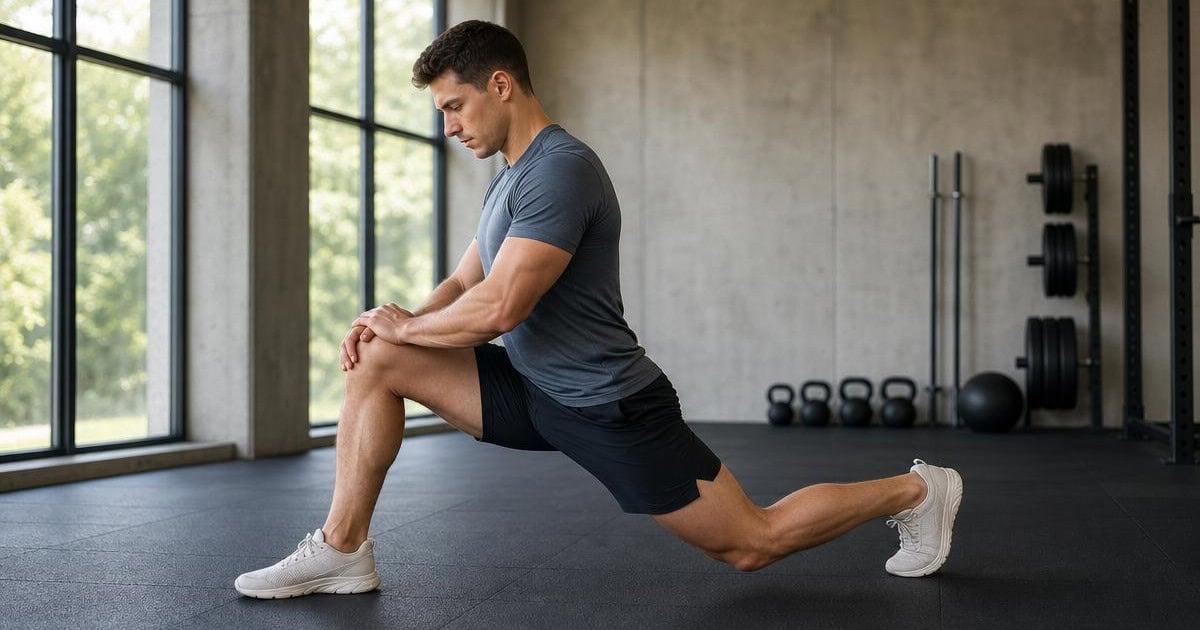
Improving ankle mobility requires understanding both ankle joint anatomy (the ankle moves in multiple directions – plantar flexion, dorsiflexion, inversion, eversion – all of which can be limited by tight calves, tight tibialis anterior, weak intrinsic foot muscles, or poor movement patterns) and the training principles that develop it: dedicated stretching for tight muscles (calves, tibialis anterior), strength training that builds full range of motion (calf raises with full ROM, deep squats), combination patterns that train mobility under load (Cossack squats, Bulgarian split squats, goblet squats), dynamic ankle work (jump rope, toe walks, heel-to-toe walks), and high-frequency consistent practice. Most people with limited ankle mobility have one or more of these issues: tight calves from sitting, walking in supportive shoes, and lack of full ROM training, tight tibialis anterior, weak ankle stabilizers, or poor squat patterns that compensate around poor ankle mobility. Limited ankle mobility is one of the most common limitations in athletic performance – it restricts squat depth, limits sprint mechanics, and contributes to common injuries.
Below are ten of the most effective exercises for improving ankle mobility, covering calf strength with full ROM (standing calf raise, dumbbell standing single leg calf raise), targeted stretching (standing shin stretch), mobility under load (cossack squats, dumbbell Bulgarian split squat, dumbbell goblet squat), dynamic ankle work (jump rope, toe walk, heel-to-toe walk), and squat-specific ankle mobility (barbell squat). Together they form a complete ankle mobility program. A 15 to 25-minute ankle mobility session pulled from this list, performed 4 to 7 times per week (or as integrated work alongside your regular training), produces measurable ankle mobility improvement within 4 to 8 weeks of consistent training – including better squat depth, improved athletic movement, reduced ankle injury risk, and the integrated ankle function that supports all lower-body performance.
Standing Calf Raise

The Standing Calf Raise performs standing calf raises. The pattern builds calf strength and ankle range of motion.
For ankle mobility, the standing calf raise builds calf strength and ankle range of motion through full plantar flexion and dorsiflexion. Run it for 4 sets of 12 to 20 reps as primary calf strength/mobility work.
Stand with feet hip-width on a flat surface or with the balls of the feet on a slightly elevated surface for added range of motion. Rise up onto the toes by extending the ankles into full plantar flexion. Hold briefly at peak. Lower under control to a deep stretch at the bottom (full dorsiflexion). The pattern builds calf strength while training full ankle range of motion – the loaded eccentric stretch at the bottom develops dorsiflexion mobility critical for squatting depth and athletic movement. Use full range of motion for both strength AND mobility benefits.
Dumbbell Standing Single Leg Calf Raise

The Dumbbell Standing Single Leg Calf Raise performs unilateral calf raises with weight. The pattern produces unilateral ankle mobility work.
For ankle mobility, the single-leg calf raise produces unilateral ankle mobility loading – addresses left/right asymmetries common in ankle mobility issues. Run it for 3 sets of 10 to 12 reps per leg as unilateral ankle work.
Stand on one leg holding a dumbbell in the opposite hand. Use the free hand for balance support. Rise up onto the toes of the standing foot through full plantar flexion. Lower slowly through full dorsiflexion to deep stretch. The unilateral loading produces stronger stimulus per rep while addressing left/right asymmetries common in ankle mobility limitations. The pattern develops both calf strength and ankle range of motion on each side individually – critical for addressing the ankle mobility asymmetries that commonly limit squat depth and athletic performance.
Standing Shin Stretch
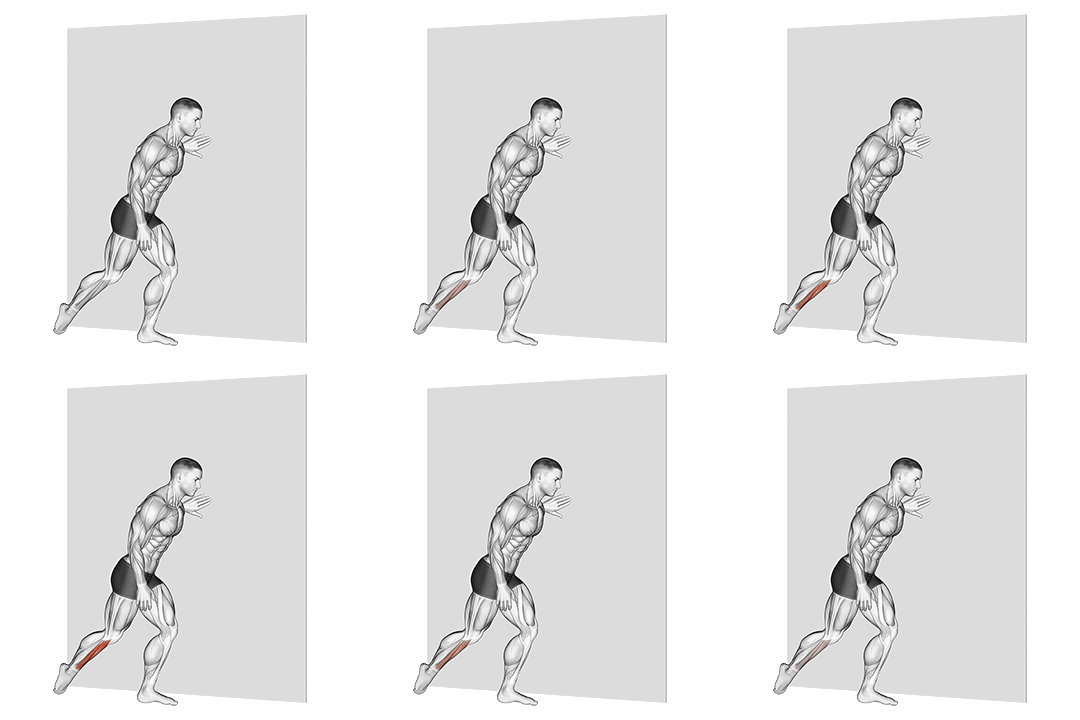
The Standing Shin Stretch performs shin stretches. The pattern addresses tight tibialis anterior that limits ankle mobility.
For ankle mobility, the standing shin stretch addresses tight tibialis anterior. Run it for 2 to 3 sets of 30 to 45-second holds as supporting ankle mobility work.
Stand with one foot in front of the other. Place the top of the back foot on the floor with toes pointed (knee slightly bent). Press the front of the back ankle toward the floor to stretch the front of the shin and ankle. Feel the stretch in the tibialis anterior (front of shin). Hold for 30 to 45 seconds. Switch sides. The pattern addresses the often-overlooked tight tibialis anterior – while most ankle mobility work focuses on calves, tight tibialis anterior also limits ankle range of motion. Combined with calf stretching, shin stretching produces complete ankle mobility development.
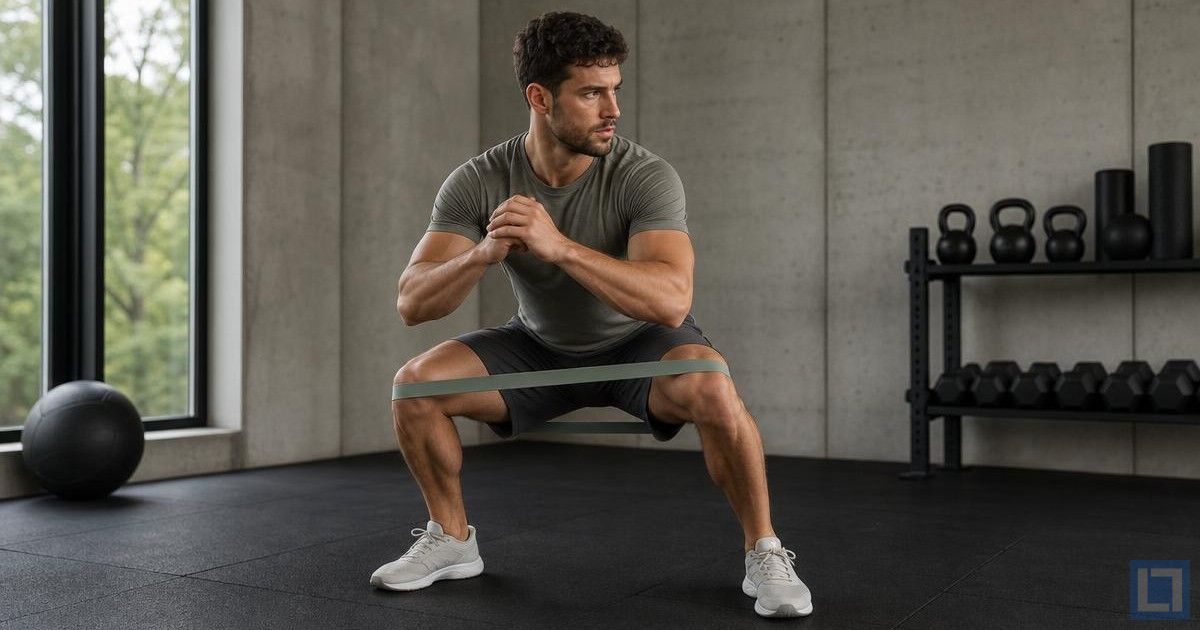
Cossack Squats
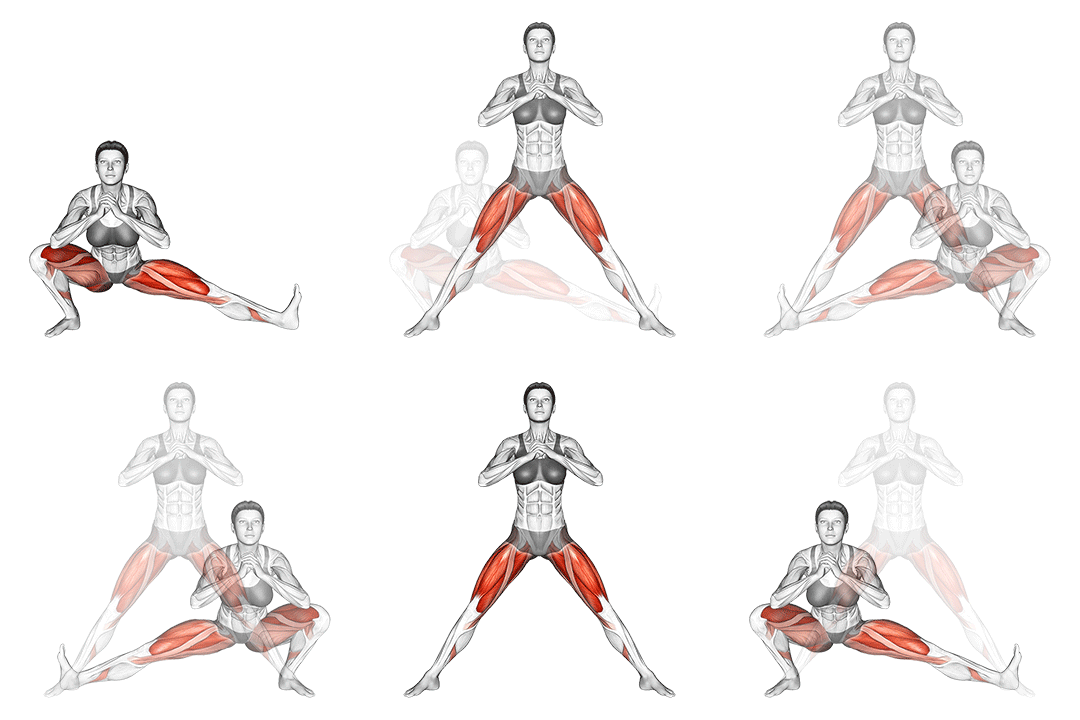
The Cossack Squats perform Cossack squats. The lateral squat pattern produces strong ankle dorsiflexion mobility.
For ankle mobility, Cossack squats produce extreme ankle dorsiflexion through deep lateral squat position. Run it for 3 sets of 8 to 10 reps per side as ankle/hip mobility work.
Stand with feet wide apart (about 2x shoulder-width). Shift weight to one side by bending that knee deeply while keeping the other leg straight. The straight leg foot should be flat on the ground or with toes pointed up. Lower until you reach maximum depth in the squatting leg. Drive back to center and switch sides. The pattern produces extreme ankle dorsiflexion in the squatting leg – the deep lateral squat position requires substantial ankle range of motion. Excellent combined ankle and hip mobility work that addresses common mobility limitations simultaneously.
Dumbbell Bulgarian Split Squat
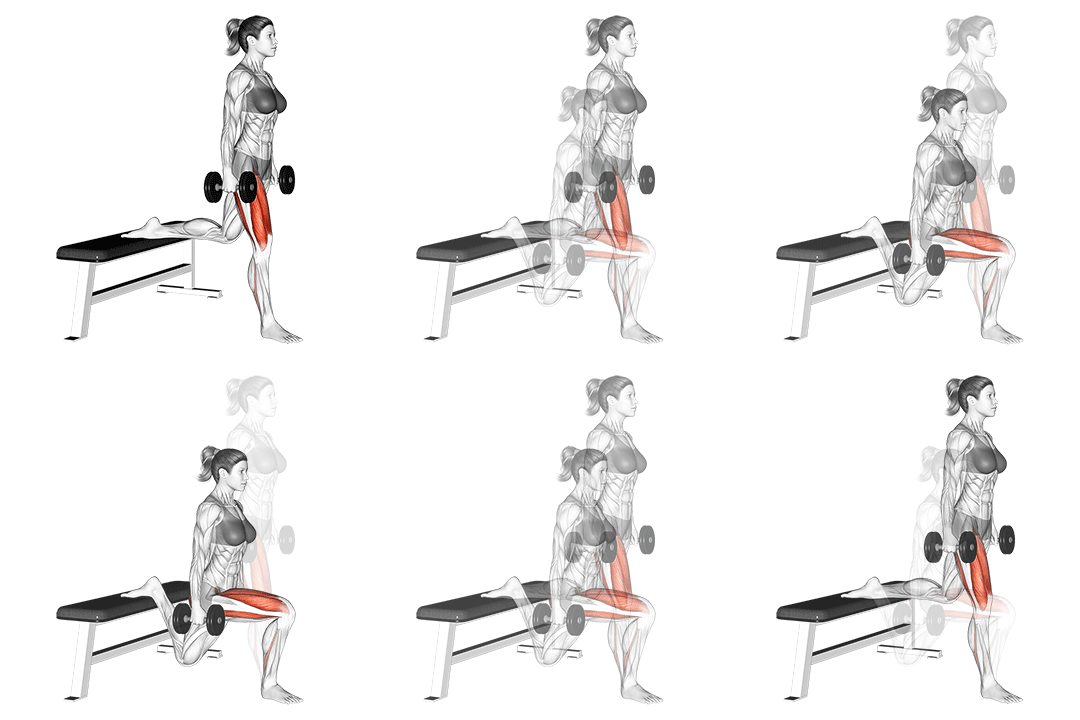
The Dumbbell Bulgarian Split Squat performs Bulgarian split squats. The pattern combines unilateral leg strength with ankle mobility loading.
For ankle mobility, Bulgarian split squats train unilateral ankle mobility under load. Run it for 3 sets of 8 to 10 reps per leg as combined unilateral strength/mobility work.
Stand 2 to 3 feet in front of a bench. Place the top of the rear foot on the bench behind. Hold dumbbells in each hand at the sides. Squat down by bending the front knee deeply while feeling the front knee track over the toes (requires good ankle dorsiflexion). Drive back up through the front heel. The pattern combines strength building with ankle mobility loading – the deep front knee bend requires substantial ankle dorsiflexion, training the ankle to maintain mobility under load. Excellent for combining ankle mobility with leg strength.
Dumbbell Goblet Squat
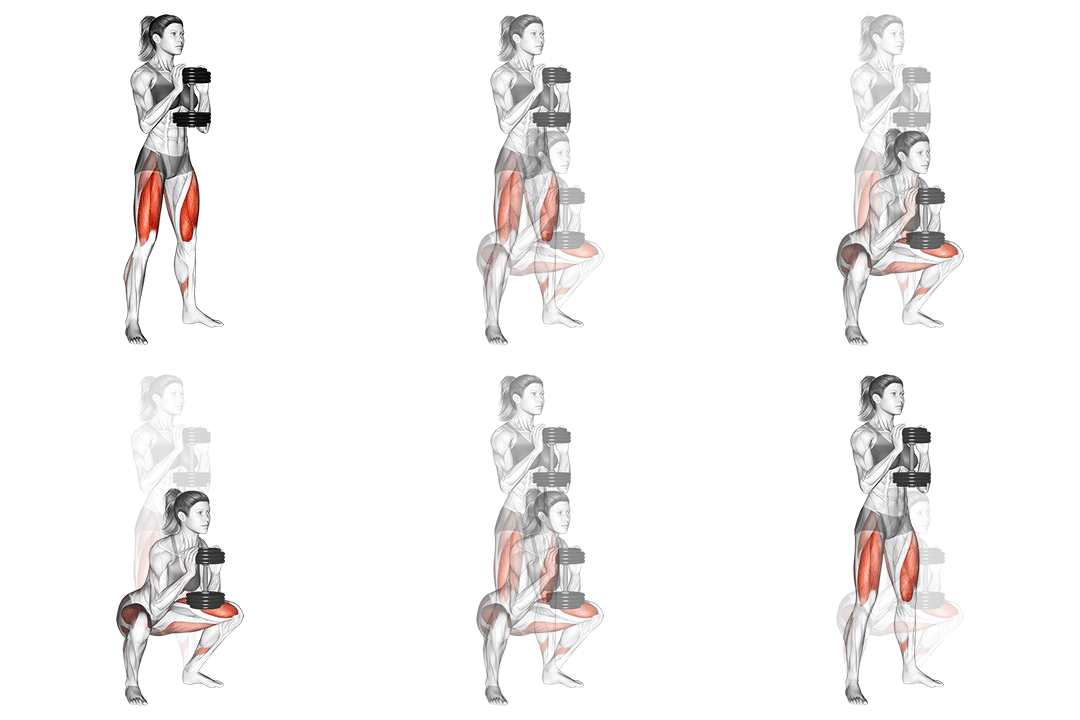
The Dumbbell Goblet Squat performs goblet squats. The pattern trains deep squat ankle mobility under load.
For ankle mobility, the goblet squat trains deep squat-specific ankle mobility. Run it for 3 sets of 10 to 15 reps as combined squat/ankle mobility work.
Stand with feet shoulder-width holding a dumbbell at the chest with both hands. Squat down deeply by bending the knees and hips – the front-loaded position counterbalances the squat and allows for deeper depth than back squats for many people. Lower until the elbows touch the inside of the knees. The deep squat position requires substantial ankle dorsiflexion for proper form. Drive back up. The pattern trains deep squat-specific ankle mobility – the front-loaded position emphasizes ankle dorsiflexion through the deep squat depth. Excellent for working through ankle mobility limitations in the squat pattern.
Jump Rope

The Jump Rope performs jump rope skipping. The pattern produces dynamic calf and ankle work.
For ankle mobility, jump rope produces dynamic calf and ankle work that maintains ankle range of motion through repetitive plantar/dorsiflexion. Run it for 3 to 5 rounds of 2 to 3 minutes as dynamic ankle work.
Hold the jump rope handles in each hand with the rope behind. Swing the rope forward over the head and jump over it as it passes under the feet. Continue rhythmically. The repetitive ankle motion produces dynamic calf and ankle work – the ankles work through hundreds of repetitions of plantar flexion and dorsiflexion. The pattern maintains ankle range of motion through repeated dynamic loading and produces the calf endurance that supports athletic ankle function. Combined with static stretching and strength work, jump rope provides excellent dynamic ankle mobility maintenance.
Toe Walk

The Toe Walk performs walking on the toes. The pattern produces calf strength and ankle plantar flexion.
For ankle mobility, toe walking produces direct calf strength and ankle plantar flexion training. Run it for 3 sets of 30 to 60-second walks as calf/ankle work.
Stand with feet hip-width. Rise up onto the toes by extending the ankles. Walk forward maintaining the toe position (heels off the ground). Continue for the working interval. The calves work hard isometrically while the ankles maintain full plantar flexion. The pattern produces direct calf strengthening combined with sustained plantar flexion – excellent for ankle range of motion development and addresses the calf endurance that supports proper ankle function. Combined with heel walking (heel-to-toe walk), toe walking provides complete ankle range of motion training.
Heel to Toe Walk

The Heel to Toe Walk performs heel-to-toe walking. The pattern produces dynamic ankle range of motion training.
For ankle mobility, heel-to-toe walking produces dynamic ankle range of motion training through full ankle motion. Run it for 3 sets of 30 to 60-second walks as ankle mobility work.
Stand with feet hip-width. Step forward placing the heel down first, then rolling through the foot to push off with the toes. Each step uses full ankle range of motion from dorsiflexion (heel strike) to plantar flexion (toe push-off). Continue for the working interval. The pattern produces full ankle range of motion through every step – excellent for maintaining and improving ankle mobility through dynamic loading. The exaggerated heel strike and toe push-off train the full ankle motion that proper walking and athletic movement require.
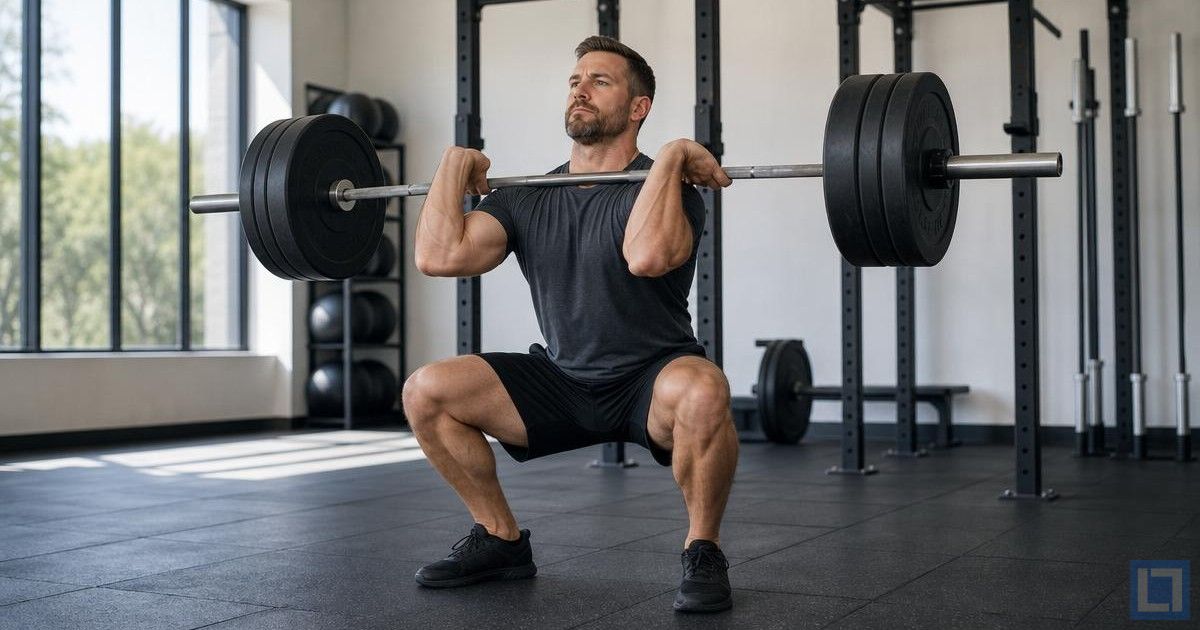
Barbell Squat

The Barbell Squat performs back squats. The compound pattern trains ankle mobility under heavy load.
For ankle mobility, the squat trains ankle dorsiflexion under heavy load – critical for translating mobility to strength. Run it for 3 sets of 5 to 10 reps as combined strength/mobility work.
Set up a barbell on a rack at upper back height. Position the bar across the upper back. Step back with feet shoulder-width. Squat down deeply by bending the knees and hips. Lower until the thighs are parallel to the floor (or below for full depth). Drive back up through the heels. The pattern trains ankle mobility under heavy load – the deep squat position requires substantial ankle dorsiflexion to maintain proper form, and squat training reinforces the ankle mobility patterns developed through dedicated mobility work. Use full squat depth to maximize ankle mobility benefits.
How To Program These Workouts
A productive ankle mobility session pulls 5 to 7 exercises from the list above. A common balanced session: standing calf raise (calf strength/ROM), standing shin stretch (tibialis), cossack squats (lateral mobility), dumbbell goblet squat (deep squat mobility), heel-to-toe walk (dynamic), jump rope (dynamic ankle conditioning). For pure mobility focus: standing calf raise, standing shin stretch, cossack squats, dumbbell goblet squat, toe walk, heel-to-toe walk. For combined strength/mobility focus: standing calf raise, dumbbell standing single leg calf raise, dumbbell Bulgarian split squat, barbell squat. Run calf strength for 3 to 4 sets of 12 to 20 reps with full ROM, static stretching for 2 to 3 sets of 30 to 45-second holds, mobility under load for 3 sets of 8 to 12 reps per side, dynamic walks for 3 sets of 30 to 60 seconds, jump rope for 3 to 5 rounds of 2 to 3 minutes.
Train ankle mobility 4 to 7 times per week for accelerated improvement. Most successful ankle mobility programs incorporate work as: 1) daily targeted stretching (calf and shin stretches, 60 seconds total per side daily), 2) 2 to 3 weekly dedicated mobility sessions (5 to 7 exercises covering all ankle movement patterns), 3) integrated ankle mobility warm-ups before all training sessions, 4) full ROM in compound work (deep squats, calf raises with full range). Ankle mobility tolerates very high frequency – daily targeted stretching plus 2 to 3 dedicated sessions produces measurable improvement within 4 to 8 weeks. Combined with full ROM movement in regular training, comprehensive ankle mobility programming produces lasting improvements that support all athletic performance.
For broader programming, see our how to improve hip mobility and best workouts for mobility. For specific work, see our how to build bigger calves.
Final Thoughts
Improving ankle mobility requires applying the right training principles consistently over time: daily targeted stretching for tight calves and shins, calf strength training with full range of motion, mobility under load through deep squats and lateral patterns, dynamic ankle work for integrated function, and high-frequency consistent practice that allows tissue adaptation to expanded ranges. The combination of calf raises, single-leg calf raises, shin stretches, Cossack squats, Bulgarian split squats, goblet squats, jump rope, toe walks, heel-to-toe walks, and barbell squats covers every direction of ankle mobility and produces broader improvement than calf stretching alone would suggest. Most individuals who consistently apply these principles see measurable ankle mobility improvement within 4 to 8 weeks – including better squat depth, improved athletic movement, reduced ankle injury risk, and the integrated ankle function that supports all lower-body performance. For lifters, athletes, and individuals with restricted ankle mobility, dedicated ankle mobility training is one of the most effective interventions available.
Stay focused on consistency over intensity in ankle mobility work. The most common mistake people make is doing intense ankle mobility sessions occasionally rather than consistent daily work. The fix: prioritize daily targeted stretching at moderate intensity over occasional intense sessions. The connective tissue and muscle adaptations that produce lasting ankle mobility happen through consistent gentle work over time. Combined with dedicated mobility sessions 2 to 3 times per week and full ROM in regular training (deep squats, calf raises with full range), daily stretching produces lasting ankle mobility improvements. Remember that ankle mobility limitations developed over years of supportive shoes and limited movement – correction takes weeks to months of consistent work.
Frequently Asked Questions
How long does it take to improve ankle mobility?
4 to 8 weeks for measurable improvement, ongoing for full mobility. Most individuals who consistently apply daily ankle stretching plus dedicated mobility sessions see measurable improvement within 4 to 8 weeks – better squat depth, improved range of motion. Severe ankle mobility limitations (from years of supportive shoes, chronic injuries, or chronic poor patterns) may require 3 to 6 months of consistent work for full improvement. Most people see initial improvement within 2 to 3 weeks of starting consistent daily stretching.
What’s the best exercise for ankle mobility?
Daily calf stretching plus combined strength/mobility work. Standing calf raises with full range of motion build calf strength while training full ankle ROM. Cossack squats produce extreme ankle dorsiflexion through lateral movement. Goblet squats train squat-specific ankle mobility. Combined with shin stretches (for tibialis), dynamic ankle work (jump rope, toe walks, heel-to-toe walks), and full ROM in compound lifts, these form the foundation of ankle mobility improvement.
Why are my ankles so tight?
Most commonly from supportive shoes, sitting, and lack of full ROM training. Modern lifestyle (rigid shoes that limit ankle motion, prolonged sitting, lack of athletic movement) keeps ankles in restricted positions for hours daily, producing chronic ankle mobility restrictions. Other causes: chronic ankle injuries with compensation patterns, calf tightness from running without adequate stretching, age-related connective tissue changes. The fix: daily ankle mobility work plus footwear that allows ankle motion plus proper movement patterns to restore normal ankle function.
Can ankle mobility be improved?
Yes – ankle mobility responds well to dedicated training. Most ankle mobility limitations stem from soft tissue restriction (tight calves, tight tibialis anterior) rather than structural issues. Soft tissue restrictions respond very well to dedicated stretching, strength work with full ROM, and dynamic ankle training. Ankle mobility caused by structural issues (chronic injuries, severe arthritis) may have limited correction potential and require professional evaluation. For typical ankle mobility from modern lifestyle, dedicated training produces measurable improvement for almost everyone.
How often should I do ankle mobility work?
Daily targeted stretching plus 2 to 3 dedicated sessions weekly. The ankles tolerate very high frequency – daily targeted stretching (calf stretches, shin stretches) accelerates mobility improvement substantially compared to less frequent work. Most successful ankle mobility programs include: daily 5-minute targeted stretching, 2 to 3 weekly dedicated 20-minute mobility sessions, integrated dynamic mobility before all training, full ROM in compound lifts. Combined approach produces measurable ankle mobility improvement within 4 to 8 weeks for most individuals.