Fixing anterior pelvic tilt requires understanding both the cause (typically a combination of tight hip flexors from prolonged sitting, weak glutes from inactivity, weak deep abdominals, and tight lower back muscles – all of which combine to tilt the pelvis anteriorly into the characteristic APT posture with arched lower back and protruding belly) and the training principles that correct it: dedicated hip flexor stretching for the tight muscles pulling the pelvis forward, glute strengthening for the weak muscles failing to hold the pelvis back, deep core training for the abdominals that should support proper pelvic position, posterior chain work for integrated hip extension, and combined daily practice for accelerated correction. Most people with APT are dealing with one or more of these issues: tight hip flexors from sitting 8+ hours daily, weak glutes from lack of activation and strengthening, weak deep abs from neglected core work, tight lower back from compensating for weak glutes, and overall poor movement patterns that reinforce APT through daily life. The fix involves: 1) daily hip flexor stretching (kneeling stretch, lying stretch) for the tight front-of-hip muscles, 2) heavy glute strengthening (glute bridges, single-leg glute bridges, RDLs) for the weak posterior muscles, 3) deep core training (dead bugs, hollow holds, planks) for proper pelvic position support, 4) lateral core stability (side planks) for complete core development, and 5) posterior chain integration (supermans, RDLs) for full hip extension capacity.
Below are ten of the most effective exercises for fixing anterior pelvic tilt, covering glute strengthening (barbell glute bridge, single leg glute bridge with knee to chest), deep core training (front plank, dead bug, hollow hold), hip flexor mobility (kneeling hip flexor stretch), supporting mobility (lying glute stretch), posterior chain work (barbell romanian deadlift, superman), and lateral core (side plank). Together they form a complete APT correction program. A 25 to 35-minute APT correction session pulled from this list, performed 3 to 5 times per week (or as integrated work alongside your regular training), produces measurable APT improvement within 8 to 12 weeks of consistent training for most individuals – including reduced lower back arching, better posture, less lower back pain, and improved athletic performance.
Barbell Glute Bridge
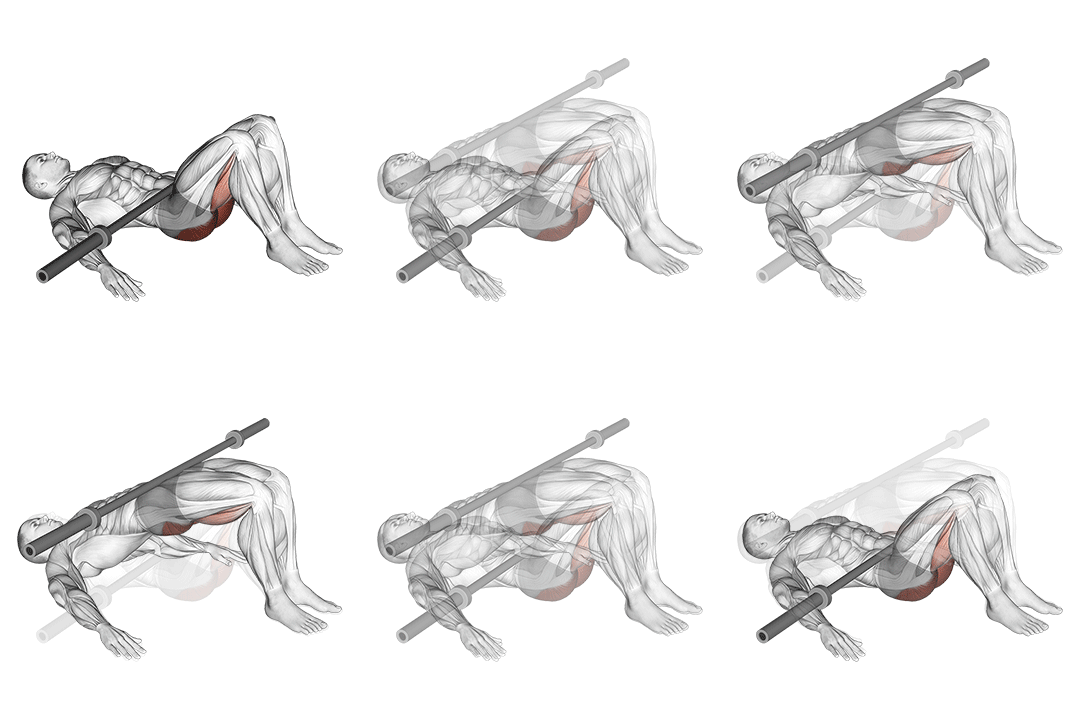
The Barbell Glute Bridge performs glute bridges. The pattern builds glute strength critical for fixing anterior pelvic tilt.
For fixing anterior pelvic tilt, the glute bridge is foundational. Weak glutes are a primary cause of APT – strengthening glutes pulls the pelvis back into proper position. Run it for 4 sets of 10 to 15 reps as primary glute work.
Lie on the floor with knees bent and feet planted. Position a barbell across the hips. Hold the bar in place. Drive through the heels to lift the hips up by extending the hips. The body forms a straight line from shoulders to knees at the top. The glutes work hard. Squeeze at peak hip extension. Lower under control. The pattern builds the glute strength essential for fixing APT – strong glutes pull the pelvis posteriorly into proper neutral position, counteracting the anterior pelvic tilt that comes from weak glutes and tight hip flexors. Most successful APT correction programs prioritize heavy glute strengthening.
Single Leg Glute Bridge with Knee to Chest

The Single Leg Glute Bridge with Knee to Chest performs unilateral glute bridges. The pattern produces unilateral glute strengthening for APT correction.
For fixing APT, the single-leg glute bridge addresses left/right imbalances common in APT. Run it for 3 sets of 10 to 12 reps per leg as unilateral glute work.
Lie on the back with one knee bent and foot planted on the floor. Pull the opposite knee to the chest with the hands. Drive through the heel of the planted foot to lift the hips up by extending the hip. The working glute and hamstring work hard through unilateral hip extension. Squeeze at peak. Lower under control. The pattern produces unilateral glute strengthening – addresses asymmetries common in APT and ensures both glutes develop equally. Switch legs between sets.
Front Plank
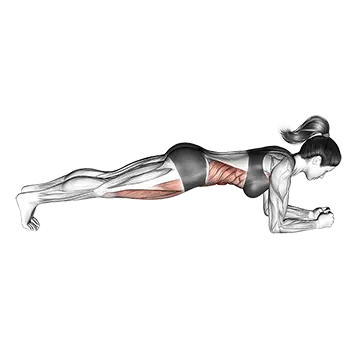
The Front Plank performs forearm plank holds. The pattern builds core strength critical for APT correction.
For fixing APT, the plank builds the deep core strength essential for proper pelvic position. Run it for 3 sets of 30 to 60-second holds as primary core work.
Lie face-down on the floor. Prop up on the forearms with elbows under the shoulders. Lift the hips so the body forms a straight line from shoulders to ankles. The core works hard isometrically – the abs must contract to maintain neutral spine. Hold for the working interval. The pattern builds the deep core strength APT correction requires – weak core (especially deep abdominals) is a primary cause of APT, and dedicated core training pulls the pelvis into proper neutral position alongside glute strengthening.
Kneeling Hip Flexor Stretch
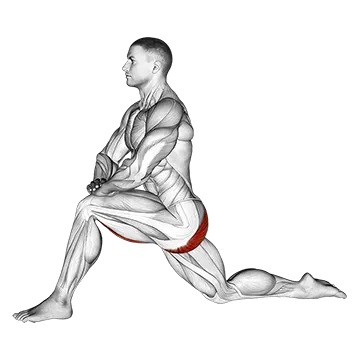
The Kneeling Hip Flexor Stretch performs kneeling hip flexor stretches. The pattern directly addresses tight hip flexors causing APT.
For fixing APT, the hip flexor stretch directly addresses tight hip flexors – the primary muscular cause of APT. Run it for 3 sets of 30 to 60-second holds per side, daily if possible.
Kneel on one knee with the other foot planted in front in a 90/90 lunge position. Keep the torso upright. Squeeze the back glute hard while gently pushing the hips forward. Feel a deep stretch in the front of the hip on the back leg side. Hold for 30 to 60 seconds. Switch sides. The pattern directly addresses tight hip flexors that pull the pelvis anteriorly into APT. Combined with glute strengthening, daily hip flexor stretching is the most effective APT correction intervention. Most APT cases involve hip flexors that have shortened from prolonged sitting.
Dead Bug

The Dead Bug performs dead bug core exercise. The pattern builds deep core stability critical for APT correction.
For fixing APT, the dead bug builds the deep core stability that supports proper pelvic position. Run it for 3 sets of 10 to 12 reps per side as deep core work.
Lie on the back with arms extended toward the ceiling and knees bent at 90 degrees with shins parallel to the floor. Slowly extend one leg toward the floor while extending the opposite arm overhead. Keep the lower back pressed firmly into the floor (this is the key – if the lower back arches off the floor, APT is engaged). Return to start and switch sides. The deep core works hard against the limb movement. The pattern builds the deep core stability APT correction requires – maintaining lower back pressed into the floor while limbs move trains the deep core to hold proper pelvic position.
Hollow Hold
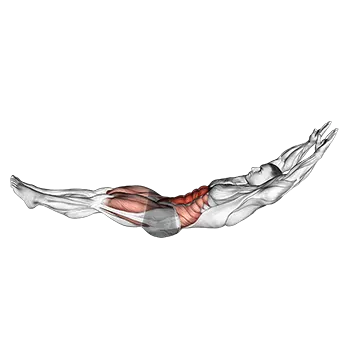
The Hollow Hold performs hollow body holds. The pattern is foundational deep core work for APT correction.
For fixing APT, the hollow hold produces extreme deep core loading that pulls the pelvis into proper position. Run it for 3 to 4 sets of 20 to 60-second holds as deep core work.
Lie on the back. Press the lower back firmly into the floor by tilting the pelvis posteriorly and contracting the abs. Lift the legs slightly off the floor (about 6 inches). Lift the upper back and shoulders slightly off the floor. Extend the arms overhead. The body forms a “hollow” curved shape with the lower back pressed into the floor. Hold for the working interval. The pattern produces extreme deep core loading – the hollow position trains the exact pattern needed to fix APT (posterior pelvic tilt with active deep core). Most successful APT correction programs include hollow hold variations.
Lying Glute Stretch
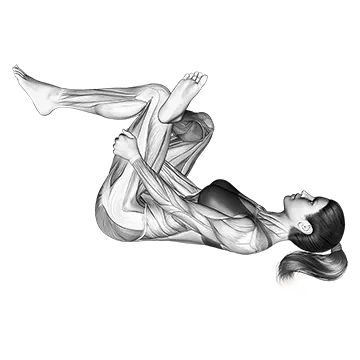
The Lying Glute Stretch performs lying glute stretches. The pattern addresses tight glutes that limit hip mobility in APT.
For fixing APT, the lying glute stretch addresses tight glutes that compound APT through restricted hip mobility. Run it for 2 to 3 sets of 30 to 60-second holds per side as supporting mobility work.
Lie on the back. Cross one ankle over the opposite thigh (figure-4 position). Pull the bottom thigh toward the chest with both hands. Feel a deep stretch in the glute of the crossed leg. Hold for 30 to 60 seconds. Switch sides. The pattern addresses tight glutes that compound APT – while weak glutes are the primary issue, tight glutes can develop simultaneously and limit hip mobility. Combined with hip flexor stretching and glute strengthening, glute mobility supports complete APT correction.
Barbell Romanian Deadlift

The Barbell Romanian Deadlift performs Romanian deadlifts. The pattern builds posterior chain strength critical for APT correction.
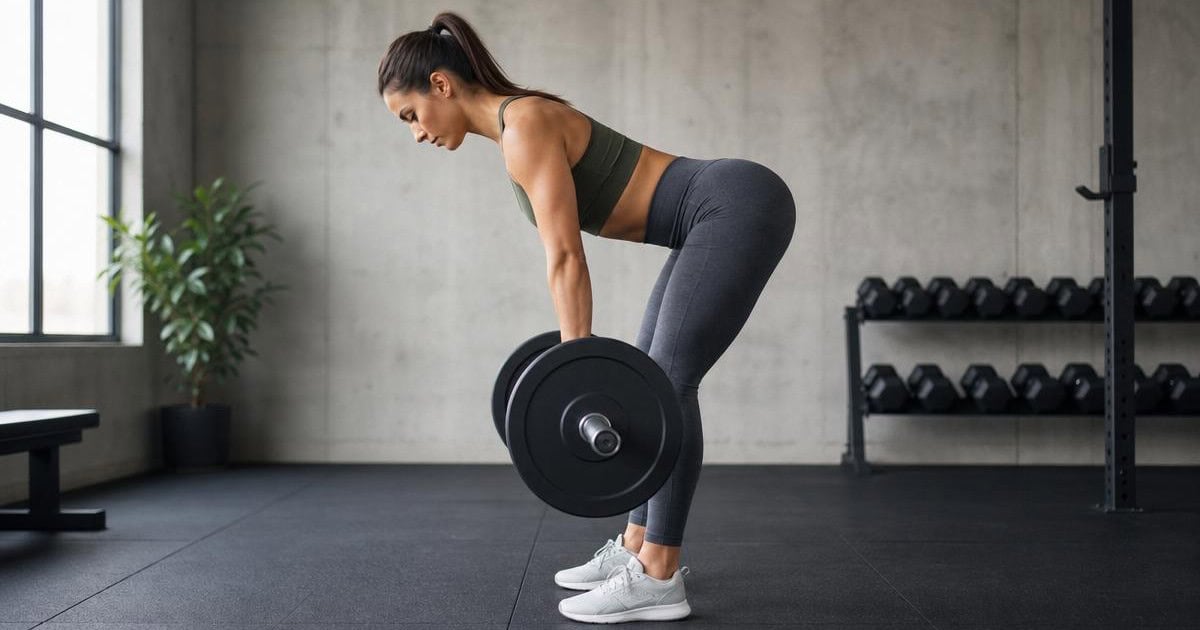
For fixing APT, the RDL builds the posterior chain (glutes and hamstrings) that pulls the pelvis into proper position. Run it for 3 sets of 8 to 10 reps as posterior chain work.
Stand with feet hip-width holding a barbell at the front of the thighs. Hinge at the hips by sending them backward while keeping the back flat and legs nearly straight. Lower the barbell along the legs until the hamstrings stretch deeply. Drive back to standing by extending the hips. The pattern builds the posterior chain strength critical for APT correction – strong glutes AND hamstrings together pull the pelvis into proper neutral position. RDLs train the hip hinge pattern that APT sufferers commonly lack.
Superman

The Superman performs prone superman holds. The pattern produces direct posterior chain work supporting APT correction.
For fixing APT, the superman produces direct glute and lower back strengthening that supports proper pelvic position. Run it for 3 sets of 10 to 15 reps or 30-second holds as posterior chain accessory work.
Lie face-down on the floor with arms extended overhead and legs straight. Lift both arms and legs off the floor simultaneously by extending the upper and lower back. The upper back, lower back, and glutes all work hard. Hold briefly at peak (or hold the position for 30-second holds). Lower under control. The pattern produces direct posterior chain loading – the glutes and lower back work to maintain extended position, supporting the strength patterns that fix APT.
Side Plank
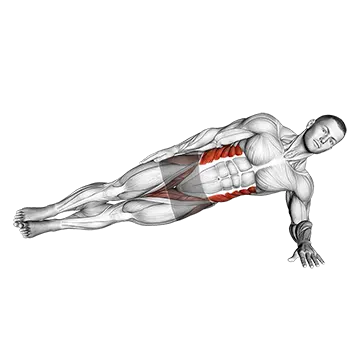
The Side Plank performs side plank holds. The pattern builds lateral core strength supporting APT correction.
For fixing APT, the side plank builds the lateral core strength that completes core stability. Run it for 3 sets of 30 to 45-second holds per side as lateral core work.
Lie on one side with the body straight. Prop up on one forearm with the elbow under the shoulder. Lift the hips up so the body forms a straight line from feet to head. The obliques and glute medius work hard. Hold for the working interval. Switch sides between sets. The pattern builds lateral core strength essential for complete APT correction – while front planks address anti-extension and dead bugs/hollow holds train deep core, side planks ensure the obliques and lateral core also support proper pelvic position.
How To Program These Workouts
A productive APT correction session pulls 6 to 8 exercises from the list above. A common balanced session: kneeling hip flexor stretch (mobility), barbell glute bridge (heavy glute), single leg glute bridge with knee to chest (unilateral glute), dead bug (deep core), hollow hold (deep core), barbell romanian deadlift (posterior chain), front plank (core), side plank (lateral core). For high-frequency daily work: kneeling hip flexor stretch, barbell glute bridge, dead bug – these can be performed daily without recovery concerns. For dedicated correction sessions: include all 10 exercises across 2 to 3 sessions per week. Run static stretching for 2 to 3 sets of 30 to 60-second holds, glute strengthening for 3 to 4 sets of 8 to 15 reps, deep core for 3 to 4 sets of 10 to 12 reps or 20 to 60-second holds, posterior chain for 3 sets of 8 to 12 reps.
Train APT correction with high frequency for accelerated improvement. Most successful APT correction programs incorporate work as: 1) daily hip flexor stretching (60 to 120-second total daily hip flexor stretch), 2) daily glute activation drills (glute bridges, clams), 3) dedicated APT correction sessions 3 to 5 times per week (6 to 8 exercises covering all APT correction patterns), 4) integrated APT work in main lifting sessions (RDLs, dead bugs, planks). Hip flexor stretching tolerates daily frequency – intensity matters less than consistency. Most individuals see measurable APT improvement within 8 to 12 weeks of consistent daily hip flexor stretching plus 3 to 5 weekly correction sessions.
For broader programming, see our how to improve hip mobility and how to fix rounded shoulders. For specific work, see our best workouts for lower back pain.
Final Thoughts
Fixing anterior pelvic tilt requires applying the right training principles consistently over time: daily hip flexor stretching for tight front-of-hip muscles, heavy glute strengthening for weak posterior muscles, deep core training for proper pelvic position support, lateral core stability for complete core development, and posterior chain integration for full hip extension capacity. The combination of glute bridges (bilateral and unilateral), planks (front and side), dead bugs, hollow holds, hip flexor stretches, glute stretches, RDLs, and supermans covers every functional pattern needed for APT correction and produces broader posture improvement than any single approach. Most individuals who consistently apply these principles see measurable APT improvement within 8 to 12 weeks – reduced lower back arching, better posture, less lower back pain, improved athletic performance, and the visible improvement in standing posture that proper pelvic position provides. For anyone with APT from sitting, weak glutes, or chronic poor posture, dedicated correction training is one of the most effective interventions available.
Stay focused on consistency over intensity. The most common mistake people make in APT correction is doing intense correction sessions occasionally rather than consistent daily work. The fix: prioritize daily hip flexor stretching (even just 60 seconds per side) plus daily glute activation work over occasional intense sessions. The connective tissue and muscle adaptations that produce lasting APT correction happen through consistent gentle work over time, not aggressive forcing in occasional sessions. Combined with dedicated correction sessions 3 to 5 times per week, daily mobility and activation produces the lasting APT correction that occasional intense work never achieves. APT correction is built through thousands of repetitions across weeks and months.
Frequently Asked Questions
How long does it take to fix anterior pelvic tilt?
8 to 12 weeks for measurable improvement, 6 to 12 months for complete correction. Most individuals who consistently apply daily hip flexor stretching plus dedicated APT correction sessions see measurable improvement within 8 to 12 weeks – reduced lower back arching, better posture, less lower back pain. Severe APT (from years of sitting and chronic poor posture) may require 6 to 12 months of consistent work for complete correction. The improvement timeline depends on starting severity, training consistency, and concurrent factors (continuing desk work, current activity levels).
What causes anterior pelvic tilt?
Combination of tight hip flexors, weak glutes, weak deep abs. APT is typically caused by: 1) tight hip flexors from prolonged sitting that pull the pelvis anteriorly, 2) weak glutes that fail to hold the pelvis in proper neutral position, 3) weak deep abdominals that don’t support proper pelvic position, 4) tight lower back muscles compensating for weak glutes, 5) overall poor movement patterns that reinforce APT through daily life. Modern lifestyle (desk work, driving, phone use) is the primary contributor for most APT cases.
Can APT be fixed?
Yes for most cases, with consistent training. APT caused by muscle imbalance (the most common cause) responds very well to dedicated correction training. APT caused by structural skeletal issues may have limited correction potential and require professional evaluation. For typical APT from modern lifestyle and training imbalances, dedicated correction training produces measurable improvement for almost everyone within 8 to 12 weeks. Most cases can be completely or substantially corrected with 6 to 12 months of consistent work.
What’s the best exercise for fixing APT?
Daily hip flexor stretching plus glute strengthening. Hip flexor stretches (kneeling hip flexor stretch) directly address the tight muscles pulling the pelvis forward. Glute bridges and single-leg glute bridges build the strong posterior muscles that hold the pelvis back. Combined with deep core training (dead bugs, hollow holds, planks) and posterior chain work (RDLs, supermans), these form the foundation of APT correction. Most successful programs prioritize daily hip flexor stretching plus 3 to 5 weekly correction sessions.
How often should I train for APT correction?
Daily mobility and activation + 3 to 5 dedicated sessions per week. Hip flexor stretches and glute activation work tolerate very high frequency – daily training accelerates correction substantially. Most successful APT correction programs include: 1) daily hip flexor stretching (60+ seconds per side), 2) daily glute activation drills, 3) dedicated correction sessions 3 to 5 times per week with 6 to 8 exercises, 4) integrated APT work in main lifting sessions (RDLs, dead bugs, planks). Daily training produces faster correction than less frequent work.